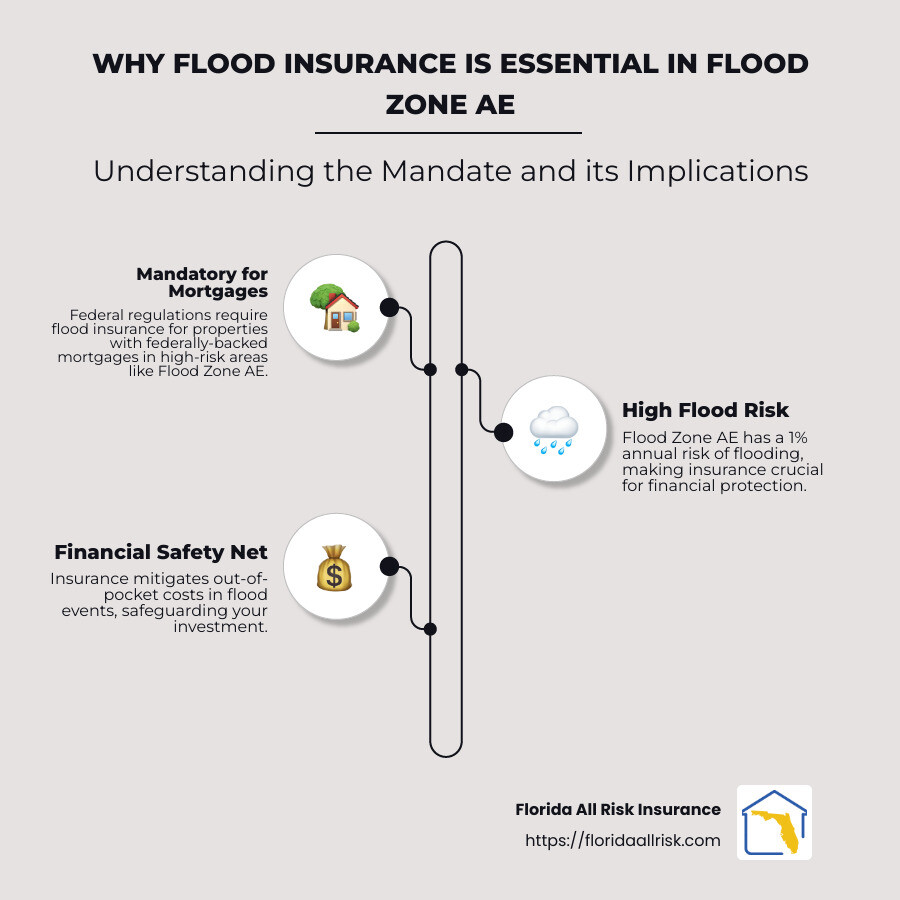
Does flood zone ae require flood insurance in florida? The short answer is yes. If your property is situated in Flood Zone AE, federal regulations mandate that you must purchase flood insurance, especially if you have a mortgage backed by a federally-regulated lender. This is because Flood Zone AE is designated as a high-risk area by FEMA, with a 1% annual chance of flooding and a substantial 26% risk over a typical 30-year mortgage period.
Flood Zone AE areas are typically found in low-lying regions close to floodplains, rivers, or lakes. Because of this heightened risk, flood insurance becomes crucial for protecting your investment. While the requirement is mandatory for many, having this coverage also provides a financial safety net, reducing out-of-pocket costs after a flood event.
I’m Jason Miller, a seasoned insurance expert based in Florida, with over 20 years of experience in helping homeowners steer the complex landscape of flood insurance requirements like those for “does flood zone ae require flood insurance in florida.” I aim to explain these requirements and guide you through the essential details that affect your coverage and financial security. Stay with us as we explore these high-risk zones, such as Flood Zone AE, and uncover the necessary steps to safeguard your home effectively.
Does flood zone ae require flood insurance in florida word list:
Understanding Flood Zone AE
Flood Zone AE is classified as a high-risk flood zone by FEMA. This means that properties in this area face a significant risk of flooding. Specifically, there’s a 1% chance of flooding in any given year. Over a 30-year mortgage, this risk escalates to 26%.
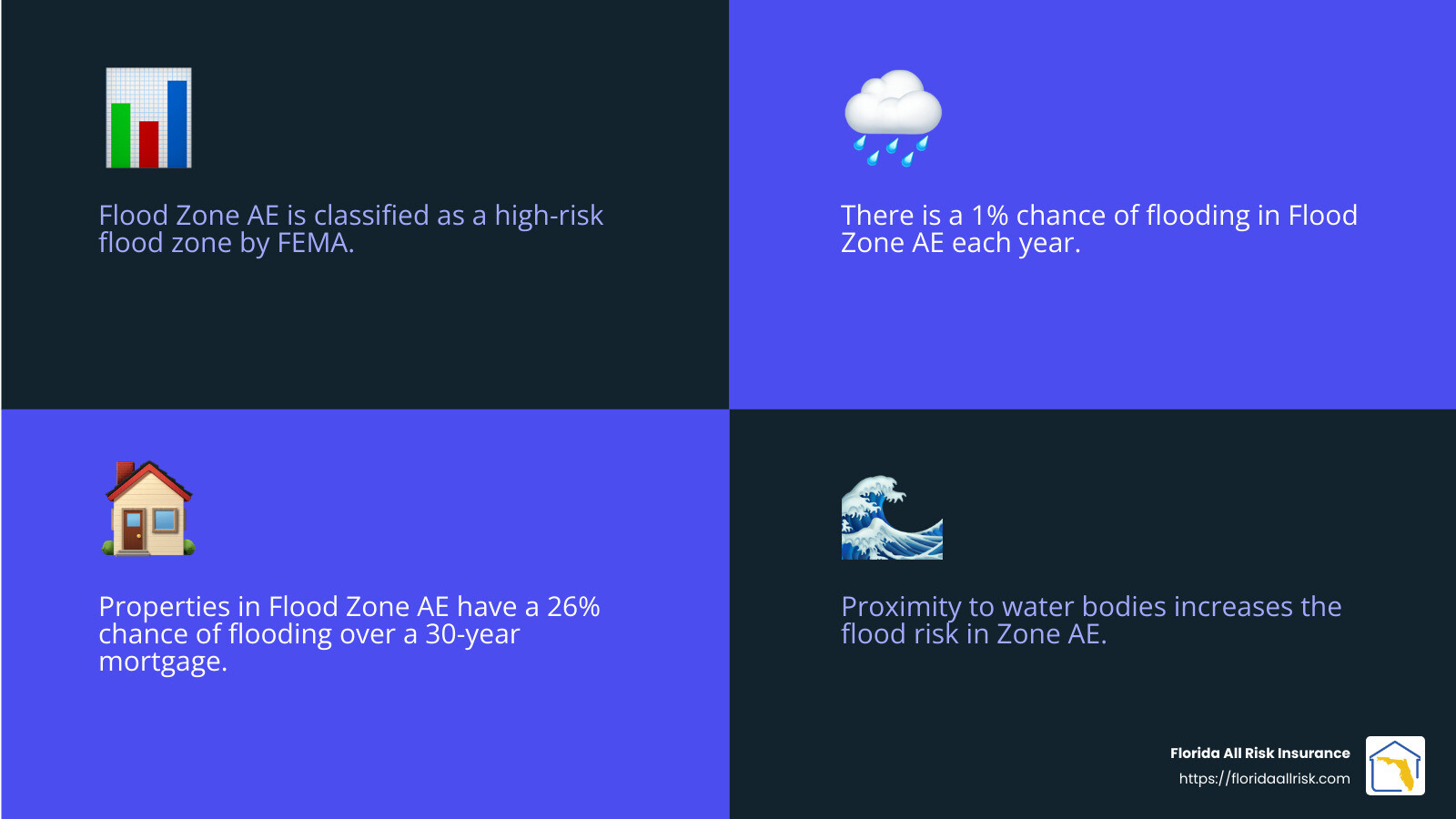
These areas are often located near water bodies like rivers, lakes, or floodplains. The proximity to these water sources increases the likelihood of flooding, especially during heavy rainfall or storm surges.
Why It’s High-Risk
Flood Zone AE is not just about its closeness to water. It’s also about the area’s topography and how water naturally flows. Low-lying regions are more susceptible because they can easily become overwhelmed by rising water levels.
Key Points About Flood Zone AE:
-
1% Annual Flood Risk: This might sound low, but remember, it’s an annual chance. Over time, the risk accumulates.
-
26% Risk Over 30 Years: This is particularly relevant for homeowners with a standard mortgage term. It’s a substantial risk that demands careful consideration.
-
Proximity to Water Bodies: Being near rivers, lakes, or floodplains inherently increases flood risk. It’s crucial to understand how these natural features impact your property’s flood risk.
Understanding these factors is vital for homeowners in Flood Zone AE. It prepares you to meet insurance requirements and helps you take proactive measures to protect your property.
Does Flood Zone AE Require Flood Insurance in Florida?
If you’re a homeowner in Flood Zone AE in Florida, you’re dealing with a high-risk flood area. Does Flood Zone AE require flood insurance in Florida? The short answer: yes, it does. Here’s why:
Why Flood Insurance is Mandatory
Federal regulations play a big role here. Properties in Flood Zone AE are part of the Special Flood Hazard Area (SFHA). This designation means that the risk of flooding is significant, and the federal government mandates flood insurance for these areas.
If you have a federally-backed mortgage—like an FHA or VA loan—your lender will require you to carry flood insurance. This is non-negotiable. Lenders want to protect their investment, and flood insurance ensures that, even if disaster strikes, there’s a financial safety net in place.
Federal Requirements:
- SFHA Designation: Properties in these zones must have flood insurance if they have federally-backed mortgages.
- Mortgage Lender Mandates: Lenders require flood insurance to safeguard their investment in high-risk areas.
Impact on Homeowners
Owning a home in Flood Zone AE comes with specific responsibilities and considerations. Insurance costs are a primary concern. Flood insurance can be costly, and it’s an additional expense on top of your regular homeowners insurance.
However, this insurance is essential for protecting your property value. Flood damage can be devastating, leading to costly repairs or even a total loss of the property. Insurance helps cover these expenses, preserving both your home and its market value.
Considerations for Homeowners:
-
Insurance Costs: Flood insurance is an added expense but crucial for financial protection.
-
Property Value Protection: Ensures that your investment is safeguarded against flood damage.
-
Building Regulations: Properties in Flood Zone AE may also face stricter building codes and elevation requirements to minimize flood risk.
Navigating these requirements and costs is part of living in a high-risk flood area like Flood Zone AE. It’s essential to stay informed and work with your insurance provider to ensure you have the coverage you need.
Understanding these aspects will help you manage your property effectively and comply with all necessary regulations.
How Flood Zone AE Affects Insurance Rates
National Flood Insurance Program (NFIP)
The National Flood Insurance Program (NFIP) is a federal initiative that provides flood insurance to homeowners, renters, and businesses in participating communities. For those in Flood Zone AE, the NFIP is a crucial resource. It offers standardized coverage options, which include building coverage up to $250,000 and contents coverage up to $100,000.
One of the key features of the NFIP is its Risk Rating 2.0 system. This approach modernizes how flood insurance rates are determined. Instead of relying solely on flood zone designations, it incorporates a broader range of factors, like the property’s distance to water, flood frequency, and elevation. This means that while flood zones are still important, they no longer directly dictate insurance rates.
Community Participation:
- Communities must adopt floodplain management regulations to participate in the NFIP.
- Participation ensures access to federal flood insurance, which is often more affordable than private options.
Coverage Limits:
- Building coverage up to $250,000.
- Contents coverage up to $100,000.
Private Flood Insurance Options
Private flood insurance offers an alternative to the NFIP, with some advantages for homeowners in Flood Zone AE. These policies often provide more customized coverage, which can include higher limits and additional benefits such as coverage for loss of use or additional living expenses.
Flexible Terms and Higher Limits:
- Customized Coverage: Custom policies that can exceed NFIP limits.
- Higher Limits: Options for greater coverage on both structures and contents.
Private insurers may also offer more flexible terms, allowing homeowners to select deductibles and coverage options that best fit their needs. This flexibility can be particularly beneficial for those with unique property features or higher-value homes.
Elevation Certificates:
Obtaining an elevation certificate can be beneficial when seeking flood insurance, whether through the NFIP or a private insurer. This document provides details about the elevation of your property, which can impact your insurance rates. Higher elevation often means lower risk and potentially lower premiums.
By understanding the options available through both the NFIP and private insurers, homeowners in Flood Zone AE can make informed decisions about their flood insurance, ensuring they have the right coverage to protect their property and peace of mind.
Frequently Asked Questions about Flood Zone AE
What is the Base Flood Elevation (BFE)?
The Base Flood Elevation (BFE) is a crucial concept when discussing flood-prone areas like Flood Zone AE. Essentially, BFE represents the height that floodwaters are estimated to reach during a base flood event, which has a 1% chance of occurring in any given year. This measurement is key in determining building requirements and insurance rates.
Flood maps, often provided by FEMA, display these elevations and help homeowners and builders understand the flood risk of specific locations. Structures built in Flood Zone AE must follow certain construction standards to ensure safety and compliance, such as elevating the lowest floor of a building to or above the BFE.
Can You Build in Flood Zone AE?
Yes, you can build in Flood Zone AE, but there are strict building regulations to follow. These regulations are designed to minimize flood damage and ensure the safety of the structure and its occupants. Key requirements include:
-
Elevation Requirements: The lowest floor of the building must be at or above the BFE. This is to prevent floodwaters from entering living spaces during a flood event.
-
Construction Standards: All electrical, plumbing, and HVAC systems must be installed above the BFE. Additionally, enclosed areas below this elevation, like basements, cannot be used as living spaces.
These standards are crucial for reducing flood risk and are often mandated by local building codes and FEMA guidelines.
How to Obtain an Elevation Certificate?
An elevation certificate is a document that provides details about your property’s elevation relative to the BFE. It is an essential tool for determining flood insurance rates and ensuring compliance with building regulations in Flood Zone AE.
To obtain an elevation certificate, you will need to hire a licensed surveyor, professional engineer, or registered architect. These professionals are authorized to assess your property and provide the necessary documentation. The process involves measuring the elevation of your home’s lowest floor and comparing it to the BFE.
FEMA guidelines outline the specifics of what an elevation certificate should include, and having this document can potentially lower your flood insurance premiums if it shows that your property is at a lower risk of flooding.
By understanding these elements—BFE, building regulations, and elevation certificates—homeowners can better steer the challenges of living in Flood Zone AE and ensure their properties are adequately protected.
Conclusion
Navigating the complexities of flood risk management is essential for homeowners in Flood Zone AE. This high-risk area requires careful planning and adherence to regulations to protect both property and personal safety. Understanding the nuances of flood insurance and building requirements can significantly mitigate potential flood damage.
At Florida All Risk Insurance, we specialize in providing personalized coverage options custom to meet the unique needs of Florida residents. Our expertise in flood insurance ensures that you receive comprehensive protection while complying with federal and local regulations. We offer access to a wide range of carriers, enabling us to find competitive rates and customized solutions for your specific situation.
Flood risk management involves more than just purchasing insurance. It requires proactive steps, such as obtaining an elevation certificate and adhering to building codes that lift your property above the Base Flood Elevation (BFE). These measures not only help in reducing insurance premiums but also improve the safety and resilience of your home.
If you’re in a high-risk area like Flood Zone AE, it’s crucial to have a robust flood insurance policy in place. Our team at Florida All Risk Insurance is here to guide you through the process, ensuring that your home and belongings are well-protected.
For more information on how we can assist you with flood insurance and other coverage needs, visit our Flood Insurance page.
By choosing Florida All Risk Insurance, you are opting for peace of mind and expert advice in navigating the challenges of living in a flood-prone area. Our personalized approach ensures that you receive the best possible protection for your home and family.