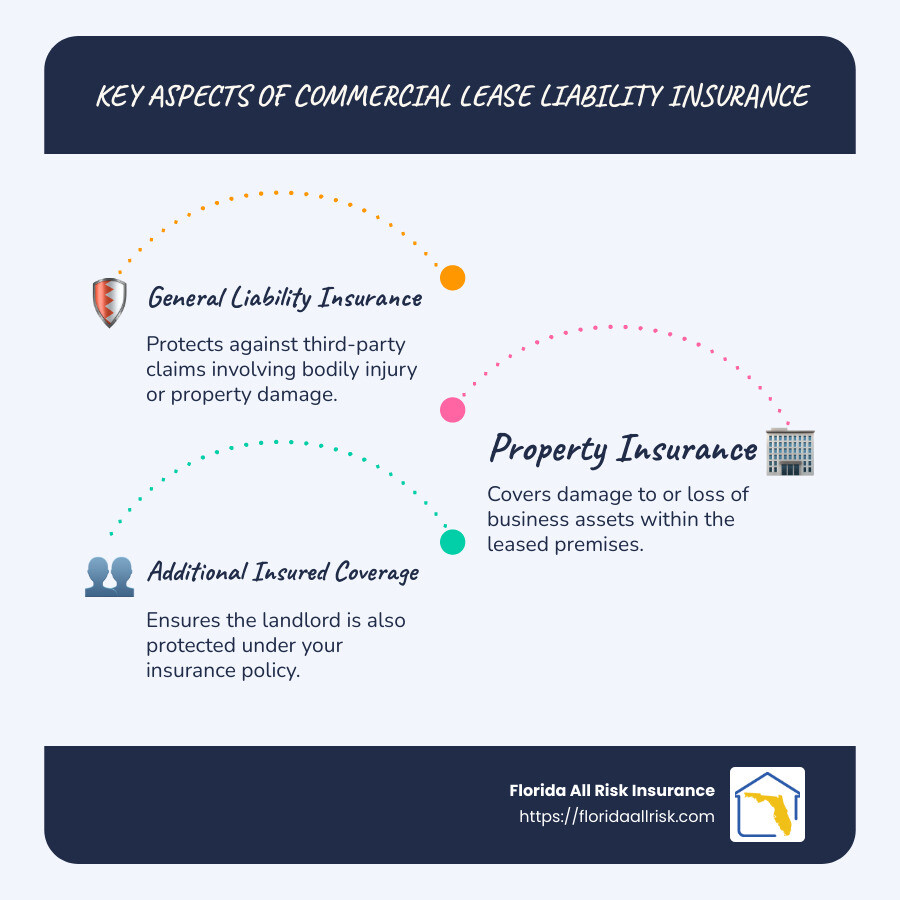
Commercial lease liability insurance is crucial for both tenants and landlords. It provides coverage against third-party claims, such as property damage or bodily injury on leased premises. As a tenant, you must understand and comply with the insurance requirements in your lease to avoid potential legal issues or financial penalties. Often, these requirements include:
- General Liability Insurance: Protects against third-party claims.
- Property Insurance: Covers damage to business assets.
- Additional Insured Coverage: Ensures the landlord is also protected under your policy.
When renting commercial property, obtaining the right insurance is not just about meeting your landlord’s requirements—it’s about safeguarding your business assets and operations.
My name is Jason Miller, a second-generation insurance professional with over 20 years of experience. At Florida All Risk Insurance, I’ve guided countless clients through the intricacies of commercial lease liability insurance, helping them find the best coverage to meet their unique needs. Now, let’s dive deeper into understanding commercial lease liability insurance and its significance for both tenants and landlords.
Understanding Commercial Lease Liability Insurance
When you’re leasing commercial property, it’s crucial to understand the concept of commercial lease liability insurance. This type of insurance is not merely a formality in your lease agreement but a vital component that protects both you and your landlord from potential financial losses and legal complications.
Why Landlords Require Liability Insurance
Landlords require liability insurance primarily for protection. By mandating that tenants carry liability insurance, landlords shield themselves from potential lawsuits and financial claims. For example, if someone is injured on the property or if there’s damage to another tenant’s space, the liability insurance steps in to cover these costs.
For tenants, this insurance is equally important. It ensures that if an unfortunate incident occurs, they are not left bearing the full financial burden alone. This coverage is a legal obligation in many leases, acting as a safety net for both parties.
Types of Liability Insurance in Commercial Leases
Understanding the types of liability insurance involved in commercial leases is key. Here’s a breakdown:
-
General Liability Insurance: This is the most common type required in leases. It covers third-party claims for bodily injury, property damage, and even advertising injury. For instance, if a customer slips and falls in your store, this insurance helps cover medical expenses and legal fees.
-
Excess Liability Insurance: Think of this as an extra layer of protection. It kicks in when your general liability coverage limits are exhausted. It’s particularly useful for businesses that face higher risks and want to ensure they are covered for larger claims.
-
Commercial Umbrella Insurance: Similar to excess liability, but with broader coverage. It provides additional protection over several liability policies, including general liability and commercial auto. This is particularly beneficial for businesses with multiple potential liability exposures.
These insurance types work together to provide comprehensive protection. They ensure that both the tenant and landlord are safeguarded against unforeseen events, allowing business operations to continue smoothly without the constant worry of potential claims.
Understanding and securing the right liability coverage is a crucial step in fulfilling your obligations as a tenant and maintaining a good relationship with your landlord.
Key Components of Commercial Lease Liability Insurance
When diving into commercial lease liability insurance, it’s crucial to understand its key components. These elements are designed to protect both the tenant and the landlord from potential financial pitfalls.
General Liability Insurance
General Liability Insurance is like a safety net. It primarily covers third-party claims, which means if someone who isn’t part of your business (like a customer or visitor) gets hurt on your premises or if there’s property damage, this insurance has you covered.
-
Bodily Injury: Imagine a customer slipping and falling in your store. General liability insurance helps cover the medical expenses and any legal fees that might arise from such incidents.
-
Property Damage: If your business activities accidentally damage someone else’s property, this insurance will step in to cover the repair or replacement costs.
-
Legal Fees: Lawsuits can be expensive. This insurance helps cover the costs of legal defense, ensuring you’re not financially drained by legal battles.
Excess Liability and Commercial Umbrella Insurance
Sometimes, the standard coverage isn’t enough. That’s where Excess Liability and Commercial Umbrella Insurance come into play. These policies offer additional coverage and financial protection beyond the limits of your general liability policy.
-
Excess Liability: This acts as an extension of your existing liability coverage. If a claim exceeds the limits of your general liability policy, excess liability insurance kicks in to cover the additional costs. It’s like having a backup plan for those unexpected, high-cost claims.
-
Commercial Umbrella Insurance: Think of this as a broader shield. It provides extra coverage not just for general liability but also for other policies like commercial auto. This is particularly useful for businesses with multiple liability exposures.
Both of these options ensure that your business is protected against large claims that could potentially exceed your primary insurance limits. They offer peace of mind, knowing you have a comprehensive safety net in place.
In summary, understanding these components of commercial lease liability insurance is vital for both tenants and landlords. It ensures that all parties are protected from unforeseen events, allowing businesses to operate smoothly without the looming threat of financial loss.
Additional Insurance Requirements in Commercial Leases
In addition to the core components of commercial lease liability insurance, there are other insurance requirements that tenants often need to consider. These additional coverages provide further protection for both tenants and landlords, ensuring a smooth and secure leasing arrangement.
Business Interruption Insurance
Imagine a sudden event, like a fire or flood, that forces your business to close temporarily. Business Interruption Insurance is designed to protect you in these situations by covering lost income and operational expenses. This means you can continue paying your bills, including rent, even when your business isn’t bringing in revenue.
-
Income Protection: This insurance helps replace the income you would have earned if your business hadn’t been interrupted. It’s like a financial cushion that keeps you afloat during tough times.
-
Operational Expenses: Even if your doors are closed, you still have bills to pay. Business interruption insurance covers these ongoing expenses, ensuring you can keep up with payments like utilities and salaries.
-
Rent Coverage: If you’re unable to operate due to a covered event, this insurance can also help cover your rent payments. This is crucial in maintaining a good relationship with your landlord and avoiding lease violations.
Workers’ Compensation Insurance
Accidents happen, even in the safest work environments. Workers’ Compensation Insurance is a must-have to protect your employees and your business.
-
Employee Protection: If an employee is injured while working, this insurance provides them with medical benefits and wage replacement. It’s a safety net that ensures your staff is taken care of.
-
Medical Expenses: Workers’ comp covers the medical costs associated with workplace injuries or illnesses, so your employees can focus on recovering without the stress of medical bills.
-
Legal Compliance: Most states require businesses to have workers’ compensation insurance. Having this coverage keeps you compliant with legal regulations and protects you from potential lawsuits.
Commercial Auto Insurance
If your business involves the use of vehicles, Commercial Auto Insurance is essential. It protects your business from liabilities arising from accidents involving company vehicles.
-
Vehicle Protection: This insurance covers damages to your business vehicles caused by accidents, theft, or vandalism.
-
Liability Coverage: If one of your vehicles is involved in an accident that causes injury or damage to others, commercial auto insurance helps cover the costs.
-
Hired and Non-Owned Auto Insurance (HNOA): If your employees use their personal vehicles for work purposes, HNOA provides coverage, ensuring all bases are covered.
These additional insurance coverages are crucial for a comprehensive risk management strategy in commercial leasing. They protect against a wide range of potential risks, ensuring that both tenants and landlords can maintain a stable and secure business relationship.
Frequently Asked Questions about Commercial Lease Liability Insurance
What is the average cost of commercial liability insurance?
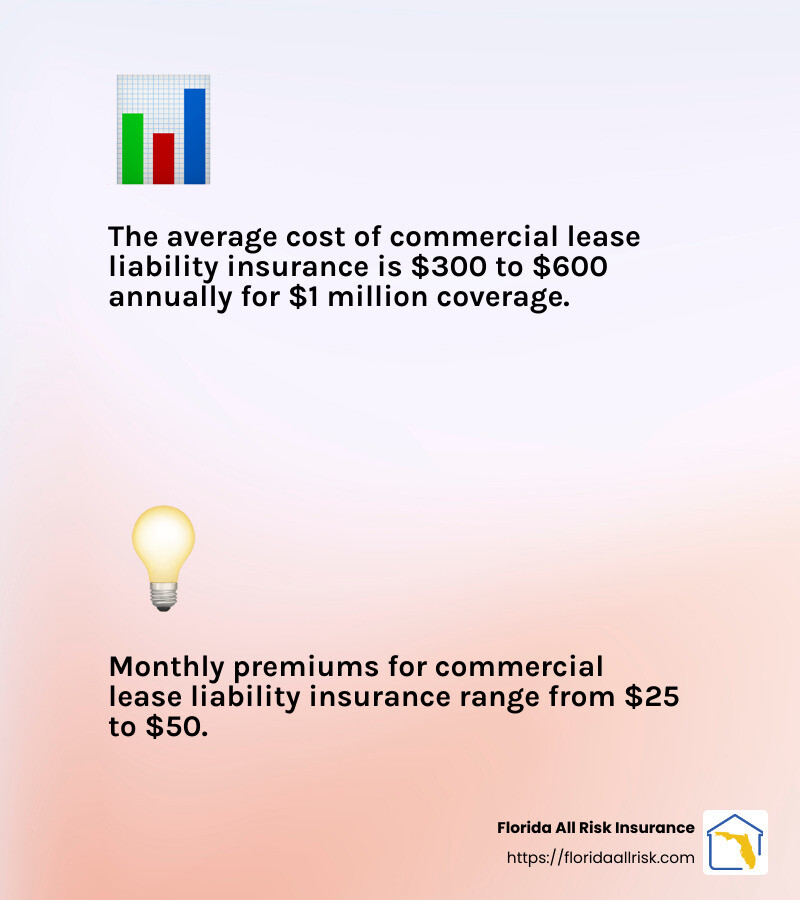
The cost of commercial lease liability insurance can vary widely based on several factors. On average, businesses might expect to pay between $300 and $600 annually for a million dollars of coverage. However, this can go up to $1,000 depending on the specific risks associated with your business operations. Monthly premiums typically range from $25 to $50, but exact figures depend on the business type, location, and coverage limits.
How does commercial lease liability insurance protect landlords?
Commercial lease liability insurance is essential for protecting landlords from a range of potential liabilities. When a tenant carries adequate liability insurance, it shields the landlord from financial responsibility for incidents like property damage or bodily injuries that occur on the premises.
For instance, if a customer slips and falls in a tenant’s store, the tenant’s liability insurance covers the medical expenses and legal fees, protecting the landlord from these costs. This insurance acts as a buffer, ensuring that landlords are not financially impacted by incidents related to tenant activities.
Why is commercial lease insurance considered expensive?
Commercial lease insurance can be expensive due to the broad range of risks it covers. Factors like the coverage limits and risk factors associated with the business play a significant role in determining the cost. High-risk industries, such as those involving heavy machinery or hazardous materials, often face higher premiums.
Location is another crucial factor. Businesses in areas prone to natural disasters or with higher crime rates may see increased insurance costs. Additionally, the number of employees and years in operation can affect premiums, as more employees and longer business histories might increase the likelihood of claims.
Conclusion
At Florida All Risk Insurance, we understand that every business is unique. That’s why we offer comprehensive solutions custom to the specific needs of your company. Whether you’re a small business owner or manage a larger enterprise, we provide custom coverage options to ensure you’re protected.
Our team in Saint Petersburg, Florida, is dedicated to helping you steer the complexities of commercial lease liability insurance. With our personalized service, we aim to make the process as straightforward and stress-free as possible. We work with a wide range of carriers to find competitive rates and the best coverage options for your situation.
By choosing Florida All Risk Insurance, you’re not just getting an insurance policy; you’re gaining a partner committed to safeguarding your business. Our goal is to give you peace of mind so you can focus on what truly matters—growing your business.
Ready to explore your options? Visit our commercial property insurance page to learn more about how we can help protect your business assets.