High risk commercial property insurance is a critical financial lifeline for businesses operating in challenging environments. When conventional insurance routes turn away due to former claims, location hazards, or the nature of the business itself, specialized policies come into play to offer much-needed protection. Key aspects to understand include:
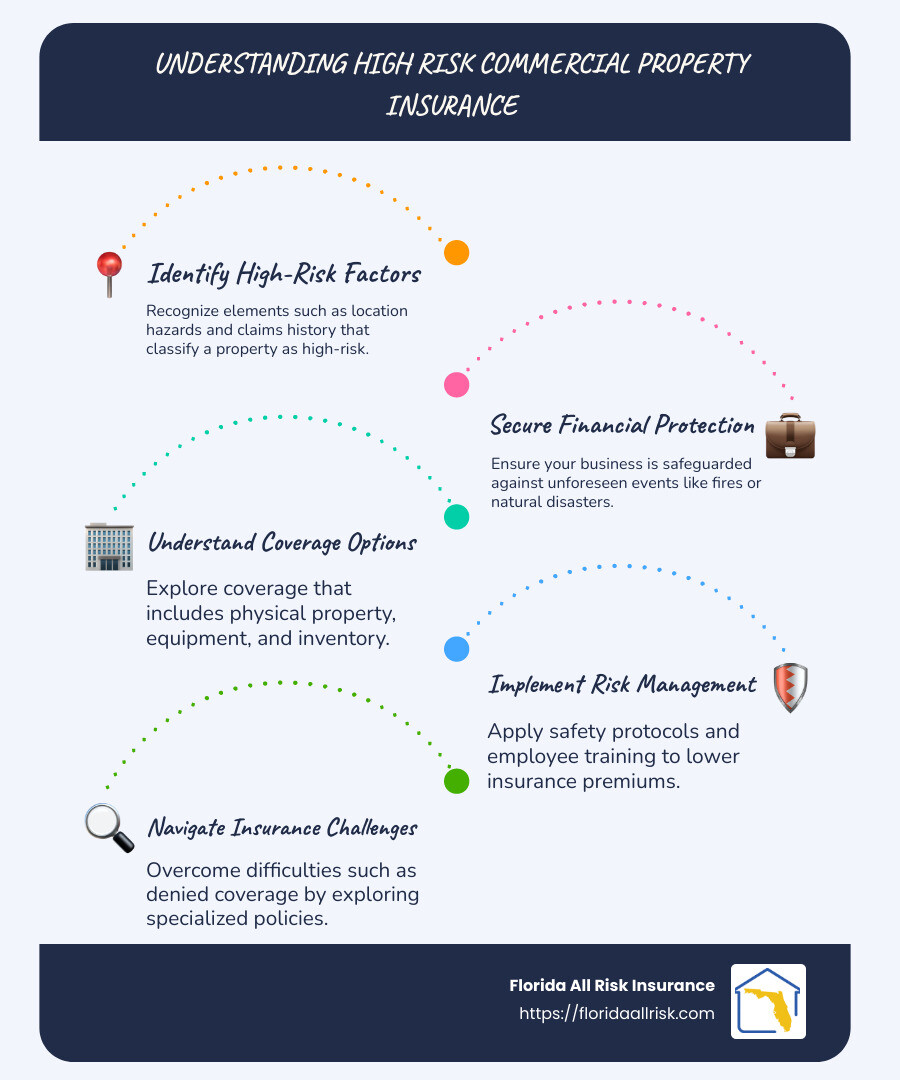
- Financial Protection: Safeguards your business against unforeseen events like fires, theft, or natural disasters.
- Commercial Property: Coverage that includes physical property and assets like equipment and inventory.
- High-Risk Situations: Custom solutions for properties deemed too risky by standard insurers.
As Jason Miller, a second-generation insurance professional with over 20 years of experience in handling high-risk commercial property insurance, I have guided numerous Florida businesses through the complexities of obtaining comprehensive and competitive insurance coverage.
High risk commercial property insurance word roundup:
– all risk commercial property insurance
– cheap commercial property insurance
Understanding High Risk Commercial Property Insurance
When it comes to high-risk commercial property insurance, businesses face unique challenges. Properties considered “high-risk” often struggle to find coverage through traditional insurance providers. This can be due to various factors, such as their location, previous claims, or the specific nature of the business operations.
High-Risk Properties
High-risk properties are those that standard insurers often shy away from. This can include buildings in areas prone to natural disasters like hurricanes, floods, or wildfires. For example, properties located in hurricane-prone regions of Florida may be categorized as high-risk due to the increased likelihood of damage.
Insurance Coverage
For these high-risk properties, insurance coverage must be comprehensive and specifically custom. Coverage typically includes protection against a wide array of potential threats, such as fire, theft, and weather-related events. Unlike standard policies, high-risk insurance is designed to accommodate the unique needs and challenges faced by these properties.
Natural Disasters
Natural disasters are a significant concern for high-risk properties. With the increasing frequency and severity of these events, having the right insurance is crucial. High-risk commercial property insurance provides financial protection, ensuring that businesses can recover and rebuild after a disaster strikes.

In summary, high-risk commercial property insurance is essential for businesses operating in challenging environments. It offers custom coverage to protect against the unique risks these properties face, providing peace of mind and financial security.
Factors Contributing to High Risk
Understanding why a property is labeled as “high-risk” is crucial for obtaining the right insurance. Let’s break down the main factors: location, claims history, and property condition.
Location
Location is a key player in determining risk. Properties in areas with a high likelihood of natural disasters, like Florida’s hurricane zones, are often considered high-risk. Buildings in regions prone to wildfires or floods also fall into this category. The proximity to fire stations and hydrants can influence risk assessments as well. Properties in remote areas with limited fire protection face higher insurance premiums.
Claims History
A property’s claims history significantly impacts its risk profile. Properties with a high number of previous claims, whether due to natural disasters, theft, or vandalism, are seen as higher risk by insurers. This history suggests a likelihood of future claims, which makes insurers wary. However, some insurers specialize in covering properties with challenging claims histories, offering solutions where others might not.
Property Condition
The condition of a property is another critical factor. Older buildings or those in poor repair are often deemed high-risk. Insurers assess the construction materials, age, and any recent renovations. Buildings with fire-resistant materials may enjoy lower premiums, while those with outdated systems or structural issues face higher costs. Regular maintenance and upgrades can help improve a property’s insurability and reduce premiums.
In conclusion, several factors contribute to a property’s high-risk status. By understanding these, businesses can better steer the complexities of obtaining high-risk commercial property insurance.
Methods to Lower Premiums
Reducing premiums on high risk commercial property insurance isn’t just about luck. It’s about smart strategies that can make a real difference. Let’s explore a few key methods:
Safety Protocols
Implementing robust safety protocols is a game changer. Why? Because insurers love to see proactive risk management. This might mean installing fire alarms, sprinkler systems, and security cameras. In fact, properties with these features often enjoy lower premiums because they pose less risk to insurers. Regular safety drills and inspections can also demonstrate a commitment to safety, which can positively impact insurance costs.
Employee Training
Employee training is another powerful tool. When employees know how to handle emergencies, the risk of accidents and claims decreases. Training programs can cover everything from fire safety to emergency evacuation procedures. Well-trained employees are less likely to make costly mistakes, and this can lead to lower insurance premiums. Plus, it shows insurers that a business is serious about minimizing risks.
Risk Management
Conducting regular risk management assessments is essential. These assessments help identify potential hazards and areas for improvement. By addressing risks before they become problems, businesses can reduce the likelihood of claims. Insurers appreciate this proactive approach and often reward it with lower premiums.
Risk management isn’t just about fixing what’s broken; it’s about continuous improvement. Regularly updating safety protocols and training programs based on these assessments can further improve a property’s insurability.
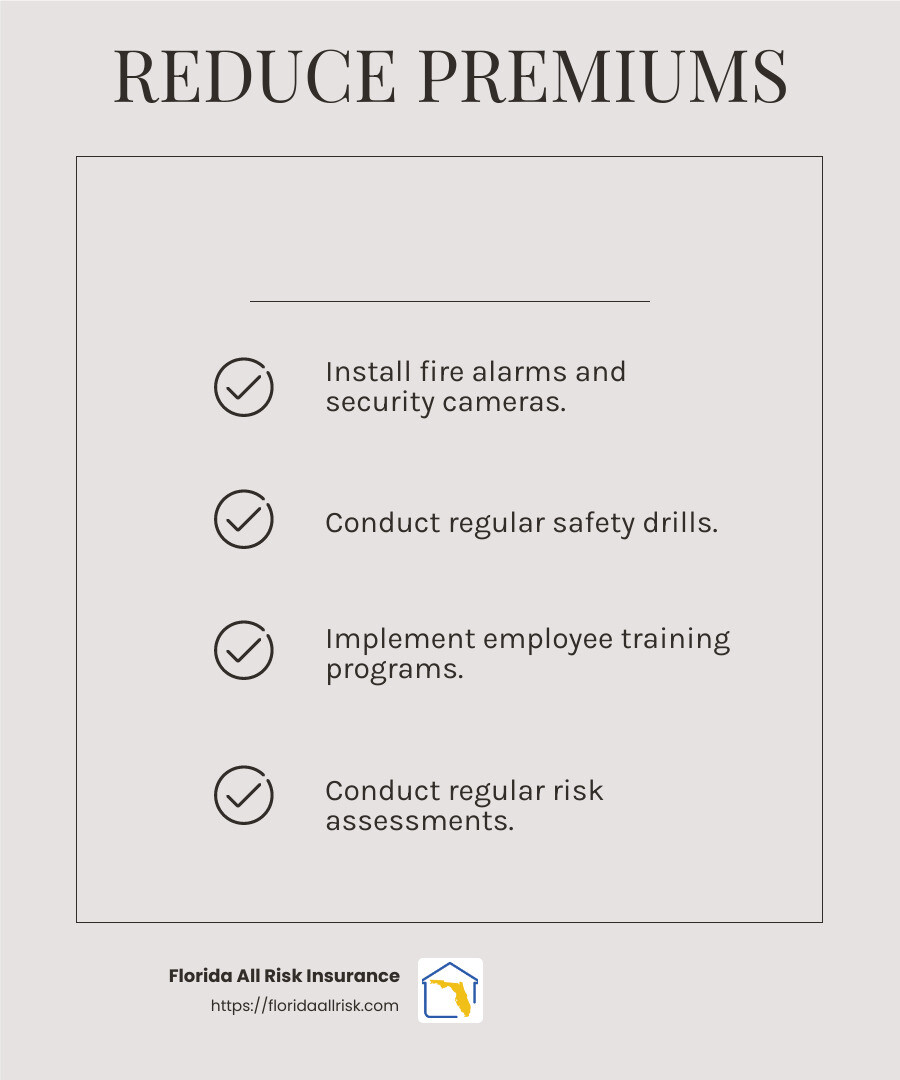
In summary, by focusing on safety protocols, employee training, and comprehensive risk management, businesses can effectively lower their insurance premiums. These strategies not only make a property safer but also more attractive to insurers, creating a win-win situation.
Challenges in Obtaining High Risk Insurance
Securing high risk commercial property insurance can be a daunting task. Let’s explore the main challenges businesses face and what you can do about them.
Insurance Carriers
Most traditional insurance carriers shy away from high-risk properties. They often see these properties as too risky due to factors like location and claims history. For instance, a property in a flood-prone area or one with a history of multiple claims can be labeled as high risk. This means many carriers might not be willing to offer coverage.
However, specialized insurers like Florida All Risk Insurance understand these challenges and are equipped to provide custom solutions for high-risk properties.
Denied Coverage
Hearing “no” from insurance companies can be frustrating. Properties with prior claims or those in areas prone to natural disasters often face denial. But don’t lose hope.
Some insurers focus specifically on high-risk properties and do not deny coverage solely based on past claims. They assess each property individually, considering unique factors that might not be apparent at first glance.
Unique Requirements
High-risk properties often come with unique requirements. For example, insurers might require improved safety measures or specific modifications to the property. This could include installing advanced fire suppression systems or upgrading the building’s infrastructure to meet modern safety standards.
Meeting these requirements can be costly, but they are crucial for obtaining coverage. Plus, they often lead to a safer property, which can help in negotiating better terms with insurers.
In conclusion, while obtaining high-risk insurance can be challenging, understanding the requirements and working with specialized insurers can make a significant difference. By addressing these challenges head-on, businesses can secure the coverage they need to protect their valuable assets.
Frequently Asked Questions about High Risk Commercial Property Insurance
What is high-risk property insurance?
High-risk property insurance offers financial protection for properties considered risky by insurers. These properties might be in areas prone to natural disasters, like hurricanes or floods. Imagine a beachfront hotel in Florida; it faces a higher risk of storm damage compared to an inland office building. High-risk insurance ensures that even if a disaster strikes, the property owner won’t bear the full financial burden alone.
What is all-risk commercial property insurance?
All-risk commercial property insurance is also known as open peril insurance. It provides coverage against a wide range of potential risks, except those specifically excluded in the policy. This type of policy is beneficial for businesses because it covers unexpected events that might not be listed in a more limited insurance policy. For example, if a sudden electrical surge damages equipment in a factory, an all-risk policy would likely cover the repair costs unless electrical surges are explicitly excluded.
What commercial property has the most risk?
Certain properties are inherently riskier than others. Big office buildings in large cities often top the list. These structures are not only expensive to repair but also face higher risks due to factors like their location and the number of people they accommodate. For instance, a skyscraper in a busy city center may be at greater risk of vandalism, theft, or even terrorism. Moreover, urban areas can be more susceptible to natural disasters like earthquakes or severe weather, further increasing the risk for these properties.
Understanding the nuances of high-risk commercial property insurance can help businesses make informed decisions about protecting their assets, ensuring they have the coverage they need when it matters most.
Conclusion
At Florida All Risk Insurance, we understand that every business is unique. That’s why we offer custom coverage options that cater to the specific needs of high-risk commercial properties. Whether your business is located in a hurricane-prone area or you have a history of claims, we work with you to find the right insurance solution.
Our approach is simple: we provide competitive rates without compromising on the quality of coverage. As an independent agency based in St. Petersburg, Florida, we have access to a wide range of carriers, allowing us to tailor insurance packages that align with your budget and risk profile.
We believe in making the insurance process straightforward and stress-free. Our team is dedicated to offering personalized service, ensuring that you fully understand your coverage options and feel confident in your choice.
If you’re struggling to find the right insurance for your high-risk commercial property, let us help. Visit our Commercial Property Insurance page to learn more about how we can protect your business assets and provide peace of mind.