

Class A RV Insurance Rates 2024: Smart Savings
Understanding Class A RV Insurance Costs: What You Need to Know
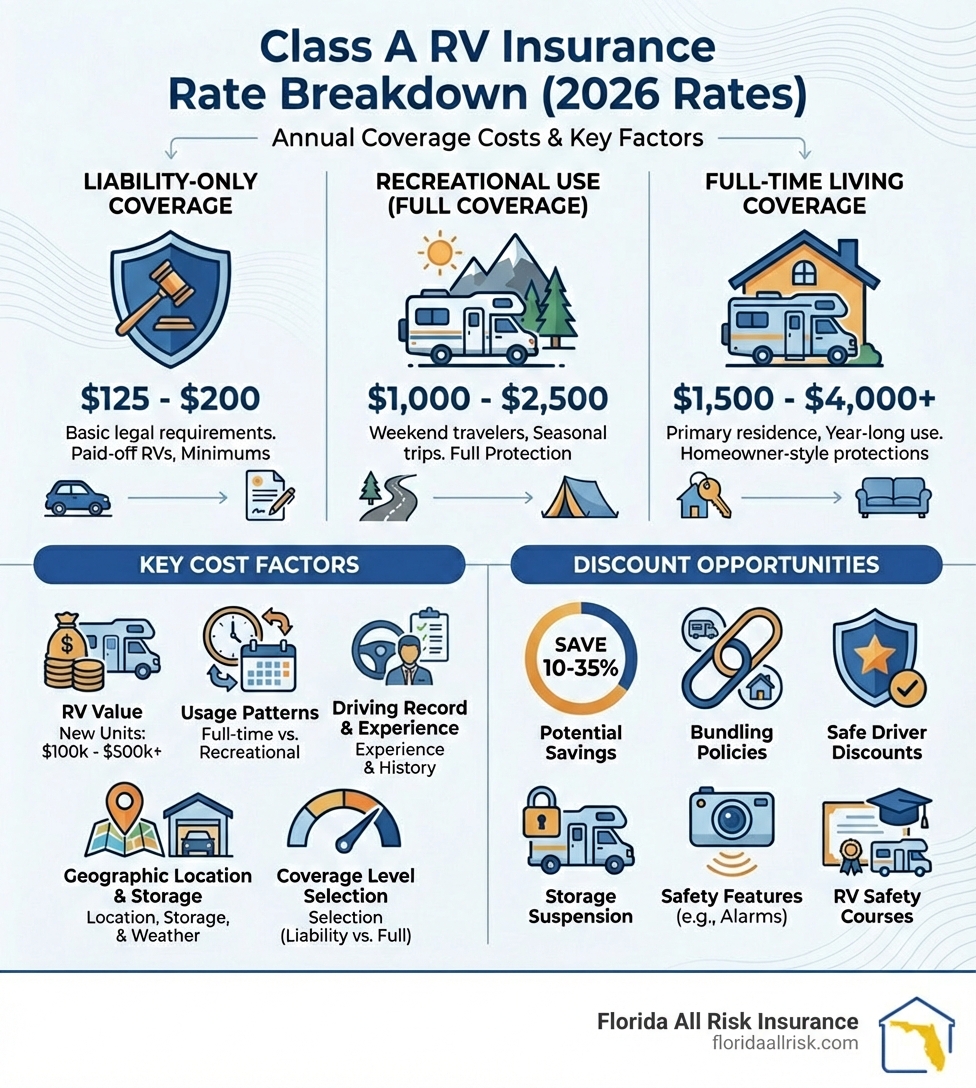
Class A RV insurance rates typically range from $1,000 to $4,000+ annually, depending on your RV’s value, how you use it, and your coverage choices. Here’s what you need to know right away:
Quick Rate Overview:
| Coverage Type | Annual Cost Range | Best For |
|---|---|---|
| Liability-Only | $125 – $200 | Paid-off RVs, minimum legal requirements |
| Recreational Use (Full Coverage) | $1,000 – $2,500 | Weekend trips, seasonal travel |
| Full-Time Living | $1,500 – $4,000+ | Primary residence, year-long use |
| Industry Average (2024) | ~$1,050 | Standard motorhome policies |
What Affects Your Rate Most:
- Your RV’s value and age (new Class A units cost $100,000-$500,000+)
- How you use it (full-time living costs significantly more)
- Your driving record and experience
- Where you live and store it (especially in weather-prone areas like Florida)
- Coverage level (liability-only vs. comprehensive protection)
If you’re a Florida homeowner considering a Class A motorhome, you’re facing a unique insurance landscape. Florida’s hurricane risk, high population density, and specific state requirements all factor into your premium. But there’s good news: understanding these costs upfront helps you budget accurately and identify ways to save through discounts, smart coverage choices, and proper storage.
This guide breaks down everything that influences your Class A RV insurance rates—from the basics of what coverage you legally need to the specialized protections that make sense for full-timers versus weekend warriors. We’ll show you real numbers, explain why they vary so dramatically, and give you actionable steps to lower your premium without sacrificing protection.
Whether you’re shopping for your first luxury motorhome or looking to reduce costs on your current policy, you’ll find straightforward answers here. No insurance jargon, no hidden surprises—just the facts you need to make an informed decision.
I’m Jason Miller, and I’ve been helping Florida residents steer complex insurance decisions for over 20 years at Florida All Risk Insurance. My team and I specialize in finding competitive class a rv insurance rates by comparing options across multiple carriers, ensuring you get comprehensive protection custom to Florida’s unique risks. Let’s explore what you can expect to pay and how to get the best value for your investment.
What is the Average Cost of Class A RV Insurance?
Understanding the typical cost of insuring a Class A motorhome is the first step in budgeting for your adventures. While there’s no single price tag, industry data provides a solid baseline. Premiums are influenced by whether you need basic liability or comprehensive full coverage, and whether you use your RV for weekend getaways or as your primary home.
Average Annual Premiums Explained
When we talk about Class A RV insurance rates, we’re looking at a broad spectrum. Generally, costs can range anywhere from $1,000 to $4,000+ annually. This wide range exists because every RV and every RVer is unique. For instance, industry averages for motorhome policies in 2024 hovered around $1,050. More specifically, for a gas-powered Class A motorhome used recreationally for about 140 days a year, the average annual insurance premium typically falls between $1,000 and $1,300.
These figures are just starting points. The final price you pay will be an intricate calculation based on many factors, which we’ll dive into shortly. A more luxurious, high-value Class A motorhome will naturally command a higher premium than a more modest model, even if both are used for similar purposes. It’s a bit like insuring a compact car versus a luxury SUV – the underlying value changes the equation. For a deeper look into the general costs of motorhome insurance, you can check out our guide on how much motorhome insurance costs.
Cost Difference: Liability-Only vs. Full Coverage
One of the most significant factors influencing your Class A RV insurance rates is the level of coverage you choose.
If you’re considering a liability-only policy, you’re looking at the bare minimum required by law. This type of coverage is designed to protect you financially if you cause an accident, covering bodily injury and property damage to others, but it won’t pay for repairs to your own RV. In Florida, as in most states, liability insurance is a legal requirement for motorized RVs. For a Class A, a liability-only policy can start as low as $125-$200 annually. This might seem appealing, especially if your RV is older and fully paid off, and you’re comfortable covering potential repair costs out-of-pocket.
However, if you’re like most Class A owners, you’ll likely opt for full coverage. This comprehensive protection includes:
- Collision Coverage: Pays for damage to your Class A RV resulting from a collision, regardless of who is at fault.
- Comprehensive Coverage: Protects against non-collision events such as theft, vandalism, fire, severe weather (a big concern here in Florida!), and even animal strikes.
With full coverage, you’re looking at significantly higher premiums, potentially exceeding $3,000 per year. If you’re financing your Class A RV, your lender will almost certainly require comprehensive and collision coverage to protect their investment until the loan is paid off. We often advise clients that while liability-only is cheaper, it leaves a huge gap in protecting your valuable asset. To understand more about your insurance needs, visit our page on Do I Need RV Insurance?.
Full-Time vs. Recreational Use: A Major Cost Driver
How you use your Class A RV is another pivotal factor in determining your Class A RV insurance rates. There’s a significant difference between using your RV for occasional trips and making it your permanent home.
-
Recreational Use: If your Class A is primarily for weekend getaways, seasonal vacations, or part-time travel (typically less than six months out of the year), you’re considered a recreational user. For these adventurers, annual premiums often range from $1,000 to $2,500. Your policy will reflect the fact that your RV spends a good portion of its time parked or in storage, reducing its exposure to risk.
-
Full-Time Use: For those who accept the full-time RV lifestyle, using their Class A as their primary residence for six or more months out of the year, insurance costs are notably higher. Full-time RV insurance typically ranges from $1,500 to $4,000+ annually. Why the jump? Because a full-timer’s policy needs to offer “homeowner-style protections” that a recreational policy simply doesn’t. This includes:
- Personal Liability When Parked: This is crucial. If someone gets injured on your property (your RV) while it’s parked, this coverage acts like a homeowner’s liability policy.
- Expanded Contents Coverage: Your personal belongings inside the RV are often more extensive and valuable when it’s your home, requiring higher limits.
- Medical Payments for Guests: Covers medical expenses for guests injured in or around your RV, regardless of fault.
- Loss Assessment Coverage: If you’re part of an RV park association, this can cover your share of special assessments for damage to common areas.
Essentially, when your Class A is your home, you face the same risks as any traditional homeowner, plus all the unique risks of being on the road. We make sure our full-time RV clients in Florida are covered for every scenario, from a fender bender on I-75 to a slip-and-fall incident at their campsite.
Key Factors That Influence Class A RV Insurance Rates
Your final insurance premium is a personalized figure calculated from a wide range of risk factors. Insurers assess everything from the vehicle itself to your personal driving history to determine the likelihood of a claim. Understanding these elements empowers you to see where costs are coming from and identify areas where you might have some control.
The Impact of Your RV’s Value, Age, and Model
The Class A RV itself is a major player in its insurance cost. New Class A units are substantial investments, often costing anywhere from $100,000 to over $500,000. It stands to reason that a higher-value vehicle will have higher Class A RV insurance rates because the potential cost to repair or replace it is significantly greater. A brand-new $400,000 luxury motorhome will certainly cost more to insure than a 10-year-old model, even if both are carefully maintained.
The age of your RV also plays a role. Newer models generally cost more to insure due to their higher market value and the expense of replacing advanced components. However, older RVs aren’t always cheaper. If an RV is very old and parts are hard to find, or if it’s in a state of disrepair, it might be considered a higher risk for breakdowns or costly specialized repairs. On the flip side, a very well-maintained classic or vintage Class A motorhome might require specialized “agreed value” coverage, ensuring it’s insured for its true worth rather than a depreciated actual cash value. Authoritative resources like J.D. Power can help you research your RV’s value. Our partners understand the nuances between different valuation methods and how that impacts your policy.
Your Driving Record and Experience
Just like with auto insurance, your driving history significantly impacts your Class A RV insurance rates. A clean driving record, free of at-fault accidents, traffic violations, and prior claims, is your best friend when it comes to lower premiums. Insurers view drivers with a history of incidents as a higher risk, and this will be reflected in your quote.
Your experience behind the wheel of a large vehicle like a Class A motorhome also matters. Veteran RV operators, who have years of experience navigating these majestic machines, often qualify for better rates than novice drivers. If you’re new to the Class A world, consider taking an RV safety course; it not only makes you a safer driver but can also earn you a discount on your premium. We always encourage our clients to maintain a spotless driving record – it’s one of the easiest ways to keep costs down.
Location, Storage, and Usage Patterns
Where you live, where you store your RV, and how often you use it are all critical factors, especially here in Florida.
-
Geographic Location: Your state, region, and even your specific ZIP code influence your Class A RV insurance rates. Florida, for instance, is prone to severe weather events like hurricanes, which increases the risk of damage to your RV. Highly populated areas or regions with higher rates of theft or accidents can also lead to more expensive insurance. We understand Florida’s unique risks, from coastal storm surges to busy interstates, and we help you steer these factors. For specific details on how our location impacts RV insurance, check our RV Insurance Florida Guide.
-
Storage Location: Where your Class A motorhome sleeps at night matters. Is it in a secure, covered facility with surveillance, or is it parked in your driveway? A secure storage location reduces the risk of theft, vandalism, and weather exposure, which can translate to lower premiums.
-
Usage Frequency: As discussed earlier, whether you use your RV recreationally or as a full-time residence has a major impact. But even for recreational users, the estimated annual mileage or number of days you use your RV can influence your rate. The more time it spends on the road, the higher the exposure to potential accidents.
Understanding Your Class A RV Insurance Coverage Options
A robust insurance policy is built from several layers of coverage. While some are legally required, others are optional add-ons that provide crucial financial protection against specific risks. Tailoring your coverage to your lifestyle is key to creating a policy that offers both peace of mind and value.
State Minimum Insurance Requirements for a Class A Motorhome
For any motorized RV, including your Class A motorhome, liability insurance is a legal mandate in most states, including Florida. This means you must carry a minimum amount of coverage to legally operate your vehicle on public roads. This liability coverage typically includes:
- Bodily Injury Liability (BI): Pays for medical expenses and lost wages for others if you’re at fault in an accident.
- Property Damage Liability (PD): Covers costs to repair or replace another person’s property damaged in an accident you cause.
The specific minimum limits vary by state, so understand Florida’s requirements. We’ll ensure your policy meets or exceeds these legal mandates. Additionally, many states recommend or require Uninsured/Underinsured Motorist (UM/UIM) coverage, which protects you if an at-fault driver doesn’t have enough or any insurance. For more general consumer protection information and state insurance requirements, you can consult the National Association of Insurance Commissioners.
Core Coverages: Comprehensive and Collision
Beyond the state-mandated liability, comprehensive and collision are the pillars of full coverage for your Class A RV.
-
Collision Coverage: This is your safety net for accidents. It pays for damages to your own Class A motorhome if it collides with another vehicle or object, regardless of who was at fault. Imagine a minor fender bender in a parking lot or an unfortunate encounter with a guardrail – collision coverage helps get your RV repaired.
-
Comprehensive Coverage: Often called “other than collision,” this coverage protects your RV from a wide array of non-driving incidents. This is especially vital in Florida, where comprehensive claims often stem from:
- Theft and Vandalism: If your RV is stolen or damaged maliciously.
- Fire: From an engine fire to a campfire gone wrong.
- Weather Damage: Hail, wind, floods (especially during hurricane season!), and lightning.
- Animal Strikes: Colliding with a deer or other wildlife.
As we mentioned, if you’re financing your Class A, lenders will almost certainly require both comprehensive and collision coverage to protect their significant asset. Even if your RV is paid off, these coverages are highly recommended given the high cost of Class A motorhomes.
Specialized Add-Ons That Affect your class a rv insurance rates
While core coverages are essential, specialized add-ons can significantly improve your protection and directly influence your overall Class A RV insurance rates. These options allow us to tailor your policy precisely to your lifestyle and needs.
Here’s a list of common RV insurance add-ons we often recommend:
- Personal Effects Replacement: Your Class A RV isn’t just a vehicle; it’s often packed with personal belongings. This coverage protects items like electronics, clothing, camping gear, and cookware inside your RV if they are stolen or damaged.
- Vacation Liability: If you’re a recreational RVer, this is a must-have. It provides liability protection when your RV is parked and being used as a temporary residence (e.g., at a campsite). This covers injuries to others or property damage that occurs around your RV, like if a guest trips over your awning or an oil leak from your RV contaminates the campsite.
- Emergency Expense Coverage: Imagine your Class A breaking down more than 50 miles from home. This coverage pays for lodging, transportation, and even food while your RV is being repaired, so you’re not stranded and out of pocket.
- Roadside Assistance: Essential for such a large vehicle! This covers towing, tire changes, lockout services, fuel delivery, and other on-road emergencies for your Class A.
- Total Loss Replacement: For new RVs, this is a fantastic option. If your Class A is totaled within a certain timeframe (often the first 5 model years), this coverage provides a brand-new replacement RV of similar make and model, rather than just its depreciated actual cash value.
- Pest Damage Protection: Unfortunately, pests can cause significant damage to RVs. This add-on can cover repairs resulting from damage caused by rodents, insects, or other critters.
Choosing the right combination of these add-ons can make a huge difference in your peace of mind, and while they add to your premium, the protection they offer can be invaluable.
How to Lower Your Class A RV Insurance Premiums
While Class A RV insurance can be a significant expense, there are numerous ways to reduce your premium. Proactive steps and smart choices can lead to substantial savings, often without sacrificing important coverage. From available discounts to new technologies, it pays to explore all your options.
Unlocking Discounts to Reduce Your Rates
We love helping our clients find savings, and RV insurance is no exception! Multiple discounts can reduce your Class A RV insurance rates by 10-35%, with some storage options offering even more significant savings. It’s truly worth asking about every available discount, as many require you to specifically request them.
Here’s a list of top RV insurance discounts you should inquire about:
- Bundling Policies: One of the most effective ways to save! By combining your RV insurance with your auto, home, or other policies through us, you could see savings of 10-25% on your premiums. This is especially beneficial for Florida homeowners who already trust us with their other insurance needs.
- Safe Driver Discount: If you maintain a clean driving record with no accidents or violations, you’ll likely qualify for this discount. It pays to be a careful driver!
- Storage/Suspension Option: This is a big one for seasonal RVers. If you store your Class A for an extended period when it’s not in use, you can suspend certain coverages (like collision) and potentially save up to 53% off premiums while still maintaining comprehensive protection against theft, fire, or weather damage.
- Safety Features: Installing anti-theft devices, GPS trackers, or even a tire pressure monitoring system can earn you discounts. Insurers appreciate features that reduce risk.
- Paid-in-Full Discount: Many insurers offer a small discount if you pay your annual premium upfront rather than in monthly installments, saving them administrative costs.
- RV Safety Course: Completing an approved RV driving safety course not only makes you a more confident driver but can also lower your rates.
- Association Memberships: Belonging to certain RV clubs or associations might qualify you for exclusive discounts through our network of carriers.
Are Telematics Programs an Option for Class A RVs?
Telematics programs, often known as usage-based insurance, involve installing a device in your vehicle or using a mobile app to track your driving habits. The idea is that safer drivers or those who drive less can earn discounts. While telematics are common for cars, their availability for Class A RVs is still limited but growing.
Some insurers might offer pay-per-mile options or seasonal adjustments based on actual usage, which could translate to savings if you don’t use your RV extensively. However, these programs also come with considerations regarding data privacy and how your driving data might impact future claims or non-renewal decisions. We stay updated on these evolving programs and can advise you on whether a telematics option might be beneficial for your specific Class A RV usage.
How to Get an Accurate Insurance Quote for Your Class A RV
Getting a precise and competitive quote is the final step in securing your policy. The most accurate quotes come from providing detailed information and comparing offers. Working with a professional can streamline this process and uncover options you might not find on your own.
Information You’ll Need to Provide
To get the most accurate Class A RV insurance rates, we’ll need some specific details about your motorhome and your driving profile. Having this information ready will make the quoting process smooth and efficient:
- Vehicle Identification Number (VIN): This unique 17-character code identifies your specific RV.
- Make, Model, and Year: For example, a 2023 Newmar Dutch Star.
- Purchase Price and Current Value: Especially important for newer or high-value Class A units.
- Storage Address: Where your RV is typically kept when not in use. This is crucial for Florida residents due to regional risks.
- Intended Usage: Clearly state whether it’s for recreational use or full-time living. This profoundly impacts the type and cost of coverage.
- Annual Mileage Estimate: An approximation of how many miles you expect to drive each year.
- Driver Information: License numbers, dates of birth, and driving history for all individuals who will be operating the Class A RV.
Comparing Quotes and Working with an Agent
When seeking Class A RV insurance rates, it’s always wise to shop around and compare offers. Don’t just look at the price; carefully review the coverage limits, deductibles, and the insurer’s customer service ratings. The cheapest option isn’t always the best value, especially when protecting such a significant investment.
This is where working with an independent agent like us at Florida All Risk Insurance truly shines. As an independent agency, we aren’t tied to a single insurance company. Instead, we have access to a wide range of carriers that specialize in RV insurance. This means we can:
- Access Multiple Carriers: We do the legwork for you, comparing quotes and coverage options from various reputable insurers to find the best fit for your Class A.
- Provide Personalized Advice: We understand the nuances of RV insurance, especially in Florida, and can offer expert guidance custom to your specific needs and lifestyle.
- Find the Right Fit: Our goal is to ensure you get comprehensive coverage at a competitive rate, balancing protection with affordability.
We make it our business to ensure our clients in Saint Petersburg, FL, and across Florida, hit the road with confidence, knowing their prized possession is well-protected. You can explore our full suite of options for your motorhome at Explore Recreational Vehicle Insurance Products.
Your Next Steps to Insuring Your Class A Motorhome
Insuring your Class A motorhome is a critical step in protecting your investment and enabling worry-free travel. As we’ve seen, Class A RV insurance rates are not a one-size-fits-all number; they are a reflection of your unique vehicle, lifestyle, and choices. By understanding the factors at play—from your RV’s value and your driving record to the specific coverages you select—you can confidently build a policy that fits your needs and budget. Remember to leverage available discounts and consider how your usage impacts your premium.
An independent insurance agency like Florida All Risk Insurance can be an invaluable partner in this process, helping you compare options from various top-rated carriers to find the optimal balance of protection and price.
Ready to find out how much you could save? Explore our comprehensive guide on how much motorhome insurance costs to dive deeper into budgeting for your policy.
For a personalized quote custom to your Class A RV, contact our experienced team today. We’ll help you hit the road with confidence.
Contact Us
Florida All Risk Insurance
Address: 13535 Automobile Blvd #200, Saint Petersburg, FL 33701
Phone: (727) 201-4467
Email: [email protected]

