

What is a self funded group health insurance plan? It’s a plan where an employer pays for employee health claims directly, using their own money instead of relying on an insurance company. Here’s a quick rundown of what this means:
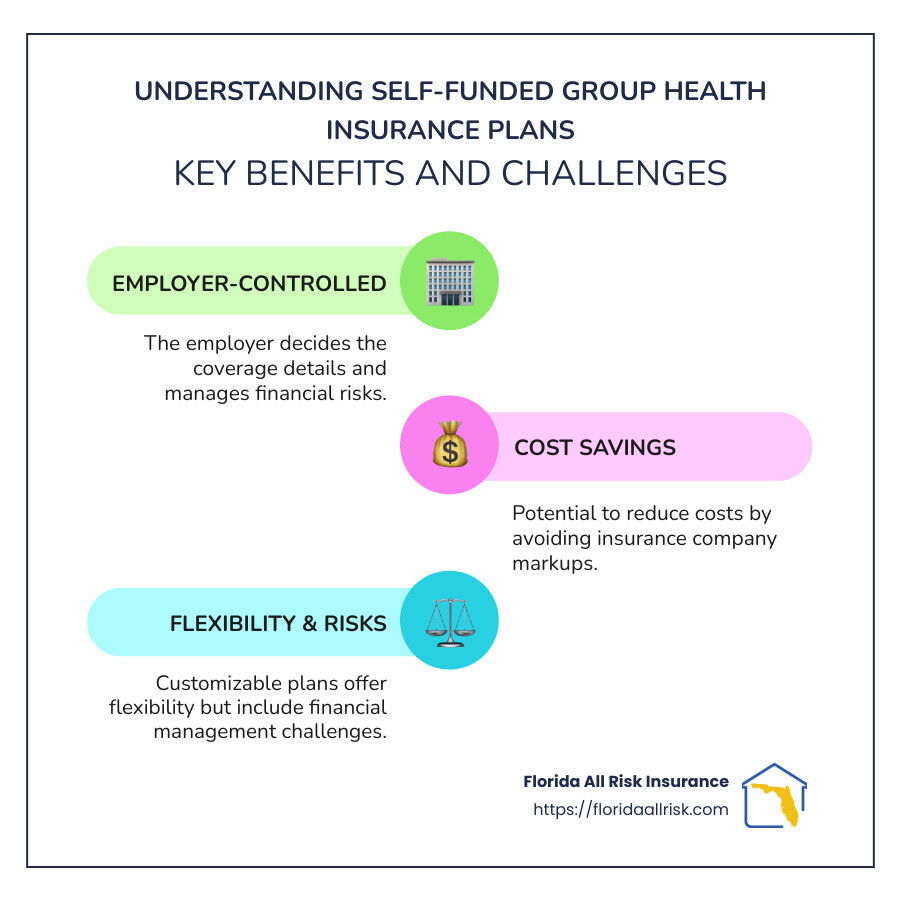
- Employer-Controlled: The employer decides the coverage and assumes the financial risk.
- Cost-Saving Potential: Employers can save money by not paying markup costs charged by insurance companies.
- Flexible Benefits: Employers have the flexibility to customize benefits custom to employee needs.
- Financial Risk: Employers must manage cash flow to cover unpredictable health claims. Stop-loss insurance can help manage large claims.
Self-funded health plans have grown in popularity among businesses aiming to cut costs and gain more control. Instead of a one-size-fits-all insurance, these plans allow companies to design and fund their own schemes. This approach offers cost savings but also introduces financial risks that require careful management.
I’m Jason Miller, a second-generation insurance professional, passionately navigating the insurance landscape. Over the past 20 years, I’ve helped businesses understand what is a self funded group health insurance plan while focusing on customer-centric solutions. Let’s explore more about these intriguing insurance options.
What is a Self-Funded Group Health Insurance Plan?
Key Characteristics of Self-Funded Plans
In a self-funded group health insurance plan, the employer takes on the role of insurer. This means the employer pays for employee health claims directly, using company funds. It’s a bit like the company becoming its own insurance provider.
Employer Financial Risk:
Employers assume the financial risk for providing health care benefits. Instead of paying a fixed premium to an insurance company, they pay for each claim as it arises. This can lead to significant cost savings but also means that employers need to be prepared for potentially high and unpredictable expenses.
Direct Payment for Health Care Benefits:
Under this plan, the employer directly covers the medical costs of employees. This direct payment approach can be more economical since it bypasses the insurance company fees and markups.
Employer Responsibility and Claims Processing:
Employers are responsible for managing and processing claims. This involves more work compared to fully insured plans, where the insurance company handles these tasks. To simplify this process, many employers hire third-party administrators (TPAs). TPAs handle the day-to-day operations like claims processing, maintaining eligibility records, and managing provider networks.

Third-Party Administrators (TPAs):
TPAs play a crucial role in self-funded plans. They provide expertise and infrastructure to manage the plan efficiently. They also help employers determine necessary stop-loss insurance levels, which protect against catastrophic claims.
Stop-Loss Insurance:
To mitigate the risk of large claims, employers often purchase stop-loss insurance. This coverage kicks in when claims exceed a certain amount, protecting the employer from severe financial loss.
By taking on the responsibility of a self-funded plan, employers can tailor health benefits to better match their employees’ needs. However, they must also be ready to handle the financial risks and administrative challenges that come with this approach.
Let’s dive deeper into the benefits of self-funded health plans in the next section.
Benefits of Self-Funded Health Plans
Cost Savings and Flexibility
One of the biggest draws of self-funded health plans is the potential for significant cost savings. Unlike traditional insurance, where employers pay a fixed premium, self-funded plans allow employers to pay only for the actual health care costs incurred by employees. This can lead to lower overall expenses, especially if the company’s health claims are lower than expected.
Employers also save on administrative costs. Traditional insurance plans include administrative fees that can be quite high. In a self-funded plan, employers often work with Third-Party Administrators (TPAs) who manage these tasks more efficiently and at a lower cost. TPAs handle everything from claims processing to maintaining eligibility records.
Another advantage is the flexibility in how funds are used. Because employers pay providers directly, they can avoid the markups and fees typically added by insurance companies. This direct payment model allows for more control over healthcare spending.
Customization and Control
Self-funded plans offer unparalleled customization and control. Employers can design health plans that specifically meet the needs of their workforce. This includes tailoring coverage options, such as medical, dental, vision, and prescription drugs, to better suit employee preferences.
Employers can also implement wellness strategies to promote healthier lifestyles among employees, potentially reducing future healthcare costs. With the help of regular claim reports provided by TPAs, employers can gain insights into health trends within their organization. These reports help identify areas for cost savings and inform decisions about plan adjustments.
To manage the financial risk associated with large, unexpected claims, employers often purchase stop-loss insurance. This insurance acts as a safety net, kicking in when claims exceed a pre-set threshold. It protects the company from catastrophic financial loss, allowing them to reap the benefits of self-funding without taking on excessive risk.

By adopting a self-funded health plan, employers gain the ability to control costs and customize benefits, making it a strategic choice for many organizations. However, weigh these benefits against the challenges and risks involved, which we’ll explore in the next section.
Challenges and Risks of Self-Funded Plans
Managing Financial Risk
Self-funded health plans come with their own set of challenges, particularly in managing financial risk. Unlike fully insured plans, where the insurance company assumes the risk, self-funded plans place the financial responsibility squarely on the employer. This means if healthcare claims are higher than expected, the employer must cover the excess costs.
One way to manage this risk is through stop-loss insurance. This insurance kicks in when claims exceed a certain amount, protecting the company from catastrophic financial losses. Stop-loss insurance can be either specific, covering individual claims, or aggregate, covering total claims over a period.
However, even with stop-loss insurance, employers need to maintain adequate reserves. These reserves act as a financial buffer, ensuring the company can cover claims as they arise. It’s crucial for employers to evaluate their cash flow variability. If a business has inconsistent cash flow, covering unexpected large claims might become challenging.
Compliance and Regulatory Considerations
Navigating the regulatory landscape is another challenge for self-funded plans. These plans must comply with several federal laws, including the Employee Retirement Income Security Act (ERISA) and the Health Insurance Portability and Accountability Act (HIPAA).
ERISA sets minimum standards for most voluntarily established retirement and health plans, ensuring that plan funds are protected. Meanwhile, HIPAA provides data privacy and security provisions for safeguarding medical information. Employers must ensure their self-funded plans adhere to these regulations to avoid penalties.
Additionally, while self-funded plans are generally not subject to state insurance regulations, they must still comply with federal rules like the No Surprises Act, which protects employees from unexpected medical bills. Understanding and adhering to these requirements is crucial to maintaining a compliant and effective self-funded plan.
By addressing these challenges, employers can better manage the risks associated with self-funded health plans. But how do these plans compare to fully insured ones? Let’s explore the differences in the next section.
Frequently Asked Questions about Self-Funded Health Plans
What is the difference between self-funded and fully insured plans?
In a self-funded plan, the employer takes on the financial risk. They pay for their employees’ healthcare claims directly, rather than paying insurance premiums to a carrier. This means the employer is responsible for covering all claims, which can be risky if costs are higher than expected. However, it offers more control over the plan’s design and costs.
On the other hand, with a fully insured plan, the employer pays a fixed premium to an insurance company. The insurer then assumes the risk and is responsible for paying claims. This provides predictability in costs but less flexibility in plan customization.
How common are self-funded health plans?
Self-funded health plans are quite common, especially among large companies. According to the Kaiser Family Foundation, 79% of workers at large companies are covered by self-funded plans. This trend is due to the potential for cost savings and greater control over plan benefits. For smaller companies, the percentage is lower, but the approach is gaining popularity as they seek to manage rising healthcare costs.
Are self-funded plans subject to state regulations?
Self-funded health plans are generally not subject to state insurance regulations. Instead, they are governed by federal laws like the Employee Retirement Income Security Act (ERISA). ERISA sets standards to protect plan participants and their benefits.
Additionally, self-funded plans must comply with the No Surprises Act, a federal law designed to protect consumers from unexpected medical bills. This law applies to both self-funded and fully insured plans, ensuring that employees are shielded from surprise charges for out-of-network care in emergency situations.
Understanding these regulatory frameworks is essential for employers considering self-funded plans. They provide a clearer picture of the responsibilities and protections involved in managing such plans.
Conclusion
At Florida All Risk Insurance, we understand that choosing the right health insurance plan for your business is a significant decision. With our personalized service and expertise, we are here to help you steer the complexities of self-funded health plans.
Self-funded plans offer a level of custom coverage that can be custom to meet the specific needs of your employees and your budget. By taking control of your healthcare benefits, you can design a plan that aligns with your company’s goals and employee wellness strategies. This means you can choose the benefits that matter most to your team, while potentially saving on costs.
Our team is committed to providing you with the best solutions and competitive rates. As an independent agency, we have access to a wide range of carriers, ensuring that we can find the ideal coverage for your business. Whether you’re a small business or a large corporation, we offer the expertise and support you need to make informed decisions.
If you’re considering a self-funded health plan, contact us at Florida All Risk Insurance. Let us help you explore your options and find the best fit for your company’s needs. With our guidance, you can confidently manage your health benefits and focus on what you do best—running your business.

