

What Does Personal Watercraft Insurance Cover?
Introduction to PWC Protection
What does personal watercraft insurance cover is a vital question for any Florida PWC owner. Whether you ride a Jet Ski, Sea-Doo, or WaveRunner, having the right protection means you can focus on the fun while an insurance policy stands ready for the unexpected. Florida’s year-round boating season, busy inlets, and shallow flats make PWC riding uniquely exciting—and uniquely exposed to risks that standard homeowners policies don’t address.
A well-structured PWC policy is designed for how these craft are used: quick acceleration, tight maneuverability, frequent launching and retrieving, and operation close to shore and other vessels. It combines liability protection for injuries you cause, coverage for damage to your own craft, help with medical bills, and support when the at-fault boater doesn’t carry adequate insurance. In short, it protects both your wallet and your weekends.
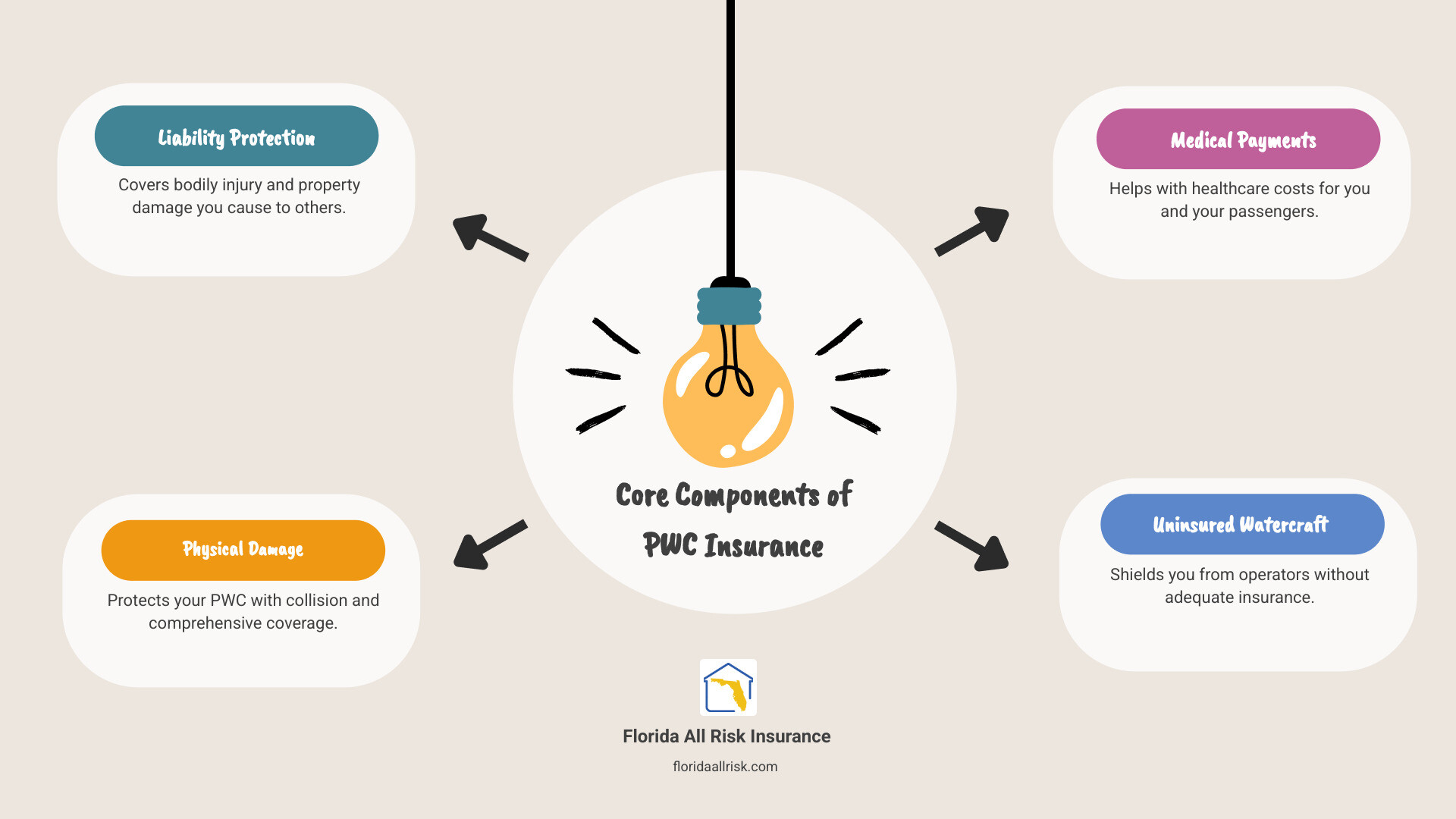
Personal watercraft insurance typically includes:
- Liability Protection: Covers bodily injury and property damage you cause to others.
- Physical Damage Coverage: Protects your PWC from collision and comprehensive losses.
- Medical Payments: Pays for healthcare costs for you and your passengers.
- Uninsured Watercraft Coverage: Protects you from operators without proper insurance.
- Personal Property: Covers your gear, equipment, and accessories.
- On-Water Towing: Provides emergency assistance if you break down.
PWCs face unique risks—impacts with submerged objects, collisions at low visibility, theft from driveways or docks, and storm damage. The right policy recognizes these realities and responds quickly to help you recover. According to the National Association of State Boating Law Administrators, personal watercraft account for a significant percentage of recreational boating accidents, making proper insurance coverage essential for financial protection.
At Florida All Risk Insurance, our experienced team has helped thousands of watercraft owners steer their insurance needs. We understand the challenges Florida boaters face and can help you build a comprehensive policy custom to you. If you'd like to explore options before you ride again, browse our Watercraft & Boat Insurance overview for more detail on available protections: https://floridaallrisk.com/insurance_products/watercraft-boat-insurance/.
Why a dedicated PWC policy matters in Florida
- Florida’s waterways are busy year-round, with a high concentration of vessels in bays, rivers, and coastal zones—raising the odds of incidents that lead to liability claims.
- Shallow areas, sandbars, and oyster beds increase the likelihood of lower-unit and hull damage.
- Hurricanes and tropical systems bring wind and debris risks, as well as theft and vandalism concerns during evacuations.
- Many marinas, storage facilities, and lenders require proof of coverage.
Understanding what a policy covers—and what it excludes—helps you choose the right protections and keeps your time on the water carefree and compliant.
The Core of PWC Insurance: Liability and Physical Damage
When exploring what does personal watercraft insurance cover, the two most fundamental components are liability and physical damage coverage. These work together to shield you from financial loss, whether you’re responsible for injuring someone or your own PWC is damaged by a covered event.
Liability Coverage: Your Financial Shield
Liability coverage is your defense if you’re at fault for injuring someone or damaging their property. On Florida’s crowded waterways, split-second decisions can have big consequences. Liability protection typically includes:
-
Bodily Injury Liability: Pays for injuries to others when you are legally responsible. This can include medical bills, rehabilitation, lost wages, pain and suffering (where allowed), and related costs. Policies also provide legal defense for covered claims—an important benefit, as attorney fees and court costs can escalate quickly. Defense arrangements vary by insurer and policy; review whether defense costs are within or in addition to the liability limits.
-
Property Damage Liability: Covers damage you cause to another person’s property—another boat or PWC, a dock or seawall, or personal items like fishing gear and electronics. In high-value marinas and residential waterfronts, these claims can be substantial.
It’s worth noting that homeowner’s policies rarely extend meaningful liability protection to PWC operations. A dedicated PWC policy is purpose-built to respond to on-water risks, including claims involving swimmers, paddlecraft, and anchored vessels within your area of operation.
Physical Damage Coverage: Protecting Your Investment
Your PWC is a significant investment of money and time. Physical damage coverage helps repair or replace it after a covered loss.
-
Collision Coverage: Applies when your PWC hits or is hit by another object, whether another boat, a dock, a buoy, or a submerged object like a log or oyster bed. Claims are paid regardless of fault, subject to your deductible and policy terms.
-
Comprehensive Coverage: Responds to non-collision perils such as theft, vandalism, fire, storm damage, and falling objects. In Florida, comprehensive is especially valuable for hurricane-related risks and theft while the craft is stored at home or in a marina.
How losses are settled matters. Policies may be written on an Actual Cash Value (ACV) basis—paying the value of the PWC at the time of loss, factoring depreciation—or an Agreed Value basis, which locks in a payout amount for a total loss. We explore this further in the endorsements section. For partial losses, many policies cover OEM or equivalent parts; some offer optional Replacement Cost coverage so you’re not penalized for depreciation on parts.
Common claim scenarios on Florida waters include hard strikes on sandbars, trailer mishaps near crowded ramps, and theft of high-demand models. With the right physical damage coverage and deductible, you can repair or replace your craft and get back to your favorite launch ramp faster and with fewer out-of-pocket surprises.
What Does Personal Watercraft Insurance Cover for You and Your Passengers?
Beyond protecting your PWC and your financial liability, a comprehensive policy extends coverage to the most important element: people. Whether you’re carrying a friend to a sandbar or teaching a family member the ropes, human safety comes first—and good insurance recognizes that.
Medical Payments (MedPay) Coverage
If you or your passengers are injured in a covered accident on your PWC, Medical Payments (MedPay) helps pay for certain medical expenses, regardless of who caused the accident. Because MedPay is a no-fault benefit, it can fund care quickly while other liability questions are sorted out.
MedPay commonly helps with:
- Ambulance transport and emergency triage
- Hospital and surgical costs
- Doctor’s visits and follow-up care
- Imaging, X-rays, and diagnostic tests
MedPay is not a substitute for health insurance, but it functions as a practical bridge. Typical limits vary by policy and insurer; higher limits can provide valuable breathing room while longer-term medical claims are resolved. If your health plan carries high deductibles or limited out-of-network benefits for marine-area facilities, consider increasing MedPay limits for added peace of mind.
Protection from Uninsured and Underinsured Operators
Unfortunately, not everyone on the water carries adequate insurance. If you’re injured by another operator who lacks coverage—or doesn’t have enough—Uninsured/Underinsured Watercraft coverage can step in. This coverage helps pay for injuries to you and your passengers and may address other losses when you’re not at fault and the other party can’t pay.
Given Florida’s mix of seasonal visitors, rental craft, and varied experience levels, uninsured and underinsured losses are a real risk. Coverage terms vary, so review your policy’s definitions and limits closely. The Insurance Information Institute provides a helpful overview of PWC risks and safety considerations: https://www.iii.org/article/personal-watercraft-insurance-and-safety.
What does personal watercraft insurance cover for your gear?
A day on your PWC often includes gear—from life jackets and tow ropes to fish finders, GPS units, and dry bags. Many PWC policies include options for personal effects coverage, which can help if these items are stolen or damaged due to a covered loss.
- Coverage is often written on an ACV (Actual Cash Value) basis, which accounts for depreciation on items like electronics or towables.
- Limits and deductibles apply; higher limits can often be added by endorsement if you carry premium gear.
- Some items, like fine jewelry or high-end cameras, may be better insured on a separate policy or endorsement, especially if you use them off the water as well.
If you routinely bring expensive equipment, talk to your agent about inventorying your gear and setting appropriate limits. Good documentation (photos, serial numbers, receipts) makes claims smoother.
Essential Add-Ons and Optional PWC Coverages
While core coverages form a solid foundation, optional endorsements allow you to tailor a policy to the way you actually ride and store your craft. These extras can turn a good policy into one that fits your life on the water.
On-Water Towing and Roadside Assistance
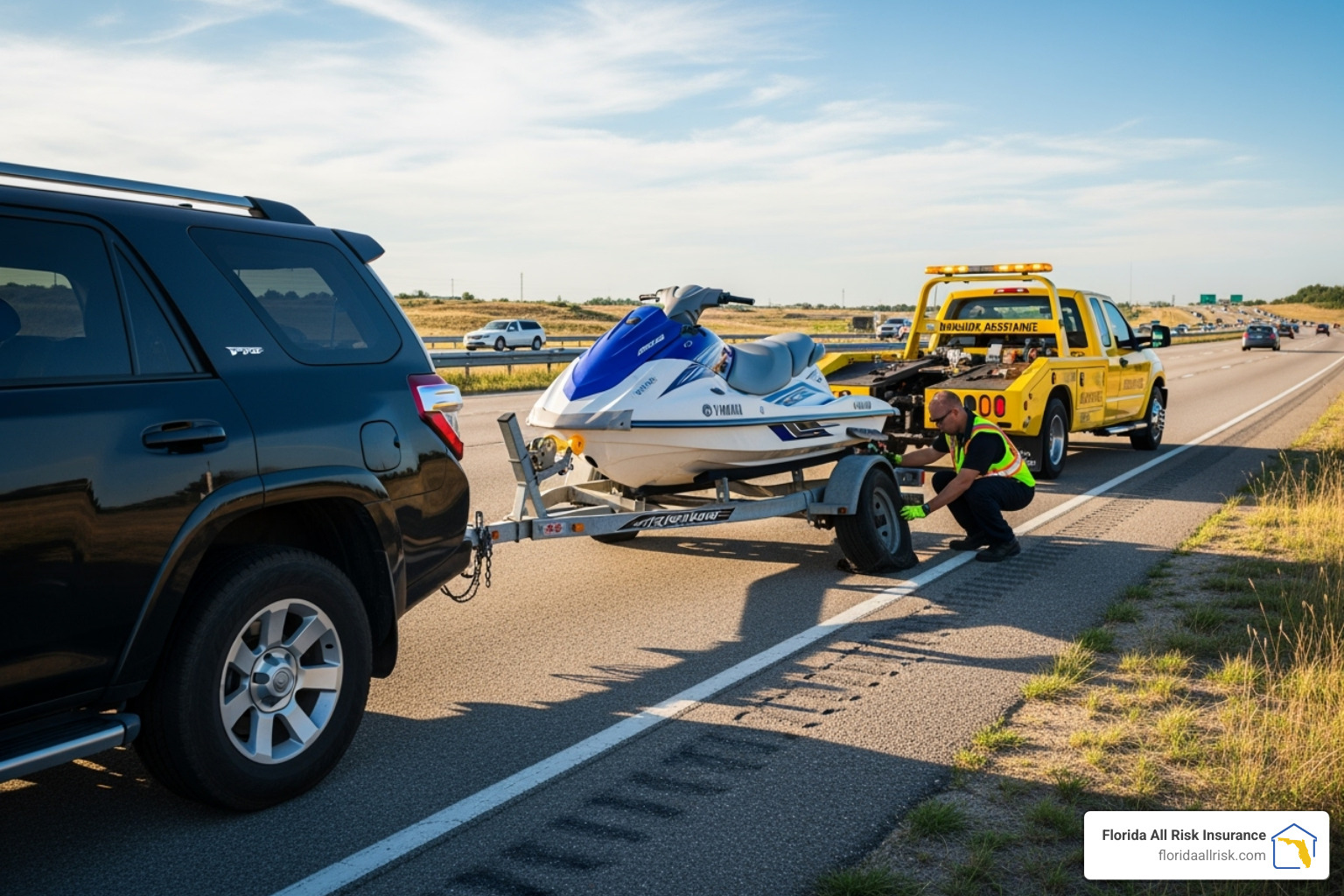
Breaking down on the water—or having a trailer issue on the highway—can derail a perfect day. On-water towing and roadside assistance provide practical help.
- On-Water Service: Professional towing to a marina or ramp, fuel delivery if you run dry, and jump starts for a dead battery. Many plans also assist if your craft becomes grounded in a safe area and needs a gentle pull-off.
- Roadside Assistance: Extends coverage to your trailer and the vehicle towing it, offering help for flat tires, lockouts, and towing to the nearest qualified repair shop.
Check whether services have per-incident caps, mile limits, or required service areas. If you frequently explore new waterways, these small print details matter.
Other Valuable Endorsements to Consider
- Agreed Value vs. Actual Cash Value (ACV): With Agreed Value, you and the insurer establish the payout for a total loss at policy inception, eliminating depreciation debates. ACV pays market value at the time of loss and typically carries lower premiums. Your choice depends on budget and how you’d handle a total loss.
- Replacement Cost for Parts (Partial Losses): Helps pay for new parts without deducting for depreciation when you haven’t lost the entire craft. Especially useful for modern electronics or body panels on newer PWCs.
- Wreckage Removal and Salvage: If your PWC sinks or is stranded in a way that requires professional recovery, you may be responsible for removal. This endorsement helps cover specialized salvage, crane, or dive-team costs.
- Fuel Spill Liability and Pollution Cleanup: Even small spills can lead to expensive cleanup efforts and potential fines. This coverage helps protect your finances and the environment.
- Hurricane Haul-Out: Some policies contribute toward the cost of professionally hauling or securing your PWC when a named storm approaches, helping you act early and reduce loss exposure.
- Trailer and Transport Coverage: Covers the trailer for physical damage from covered perils and may extend to equipment used exclusively with your PWC, subject to policy specifics. Note that liability while towing is typically under your auto policy; confirm how your policies coordinate.
These add-ons can be layered to meet your risk tolerance and riding style. A quick conversation with your agent about where you ride, how you store, and what you carry can reveal cost-effective enhancements you might otherwise overlook.
Understanding Policy Exclusions and Limitations
Knowing what does personal watercraft insurance cover is only half the story; you also need to understand what it doesn’t cover. Exclusions and limitations clarify risk boundaries and help you avoid surprises.
Common Exclusions in PWC Policies
- Racing and Competition: Losses during organized races, speed trials, or stunts are typically excluded. If you plan to compete, a specialty policy may be required.
- Commercial Use: Paid instruction, tours, or rentals fall outside personal policies. Using your PWC for any business purpose generally requires a commercial policy.
- Operation After Dark: Many policies exclude operation between dusk and dawn, when visibility is reduced and collision risk increases.
- Performance Modifications: Unauthorized changes that significantly alter speed or handling can void coverage. Keep receipts and documentation for any approved upgrades.
- Wear and Tear / Mechanical Breakdown: Insurance is designed for sudden, accidental events—not deterioration, corrosion, or failures due to age or maintenance issues.
- Negligence and Improper Repairs: Reckless operation (e.g., ignoring posted no‑wake zones) or substandard repairs may lead to claim denials. Always use qualified technicians and follow manufacturer guidance.
- Illegal Operation and Impairment: Operating under the influence or without required certifications can jeopardize coverage and create serious legal exposure.
At https://floridaallrisk.com/about-us/, we help clients review these limitations in plain language so you can make informed choices.
Navigational Limits and Lay-Up Periods
Your policy will define where and when you can operate.
- Geographic Boundaries (Navigational Limits): Some policies confine operation to inland and coastal waters within a set distance from shore, or to U.S. waters only. If you plan to trailer your PWC to the Florida Keys, cross to the Bahamas, or ride near international waters, discuss your plans with your agent. Operating outside stated limits can void coverage.
- Lay-Up Periods: If you store your PWC for part of the year, a lay-up period can reduce premiums by limiting operation during those months. Your PWC remains covered for theft, fire, and vandalism while stored—but using it during lay-up can void coverage. Follow storage requirements (battery disconnect, location, securing) to keep protection intact.
Documenting Your Property and Maintenance
Clear documentation helps avoid disputes and speeds up claims. Keep:
- Photos and serial numbers for hull, engine, and major accessories
- Receipts for accessories, upgrades, and professional service
- Storage records and storm-prep actions (particularly for hurricane haul-outs)
Good records demonstrate responsible ownership and can support better outcomes if a loss occurs.
PWC Insurance vs. Other Policies and Legal Requirements
Many PWC owners wonder whether homeowners or boat insurance provides enough protection. While it’s smart to avoid duplicate coverage, the reality is that what does personal watercraft insurance cover is highly specialized and not replicated by other policies.
How PWC Insurance Differs from Homeowners or Boat Insurance
Most homeowners policies offer extremely limited or no coverage for personal watercraft—especially for liability. Standard boat insurance is closer but still not tailored to PWC performance and use cases. PWC policies address how these crafts are ridden, stored, and transported.
| Coverage Type | PWC Insurance | Standard Boat Insurance | Typical Homeowners Policy |
|---|---|---|---|
| Liability | Designed for PWC-related incidents (BI, PD) with appropriate exclusions and limits | Designed for boat operations, often different power/speed assumptions | Very limited or no liability for PWCs |
| Physical Damage | Collision and comprehensive tailored to PWC risks | Collision and comprehensive tailored to boats | May cover only very small, low-powered craft; PWCs often excluded |
| Personal Property | Itemized coverage for onboard gear and accessories | Onboard gear and accessories for boats | Limited coverage for watercraft-related items |
| Medical Payments | For operator and passengers on a PWC | For operator and passengers on a boat | Typically excludes watercraft injuries |
| Specialized Needs | Towing, salvage, spill liability, agreed value options | Towing, salvage, navigation options | No watercraft-specific enhancements |
A dedicated PWC policy is the only way to ensure you have coverage built for your craft and your riding style.
Is PWC Insurance Legally Required in Florida?
Florida does not legally mandate PWC insurance for personal recreational use. However, you may still need proof of coverage in practice:
- Marinas and Storage: Many facilities require liability coverage to dock or store your PWC.
- Lenders: If you finance your PWC, the lender will likely require comprehensive and collision coverage.
Even when not required, insurance is part of responsible riding. For safety, ensure you carry required equipment and follow best practices. The Transport Canada boating safety equipment guide offers a helpful checklist approach applicable to small-craft safety thinking: https://tc.canada.ca/en/marine-transportation/marine-safety/marine-safety-publications/passport-anglers-hunters-tp-14659-e#mandatory. For policy coverage and Florida-specific considerations, explore our Watercraft & Boat Insurance page: https://floridaallrisk.com/insurance_products/watercraft-boat-insurance/.
Factors That Influence Your PWC Insurance Premium
After exploring what does personal watercraft insurance cover, the next question is usually about cost. While pricing varies by insurer and profile, many Florida riders see annual premiums that reflect the craft’s value, horsepower, storage methods, rider experience, and claims history.
What determines the cost of personal watercraft insurance?
- PWC Make, Model, and Power: Higher-horsepower and performance models cost more to insure, as do newer or premium-priced crafts.
- Age of Watercraft: Newer models are more valuable to replace; very old units may be harder to source parts for—both factors influence rate.
- Operator Age and Experience: Younger riders and those with limited time on the water generally pay more until they build a clean record.
- Driving and Claims History: At-fault accidents, tickets, or prior claims (on water or road) can increase premiums.
- Location and Storage: Where you operate and store your PWC matters. Secure, indoor storage can help; high-theft ZIP codes and marina storage may cost more.
- Usage Pattern: Frequent use or riding in high-traffic areas can affect pricing; seasonal lay-up may reduce cost if you don’t ride year-round.
- Coverage Limits and Deductibles: Higher liability limits cost more. Raising a physical damage deductible usually lowers the premium.
- Safety Education and Equipment: Approved boating safety courses can earn discounts. Certain anti-theft devices or GPS trackers may also help.
- Bundling: Placing your PWC with the same company that insures your home or autos can unlock multi-policy savings.
Finding a comfortable balance
Start by choosing liability limits that match your financial exposure—think about your assets, medical costs, and the value of property you might encounter on the water (docks, seawalls, high-end vessels). Then, set a physical damage deductible you’d feel comfortable paying after a loss. For many riders, a modest increase in deductible provides meaningful premium relief without creating undue financial strain.
To better understand the tradeoffs, review your policy declarations page and endorsement options with an agent. A small tweak—like adding hurricane haul-out or fine-tuning personal effects limits—can optimize cost and protection based on how and where you ride.
Frequently Asked Questions about PWC Insurance
We’ve answered thousands of questions about what does personal watercraft insurance cover. Here are detailed answers to common ones we hear from PWC owners across Florida.
Does my PWC insurance cover friends or family who operate my watercraft?
Often yes, through what’s called permissive use. Coverage typically extends to people you allow to operate the PWC, provided they meet legal and policy requirements (such as age, licensing or boater education if applicable, and sobriety). Some insurers apply different deductibles or limit amounts for non-listed operators. Always check your specific policy language before handing over the lanyard.
Are people being towed for watersports (tubing, skiing) covered?
Generally, yes—most standard PWC policies include watersports liability for common activities like tubing, water skiing, and wakeboarding. However, more extreme activities (e.g., parasailing, hydroflight devices) are frequently excluded unless you add a specific endorsement. Review the definitions in your policy and speak with your agent if you’re trying a new sport.
Do I need a separate policy for each PWC I own?
Not necessarily. Many insurers offer multi-craft policies, allowing you to insure multiple PWCs under a single plan. This simplifies administration and can lead to multi-craft or multi-policy discounts. Be sure each craft’s value, accessories, and usage are properly listed and rated.
Is my PWC trailer covered?
Liability while towing a trailer on the road typically falls under your auto policy. Physical damage to the trailer itself is not automatically covered by your PWC policy, but you can often add trailer coverage by endorsement. Verify limits for personal property carried on the trailer, as those items may need separate coverage or a different policy.
What if my PWC sinks—who pays to remove it?
Wreckage removal and salvage can be costly, especially if environmental or navigational hazards are involved. Some policies include limited coverage, while others require an endorsement for robust protection. If you frequently ride in deeper or busier channels, consider adding this coverage.
Does my policy cover fuel spills?
Many PWC policies offer fuel spill liability and pollution cleanup coverage, often as an optional endorsement. Cleanup can be expensive—even small spills require professional response. Confirm whether fines, penalties, and third-party claims are included and whether separate sub-limits apply.
Will my rates go up after a claim?
Premiums can increase following at-fault accidents or certain types of claims. The size and type of loss, your prior history, and your insurer’s rating rules all play a role. Ask your agent how claims may affect your policy at renewal and whether accident forgiveness is available.
Can I ride at night and remain covered?
Many policies exclude operation between dusk and dawn. Some also limit coverage when visibility is reduced by weather. Even if coverage were available, night riding significantly increases risk. Review policy wording carefully and consider the safety implications before operating after dark.
Am I covered if I travel outside Florida?
It depends on your policy’s navigational limits. Many policies allow operation in specified U.S. coastal and inland waters within certain distances from shore. If you plan to trailer to other states or cross near international waters, talk to your agent about expanding or clarifying your navigation territory before you go.
How do I document my gear and accessories for a claim?
Keep a simple, up-to-date inventory: photos of your PWC and accessories, serial numbers for electronics, copies of receipts, and any professional installation notes. Store digital copies in the cloud so you can access them after a loss. Good records accelerate claims and reduce disputes over value.
For a broader safety perspective and best practices while riding, the Insurance Information Institute’s resource on personal watercraft safety is a helpful reference: https://www.iii.org/article/personal-watercraft-insurance-and-safety.
Secure Your Adventures with the Right Coverage
Navigating PWC insurance is an essential step to protect your investment and keep every trip worry-free. From liability and medical payments to comprehensive protection for your craft, gear, and passengers, the right policy is your best defense against the unexpected on Florida’s busy waterways. An experienced agent can help you compare ACV versus Agreed Value, fine-tune deductibles, and add smart endorsements like on-water towing, wreckage removal, and fuel spill liability.
If you’re ready to dial in your coverage, explore our Watercraft & Boat Insurance options here: https://floridaallrisk.com/insurance_products/watercraft-boat-insurance/.
Strong CTAs:
- Get tailored protection for your Jet Ski, Sea‑Doo, or WaveRunner in minutes—start your quote now: https://floridaallrisk.com/get-a-quote/
- Have questions about limits, deductibles, or endorsements? Speak with a friendly specialist today: https://floridaallrisk.com/get-a-quote/
Contact Us
Have questions about what does personal watercraft insurance cover or ready to get started with a policy? The team at Florida All Risk Insurance is here to help. We take the time to understand your unique needs and craft coverage that fits your lifestyle—whether you’re a weekend rider or a seasoned enthusiast exploring Florida’s coastline.
Address: 7901 4th St. N STE 300, Saint Petersburg, FL 33702
Phone: 727-577-4100
Email: [email protected]
Learn more about our approach and team: https://floridaallrisk.com/about-us/.

