

Vehicle Insurance Auto: 1-Tap Secure 2025
Why Vehicle Insurance Auto Matters for Every Florida Driver
Vehicle insurance auto is not just a legal requirement in Florida—it’s your financial safety net on the road. Whether you’re commuting in St. Petersburg or taking a trip along the Gulf Coast, auto insurance protects you from the potentially devastating costs of accidents, theft, and other vehicle-related damages.
Quick Answer: What You Need to Know About Vehicle Insurance Auto
- What it is: A contract with an insurer that provides financial protection against vehicle-related losses.
- Why it’s required: Florida law mandates minimum coverage (PIP and PDL) for all registered vehicles.
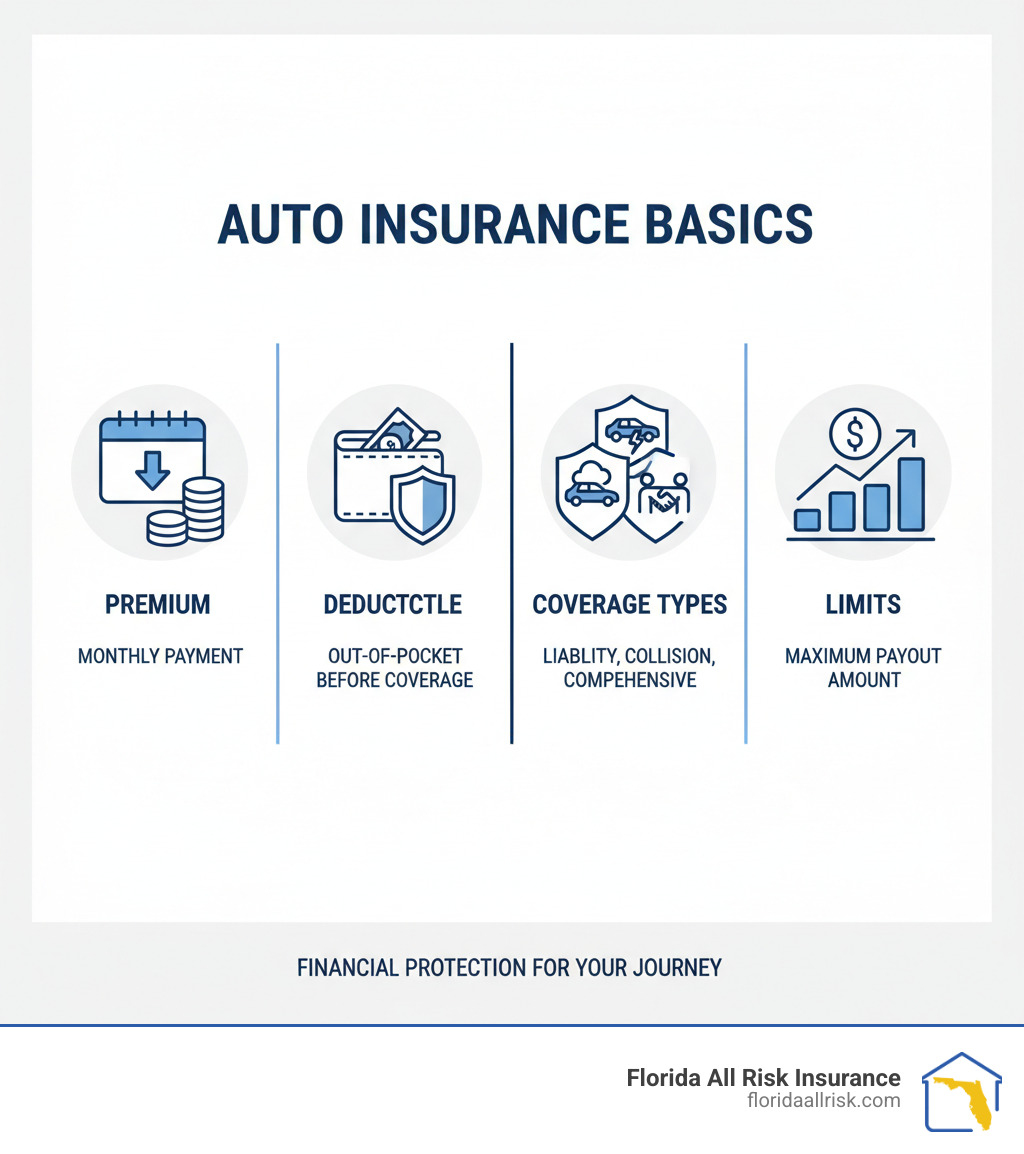
- Core components: Your policy includes a premium (your payment), a deductible (what you pay per claim), coverage types, and policy limits.
- Key coverage types: Personal Injury Protection, Property Damage Liability, Collision, Comprehensive, and optional add-ons.
- Average cost: Varies based on your driving record, vehicle, location, and coverage choices.
Without proper coverage, a single accident could cost you thousands of dollars in medical bills, property damage, and legal fees. Florida’s no-fault insurance system means your own policy is the first to pay for your injuries, regardless of who caused the accident, making adequate coverage even more critical.
Driving without insurance in Florida carries serious penalties, including license suspension, hefty fines, and potential SR-22 filing requirements that make future insurance much more expensive.
I’m Jason Miller, owner of Florida All Risk Insurance. With over 20 years of experience, my team and I specialize in navigating Florida’s unique insurance landscape to find comprehensive vehicle insurance auto solutions that protect your assets without breaking the bank.
Decoding Your Policy: Core Auto Insurance Coverages
Think of your auto insurance policy as a customizable shield. Some parts are required by Florida law, while others can be added based on your needs and budget. Understanding these building blocks helps you create a vehicle insurance auto plan that truly has your back.
Florida’s Mandatory Coverages
Florida’s no-fault system requires two specific coverages designed to provide immediate help after an accident, regardless of who is to blame.
Personal Injury Protection (PIP) is the core of this system. If you’re injured in an accident, your PIP covers 80% of medical expenses and 60% of lost wages, up to a total of $10,000. It covers you, your household members, and certain passengers, no matter who caused the crash. This system speeds up claims for minor injuries, but serious injuries can quickly exceed the $10,000 limit. For a detailed explanation, see our guide on Personal Injury Protection Insurance.
Property Damage Liability (PDL) is the other mandatory coverage. It pays for damage you cause to someone else’s property, such as their car, fence, or mailbox. Florida requires a minimum of $10,000 in PDL coverage. You can review all official requirements at the Florida Department of Highway Safety and Motor Vehicles page.
Essential Optional Coverages for Your Vehicle
While PIP and PDL keep you legal, they offer minimal protection. Optional coverages are what truly safeguard your finances.
Bodily Injury Liability (BIL) is optional but essential for protecting your assets. If you cause a serious accident that injures someone, their medical bills and other costs can far exceed your PIP coverage. Without BIL, you are personally responsible for the difference, putting your savings and home at risk. We always recommend substantial BIL limits.
Collision Coverage pays to repair or replace your vehicle after an accident, whether you hit another car or a stationary object. You pay a deductible (typically $500 or $1,000), and your insurance covers the rest. Lenders usually require this for financed or leased vehicles.
Comprehensive Coverage protects against non-collision events. In Florida, this is crucial for risks like hurricanes, flooding, theft, vandalism, and animal strikes. Like collision, it includes a deductible. Together, collision and comprehensive are often called “full coverage.”
These coverages typically pay the Actual Cash Value (ACV) of your car, which accounts for depreciation. For newer cars, you might consider Replacement Cost coverage, which pays for a brand-new vehicle of a similar model. As a vehicle ages, you might consider dropping collision and comprehensive if the premium and deductible outweigh the car’s value. Explore your options on our Auto Insurance Coverage Options page.
Enhancing Your Protection: Endorsements and Additional Options
Endorsements are upgrades that add specific layers of protection to your vehicle insurance auto policy.
- Uninsured/Underinsured Motorist (UM/UIM) Coverage: Critical in Florida, where many drivers are uninsured. This covers your medical bills, lost wages, and suffering if you’re hit by a driver with little or no insurance. Learn more at Uninsured Motorist Coverage Florida.
- Medical Payments (MedPay): Covers medical expenses for you and your passengers regardless of fault, often filling gaps left by PIP.
- Rental Reimbursement: Pays for a rental car while yours is being repaired after a covered claim.
- Roadside Assistance: Provides towing, jump-starts, tire changes, and fuel delivery for peace of mind.
- Gap Insurance: Essential for new, financed vehicles. It covers the difference between your car’s value and what you still owe on your loan if it’s totaled.
Specialized Vehicle Insurance Auto Needs
Different vehicles require specialized policies that address their unique risks and values.
- Motorcycle Insurance: A separate policy from auto insurance, covering liability, custom parts, and safety gear.
- RV Insurance: Combines auto coverage with protections for personal belongings and vacation liability.
- Commercial Truck Insurance: A business policy with higher liability limits and coverage for cargo and business-related risks. Learn more at Commercial Truck Insurance.
- Classic and Antique Car Insurance: Offers agreed-value coverage, which is crucial for appreciating assets, unlike standard policies that use depreciated value. Find out more at Classic Car Insurance Florida.
The Price of Protection: Factors That Influence Your Auto Insurance Premiums

When you get a quote for vehicle insurance auto coverage, you receive a personalized price based on factors that help insurers assess risk. Understanding what drives your premium up or down empowers you to make informed decisions and potentially lower your costs.
Your Driving Profile
Your history behind the wheel is the most significant factor in determining your rate.
- Driving Record: A clean record free of accidents and violations signals you are a low-risk driver and earns you lower premiums. At-fault accidents, especially those with significant damage or injuries, can dramatically increase your rates for three to five years.
- Traffic Violations: Moving violations like speeding or running red lights add points to your license and signal higher risk to insurers.
- Claims History: A pattern of frequent claims, even for not-at-fault accidents, can sometimes raise rates. A claim-free record, however, can lead to significant discounts.
- Driving Experience: New drivers face higher premiums due to statistical risk. Rates typically decrease with years of safe driving experience.
- DUI and Serious Violations: A DUI conviction has severe consequences, leading to substantial rate hikes and the requirement of an SR-22 or FR-44 filing—a state-mandated proof of insurance that comes with much higher costs. If you’re in this situation, visit our DUI Auto Insurance Florida page for expert help.
Your Vehicle and Its Use
The car you drive and how you use it play a major role in your vehicle insurance auto costs.
- Vehicle Make and Model: High-performance sports cars and luxury vehicles are more expensive to insure because they cost more to repair or replace and are often targeted for theft. Vehicles with high safety ratings and affordable parts typically have lower premiums.
- Vehicle Age: Newer cars often cost more to insure due to their higher value and expensive technology. Older, less valuable cars may have lower comprehensive and collision premiums.
- Repair Costs: Vehicles with specialized parts or complex systems, like luxury brands or electric cars, have higher repair costs, which translates to higher insurance premiums.
- Annual Mileage: The more you drive, the higher your risk of an accident. Low-mileage drivers often qualify for discounts. Learn more in our guide: How Low Mileage Can Slash Your Bill.
- Vehicle Use: Using your car for a daily commute during rush hour is riskier than using it for occasional pleasure trips, and your premium will reflect that.
Demographic and Geographic Factors
Some factors are based on statistics related to who you are and where you live.
- Age and Gender: Younger drivers, particularly teenage males, face the highest premiums due to statistically higher accident rates. Rates generally decrease with age and a clean driving record.
- Marital Status: Married individuals often receive slightly lower rates, as they tend to file fewer claims.
- Geographic Location: Your ZIP code has a large impact. Urban areas with more traffic, crime, and accidents typically have higher premiums than rural areas. Living in downtown Car Insurance St. Pete will result in different rates than a quiet suburban community.
- Credit-Based Insurance Score: In Florida, insurers may use a score derived from your credit history. Statistics show a correlation between credit responsibility and filing claims, so a better score can lead to lower rates.
Your Policy Choices
The decisions you make when building your policy directly impact your premium.
- Coverage Limits: Higher liability limits offer greater financial protection but increase your premium. It’s crucial to carry limits that adequately protect your assets.
- Deductible: This is the amount you pay out-of-pocket on a claim. Choosing a higher deductible for collision and comprehensive coverage will lower your premium, but you must be able to afford that amount if you file a claim. Explore your choices at Auto Insurance Deductible Options.
- Payment Plan: Paying your annual premium in full often comes with a small discount compared to making monthly payments, which may include service fees.
Smart Savings: How to Lower Your Vehicle Insurance Auto Costs
Finding affordable vehicle insurance auto is possible by taking a proactive approach. From common discounts to modern technology, there are numerous ways to reduce your premiums without sacrificing essential protection.
Open uping Common Auto Insurance Discounts
Insurance discounts are hidden money in your policy. Ask your agent about every one you might qualify for, as many drivers miss out on significant savings.
- Bundling Policies: Insuring your home and auto with the same provider is one of the most effective ways to save, often reducing premiums on both policies.
- Multi-Vehicle Discount: Insuring more than one vehicle on the same policy typically earns a discount.
- Good Student Discount: Young drivers who maintain a ‘B’ average or higher in school often qualify for reduced rates, as responsible students tend to be responsible drivers.
- Safe Driver Discount: Maintaining a clean record with no accidents or violations for several years can qualify you for substantial savings.
- Defensive Driving Course: Completing an approved course can trim your premium, which is especially valuable for new drivers or those with minor violations.
- Vehicle Safety Features: Cars equipped with anti-theft devices, anti-lock brakes, and airbags often qualify for discounts.
- All-Electric Vehicle Discounts: Many insurers now offer discounts for driving an all-electric vehicle, which can save you up to 15%.
For a complete list of savings opportunities, visit our Best Car Insurance Discounts page.
The Impact of Telematics and Usage-Based Insurance
Technology is revolutionizing how vehicle insurance auto premiums are calculated. Telematics programs, also known as usage-based insurance, use a small device or a smartphone app to monitor your actual driving behavior.
These programs track factors like mileage, speed, hard braking, and time of day. This allows your rate to be based on your individual habits rather than broad demographic data. Safe drivers who avoid sudden stops and speeding can see savings of up to 30%. Low-mileage drivers also benefit significantly. While privacy is a consideration, reputable programs use your data solely for rating purposes. Learn more about this modern approach at Pay as You Drive Insurance Florida.
Strategic Policy Management
Managing your policy over time is key to long-term savings.
- Shop and Compare Quotes: Rates vary dramatically between providers. As an independent agency, we do this work for you, comparing offers from multiple carriers to find the best rate. Start the process with our Online Auto Insurance Quotes Florida tool.
- Work with an Independent Agent: Unlike agents who represent only one company, an independent agent at Florida All Risk Insurance works for you. We have access to numerous insurers and can objectively find the best fit for your needs and budget.
- Review Your Coverage Annually: Life changes like buying a new car, moving, or adding a driver affect your insurance needs. An annual review ensures your coverage is appropriate and you aren’t overpaying.
- Adjust Your Deductibles: If you have a healthy emergency fund, raising your collision and comprehensive deductibles can lower your premium. The key is choosing a deductible you can comfortably pay if you need to file a claim.
Navigating Your Policy: From Claims to Management
Understanding how to use and manage your policy is just as important as choosing the right coverage. This section covers the claims process, the role of insurance professionals, and the convenience of modern digital tools.
The Auto Insurance Claims Process
No one wants to be in an accident, but knowing what to do afterward can make a stressful situation more manageable.
- Steps to Take After an Accident:
- Ensure Safety: Move to a safe location if possible and check for injuries.
- Contact Authorities: Call 911 if there are injuries or significant damage. A police report is invaluable.
- Exchange Information: Get names, contact info, and insurance details from all parties.
- Document the Scene: Take photos of vehicle damage and the accident scene.
- Seek Medical Attention: Get checked by a medical professional to document any injuries for your PIP claim.
- Reporting a Claim: Contact your insurance provider as soon as possible. Timely reporting expedites the process.
- Working with an Adjuster: An adjuster will investigate the incident, assess damages, and determine the payout based on your policy. Be honest and provide all requested documentation.
- Understanding Fault Determination: While Florida is a no-fault state for injuries, fault is still determined for property damage and for liability claims that exceed PIP limits.
- Repair vs. Total Loss: An insurer will declare a car a “total loss” if repair costs exceed a certain percentage of its actual cash value (ACV). If totaled, you’ll receive a settlement for the car’s ACV, minus your deductible.
The Role of Insurance Agents and Brokers
Choosing the right insurance professional can make all the difference in finding the best vehicle insurance auto coverage.
- Independent Agents vs. Captive Agents: Captive agents work for a single insurance company and can only offer its products. Independent agents, like us at Florida All Risk Insurance, work with multiple carriers. This allows us to shop the market on your behalf to find the best rates and coverage options.
- How a Broker Can Help You: An independent broker is your advocate. We take the time to understand your needs, explain complex terms, and compare quotes to find the most suitable and affordable plan. We save you time and money while providing personalized advice. Find out more at Car Insurance Broker St. Petersburg, FL.
- Personalized Service: We build relationships, not just sell policies. We’re here to answer questions and guide you through the claims process.
Managing Your Policy in the Digital Age
Modern technology has made managing your vehicle insurance auto policy more convenient than ever.
- Online Portals and Mobile Apps: Most insurers offer online tools to view policy documents, check coverage, and review billing statements 24/7.
- Digital ID Cards: Access proof of insurance instantly through an app or online portal.
- Online Payments and Updates: Easily make payments or update your address, vehicle, or driver information online.
- Digital Claim Tracking: Many apps allow you to track the status of a claim, upload documents, and communicate with your adjuster. For any assistance, our Car Insurance Customer Service is always ready to help.
Frequently Asked Questions about Vehicle Insurance Auto
When it comes to vehicle insurance auto policies, many Florida drivers have the same questions. Here are straightforward answers to some of the most common concerns.
What is a deductible and how does it work?
A deductible is the out-of-pocket amount you agree to pay for a collision or comprehensive claim before your insurance company covers the rest. For example, if your car sustains $3,000 in damage and you have a $500 deductible, you pay the first $500, and your insurer pays the remaining $2,500. Choosing a higher deductible lowers your premium, but ensure you can afford that amount if you need to file a claim. Most drivers choose deductibles between $250 and $1,000. For more details, visit our page on Auto Insurance Deductible Options.
Does my auto insurance cover me if I drive a rental car?
In many cases, yes—the coverage from your personal auto policy extends to a rental car. Your liability, collision, and comprehensive coverages typically travel with you. However, the coverage is usually limited to the same levels you carry on your personal policy. If you only have minimum liability, you won’t have collision coverage for the rental. Before declining the rental company’s expensive insurance, it’s always best to call your agent to confirm exactly what your policy covers.
What should I do if my insurance premium increases?
If your renewal notice shows a premium increase, contact your agent to understand why. Common reasons include a recent claim, a traffic violation, a change in your credit-based insurance score, or a general rate increase in your area. Once you know the cause, you have options. You can ask about new discounts, consider raising your deductibles, or remove endorsements you no longer need. If the increase is due to area-wide changes, it may be time to shop around. As an independent agency, we can compare quotes from multiple carriers to find you a better rate. You can also explore options for Cheap Car Insurance in St. Petersburg to see what’s available.
Your Partner in Protection
Finding the right vehicle insurance auto coverage doesn’t have to be overwhelming. We’ve explored the essential building blocks of auto insurance in Florida, the factors that shape your premium, and practical strategies to lower your costs. Insurance is more than a monthly bill; it’s your financial safety net, protecting you from the potentially devastating costs of an accident, theft, or natural disaster.
In Florida’s unique insurance landscape—with its no-fault system and significant number of uninsured drivers—having the right coverage is essential. Building a policy that truly protects you requires understanding your specific needs and risks. That’s where personalized guidance makes all the difference.
At Florida All Risk Insurance, we’ve spent years helping Florida drivers steer these complexities. As an independent agency, we work for you, not an insurance company. We compare options from multiple carriers to find coverage that fits your unique situation and budget. We believe in building relationships and providing clear, straightforward advice.
For more general information on auto insurance principles, you can also consult resources like the National Association of Insurance Commissioners (NAIC), which provides unbiased educational content.
Ready to find the right protection for your journey? Our team will compare options from multiple carriers to find you the best rates and coverage.
Get Your Free Auto Insurance Quote Today!
Want expert guidance before you buy? Request a Personalized Policy Review and our team will walk you through your options.
If you need short-term coverage, explore our guide on Temporary Car Insurance in Florida to understand your options. Let Florida All Risk Insurance be your partner in protection.
Contact Us
Ready to get started? Reach out to us today. We’re happy to answer your questions, provide a free, no-obligation quote, or simply have a conversation about your coverage needs. As your local St. Petersburg independent agency, we’re here to provide the personalized service you deserve.
Florida All Risk Insurance
Address: 7901 4th St N, STE 4302, Saint Petersburg, FL 33702
Phone: (727) 577-4100
Email: [email protected]

