Why Vacant Land Property Insurance Matters More Than You Think
Vacant land property insurance protects undeveloped property owners from liability claims when someone gets injured on their land. Here’s what you need to know:
Quick Coverage Overview:
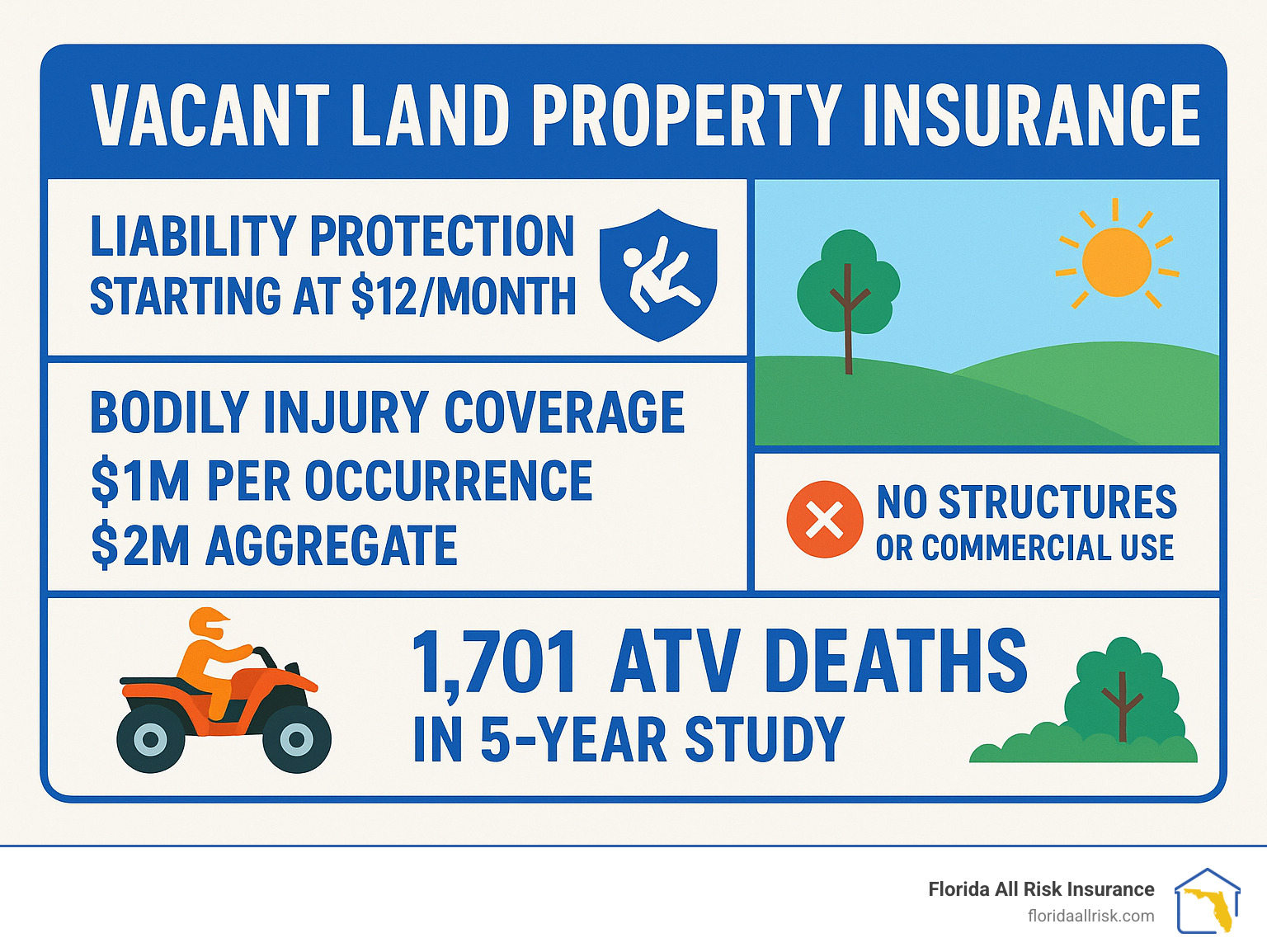
- Primary Protection: Liability for injuries to visitors, trespassers, or neighbors
- Typical Cost: Starting at $12/month or $0.30 per acre (minimum $225/year)
- Standard Limits: $1 million per occurrence, $2 million aggregate
- Not Covered: Existing structures, commercial activities, intentional damage
- When Required: Often mandated by lenders for financed land purchases
Many Florida landowners assume their homeowners policy covers that empty lot they bought for future retirement or investment. That’s a costly mistake. Liability is extended to vacant property automatically only if the land has absolutely no man-made structures. Even a simple shed, fence, or gravel driveway changes everything.
The risks are real. The average claim for bodily injury and property damage exceeded $26,870 between 2014-2018. Whether it’s an ATV accident, a hunter’s fall, or someone tripping over hidden debris, vacant land carries surprising liability exposure.
Even “No Trespassing” signs won’t protect you from lawsuits. People can still sue for injuries, and you’ll need coverage for legal defense costs alone.
I’m Jason Miller, and I’ve been helping Florida property owners steer complex insurance decisions for over 20 years at Florida All Risk Insurance. Through decades of experience with vacant land property insurance claims and coverage gaps, I’ve seen how the right protection saves landowners from financial disaster while keeping premiums affordable.
Know your vacant land property insurance terms:
- commercial property insurance
- building insurance commercial lease
- independent insurance agency Florida
What Is Vacant Land Property Insurance?
Think of vacant land property insurance as your legal shield when you own undeveloped property. It’s a specialized policy that steps in when someone gets hurt on your land and decides to sue you for their medical bills, lost wages, or pain and suffering.
This isn’t like your regular property insurance that covers buildings and belongings. Vacant land property insurance focuses entirely on liability protection – protecting your bank account from lawsuits when accidents happen on your property.
The Insurance Services Office (ISO) gets specific about what counts as “vacant land.” We’re talking about property in its completely natural state – no man-made structures whatsoever. That means no buildings, no sheds, no fences, no paved driveways, and not even utility poles. If your property has any human improvements, it’s no longer considered vacant for insurance purposes.
What makes this coverage important is its third-party protection. Whether someone invited visits your land, a neighbor wanders over, or even a trespasser gets injured, you could be on the hook for their medical expenses, legal fees, and damages. The policy covers premises liability for all these scenarios.
Many lenders won’t finance vacant land purchases without this coverage. Banks or lenders often require insurance on financed vacant land as a loan condition to protect both your investment and theirs.
Vacant vs. Unoccupied vs. Improved Land
Getting these terms straight can save you from buying the wrong coverage – or worse, having no coverage when you need it most.
Vacant land is property in its natural state. You might use it for farming, forestry, or weekend camping trips, but there are zero structures. This type of property might get automatic liability coverage from your homeowners policy, but don’t count on it without checking first.
Unoccupied land has buildings or homes that are just sitting empty right now. Maybe you’re renovating, or it’s a seasonal property. Either way, you need coverage that protects both the structures and your liability exposure. Most homeowners policies start treating property as vacant after 30 to 60 days of nobody living there.
Improved land includes any property with man-made additions. We’re talking about everything from pole barns and wells to fenced areas and gravel roads. Vacant property with a pole barn isn’t considered ‘vacant’ by ISO. Even small improvements completely change your insurance needs.
The bottom line? That innocent-looking shed or fence post can disqualify you from vacant land coverage and leave you scrambling for the right policy.
Is It Legally Required?
No state law forces you to buy vacant land property insurance, but several situations make it practically essential for protecting your financial future.
Lender requirements top the list. Most banks won’t finance vacant land without liability coverage. They’re protecting their investment in your property while making sure you can handle potential lawsuits without defaulting on your loan.
Contract situations also demand coverage. If you lease your land to hunters, let farmers use it, or allow recreational activities, you’ll likely need to show proof of insurance before anyone signs an agreement.
Some local regulations might require coverage too, especially if your property sits next to schools, public areas, or busy roads where accidents are more likely to happen.
While the law might not require it, the financial risk makes coverage a smart move. There is no legal requirement to carry vacant land insurance, but policies provide liability coverage in a litigious environment. In today’s world where lawsuits are common, that protection is worth its weight in gold.
Risks & Coverages Every Landowner Should Know

Even undeveloped land can create expensive liability. Here are the claims we see most often in Florida:
- Hidden holes, loose roots, or uneven ground cause slip-and-fall injuries.
- ATV or hunting accidents on rough trails lead to serious medical bills.
- Brushfires that start on your lot jump a fence and damage a neighbor’s property.
- Attractive nuisances (old wells, ponds, abandoned foundations) draw curious kids who can still sue even if they were trespassing.
Defense costs alone can top $50,000, so liability protection matters as much as paying damages.
| Covered Losses | Excluded Losses |
|---|---|
| Slip and fall injuries | Intentional injuries by owner |
| Medical expenses for injured parties | Commercial farming operations |
| Legal defense costs | Existing structure damage |
| Fire damage to neighboring property | Pollution or environmental damage |
| Trespasser injuries (in many cases) | Professional/business activities |
| Natural disaster-related injuries | Aircraft or watercraft operations |
Standard Protections Inside Vacant Land Property Insurance
- $1 million per occurrence / $2 million aggregate is the typical starting limit.
- Zero deductible on liability means the insurer pays from the first dollar.
- Defense costs are paid outside your policy limit, so legal bills don’t eat into what’s available for settlements.
- Medical payments coverage can diffuse small incidents before they become lawsuits.
Common Exclusions You Can’t Ignore
Purposeful acts, commercial use, any man-made improvements, and pollution events require other types of insurance. If you add a shed, start farming, or store fuel on-site, call your agent immediately so your policy keeps pace.
How Much Does Vacant Land Insurance Cost?
Most owners are surprised by how inexpensive this protection is. Basic liability starts around $12 per month (about $0.30 per acre) with a $225 yearly minimum. Real-world examples:
- 5 wooded acres: roughly $225 a year
- 25 acres: $300–$400 a year
- 100 acres: $500–$750 a year
A single lawsuit can cost tens of thousands, so $150–$300 annually is money well spent.
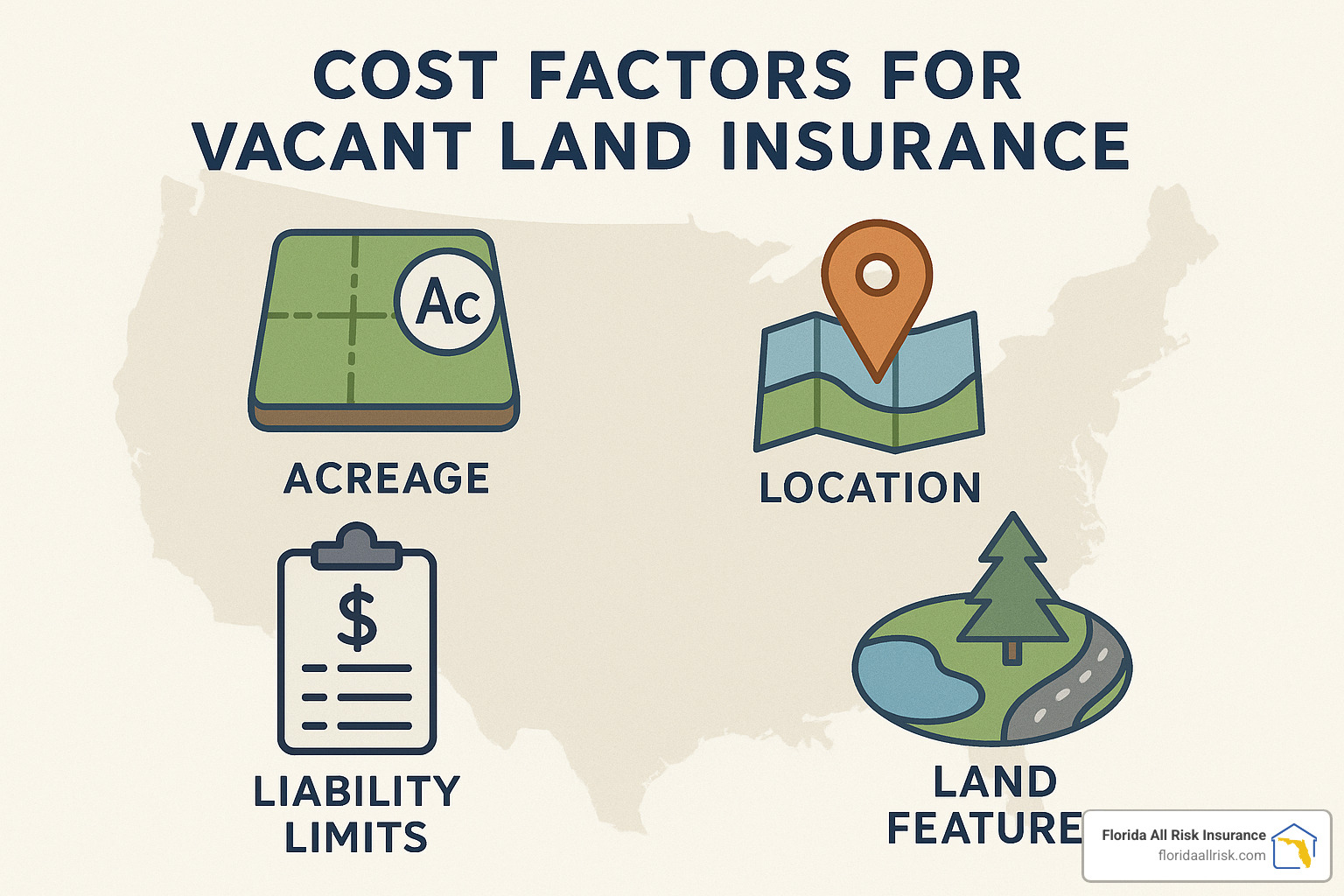
Factors That Move the Needle on Price
- Location: Flood, wildfire, or urban parcels cost more than remote, low-hazard tracts.
- Terrain & features: Steep slopes or ponds raise rates because they raise risk.
- Use: Passive investment land is cheapest; allowing hunting or ATV riding adds a modest surcharge.
- Claims history: Prior losses—yours or the property’s—affect premiums.
Budgeting Tips
- Add the parcel to an existing personal umbrella for a discount.
- Cover multiple lots under one policy.
- Pay annually and avoid the 5-10 % installment charge.
For larger commercial parcels, see our guide to vacant commercial property insurance cost.
Choosing & Optimizing Your Policy
Finding the right vacant land property insurance doesn’t have to be complicated, but it does require knowing what to look for and who to trust with your coverage needs.
The agent you choose makes all the difference. Independent agents like us at Florida All Risk Insurance work with multiple insurance carriers, which means we can shop your coverage across different companies to find the best combination of price and protection. Direct writers only sell their own products, limiting your options and potentially costing you money.
When evaluating carriers, focus on financial strength first. Look for companies with A.M. Best ratings of A+ or better. These ratings tell you the insurance company has the financial stability to pay claims when you need them most.
Getting accurate quotes requires the right information. Have your property address or parcel ID number ready, along with GPS coordinates if your land is in a remote area. Know your total acreage and be honest about how you plan to use the property. Any existing structures – even a simple storage shed – changes your coverage needs entirely.
Many carriers now offer instant online quotes for vacant land property insurance, which can be helpful for getting ballpark pricing. However, if your property has unique features or you’re not sure about coverage details, working with an experienced agent saves time and prevents costly mistakes.
Steps to Reduce Liability Before You Buy
Smart property management protects both your wallet and your peace of mind. Taking proactive steps to reduce risks can lower your premiums and, more importantly, prevent accidents from happening in the first place.
Regular property walks are your best defense. Visit your land at least quarterly to spot potential hazards before they become problems. Look for dead trees that could fall, holes that someone might step in, or debris that creates tripping hazards. It’s much cheaper to remove a dangerous tree branch than to pay medical bills for someone it injures.
Proper signage works, but it’s not bulletproof. Post clear “No Trespassing” signs at all entry points and use specific warning signs for known hazards. Mark your property boundaries so people know where your responsibility begins and ends.
The key is being proactive about hazard removal. Fill holes, clear debris, and address drainage problems that create standing water. If you have old foundations, wells, or other attractive nuisances, fence them off or remove them entirely.
Custom liability waivers add another layer of protection if you allow hunting, fishing, or recreational use on your property. However, waivers don’t eliminate all liability, especially in cases of gross negligence.
Consider installing gates or other access controls to prevent unauthorized entry. Working with local law enforcement on persistent trespassing issues shows you’re taking reasonable steps to control access to your property.
Planning to Build? Transitioning from Vacant to Construction

Building on your vacant land creates exciting opportunities, but it also changes your insurance needs completely. Timing your coverage transition properly prevents expensive gaps that could leave you exposed during construction.
The moment construction begins, your vacant land policy may no longer apply. Most vacant land property insurance policies require immediate notification when any construction activity starts. This includes clearing land, bringing in equipment, or even preliminary site work. Failing to notify your insurance company can void your coverage entirely.
You’ll need builder’s risk insurance to protect the structure while it’s under construction. This specialized coverage protects against fire, theft, vandalism, and weather damage during the building process. Builder’s risk is completely different from your vacant land liability coverage, so you’ll likely need both policies running simultaneously.
The transition doesn’t happen overnight. Smart landowners arrange builder’s risk coverage before the first shovel hits dirt, then maintain their vacant land liability protection until construction is complete.
Once your home is habitable and you receive a certificate of occupancy, you’ll transition to standard homeowners insurance. This final step completes your journey from vacant land owner to homeowner, but proper planning ensures you’re protected every step of the way.
Communication with your insurance agent is crucial during this transition. We help coordinate the timing of different policies, ensure there are no coverage gaps, and make sure you’re not paying for duplicate coverage.
Frequently Asked Questions about Vacant Land Property Insurance
Does my homeowners policy automatically cover truly vacant land?
Often, yes—but only if the land has zero man-made structures. A single fence, gravel drive, or pole barn cancels the automatic extension. When in doubt, ask your agent; a stand-alone policy usually costs under $200 a year and removes any guesswork.
What do I do if someone is hurt on my land?
- Get medical help immediately.
- Photograph the scene and gather witness info.
- Notify your insurer within 24–48 hours. Provide facts, not opinions.
- Leave the scene untouched until the adjuster says otherwise.
- Let the carrier handle fault and legal discussions.
Following these steps keeps the claim moving and preserves coverage.
Can I allow hunting or ATV use and still be covered?
Most policies allow recreational use, but the risk is higher, so:
- Tell your insurer up front so the activity is listed on the policy.
- Require written waivers from every participant.
- Post clear rules, mark hazards, and maintain trails.
- Consider a personal umbrella for extra limits if you host frequent outings.
Discuss any planned activity with us first—small tweaks to the policy now can prevent big surprises later.
Conclusion
Protecting your vacant land doesn’t have to be complicated or expensive. Vacant land property insurance offers peace of mind that’s hard to put a price on – especially when coverage starts at just $12 per month.
Think about it this way: you wouldn’t drive without auto insurance or own a home without homeowners coverage. Your vacant land deserves the same protection, particularly in Florida where recreational activities and natural hazards create real liability risks.
The math is simple. One liability claim could cost tens of thousands in legal fees alone, while a full policy typically runs $150-600 annually. That’s less than most people spend on coffee in a month, yet it protects your entire financial future.
Here’s what makes the difference: understanding your specific risks and getting proper coverage before something happens. Whether you own a small lot for future retirement or hundreds of acres for hunting and recreation, the right policy protects both your property investment and your family’s financial security.
At Florida All Risk Insurance, we’ve been helping Florida landowners steer these decisions for over 20 years. Our St. Petersburg team understands that every piece of land tells a different story. As an independent agency, we work with multiple carriers to find coverage that fits both your needs and your budget.
We’ve seen too many landowners find coverage gaps after an accident occurs. Don’t let that be your story. The best time to secure vacant land protection is before you need it – when you can take time to understand your options and make informed decisions.
Your land represents more than just an investment. It’s your piece of Florida, your future plans, your family’s legacy. Protecting it properly means you can enjoy it with confidence, knowing that one unexpected accident won’t derail your financial goals.
Ready to protect what matters most? Contact Florida All Risk Insurance today for a personalized quote and coverage review. We’ll walk you through your options, explain the details in plain English, and help you secure the right protection for your unique situation.
For landowners considering commercial activities or business use, our commercial property insurance options can help you understand how different uses affect your coverage needs.
Don’t wait until tomorrow to protect what you’ve worked so hard to build today. Your vacant land – and your peace of mind – are worth that simple phone call.