The Rising Challenge of Commercial Property Vacancy
Vacant commercial property insurance is specialized coverage designed for buildings that are unoccupied for extended periods, typically providing protection against vandalism, theft, fire, water damage, and liability claims when standard policies would exclude coverage.
For quick reference, here’s what you need to know:
| Vacant Commercial Property Insurance Essentials |
|---|
| Definition: Insurance for buildings with less than 31% occupancy for 60+ days |
| Why You Need It: Standard policies exclude or reduce coverage after 60 days vacant |
| Key Coverages: Property damage, liability, vandalism, theft, water damage |
| Average Cost: $1,000-$3,000 annually depending on building size and location |
| When Required: During property transitions, renovations, or tenant searches |
Commercial vacancy rates across the U.S. have skyrocketed in recent years, with the national office vacancy rate reaching nearly 18% as of February 2024 – a stark increase from the pre-2020 average of 12%. This surge has left many Florida property owners in a precarious position, as standard commercial insurance policies typically exclude coverage for vandalism, water damage, theft, and glass breakage after a building has been vacant for just 60 consecutive days.
An empty building still needs protection – perhaps even more than an occupied one. Vacant properties face significantly higher risks of:
- Vandalism and theft (easier targets with no occupants)
- Undetected damage (water leaks, mold growth)
- Fire hazards (50% of vacant building fires are arson)
- Liability claims (trespassers or passersby injured on premises)
Without proper coverage, these risks can quickly translate into substantial financial losses. Most standard commercial policies contain a “vacancy clause” that severely restricts or eliminates coverage after a property has been empty for 60 consecutive days.
I’m Jason Miller, a second-generation insurance professional with over 20 years of experience helping Florida businesses secure appropriate vacant commercial property insurance for their unoccupied buildings. Having witnessed the devastating financial impact that inadequate vacancy coverage can cause, I’m committed to ensuring your vacant commercial assets remain protected.

Related content about vacant commercial property insurance:
– commercial property insurance
– commercial unit insurance
– commercial property insurance risk
Why Vacant Buildings Need Specialized Coverage
Empty buildings aren’t just sitting there harmlessly – they’re practically inviting trouble. The National Fire Protection Association reports a sobering reality: about 30,200 structure fires happen in vacant buildings each year, causing around $710 million in direct property damage. What’s truly eye-opening is that half of these fires are intentionally set, compared to just 10% of fires in occupied buildings.
These aren’t just numbers on a page – they represent real financial losses that standard commercial insurance policies simply weren’t designed to cover. When a building sits empty, the risk profile changes dramatically.

Without regular occupants, vacant properties become prime targets for criminal activity. Vandals find empty buildings irresistible canvases, while thieves (particularly those hunting for valuable copper wiring and plumbing) see them as low-risk opportunities. Fire risks skyrocket too – not only is arson more common, but when fires do start, they’re often found much later, allowing flames to spread extensively before firefighters arrive.
Maintenance issues that might be minor in an occupied building can quickly spiral into major damage when no one’s around to notice that small water leak or cracked window. And surprisingly, liability exposure actually increases – trespassers who get injured might still file claims, and deteriorating conditions can pose serious risks to innocent passersby.
Let’s not forget that most commercial mortgage agreements require continuous insurance coverage regardless of whether anyone’s using the building. This is where vacant commercial property insurance becomes not just important, but essential.
The Hidden Price of Emptiness
The true cost of an empty commercial property goes far beyond just missing out on rent checks. Property owners face a perfect storm of financial challenges that many don’t anticipate until they’re knee-deep in them.
First, all those carrying costs don’t magically disappear – mortgage payments, property taxes, and basic utilities continue like clockwork whether the building is occupied or not. Meanwhile, the property itself begins to deteriorate at an accelerated pace. HVAC systems, plumbing fixtures, and electrical components actually need regular use to stay in good working order.
Security expenses climb too. Without tenants serving as natural deterrents to crime, owners often need to invest in additional measures like regular security patrols, surveillance systems, and physical barriers – all adding to the monthly burn rate.
When standard policies won’t provide adequate coverage, specialized vacant commercial property insurance typically comes with higher premiums, reflecting the increased risk. And just when you think it couldn’t get worse, many cities have vacant building ordinances that require registration and impose ongoing fees specifically designed to discourage long-term vacancy.
Perhaps most concerning is how these problems compound over time. A building that sits empty for months or years often requires significant investment to bring it back to marketable condition. This creates a difficult cycle – the longer it sits vacant, the more it costs to fix, making it harder to attract tenants, leading to… more vacancy.
Cities experiencing high commercial vacancy rates like Detroit (31.3%) and San Francisco (23.4%) as of early 2024 have witnessed how empty properties create ripple effects throughout entire business districts, affecting neighboring property values and contributing to community decline.
The good news? With proper risk management strategies and the right vacant commercial property insurance, these risks can be effectively managed. The key is understanding exactly what coverage you need before that 60-day vacancy clock starts ticking.
For more information on managing commercial property risks, check out our guide on Commercial Property Insurance Risk or review the scientific research on vacant-building fires from the NFPA.
Vacancy Rules & Clauses: When Does Insurance Consider Your Building “Vacant”?
Have you ever wondered when exactly your empty building crosses that invisible line from “temporarily unoccupied” to “officially vacant” in the eyes of your insurance company? It’s not just a matter of semantics – it could be the difference between a fully covered claim and a denied one.
Most commercial property policies follow the Insurance Services Office (ISO) standards, which have a pretty specific definition of vacancy. Your building is considered vacant when:
- Less than 31% of its total square footage is being used for its intended purpose
- This condition has lasted for more than 60 consecutive days
This “31% rule” is worth understanding clearly. Let’s say you own a 10,000 square foot office building, but only 3,000 square feet is actively being used for business operations. Since that’s less than 31% of the space, your insurer may consider the entire building vacant – even though part of it is still in use!
After 60 days of vacancy, standard commercial policies typically implement a vacancy clause that significantly limits your protection. The insurer will usually not cover damage from vandalism, sprinkler leakage, water damage, theft, or attempted theft. For losses that are still covered (like fire), they’ll reduce your claim payment by 15%.

Vacant vs. Unoccupied: Insurance Impact
In everyday conversation, we might use “vacant” and “unoccupied” interchangeably, but in insurance, these terms have distinct meanings with very different consequences:
| Vacant Property | Unoccupied Property |
|---|---|
| Contains no people, business personal property, or furnishings | Contains furnishings, equipment, or personal property but no people |
| Less than 31% of total square footage in use | More than 31% of total square footage in use |
| No “customary operations” taking place | Temporary absence of occupants (e.g., seasonal business, weekend closure) |
| Requires specialized vacant commercial property insurance | May be covered under standard commercial property policy |
Think of it this way: a retail store that’s closed for renovations but still has all its merchandise and fixtures inside would be considered “unoccupied” rather than “vacant.” Similarly, a beachfront restaurant that closes during the off-season but keeps its equipment and furniture in place isn’t “vacant” – it’s just temporarily unoccupied.
The magic phrase in many policies is “customary operations.” Your insurer is looking at whether your property is being used for its intended purpose, even if people aren’t there all the time.
How a Vacancy Clause Affects Vacant Commercial Property Insurance
That vacancy clause in your standard commercial property policy can create some serious coverage gaps that many property owners find only after suffering a loss – when it’s too late. Here’s what typically happens when the vacancy clause kicks in:
First, specific perils get excluded entirely after that 60-day vacancy mark. Your policy won’t cover vandalism, sprinkler leakage (unless protected against freezing), water damage, theft, or glass breakage. These are precisely the types of damage that vacant buildings are most vulnerable to – talk about bad timing!
Second, even for perils that remain covered like fire or windstorm damage, your insurer may reduce claim payments by 15% if your building was vacant for more than 60 days before the loss occurred. That reduction can represent thousands or even tens of thousands of dollars coming out of your pocket.
Third, most policies require you to notify the insurer when a building becomes vacant. If you fail to do so, they might deny claims entirely – regardless of the cause.
Finally, some insurers may simply cancel your coverage completely upon learning of a vacancy, leaving your investment totally unprotected.
The silver lining? You don’t have to accept these gaps in coverage. A vacancy permit endorsement or a specialized vacant commercial property insurance policy can provide the protection your empty building needs. At Florida All Risk Insurance, we can help you understand your options and find the right coverage for your unique situation.
Vacant Commercial Property Insurance – Coverages, Exclusions & Costs
When a property sits empty, it needs special protection. Vacant commercial property insurance is designed specifically for this purpose – filling those worrying gaps that appear when standard policies invoke their vacancy clauses.
Think of this specialized coverage as your empty building’s guardian. It typically provides protection on two main fronts: the physical structure itself and liability protection for anyone who might get injured on the premises (even if they shouldn’t be there).
For the building itself, you’ll typically get coverage against fire and lightning damage, explosions, windstorm and hail, and smoke damage. Many policies can add vandalism protection and theft coverage through endorsements – absolutely crucial since empty buildings are prime targets for both.

When shopping for coverage, you’ll likely encounter two main policy types: “Basic Form” (covering only specifically named perils) or “Special Form” (covering all risks except those specifically excluded). The Special Form provides broader protection but, as you might expect, comes with a higher price tag. For many property owners, the peace of mind is worth the investment.
Core Protections in Vacant Commercial Property Insurance
Fire protection remains one of the most vital coverages in any vacant commercial property insurance policy. The statistics are sobering – NFPA data shows vacant building fires cause over $500 million in property damage each year. Without occupants to spot a small fire early, blazes in vacant buildings often cause catastrophic damage before firefighters arrive.
Wind and hail coverage protects against nature’s fury, though if your property sits in Florida’s coastal areas (as many of our clients’ buildings do), you might face some limitations or higher wind deductibles. We can help steer these challenges.
Water damage protection covers those sudden, unexpected incidents – like a pipe bursting – but gradual leaks or flooding typically require separate coverage solutions. This distinction becomes particularly important with vacant properties where small leaks can go unnoticed for weeks.
Theft and vandalism coverage might seem optional until you consider how attractive an empty building is to opportunistic criminals. From copper wire stripping to graffiti, these risks increase exponentially when a property sits vacant.
Glass breakage protection is surprisingly important – broken windows not only require replacement but signal vulnerability to potential trespassers. And debris removal coverage, while often overlooked, becomes crucial if you face substantial damage requiring cleanup before repairs can begin.
What’s Not Covered After 60 Days of Vacancy
Even with specialized vacant commercial property insurance, certain exclusions typically apply. Understanding these gaps helps prevent nasty surprises when filing a claim.
Long-term deterioration – the slow decay that happens naturally when buildings sit unused – falls outside coverage parameters. The same goes for flood damage, which requires separate coverage through the National Flood Insurance Program or private insurers.
Self-inflicted damage never qualifies for coverage (for obvious reasons), and certain high-risk renovation activities might require additional protection. Pre-existing damage also falls outside your policy’s protection – another reason to thoroughly document your property’s condition when a policy begins.
Some specialized vacant building policies do offer protection against perils that standard policies exclude under vacancy clauses. However, these extended coverages typically require specific endorsements and additional premium – something we can help you evaluate based on your specific situation and risk tolerance.
Pricing Snapshot & Premium Drivers
Most vacant commercial property insurance policies range from $1,000 to $3,000 annually, though your actual cost depends on several factors unique to your situation.
Location plays a major role – buildings in high-crime areas naturally cost more to insure, as do properties exposed to extreme weather (a particular consideration for our Florida clients). Your building’s age, construction type, square footage, and overall condition all influence pricing, with older or poorly maintained properties generally commanding higher premiums.
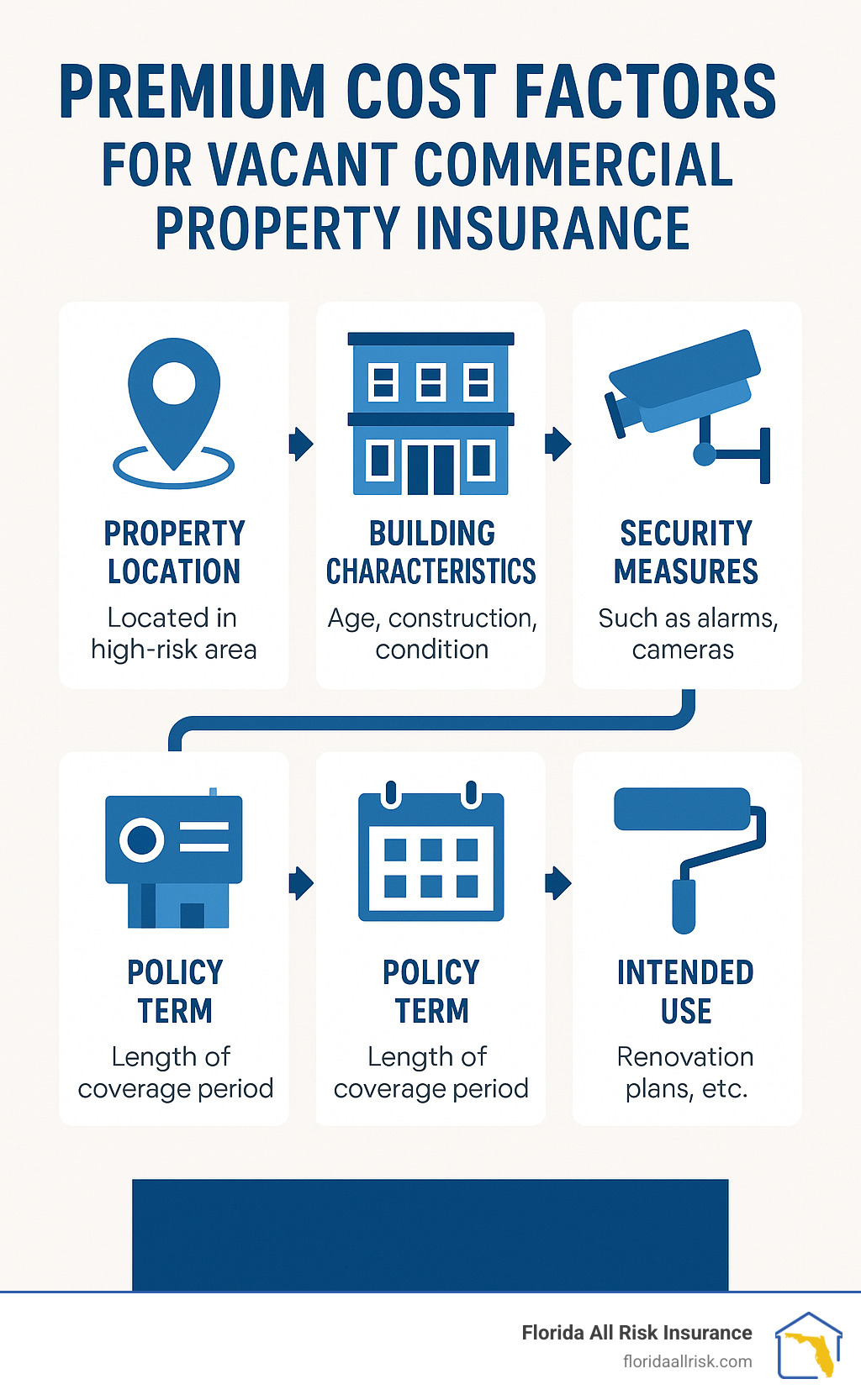
Good news, though – you can often reduce premiums by implementing security measures. Alarm systems, surveillance cameras, perimeter fencing, and regular property inspections may qualify you for discounts. It’s not just about saving money; these measures genuinely reduce risk and help protect your investment.
Most vacant property policies offer flexible terms of 3, 6, 9, or 12 months. While shorter terms might have higher annualized rates, they provide flexibility if you expect the vacancy to be temporary. This flexibility becomes particularly valuable when marketing a property for lease or planning renovations with uncertain timelines.
At Florida All Risk Insurance, we understand the unique challenges facing owners of vacant commercial properties. Our St. Petersburg team specializes in finding solutions custom to Florida’s distinctive challenges, including coastal exposure and seasonal vacancy patterns. We work with multiple carriers to create customized protection that addresses your specific risks while keeping costs manageable.
For comprehensive protection that gives you peace of mind while your property sits empty, explore our All Risk Commercial Property Insurance options or learn more about managing Commercial Property Insurance Risk.
Reducing Risk & Premiums: Security, Maintenance, Endorsements
Let’s face it – an empty building can feel like a money pit, especially when insurance premiums keep climbing. The good news? You can actually lower those costs while better protecting your property. It’s a win-win that many property owners miss out on.
Taking a proactive approach to securing and maintaining your vacant property doesn’t just make good business sense—it can substantially reduce your vacant commercial property insurance premiums too. Think of these measures as investments rather than expenses.
Security Measures
Empty buildings practically announce “nobody’s watching” to potential troublemakers. That’s why effective security starts with visibility. Installing centrally monitored security systems with 24/7 monitoring capabilities can catch problems before they escalate—and many insurance carriers will reward you with premium discounts for having these systems in place.
Don’t underestimate the power of good lighting. Well-illuminated properties are significantly less appealing to vandals and thieves. Motion-sensor lights around the perimeter create an immediate deterrent effect when someone approaches after hours.
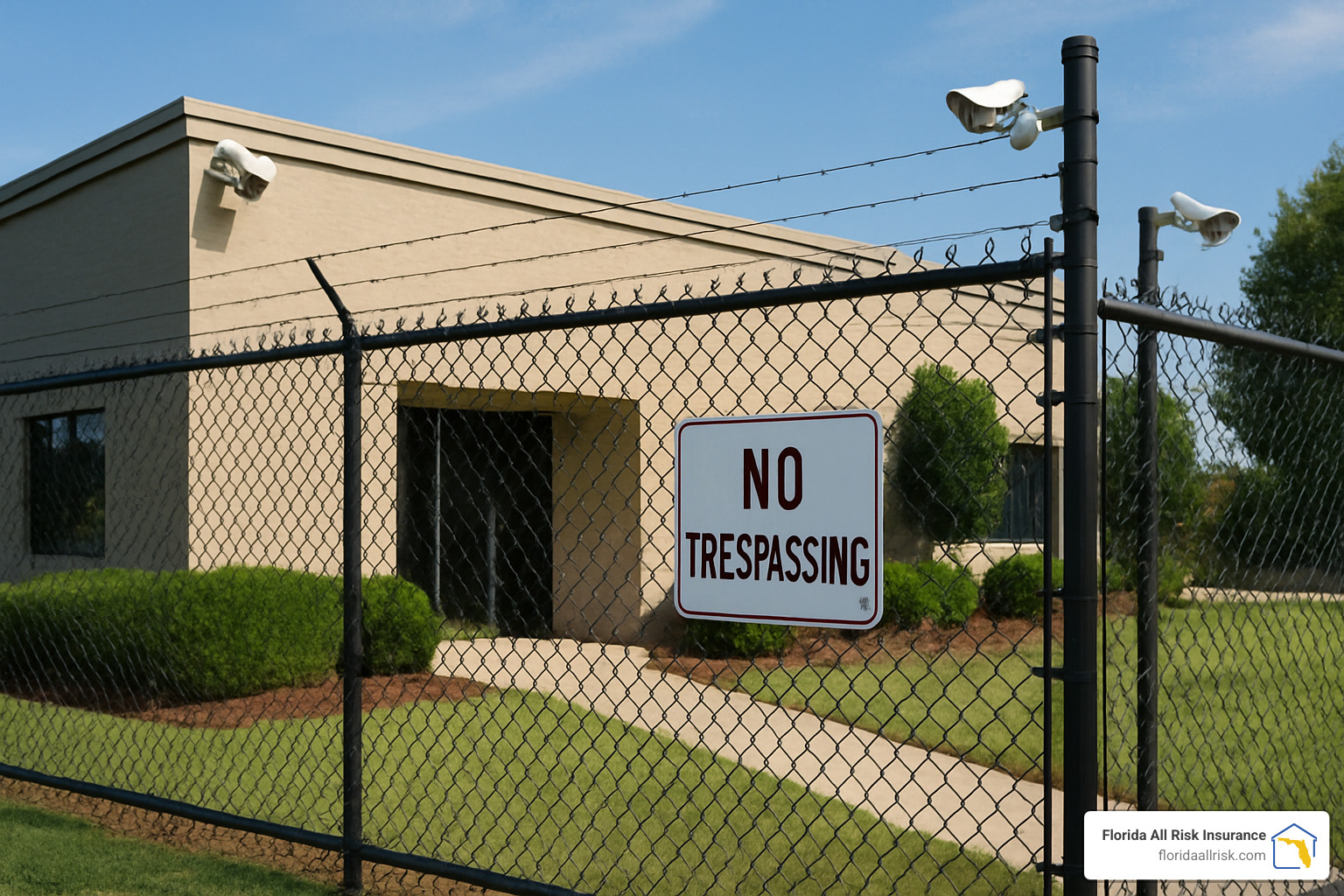
Physical barriers matter too. Commercial-grade locks on all entry points, securely boarded windows where appropriate, and perimeter fencing with locked gates all create layers of protection. Adding clearly visible “No Trespassing” signs establishes both physical and legal boundaries.
For higher-value properties or those in particularly vulnerable areas, regular security patrols can provide an extra layer of protection that may pay for itself in premium savings and prevented losses.
Maintenance Protocols
“Out of sight, out of mind” is a dangerous approach with vacant properties. Regular inspections—ideally weekly or bi-weekly—help catch small issues before they become major problems. I always tell my clients to document these inspections with dated photographs, which can be invaluable if you ever need to file a claim.
Winter brings special challenges for empty buildings. Proper winterization, including insulating or draining pipes to prevent freezing and bursting, is essential preventive maintenance that insurers notice and appreciate.
The decision about utilities requires careful thought. Keeping them active supports security systems and prevents freezing, but inactive utilities eliminate certain risks. Whichever route you choose, document your decision and the precautions you’ve taken.
Curb appeal matters even when nobody’s home. Maintaining landscaping and exterior appearance prevents your property from signaling its vacancy to potential troublemakers. Fresh paint, trimmed shrubs, and cleared walkways suggest an actively managed property rather than an abandoned one.
Don’t forget regular structural checks. The roof, foundation, and building envelope should be inspected regularly for signs of water intrusion, which can cause devastating damage if left unchecked.
Insurance Strategies
Working with the right insurance partner can make a tremendous difference in both coverage and cost. At Florida All Risk Insurance, we help clients throughout Florida develop comprehensive risk management strategies that both protect assets and optimize insurance costs.
A vacancy permit endorsement can be a game-changer for temporarily vacant properties. This modification to your existing commercial property policy reinstates coverages that would otherwise disappear during vacancy. While it adds some premium cost, it’s often more economical than a standalone vacant building policy for shorter vacancies.
Consider adjusting your deductibles strategically. Accepting a higher deductible can significantly lower premiums, though you’ll need to be prepared for greater out-of-pocket costs if a claim occurs. We can help you find the sweet spot that balances premium savings against your risk tolerance.
Don’t miss out on bundling opportunities. Combining multiple insurance needs—such as coverage for multiple vacant properties or other business insurance—often results in meaningful premium discounts.
Many insurers offer specific premium reductions for implementing risk mitigation measures. These “loss control credits” can add up quickly when you’ve taken multiple steps to secure and maintain your property.
Vacancy Permit & Other Endorsements That Pay Off
Smart endorsement choices can dramatically improve your vacant commercial property insurance protection while keeping costs manageable.
The vandalism and malicious mischief endorsement is particularly valuable for vacant properties, as it explicitly adds back coverage for intentional damage by third parties—one of the most common risks empty buildings face.
If your property will undergo renovation, consider a builders risk conversion option. This endorsement facilitates a smooth transition to builders risk coverage when construction begins, eliminating potential coverage gaps during this critical phase.
For properties with significant mechanical systems, equipment breakdown coverage protects vulnerable mechanical, electrical, and pressure equipment during periods of disuse when problems might otherwise go unnoticed until significant damage occurs.
Given the heightened liability exposure of vacant properties, an umbrella liability policy provides additional protection beyond your primary policy limits. This extra layer of coverage can be surprisingly affordable relative to the protection it provides.
As an independent agency with deep Florida market knowledge, Florida All Risk Insurance connects you with the right endorsements from multiple carriers, customized to your specific situation and property. We understand that no two vacant properties face exactly the same risks, especially in Florida’s diverse climate zones and market conditions.
Learn more about reducing risks at our Commercial Property Insurance Risk resource center.
Getting Covered: Application, Policy Management & When Occupancy Changes
Securing appropriate vacant commercial property insurance involves a more detailed application process than standard commercial coverage. Here’s what to expect:
Application Process
-
Standard ACORD forms: These industry-standard applications capture basic property information.
-
Vacant property supplemental questionnaire: This form collects vacancy-specific details such as:
- Duration of vacancy
- Reason for vacancy
- Security measures in place
- Utility status
- Inspection frequency
-
Future plans for the property
-
Loss history documentation: Most insurers require 3-5 years of loss runs to evaluate claim history.
-
Property photos: Recent photographs of both exterior and interior conditions help underwriters assess the property’s condition and security.
-
Valuation documentation: Accurate building valuation is crucial for ensuring proper coverage limits.
For Florida properties, additional considerations may include windstorm protection features, flood zone information, and coastal exposure details. At Florida All Risk Insurance, our St. Petersburg team specializes in navigating these Florida-specific requirements.
Policy Management & Occupancy Changes
Managing your vacant commercial property insurance effectively requires attention to several key areas:
-
Policy term selection: Choose a term length that aligns with your expected vacancy period. Options typically include 3, 6, 9, or 12 months.
-
Premium payment options: Unlike standard commercial policies, vacant building insurance often requires full premium payment upfront, though some carriers offer financing for 12-month policies.
-
Occupancy monitoring: Track and document the occupancy percentage of your building, particularly as it approaches the critical 31% threshold.
-
Insurer notification: Promptly inform your insurance provider of any changes in occupancy status, security measures, or property condition.
-
Policy conversion: When occupancy increases above the vacancy threshold, work with your agent to transition back to a standard commercial property policy.
From Vacant to Renovation: Builder’s Risk vs Vacant Commercial Property Insurance
Many vacant properties eventually undergo renovation, requiring a shift in insurance strategy. Here’s how the two coverage types compare:
| Aspect | Vacant Building Insurance | Builder’s Risk Insurance |
|---|---|---|
| Purpose | Protects vacant, idle property | Covers property during active construction |
| Property Valuation | Based on existing structure | Reflects increasing value as work progresses |
| Coverage Trigger | Occupancy below 31% | Start of renovation activities |
| Theft Coverage | Limited, often excluded | Typically includes materials and supplies |
| Term Length | 3, 6, 9, or 12 months | Matches project timeline (usually up to 12 months) |
| Premium Basis | Building characteristics and location | Project cost and scope |
The transition point between these coverages isn’t always clear-cut. Light cosmetic renovations might be acceptable under a vacant building policy, while structural work typically requires builder’s risk coverage. At Florida All Risk Insurance, we help clients determine the appropriate timing for this transition and ensure continuous protection throughout the process.
Claim Scenarios & Documentation Tips
Understanding common claim scenarios can help you better prepare for potential losses. Here are typical situations affecting vacant commercial properties and documentation tips for each:
- Fire damage from squatters or arson
- Documentation needed: Police and fire department reports, security logs, photos of the property before and after damage
-
Tip: Regular date-stamped photos prove the condition before the incident
-
Water damage from burst pipes or roof leaks
- Documentation needed: Maintenance records, inspection logs, weather reports
-
Tip: Document winterization efforts and regular system checks
-
Liability claims from trespassers or passersby
- Documentation needed: Warning signage photos, security measures in place, visitor logs if applicable
-
Tip: Maintain a log of all property inspections and security patrols
-
Vandalism and theft
- Documentation needed: Police reports, inventory of damaged/stolen items, security system records
- Tip: Maintain a detailed inventory with photos of any equipment or fixtures remaining in the building
Proper documentation is crucial for claim approval. We recommend creating a vacant property management file that includes:
– Regular inspection reports with dated photographs
– Maintenance records
– Security system tests and alerts
– Correspondence with local authorities
– Utility status and service records
Frequently Asked Questions about Vacant Commercial Property Insurance
What is a vacancy permit endorsement and when should I buy it?
Think of a vacancy permit endorsement as a special permission slip for your regular commercial property policy. It tells your insurance company, “Yes, I know the building is empty, but please keep covering everything anyway.”
This endorsement makes perfect sense when you’re facing a temporary vacancy situation. Maybe you’re between tenants but actively showing the space, planning some light renovations, or waiting for a new business to move in. In these scenarios, paying the additional 10-25% on top of your regular premium can save you significant headaches compared to purchasing an entirely new policy.
I’ve helped many Florida property owners who thought they needed to completely change their insurance when a building emptied out. Often, they were relieved to find this simpler option for short-term vacancies under six months. The endorsement maintains coverage for those critical perils like vandalism and water damage that would otherwise disappear after 60 days.
How much does a policy cost for short-term versus long-term vacancies?
Your wallet will definitely feel the difference between insuring a building that’s temporarily empty versus one that’s going to sit vacant for the foreseeable future.
For short-term vacancies (3-6 months), you’re typically looking at paying about 15-30% more than your standard commercial property rate. The good news? Many insurers will allow pro-rated cancellation if your building becomes occupied again ahead of schedule, so you’re not stuck paying for unnecessary coverage.
When you’re facing a long-term vacancy (over 6 months), that’s when the costs really climb. Expect premiums anywhere from 50-100% higher than standard rates. Most insurers will require a specialized vacant commercial property insurance policy rather than just an endorsement.
To put this in real numbers: a $500,000 commercial building with a standard annual premium of $1,500 might cost $2,000 with a short-term vacancy permit, but jump to $2,500-$3,000 for a long-term vacant building policy.
The longer your property sits empty, the fewer coverage options you’ll find and the more you’ll pay. Properties vacant for over a year face particularly steep premiums as insurers view them as significantly higher risk.
Are vacant land and vacant building policies the same thing?
They might sound similar, but these are actually quite different insurance products – like comparing a bicycle to a motorcycle. They both have wheels, but that’s where the similarities mostly end.
Vacant land insurance primarily focuses on liability protection. If someone wanders onto your empty lot and gets injured, this coverage helps with their medical bills and your potential legal costs. It’s relatively inexpensive, typically ranging from $100-$500 annually, because there’s simply less that can go wrong with an empty piece of land.
Vacant building insurance (or vacant commercial property insurance) is much more comprehensive. It protects both the physical structure against damages (fire, wind, hail) and provides liability coverage for injuries. This dual protection is why it costs significantly more – usually $1,000-$3,000+ per year. The policy can also include coverage for debris removal after a loss, limited pollution cleanup, and optional protection against vandalism and theft.
Here in Florida, many of our clients own properties with both vacant buildings and surrounding unused land. In these cases, we often recommend package policies that cover everything under one umbrella. This approach typically saves money compared to purchasing separate policies while ensuring complete protection.
At Florida All Risk Insurance, we’ll help you determine exactly what type of vacancy coverage makes sense for your specific situation. Whether you’re holding an empty lot for future development or managing a temporarily vacant retail space, we’ll make sure you’re neither over-insuring nor leaving dangerous gaps in your protection.
Conclusion
Let’s face it – empty buildings can be money pits without the right protection. As commercial vacancy rates continue to hover at historic highs, understanding how to properly insure these properties isn’t just smart – it’s essential for protecting your investment and your peace of mind.
Throughout this guide, we’ve explored the ins and outs of vacant commercial property insurance and how it differs from standard coverage. The reality is clear: when your building sits empty, the risks multiply while standard coverage shrinks.
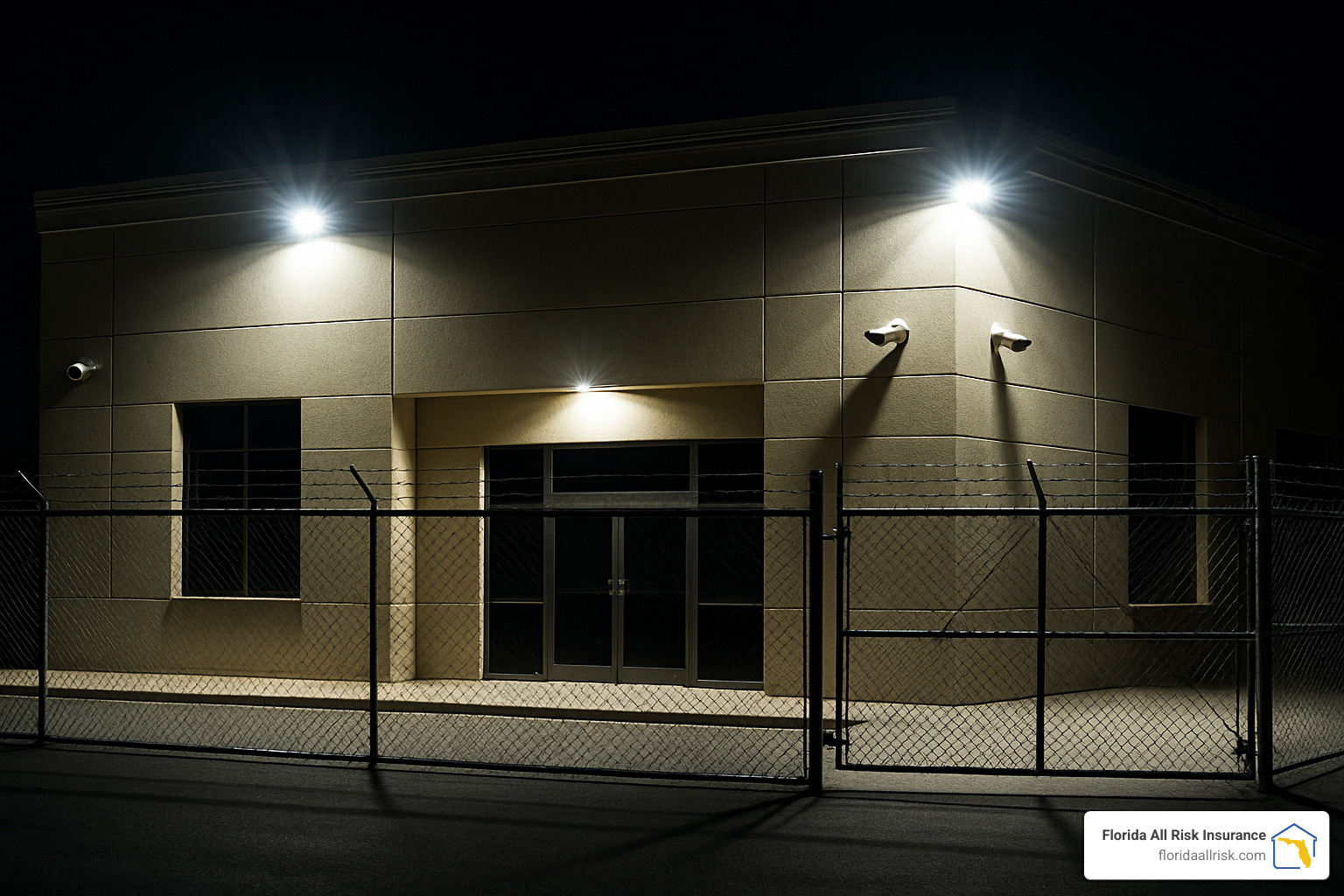
Once your building crosses that 31% occupancy threshold and sits vacant for 60 days, your standard policy starts creating serious coverage gaps. That’s when specialized protection becomes not just valuable, but necessary.
The good news? You don’t have to steer these waters alone. At Florida All Risk Insurance, we’ve helped countless property owners across Florida develop protection strategies that make sense for their unique situations. Whether your property is sitting empty while you search for new tenants, undergoing renovation, or waiting for its next chapter, we can help you find the right balance of coverage and cost.
What makes our approach different is our deep understanding of Florida’s unique property challenges – from coastal considerations to seasonal vacancy patterns. As an independent agency, we’re not tied to a single insurer’s products. Instead, we can shop the market to find you the most comprehensive protection at competitive rates.
Don’t wait for a broken pipe, vandalism incident, or liability claim to find your vacant property isn’t properly covered. A quick conversation with our team could save you thousands in potential losses and give you the confidence that your investment remains secure until it’s ready for its next purpose.
For more information about protecting your commercial properties – vacant or occupied – visit our commercial property coverage page or call our St. Petersburg office today. We’re ready to help ensure your property doesn’t become another vacancy statistic.