

Home insurance coverage Florida: 6 Essential Safeguards
Why Understanding Home Insurance Coverage Florida Is Critical for Every Homeowner
Home insurance coverage Florida is one of the most complex and expensive in the nation, with average annual premiums around $4,200—nearly triple the national average. As a Florida homeowner, you face a unique combination of risks: more hurricanes than any other state, constant flood threats, and a volatile insurance market where carriers are increasingly scarce.
Quick Answer: What Does Home Insurance Coverage Florida Include?
A standard Florida homeowners policy bundles six key protections:
- Coverage A (Dwelling): Protects your home’s structure, based on rebuilding cost.
- Coverage B (Other Structures): Covers detached structures like garages, sheds, and fences.
- Coverage C (Personal Property): Protects your belongings, such as furniture and electronics.
- Coverage D (Loss of Use): Pays for additional living expenses if your home is uninhabitable.
- Coverage E (Personal Liability): Protects you from lawsuits for injury or property damage.
- Coverage F (Medical Payments): Covers minor medical bills for guests injured on your property.
Critical Florida-Specifics:
- Flood insurance is NOT included and must be bought separately.
- Hurricane deductibles are a percentage (2-10%) of your home’s insured value, not a flat dollar amount.
- Wind mitigation features can earn you significant, state-mandated discounts.
Understanding what your policy covers—and what it excludes—is essential to avoid financial devastation after a disaster. The rules are different in Florida, and the stakes are higher.
I’m Jason Miller of Florida All Risk Insurance. With over 20 years of experience and a family legacy in this business, I’ve seen how the right coverage can mean the difference between recovery and ruin. My team is dedicated to helping homeowners like you steer these complexities and find comprehensive, affordable protection.
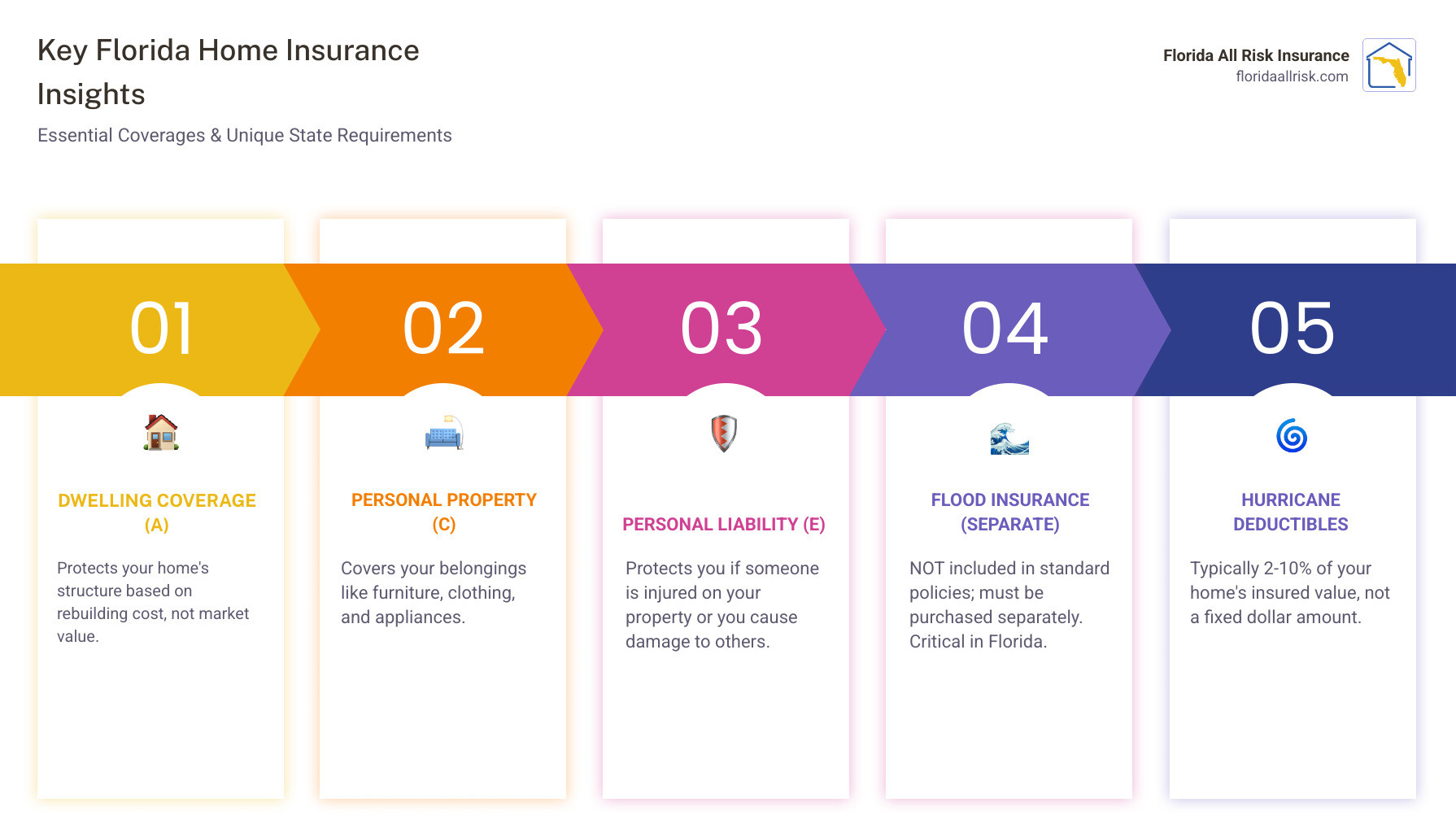
The Foundation: Understanding Standard Homeowners Insurance Policy Components
A typical Florida homeowners policy is a package of several distinct coverages, each designed to protect a different aspect of your home and financial life. Understanding these foundational elements is the first step toward ensuring you are adequately insured.
Standard Home Insurance Coverage Florida: What’s Included?
When we talk about home insurance coverage Florida, we’re usually referring to a comprehensive policy that bundles several types of protection. Let’s break down each component:
- Dwelling (Coverage A): This is the core of your policy, covering the physical structure of your home and attached structures like garages or decks. The coverage amount must reflect the cost to rebuild your home, not its market value. Rebuilding costs include materials, labor, and meeting current building codes.
- Other Structures (Coverage B): This protects structures on your property not attached to your house, such as a detached garage, shed, or fence. Coverage is typically a percentage (often 10-20%) of your Dwelling (Coverage A) limit.
- Personal Property (Coverage C): This covers your belongings—furniture, clothing, electronics—from damage, destruction, or theft, both inside your home and sometimes while traveling. Be aware that standard policies have sub-limits for high-value items like jewelry, firearms, and art (e.g., a $1,500 limit for jewelry theft). If you own valuable items, you may need to purchase a separate rider or floater to insure them for their full appraised value.
- Loss of Use (Coverage D): Also known as Additional Living Expense (ALE), this is a lifeline if a covered loss makes your home uninhabitable. It pays for necessary increases in living expenses to maintain your normal standard of living, such as hotel stays, a temporary rental, restaurant meals, laundry services, and even pet boarding fees. This is usually 10-20% of your dwelling coverage.
- Personal Liability (Coverage E): This protects you financially if you or a family member are found legally responsible for injuring someone or damaging their property. For example, if a guest slips on a wet tile in your home and sues for medical costs, or if your tree falls and damages your neighbor’s roof, this coverage helps pay for your legal defense and any settlements.
- Medical Payments (Coverage F): This covers reasonable medical expenses for guests accidentally injured on your property, regardless of fault. It helps resolve minor incidents before they become lawsuits.
For a broader overview, you can refer to the Consumer Services overview from the Florida Department of Financial Services.
Replacement Cost vs. Actual Cash Value (ACV)
One of the most critical distinctions in home insurance coverage Florida is how your property is valued for a claim. This choice significantly impacts your payout.
- Actual Cash Value (ACV): This pays the cost to replace your property minus depreciation for age and wear. If a 10-year-old roof with a 20-year lifespan is destroyed, an ACV policy might only pay for half the cost of a new one, leaving you with a large out-of-pocket expense. For personal property, this means you’d get what your five-year-old couch is worth today, not what it costs to buy a new one.
- Replacement Cost (RC): This is the preferred option. An RC policy pays to repair or replace your property with new materials of similar quality, without deducting for depreciation. If your 10-year-old roof is destroyed, you get the full cost of a brand-new roof. While RC policies have higher premiums, they offer far greater financial protection. For your dwelling, Replacement Cost is essential. For personal property, we always recommend adding an RC endorsement to avoid the financial shock of depreciation.
Specialized Coverage: Condos (HO-6) and Mobile Homes
Florida’s diverse housing market includes many condos and mobile homes, which require specialized policies.
- HO-6 Policies (Condominium Unit Owners): If you own a condo, your association’s master policy covers the building’s exterior and common areas. An HO-6 policy is essential to cover what the master policy doesn’t: your unit’s interior walls, floors, fixtures, personal property, and liability. It also provides loss assessment coverage, which is critical. If the condo association levies a special assessment on all unit owners to cover a large master policy deductible or uninsured damage to a common area, this coverage helps pay your share, protecting you from a sudden, large bill.
- Mobile Home Insurance: These policies are designed for manufactured homes. They protect the structure and your belongings, similar to a standard policy. However, they often settle claims on an Actual Cash Value (ACV) basis, especially for older homes. Ensuring your mobile home meets wind tie-down requirements is crucial for insurability and can lower your premium.
Florida’s Perfect Storm: Navigating Hurricane, Flood, and Other Unique Risks
Insuring a home in Florida means preparing for catastrophic weather. Standard policies have specific rules and exclusions for the state’s biggest threats. Understanding these nuances is key to avoiding devastating financial gaps.
Hurricane Coverage and Deductibles Explained
Standard Florida homeowners policies include coverage for windstorm damage, but it comes with a special Hurricane Deductible.
- How it Works: Unlike a standard flat-dollar deductible, a hurricane deductible is a percentage (typically 2% to 10%) of your home’s insured value (Coverage A). For a home insured at $300,000 with a 5% deductible, you’d be responsible for the first $15,000 of hurricane damage. Choosing a higher percentage can lower your annual premium, but it significantly increases your financial risk in the event of a storm.
- When it Applies: The deductible is triggered by a storm officially named by the National Hurricane Center. It applies from the time a hurricane watch or warning is issued for any part of Florida.
- A Silver Lining: Florida law states you only have to pay your hurricane deductible once per calendar year. If a second hurricane hits in the same year, your lower, standard “All-Other-Perils” deductible would apply.
Understanding and budgeting for your hurricane deductible is a critical part of your financial preparedness.
Why is Flood Insurance Essential for Home Insurance Coverage Florida?
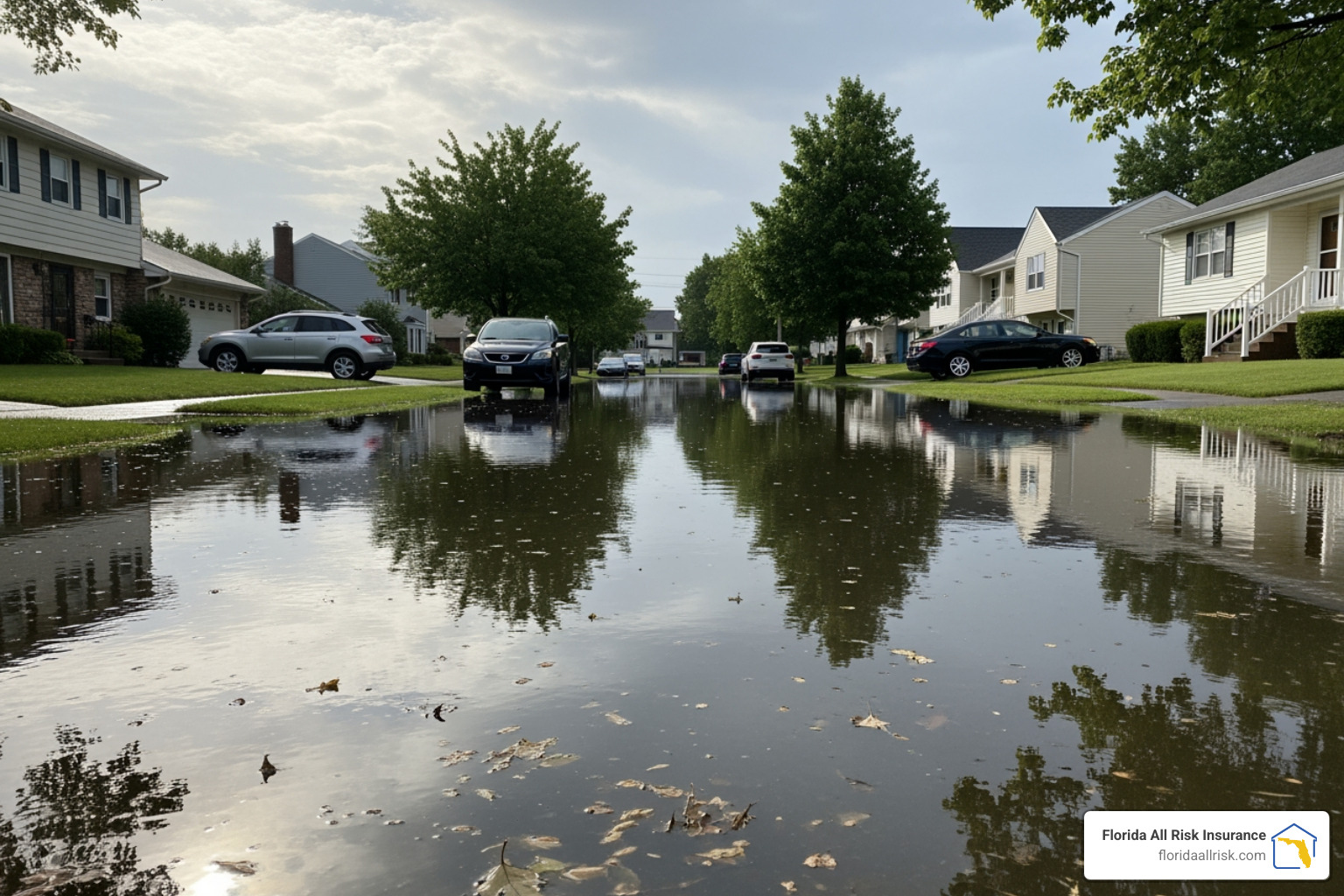
This is the most critical exclusion to understand for home insurance coverage Florida: standard homeowners policies do not cover flood damage. Damage from rising water, storm surge, or wave wash is not covered.
To protect against this, you must purchase a separate flood insurance policy. There are two primary sources for this coverage:
- National Flood Insurance Program (NFIP): This is a federal program that provides the majority of flood policies. The average cost in Florida is around $700 per year, but this can vary dramatically based on your specific risk. The NFIP recently updated its pricing methodology to Risk Rating 2.0, which bases premiums on a property’s individual characteristics (like elevation and proximity to water) rather than just its flood zone.
- Private Flood Insurance: A growing number of private insurers now offer their own flood policies. These can sometimes provide higher coverage limits and more competitive rates than the NFIP, but they are not federally backed and have different rules and claims processes.
Crucially, most flood policies have a 30-day waiting period before they take effect, so you cannot buy coverage right before a storm. With many lenders and even Citizens now mandating flood insurance for certain properties, and given Florida’s low-lying geography, we advise every homeowner to secure a flood insurance policy.
Special Considerations for Canadian and Out-of-State Owners
Owning a Florida property from afar, whether from another state or Canada, presents unique insurance challenges.
- Regulatory Differences: The U.S. insurance market is state-regulated, which can be unfamiliar to Canadian owners accustomed to federal regulation.
- Financing Problems: Lenders require proof of adequate insurance to approve a mortgage. Difficulty securing coverage can jeopardize a property purchase.
- Property Management: Insurers will want to know your plan for managing the property, especially for storm preparation and post-storm inspections.
- Rental Liability: If you rent out your property, your liability exposure increases. You’ll need to ensure your policy covers rental activities.
Working with an agent experienced with the needs of out-of-state owners is vital to steer these complexities.
Decoding the Dollars: What Influences Florida Home Insurance Costs?
The average Florida homeowner pays around $4,200 annually for insurance, a figure driven by a multitude of risk factors. Understanding what insurers look for can help you identify potential savings.
Key Factors That Determine Your Premium
Insurers use a complex formula to assess risk and calculate your premium for home insurance coverage Florida.
- Home’s Age: Older homes with outdated plumbing, wiring, or structural elements are more expensive to insure. For homes over 30 years old, most insurers require a 4-Point Inspection that verifies the age and condition of the roof, electrical system, plumbing, and HVAC before they will offer a policy.
- Construction Materials: Masonry (concrete block) homes are more wind-resistant than frame homes and often earn lower rates.
- Roof Age and Shape: The roof is a home’s first line of defense and a primary concern for Florida insurers. A newer roof is one of the most significant factors in determining your premium and even your ability to get coverage. Many carriers are hesitant to insure roofs over 15 years old. Hip roofs (sloped on all four sides) perform better in high winds than gable roofs and can lead to substantial discounts.
- Location: Proximity to the coast or a high-risk flood zone significantly increases premiums.
- Claims History: A history of frequent claims, especially for water or wind, will increase your rates.
- Credit Score: Insurers in Florida may use a credit-based insurance score to help determine premiums.
- Protective Devices: Monitored security systems and fire alarms can qualify you for small discounts.
Opening up Savings: Wind Mitigation and Other Discounts
Florida law requires insurers to offer discounts for features that mitigate wind damage. A wind mitigation inspection is the key to open uping these savings.
A qualified inspector assesses your home’s wind-resistant features and documents them on a standard form. Key features that earn discounts include:
- Roof-to-Wall Attachments: Strong metal connectors (straps or clips) that secure the roof to the walls.
- Roof Shape: A hip roof is more aerodynamic and wind-resistant.
- Opening Protection: Impact-resistant windows and doors, or rated shutters, protect against flying debris.
- Secondary Water Resistance (SWR): This is a self-adhering, modified-bitumen sheet applied directly to the roof decking before the shingles are installed. It acts as a waterproof barrier, preventing water intrusion even if the shingles are blown off. This feature provides one of the largest available wind mitigation discounts.
These discounts can be substantial. Beyond wind mitigation, you can also save by bundling your home and auto policies or by qualifying for a new home discount.
For more details, see the state’s Premium Discounts for Hurricane Loss Mitigation Consumer Guide.
Understanding Law & Ordinance Coverage
If your home is damaged, you may be required to rebuild to current, stricter building codes. Law & Ordinance coverage helps pay for these extra costs.
For example, if a storm damages your older home, new codes might require a higher foundation or stronger hurricane straps. This coverage pays the difference. In Florida, insurers must include Law and Ordinance coverage equal to 25% of your dwelling amount on most policies. They are also required to offer you the option to increase it to 50% for an additional premium. For older homes, this extra coverage is a wise investment, as code-compliance costs can be staggering.
After the Storm: The Florida Home Insurance Claims Process Explained
When disaster strikes, knowing your rights and responsibilities is crucial. Florida has specific laws governing the claims process. Prompt action and thorough documentation are key to a smooth experience.
Your Duties as the Insured After a Loss
Your policy outlines specific duties you must fulfill after a loss to ensure a successful claim for your home insurance coverage Florida.
- Notify Your Insurer: Report the damage to your agent or insurance company as soon as possible.
- Mitigate Further Damage: Take reasonable steps to protect your property from more harm, like putting a tarp on a damaged roof or boarding up a broken window.
- Document Everything: Before making repairs, take extensive photos and videos of all damage.
- Keep Receipts: Save all receipts for temporary repairs and additional living expenses (like hotel stays).
- Create an Inventory: Make a detailed list of all damaged personal property, including its description, age, and original cost.
- Cooperate with the Adjuster: Work with the insurance adjuster during their investigation, which may include providing a recorded statement.
The Insurer’s Obligations: Timelines and Communication
Florida law sets strict timelines for insurers to ensure claims are handled fairly and efficiently.
- 7-Day Acknowledgment: Insurers must acknowledge receiving your claim within 7 days.
- 7-Day Investigation Start: They must begin their investigation within 7 days of receiving your proof-of-loss statement.
- 60-Day Pay or Deny Rule: Within 60 days of receiving notice of a claim, the insurer must pay the undisputed portion of the claim or deny it. Late payments may be subject to interest as per Florida Statutes Section 55.03.
Policyholders generally have one year from the date of loss to report an initial claim for hurricane damage and 18 months for a supplemental claim.
Florida’s Valued Policy Law and Total Loss Claims
Florida has a unique statute called the Valued Policy Law (VPL) that protects homeowners in the event of a total loss.
If a covered peril (like a fire or hurricane) results in a “total loss” where your home cannot be repaired, the VPL requires the insurer to pay the full face amount of the policy covering the structure. For example, if your home is insured for $300,000 and is declared a total loss, the insurer pays $300,000 for the structure, preventing disputes over its value after it has been destroyed. This law is a powerful safeguard, providing a clear financial outcome in the most devastating circumstances.
When You Can’t Find Coverage: Exploring Florida’s Insurance Market Options
A volatile market has made it difficult for some homeowners to find coverage. If you’re struggling to secure a policy, it’s important to know about the state’s alternative options.
Citizens Property Insurance: The Insurer of Last Resort
When private carriers won’t offer coverage, Citizens Property Insurance Corporation often can. Created by the Florida Legislature, Citizens is a state-run insurer of last resort.
- Purpose: It provides property insurance to homeowners who cannot find coverage in the private market, or only at a much higher price (typically over 20% more than a comparable Citizens policy).
- Mandatory Flood Insurance: A 2022 law requires most Citizens policyholders with wind coverage to also purchase and maintain a separate flood insurance policy.
- Assessments: If Citizens has a major claims shortfall after a catastrophe, it can levy assessments on nearly all Florida insurance policyholders (not just its own customers) to cover the deficit.
- Depopulation: Citizens actively works to move its policies back to the private market through “depopulation” programs.
While Citizens is a vital safety net, it’s intended as a temporary solution. For more information, you can visit the Florida Department of Financial Services’ website here.
Admitted vs. Surplus Lines Carriers
When shopping for home insurance coverage Florida, you’ll encounter two main types of carriers:
- Admitted Carriers: These insurers are licensed by the Florida Office of Insurance Regulation (OIR) and must follow state rules on rates and forms. Crucially, their policies are backed by the Florida Insurance Guaranty Association (FIGA), which pays claims if the insurer becomes insolvent.
- Surplus Lines Carriers: These carriers insure higher-risk properties that admitted carriers decline. They have more flexibility in pricing and coverage but are not backed by FIGA. If a surplus lines carrier fails, policyholders have limited recourse for unpaid claims. They are a necessary option for hard-to-insure risks but carry more financial risk for the consumer.
Policy Cancellation and Nonrenewal Rules
Insurers must follow specific rules when ending a policy.
- Cancellation: An insurer can only cancel a policy mid-term for specific reasons, like non-payment of premium or fraud, and must provide proper notice.
- Nonrenewal: An insurer can choose not to renew a policy at its expiration. In Florida’s tough market, this is more common. They must provide at least 120 days’ advance notice, giving you time to find new coverage. Reasons can include an insurer reducing its exposure in a certain area or a high number of claims at your property.
If you receive a nonrenewal notice, an independent agent can be invaluable in helping you shop the market for a replacement policy.
Conclusion: Secure Your Sunshine State Haven with Expert Guidance
Navigating home insurance coverage Florida means dealing with unique risks, high costs, and complex rules. From understanding your policy’s core components and the absolute need for separate flood insurance to mastering hurricane deductibles and the claims process, being an informed homeowner is your best defense. The right coverage isn’t a generic product; it’s a custom shield built to protect your most valuable asset in the Sunshine State.
Don’t steer this complex market alone. The experts at Florida All Risk Insurance specialize in the intricacies of the Florida market. We can help you assess your risks, find crucial discounts, and build a policy that provides true peace of mind.
Ready to review your coverage? Contact us today for a comprehensive policy review and a no-obligation quote!
Have questions about your specific needs? Explore our homeowners insurance solutions and see how we can help protect your Pinellas County home.
Contact Florida All Risk Insurance
Address: 7100 66th St N, Pinellas Park, FL 33781, United States
Phone: +1 727-522-7777
Email: [email protected]

