

St. Petersburg Flood Insurance: Why Your Sunshine City Needs a Raincoat
St. Petersburg flood insurance is essential protection for one of Florida’s most beautiful and flood-prone cities. Situated on the Pinellas Peninsula between Tampa Bay and the Gulf of Mexico, St. Pete’s unique geography makes it a paradise for residents but also places it at an exceptionally high risk for flooding. Here’s what you need to know to protect your home and finances.
Quick Answer for St. Petersburg Residents:
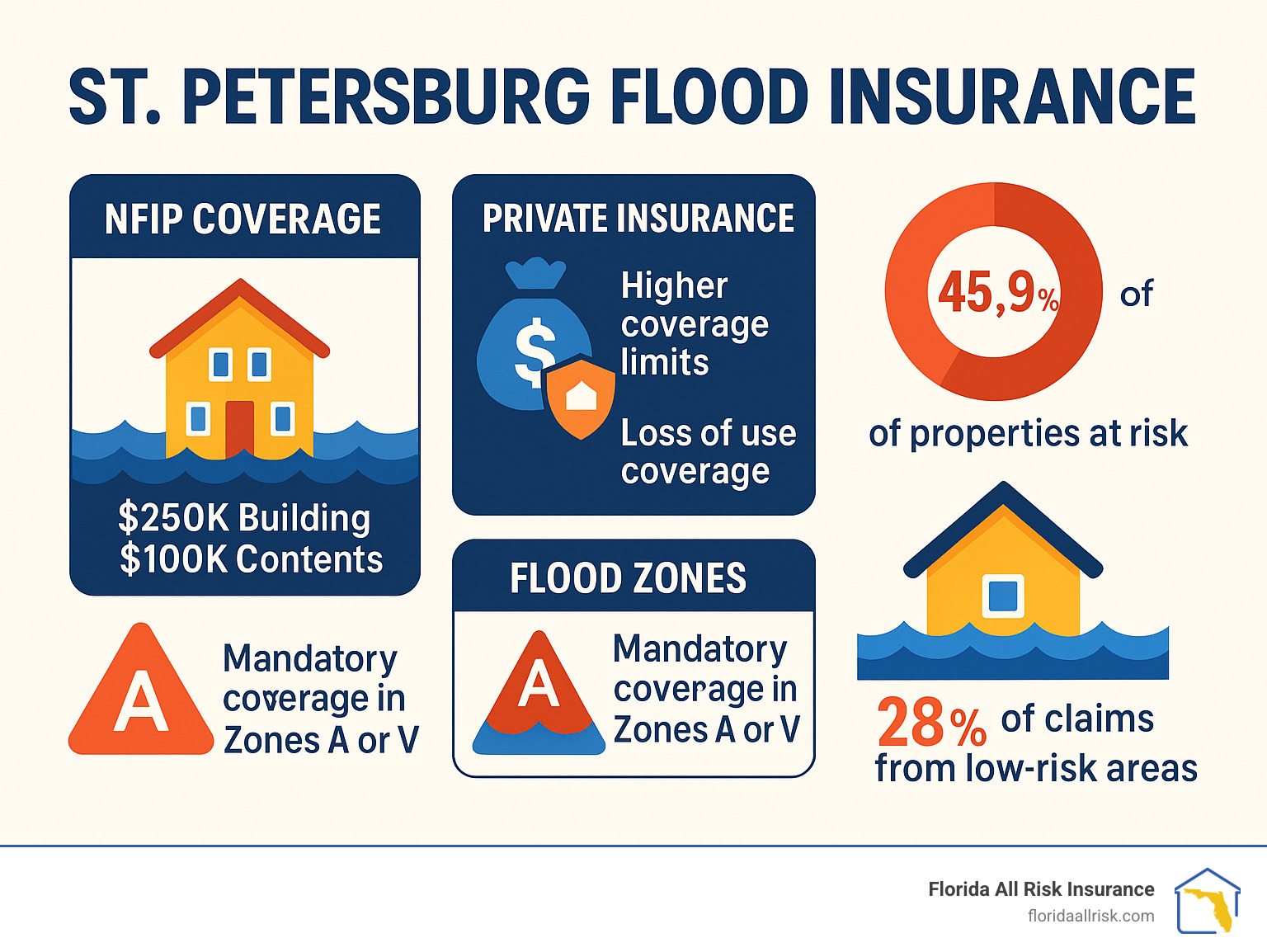
- Nearly half at risk: 39,585 properties (45.9% of all properties) are at significant flood risk over the next 30 years.
- Homeowners insurance is not enough: Standard homeowners policies do not cover flood damage from weather events.
- Two primary options: You can choose between the government-backed National Flood Insurance Program (NFIP) or more flexible private flood insurance policies.
- Risk is everywhere: 28% of all flood claims come from properties located outside of designated high-risk flood zones.
- Don’t wait for the storm: A 30-day waiting period typically applies before a new flood insurance policy becomes effective.
- Significant local discounts: St. Pete residents are eligible for a 40% discount on NFIP premiums due to the community’s proactive flood mitigation efforts.
- Average cost: While local rates vary, the average nationwide cost is around $53 per month.
Living in St. Petersburg offers unparalleled access to waterfront views, vibrant culture, and abundant sunshine, but this idyllic lifestyle carries a hidden risk. Flooding is the most common and costly natural disaster in the United States, and St. Petersburg’s low elevation, extensive coastline, and vulnerability to tropical systems make it a hotspot. Hurricanes like Hermine (2016) and Irma (2017) serve as recent, potent reminders of this ever-present threat.
A critical fact many homeowners overlook until it’s too late is that standard insurance policies explicitly exclude damage from flooding. This common misconception leaves families financially exposed when storm surge, heavy rains, or rising tides inundate their homes.
This comprehensive guide will walk you through everything you need to know to protect your home from flood damage in St. Petersburg. As experienced insurance professionals who have witnessed the devastation firsthand, we are dedicated to helping our fellow residents understand their risks, steer their options, and secure the right protection for their peace of mind.
Quick St. Petersburg flood insurance definitions:
- commercial property insurance
- hazard insurance for commercial property
- commercial property insurance risk
The Reality of Flood Risk in St. Petersburg
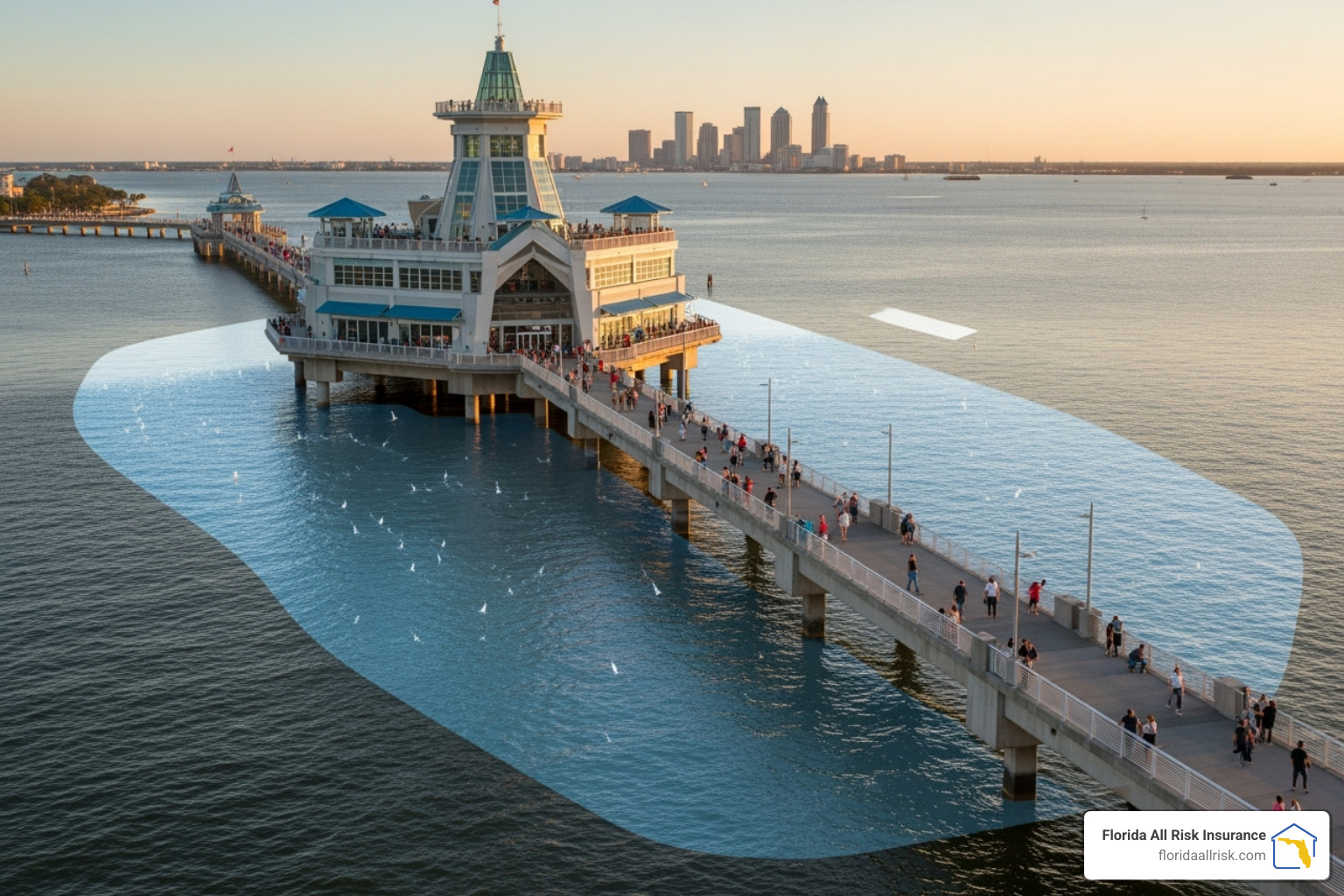
Our beautiful city, nestled between the expansive waters of Tampa Bay and the Gulf of Mexico, is in a prime location for flooding. The risk isn’t just from major hurricanes; it’s a year-round concern stemming from heavy summer thunderstorms, seasonal king tides, and even localized issues like clogged storm drains that can quickly turn a street into a river.
The Many Faces of Flooding in St. Pete
Understanding the different types of flood threats is key to appreciating your true risk:
- Storm Surge: This is the wall of water pushed ashore by a hurricane or major tropical storm. As a coastal city, St. Petersburg is highly susceptible to storm surge, which can cause the most catastrophic and widespread damage.
- Pluvial (Rainfall) Flooding: This occurs when intense, prolonged rainfall overwhelms the capacity of local drainage systems. St. Pete’s notorious summer downpours can lead to this type of street-level and property flooding, often with little warning.
- Fluvial (River) Flooding: While St. Pete doesn’t have major rivers, overflowing canals and drainage basins can contribute to flooding in nearby areas.
- Tidal Flooding: Often called “sunny-day” or “nuisance” flooding, this happens when exceptionally high tides (king tides) push water onto normally dry land, especially in low-lying coastal neighborhoods like Shore Acres and Snell Isle.
The Stark Numbers: A City on the Front Lines
The statistics are sobering. Currently, 39,585 properties in St. Petersburg face a significant flood risk over the next 30 years, which is a staggering 45.9% of all properties in the city. This means nearly one in every two homes and businesses could be impacted.
We’ve seen this play out recently. Hurricane Hermine in 2016 affected 204 properties, and Hurricane Irma in 2017 impacted another 102 properties, according to First Street flood models. These were not direct, catastrophic hits, yet they still caused significant damage and disruption.
The entire state of Florida is considered a flood zone, and every property has some level of risk. Some areas, known as “Repetitive Loss Areas,” have been hit so frequently that homeowners have taken extreme measures. For example, one St. Petersburg home received four separate NFIP payments before the owners undertook a $418,955 project to lift the structure above the flood level.
This raises a common question: Does Everyone in Florida Need Flood Insurance? Based on historical loss data and current projections, the answer is a resounding yes.
Looking Ahead: Climate Change and Future Projections
The flood risk we face today is expected to grow. Rising sea levels and the potential for stronger, more frequent storms are reshaping our future. A “1-in-100 year flood event” (a flood with a 1% chance of happening in any given year) would affect 29,131 properties today. Projections show that in just 30 years, the same event could impact 32,108 properties—nearly 3,000 more homes and businesses.
If your home is in a Special Flood Hazard Area (SFHA), you have a 26% chance of experiencing a flood during a 30-year mortgage, compared to just a 1-2% chance of a major fire. These are not odds to gamble on. A professional Flood Insurance Risk Assessment can clarify your specific vulnerability.
Why Your Homeowners Policy Won’t Save You
This is a critical point that costs Florida families millions each year: standard homeowners insurance does not cover flood damage. It’s a common and costly mistake to assume that because your policy covers water damage from a burst pipe, it also covers flooding from a natural event. It doesn’t.
Standard policies explicitly exclude flood damage. The official definition of a flood is an excess of water on land that is normally dry, affecting two or more properties or two or more acres. This includes storm surge, overflow of inland or tidal waters, heavy rainfall, and mudflow. You can read the complete official FEMA definition of a flood for additional context.
Without a separate St. Petersburg flood insurance policy, you are responsible for all repair, replacement, and cleanup costs, which can easily run into tens or hundreds of thousands of dollars. A dedicated flood policy is not just a good idea; it’s essential for every property owner in our city.
Navigating Your St. Petersburg Flood Insurance Options
While the reality of flood risk can seem daunting, homeowners today have more choices than ever. The flood insurance landscape has evolved beyond a one-size-fits-all solution. The two primary options are the government-backed National Flood Insurance Program (NFIP) and the growing private flood insurance market.
Independent agents can help you explore both paths to find coverage that fits your home, budget, and peace of mind.
The Two Main Paths: NFIP vs. Private Flood Insurance
You can choose between the federal government’s program or policies from private insurance companies. The NFIP is a long-standing, reliable option with standardized coverage backed by the U.S. government. Private flood insurance is a newer, more flexible alternative that often uses advanced technology to assess risk and can offer higher coverage limits and additional features.
| Feature | NFIP | Private Flood Insurance |
|---|---|---|
| Coverage Limits | Building: $250,000 / Contents: $100,000 | Often much higher—up to $15 million+ |
| Loss of Use Coverage | Not included (except for some specific policyholders) | Often available or included as standard |
| Replacement Cost | Building: Yes (if primary residence) / Contents: Actual Cash Value | Building & Contents: Replacement Cost often available |
| Waiting Period | Typically 30 days | Can be shorter (0-14 days) |
| Underwriting | FEMA’s Risk Rating 2.0 methodology | Proprietary, tech-driven risk modeling |
| Availability | Must be in a participating community (like St. Pete) | Broader availability through independent agents |
An independent agent can shop both markets for you. For a full list of carriers, see our guide on Flood Insurance Companies in Florida.
Understanding the National Flood Insurance Program (NFIP)
Created by Congress in 1968, the NFIP provides affordable flood insurance to communities that adopt and enforce floodplain management regulations. St. Petersburg participates in the program, making residents eligible for NFIP coverage. A key benefit is that it’s backed by the full faith and credit of the U.S. government, ensuring claims can be paid even after major disasters.
The NFIP offers two coverage types:
- Building coverage: Protects your home’s structure up to $250,000.
- Contents coverage: Protects your belongings up to $100,000.
These coverages must be purchased separately. While building coverage is often required for mortgages in high-risk zones, contents coverage is optional but highly recommended. You can verify St. Petersburg’s participation on FEMA’s official community status list.
Under its Risk Rating 2.0 methodology, the NFIP now uses a more equitable and risk-based approach to pricing. Instead of relying solely on flood zones, it considers multiple factors like a property’s specific elevation, distance to a water source, and construction type to generate a more accurate premium.
For condo owners, the association’s master policy covers the building’s common elements, but you need your own policy (an HO-6 policy with flood coverage) for personal belongings and any improvements you’ve made to your unit.
Exploring the Private Flood Insurance Market
The private flood insurance market offers innovation, competition, and flexibility. Private insurers use sophisticated technology, high-resolution topographical data, and advanced weather modeling to assess a property’s unique risk profile. This can result in more accurate and sometimes lower pricing, especially for newer or mitigated homes.
Key advantages of private flood insurance include:
- Higher Coverage Limits: Private policies can offer building coverage of $1 million or more, which is crucial for homes valued above the NFIP’s $250,000 limit.
- Loss of Use Coverage: Many private policies include this feature—also known as Additional Living Expenses—that covers costs like hotel bills and restaurant meals if your home is uninhabitable after a flood.
- Replacement Cost on Contents: Unlike the NFIP, many private policies offer replacement cost value for your personal belongings, not just their depreciated value.
- Shorter Waiting Periods: While the NFIP has a 30-day wait, some private insurers offer coverage in 7 to 14 days, and sometimes with no waiting period for a mortgage closing.
When considering a private policy, it’s important to work with an agent who can verify the insurer’s financial strength. Look for carriers with high ratings from firms like AM Best. This ensures the company has the financial stability to pay claims after a widespread disaster.
What’s Covered (and What’s Not) in a Typical Policy
Understanding what your St. Petersburg flood insurance policy covers is as important as having one. Policies vary, but they generally divide coverage into two categories: protection for your home’s structure (Building Coverage) and for your personal belongings (Contents Coverage).

Building Coverage: Protecting Your Home’s Structure
Building coverage is designed to repair or rebuild the physical structure of your home after a flood. This typically includes:
- The foundation, walls, and staircases.
- Electrical and plumbing systems.
- Central air conditioning, furnaces, and water heaters.
- Built-in appliances like stoves and dishwashers.
- Permanently installed carpeting, paneling, and cabinets.
- Window blinds.
- Detached garages (up to 10% of building coverage).
- Debris removal costs.
A special note on basements and enclosures: NFIP policies provide very limited coverage for areas below the lowest liftd floor, including basements and crawlspaces. While foundation elements and essential equipment (like a furnace or water heater) may be covered, finished items like paneling, carpeting, and personal belongings stored in these areas are typically not.
Contents Coverage: Safeguarding Your Belongings
Contents coverage protects the personal property inside your home. This is usually purchased separately from building coverage and is essential for replacing items that make your house a home. Coverage typically includes:
- Furniture, clothing, and electronics.
- Curtains and portable window air conditioners.
- Portable appliances like microwaves.
- Washers and dryers.
- Food freezers and the food inside them.
- Valuable items like original artwork and furs, though usually with a specific limit (e.g., $2,500).
We recommend creating a home inventory with photos or video to document your belongings, which is invaluable when filing a claim.
Increased Cost of Compliance (ICC) Coverage
A crucial but often overlooked feature of NFIP policies is Increased Cost of Compliance (ICC) coverage. If your home is substantially damaged by a flood and your community has updated its floodplain management ordinances, you may be required to rebuild to a higher, safer standard. ICC provides up to $30,000 to help cover the costs of elevating, flood-proofing, relocating, or demolishing the structure. This benefit is in addition to the building coverage limit and is vital for ensuring a resilient recovery.
Common Exclusions: What You Need to Know
It’s crucial to know what is not covered to avoid surprises. Common exclusions include:
- Preventable Damage: Moisture, mildew, or mold damage that the property owner could have prevented is not covered.
- Valuable Papers: Currency, precious metals, and stock certificates are excluded. Store these in a safe deposit box.
- Exterior Property: Decks, patios, fences, swimming pools, landscaping, and seawalls are not covered.
- Additional Living Expenses: The cost of temporary housing while your home is repaired is typically excluded from NFIP policies, though often available in private policies.
- Vehicles: Cars, boats, and RVs require separate coverage through auto or marine insurance.
- Loss of Use: Compensation for inconvenience or lost rental income if your property is inaccessible but undamaged is not covered.
- Sewer Backup: This is only covered if it’s a direct result of widespread flooding that caused the sewer system to back up.
For a complete overview of coverage details, see our guide on Flood Insurance Coverage Florida. Always review your specific policy documents and ask questions about anything that is unclear.
Decoding Your Flood Risk and Its Impact on Premiums
Your property’s specific flood risk is the primary driver of your St. Petersburg flood insurance cost. Understanding how this risk is assessed allows you to make informed decisions and potentially lower your premiums.
Finding Your Zone: How Flood Risk is Determined in St. Pete
Your flood risk starts with FEMA Flood Maps, also known as Flood Insurance Rate Maps (FIRMs). New maps for St. Petersburg went into effect on August 24, 2021, potentially changing risk classifications for some properties.
These maps designate different flood zones:
- Special Flood Hazard Areas (SFHAs): These are high-risk zones with at least a 1% annual chance of flooding. Flood insurance is mandatory here for homes with federally backed mortgages.
- Zone A/AE: Areas subject to inundation by the 1% annual chance flood. AE zones have determined Base Flood Elevations (BFEs).
- Zone V/VE: High-risk coastal areas with the added danger of storm-induced wave action (velocity). These zones typically have the highest insurance premiums due to the destructive power of waves.
- Moderate-to-Low Risk Zones: These are zones labeled B, C, or X. Despite the “low risk” label, 28% of flood insurance claims and one-third of federal disaster assistance for flooding come from these areas, highlighting that risk is not confined to SFHAs.
You can check your property’s zone on the FEMA Flood Map Service Center. For more information, visit our FEMA Flood Zone Map resource page.
Key Factors Influencing St. Petersburg Flood Insurance Costs
Modern pricing, especially with FEMA’s Risk Rating 2.0 and private market models, is highly individualized. Key factors include:
- First Floor Height: The elevation of your home’s lowest floor relative to the ground and the Base Flood Elevation (BFE).
- Distance to Water: Proximity to the coast, a bay, a river, or another flooding source is a major rating factor.
- Foundation Type: Homes on liftd pilings or stilts are typically cheaper to insure than those with slab-on-grade foundations or enclosures.
- Construction & Replacement Cost: The age, building materials, and total cost to rebuild your home affect its resilience and the premium.
- Claims History: A property with a history of flood claims will likely have a higher premium.
- Coverage Choices: The amount of building and contents coverage and the deductible you select directly impact your premium.
For a broader look at pricing, see our guide on How Much Does Flood Insurance Cost in Florida?.
How to Potentially Lower Your Premiums
You can take proactive steps to manage your flood insurance costs. St. Petersburg residents have several powerful strategies available:
- Leverage CRS Discounts: Pinellas County’s proactive floodplain management efforts earn residents a significant Class 3 rating in the Community Rating System (CRS). This provides a 40% discount on NFIP premiums for properties in SFHAs and a 10% discount for those in non-SFHAs. This saves residents an estimated $10 million annually.
- Implement Mitigation Measures: Taking steps to protect your home can lower premiums significantly. This includes:
- Installing Flood Vents: These allow floodwaters to flow through an enclosure rather than build up pressure and collapse the walls.
- Elevating Utilities: Moving HVAC systems, electrical panels, and water heaters to a higher floor or an liftd platform.
- Using Flood-Resistant Materials: Rebuilding with water-resistant insulation, wallboard, and flooring below the BFE.
- Elevating the Entire Home: The most effective but costly option, as detailed in a FEMA case study about a St. Petersburg home elevation.
- Increase Your Deductible: Choosing a higher deductible will lower your annual premium. The NFIP allows separate deductibles for building and contents coverage, up to $10,000 each. Ensure you can afford the out-of-pocket cost in case of a claim.
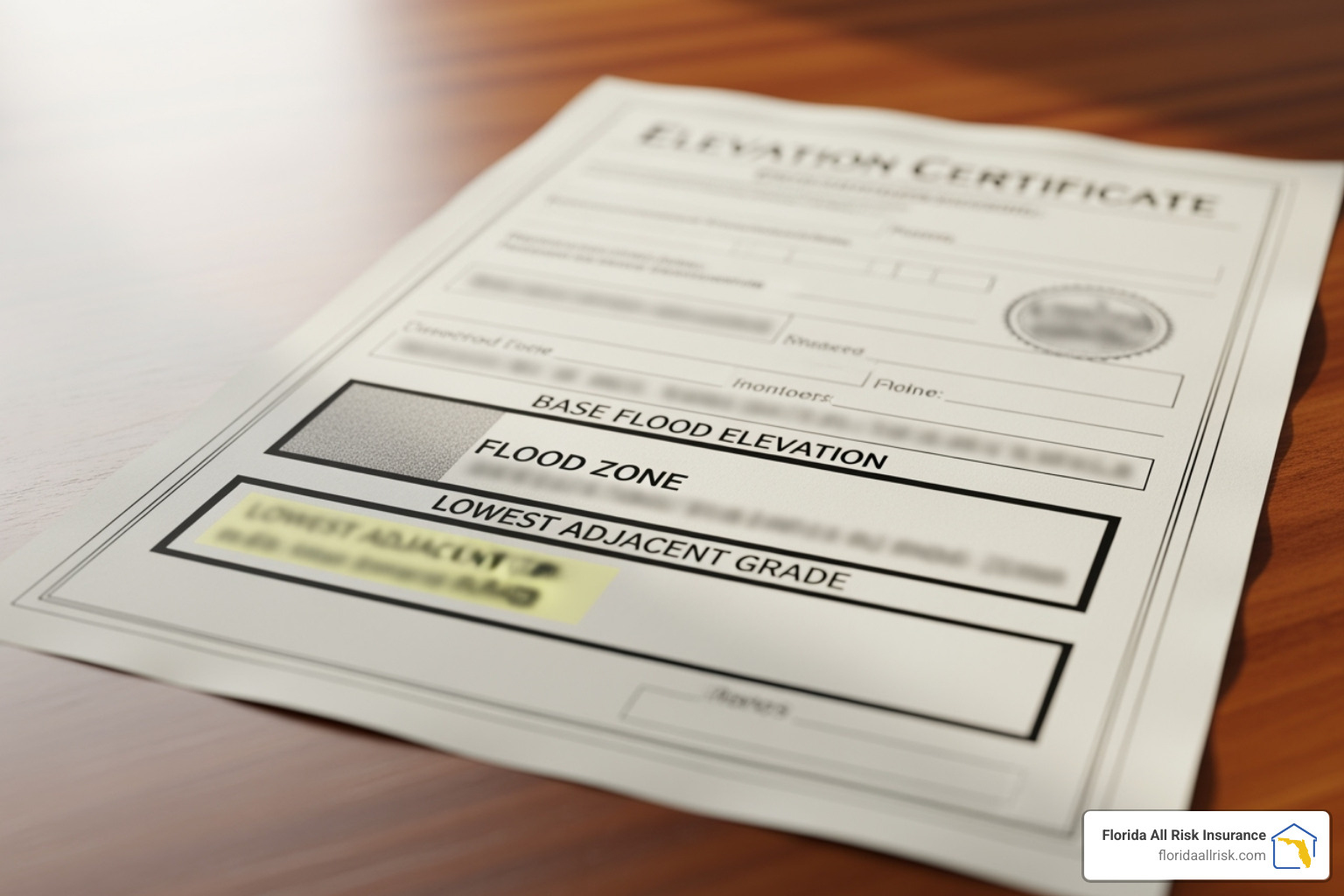
- Obtain an Elevation Certificate: This document, prepared by a licensed surveyor, provides official data on your property’s elevation. Even if not required, it can sometimes prove your home is at a lower risk than maps suggest, leading to a lower premium, especially for homes built before the first flood maps.
The A-to-Z Guide for St. Pete Homeowners: Before, During, and After a Flood
Having St. Petersburg flood insurance is your financial safety net. Knowing how to use it before, during, and after a flood can make the difference between a stressful recovery and a catastrophic one.
The Waiting Game: Policy Effective Dates
Be aware that you can’t buy flood insurance at the last minute. NFIP policies typically have a 30-day waiting period before coverage begins. Private policies may have shorter waits (often 10-14 days), but the rule is universal: you cannot purchase coverage when a storm is already approaching. Plan ahead and secure coverage well before hurricane season begins on June 1st.
Exceptions to the 30-day wait exist, such as when flood insurance is required for a new home loan or refinancing, or if a FEMA map revision newly places your property in a high-risk zone.
Before the Storm: Preparation is Key
Proactive preparation can save time, money, and immense stress later. Here are key steps to take before a flood threat:
- Create a Home Inventory: Use your smartphone to take detailed photos and videos of every room and valuable item. Document serial numbers on appliances and electronics. Store these files in a secure cloud service like Google Drive or Dropbox.
- Secure Important Documents: Keep insurance policies, deeds, titles, financial records, and identification in a waterproof, portable container. Store digital copies in your secure cloud storage as a backup.
- Understand Your Policy: Annually review your coverage limits, deductibles, and exclusions with your agent so you know what to expect. Make sure your coverage amount is still adequate for your home’s value.
- Build a Flood-Ready Kit: Prepare a kit with essentials like water, non-perishable food, medications, a flashlight, batteries, and a first-aid kit.
- Have an Emergency Plan: Establish evacuation routes, out-of-state contact numbers, and meeting points for your family.
After the Flood: Navigating the Claims Process
Once the floodwaters recede and it’s safe to return, a clear plan will help you manage the claims process effectively.
- Contact Your Insurance Agent Immediately: Your agent is your primary point of contact. They will start the claims process and provide guidance. Prompt notification helps ensure a faster claims experience.
- Document All Damage: Before you move or clean anything, take extensive photos and videos of the damage. Capture the high-water marks on both interior and exterior walls. Photograph all affected property, from furniture to flooring.
- Begin Mitigation and Cleanup: Take steps to prevent further damage, like removing wet carpets and drywall to prevent mold. Keep all receipts for any cleanup expenses, as they may be reimbursable.
- Separate Damaged Property: Move damaged items away from undamaged ones, but do not discard anything until your insurance adjuster has inspected it or given you permission to do so.
- Prepare for the Adjuster: The insurance company will assign an adjuster to inspect your property. Have your home inventory and damage photos ready for their visit. The adjuster will prepare a detailed damage estimate.
- File Your Proof of Loss: This is your formal claim for damages, a sworn statement that includes the amount you are claiming. The NFIP requires this to be submitted within 60 days of the flood. Your adjuster will help you complete this crucial document.
- Beware of Scams: Be cautious of contractors who show up unannounced or ask you to sign an Assignment of Benefits (AOB) form. An AOB can transfer your insurance rights to a contractor, leading to inflated claims and loss of control. Always get multiple written estimates, check for licenses and insurance, and consult your insurer before signing any repair contracts.
Your Next Steps to a Flood-Proof Peace of Mind
Living in St. Petersburg offers a beautiful coastal lifestyle, but it comes with undeniable and increasing flood risks. This guide has shown that St. Petersburg flood insurance is not just an option—it is a fundamental necessity for protecting your home, your family, and your financial future.
With 45.9% of properties at significant risk and climate change expected to intensify that threat, waiting is not a viable strategy. The single most critical takeaway is that your standard homeowners insurance will not cover flood damage. When storm surge from a hurricane or flash flooding from a summer storm inundates your property, you need a separate, dedicated flood policy to avoid a financial catastrophe.
Fortunately, you have excellent options. You can choose the government-backed NFIP for standardized, reliable coverage made more affordable by our community’s 40% CRS discount. Or you can explore the private flood insurance market for potentially higher limits, broader coverage, and features like loss-of-use protection.
The right choice depends on your property’s unique risk and your personal financial situation. The most important choice is to act.
Ready to Act?
Protect what matters most while the skies are clear. A waiting period of up to 30 days applies to most policies, so starting the process early is essential to ensure you’re covered before the next storm season.
Contact Us
Florida All Risk Insurance
Saint Petersburg, FL 33701
Phone: (727) 349-0311
Email: [email protected]
© 2024 Florida All Risk Insurance. All rights reserved.

