Small Farm Business Insurance: Best 2025 Guide
Why Small Farm Business Insurance is Essential for Your Livelihood
Small farm business insurance provides critical financial protection against the unique risks that threaten farming operations, from weather disasters and equipment failures to liability claims and crop losses. Whether you’re running a hobby farm or a commercial agricultural business, standard homeowners insurance simply won’t cover your farming activities, leaving you vulnerable to devastating financial losses.
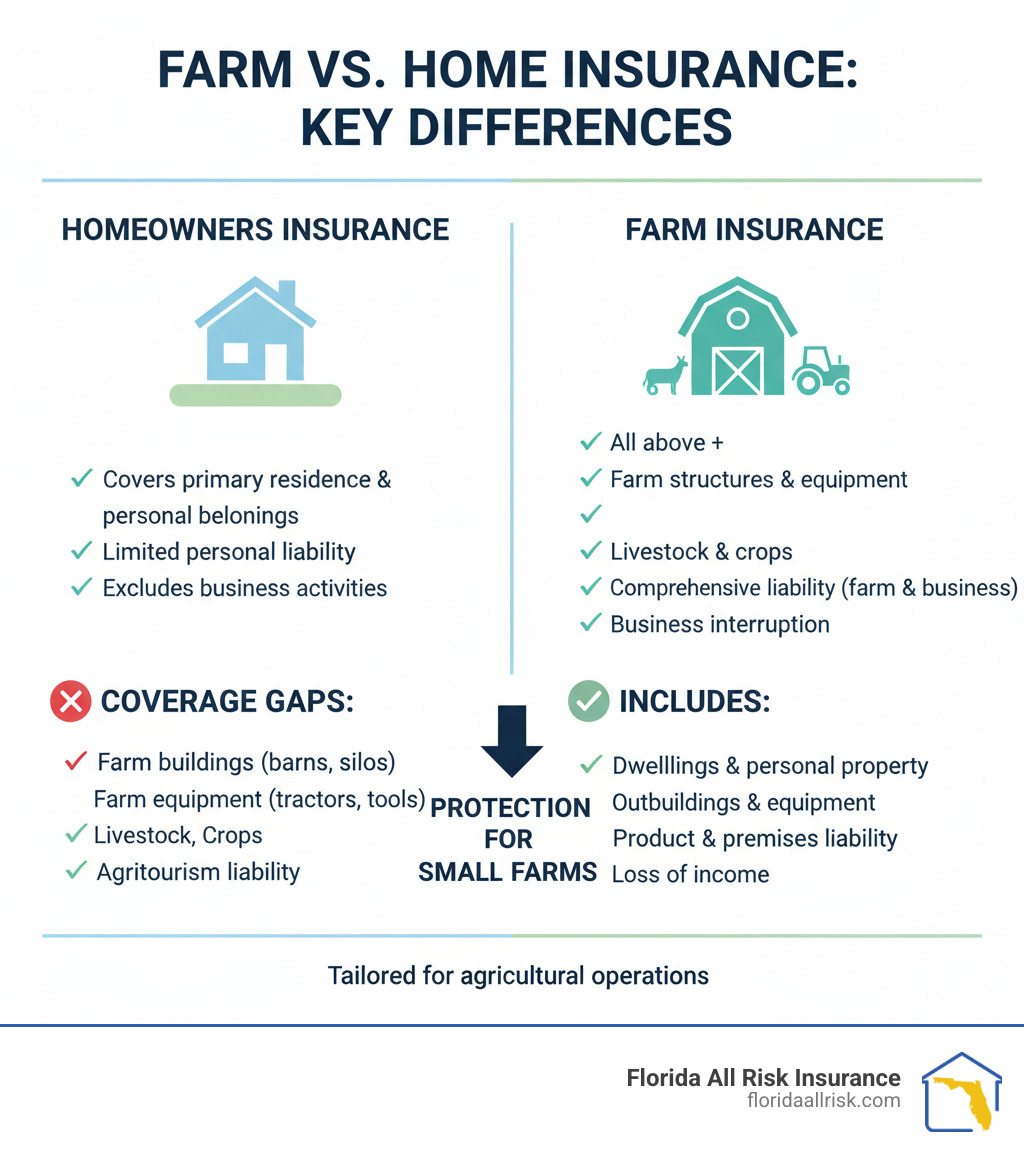
A comprehensive farm policy typically includes:
- Property Coverage: Protects farm buildings, homes, and structures.
- Equipment Insurance: Covers tractors, tools, and machinery.
- Liability Protection: Guards against visitor injuries and product liability claims.
- Crop/Livestock Coverage: Protects against weather, disease, and theft.
- Business Interruption: Covers lost income from covered events.
Small farms face distinct challenges that set them apart from typical residential properties. As one insurance expert notes: “Farming isn’t like other businesses, so insurance plans should be specially designed to meet farmers’ needs.” The stakes are particularly high for Florida farmers, where hurricanes and flooding can wipe out an entire season’s work in hours. While farm insurance costs can start as low as $1,500 per year for basic coverage, substantial commercial operations may see annual premiums of $3,000 to $10,000 or more.
I’m Jason Miller, and with over 20 years of experience helping Florida businesses with complex insurance needs, I’ve seen how proper small farm business insurance can mean the difference between weathering a crisis and losing everything. My team at Florida All Risk Insurance specializes in creating customized protection plans for agricultural operations throughout the Sunshine State.
The Modern Homestead: Defining “Small Farm” and Its Unique Risks
Running a small farm today is a blend of passion and business. What starts with a few chickens can quickly grow into selling eggs at a farmer’s market, turning your home into an agricultural operation with unique risks.
The challenge is that small farm business insurance exists in a gray area. Your operation might not be a massive industrial farm, but it’s more complex than a backyard garden. Understanding where your farm fits is crucial for getting the right protection. This gray area is where many aspiring farmers get into trouble, assuming their homeowners policy offers protection that simply isn’t there.

What is Considered a Small Farm for Insurance Purposes?
Insurers look at your intent and income, not just acreage. A small farm falls between a garden and a full-scale commercial operation. Most insurers focus on revenue thresholds. For example, some consider operations with less than $50,000 in annual turnover as small farms. The USDA’s Micro Farm Program sets its cap higher at $350,000, recognizing that “small” farms can generate substantial income.
The real question is how you use your farm. If you sell produce, have a roadside stand, breed livestock for sale, host farm-to-table dinners, or offer tours, you’ve likely crossed into agricultural business territory. Any activity that invites the public onto your property or puts a product into the stream of commerce introduces business liability that standard homeowners insurance won’t cover.
Hobby Farm vs. Commercial Farm Insurance
The difference between a hobby and a commercial farm is intention. A hobby farm is primarily for personal enjoyment or self-sufficiency, with another main income source. A commercial farm, even a small one, operates with a clear profit motive. You’re actively trying to make money from your agricultural activities, and you likely file a Schedule F (Profit or Loss From Farming) with your taxes.
This distinction changes your insurance needs. Hobby farms might use extensions of homeowners policies, but commercial operations need dedicated Business Liability Insurance within a comprehensive farm policy. The liability risks from selling products or hosting visitors are significant and require commercial coverage. Relying on a hobby farm endorsement for a commercial operation is a recipe for a denied claim.
Why Standard Homeowners Insurance is Insufficient
Many small farmers learn the hard way that homeowners insurance excludes business activities. Imagine a hurricane destroys your greenhouse, tractor, and crops. A standard homeowners policy won’t cover it because it’s considered business property and activity. Most policies have a very low sub-limit for business property, often as little as $2,500, which is nowhere near enough to replace a tractor, irrigation system, or walk-in cooler.
This creates dangerous coverage gaps. Farm structures like barns, silos, and greenhouses receive little to no protection. Your valuable equipment—tractors, tillers, and tools—might have minimal coverage limits. The biggest risk is liability. A standard policy’s personal liability coverage explicitly excludes incidents arising from business pursuits. A single slip-and-fall accident during a U-pick event or a product liability claim from contaminated produce could be financially devastating without the proper farm insurance.
Even small home-based agricultural businesses, like selling jams from your farm kitchen, need specialized protection. Our guide on how to Safeguard Your Home-Based Business explains these risks in detail. If you generate income from your farm, standard homeowners insurance leaves you dangerously exposed.
Understanding the Core Components of Small Farm Business Insurance
Think of small farm business insurance as a custom-built toolkit, not a one-size-fits-all solution. Your policy should be crafted to fit your specific operation, piecing together the exact coverage you need. You can explore our full range of options on our Insurance Products page.
Property and Dwelling Coverage
This coverage protects not just your farmhouse but all the structures that make your farm run: barns, sheds, greenhouses, silos, and even permanent fencing. When disaster strikes, you’ll choose between replacement cost (to rebuild with today’s materials and labor costs) and actual cash value (which factors in depreciation). While ACV results in a lower premium, it can leave you with a significant out-of-pocket expense to rebuild an older structure. For farms with significant commercial structures, our Commercial Property Insurance provides robust protection.
Farm Personal Property and Equipment
Your tractor, tillers, irrigation systems, and tools are the heartbeat of your farm. This coverage protects these essential assets from damage or theft, whether they are in a barn or out in the field. It can be written on a scheduled basis (listing high-value items individually) or a blanket basis (covering all equipment up to a certain limit). This also extends to your living investments—livestock and poultry—guarding them against theft, accidents, and other covered perils like lightning strikes or attacks by wild animals. Protecting these assets is critical for operational continuity. Learn more about protecting business assets with our Business Property Insurance Near Me services.
Comprehensive Liability Protection
Farm liability coverage is your shield against unexpected events that can lead to legal and financial trouble. This is not one single coverage but a suite of protections. This is crucial if you:
- Host visitors for U-pick operations or agritourism.
- Sell produce at farmers’ markets or through a CSA.
- Have the public on your property for any reason.
Key liability components include:
- Premises Liability: Covers injuries to non-employees on your property, like a customer tripping over an irrigation line.
- Product Liability: Vital if a customer claims your product (e.g., eggs, milk, vegetables) caused illness or injury.
- Pollution Liability: Protects you if farm runoff, overspray of pesticides, or manure storage affects neighboring properties or water sources.
- Care, Custody, or Control: Essential for farms that board animals for others, like horse stables, covering injury or death to an animal in your care.
Our Commercial General Liability Insurance for Small Business offers comprehensive protection for these risks.
Crop, Produce, and Livestock Coverage
Florida farmers know how quickly weather can turn. This coverage acts as a financial buffer against losses from drought, flood, hail, and hurricanes. It can also protect harvested produce from spoilage due to a covered event like a power outage or equipment failure in your cold storage.
Livestock protection covers your animals against disease, accidents, and theft. This can be broad coverage for your entire herd or flock, or specialized mortality insurance for high-value breeding stock. Considering the value of a prized bull or an entire flock of laying hens, this coverage is essential. For more insights, Cornell Small Farms offers valuable information on crop insurance that can complement your policy.
Common Policy Exclusions to Be Aware Of
Every policy has limits. Be aware of common exclusions:
- Intentional acts and neglect: Insurance covers accidents, not deliberate damage or losses from poor maintenance.
- Flood and earthquake: These typically require separate policies, a critical point for flood-prone Florida. You may need a policy through the National Flood Insurance Program (NFIP).
- Commercial vehicle use: Your farm truck, when used on public roads for business, needs a separate commercial auto policy.
- Mysterious disappearance of livestock: You’ll likely need evidence of theft or a covered peril, not just an unaccounted-for animal.
- War and nuclear hazards: These catastrophic events are standard exclusions.
Tailoring Your Coverage: Specialized Needs and Cost Factors
Every farm is unique, and your insurance should be too. A small organic vegetable farm selling at a local market faces different risks than a cattle ranch or a vineyard hosting tours. At Florida All Risk Insurance, we craft custom protection that grows with your business. We specialize in providing Insurance for Small Businesses of all kinds, including the unique world of farming.
Specific Insurance Needs for Different Farm Types
Your farming style shapes your insurance needs. For instance:
- Organic farms may need coverage for certification loss due to contamination from a neighbor’s pesticide drift, which can be a devastating financial blow.
- Diversified farms with multiple crops, livestock, and direct sales have broader liability exposures that require careful policy construction to avoid gaps.
- Agritourism operations (U-pick, farm tours, event venues) dramatically increase public liability risk and may require higher limits and specific endorsements for activities like hayrides or corn mazes.
- Vineyards and wineries require protection for specialized equipment (presses, tanks), valuable grapevines (against perils like frost), and product liability for the wine they sell.
- Apiaries face unique risks related to bee colony collapse, equipment theft, and liability from stings, especially if hives are located near public areas.
- Livestock breeders need to protect high-value animals with specialized mortality insurance that covers death from accident, illness, or disease.
- Aquaculture farms in Florida face risks like equipment breakdown causing oxygen deprivation, disease outbreaks, and contamination of their water systems.
If you have employees, even seasonal workers, you’ll likely need Workers Comp insurance to cover on-the-job injuries, as this is not covered by general liability.
Key Factors Influencing the Cost of Small Farm Business Insurance
Several factors determine your annual premium. Understanding them can help you manage costs effectively.
- Location: A coastal farm in a Florida hurricane corridor faces higher property risks than an inland one. Proximity to flood zones is also a major factor.
- Farm Size and Type: A 5-acre market garden has a different risk profile than a 50-acre diversified livestock operation or an agritourism venue that attracts hundreds of visitors.
- Property Value: The replacement cost of your home, barns, greenhouses, and other structures is a primary cost driver. An accurate valuation is essential.
- Equipment Value: The total value of your tractors, implements, and tools directly influences your premium. A detailed inventory is crucial for proper coverage.
- Liability Limits and Deductibles: Higher liability limits (e.g., $2 million vs. $1 million) increase your premium but provide greater protection. Higher deductibles can lower your premium but mean more out-of-pocket cost per claim.
- Claims History: A clean claims record (a good “loss run” history) can earn you discounts, while a history of frequent claims may increase your rates.
- Risk Management: Insurers may offer credits for proactive safety measures like having documented safety protocols, secure fencing, fire extinguishers in all buildings, and a well-maintained property.
Working with an independent agency allows us to shop these factors across multiple carriers to find the best combination of coverage and cost for your farm.
Leveraging Support: Government Programs and Subsidies
Running a small farm in Florida is challenging, but you don’t have to bear the financial risks alone. The federal government offers several programs to help farmers manage insurance costs and protect their livelihoods. These programs are investments in our nation’s food security and rural economy.
What is the Micro Farm Program and Who is Eligible?
The USDA’s Micro Farm Program is designed for small, diversified operations. Instead of insuring individual crops, it provides whole-farm revenue protection under a single policy. This is ideal for farms growing multiple crops, raising various animals, and selling through different channels like farmers markets or CSAs.
Eligibility is straightforward:
- Your farm must generate less than $350,000 in annual revenue (or up to $400,000 for renewals).
- You need at least three years of Schedule F tax records or equivalent documentation.
The program offers coverage levels from 50% to 85% of your historic revenue, with significant premium subsidies. For example, at the 50% coverage level, the government subsidizes 80% of your premium. For details, review the Official Micro Farm Program Fact Sheet.
Federal Crop Insurance and Other Disaster Programs
Beyond the Micro Farm Program, the USDA’s Risk Management Agency (RMA) oversees a broader network of federally subsidized crop insurance policies. These programs provide a crucial safety net against perils like drought, flood, hail, and market fluctuations. You purchase these policies through authorized private insurance companies, but the government subsidizes a large portion of the premiums.
Additionally, federal disaster programs from your county’s USDA Farm Service Agency offer another layer of protection. The Noninsured Crop Disaster Assistance Program (NAP) helps farmers growing specialty crops not eligible for traditional insurance.
The key is to stay on top of enrollment deadlines. Missing them means waiting another year for coverage. You can find authorized agents through the USDA Agent Locator and get more information on disaster assistance at fsa.usda.gov. These government programs work best when combined with a solid small farm business insurance policy from a knowledgeable agent.
Making the Right Choice: Selecting and Managing Your Policy
Choosing the right small farm business insurance is about building a partnership to protect your livelihood. It requires a deep, honest understanding of your unique risks and operational needs to secure your farm’s future against the unexpected.
How to Choose the Right Insurance Policy
Finding the perfect policy starts with a clear-eyed assessment of your operation. Follow these steps:
- Assess Your Risks: Don’t just guess. Create a detailed inventory spreadsheet of everything that needs protection—buildings, equipment (with serial numbers and values), livestock, and stored crops. List all business activities, from direct sales and farmers’ markets to public tours and on-farm events.
- Understand Your Needs: A hobby farm has different needs than a commercial operation supplying restaurants. Be realistic about your revenue and how dependent you are on it. If you have employees or sell directly to consumers, your liability exposure is much higher and requires commercial-grade coverage.
- Compare Quotes: Don’t just pick the cheapest option. An apples-to-apples comparison is key. Compare policies with similar coverage limits, deductibles, and covered perils to ensure you’re getting the right value, not just a low price with critical gaps.
- Understand Exclusions: Work with a knowledgeable agent to identify potential gaps in coverage. Ask for a specimen policy and read the exclusions section carefully. Pay special attention to exclusions for flood, specific liability scenarios, or high-value equipment.
- Balance Cost and Coverage: Find the sweet spot between comprehensive protection and an affordable premium. Prioritize your biggest risks. It’s better to be fully covered for a catastrophic liability claim than to save a few dollars and be underinsured.
- Research the Insurer: Look into the company’s financial stability (e.g., AM Best rating) and its reputation for customer service and claims handling, especially after major events like hurricanes in Florida.
The Role of an Independent Insurance Agent
As an independent agency, Florida All Risk Insurance is committed to you, not a single insurance company. We offer:
- Expert Guidance: We understand the unique challenges of farming in Florida, from hurricane preparedness to specific crop and livestock risks.
- Access to Multiple Carriers: We shop the market on your behalf to find the best fit for your needs and budget, translating complex policy language into clear choices.
- Policy Customization: We build a policy that covers exactly what you need, whether you’re growing organic vegetables or hosting farm-to-table dinners.
- Advocacy During Claims: When disaster strikes, we are your first call. We guide you through the complex claims process and advocate on your behalf to ensure a fair and timely settlement. Our Tampa Small Business Insurance Guide 2025 offers more insights.
Documentation and Policy Reviews
Applying for farm insurance requires some paperwork. Be prepared to provide:
- Farm Tax Forms (Schedule F)
- A Detailed Farm Plan describing your operations
- Inventory Lists for equipment and livestock
- Property Details for all structures, including age and construction type
Farms are always evolving, which is why annual policy reviews are so important. Before your renewal, ask yourself: Did you buy or sell major equipment? Did your revenue change significantly? Did you start a new venture like a CSA, agritourism, or online sales? Have you hired employees? We’ll meet with you each year to review these changes and ensure your policy continues to protect your growing legacy.
Frequently Asked Questions about Small Farm Insurance
How much does small farm insurance typically cost?
The cost varies widely. For small hobby farms with basic coverage, annual premiums might start around $1,500. For more substantial commercial operations with significant equipment, revenue, or public liability, costs often range from $3,000 to $10,000 or more. Key factors influencing cost include your farm’s location (e.g., coastal Florida vs. inland), size, type of operation (e.g., vegetable vs. livestock vs. agritourism), property and equipment value, chosen coverage limits, and claims history.
Can I bundle my home and farm insurance?
Yes, many insurers offer “farmowners policies” that combine home and farm coverage into one package. This is convenient and can often lead to discounts. However, it’s crucial to review the policy carefully to ensure it provides adequate business coverage for all your agricultural activities, equipment, and liability exposures. A standard homeowners policy, even when bundled, contains business exclusions, so the farm portion must be comprehensive and function as a true commercial policy for your operations.
What is the difference between hobby farm and commercial farm insurance?
The primary distinction is intent and income.
Hobby farm insurance is for those who farm for personal enjoyment, with farming not being their main source of income. This coverage is often an endorsement or extension of a homeowners policy and has significant limitations on business activities and revenue.
Commercial farm insurance is for operations with a clear intent to generate profit. It’s a full business policy offering comprehensive protection for property, equipment, product liability, employees, and business interruption. If you depend on your farm for income, you need a commercial policy. It’s a complete Florida Small Business Insurance solution custom for agriculture.
Does farm insurance cover my farm vehicles?
Generally, no. A farm insurance policy covers mobile equipment like tractors and combines while on your property. However, any vehicle that is licensed for road use—like your farm pickup truck used to make deliveries or go to the feed store—needs a separate commercial auto insurance policy. A personal auto policy will exclude coverage if you get into an accident while conducting farm business.
Are my employees covered under my farm liability insurance?
No. General liability insurance covers injuries to third parties (like customers or visitors), not your employees. To cover injuries that your employees sustain on the job, you need Workers’ Compensation insurance. In Florida, this is legally required for most businesses with employees, including farms. It protects your business from lawsuits and covers medical expenses and lost wages for injured workers.
Conclusion: Secure Your Farm’s Future
Your farm is more than a business—it’s a legacy worth protecting. We’ve explored why small farm business insurance is an indispensable tool for safeguarding your livelihood. From property and equipment coverage to comprehensive liability and specialized crop protection, a custom policy provides essential peace of mind.
At Florida All Risk Insurance, we pride ourselves on our proactive approach to risk management and our commitment to finding custom coverage that fits your Florida farm. Don’t let a gap in coverage jeopardize everything you’ve worked so hard to build.
Ready to cultivate peace of mind? Get a Quote online today, or call us to discuss your specific needs and let us help you build a resilient future for your farm.
For a comprehensive look at how we protect local enterprises, explore our guide to insurance for small businesses.
Contact Us
When you’re ready to protect your farm with the right small farm business insurance, we’re here to help. At Florida All Risk Insurance, we understand that every farm is unique, and we’re committed to finding coverage that fits your specific needs and budget.
Our team of experienced agents is based right here in St. Petersburg, Florida, giving us deep knowledge of the challenges facing local farmers. Whether you’re dealing with hurricane season or the everyday risks of agricultural life, we know how to protect against it.
Florida All Risk Insurance
789 Insurance Ave, Saint Petersburg, FL 33701
Phone: (727) 555-0100
Email: [email protected]
We’re more than just an insurance agency—we’re your partners in protecting what matters most. Give us a call, send us an email, or visit our office to discuss how we can help secure your farm’s future.