

The Powerful Impact of Small Businesses
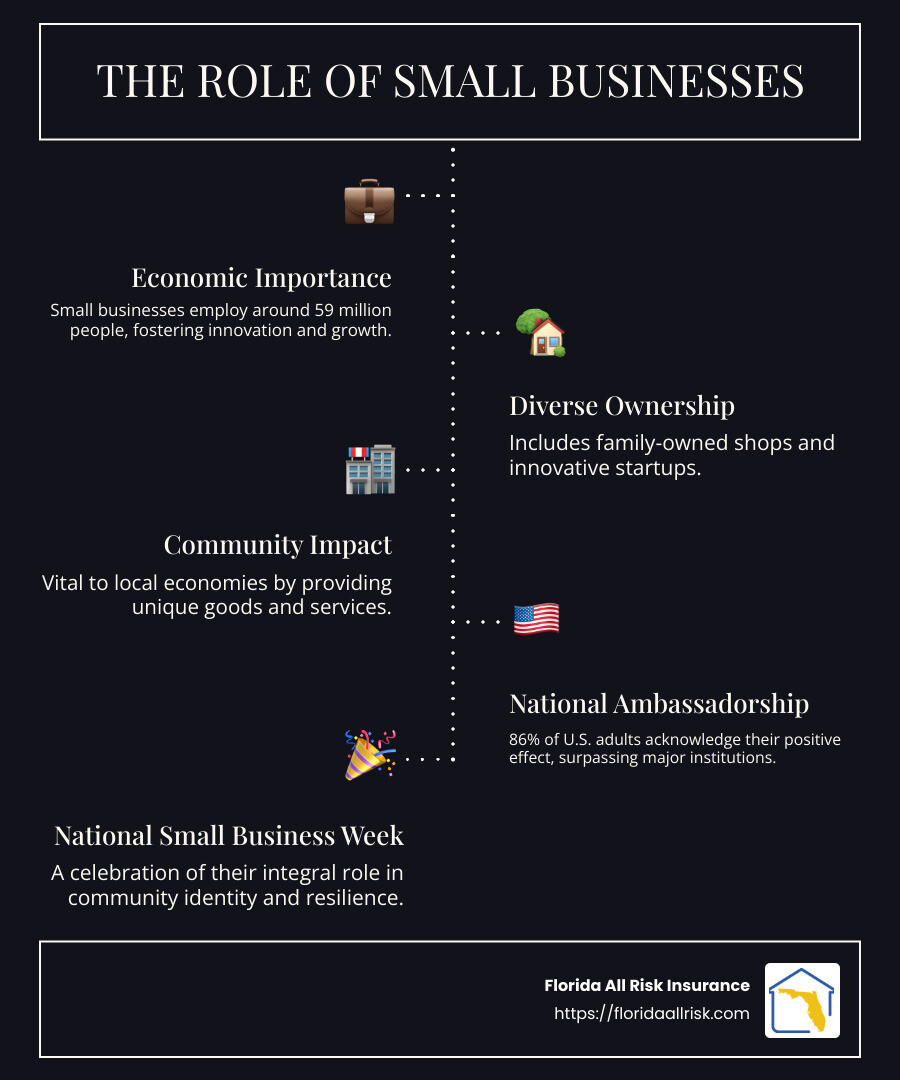
Small businesses are the backbone of the American economy, representing 99.9% of U.S. firms and accounting for nearly half of all private sector employment. Their influence is undeniable. With 86% of U.S. adults affirming their positive effect on the nation, small businesses surpass even revered institutions like the military and churches in public sentiment.
Here are the key points about small businesses:
- Economic Importance: Employ roughly 59 million people, fostering innovation and economic growth.
- Diverse Ownership: Range from family-owned shops to innovative startups.
- Community Impact: Vital to local economies, providing unique goods and services.
As these enterprises prepare to celebrate National Small Business Week, it’s clear that their role extends beyond just economic figures; they are integral to the community’s identity and resilience.
I’m Jason Miller, an experienced insurance professional with over 20 years in Florida’s dynamic insurance market. I’m passionate about supporting small businesses by providing custom insurance solutions to help protect your ventures and assets.
Small businesses terms simplified:
– affordable employee health insurance
– business health insurance
– buy business insurance
Understanding Small Businesses
Small businesses are a crucial part of the economy. But what exactly defines a small business? Let’s break it down.
Definition and Characteristics
A small business is typically an independently owned and operated company. It has fewer employees and less annual revenue than larger companies. The exact definition can vary by country and industry. For example, in the U.S., a business with fewer than 500 employees is considered small.
Characteristics of Small Businesses:
– Flexibility: Small businesses can adapt quickly to changes in the market.
– Community Focus: Often deeply rooted in local communities, they provide personalized services.
– Innovation: Many small businesses are pioneers in their fields, introducing new products and services.
Size Definitions
The size of a small business can be measured in different ways. The most common is by the number of employees. Here’s a quick look at how different regions define small businesses by employee count:
| Region | Micro | Small | Medium |
|---|---|---|---|
| U.S. | 1-6 | <500 | <500 |
| EU | <10 | <50 | <250 |
| AUS | 1-2 | <15 | <200 |
| CAN | 1-4 | <100 | <500 |
Demographics
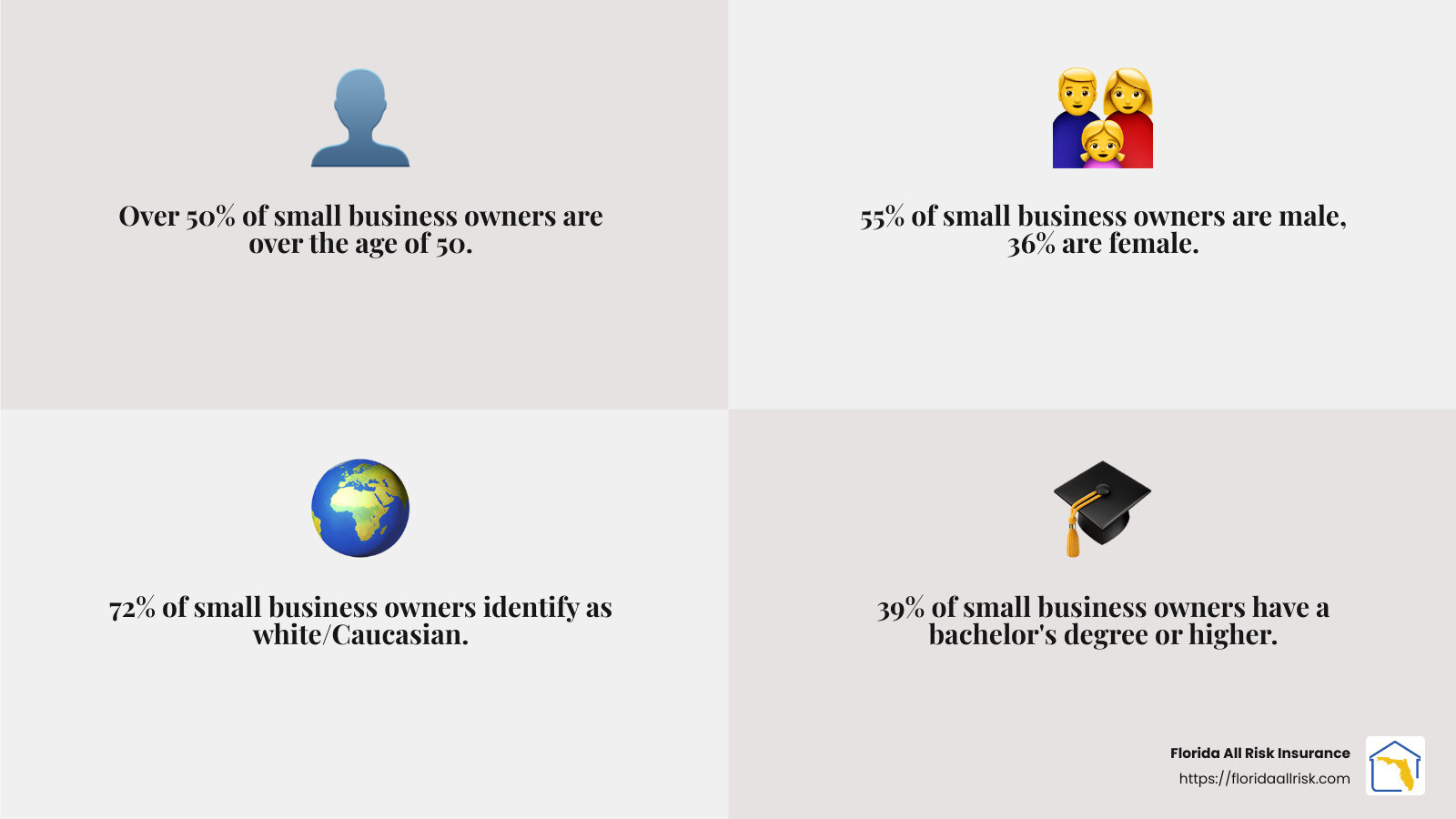
In the U.S., the landscape of small business owners is diverse. Here’s a snapshot based on a 2016 study:
- Age: Over 50% of small business owners are over the age of 50.
- Gender: 55% are male, 36% are female, and 9% have equal ownership between genders.
- Race: 72% identify as white/Caucasian, with the rest being a mix of other ethnicities.
- Education: 39% have a bachelor’s degree or higher.
These characteristics and definitions highlight the diverse and dynamic nature of small businesses. They are not just economic entities but are integral to the social fabric of communities, providing jobs, fostering innovation, and ensuring local economies thrive.
Next, let’s explore how to start your own small business and the key steps involved.
Starting Your Small Business
Starting a small business is an exciting journey. It allows you to turn your passion into a career, be your own boss, and potentially create something impactful for your community. Let’s explore the key elements of launching your own venture.
Business Ideas
The first step in starting a small business is coming up with a viable business idea. Consider your skills, interests, and the needs of your community. For instance, if you have a knack for writing, you might explore editorial services. Or, if you love cooking, starting a catering business could be a great fit.
Tip: Look for gaps in the market. Is there a service or product that’s missing in your area? Filling that gap can be a lucrative opportunity.
Low-Cost Startups
Starting a business doesn’t have to be expensive. Many low-cost startups can be launched with minimal investment. Here are a few ideas:
- Freelance Services: Writing, graphic design, or programming can be started with just a computer and internet connection.
- Online Retail: Platforms like Etsy or eBay allow you to sell products without needing a physical store.
- Consulting: Use your expertise to advise businesses or individuals, requiring little more than your knowledge and a way to connect with clients.
Fun Fact: According to Investopedia, many successful businesses started with less than $500.
Self-Employment and Entrepreneurship
Choosing self-employment means you’re in control. You decide your hours, your clients, and how your business grows. This path is ideal for those who value independence and have a strong entrepreneurial spirit.
Entrepreneurship involves taking risks and innovating. Successful entrepreneurs are often adaptable and open to new ideas. They see opportunities where others see challenges.
Startup Steps
Here’s a simplified roadmap to get your startup off the ground:
-
Research and Plan: Understand your market and competitors. Write a business plan outlining your goals and strategies.
-
Legal Structure: Decide if you’ll operate as a sole proprietorship, LLC, or another structure. This affects taxes and liability.
-
Finances: Separate your personal and business finances. Open a business bank account and keep meticulous records.
-
Branding: Create a strong brand identity. This includes your business name, logo, and online presence.
-
Launch: Start small. Test your product or service, gather feedback, and adjust as needed.
-
Network: Build a support network of mentors and fellow entrepreneurs.
Starting a small business is a journey filled with challenges and rewards. With the right idea and a solid plan, you can turn your entrepreneurial dreams into reality.
Next, we’ll explore how to grow your small business and overcome common challenges.
Growing Your Small Business
Growing a small business is like nurturing a plant. It requires careful attention, patience, and the right conditions to thrive. Let’s explore the key aspects of business growth, common challenges, and strategies to expand your venture.
Business Growth
Growth can be measured in various ways: increased revenue, more customers, or expanded product lines. To achieve growth, consider these strategies:
-
Market Expansion: Explore new markets or customer segments. This could involve targeting a different demographic or expanding geographically.
-
Diversification: Introduce new products or services. This can attract a broader audience and reduce reliance on a single revenue stream.
-
Enhancing Customer Experience: Happy customers are repeat customers. Improve service quality, engage with customers, and seek feedback to improve their experience.
Tip: Regularly review your business plan. Adjust your goals and strategies based on market trends and business performance.
Challenges
Running a small business comes with its share of challenges. Here are some common problems and how to tackle them:
-
Financial Management: Cash flow issues are a leading cause of business failure. Keep a close eye on your finances, manage expenses, and ensure you have a buffer for unexpected costs.
-
Competition: Stay ahead by differentiating your products or services. Innovate and continuously improve to offer unique value.
-
Scaling Operations: As you grow, you may need to hire more staff or invest in new technology. Plan for these changes and ensure you have the resources to support them.
Financial Reporting
Accurate financial reporting is crucial for tracking your business’s health and making informed decisions. Here’s what you need to know:
-
Key Reports: Regularly update your income statement, balance sheet, and cash flow statement. These reports provide insights into profitability, financial position, and liquidity.
-
Compliance: Ensure compliance with tax regulations and reporting standards. This avoids penalties and builds trust with investors and lenders.
-
Tools: Consider using accounting software to automate and streamline financial management.
Franchising
Franchising is a growth strategy where you allow others to operate under your brand. It offers a way to expand rapidly with reduced capital risk. Here’s how it works:
-
Benefits: Franchising provides a steady revenue stream through franchise fees and royalties. It also leverages the franchisee’s investment for growth.
-
Challenges: Maintaining brand consistency across locations can be challenging. Provide comprehensive training and support to franchisees.
Example: Many successful fast-food chains started as small businesses and expanded through franchising.
Retailers’ Cooperative
A retailers’ cooperative is a group of independent businesses that collaborate to gain advantages like bulk purchasing and shared marketing. Here’s why it’s beneficial:
-
Cost Savings: Members benefit from reduced costs due to collective buying power.
-
Community Support: Cooperatives often strengthen local economies by keeping money within the community.
-
Shared Resources: Members can share resources like technology and best practices, improving efficiency.
Fun Fact: Ace Hardware is an example of a successful retailers’ cooperative.
Growing your small business requires strategic planning, adaptability, and a willingness to tackle challenges head-on. As you expand, remember to stay true to your core values and continue delivering value to your customers.
Next, we’ll discuss the vital role small businesses play in the economy and their impact on communities.
The Role of Small Businesses in the Economy
Small businesses are the backbone of the economy, driving employment, generating revenue, and strengthening local communities.
Employment
Small businesses employ nearly half of all private-sector workers in the U.S., accounting for about 59 million jobs. They are often celebrated for their role in job creation, particularly because they provide opportunities in diverse industries—from retail to professional services. While large companies might offer higher wages, small businesses contribute significantly to employment by hiring from the secondary labor market.
Revenue
In 2021, small businesses in the U.S. brought in over $16.2 trillion in revenue. This is a testament to their economic power, even though they often operate with fewer resources than larger firms. While the majority of small businesses have fewer than 20 employees, they still manage to generate substantial revenue, showcasing their efficiency and impact.
Local Economy
Small businesses are vital to local economies. They keep money circulating within the community, support local suppliers, and contribute to the area’s unique character. When people shop at local stores or use local services, they help maintain a vibrant community and create a multiplier effect, where each dollar spent supports local jobs and services.
Community Impact
Beyond economics, small businesses foster community spirit and pride. They sponsor local events, support local charities, and provide a personal touch that large corporations often can’t. Their presence encourages community involvement and strengthens social ties, making neighborhoods more resilient and cohesive.
In summary, small businesses not only drive economic growth but also improve community well-being. Next, we’ll address some frequently asked questions about small businesses to further your understanding.
Frequently Asked Questions about Small Businesses
What are the 4 types of small business?
When it comes to structuring a small business, there are four main types to consider:
-
Sole Proprietorships: This is the simplest form of business, owned and run by one individual. The owner is personally liable for all business debts and obligations. It’s a common choice due to its simplicity and ease of setup.
-
Partnerships: These businesses are owned by two or more people. Partnerships can be general, where all partners share liability, or limited, where some partners have limited liability based on their investment. Partnerships allow for shared responsibility and resources.
-
Corporations: Corporations are more complex and are considered separate legal entities from their owners. This structure provides limited liability protection, meaning owners are not personally responsible for business debts. Corporations can be more expensive to set up and maintain but offer benefits like easier access to capital.
-
Limited Liability Companies (LLCs): This structure combines elements of partnerships and corporations. Owners, known as members, have limited liability protection while enjoying the flexibility of a partnership. LLCs are popular for their balance of protection and simplicity.
How do small businesses impact the economy?
Small businesses play a crucial role in the economy. Here’s how:
-
Employment: They employ about 59 million people, nearly half of the private-sector workforce. By providing jobs across various industries, small businesses help reduce unemployment and support economic stability.
-
Revenue: Small businesses generate significant revenue, contributing over $16.2 trillion in 2021. Despite their smaller size, they efficiently generate income, showcasing their economic importance.
-
Local Economy: They are vital to local economies, keeping money within the community and supporting local suppliers. This creates a multiplier effect, where each dollar spent locally supports jobs and services, strengthening the community’s economic fabric.
What are some examples of small businesses?
Small businesses come in various forms, serving different needs and markets. Here are some examples:
-
Service Operations: These include businesses like hair salons, cleaning services, and repair shops. They provide essential services to the community, often with a personal touch that larger companies can’t match.
-
Retail Operations: Small retail stores, like boutiques and specialty shops, offer unique products and personalized shopping experiences. They contribute to the local economy by attracting shoppers and supporting local artisans and suppliers.
-
Professional Services: This category includes businesses like consulting firms, accounting services, and legal practices. They offer specialized expertise and often serve other businesses, contributing to the broader economic ecosystem.
These examples highlight the diversity and adaptability of small businesses, which are integral to economic growth and community development.
Conclusion
As we wrap up our exploration of small businesses, it’s clear they are the backbone of our economy. They provide jobs, boost local economies, and foster innovation. At Florida All Risk Insurance, we understand the unique challenges and opportunities that small businesses face. That’s why we offer personalized service and comprehensive solutions custom to meet the diverse needs of businesses across Florida.
Our team is committed to helping you protect what matters most. Whether you need coverage for your property, vehicles, or employees, we’ve got you covered. Our expertise in providing customized insurance plans ensures you have the right protection at competitive rates.
For those looking to offer health benefits to their employees, our group health insurance plans are designed to provide peace of mind and attract top talent.
By partnering with us, you’re not just getting insurance; you’re gaining a trusted ally dedicated to your success. Let’s work together to secure the future of your small business and continue to make a positive impact on our communities.

