Why Smart Florida Homeowners Are Slashing Their Insurance Bills
Protecting your most valuable asset shouldn’t drain your monthly budget. For Florida homeowners, the unique challenges of hurricanes, rising construction costs, and a volatile insurance market mean premiums are often significantly higher than the national average. In the wake of major storms and recent legislative reforms, the landscape is more complex than ever. The good news is that you have more control than you might think. Strategic policy management and smart home upgrades can reduce your premiums by hundreds, or even thousands, of dollars annually—without sacrificing the coverage you actually need when a loss occurs.
Quick Ways to Save on Homeowners Insurance:
- Increase your deductible — Save up to 25% by raising your standard deductible from $500 to $1,000, and potentially more at higher levels. This is one of the fastest ways to see immediate premium reduction.
- Bundle policies — Get 10–25% off by combining home and auto insurance with the same carrier. This multi-policy discount is often one of the largest available.
- Install security systems — Earn 5–20% discounts with centrally monitored alarms for burglary and fire, which reduce theft and property damage risks.
- Improve your credit score — Better credit can significantly reduce premiums in Florida, as insurers use it as a factor to predict future losses.
- Shop around annually — Comparing quotes from multiple carriers can uncover sizable differences in rates and coverage, as each company’s appetite for risk changes.
- Upgrade home safety features — Wind mitigation, impact windows, and eligible roof upgrades often trigger substantial Florida-specific discounts that can transform your premium.
This guide walks you through the most effective ways to save on homeowners insurance, from simple policy tweaks to bigger home improvements that pay for themselves over time. You’ll learn how to review coverage like a pro, which discounts are worth pursuing, and how Florida’s hurricane risk changes the rules of the game.
What you’ll learn in this article:
- How to structure your policy and deductibles to control costs
- Which coverage limits truly matter—and where you might be overpaying
- How wind mitigation, roof upgrades, and smart-home devices translate into real savings
- Why your credit, claims history, and even billing method affect what you pay
- Practical shopping strategies, Florida-specific insights, and answers to common questions
I’m Jason Miller, an insurance professional with over 20 years of experience helping Florida homeowners navigate a complex, fast-changing market. My team at Florida All Risk Insurance focuses on reducing premiums and maximizing protection—so your policy fits your home, your budget, and our state’s unique risks.

Strategic Policy Reviews: The Smart Way to Save on Homeowners Insurance
Your biggest money-saving opportunities are often sitting inside your current policy. Think of homeowners insurance as a living document that should adapt to your life, not a contract you set and forget. A focused annual review—especially before hurricane season—can uncover meaningful savings without weakening your safety net.
How Increasing Your Deductible Impacts Costs
Your deductible is the amount you pay out of pocket on a claim before your insurer contributes. A higher deductible means you accept more initial risk, which is why insurers reward you with a lower premium. Increasing your deductible is one of the fastest ways to save on homeowners insurance—as long as you can comfortably cover that amount in an emergency.
Florida tip: Many policies here have two key deductibles—an All-Other-Perils (AOP) deductible and a separate percentage-based Hurricane Deductible (often 2%, 5%, or 10% of your Coverage A dwelling limit). The AOP applies to everyday losses like non-hurricane wind, theft, or water damage; the hurricane deductible generally applies only when damage is caused by a named storm event as defined in your policy. Know both numbers and choose them intentionally. A higher hurricane deductible can yield significant savings, but it also means a much larger out-of-pocket expense after a major storm.
| Deductible Amount | Potential Annual Premium Savings |
|---|---|
| $500 | Base Premium |
| $1,000 | Up to 13% |
| $2,500 | Up to 20% |
| $5,000 | Up to 25% |
Note: Savings vary by insurer, location, roof age, and other risk factors. The ideal deductible is one you can readily cover from your emergency fund.
Smart claims strategy: Think carefully before filing small claims. A minor claim can increase your rate and may remove your claims-free discount for several years, potentially costing more than the payout. For example, a $1,200 repair on a policy with a $1,000 deductible yields only a $200 payout but could trigger a rate increase and loss of discounts worth far more over the next three to five years.
Tailor Coverage: Insure for Rebuild Cost, Not Market Value
A common mistake is insuring your home for its market value instead of its rebuild cost. Your homeowners policy pays to rebuild the structure—not buy the land. In many Florida markets, land is a large part of the property’s total price, which can lead to overinsuring (and overpaying) if you use market value as a guide.
Also understand the difference between Replacement Cost Value (RCV) and Actual Cash Value (ACV):
- RCV pays to replace damaged items with new ones of similar kind and quality, without a deduction for depreciation.
- ACV pays the depreciated value, which often leads to larger out-of-pocket costs. For a 10-year-old roof with a 20-year lifespan, ACV might only pay for 50% of a new roof.
For your dwelling coverage, RCV is strongly preferred. Many Florida carriers are now shifting to ACV settlement for older roofs (typically 10-15+ years). If your policy uses ACV on the roof, ask whether you can upgrade to RCV or a better roof settlement option and how that affects the premium.
Beyond the main dwelling (Coverage A), review:
- Coverage B (Other Structures): Covers fences, sheds, and detached garages. Ensure the limit reflects the actual replacement cost of these structures.
- Coverage C (Personal Property): Ensure the limit and sublimits fit your belongings. High-value items like jewelry or art may need separate riders. Always opt for replacement cost on personal property if available.
- Coverage D (Loss of Use): Covers temporary living expenses if your home becomes uninhabitable after a covered loss. With longer post-storm repair timelines in Florida, this is critical. Consider increasing this limit beyond the standard 10-20% of Coverage A.
- Liability: Many homeowners carry $300,000 or $500,000. Consider an umbrella policy for additional liability protection if you have significant assets, a pool, or other exposures.
- Ordinance or Law: This is vital in Florida. It pays for code-required upgrades after a covered loss. If a hurricane damages 50% of your roof, the county may require you to replace the entire roof to meet the current building code. Standard policies often include a small limit (e.g., 10% of Coverage A), but increasing this to 25% or 50% is a wise investment.
- Water Backup/Sump Overflow: Not always included—add this endorsement to cover damage from backed-up sewers or drains.
Review your coverage limits after renovations, roof replacement, or major purchases. For Florida-specific guidance and current market insights, see this overview of Florida Homeowners Insurance 2025.
Inflation Guard and Rebuild Cost Updates
Construction costs in Florida can rise rapidly, especially after active storm seasons. Ensure your policy has an appropriate inflation guard endorsement and request periodic rebuild cost estimates from your agent. Share details about your home’s finishes and any upgrades (e.g., impact windows or a new roof) so the valuation and discounts are accurate.
The Power of Bundling
Bundling home and auto with the same carrier is one of the easiest and most consistent discounts available, often ranging from 10–25%. Bundling can also streamline billing and simplify claims coordination when a loss affects multiple policies. Some insurers extend the discount when you add additional lines like boat, RV, or umbrella insurance. Learn more about bundling options and how they affect your quote on our Homeowners Insurance page.
Annual Checkup: What to Review
- Deductibles and hurricane deductible percentage
- Roof age/material and any new mitigation features
- Coverage A–D limits, personal property settlement type, and special sublimits
- Ordinance or Law, water backup, and other key endorsements
- Discounts you qualify for (monitored alarms, wind mitigation, automatic payments)
- Claims history and any changes that may affect rates or eligibility
A 20-minute check-in each year can catch outdated information, unlock new discounts, and keep your coverage aligned with real-world costs.
Fortify Your Home, Lower Your Bill: Upgrades That Pay Off
Insurance is fundamentally about risk. The less risky your home is to insure, the lower your premiums will be. In Florida—where wind and water drive many of the most expensive claims—strategic resilience upgrades can deliver substantial savings and a safer home.
Home Security and Safety Discounts
Protecting your home from theft and fire provides peace of mind and premium savings. Insurers commonly offer:
- Monitored burglary and fire alarms: Often 5–15% premium reductions; centrally monitored fire systems can reach 15–20% because they reduce both fire and water damage from firefighting efforts.
- Basic security: Deadbolt locks, local alarms, and motion sensors may qualify for smaller credits.
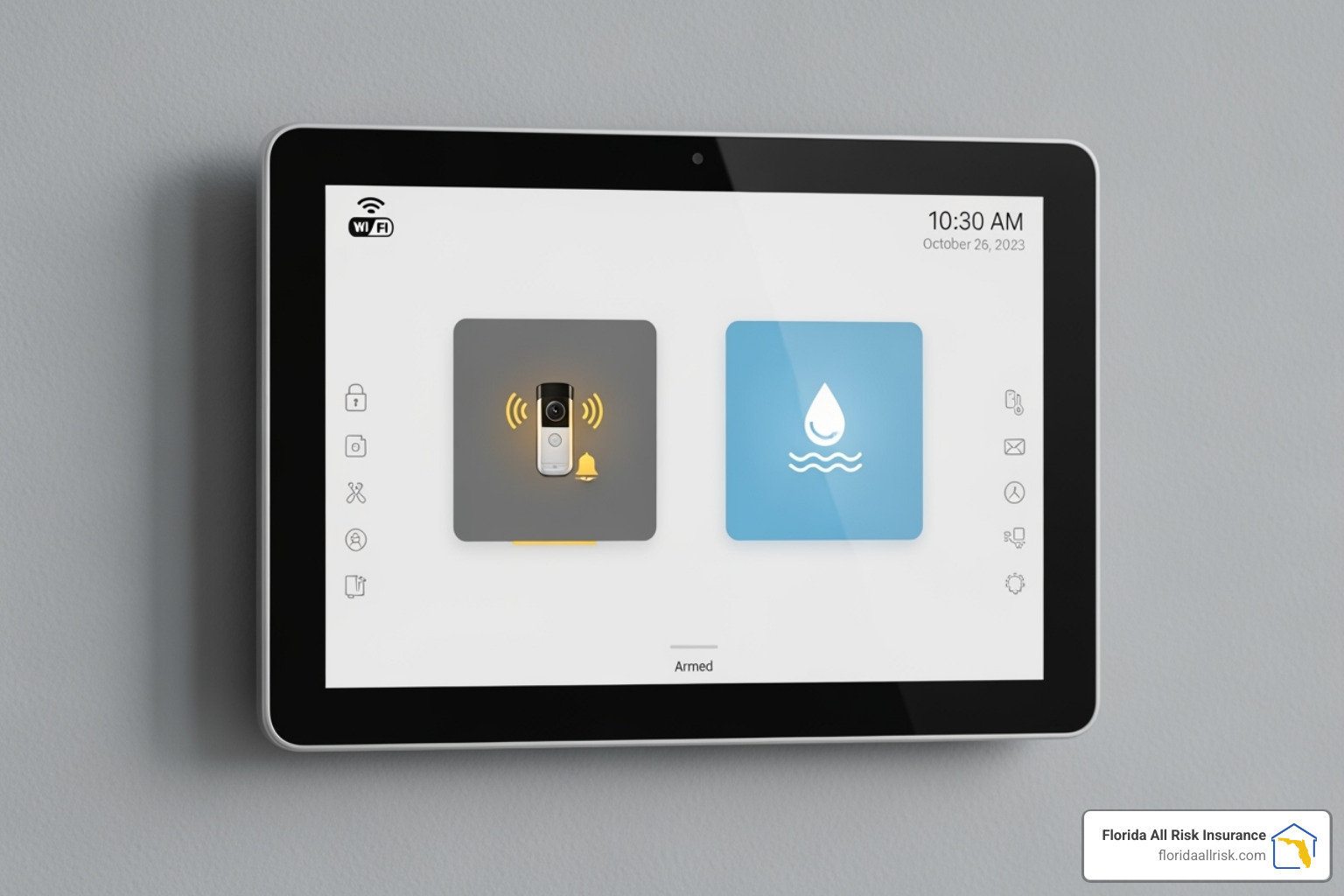
- Smart devices: Video doorbells, smart locks, connected smoke detectors, and automatic water shutoff valves are increasingly recognized by insurers for their ability to prevent or mitigate losses.
Before installing, ask your agent which certifications or documentation (e.g., a monitoring certificate) are needed to ensure the discount is applied.
Weather-Proofing Your Florida Home for Big Savings
In Florida, hardening your home against wind is not only a safety imperative—it’s a gateway to some of the biggest insurance credits. A Wind Mitigation Inspection (Form OIR-B1-1802) documents construction features that can dramatically reduce potential storm damage. Insurers use the results to calculate individualized discounts.
Key features evaluated in a wind mitigation inspection typically include:
- Roof shape: Hip roofs (sloped on all four sides) often perform better and receive larger discounts than gable roofs (triangular).
- Roof covering: The type and Florida Building Code compliance of the shingles, metal, or tile. Newer materials installed to recent codes get better credits.
- Roof deck attachment: This specifies the nail size and spacing used to attach the plywood deck to the trusses. Closer spacing (e.g., 6 inches) is stronger and earns a better discount.
- Roof-to-wall connections: This documents how the roof trusses are attached to the walls. Metal clips or straps are much stronger than older toe-nailing methods and earn significant credits.
- Secondary water resistance (SWR): A self-adhering membrane applied to the roof deck under the shingles. It prevents water intrusion if the top layer of roofing is damaged.
- Opening protection: This is the most significant credit. It verifies that all windows, doors, and garage doors are impact-rated or protected by rated shutters, protecting the building envelope from pressurization and failure.
- Construction standards: Homes built or significantly re-roofed to newer Florida Building Code editions (2002 or later) often fare better.
A wind mitigation report is inexpensive relative to the potential savings—often paying for itself within the first year. To explore state-supported home-hardening resources, review the Florida program information available through the My Safe Florida Home initiative.
Roof upgrades are particularly influential. If you’re planning a replacement, ask your contractor about improved deck attachment, SWR, and products that meet or exceed the current Florida Building Code; document the work with permits and photos for your insurer.
Don’t Forget Flood Risk
Standard homeowners policies do not cover flood damage from storm surge, rising water, or heavy rainfall that accumulates and enters the home from the ground. If you live in Florida, flood risk deserves a separate conversation regardless of whether you are in a Special Flood Hazard Area (SFHA).
- The National Flood Insurance Program (NFIP) has a typical 30-day waiting period before coverage begins. Its new pricing methodology, Risk Rating 2.0, now prices policies based on individual property characteristics, not just the flood zone.
- Private flood options may offer different coverage structures, higher limits, shorter waiting periods, and often more competitive pricing than the NFIP.
Learn the basics and assess your risk using FEMA’s resources here: FEMA’s National Flood Insurance Program. For quotes and coverage comparisons, you can also review our Flood Insurance Options.
Home Systems, Maintenance, and Water Protection
Insurers reward well-maintained systems because they reduce the likelihood of large losses:
- Electrical and plumbing: Upgrading outdated wiring (e.g., knob-and-tube) or problematic pipes (e.g., galvanized/polybutylene) reduces fire and water risk. Many carriers will not insure homes with these systems.
- HVAC: Newer systems are safer and less prone to leaks from clogged drain lines. Keep records of replacements.
- Water leak prevention: Smart shutoff valves and leak sensors near water heaters, refrigerators, and washing machines can avert major damage and may earn discounts.
- Roof condition: In Florida, aging roofs are a prime driver of claims. Proactive maintenance, periodic inspections, and timely replacement can lower premiums and reduce claim disputes.
Pro tip: Keep documentation. Photos, permits, invoices, and inspection reports help your agent and carrier apply every discount you deserve. Store digital copies in the cloud for easy access after a storm.
Your Personal Profile: Financial and Lifestyle Discounts
Insurers don’t just evaluate your house; they also evaluate you. Your financial habits, claims history, and life circumstances can open up meaningful discounts. Responsible customers are rewarded with lower premiums over time.
How Your Credit Score Affects Your Insurance Rate
In Florida, insurers may use a credit-based insurance score to help predict risk. This is not the same as your FICO score, but it is derived from your credit history. Decades of industry data show a strong statistical correlation between credit behavior and the frequency of insurance claims. While the exact scoring models are proprietary, the factors that improve your credit-based insurance score are the same ones that build a strong traditional credit profile:
- Pay bills on time; set up reminders or automatic payments.
- Keep credit card balances low relative to limits (low credit utilization).
- Avoid opening numerous new accounts in a short period.
- Dispute errors on your report promptly.
Improving your credit can lead to substantial savings over time, as homeowners with excellent credit often pay significantly less than those with poor credit for the same coverage. To learn more about how credit intersects with insurance, see this overview from the Insurance Information Institute. You can also access your credit reports at no cost via AnnualCreditReport.com.
The Art of the Claim: Use Your Policy Wisely
Most carriers offer a claims-free discount for customers who go several years without a claim. This discount can be significant, sometimes 10-20% of your premium. Filing a small claim can increase your rate at renewal and remove that discount for multiple years (typically 3-5). Before filing, consider:
- Your deductible: If the repair is close to or below the deductible, paying out of pocket is almost always the better financial choice.
- Long-term cost: A $500 payout from a claim could result in $1,500 of increased premiums and lost discounts over the next three years. Ask yourself if the short-term cash is worth the long-term cost.
- Frequency vs. severity: Insurers are often more concerned by a pattern of small, frequent claims than one single, large, weather-related event.
Tip: Ask your agent about the impact of a potential claim (hypothetically) before filing. While they can’t guarantee a future rate, they can explain the likely implications based on your carrier’s guidelines.
Uncovering Commonly Missed Discounts
Beyond the big, well-known credits, there are smaller discounts you should check for during your annual review:
- Loyalty and longevity: Staying with the same insurer for multiple years may qualify.
- Age and retirement: Some carriers offer credits to homeowners 55+ who are retired, as they are often home more, potentially deterring theft and catching maintenance issues sooner.
- Lifestyle factors: Nonsmoking households reduce fire risk; you may see small savings.
- Group affiliations: Alumni associations, professional organizations (e.g., for teachers or engineers), credit unions, and some employers negotiate preferred pricing with insurers.
- Mortgage-free: Owning your home outright can signal financial stability and may lower your premium with some carriers.
- Paperless and auto-pay: A modest but easy discount in many programs.
The CLUE About Your History
Insurers often reference prior claim activity through databases like the CLUE (Comprehensive Loss Underwriting Exchange) report. This report shows a 7-year history of claims associated with a person and a property. While you can’t edit the historical facts, verifying accuracy is worthwhile—especially if you recently purchased the home and past losses belong to a prior owner. If you find errors, dispute them with the reporting agency, LexisNexis. You are entitled to a free copy of your report.
Put it all together, and your personal profile can nudge your premium up or down by hundreds of dollars. Manage the pieces you control—credit, claim decisions, and documentation—and pair them with a well-structured policy to capture the full savings potential.
Frequently Asked Questions About Saving on Home Insurance
We hear these questions daily from Florida homeowners interested in controlling insurance costs. Here are straightforward answers with practical steps.
What is the most effective way to lower my home insurance premium?
There’s no single silver bullet; the best results come from a few coordinated moves:
- Shop the market annually: Rates and underwriting appetites change frequently. An independent agent can compare multiple carriers for you; for a Florida-specific overview of top considerations, see our guide to the Best Homeowners Insurance in Florida 2025.
- Adjust deductibles: Pick an AOP deductible you can afford ($1,000 or $2,500 is common) and review your hurricane deductible percentage. A higher deductible means lower premiums.
- Bundle policies: Home + auto is often the most valuable bundle, with potential 10–25% savings.
- Get a Wind Mitigation Inspection: In Florida, verified wind-resistant features can open up substantial credits that often outweigh any other single discount.
Why did my premium increase even though I didn’t file a claim?
This is the most common question in Florida. Your individual rate is part of a larger pool. Premiums can increase for several reasons that are outside your control:
- Reinsurance Costs: The insurance your insurance company buys to cover catastrophic losses has become extremely expensive globally, and these costs are passed on to consumers.
- Inflation: The cost to repair and rebuild homes (lumber, materials, labor) has risen sharply, so the potential cost of a future claim is higher.
- Increased Storm Frequency/Severity: A more active hurricane season in the region leads to higher projected losses for insurers, who adjust rates accordingly.
- Litigation: Florida has historically had a high volume of lawsuits against insurance companies, which drives up costs for everyone.
How does my home’s location in Florida affect my costs?
Location is a major rating factor:
- Proximity to the coast: Closer to the ocean typically means higher hurricane and storm surge risk.
- Fire protection: Your home’s Protection Class (based on distance to a responding fire station and fire hydrants) matters.
- Regional perils: Some inland areas have higher risk for tornadoes or sinkholes; local crime rates can influence theft coverage.
- Flood zones: Standard home policies exclude flood. If your property is in a Special Flood Hazard Area, your lender will likely require flood insurance. Even if not required, it’s highly recommended anywhere in Florida.
Explore options custom to your region on our Florida Home Insurance page.
How do roof age and material affect my premium?
Roof condition and age are pivotal in Florida. Newer roofs (under 10 years old) receive the best rates. As a roof ages, its ability to withstand wind and prevent leaks diminishes, making it a higher risk. Many carriers have strict age limits and may require an ACV settlement for older roofs. Wind-resistant materials (like metal or high-wind-rated architectural shingles) and a hip roof design can earn significant discounts. Always document roof replacements with permits, photos, and invoices to provide to your agent.
Does homeowners insurance cover a home-based business?
Usually not sufficiently. A standard homeowners policy provides very limited coverage for business property (typically $2,500) and no liability coverage for business activities. A home business endorsement can help for simple setups, but many home-based businesses need a dedicated Business Owner’s Policy (BOP) to adequately cover property, liability, and potential income loss. Learn how coverage works for home-based operations here: Safeguard Your Home-Based Business.
What documentation do I need to receive discounts?
Carriers require proof to apply larger credits. Common examples include:
- Wind mitigation inspection report (Form OIR-B1-1802)
- Alarm certificates from your monitoring company
- Proof of updates (invoices, permits) for electrical, plumbing, HVAC, or roof
- Photos showing installed impact windows/doors or shutters
Submit documents to your agent early—ideally before renewal—so credits appear on the new policy term.
Should I file a claim for small damage?
Often, no. If the repair cost is near your deductible, filing may cost more in the long run by increasing your premium and removing claims-free discounts. Save insurance for significant, catastrophic losses. If in doubt, discuss options with your agent before filing.
Is flood insurance worthwhile if I’m not in a high-risk zone?
Absolutely. According to FEMA, more than 25% of all flood claims happen outside high-risk zones. Heavy rain can cause flash floods anywhere. There’s typically a 30-day waiting period with NFIP policies, so it’s wise to plan ahead. Start with FEMA’s primer: FEMA: Understanding Flood Insurance. When you’re ready to compare coverage types and limits, visit our Flood Insurance Options.
What policy features are most overlooked but important in Florida?
- Ordinance or Law coverage: Helps with code-required upgrades during repairs. This is crucial in a state with constantly evolving building codes.
- Loss of Use: Ensures you have a place to live if your home is uninhabitable after a covered loss. Post-hurricane repairs can take months or even years.
- Water backup: Adds protection for a common (and costly) type of water damage that standard policies may not cover.
- Personal property replacement cost: Replaces items at today’s prices rather than a depreciated value.
Conclusion: Take Control of Your Home Insurance Costs Today
You now have a practical roadmap to save on homeowners insurance without compromising protection. Lasting savings rarely come from a single trick—they come from layering smart decisions and taking a proactive stance in a challenging market.
- Choose deductibles strategically. Select an All-Other-Perils deductible you can comfortably afford and understand the significant financial impact of your separate hurricane deductible.
- Insure for the true rebuild cost. Verify that key coverages like Ordinance or Law and Loss of Use reflect the high costs and long timelines of post-storm recovery in Florida.
- Harden your home against the wind. A documented wind mitigation inspection is your single most powerful tool for earning credits. Roof upgrades and impact-rated openings can yield some of the largest savings in the state.
- Maintain a strong personal profile. Manage your credit responsibly, use your policy for major losses rather than minor maintenance, and ask about every available discount.
- Compare quotes periodically. The Florida market evolves quickly, which makes regular reviews with an independent agent essential to ensure you have the right coverage at the best possible price.
Our team at Florida All Risk Insurance works with a wide range of carriers to help homeowners find the right balance of price and protection. If you haven’t looked closely at your policy in the last year, now is a great time to do it.
Strong, friendly CTAs (conclusion-only):
- Ready to see your savings in black and white? Get a personalized quote for your home in The Villages, FL today: Get My Custom Quote.
- Prefer to talk it through with a licensed specialist? We’re happy to help you review your current policy and identify every discount you qualify for: Contact Us Now.
Contact Us
Florida All Risk Insurance
Address: 777 Central Ave, Saint Petersburg, FL 33701
Phone: (727) 555-0123
Email: [email protected]