Professional liability insurance for independent contractors is a must-have shield against legal and financial turmoil.
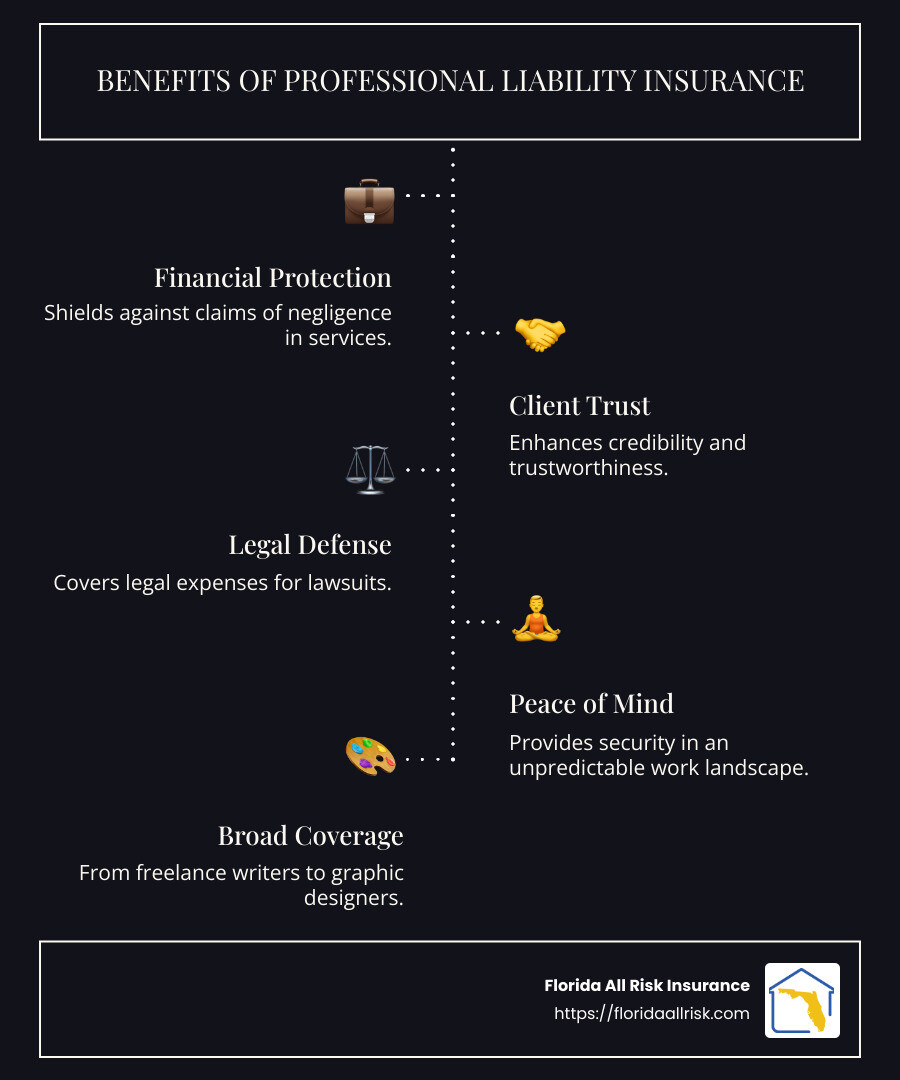
- Financial Protection: Shields against claims of negligence or errors in services provided.
- Client Trust: Having insurance can improve your credibility and trustworthiness.
- Legal Defense: Covers legal expenses in case of lawsuits alleging deficient work.
Independent contractors often juggle multiple roles and responsibilities. In this unpredictable landscape, professional liability insurance provides peace of mind and financial protection against potential legal claims. Whether you’re a freelance writer or a graphic designer, this insurance acts as a safety net, covering the costs that may arise if a client believes your work caused them a financial setback. Professional liability insurance is indispensable for those who can’t afford the luxury of unexpected legal expenses.
My name is Jason Miller, and I bring over 20 years of expertise in guiding independent contractors toward securing their professional liability insurance. Having witnessed the evolution and increased demand for comprehensive insurance solutions firsthand, I understand the critical need for financial protection in today’s dynamic work environment.
Professional liability insurance for independent contractors terms to know:
– contractor liability insurance coverage
– general contractor insurance coverage
– general liability insurance
Understanding Professional Liability Insurance for Independent Contractors
What is Professional Liability Insurance?
Professional liability insurance, also known as errors and omissions insurance, is a specialized coverage designed to protect independent contractors from claims of negligence, errors, or omissions in the services they provide. Unlike general liability insurance, which covers physical injuries or property damage, this insurance focuses on the financial losses your clients might suffer due to mistakes in your work.
Imagine you’re an IT consultant who accidentally provides incorrect advice, leading to a client’s system failure and financial loss. Professional liability insurance would cover the legal costs and any settlements resulting from such a claim.
Why Independent Contractors Need It
For independent contractors, the risk of client lawsuits is a real concern. Even a small error can lead to significant financial loss for a client, which might result in a lawsuit. Having professional liability insurance is not just about compliance or meeting client requirements—it’s about ensuring peace of mind.
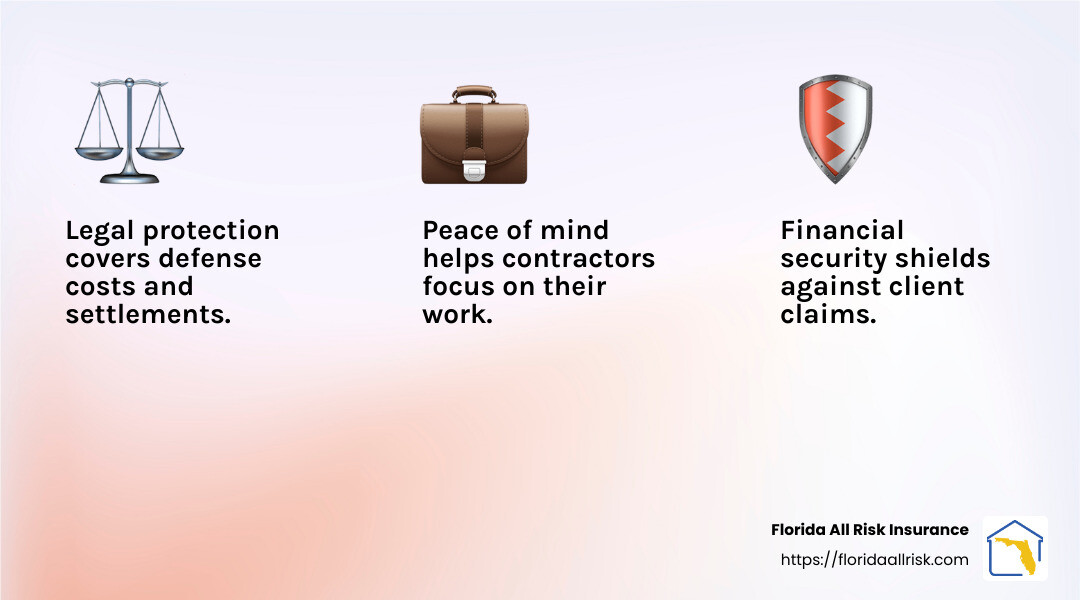
Key Reasons to Have Professional Liability Insurance:
- Legal Protection: Covers defense costs and settlements in case of lawsuits.
- Financial Security: Protects against the financial impact of client claims.
- Peace of Mind: Allows contractors to focus on their work without the constant worry of potential legal repercussions.
For instance, a freelance photographer might accidentally delete important client photos. Without insurance, the costs of legal defense and potential compensation could be overwhelming. With professional liability insurance, these financial burdens are significantly reduced.
In the unpredictable world of freelancing, professional liability insurance for independent contractors is not just an option—it’s a necessity. It provides a safety net, ensuring that you can steer your career with confidence, knowing you’re protected against unforeseen legal challenges.
Types of Liability Insurance for 1099 Contractors
When you’re a 1099 contractor, understanding the types of liability insurance available is crucial to protecting your business. Let’s explore the two primary types—general liability insurance and professional liability insurance—and explore additional coverages that might be beneficial.
General Liability Insurance
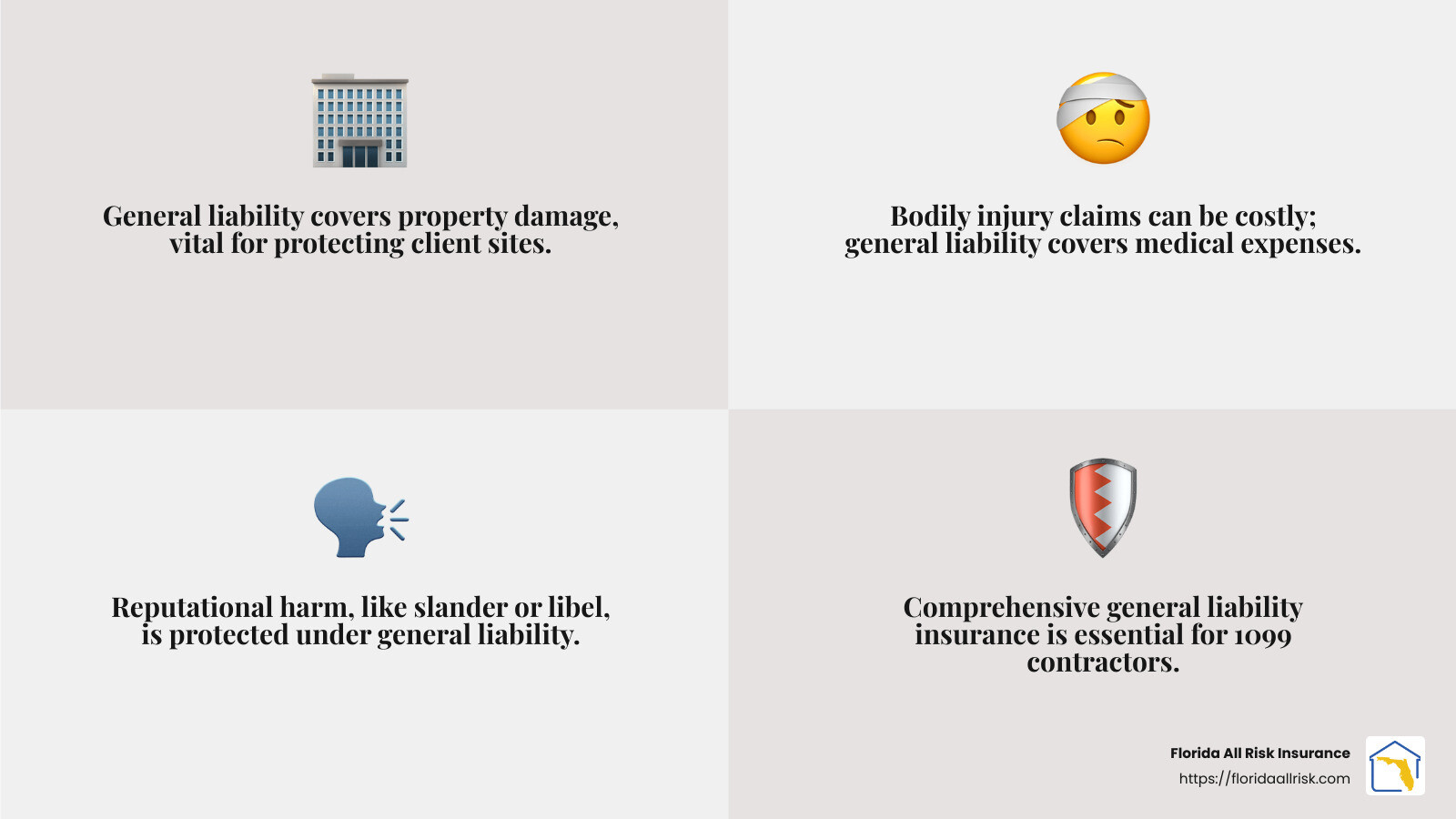
General liability insurance is essential for any contractor. It covers common risks such as property damage, bodily injury, and reputational harm. Imagine you’re a freelance event planner and an attendee trips over your equipment, resulting in injury. General liability insurance would cover the medical expenses and any potential legal costs.
Key Coverages:
- Property Damage: If you accidentally damage a client’s property, this insurance helps cover the repair or replacement costs.
- Bodily Injury: Covers medical expenses if someone is injured due to your business activities.
- Reputational Harm: Protects against claims of slander or libel, which could harm your business reputation.
Professional Liability Insurance
For independent contractors, professional liability insurance—often called errors and omissions insurance—is a must-have. It protects against claims of negligence, errors, or omissions in your professional services. If a marketing consultant gives advice that leads to a client’s financial loss, this insurance covers legal defense and settlements.
Key Coverages:
- Errors and Omissions: Covers mistakes or failures in your services that cause client losses.
- Legal Costs: Pays for legal defense fees and court costs, regardless of whether you’re at fault.
- Client Disputes: Protects against disputes over the quality of your work or unmet expectations.
Additional Coverages
Beyond general and professional liability insurance, contractors might consider other coverages depending on their specific needs:
- Commercial Auto Insurance: If you use a vehicle for business, this insurance covers accidents and damages during business operations.
- Workers’ Compensation: Essential if you have employees, it covers workplace injuries and illnesses.
- Cyber Liability Insurance: Protects against data breaches and cyber attacks, crucial for those handling sensitive client data.
Choosing the right mix of insurance policies ensures comprehensive protection against a wide range of risks. It’s about safeguarding your livelihood and providing peace of mind, knowing you’re covered against potential legal and financial challenges.
How to Obtain Liability Insurance
From an Insurance Provider
Getting liability insurance as an independent contractor can seem daunting, but it doesn’t have to be. The first step is to contact an insurance provider who specializes in business insurance. They can guide you through the process and help you find the policy that fits your needs.
Key Steps:
-
Research Providers: Look for insurance companies with experience in covering independent contractors. They understand the unique risks you face.
-
Policy Options: Discuss different policy options with the provider. They should offer various coverages, such as professional liability insurance for independent contractors, general liability, and more specialized options like cyber liability insurance.
-
Cost-Effective Solutions: Ask about bundling policies. Combining multiple coverages into a single policy, like a Business Owner’s Policy (BOP), can be more cost-effective.
-
Certificate of Insurance: Once you purchase a policy, get a certificate of insurance. This document proves that you have coverage, which can be crucial for securing contracts or leases.
-
Coverage Limits: Be clear on the coverage limits. This is the maximum amount your insurer will pay for a claim. Ensure it’s sufficient for your industry’s risks.
Factors Affecting Insurance Costs
Several factors influence how much you’ll pay for liability insurance. Understanding these can help you make informed decisions and potentially lower your premiums.
Risk Exposure: The type of work you do greatly affects your insurance cost. High-risk industries like construction will generally have higher premiums compared to lower-risk fields like graphic design.
Business Location: Where you operate also plays a role. Insurance costs can vary by state and even city due to different legal environments and cost-of-living factors.
Claims History: If you’ve had previous claims, insurers might view you as a higher risk, which can increase your premiums. Maintaining a clean claims record can help keep costs down.
Coverage Needs: The more coverage you need, the higher your premiums. However, skimping on necessary coverage to save money can be risky. It’s about finding the right balance.
Conclusion: By understanding these factors and working closely with an insurance provider, you can secure the right insurance coverage for your needs. Protecting your business with the right policies not only provides peace of mind but also ensures you are prepared for any legal or financial problems.
Frequently Asked Questions about Liability Insurance for Independent Contractors
Do Independent Contractors Need Liability Insurance?
Yes, they do. Independent contractors face similar risks as any small business owner. Without liability insurance, they could be personally responsible for expensive claims. Financial protection is crucial because even a single lawsuit could potentially close your business.
While not all independent contractors are legally required to have liability insurance, it’s highly recommended. In some professions, especially those with higher risks like construction or engineering, insurance might be required by contracts or industry regulations. It’s always wise to check the legal requirements in your specific field and location.
How Much Does Liability Insurance Cost?
The cost of liability insurance for independent contractors varies widely. On average, premiums can range from $300 to $1,000 per year for low-risk professions, but they can exceed $3,000 annually for high-risk industries.
Several factors influence costs:
- Industry and Risk: High-risk sectors like construction have higher premiums due to the likelihood of claims.
- Coverage Limits: Higher limits mean higher premiums. Policies typically offer coverage from $500,000 to $2 million.
- Deductibles: A higher deductible can lower your premium but means more out-of-pocket expenses if you file a claim.
- Location: Insurance costs differ by state and city, influenced by local legal environments and cost of living.
- Claims History: A history of claims can increase your premiums, as insurers view you as higher risk.
What Other Types of Insurance Should Independent Contractors Consider?
Beyond general and professional liability insurance, independent contractors should consider additional coverages to fully protect their business:
-
Commercial Auto Insurance: If you use your vehicle for work, this insurance covers damages from accidents during business activities. Personal auto policies typically do not cover business use.
-
Workers’ Compensation Insurance: If you have employees, this insurance is often required. It covers medical expenses and lost wages due to work-related injuries or illnesses. Even if you’re a sole proprietor, it’s worth considering for your own protection.
-
Cyber Liability Insurance: In our digital age, protecting against data breaches and cyberattacks is vital. This insurance covers costs related to data breaches, including notification expenses and credit monitoring for affected clients.
By understanding these insurance options, independent contractors can better protect themselves and their businesses from potential risks.
Conclusion
At Florida All Risk Insurance, we understand the unique challenges that independent contractors face. Whether you’re a freelancer, consultant, or a gig worker, you need insurance solutions that fit your specific needs without breaking the bank.
Our team is dedicated to providing custom coverage options custom to your profession and risks. This means you get the right protection, whether it’s professional liability insurance for independent contractors, general liability, or any other type of coverage necessary to safeguard your business.
We pride ourselves on offering competitive rates. By working with a wide range of carriers, we ensure that you have access to the best prices and coverage options available in the market. This allows you to focus on your work with peace of mind, knowing that you’re financially protected against unexpected events.
Moreover, our commitment to personalized service sets us apart. We take the time to understand your business and offer advice that’s specific to your situation. Our agents are always ready to assist you in navigating the complexities of liability insurance, ensuring you have the right coverage in place.
For more information on our comprehensive insurance offerings, including general liability insurance, visit our General Liability Insurance page. Let us help you protect what matters most, so you can concentrate on growing your business with confidence.