Business insurance for painters: Top 3 Smart Buys
Why Every Painting Professional Needs Insurance
Business insurance for painters is essential protection that safeguards your company from costly accidents, lawsuits, and unexpected losses. Whether you run a small residential painting operation or manage a commercial crew, the right insurance coverage protects your finances, reputation, and ability to keep working.
Painting is both an art and a business, but it comes with its own set of risks. From accidental paint spills on valuable property to injuries caused by slips or falls, a single incident can have significant financial consequences. A dropped ladder that shatters a client’s crystal chandelier can result in a $66,000 lawsuit. Improper paint disposal leading to environmental contamination can cost hundreds of thousands in cleanup and legal fees. Even a simple overspray incident affecting a neighbor’s vehicle can trigger a costly claim.
The good news? The right insurance policy acts like a protective coating for your business, shielding you from these financial risks and helping you recover quickly when accidents happen. Many clients—especially commercial property owners and general contractors—now require proof of insurance before they’ll even consider hiring you. Having comprehensive coverage doesn’t just protect you; it opens doors to bigger, more profitable projects.
This guide will help you understand everything you need to know about business insurance for painters, so you can protect your livelihood and focus on your craft. You will learn about essential policy types, typical costs, and how to secure the right coverage for your unique needs in Florida.
As Jason Miller, owner of Florida All Risk Insurance with over 20 years of experience serving Florida businesses, I’ve helped countless painting contractors secure the right business insurance for painters to protect their livelihoods. My team understands the unique risks you face every day on the job, and we’re here to make getting covered simple and affordable.
Business insurance for painters terminology:
- liability insurance for business cost
- electrical contractor public liability insurance
- product liability insurance rate
For additional background on why small businesses need liability protection in general, you can review this overview from the Insurance Information Institute{:target=”_blank”}, which explains how business insurance helps manage everyday risks.
What is Painters Insurance and Why is it Crucial?
Painters insurance is not a single policy, but a custom package of coverages designed to protect painting contractors from the specific risks they face every day. It is a vital investment that safeguards your finances, reputation, and the long-term success of your business. Without it, a single mishap – like an accidental paint spill on an expensive floor or a client tripping over your equipment – could lead to significant financial strain, legal battles, and even the closure of your business.
Building Trust and Winning Bigger Contracts
In the competitive world of painting, your reputation is everything. Many clients—especially commercial property owners, government entities, and general contractors—require proof of adequate insurance before hiring a painter. This is not just a formality; it is a way for them to ensure that if something goes wrong, they will not be left holding the bag.
Carrying a robust policy demonstrates professionalism and financial responsibility, giving you a competitive edge and access to more lucrative projects. It shows potential clients that you are serious about your business, prepared for unforeseen challenges, and committed to protecting their property. A Certificate of Insurance (COI) is often required to secure these opportunities. This one-page document serves as official proof of your coverage, making it easier to bid on jobs and sign contracts. Without a COI, many larger projects will be out of reach.
Financial Protection from Common Accidents
Accidents are unpredictable, and in the painting business, they can be particularly messy and costly. Imagine accidentally knocking down and shattering a client’s crystal chandelier, a potential $66,000 claim, or a thief breaking into your storage facility and stealing $23,000 worth of supplies and inventory. These are realistic examples of the types of risks painters face.
Whether it is a paint can tipping over onto expensive carpet, overspray affecting a neighbor’s vehicle or landscaping, or a client tripping over a drop cloth or ladder, you could be held personally liable for property damage, medical bills, and even lawsuits. For example, if an elderly client trips over a ladder and breaks a hip, their medical costs could be substantial, and you could face a bodily injury lawsuit. Business Liability Insurance is your first line of defense against these risks, covering medical expenses, property repair or replacement, and legal defense costs.
Even seemingly minor incidents can escalate. Improper disposal of paint waste, especially if it contains hazardous materials like lead, could lead to environmental and health consequences, resulting in fines and lawsuits. Having the right insurance means you do not have to shoulder these potentially large costs out of pocket.
For an independent explanation of how liability, property, and workers’ compensation protections work together for trade contractors, you can consult this summary from the U.S. Small Business Administration{:target=”_blank”}, which outlines common business insurance types and when they are needed.
Is Painters Insurance Legally Required?
While not always mandated by state law for a painter’s license (requirements vary by state), certain coverages are legally required in specific situations. For example, if you have employees, Florida law generally requires you to carry Workers’ Compensation insurance. This is crucial for protecting your team and complying with state regulations. If your business owns vehicles that are used for work purposes, you will need commercial auto insurance to cover them, as personal auto policies typically exclude business use.
Failing to carry required insurance can result in penalties, fines, and even work-stoppage orders from state authorities. Beyond legal mandates, many clients and general contractors will simply refuse to hire uninsured painters to protect themselves from potential liability. It is not just about what is legally required; it is about smart business practice and ensuring you can operate legally and safely in Florida.
Understanding the Core Coverages in a Business Insurance for Painters Policy
A comprehensive insurance policy for a painting business typically includes several key coverages. Understanding what each one does is the first step to building the right protection. Think of it like preparing your palette: each color serves a unique purpose, and together, they create a complete picture of protection.

Commercial General Liability (CGL) Insurance
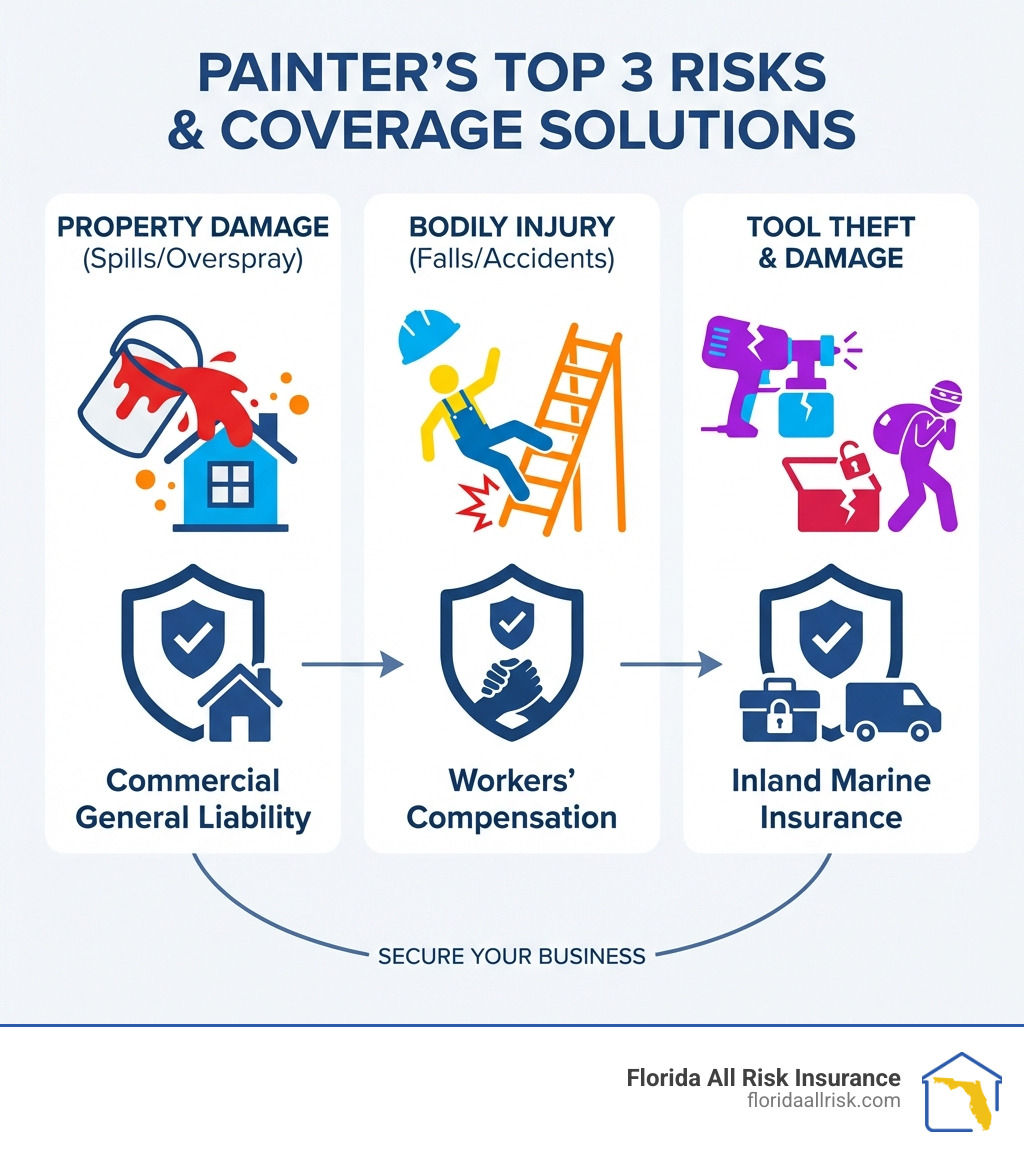
This is the foundation of any painter’s insurance package. It protects your business against claims of third-party bodily injury (for example, a client tripping over your ladder or slipping on a wet floor) and property damage (for example, paint spilling on expensive flooring or overspray damaging a client’s landscaping or vehicle). CGL also covers personal and advertising injury, such as slander, libel, or copyright infringement.
If a client makes allegations or you accidentally cause damage, CGL can cover the costs of legal defense, settlements, and judgments. For instance, if an employee makes slanderous remarks about a client, a general liability policy could help cover the claim and legal defense costs. This coverage is often required by clients, landlords (for commercial leases), and general contractors. It is your primary shield against the unpredictable nature of working on others’ property.
- Bodily Injury; Property Damage; Third-Party Claims; Legal Defense Costs; What Does General Liability Insurance Cover?; Commercial General Liability Insurance for Small Business
Workers’ Compensation Insurance
If you have employees—even just one part-timer—this is essential and legally required in most states, including Florida. Workers’ Compensation insurance provides crucial benefits to your employees if they suffer a work-related injury or illness. This includes medical expenses, rehabilitation costs, and a portion of lost wages while they recover.
For example, if an employee falls off a ladder while painting and sustains an injury requiring surgery and time away from work, Workers’ Comp would help cover these costs. Beyond employee benefits, it also provides employer’s liability protection, which can help cover legal fees if your business is sued over a workplace injury or illness. This protects both your employees and your business from the financial burden of such incidents.
- Employee Injuries; Medical Bills; Lost Wages; State Requirements; Workers Comp Quotes Florida Guide; Buy Workers Compensation Policy
Commercial Auto Insurance
Painters often rely on vehicles to transport equipment, paint, and crew members to various job sites across Florida. A personal auto policy will not cover accidents that happen while you are driving for business purposes, such as traveling to a job site or picking up supplies. This is a common and potentially costly misunderstanding.
Commercial auto insurance covers liability and physical damage for the vehicles you use for work, whether they are cars, vans, or trucks. It protects against expenses related to accidents, such as bodily injury to others, property damage, and repairs to your business vehicle. It can also include coverage for comprehensive (theft, vandalism, weather) and collision. If you use a personal vehicle for business, or if employees use their own cars for work, a “Hired and Non-Owned Auto” endorsement can extend your commercial policy to cover these situations, closing a critical coverage gap.
- Business Vehicles; Liability Coverage; Physical Damage; Hired & Non-Owned Auto
Inland Marine (Tools & Equipment) Insurance
Your tools are your livelihood. From paint sprayers and pressure washers to ladders, scaffolding, brushes, and rollers, your equipment is vital to your operation. This coverage, often called Contractor’s Tools and Equipment insurance, protects your valuable gear from theft, damage, or loss, whether the items are on a job site, in your vehicle, or at your shop.
Imagine your expensive paint sprayer being stolen from a job site overnight, or a ladder being damaged in transit. This policy helps cover the cost to repair or replace these essential items, minimizing downtime and allowing you to get back to work quickly. It is a form of inland marine insurance, specifically designed for property that is mobile or frequently moved.
- Sprayers; Ladders; Power Washers; Theft; Damage; Business Property Insurance Companies
Other Important Coverages to Consider
While the coverages above form the core of a painter’s insurance package, other policies can provide an extra layer of protection custom to your specific operations:
-
Professional Liability (Errors & Omissions): Sometimes called E&O insurance, this protects against claims of negligence or mistakes in your professional services. For painters, this could mean an accusation of using the wrong type of paint, improper surface preparation leading to premature peeling, or misjudging a color match. If a client sues you for financial losses due to your professional errors, this policy can help cover legal defense costs and damages. General Liability vs Errors and Omissions Guide.
-
Commercial Property Insurance: If you own or rent a shop, office, or storage space in Saint Petersburg, Florida, this covers the building itself and its contents (such as office furniture, computers, stored paint, and equipment) from perils like fire, theft, vandalism, and various weather events common in Florida, such as hurricanes and tropical storms. This is important for protecting your physical assets. Commercial Property Insurance.
-
Business Interruption Insurance: What happens if a fire or hurricane damages your shop, forcing you to close for weeks or months? Business Interruption insurance helps replace lost income and cover ongoing operating expenses (like rent and payroll) if your business has to shut down temporarily due to a covered property loss. This coverage can be a practical way to help your business survive and recover after a major disruption. Business Interruption Insurance Florida.
How Much Does Painters Insurance Cost?
The cost of insurance for your painting business in Florida can vary significantly based on several factors. While it is a necessary business expense, understanding these factors can help you manage your premiums and ensure you are getting the best value for your coverage. Most painters can expect to pay around $400 to $800 per year for a basic painting insurance policy, but this is a broad average that does not account for all coverages.
Key Factors That Influence Your Premiums
Insurance providers assess your business’s unique risk profile to determine your cost. Key factors include:
- Services Offered: Commercial painting or high-risk work (for example, working at extreme heights, industrial coatings, or lead paint work) typically costs more to insure than standard residential painting. The types of projects you work on directly influence your risk exposure.
- Business Size: Your annual revenue, the number of employees you have, and your total payroll directly impact your rates, especially for general liability and workers’ compensation. More employees and higher revenue generally mean more risk.
- Claims History: A clean record with no prior claims will usually result in lower premiums. A history of frequent or severe claims will likely lead to higher costs.
- Location: Your geographic location within Florida and the specific risks associated with it (for example, high-theft areas or coastal regions prone to hurricanes or flooding) play a significant role. Businesses in coastal areas of Florida might see higher property insurance costs due to increased weather risks.
- Coverage Limits & Deductibles: Higher coverage limits will increase your premium, as the insurer is taking on more potential risk. Conversely, choosing higher deductibles (the amount you pay out-of-pocket before insurance responds) can lower your premium. How Much General Liability Insurance Do I Need?
Average Cost of Business Insurance for Painters
While your exact cost will be unique, industry data provides a general idea of what you can expect to pay annually for business insurance for painters. These are median estimates, and your actual premium will depend on the factors listed above.
| Insurance Policy | Average Annual Premium Range |
|---|---|
| General Liability ($2M Limit) | $500 – $800 |
| Business Owner’s Policy (BOP) | $900 – $1,200 |
| Workers’ Compensation | Varies greatly by payroll ($2,500+) |
| Commercial Auto | $1,500 – $2,000 per vehicle |
| Tools & Equipment | $170 – $400 |
These are estimates based on industry averages and research. Your actual premium will depend on the factors listed above, your specific business operations in Florida, and the insurer. For an accurate price, it is best to get a customized quote custom to your painting business.
For instance, a small residential painting company can anticipate spending approximately $450 per year for a General Liability Insurance policy with a $2M limit. Painters pay an average of around $59 per month, or about $704 per year, for general liability insurance. Businesses and contractors that do residential and commercial painting may pay an average of about $139 per month, or $1,673 per year, for commercial auto insurance. Painting businesses sometimes pay an average of roughly $14 per month for contractor’s tools and equipment insurance, or about $169 annually. These figures highlight the variability and the importance of a personalized quote.
Navigating Key Insurance Questions for Your Painting Business
Beyond the basic coverages, painters often have specific questions related to their day-to-day operations. This section addresses some of the most common concerns.
What is the Difference Between Commercial and Residential Painters Insurance?
While the fundamental types of insurance (like General Liability) are the same, the risk levels and policy limits often differ significantly between commercial and residential painting projects.
Commercial Painting:
- Higher Stakes: Commercial jobs, such as painting office buildings, warehouses, or large retail spaces, typically involve larger contracts, more complex projects, and potentially higher property values.
- Increased Liability: Working on commercial properties might expose you to greater liability risks, including strict safety regulations, potential business interruption for the client, and larger claims if damage occurs. This often necessitates higher General Liability limits.
- Specialized Risks: Commercial projects might involve working at greater heights, using specialized industrial coatings, or adhering to stringent deadlines, all of which can increase risk and thus insurance costs.
Residential Painting:
- Personal Property Risk: While the overall contract value might be lower, residential jobs often involve working in close proximity to valuable personal belongings, delicate finishes, and active residents. The risk of damaging a homeowner’s personal property (artwork, furniture, landscaping) is high.
- Client Interaction: More direct interaction with homeowners can sometimes lead to disputes over quality or minor damages, which CGL can help address.
- Lower Limits (Often): Residential jobs may sometimes require lower liability limits compared to large commercial projects, potentially leading to slightly lower premiums, though the risk of property damage or bodily injury remains significant.
Your policy should be custom to the type of work you do most often in Florida. An independent agent can help you identify whether your primary work is residential, commercial, or a mix, and ensure your policy aligns with those specific exposures.
Does My Policy Cover Subcontractors?
This is a critical question for many painting businesses. Typically, your General Liability Insurance for Contractors policy only covers your own business entity and your direct employees. Subcontractors are generally considered separate businesses, and as such, they are usually not covered by your policy.
If a subcontractor working for you causes property damage or bodily injury, and they do not have their own insurance, you could be held liable. This is why it is a best practice to require any subcontractor you hire to provide their own Certificate of Insurance (COI) with adequate coverage. Furthermore, you should request that they name your business as an “additional insured” on their policy. This provides you with an extra layer of protection from liability arising directly from their work. Failing to do so could leave your business exposed to financial risk.
Key Considerations for Your Business Insurance for Painters Policy
Beyond the specifics of coverage types, there are practical aspects of your insurance policy that every painter should understand:
-
Certificate of Insurance (COI): As mentioned earlier, this one-page document is your official proof of insurance. You will need it to bid on jobs, sign contracts, and satisfy client requests. Many commercial and residential clients in Florida will ask for a COI before allowing you to start work. Your insurance agent should make it easy for you to get COIs quickly and efficiently.
-
Personal Vehicle Use: Many painters use their personal vehicles to transport tools, paint, and materials to job sites. However, if you or your employees use personal vehicles for business errands—even just picking up a gallon of paint—your personal auto policy likely will not provide coverage in the event of an accident. This is an important gap in coverage. A “Hired and Non-Owned Auto” endorsement on your commercial auto policy is crucial to close this gap, protecting your business from liability when personal or rented vehicles are used for work purposes.
-
Safety and Risk Management: While insurance provides a financial safety net, implementing a strong safety program can help prevent claims from happening in the first place and may even lower your insurance premiums over time. This includes proper ladder safety, ensuring good ventilation when working with chemicals, using appropriate personal protective equipment (PPE), and maintaining clear work areas. For guidance, you can consult resources from the Occupational Safety and Health Administration (OSHA){:target=”blank”} for hazard prevention in painting, and the Insurance Information Institute{:target=”blank”} for small business risk management best practices. Proactive safety measures demonstrate your commitment to professionalism and can contribute to a safer, more efficient business.
How to Get the Right Insurance for Your Painting Business
Securing the right business insurance for painters does not have to be complicated. Following a few simple steps can help ensure you get comprehensive coverage at a competitive price, specifically custom to your operations in Florida.
1. Assess Your Business Risks
Start by taking a clear look at your operations. Do you primarily paint residential interiors, or do you tackle large commercial exteriors? Do you work on multi-story buildings, requiring scaffolding or lifts? Do you have employees, or are you a sole proprietor? Do you store expensive equipment in a dedicated shop, or do you keep it in your garage? Do you handle materials like solvents or coatings that require special handling?
Understanding your specific risks—where accidents are most likely to occur, what assets are most vulnerable, and what liabilities you might face—will help you determine the types and amounts of coverage you truly need. This initial assessment is crucial for building a policy that protects you, rather than one that leaves you exposed.
2. Gather Your Business Information
To get an accurate and comprehensive quote, you will need to have key information ready. The more details you can provide, the more precise and custom your quote will be. This typically includes:
- Your full business name and physical address in Florida.
- How many years you have been in business and your experience level.
- Your estimated annual revenue and total payroll (if you have employees).
- The number of employees you have and their job roles.
- A list of all vehicles used for business, including their make, model, year, VIN, and who drives them.
- A detailed description of the services you provide (for example, residential interior, commercial exterior, pressure washing, specialty coatings).
- Your desired coverage limits for different policies.
- Information on your previous insurance policies and any claims history you may have.
Having this information organized will make the quoting process much faster and more efficient.
3. Work With an Independent Insurance Agent
This is perhaps the most important step in securing appropriate business insurance for painters. Unlike captive agents who only represent one insurance company, an independent insurance agent works with multiple carriers. This allows them to shop the market on your behalf, comparing policies, coverages, and prices from a variety of reputable insurers.
An experienced agent at Florida All Risk Insurance, based in Saint Petersburg, can provide guidance and tailor a policy package specifically for your painting business. Our team understands the unique challenges and risks that painters face in Florida, from hurricane season to local jobsite requirements. We help you steer the details, make sure you have the coverage you need, and work to find competitive rates so you can focus on running your business.
Protect Your Palette: Secure Your Business Today
Investing in the right business insurance for painters is one of the most important decisions you can make for your company. It provides a safety net that helps protect you from the financial impact of accidents, injuries, and lawsuits, allowing you to operate with confidence and focus on delivering quality work for your clients.
A painting business in Florida faces distinct challenges, from weather-related risks to client contract requirements and busy job sites. Having a comprehensive insurance plan is not just about compliance; it is about peace of mind, professional credibility, and helping ensure your business can continue to grow over the long term.
When you have the right mix of general liability, workers’ compensation, commercial auto, and tools and equipment coverage—plus any additional protections appropriate for your operation—you are better prepared for whatever comes your way on the job.
Ready to review your coverage and close any gaps? Contact Florida All Risk Insurance today for a free, no-obligation review of your current policies and a personalized quote for your painting business.
Take the next step to protect your livelihood: explore our comprehensive Business Liability Insurance options and speak with one of our local agents about building a complete insurance plan for your painting company.
Contact Us
Florida All Risk Insurance
Address: 7220 Central Avenue, Saint Petersburg, FL 33710
Phone: (727) 345-0242
Email: [email protected]