

Non-Owner Car Insurance Florida: A Complete, Friendly Guide
Why Non Owner Car Insurance Florida is Essential for Modern Drivers
Non-owner car insurance Florida provides essential liability coverage for drivers who don’t own a vehicle but frequently rent cars, use car‑sharing, or borrow a friend’s car. As more Floridians embrace flexible transportation, this specialized policy has become a practical way to protect your finances and meet key legal obligations while staying mobile.
Quick Answer: Non-Owner Car Insurance Florida Essentials
- What it covers: Liability for injuries and property damage you cause to others; optional add‑ons like Uninsured Motorist may be available.
- Average cost: $545–$756 per year in Florida, often far less than standard auto insurance because it doesn’t insure a specific vehicle.
- State framework/minimums: Florida’s financial responsibility law requires $10,000 Property Damage Liability; Personal Injury Protection (PIP) of $10,000 is required for vehicle owners. Many Florida non-owner policies include PIP to provide no‑fault medical benefits.
- Best for: Frequent renters, car‑sharing users, people between cars, and drivers who need SR‑22/FR‑44 filings to reinstate a license.
- What it excludes: Damage to the car you’re driving, comprehensive/collision for that car, business use, and other drivers not named on the policy.
Florida’s unique no-fault rules and financial responsibility requirements make non-owner coverage especially useful. It helps you carry liability protection that follows you from vehicle to vehicle and can satisfy state filing requirements after certain violations. Whether you’re renting in Miami, car-sharing in St. Petersburg, or borrowing in Tampa, a non-owner policy fills coverage gaps that could otherwise leave you exposed.
With over 60 years of combined family experience in Florida insurance, I’m Jason Miller, and I’ve seen how non-owner protection offers a simple, affordable way to drive legally and confidently without owning a car.

Basic non owner car insurance florida glossary:
What this guide covers
- A plain-English explanation of how non-owner policies work in Florida
- What’s covered (and what isn’t), plus common scenarios
- Who needs a non-owner policy—and who doesn’t
- Typical costs, city-by-city influences, and ways to save
- How to get covered quickly, including SR‑22/FR‑44 filings
- Answers to frequently asked questions specific to Florida
Throughout, you’ll find links to helpful resources on our site and to authoritative references for deeper reading.
What is Non-Owner Car Insurance and What Does It Cover?
Think of non-owner car insurance as a personal liability policy that follows you—from car to car. Unlike traditional auto insurance that’s tied to a specific vehicle, non-owner coverage protects you when you drive cars you don’t own, such as rentals, car‑sharing vehicles, or a friend’s car.
If you cause an accident while driving a borrowed or rented car, your non-owner policy can pay for the other party’s injuries and property damage, up to your policy limits. In most cases, it acts as secondary coverage, kicking in after the vehicle owner’s policy is exhausted. This portability is a major advantage for Floridians who drive occasionally or use multiple transportation options.
For a full breakdown of common protections, see our overview of Auto Insurance Coverage Options.
Understanding Your Coverage: Liability, PIP, and UM/UIM
A Florida non-owner policy often includes:
-
Bodily Injury Liability (BI): Pays for medical costs, lost wages, and pain and suffering of others you injure in an at‑fault crash. While BI is not required for all drivers in Florida, it becomes mandatory for certain filings (e.g., FR‑44 after a DUI). BI is a core building block of a non-owner policy because it helps protect your personal assets.
-
Property Damage Liability (PDL): Pays for repair or replacement of other people’s property (e.g., their vehicle, fence, or mailbox) that you damage in an at‑fault accident. Florida’s minimum PDL is $10,000 under the state’s financial responsibility law.
-
Personal Injury Protection (PIP): Florida is a no‑fault state. PIP typically pays 80% of reasonable medical expenses and 60% of lost wages up to $10,000, regardless of fault, subject to limits and treatment rules. PIP is required if you own a vehicle in Florida. Many Florida insurers include PIP in non-owner policies so you have no‑fault medical benefits even without owning a car. Coverage specifics can vary by carrier.
-
Uninsured/Underinsured Motorist (UM/UIM): Optional but highly recommended, UM/UIM can cover your injuries if you’re hit by a driver who has little or no liability insurance. In a state with a substantial number of underinsured motorists, UM/UIM is a prudent layer of protection.
For a broader look at how PIP works in Florida’s no‑fault system, see this accessible overview: What is no-fault insurance?. For state compliance background, consult the Florida Highway Safety and Motor Vehicles (FLHSMV) insurance resource.
How it works when you’re borrowing or renting
- Borrowed car (friend or family): The car owner’s policy is usually primary for liability and physical damage to the vehicle, subject to their coverage and limits. Your non-owner policy can provide secondary liability protection if damages exceed the owner’s limits.
- Rental cars: The rental company’s state‑minimum liability coverage is primary in many cases, but it can be thin. Your non-owner policy can provide a higher personal liability backstop. You can also choose the rental company’s loss damage waiver (LDW) to avoid paying for damage to the rental car itself; LDW is separate from insurance and is not included in a non-owner policy.
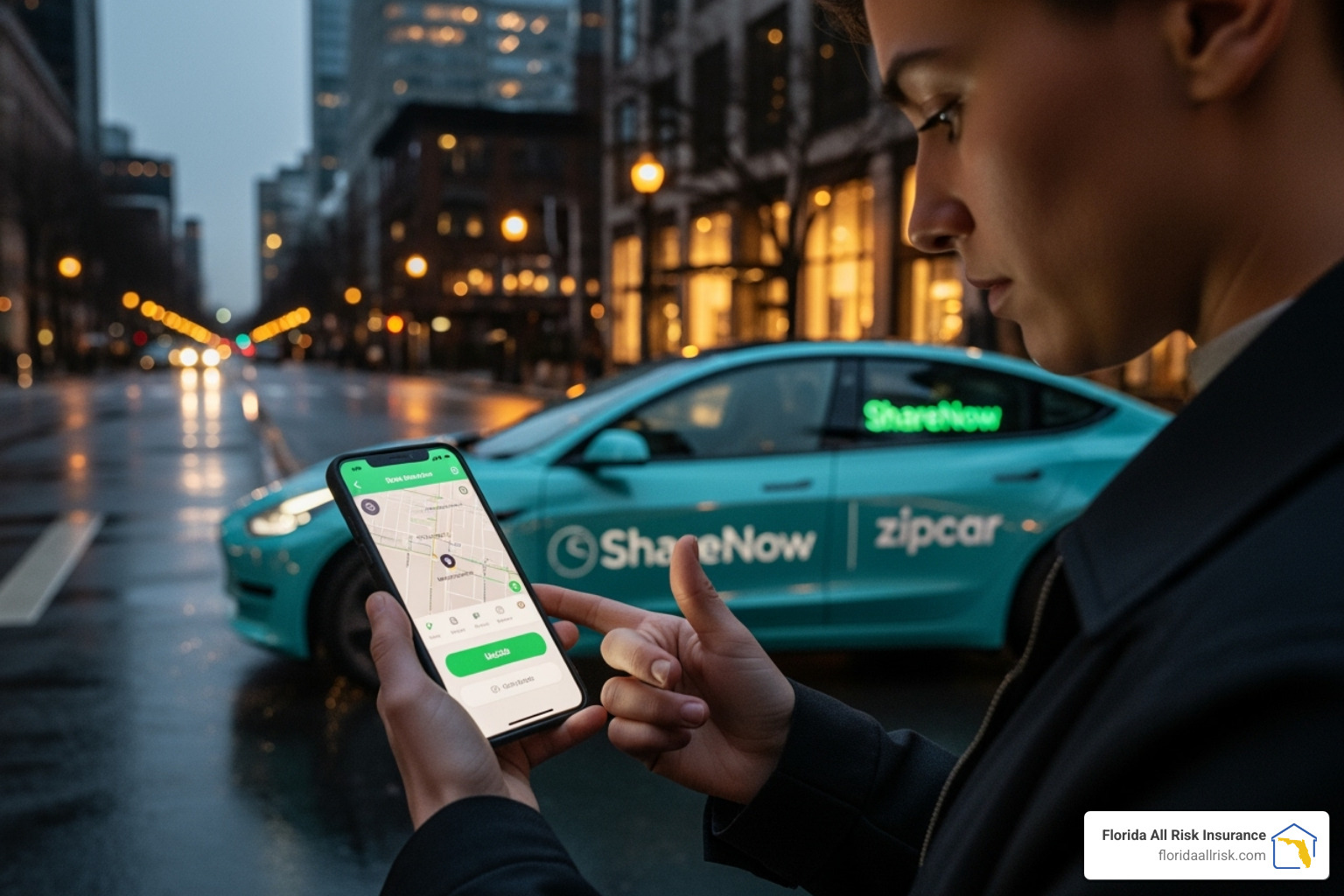
- Car-sharing: Platforms may provide baseline coverage that varies by program. A personal non-owner policy can add a consistent layer of liability protection that follows you across platforms.
Key Exclusions: What a Non-Owner Policy Won’t Cover
Know the boundaries of your protection:
- Damage to the car you’re driving: Non-owner policies don’t include collision or comprehensive on the vehicle you’re using. The vehicle owner’s policy (or a rental LDW) addresses that risk.
- Your own injuries beyond PIP: PIP has strict limits and treatment rules; injuries beyond those limits aren’t covered unless you carry other protections such as UM/UIM or health insurance.
- Personal belongings: Items inside the car (e.g., a stolen laptop) are not covered. Renters or homeowners insurance typically addresses personal property losses.
- Business or rideshare use: Personal non-owner policies generally exclude commercial driving (delivery, rideshare). You’d need a policy designed for business use.
- Other drivers: Your non-owner policy covers you, the named insured, not other people who drive the same borrowed or rented car.
- Regularly available household vehicles: If you live with someone who owns a car you drive regularly, insurers expect you to be listed on that household policy rather than buying a non-owner policy.
Non-Owner vs. Standard Car Insurance in Florida
Non-owner insurance is for drivers who don’t own a vehicle but want liability protection that follows them. Standard insurance is for people insuring a specific car. The biggest difference: non-owner policies do not insure physical damage to a specific vehicle, which is why they’re typically much more affordable.
| Feature | Non-Owner Car Insurance Florida | Standard Car Insurance |
|---|---|---|
| Primary Purpose | Liability coverage that follows the driver in non-owned vehicles | Coverage for a specific owned vehicle (plus liability) |
| Vehicle Covered | Any eligible, non-owned vehicle you drive | One or more vehicles listed on the policy |
| Typical Coverages | Liability, PIP (often included), optional UM/UIM | Liability, PIP, UM/UIM, Collision, Comprehensive, and more |
| Cost | Lower—no physical damage coverage for a vehicle | Higher—includes the risk of repairing/replacing your car |
| Ideal User | Non-owners, frequent renters, car-sharing users, drivers needing SR‑22/FR‑44 | Vehicle owners who need to protect their car and meet state rules |
The portability of non-owner coverage is its superpower: your liability protection moves with you from car to car, helping you avoid gaps and stay compliant in Florida.
Who Needs a Non-Owner Policy in Florida?
If you don’t own a car, you may wonder why you need insurance at all. The short answer: to protect your finances and satisfy legal requirements when you drive. Non-owner insurance isn’t about insuring property—it’s about insuring your responsibility as a driver.
An accident can happen anytime, and if you’re at fault, you’re responsible for the damages. A non-owner policy is the safety net that protects your assets and future income.
Great fits for non-owner coverage
- Frequent car renters: If you rent multiple times per year, a non-owner policy can be more cost‑effective and consistent than purchasing liability coverage at the rental counter each time.
- Car‑sharing users: Personal non-owner liability follows you across different platforms and vehicles, helping fill gaps in platform-provided coverage.
- Regular borrowers: If you often drive a friend’s or relative’s car, non-owner coverage gives you a personal layer of liability protection above the owner’s policy limits.
- People between cars: Selling a car or moving to a city where you’ll rely on rentals and car‑sharing? Non-owner insurance helps you maintain continuous coverage, which can lower your future rates when you buy another car.
- Students and seasonal residents: If you don’t keep a car on campus or only spend part of the year in Florida without a vehicle, non-owner coverage is an efficient way to stay protected when you do drive.
- Drivers reinstating a license: If you need an SR‑22 (after certain violations) or an FR‑44 (after a DUI) but don’t own a car, a non-owner policy is the practical path to meeting the requirement.
Maintaining continuous insurance is a plus with most carriers. Gaps in coverage can lead to higher premiums later, so a non-owner policy can help you build a favorable insurance history.
For general background on who benefits from non-owner coverage, see this plain‑language explainer: Non-owner car insurance: who needs it?
When a non-owner policy isn’t the right fit
- You own a vehicle: If you have a car titled to you (even if it’s not currently driven), you generally need a standard auto policy.
- You drive very rarely: If you drive once or twice per year, you may decide a non-owner policy is not cost‑effective; the owner’s policy or rental counter options may be sufficient for limited use.
- You live with the car owner and have regular access: Insurers usually require all licensed household members who regularly drive a vehicle to be listed on that household policy.
- You need commercial or rideshare coverage: Personal non-owner policies exclude business use. Specialized commercial or rideshare coverage is necessary in those situations.
Practical scenarios in Florida
- Weekend trips: You rent a car a few weekends each year. Your non-owner policy provides familiar liability limits every time you drive, instead of having to re‑evaluate rental counter options each trip.
- Car‑sharing to the airport: Using a platform for a quick airport run? Your non-owner policy gives you a steady backstop if the platform’s limits are low or if there’s a coverage dispute.
- Helping a friend move: You borrow a pickup for a day. If a crash exceeds the owner’s liability limits, your non-owner policy can step in on a secondary basis.
In all these situations, a non-owner policy delivers personal liability protection that follows you—so you can focus on driving, not deciphering the fine print each time you get behind the wheel.
The Cost of Non-Owner Car Insurance Florida
The good news is that non-owner car insurance is typically much more affordable than a standard auto policy because it doesn’t insure a specific vehicle for physical damage. You’re buying personal liability protection that travels with you from car to car.
Average premiums and what affects your price
In Florida, the average cost for a non-owner policy ranges from approximately $545 to $756 per year. By comparison, a basic minimum‑coverage policy on a specific car averages around $1,242 annually. Your individual premium depends on several factors:
- Driving record: A clean record is the biggest driver of lower rates. Accidents, tickets, and serious violations increase costs.
- Coverage limits: Higher liability limits cost more, but they also better protect your assets. In a severe crash, minimum limits may be quickly exhausted.
- SR‑22/FR‑44 filings: If you need a filing, the required limits and the associated risk typically increase your premium. FR‑44 filings (often required after a DUI) mandate substantially higher limits than SR‑22 filings.
- Credit-based insurance score: In Florida, many insurers use credit‑based factors to help set rates.
- Age and experience: Younger drivers generally pay more; seasoned drivers with a safe history often pay less.
- Location: Your ZIP code matters. Areas with higher traffic density, claim frequency, or litigation rates usually have higher premiums.
How rates vary by city in Florida
Rates are generally higher in large metro areas due to more traffic and higher claim costs.
- Higher‑cost cities: Major metro areas like Miami (around $687/year) and Hialeah (around $694/year) often top the list.
- Lower‑cost cities: Cape Coral (around $464/year) tends to be more affordable, with some smaller communities like El Jobean (about $354/year) and Murdock (about $360/year) among the least expensive.
- Mid‑size markets: In a city like St. Petersburg, rates are competitive at roughly $572 per year. For local context, explore Car Insurance in St. Petersburg.
The impact of age on Florida non-owner premiums
- Young drivers (16–25): Highest risk, highest rates. A 20‑year‑old could see premiums around $1,200 for non-owner coverage.
- Midlife drivers (40s–50s): Often the lowest rates, reflecting experience and stable driving patterns.
- Senior drivers (65+): Rates can tick upward again, but a clean record helps keep costs down.
Tips to balance cost and protection
- Choose limits with the worst‑case in mind: Medical costs and lawsuit exposures can be significant. Many drivers opt for higher liability limits than the state minimum.
- Consider UM/UIM: Especially in Florida, UM/UIM can be a cost‑effective way to protect yourself if you’re hit by an underinsured driver.
- Keep a clean record: Safe driving pays off. As violations fall off your record, your price can improve.
- Maintain continuous coverage: Even a non-owner policy signals responsibility to insurers and can yield better rates when you later insure a car.
The bottom line: Florida non-owner insurance is a budget‑friendly strategy to cover a big risk—your liability—without paying to insure a specific vehicle.
How to Secure Your Florida Non-Owner Policy
Buying non-owner insurance is a bit more specialized than purchasing a standard auto policy because not every online quote engine supports it. Working with an independent agent can simplify the process and surface multiple carrier options.
Steps to obtaining coverage
1) Clarify your purpose: Are you getting the policy for frequent rentals, car‑sharing, to maintain continuous coverage between cars, or to satisfy an SR‑22/FR‑44 requirement? Your goal guides the coverage structure and limits.
2) Gather basic information: Have your Florida driver’s license number handy. Be prepared to discuss your driving history, including any accidents, tickets, or license suspensions. Accuracy ensures quotes match your final premium.
3) Explore market options: Independent agencies can check rates and eligibility across several insurers. Non-owner eligibility and included coverages (e.g., PIP, UM/UIM) can vary by carrier.
4) Compare quotes and terms: Review liability limits, whether PIP is included, UM/UIM options, and any special conditions (such as SR‑22/FR‑44 filings). Understand how your policy coordinates with rental car contracts and borrowed vehicles.
5) Bind coverage and review documents: Once you choose a policy, your agent will finalize it and provide proof of insurance. If a filing is required, confirm when it will be submitted and how quickly the state will receive it.
For an overview of our online quote process, see: Online Auto Insurance Quotes Florida.
SR‑22 and FR‑44 filings in Florida
- SR‑22: This is a certificate an insurer files to prove you carry at least the minimum required liability coverage after certain violations. Many non-owner policies can be issued with an SR‑22 if you don’t own a car.
- FR‑44: Required after more serious offenses such as a DUI, FR‑44 requires higher liability limits (commonly $100,000/$300,000 BI and $50,000 PD). Non-owner FR‑44 policies are widely used when you must meet these limits but don’t own a vehicle.
Both filings are typically needed for about three years (exact timelines depend on the offense and state instructions). Insurers can often issue the policy and initiate electronic filing quickly, helping you move toward license reinstatement.
For official guidance and compliance information, consult the Florida Highway Safety and Motor Vehicles insurance page.
After you’re covered: practical tips
- Keep proof of insurance handy: Especially important if you’re renting or borrowing a vehicle.
- Know your limits: Be clear on your BI/PD limits, whether PIP is included, and if you elected UM/UIM.
- Maintain continuous coverage: Avoid lapses. If you later buy a vehicle, talk to your agent about seamlessly converting to a standard policy.
- Reassess annually: If your driving patterns change—more rentals, different car‑sharing usage, or a change in commute—review your limits and options.
If you later decide to buy a car, you’ll transition from a non-owner to a standard auto policy. Your agent can help you align coverages (liability, UM/UIM, comprehensive, collision) and any applicable discounts.
For more savings strategies and policy basics, see Affordable Car Insurance Florida and Florida Car Insurance Discounts.
Frequently Asked Questions
We receive a lot of smart questions about non-owner car insurance in Florida. Here are clear, practical answers.
Do I need non-owner insurance to rent a car in Florida?
No. Rental companies must provide at least the state’s minimum liability coverage. However, those minimums may be inadequate in a serious accident. A non-owner policy provides your own liability coverage—often at higher limits—independent of the rental contract.
Does non-owner insurance cover damage to the rental car itself?
No. A non-owner policy doesn’t include collision or comprehensive for the vehicle you’re driving. Consider the rental company’s loss damage waiver (LDW) to avoid paying for damage to the rental car, diminished value, and loss‑of‑use charges. LDW is not insurance, but it can be a convenient risk transfer.
Will a non-owner policy cover me in a borrowed car?
Yes, for liability, within policy limits. The car owner’s policy is typically primary; your non-owner policy can act as secondary liability if damages exceed the owner’s limits. It doesn’t pay for damage to the borrowed car itself.
Does non-owner insurance cover me if I drive a company car?
Generally, no. Personal non-owner policies exclude business use and company‑owned vehicles. Your employer’s commercial auto policy should cover you while driving a company car for work. Confirm details with your HR or risk management team.
How quickly can I get a non-owner policy with an SR‑22 filing?
Often the same day. After the policy is active, many carriers submit the SR‑22 to the state electronically, typically within 24–48 hours. Timeframes can vary by insurer and the specifics of your situation.
What about FR‑44 after a DUI?
FR‑44 filings require significantly higher liability limits than SR‑22. Many insurers can issue a non-owner FR‑44 policy so you can meet the requirement without owning a car. Expect a higher premium due to the mandated limits and risk profile.
Is PIP included on a non-owner policy in Florida?
Many carriers include PIP on Florida non-owner policies so you have no-fault medical benefits even without owning a vehicle. However, requirements and availability vary by insurer. Review your quote to confirm whether PIP is included and to understand any treatment rules or sub‑limits.
Do I need Uninsured/Underinsured Motorist (UM/UIM)?
UM/UIM is optional, but Florida has a meaningful percentage of drivers with low limits or no BI coverage. UM/UIM can be a cost‑effective way to protect yourself from medical costs and lost wages if you’re hit by an underinsured driver. The Insurance Information Institute provides a helpful overview of uninsured and underinsured motorist coverage.
Can I use non-owner insurance if I move or drive out of state?
Generally yes, non-owner policies provide coverage throughout the U.S., subject to policy terms. If you move, notify your agent so your policy can be updated to reflect your new state’s rules and rating factors.
Will non-owner insurance cover motorcycles or scooters?
No. Auto non-owner policies are designed for private passenger vehicles. Motorcycles and scooters require separate coverage.
Can my spouse be covered under my non-owner policy?
Non-owner policies typically insure only the named individual. If another person also needs non-owner protection, they may need a separate policy unless a carrier specifically allows multiple named insureds.
What happens if I only drive a household vehicle occasionally?
If you live with the vehicle owner, insurers generally expect you to be listed on that household policy. Non-owner insurance isn’t designed to bypass household driver listing requirements.
How are claims handled under a non-owner policy?
- Borrowed car: The owner’s insurer is usually primary for liability and the vehicle’s physical damage (if covered). Your non-owner policy can respond for excess liability if the owner’s limits are exhausted.
- Rental car: The rental company’s policy or your non-owner policy responds for liability according to the contract and state rules; the rental LDW (if purchased) addresses damage to the rental car.
Keep your proof of insurance available and contact your insurer immediately after an accident.
What if I buy a car later?
Contact your agent to convert from non-owner to a standard auto policy. Maintaining continuous coverage via a non-owner policy can help you qualify for better rates when you insure your own vehicle.
Are there payment plan options?
Most insurers offer monthly or pay‑in‑full options for non-owner policies. Fees and discounts vary by carrier.
Where can I read more about Florida’s insurance rules?
- Florida’s official resource for insurance compliance and filings: Florida Highway Safety and Motor Vehicles (FLHSMV)
- A plain‑English introduction to no‑fault/PIP concepts: No‑fault insurance explained
For additional coverage fundamentals tailored to Florida, explore our guides:
Conclusion: Drive Flexibly, Stay Protected
In Florida, mobility doesn’t have to mean car ownership. Non-owner car insurance gives you the freedom to rent, borrow, and car‑share with confidence—backed by personal liability coverage that follows you. It’s a practical way to satisfy state requirements (including SR‑22 or FR‑44 if needed), maintain continuous insurance history, and protect yourself from the financial fallout of an at‑fault accident.
We understand the Florida market, from no‑fault PIP rules to how non-owner coverage coordinates with rental agreements and borrowed vehicles. If you’re navigating life between cars—or simply prefer not to own one—this coverage can provide the peace of mind you need.
Ready to take the next step?
- Get a fast, personalized quote for non-owner car insurance: Get a Quote
- Prefer talking it through? Call us to discuss your situation and options.
For a comprehensive overview tailored to Florida drivers, see our complete guide: Non-Owner Car Insurance Florida.

