Why Understanding Liability Insurance Cost Is Essential for Your Business
For Florida business owners, understanding liability insurance cost is critical. A single lawsuit from an accident or professional mistake can lead to devastating legal fees and settlements, threatening your livelihood. The good news is that liability coverage is often more affordable than many entrepreneurs expect.
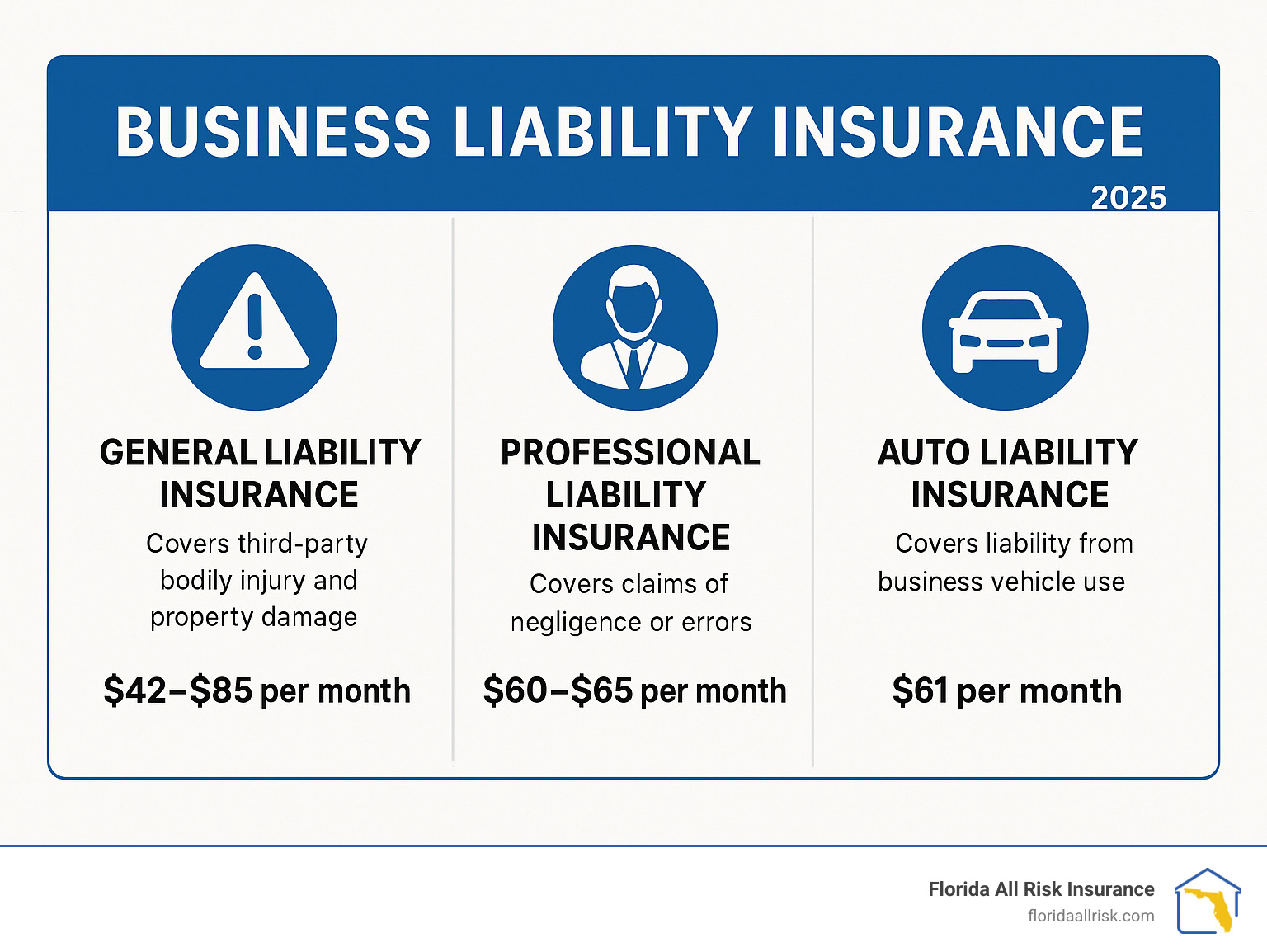
Typical monthly premiums:
- General Liability: $42 – $85 (median $60)
- Professional Liability: $60 – $65
- Commercial Auto Liability: about $61 (liability-only)
- $1 Million Policy (GL): roughly $69
These prices fluctuate based on your industry, business size, location, prior claims, and chosen coverage limits—variables every owner should weigh carefully.
Quick terms to bookmark:
- What does general liability insurance cover
- Commercial general liability insurance
- General liability insurance for small business
Understanding the Basics of Liability Insurance
Imagine a client slips on your freshly mopped floor, or your crew accidentally damages a customer’s property. These common scenarios can quickly become financial nightmares without the right protection. Liability insurance acts as your business’s financial safety net, shielding your assets from the costs of accidents and lawsuits.
The term liability insurance cost refers to the price of covering third-party claims: situations where someone outside your business suffers an injury or property damage and holds you responsible. A policy covers not only damages but also legal defense costs, which can be substantial even for groundless claims. This protection allows you to focus on your business without constant worry.
For Florida businesses, understanding what does general liability insurance cover is vital, given the state’s unique risks, from tourist traffic to hurricane-related concerns.
General Liability vs. Professional Liability: What’s the Difference?
Many business owners confuse General Liability and Professional Liability insurance. While both are protective, they cover different types of risks.
General Liability insurance handles physical world problems. It covers bodily injury, property damage, and advertising injury (like libel or copyright infringement). This is broad coverage that most businesses need.
Professional Liability insurance, or Errors and Omissions (E&O), focuses on the quality of your professional services. It protects against claims of negligence, errors, and omissions that cause clients financial loss. For medical professionals, it’s known as malpractice insurance.
Here’s a quick comparison:
| Feature | General Liability | Professional Liability |
|---|---|---|
| What it Covers | Bodily injury, property damage, advertising injury | Errors, omissions, negligence, malpractice |
| Type of Risk | Physical risks and accidents | Service-based risks and professional mistakes |
| Coverage Style | Broad coverage for most businesses | Specialized coverage for service providers |
| Common Claims | Slips and falls, property damage, libel | Incorrect advice, design flaws, missed deadlines |
| Also Known As | Commercial General Liability (CGL) | Errors and Omissions (E&O) insurance |
The liability insurance cost for these policies varies based on your business’s risk. A retail store may pay more for General Liability, while a consulting firm might have a higher Professional Liability premium.
Key Types of Liability Coverage for Businesses
Beyond the basics, businesses often need several layers of liability protection. Understanding each type helps you build a comprehensive plan without overpaying.
- General Liability Insurance (CGL): The foundation for most businesses, protecting against everyday accidents. Often required by landlords and clients.
- Professional Liability Insurance (E&O): Essential for businesses providing advice or professional services, like consultants, accountants, and real estate agents.
- Commercial Auto Liability: Legally required in Florida for any vehicles used for business purposes, as personal auto policies won’t cover business-related accidents.
- Product Liability: Protects businesses that manufacture, distribute, or sell products from claims of injury or damage caused by those products.
- Cyber Liability: Crucial for digital businesses, this covers costs related to data breaches and cyberattacks.
- Directors and Officers (D&O) Insurance: Protects the personal assets of a company’s leadership from lawsuits related to their management decisions.
Most Florida businesses start with business general liability insurance and add specialized coverages as needed.
The Ultimate Guide to General Liability Insurance Cost
Understanding the real-world liability insurance cost is key to smart business planning. Most small businesses find general liability insurance quite affordable, with typical annual premiums around $810, or about $68 per month. The median monthly cost for new customers in 2024 is around $60, while the average is closer to $85.
This difference between median and average highlights that while some high-risk businesses pay more, most companies will pay closer to the $60 median. In fact, nearly half of small businesses pay less than $45 per month, with some low-risk operations securing coverage for as little as $19 monthly. This wide range shows how your specific business details influence the final premium.
Key Factors That Determine Your General Liability Insurance Cost
Why does one business pay $19 a month while another pays $200? Insurers assess several key factors to determine your premium.
- Industry Risk: This is the biggest factor. A construction company faces far greater physical risks than a home-based consultant, leading to higher premiums.
- Business Location: Populated areas in Florida often have higher rates due to more frequent lawsuits. State-specific regulations and legal environments also play a role.
- Business Size: Insurers consider annual revenue, payroll, and employee count. A larger business has more exposure, which translates to higher potential claims.
- Years in Business: Established businesses with a positive track record are seen as lower risk than startups and often receive better rates.
- Claims History: A clean claims history is your best tool for securing competitive rates. Frequent or significant past claims can increase your premiums for several years.
- Coverage Choices: Higher coverage limits increase your premium, while higher deductibles can lower it.
While you can’t change your industry, you can control factors like safety protocols and claims management to keep your liability insurance cost down.

How Your Industry Impacts Your Premium
Your industry is the primary driver of your general liability premium, based on decades of claims data.
High-risk industries involve physical labor, work on client property, or significant public interaction. Premiums are higher due to greater claim frequency and severity.
- Construction: Heavy equipment and job site hazards create numerous opportunities for serious accidents and property damage.
- Landscaping: The use of dangerous equipment, chemicals, and work on private property increases the risk of injury and damage.
- Restaurants: High foot traffic, food preparation, and wet floors lead to frequent slip-and-fall claims and potential foodborne illness lawsuits.
Low-risk industries typically operate in office settings with minimal physical hazards, resulting in much lower premiums.
- Consulting: Home-based or office consultants have minimal physical risk, with liability exposure mainly limited to client visits.
- Accounting: These services involve primarily computer work, making their general liability risk very low.
- IT Services: Similar to consultants, their physical risks are minimal, though they have other professional liability exposures.
The premium difference can be stark: a landscaper might pay $200 monthly for coverage that costs an accountant $30. This reflects real-world risk. For general liability insurance for small business, understanding your industry’s risk profile helps set realistic budget expectations. High-risk operations may need specialized high risk general liability insurance for adequate protection.
Breaking Down Professional and Auto Liability Costs
General liability is just one piece of the puzzle. Many Florida businesses need specialized coverage to protect against professional errors or vehicle accidents. The liability insurance cost for these policies addresses risks that general liability doesn’t cover.

What to Expect for Professional Liability Insurance Cost
Professional liability insurance, or Errors and Omissions (E&O), protects you when clients claim your services caused them financial harm. The liability insurance cost for this coverage averages $60 to $65 per month (around $735 annually). Considering a single claim can cost tens of thousands in legal fees, this coverage is a vital investment.
Key factors influencing your E&O premium include:
- Profession Type: Higher-risk fields like IT, cybersecurity, or project management typically have higher premiums than marketing consulting due to the potential for greater financial loss.
- Scope of Services: Handling million-dollar contracts will cost more to insure than working on smaller projects.
- Contract Value and Data Sensitivity: Working with sensitive client data or high-value contracts increases your risk and, therefore, your premium.
- Claims History: A clean record helps keep rates manageable, while past E&O claims will increase your cost.
Many businesses find that liability insurance for consultants is essential as they grow.
Understanding Commercial Auto Liability Insurance Cost
If your business uses vehicles, commercial auto liability insurance is legally required in Florida. Liability-only coverage is affordable, averaging around $61 per month. However, this rate can vary significantly based on your risk profile.
While Florida has minimum coverage requirements, these are rarely sufficient to protect a business in a serious accident. According to the Insurance Information Institute, these state minimum coverage requirements for bodily injury and property damage often leave businesses exposed. Independent agents typically recommend higher limits for better protection.
Your commercial auto rates are determined by:
- Driving Records: The driving history of all employees who operate company vehicles is a critical factor. Clean records keep rates low, while violations or at-fault accidents will cause them to rise.
- Vehicle Type: A heavy-duty truck will cost more to insure than a small sedan used for occasional client visits.
- Business Use Patterns: A delivery service with vehicles on the road all day faces higher risk and premiums than a firm using a car for infrequent meetings.
Higher liability limits mean higher premiums, but they provide crucial protection against catastrophic claims that could otherwise jeopardize your business assets.
How to Strategically Manage and Reduce Your Liability Insurance Premiums

The Impact of Coverage Limits and Deductibles
Your policy’s coverage limits and deductibles are the most direct tools for adjusting your premium.
- Coverage limits represent the maximum the insurer will pay. A common structure is $1 million per occurrence / $2 million aggregate. Choosing higher limits raises the premium but offers greater protection.
- Deductibles are the amount you pay out of pocket before the policy responds. Higher deductibles lower premiums, but only choose a figure your company can comfortably absorb.
Actionable Strategies for Lowering Your Rates
- Bundle policies: Many carriers discount when you combine General Liability with Commercial Property in a Business Owner’s Policy.
- Implement a written risk-management plan: Formal safety procedures, regular training, and prompt maintenance reduce claim frequency. The U.S. Small Business Administration offers a helpful guide to preparing for risk that can serve as a starting point.
- Train employees regularly: Proper instruction on equipment, customer interaction, and client-property handling dramatically lowers exposure.
- Maintain a clean claims history: Fewer and smaller claims translate into lower premiums over time.
- Pay annually when possible: Paying the full premium up front can shave 5-10 percent off the total cost.
- Shop the market periodically: Premiums fluctuate, and underwriting appetites change. Reviewing options every two to three years ensures you stay competitive.
For authoritative data on minimum auto limits and liability trends, see the Insurance Information Institute’s state financial responsibility chart.
Frequently Asked Questions About Liability Insurance
Here are answers to some of the most common questions Florida business owners ask about liability insurance.
Is liability insurance for my business tax-deductible?
Yes, in most cases. The IRS typically considers liability insurance cost an ordinary and necessary business expense, making your premiums tax-deductible. This generally applies to general liability, professional liability, and commercial auto policies. However, tax laws can be complex, so it’s always best to consult with a qualified tax professional to ensure you are handling deductions correctly.
How much liability coverage does my small business actually need?
There is no one-size-fits-all answer. While a $1 million per occurrence / $2 million aggregate policy is a common starting point, your ideal coverage depends on your specific situation. Key factors include your industry’s risk level, any contractual requirements from clients or landlords, the value of your business assets, and Florida’s litigious environment. A thorough risk assessment is the best way to determine the right balance between adequate protection and an affordable premium.
Does a past claim automatically mean my rates will go up?
Not necessarily, but it is a factor. Insurers focus on the severity and frequency of claims. A single, small claim may have little impact, but multiple claims can signal higher risk. Your response also matters. If you took corrective action after an incident, such as implementing new safety protocols, insurers view this positively. The goal is not to avoid filing legitimate claims but to demonstrate you are actively managing risk to prevent future incidents.
Securing the Right Protection for Your Business
Think of liability insurance cost as an investment in your company’s future, not merely an expense. With prices ranging from under $20 per month to well over $100, knowing the factors that affect premium keeps you in control.
Every organization is unique. A construction firm in Tampa faces different exposures than a consultant in Jacksonville. As an independent agency, Florida All Risk Insurance can match those differences to the most suitable carrier and policy structure.
Ready to Move Forward?
If you would like a personalized assessment and quote, reach out to our team today; we’re happy to help you find coverage that lets you focus on growing your business with confidence.
Contact Us
Florida All Risk Insurance
200 Central Avenue, Suite 430
Saint Petersburg, FL 33701
Phone: (727) 335-0400
Email: [email protected]