Liability car insurance Florida is an essential requirement for all drivers in the Sunshine State. While Florida law mandates minimum insurance standards, understanding these and why they are critical can help ensure you’re covered properly. Here’s what you need to know right off the bat:
- In Florida, you must have at least $10,000 in Personal Injury Protection (PIP) and $10,000 in Property Damage Liability (PDL).
- Florida is a “no-fault” state, meaning basic PIP insurance covers your medical expenses regardless of who caused the accident.
Despite these basic requirements, it’s wise to explore additional coverage options to better protect yourself in case of an accident that causes severe damage or injury exceeding these limits.
I’m Jason Miller, a second-generation insurance professional with over 20 years of experience in the dynamic Florida insurance market. With my seasoned team at Florida All Risk Insurance, I’ve helped many Floridians, like yourself, steer the complexities of liability car insurance Florida effectively.

Liability car insurance Florida word guide:
Understanding Liability Car Insurance in Florida
When it comes to liability car insurance in Florida, understanding the types of coverage available is key to ensuring you’re adequately protected. Let’s break down the essentials:
Liability Coverage
Liability coverage is your financial safety net in the event of an accident. It helps cover costs if you’re at fault in an accident that injures someone or damages their property. In Florida, liability coverage is divided into two main types: Property Damage Liability (PDL) and Bodily Injury Liability (BIL).
Property Damage Liability (PDL)
Property Damage Liability is mandatory in Florida. It covers the cost of damages to another person’s property caused by your vehicle. This could include damage to another car, a fence, or even a building. The minimum requirement in Florida is $10,000. However, considering the potential high costs of repairs, many experts recommend carrying more than the minimum required coverage.
Bodily Injury Liability (BIL)
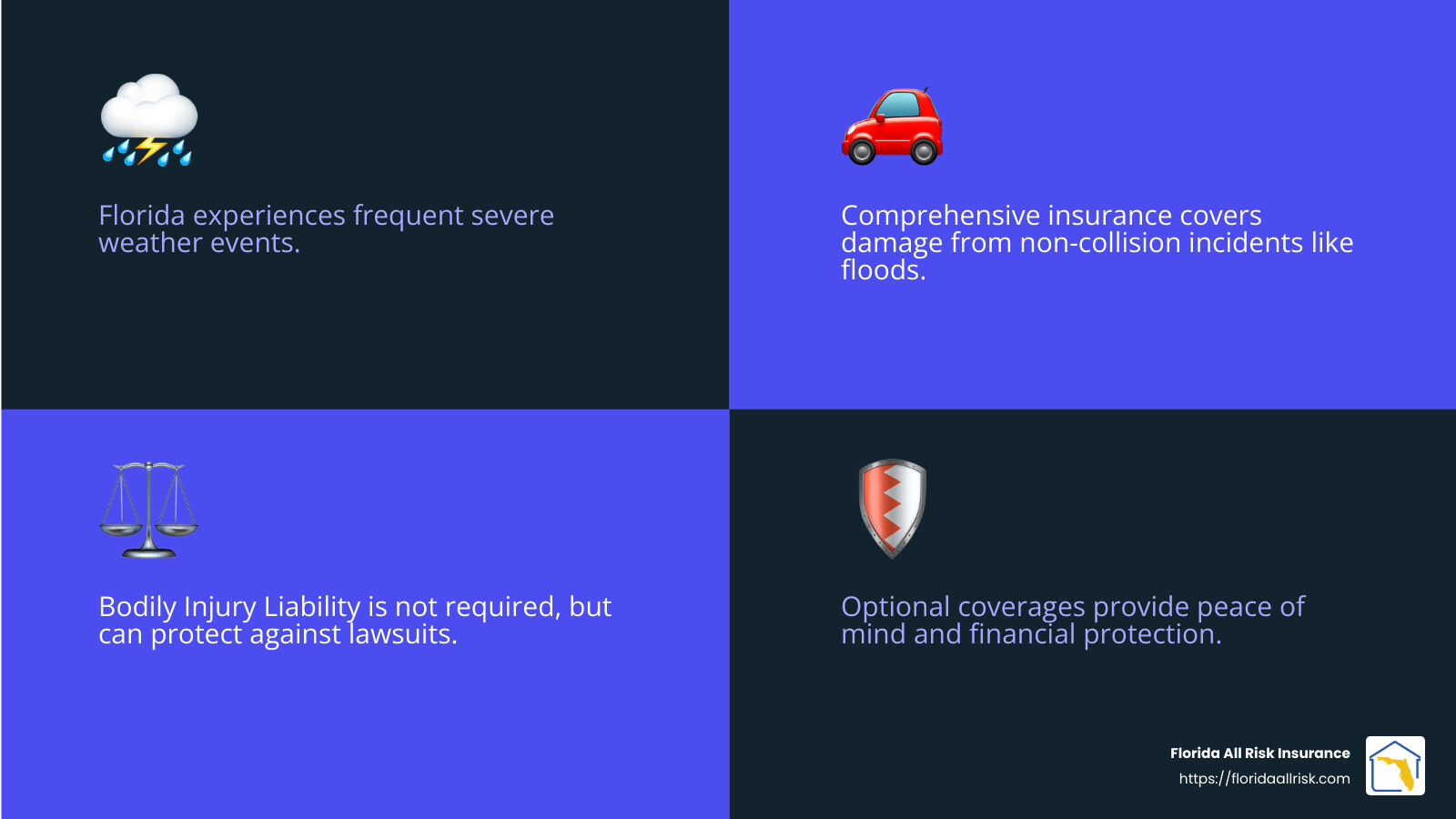
While Bodily Injury Liability isn’t required by Florida law, it’s a coverage many experts strongly advise. BIL covers medical expenses, lost wages, and other costs if someone is injured or killed in an accident you cause. Without this coverage, you might face significant out-of-pocket expenses if the injured party sues you.

Why Consider More Than the Minimum?
Florida’s insurance requirements are designed to meet basic needs, but accidents can lead to costs that far exceed these minimums. If you’re involved in a serious accident, the expenses can quickly rise. Having additional coverage can protect your assets and provide peace of mind.
In summary, while Florida’s minimum insurance requirements focus on PDL, understanding and considering additional liability coverages like BIL can offer you better protection. Liability car insurance in Florida is not just about complying with the law; it’s about safeguarding your future.
Minimum Insurance Requirements in Florida
When you’re driving in Florida, it’s important to know the minimum insurance requirements to stay legal and protect yourself financially. Florida has specific rules about the types of coverage you need, especially focusing on Personal Injury Protection (PIP) and Property Damage Liability (PDL).
Personal Injury Protection (PIP) Coverage
Florida is a no-fault state, which means that your insurance pays for your injuries regardless of who caused the accident. This is where Personal Injury Protection (PIP) comes in. It covers 80% of necessary and reasonable medical expenses up to $10,000. This coverage also extends to lost wages and other related expenses, providing a financial cushion after an accident.
Property Damage Liability (PDL) Coverage
Property Damage Liability (PDL) is another mandatory coverage in Florida. It covers damages you cause to someone else’s property with your vehicle. Whether it’s another car, a fence, or even a building, PDL helps pay for the repairs. The state requires a minimum of $10,000 in PDL coverage. However, considering the potential costs of property damage, many drivers opt for higher coverage limits to ensure they are adequately protected.
Registration Requirements
In Florida, you must have both PIP and PDL insurance before you can register a vehicle with at least four wheels. This insurance must be maintained continuously throughout the registration period, even if the vehicle is not being driven or is inoperable. If you’re moving to Florida, you have 10 days to obtain a Florida registration after starting work or enrolling your children in a Florida school.
It’s crucial to keep your insurance active. If you cancel your insurance without surrendering your license plates, you risk suspension of your driving privileges and license plate for up to three years, along with hefty reinstatement fees.
In conclusion, understanding and meeting Florida’s minimum insurance requirements is essential for legal and financial protection on the road. Ensure you have the necessary PIP and PDL coverages to stay compliant and safeguard your finances.
Optional Coverages to Consider
While Florida mandates certain minimum coverages like Personal Injury Protection (PIP) and Property Damage Liability (PDL), there are additional optional coverages that can provide greater peace of mind and financial protection. Let’s explore some of these options.
Bodily Injury Liability
Although not required by Florida law, Bodily Injury Liability is a crucial coverage to consider. This insurance helps cover costs associated with injuries sustained by others in an accident where you are at fault. Even in a no-fault state like Florida, you could be sued if your PIP doesn’t cover all expenses. This coverage typically includes medical bills, lost wages, and legal fees. With the rising costs of healthcare, having this coverage can protect you from significant out-of-pocket expenses.
Collision Insurance
Collision Insurance is designed to cover damage to your vehicle resulting from a collision, regardless of who is at fault. This is particularly valuable if you have a newer or more expensive car. Without collision insurance, you would be responsible for repair costs, which can be substantial. In Florida, where the minimum required coverage does not include collision, this optional insurance can be a lifesaver in the event of an accident.
Comprehensive Insurance
For incidents that aren’t related to collisions, there’s Comprehensive Insurance. This coverage protects against damage from events like theft, vandalism, natural disasters, and more. In Florida, where hurricanes and floods are not uncommon, comprehensive insurance can be a wise investment. It ensures that you’re covered for a wide range of unexpected occurrences that could otherwise lead to costly repairs or replacements.
Making the Right Choice
When deciding on optional coverages, consider your financial situation, the value of your vehicle, and your personal comfort level with risk. While these coverages add to your insurance premium, they provide invaluable protection that can save you money and stress in the long run. Always consult with your insurance provider to tailor a policy that best fits your needs.
Frequently Asked Questions about Liability Car Insurance in Florida
What is the most affordable car insurance option in Florida?
Finding affordable car insurance in Florida can be a challenge due to the state’s high average insurance costs, which are about 68% higher than the national average. Here are some tips to help you find more budget-friendly options:
-
Shop Around: Compare quotes from multiple insurance providers to find the best rates. Prices can vary significantly between companies.
-
Consider Your Coverage: While meeting the minimum requirements is essential, you can adjust optional coverages to fit your budget.
-
Look for Discounts: Many insurers offer discounts for good driving records, bundling policies, or taking defensive driving courses.
-
Review Your Policy Regularly: Life changes like moving, getting married, or buying a new car can affect your rates. Make sure your policy reflects your current situation.
-
Pay-Per-Mile Insurance: If you don’t drive much, consider a pay-per-mile policy which can be more economical.
Is Florida a liability state?
Florida is a no-fault state, meaning each driver’s own insurance covers their injuries and damages, regardless of who caused the accident. This is where Personal Injury Protection (PIP) comes in, covering medical expenses and lost wages up to the policy limits. However, Florida does not require drivers to carry Bodily Injury Liability insurance, although it is recommended for added protection.
Can someone drive my car if they are not on my insurance in Florida?
Yes, in Florida, insurance follows the car, not the driver. This means that if someone borrows your car and gets into an accident, your insurance policy typically covers the damages. However, it’s important to check with your insurer to understand any limitations or exceptions that might apply. Always ensure that anyone driving your car has a valid driver’s license and is a responsible driver to avoid potential complications.
Conclusion
At Florida All Risk Insurance, we understand that every driver in Florida has unique needs when it comes to auto insurance. That’s why we offer custom coverage options custom to fit your lifestyle and budget. Whether you’re looking for basic liability car insurance in Florida or more comprehensive coverage, we’re here to help you steer your options.
Our team in St. Petersburg is dedicated to providing personalized service and competitive rates. We work with a wide range of carriers to ensure you get the best possible deal without compromising on protection. By choosing us, you can drive with confidence knowing that your insurance is just right for you.
Ready to explore your options? Contact us today to find the perfect auto insurance coverage for your needs.