

The Unseen Risk: Why Standard Landlord Insurance Isn’t Enough in Florida
For Florida landlords, flood insurance for landlords is not just an add-on; it is a critical component of a resilient investment strategy. Many property owners find a devastating truth in the aftermath of a storm: their standard landlord policy does not cover flood damage. This gap in coverage can lead to catastrophic financial consequences, turning a valuable asset into a significant liability overnight.
To grasp the magnitude of this risk, consider these essential facts:
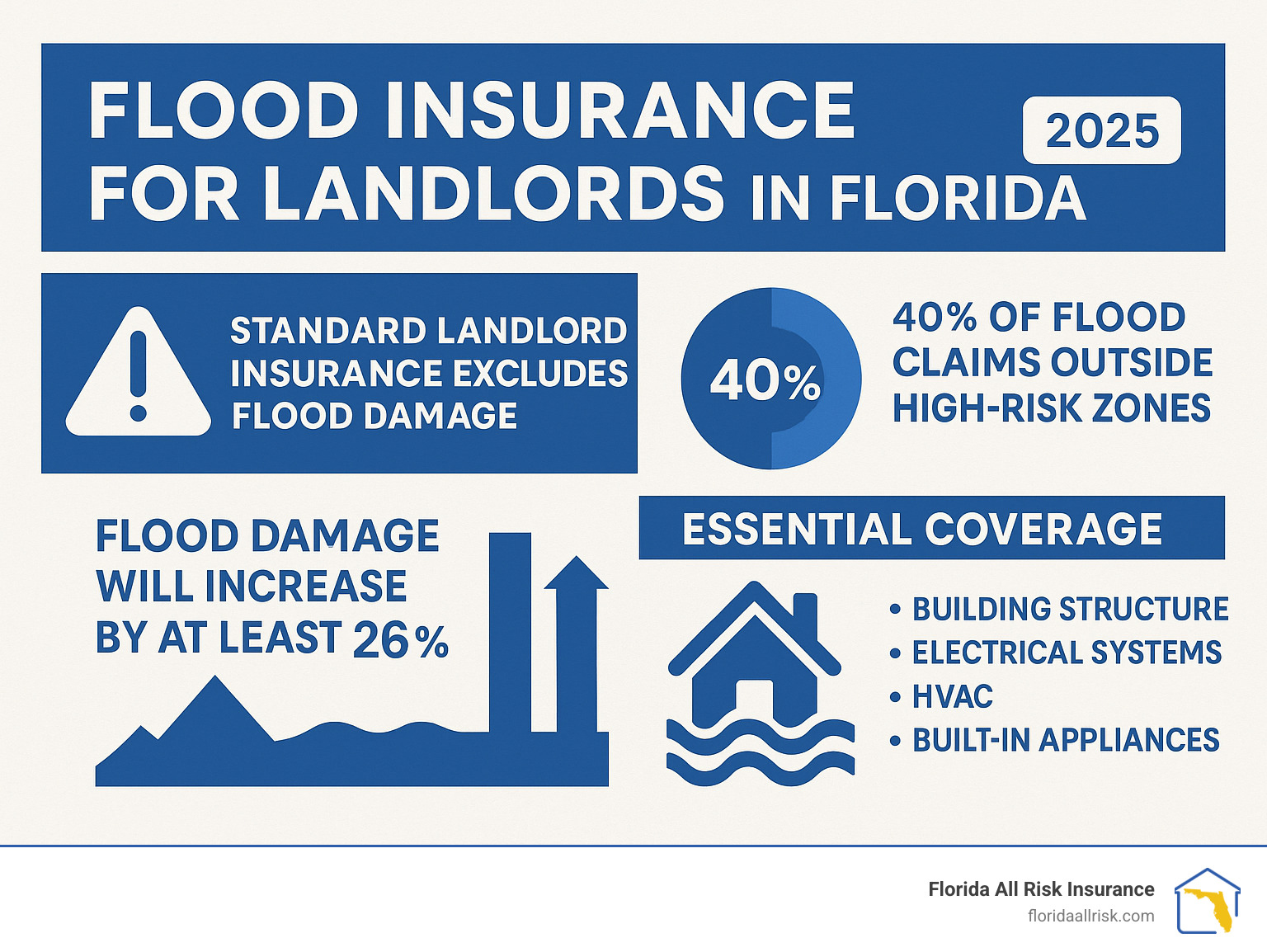
- Standard landlord insurance policies categorically exclude damage from flooding (i.e., rising surface water). A separate, dedicated flood policy is required for this peril.
- Over 40% of all National Flood Insurance Program (NFIP) claims originate from properties located outside of designated high-risk flood zones, proving that no area is truly safe.
- Climate data and risk models project that flood damage in the United States will increase by at least 26% over the next three decades, with coastal states like Florida at the epicenter of this trend.
- The financial devastation can start with minimal water intrusion. Just one inch of water inside a property can cause over $25,000 in damage to drywall, flooring, electrical systems, and cabinetry.
- Procrastination is not an option. A typical 30-day waiting period applies to most new flood insurance policies, meaning you cannot wait until a storm is approaching to secure coverage.
Florida’s unique geography makes it exceptionally vulnerable. Its extensive coastline is susceptible to hurricane-driven storm surge, while its low-lying interior and heavy seasonal rains contribute to riverine and flash flooding. Furthermore, the phenomenon of “sunny-day flooding” during king tides is becoming increasingly common in coastal communities. A widespread misconception is that properties outside of FEMA-designated high-risk zones are secure. However, FEMA statistics consistently show that a significant percentage of flood claims come from these supposedly lower-risk B, C, and X zones. This is often due to urban flooding, where aging or overwhelmed drainage systems fail to handle intense rainfall from summer storms, causing water to back up into streets and properties far from any natural body of water.
The financial fallout from a flood event extends far beyond the immediate repair costs. Landlords face the expense of complete property renovations, including mold remediation, which can be extensive and costly. This leads to prolonged vacancy periods, resulting in a major loss of rental income that can cripple cash flow for months or even years. Unlike damage from an internal source like a burst pipe (which is typically covered by a standard landlord policy), rising water from a storm, overflowing river, or storm surge is a specific exclusion that requires a dedicated flood policy.
I’m Jason Miller, a second-generation insurance professional with over 20 years of dedicated experience helping Florida property owners steer these complex risks. My family’s 60-plus years in the industry have provided a view of the devastation caused by uncovered flood losses. This experience has solidified my belief that proactive flood protection is an non-negotiable element of any successful rental property investment in the Sunshine State.
Quick flood insurance for landlords definitions:
- Flood insurance coverage in Florida
- Flood insurance requirements in Florida
- Average cost of flood insurance in Florida
Why Flood Damage Is a Landlord’s Biggest Threat
A pervasive and dangerous misconception is that standard homeowners insurance in Florida or landlord policies provide a comprehensive shield against all forms of water damage. They do not. These policies are designed to cover sudden and accidental damage from internal sources, but damage from rising surface water—the official definition of a flood—is a specific and universal exclusion. The cost of repairing flood damage can be astronomical, often requiring the property to be stripped to the studs. This includes replacing the foundation, electrical and plumbing systems, insulation, drywall, and flooring. Beyond the visible damage, long-term issues such as pervasive mold growth can pose health risks to future tenants and lead to further financial liability.
Beyond the staggering repair bills, landlords face a secondary financial crisis: lost rental income. When a property is deemed uninhabitable due to flood damage, the flow of rent payments stops. This loss of income is a major financial blow that can persist for the many months it takes to complete repairs and find new tenants. Furthermore, a history of uninsured flood damage can significantly decrease a property’s market value, making it more difficult to sell or refinance in the future. With new climate models indicating that the frequency and severity of flood events will increase by at least 26% in the coming decades, this is a risk that is actively growing each year.
The Myth of “Safe Zones”
Believing you don’t need flood insurance because your property isn’t in a designated “high-risk” flood zone (like Zone A or V) is a dangerous and costly gamble. According to FEMA’s FloodSmart data, more than 40% of all National Flood Insurance Program (NFIP) claims are filed by policyholders in moderate-to-low-risk areas. In Florida, the threats are multifaceted and extend far beyond coastal storm surge. Heavy summer thunderstorms can overwhelm local drainage systems, new construction can alter natural water flow and create new flood pathways, and even something as simple as a blocked culvert can cause localized flooding with devastating consequences. In short, every property owner in Florida has some level of flood risk, making proactive protection a wise and necessary investment for long-term financial security.
NFIP vs. Private Policies: Choosing the Right Flood Insurance for Landlords
When selecting flood insurance for landlords, you have two primary avenues: the government-backed National Flood Insurance Program (NFIP) or policies from a growing market of private insurers. Understanding the distinct advantages and limitations of each is crucial for tailoring protection to your specific rental property investment.

FEMA’s NFIP offers standardized, stable coverage that is available in participating communities across the country. In contrast, private insurers provide market-driven flexibility, often with higher coverage limits and more customizable options. The optimal choice depends on your property’s value, your specific needs like loss of rent coverage, and your overall risk tolerance.
The National Flood Insurance Program (NFIP)
Established by Congress in 1968 and managed by the Federal Emergency Management Agency (FEMA), the NFIP was created to provide property owners with access to affordable flood insurance. You don’t purchase these policies directly from the government; instead, you buy them through traditional insurance companies participating in the Write-Your-Own (WYO) program. These companies sell and service the policies, but the federal government underwrites the risk and pays the claims.
NFIP policies have standardized coverage limits. For residential properties (1-4 family structures), the program offers up to $250,000 in building coverage and up to $100,000 for contents. For commercial properties, these limits increase to $500,000 for the building and $500,000 for contents. For any property located in a Special Flood Hazard Area (SFHA) with a federally-backed mortgage, NFIP coverage is mandatory. The program’s primary strength is its stability and availability, but its one-size-fits-all approach means it offers less flexibility than private market alternatives. A significant limitation for landlords is that standard NFIP policies do not cover loss of rental income.
The Rise of Private Flood Insurance
In recent years, the private flood insurance market has expanded significantly, offering a competitive alternative to the NFIP. These insurers operate independently of the federal program, allowing them to use their own underwriting models and offer more diverse products. This often translates to more competitive and comprehensive options for landlords.
Key advantages of private flood insurance often include:
- Higher Coverage Limits: Many private insurers offer building protection well over the NFIP’s $250,000 cap, with some policies providing $1 million or more. This is essential for landlords with higher-value properties or multi-unit buildings where the replacement cost exceeds NFIP limits.
- Broader Coverage Options: This is a major differentiator. Many private policies offer loss of use coverage (also known as loss of rents) as either a built-in feature or an optional endorsement. This replaces lost rental income while the property is being repaired, a critical protection for any landlord’s cash flow. Some policies may also cover other structures or basement contents with fewer limitations than the NFIP.
- Competitive and Flexible Underwriting: Private insurers use sophisticated risk modeling that can consider property-specific details beyond the FEMA flood map, such as the installation of flood mitigation measures. This can result in lower costs, especially for properties outside of high-risk zones or those that have been liftd.
- Shorter Waiting Periods: While the NFIP imposes a standard 30-day waiting period, many private insurers offer much shorter periods, often between 7 and 14 days. Some may even have no waiting period in certain situations, such as when coverage is required for a loan closing.
You can explore various Flood Insurance Companies Florida to find a private carrier that aligns with your investment strategy.
Comparing NFIP and Private Flood Insurance for Landlords
This side-by-side comparison highlights the key differences to help you make an informed decision for your rental portfolio:
| Feature | National Flood Insurance Program (NFIP) | Private Flood Insurance |
|---|---|---|
| Coverage Limits | Residential: $250k (building), $100k (contents) Commercial: $500k (building), $500k (contents) |
Often higher, potentially $1M+ for building and contents. Customizable to property value. |
| Waiting Period | Typically 30 days (with limited exceptions) | Varies by carrier, often shorter (7-14 days), some with no waiting period for loan closings. |
| Loss of Rent Coverage | Not available. A major gap for landlords. | Often available as a built-in feature or an optional add-on. |
| Cost & Underwriting | Federally set rates. Risk Rating 2.0 methodology prices risk at the individual property level. | Market-driven rates. Can be more competitive for lower-risk properties. More underwriting flexibility. |
| Claim Payout Basis | Almost always Actual Cash Value (ACV) for non-primary residences. | May offer Replacement Cost Value (RCV) options, though often at a higher premium. |
| Underwriting Flexibility | Standardized and rigid policy terms. | More flexible, can offer custom policies and endorsements to fit specific needs. |
The availability of loss of rent coverage, higher limits, and shorter waiting periods makes private policies particularly attractive to landlords. However, the stability and universal availability of the NFIP make it a vital option, especially in high-risk areas where private coverage may be limited or expensive. The best approach is to compare quotes from both NFIP and private options to find the optimal balance of coverage and cost for your portfolio.
Decoding Your Coverage: What a Landlord Flood Policy Includes
Understanding precisely what your flood insurance for landlords policy covers—and, just as importantly, what it excludes—is essential for protecting your investment and avoiding costly surprises during a claim. Flood policies are highly specific, and knowing their boundaries is a cornerstone of effective risk management.
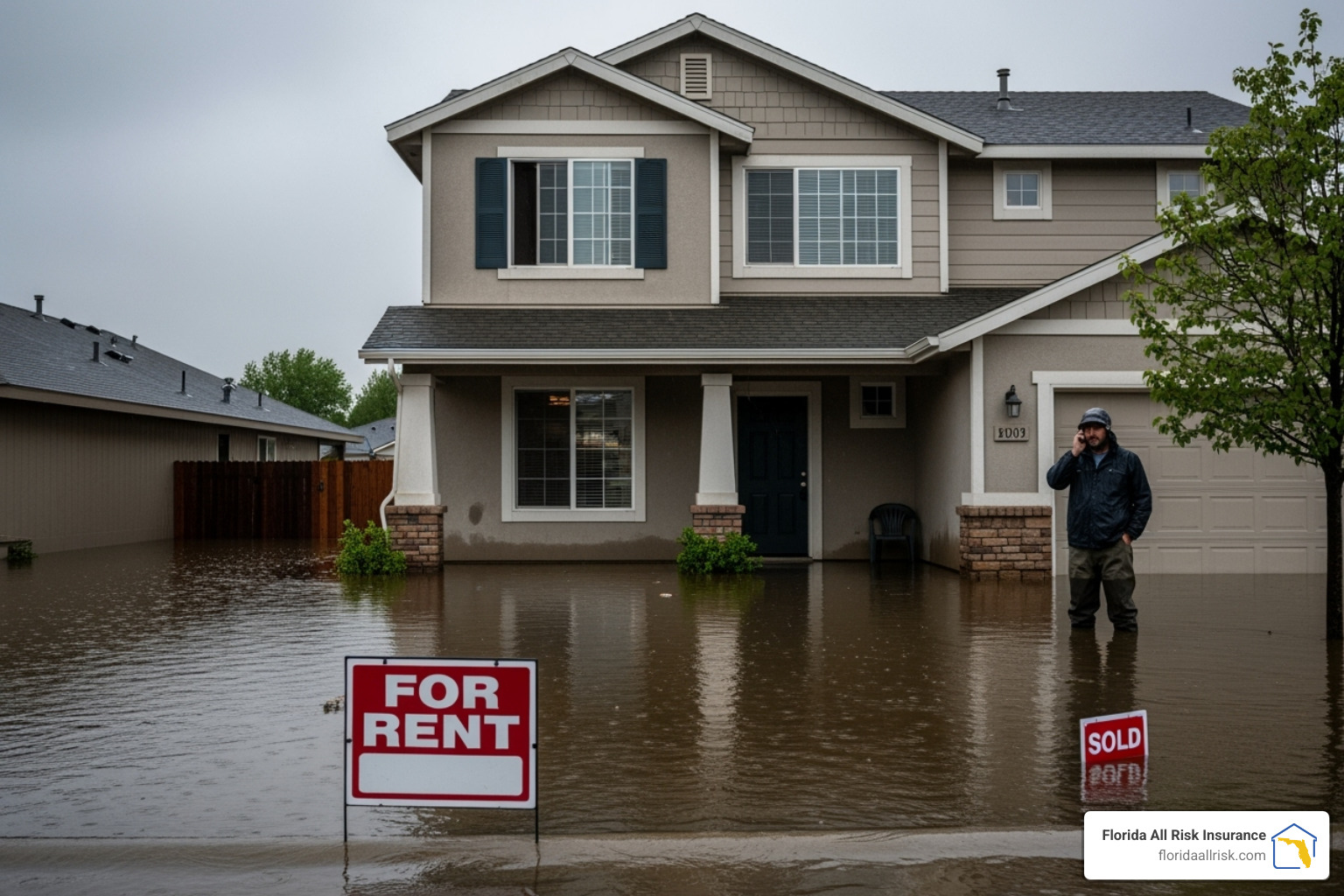
A flood is officially defined by the NFIP as a general and temporary condition of partial or complete inundation of two or more acres of normally dry land area or of two or more properties (at least one of which is the policyholder’s property) from an overflow of inland or tidal waters, unusual and rapid accumulation or runoff of surface waters from any source, or mudflow. Your policy is designed to cover direct physical loss by or from flood to your insured property.
What’s Typically Covered (Building Property)
A landlord flood policy is designed to protect the core structure and systems of your rental property. Building coverage generally includes:
- The building’s foundation, walls, and structural components.
- Electrical and plumbing systems.
- Central air conditioning, furnaces, and water heaters.
- Refrigerators, cooking stoves, and built-in appliances such as dishwashers.
- Permanently installed carpeting over an unfinished floor.
- Permanently installed paneling, wallboard, bookcases, and cabinets.
- A detached garage, up to 10% of the building property coverage limit (this amount is deducted from the total building coverage, not in addition to it).
- Debris removal costs associated with a covered flood loss.
Common Exclusions and Critical Gaps
It’s equally important to be aware of what is not covered by a standard flood policy:
- Tenant’s Personal Property: Your landlord policy does not cover your tenant’s furniture, electronics, clothing, or other belongings. It is a best practice to require tenants to carry renters insurance and advise them that they need a separate renter’s flood policy for their possessions.
- Property Outside the Building: Items such as landscaping, trees, fences, patios, decks, walkways, seawalls, and swimming pools are typically not covered.
- Financial Losses: The policy does not cover currency, precious metals, stock certificates, or other valuable papers. It also does not cover loss of income from the rental property unless you have a specific endorsement from a private insurer.
- Vehicles: Damage to cars, motorcycles, or other self-propelled vehicles should be covered by a comprehensive auto insurance policy.
- Basement and Below-Grade Limitations: Coverage in basements and other areas below the lowest liftd floor is severely restricted, typically limited to structural elements, essential utilities, and cleanup.
For a comprehensive overview, see our guide on Flood Insurance Coverage Florida.
Critical Distinction: Actual Cash Value (ACV) vs. Replacement Cost (RCV)
This is one of the most crucial financial details for landlords to understand. Most flood insurance for landlords on non-primary residences pays claims based on Actual Cash Value (ACV), not Replacement Cost Value (RCV).
- Replacement Cost (RCV) is the cost to replace damaged property with new materials of like kind and quality, without any deduction for depreciation.
- Actual Cash Value (ACV) is the cost to replace the damaged property minus depreciation for its age, wear, and tear.
Here’s a practical example: Imagine a flood destroys a 15-year-old roof on your rental property that had a 25-year expected lifespan. The cost to install a brand-new roof is $20,000. An RCV policy would pay the full $20,000 (minus your deductible). However, an ACV policy would calculate the depreciation (15/25 years = 60% depreciated) and pay only the remaining value. In this case, you would receive approximately $8,000 ($20,000 – 60% depreciation), leaving you to pay the $12,000 difference out of pocket. Since NFIP policies for rental properties are almost always settled on an ACV basis, understanding this distinction is vital for financial planning after a flood. Some private policies may offer an RCV endorsement for an additional premium, which is a valuable option to explore.
Flood vs. Water Damage vs. Sewer Backup
Insurers draw sharp lines between different types of water-related damage. Knowing the difference is key to ensuring you have the right coverage.
- Flood Damage: Caused by external, rising surface waters. This is covered only by a dedicated flood insurance policy.
- Water Damage: Caused by internal sources within the building, such as a burst pipe, overflowing toilet, or leaking appliance. This is generally covered by a standard landlord insurance policy.
- Sewer Backup: Occurs when drains or sewers back up and overflow into the property. This is typically excluded from both standard landlord and flood policies. Coverage for this peril requires a specific sewer and water backup endorsement on your landlord policy.
Understanding these distinctions is critical for a smooth claims process, especially when managing a portfolio of Commercial Property Insurance alongside your flood coverage.
Calculating the Cost and Assessing Your Property’s Risk
Understanding the cost of flood insurance for landlords and the specific factors that determine your premium is the first step toward making a financially sound decision. Premiums are not arbitrary; they are calculated based on a range of measurable risk factors, some of which you can influence through proactive measures.

Factors That Influence Your Premium
Under the NFIP’s Risk Rating 2.0 methodology and private insurance models, several key variables determine your final flood insurance cost:
- Flood Zone Designation: While no longer the sole pricing factor for the NFIP, the property’s designated flood zone on FEMA maps remains a critical indicator of risk. Properties in high-risk zones (e.g., AE, V) will generally have higher premiums than those in moderate-to-low-risk X zones.
- Property Elevation: This is a major rating factor. It refers to the elevation of your property’s lowest floor relative to the Base Flood Elevation (BFE), which is the height to which floodwater is expected to rise during a 1-percent-annual-chance flood. An Elevation Certificate, a document prepared by a licensed surveyor, provides this data and can significantly lower your rates if your home is liftd above the BFE.
- First Floor Height: The height of your first floor above the ground is a key rating variable. Higher first floors generally correlate with lower risk and lower premiums.
- Distance to a Flooding Source: The proximity of your property to a coast, river, or other body of water is a direct input into the premium calculation.
- Building Characteristics: The age of the building, its construction type (e.g., wood frame, masonry), and its foundation type (e.g., slab-on-grade, basement, crawlspace, liftd on piers) all affect its vulnerability and, therefore, its premium.
- Coverage and Deductible Choices: The amount of building and contents coverage you select, along with the deductible you choose, directly impacts your premium. Higher deductibles will lower your premium but increase your out-of-pocket cost during a claim.
- Claims History: A property with a history of repetitive flood claims will likely face higher premiums, as it has a demonstrated, ongoing risk.
To learn more, review our detailed breakdown of the Average Cost of Flood Insurance in Florida.
How to Determine Your Property’s Flood Risk
Your first step is to visit the FEMA Flood Map Service Center and enter your property’s address. This free tool will show you the official flood zone designation for your location.
- Zone AE: A high-risk area subject to inundation by the 1-percent-annual-chance flood. Base Flood Elevations (BFEs) are determined for these zones, and flood insurance is mandatory for federally-backed mortgages.
- Zone V: A coastal high-hazard area with additional risks from storm-induced waves and velocity. These properties are subject to the most stringent building codes and have the highest premiums.
- Zone X (Shaded and Unshaded): These are moderate-to-low-risk areas. While considered safer, it is critical to remember that over 40% of all flood claims come from these zones. Complacency can be costly.
When you purchase or refinance a property, your lender will order a Standard Flood Hazard Determination Form to officially document your zone status. If your property is in Zone AE, our guide Does Flood Zone AE Require Flood Insurance in Florida? provides more essential details.
Can You Get Flood Insurance in a High-Risk Zone?
Yes, absolutely. In fact, properties located in high-risk zones, officially known as Special Flood Hazard Areas (SFHA), are precisely where flood insurance is most critical and often required. If you have a mortgage from a federally regulated or insured lender on a property in an SFHA, you are legally required to purchase and maintain flood insurance for the life of the loan.
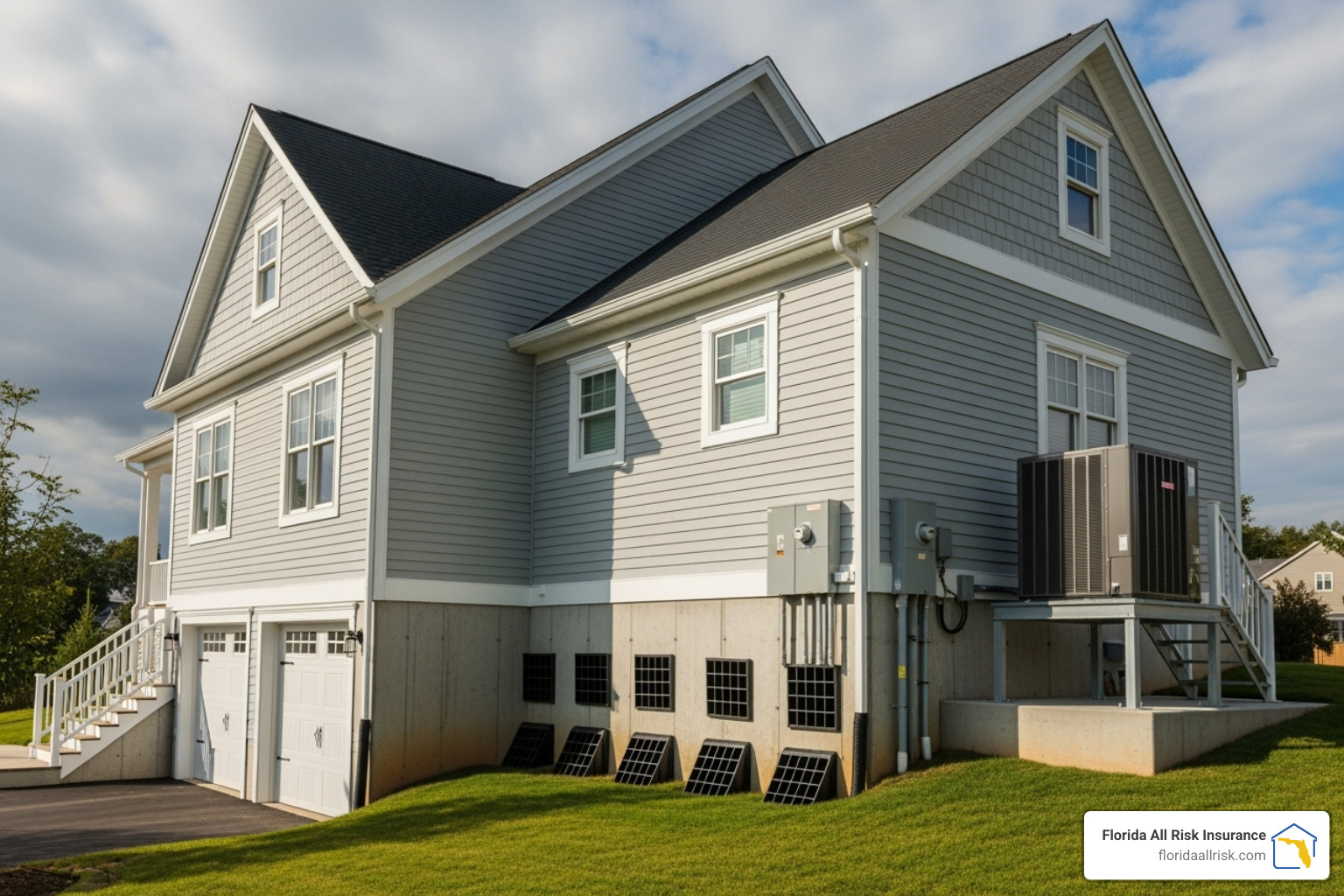
While premiums are naturally higher in these zones to reflect the increased risk, you are not without options to manage the cost. You can potentially lower your premiums through mitigation credits. FEMA and private insurers offer discounts for taking proactive steps to flood-proof your property. This can include installing certified flood vents in foundation walls, elevating the home on piers, or raising critical utilities like HVAC systems and electrical panels above the Base Flood Elevation. A high-risk designation means you need flood insurance more, not that it’s unavailable.
From Policy to Prevention: A Landlord’s Action Plan
Effective flood protection for your rental properties is a two-pronged approach. It involves first securing the right insurance policy to transfer financial risk, and second, implementing physical mitigation strategies to minimize potential damage. This comprehensive action plan helps landlords cover both critical bases.
Steps to Purchase Flood Insurance
- Assess Your Property’s Risk: Begin by visiting the FEMA Flood Map Service Center to determine your property’s official flood zone. This provides a baseline understanding of your risk profile.
- Gather Essential Documents: To get an accurate quote, you will need key property details, including the full address, year of construction, foundation type, and number of floors. If you have one, an Elevation Certificate is extremely valuable and can lead to significant discounts.
- Speak with an Independent Insurance Agent: An independent agent is your most valuable ally. Unlike a captive agent who represents only one company, an independent agent can compare quotes from both the NFIP and a wide range of private insurers. This ensures you get the best combination of coverage and price for your specific needs.
- Review Policy Options in Detail: Don’t just look at the price. Carefully review the proposed coverage limits for both the building and any contents you own. Pay close attention to the deductible, the claim payout basis (ACV vs. RCV), and any exclusions. Ask specific questions about coverage for loss of rents.
- Plan for the Waiting Period: Do not delay. Most new flood insurance policies have a mandatory waiting period before they take effect. Secure your coverage well before the start of hurricane season to avoid being caught unprotected.
Understanding the Waiting Period
You cannot buy flood insurance today and be covered for a hurricane that is forecast to arrive next week. Most NFIP policies have a strict 30-day waiting period from the date of purchase until the coverage becomes effective. There are a few specific exceptions to this rule, such as when flood insurance is required for a new loan closing, if your lender finds you need coverage during a loan’s term, or if your property is newly mapped into a high-risk area. However, for the vast majority of purchases, you must plan ahead and secure coverage at least a month in advance.
Flood Mitigation Strategies for Landlords
Taking proactive steps to make your property more flood-resistant can significantly reduce the extent of damage and may also lower your insurance premiums. These are sound investments in your property’s longevity.
- Lift Critical Utilities: One of the most effective measures is to raise expensive mechanical equipment. Work with licensed professionals to lift HVAC units, water heaters, electrical panels, and washers/dryers onto platforms or move them to a higher floor, placing them above your area’s potential flood level.
- Install Engineered Flood Vents: If your property has an enclosed foundation like a crawlspace or garage, installing FEMA-compliant flood vents is crucial. These vents allow floodwater to flow through the foundation area rather than building up and exerting immense hydrostatic pressure that can cause walls to collapse.
- Improve Grading and Drainage: Ensure the landscape and soil around your foundation slope away from the building. This simple step helps direct rainwater away from the structure. Installing French drains or swales can also help manage heavy water flow during storms.
- Use Water-Resistant Building Materials: During renovations or repairs, especially in lower levels or ground floors, opt for flood-resistant materials. Use solid wood or marine-grade plywood for cabinetry, install tile or polished concrete floors instead of carpet, and use paperless drywall and water-resistant insulation.
- Secure Outdoor Items: Anchor outdoor fuel tanks to a concrete slab to prevent them from floating away and causing a hazard. Regularly clean gutters and ensure downspouts are clear and direct water at least five feet away from the foundation.
- Develop a Tenant Communication Plan: Proactive communication is key. Advise tenants in writing (e.g., in the lease agreement) that your policy does not cover their personal belongings and strongly encourage them to purchase renter’s flood insurance. Provide them with a flood preparedness checklist, including emergency contact information and evacuation procedures.
Frequently Asked Questions About Landlord Flood Insurance
Navigating the specifics of flood insurance can be confusing. Here are clear, detailed answers to the most common questions we receive from rental property owners about flood insurance for landlords.
Does my standard landlord insurance policy cover any type of water damage?
Your standard landlord policy typically covers sudden and accidental water damage that originates from within the property. The classic example is a burst pipe, an overflowing washing machine, or a leaking water heater. However, it specifically and universally excludes damage from floods, which are defined as rising waters from an external source (e.g., storm surge, overflowing rivers, heavy rainfall). For this type of peril, you need a separate, dedicated Flood Insurance Florida policy. There is no overlap.
Do I have to require my tenants to get renters insurance?
While you cannot purchase it for them, making renters insurance a requirement in your lease agreement is a widely recognized best practice for landlords. It is crucial to go one step further and advise tenants, preferably in writing, that a standard renters policy—just like your landlord policy—does not cover flood damage to their personal belongings. They must purchase a separate, contents-only flood policy to protect their furniture, electronics, and other possessions. This can be obtained from a provider that sells NFIP policies or from a private insurer. This protects your tenants’ financial well-being and minimizes the potential for disputes and liability issues after a flood.
How does a flood insurance claim work for a rental property?
First, contact your insurance agent immediately after the flood to report the loss and start the claims process. Before you begin any cleanup, thoroughly document all damage with extensive photos and videos from multiple angles. Create a detailed inventory of all damaged items you own (e.g., appliances). An insurance adjuster will be assigned to your claim and will schedule a visit to inspect the property and assess the scope of the damage. For rental properties (non-primary residences), the claim payout under an NFIP policy is typically based on Actual Cash Value (ACV), which is the replacement cost of an item minus depreciation for age and wear. This means your payout may not be enough to cover the full cost of new materials, so it’s important to budget for this potential gap.
What is an Elevation Certificate and do I need one for my rental?
An Elevation Certificate (EC) is an official document that details your property’s specific elevation data, including the height of its lowest floor, adjacent ground, and critical machinery, relative to the Base Flood Elevation. It is prepared and certified by a licensed surveyor, engineer, or architect. While not always required to get a flood insurance quote (especially in low-risk zones), an EC is highly recommended. If your property’s lowest floor is liftd above the required level, an EC can prove it to the insurer and lead to substantial premium discounts. For properties in high-risk zones, an EC is often essential for accurate rating.
What is ‘Loss of Use’ or ‘Loss of Rents’ coverage and how do I get it?
‘Loss of Use’ or ‘Loss of Rents’ coverage is a critical protection that reimburses you for lost rental income if your property becomes uninhabitable due to a covered event. Standard NFIP policies do not offer this coverage, which is a significant gap for investors. This is one of the primary advantages of the private flood insurance market. Many private flood policies offer Loss of Rents coverage either as a built-in feature or as an optional endorsement you can add to your policy. If cash flow is important to your investment strategy, seeking out a private policy with this coverage is essential.
My rental is a condo unit on an upper floor. Do I still need flood insurance?
This is a common and important question. Even if your unit is on an upper floor and unlikely to be directly touched by floodwaters, you may still need coverage. First, the condo association’s master flood policy covers the building’s common elements (foundation, walls, elevators, lobby), but it may not cover the interior of your unit (drywall, cabinets, flooring). You may need a ‘bare walls’ policy to cover these elements. Second, if a major flood damages the lower floors and building systems, the entire building could be uninhabitable for months, and you could face a large special assessment from the HOA for repairs not fully covered by its policy. A personal flood policy can provide coverage for these assessments, up to the policy limit. It’s vital to review your HOA’s master policy to understand what it covers and where your own responsibility begins.
Protect Your Investment with the Right Coverage
As we have explored, flood insurance for landlords is an indispensable safeguard for any rental property investment in Florida. Relying on a standard landlord policy creates a critical and potentially bankrupting gap, as it will not respond to damage from rising waters. With flood risks present across the entire state—far beyond the officially designated high-risk zones—and with the frequency and severity of these events projected to increase due to climate change, proactive protection is no longer optional; it is a fundamental component of sound asset management.
Making the right choice is about more than just satisfying a lender requirement. It’s about ensuring the long-term viability of your investment. By understanding the key differences between the stable, government-backed NFIP and the flexible, feature-rich private insurance market, you can select a policy that truly fits your property’s value and your financial needs. Grasping core concepts like Actual Cash Value versus Replacement Cost empowers you to plan for the true financial impact of a potential claim. When this custom insurance coverage is combined with smart, physical mitigation strategies, you create a robust defense against one of nature’s most destructive and costly disasters.
Your Partner in Protection
Navigating the complexities of flood insurance, from deciphering flood maps to comparing policy features, can be a daunting task. At Florida All Risk Insurance, we serve as your trusted partner and advocate in this process. As a dedicated independent agency, we are not tied to any single carrier. This allows us to objectively survey the market, comparing options from a wide range of both NFIP and private carriers to find the most competitive rates and comprehensive protection custom to your unique rental portfolio. Whether you own a single-family rental, a multi-unit complex requiring Business Insurance, or a portfolio of commercial rentals, we are here to help you secure the right flood coverage. Let us help you build a resilient investment strategy that can withstand the storm.
Contact Florida All Risk Insurance
Ready to protect your valuable rental property investment from Florida’s number one peril? The experienced team at Florida All Risk Insurance is here to make the process of securing flood insurance simple, clear, and effective. We are committed to finding the flood insurance for landlords solution that fits your specific properties, risk tolerance, and budget.
Don’t wait for the next storm warning to find you’re underprotected. The mandatory 30-day waiting period on most new policies means the best time to act is now, during clear skies. Contact us today for a no-obligation review of your current coverage and for honest, professional advice from experts who care about protecting your assets for the long term. We specialize in creating customized insurance programs for landlords with single properties or extensive real estate portfolios.
Florida All Risk Insurance
Saint Petersburg, FL
Phone: (727) 522-6677
Email: [email protected]
Let’s work together to give you the peace of mind that comes from knowing your rental properties are properly and thoroughly protected against the financial devastation of a flood.

