Insuring Your Legacy: A Comprehensive Look at Florida Historic Home Insurance
Why Florida Historic Home Insurance Requires Specialized Protection
Florida historic home insurance is a specialized type of property coverage crafted for older homes with unique architectural features, rare building materials, and historical significance. If you own a home that’s over 50 years old, has original construction, or is on a historic register, a standard homeowners policy is simply not enough.
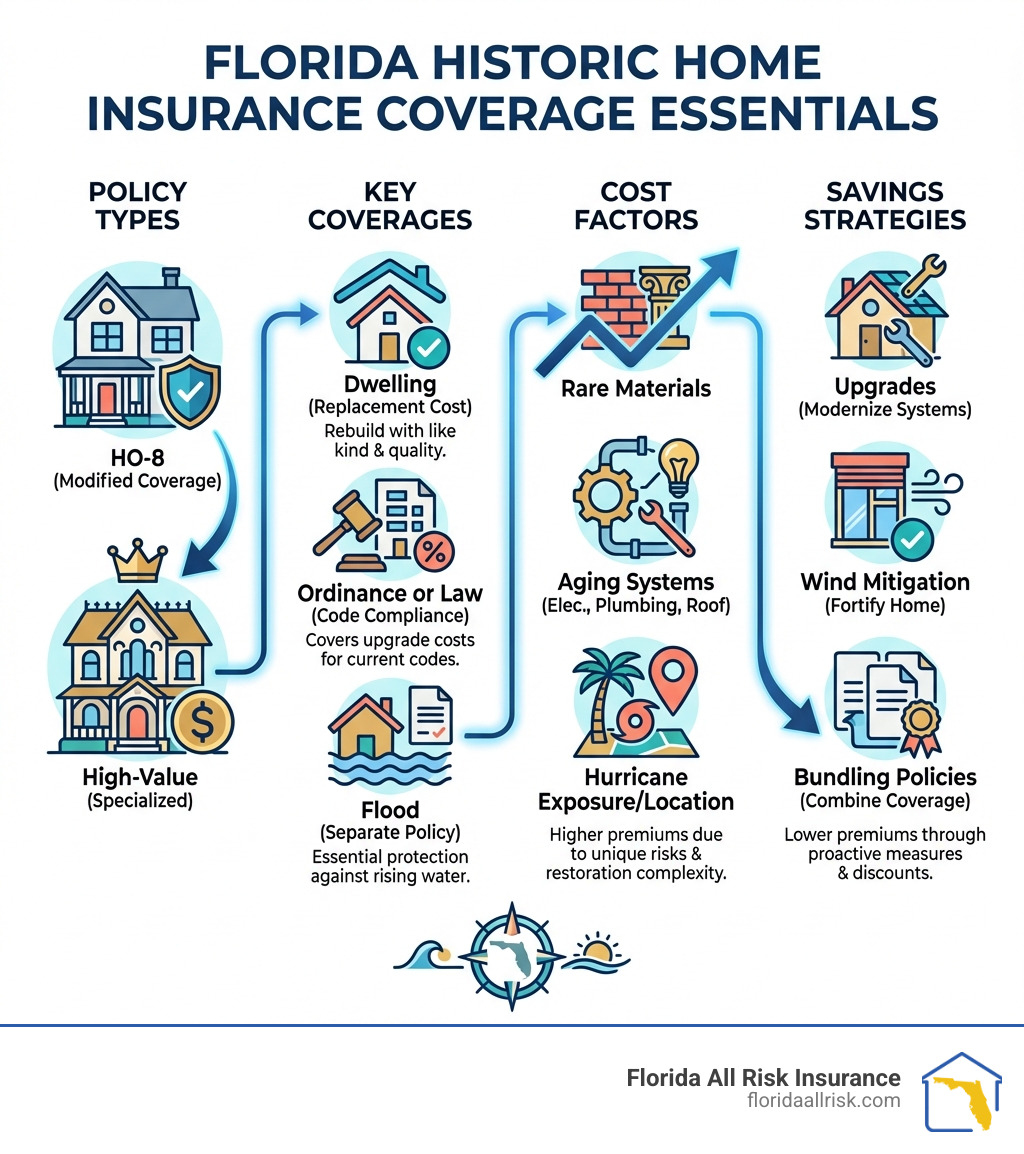
Standard policies often fail to cover the true cost of restoring a historic property, leaving owners financially exposed. The key difference lies in protecting irreplaceable materials and features that basic policies exclude. For these homes, you’ll typically need a modified HO-8 policy, a high-value policy, or a specialized historic home insurance plan. Essential coverages include full replacement cost (not actual cash value), robust ordinance or law coverage, and separate flood insurance.
The difference between insuring a historic home and a standard one comes down to one word: irreplaceable. Your 1920s Mediterranean Revival with its original pecky cypress paneling and hand-laid tile roof cannot be rebuilt with materials from a big-box store. When a standard policy pays actual cash value—factoring in decades of depreciation—you’re left with a fraction of what you need to restore your home to its former glory.
Florida presents unique challenges. Homes built before 1980 face higher premiums due to structural vulnerabilities and the increased risk of damage from hurricanes. Insurers view roofs over 20 years old as high-risk, and original electrical and plumbing systems fail at higher rates. Add Florida’s strict building codes—which can require that a home with significant damage be brought entirely up to current standards—and you can see why specialized coverage is not optional.
Many homeowners find too late that their standard policy has coverage gaps. An HO-3 policy designed for a modern subdivision home doesn’t account for the realities of a 75-year-old property. The result can be denied claims and massive out-of-pocket expenses.
This guide walks you through everything you need to know about insuring your historic Florida home—from understanding policy types to navigating Florida-specific challenges. We’ll explain why replacement cost coverage is non-negotiable and how to find insurers who understand your property’s unique value.
I’m Jason Miller, and with over 20 years of experience in Florida insurance, I’ve helped countless homeowners steer the complexities of Florida historic home insurance. My team at Florida All Risk Insurance understands that protecting a historic home requires expertise, access to specialized carriers, and a commitment to preservation that goes beyond standard solutions.
Explore more about Florida historic home insurance:
What is Historic Home Insurance and How Does It Differ?
Insuring a historic home isn’t just about protecting a structure; it’s about safeguarding a piece of history. This requires a different approach than insuring a modern house, primarily because the risks and replacement costs are fundamentally different.
Defining a Historic Home
For insurance purposes, a “historic” home isn’t always about official designations. While the National Register of Historic Places sets criteria for age and significance, insurers have a more practical definition based on risk. Generally, a home is considered historic or “older” if it’s 50 years old or more. The true distinction for insurers lies in its unique features and original construction. If your home has original plaster walls, unique millwork, or a specific type of roof that’s no longer mass-produced, it falls into this category because of the challenge and cost of repair.
Standard vs. Specialized Policies
Standard homeowners insurance policies, like an HO-3 or HO-5, are designed for modern homes using readily available materials. They often fall short for historic properties for several reasons:
- Valuation: Standard policies use modern construction costs for replacement, which doesn’t account for the specialized labor and rare materials needed for historic restoration.
- Exclusions: Older systems or materials might be excluded or lead to higher deductibles.
- Eligibility: Many standard insurers are hesitant to cover homes with older roofs, electrical systems, or plumbing. Homes constructed 40+ years ago often contain original systems that fail at higher rates, making them a higher risk.
For these reasons, owners of historic homes often need specialized or high-value home insurance policies. These are custom to the unique needs of older properties, offering broader coverage and more flexible valuation methods. You can learn more about general coverage options in our Best Homeowners Insurance Guide.
The HO-8 Policy Explained
The HO-8, or Modified Coverage Form, is designed for older homes that don’t meet the underwriting requirements for a standard policy. It’s often considered a last resort for homes where the rebuild cost exceeds market value.
- Named Perils: Unlike broader policies, HO-8 policies cover only a specific list of “named perils” (e.g., fire, windstorm, theft). If a peril isn’t explicitly listed, it’s not covered.
- Actual Cash Value: HO-8 policies typically pay out on an Actual Cash Value (ACV) basis, meaning depreciation is factored into the claim settlement. This can leave a significant gap between the payout and the actual cost to repair.
- Limitations: HO-8 policies often have significant limitations and may exclude coverage for things like water damage from burst pipes, a common issue in older homes.
While an HO-8 policy can provide baseline coverage, we generally recommend exploring policies that offer broader protection and replacement cost coverage to preserve a home’s original features.
Replacement Cost (RC) vs. Actual Cash Value (ACV)
This is one of the most critical distinctions for Florida historic home insurance.
-
Actual Cash Value (ACV): As explained in our guide The Lowdown on ACV: How Actual Cash Value Policies Work, ACV pays the cost to repair or replace damaged property minus depreciation. For a historic home, ACV payouts can be severely limited, leaving you with a fraction of the funds needed for restoration.
-
Replacement Cost (RC): This coverage pays the amount needed to repair or replace damaged property with materials of similar kind and quality, without deducting for depreciation. For historic homes, this is non-negotiable. It ensures you receive the funds necessary to rebuild your home with new, specialized materials. Many policies for historic homes offer “Guaranteed Replacement Cost” or “Extended Replacement Cost,” which can cover costs that exceed your dwelling limit by a certain percentage (e.g., 20-25%).
The Unique Challenges of Florida Historic Home Insurance
Florida’s unique environment, with its subtropical climate, coastal exposure, and stringent building codes, presents specific challenges for insuring historic properties. These factors significantly influence risk assessment and insurance premiums.
Florida-Specific Perils
- Hurricane Exposure: Florida is a hurricane hotspot. Older homes, especially those built before modern building codes were enacted, are often more vulnerable to high winds. Homes built before 1980 in Florida face significantly higher premiums due to these structural vulnerabilities.
- Flood Risk: Standard homeowners insurance policies do not cover flood damage. Given Florida’s low elevation and extensive coastline, flood risk is a major concern. If your historic home is in a flood zone, you will need a separate flood insurance policy. We have extensive resources on this, including Does Everyone in Florida Need Flood Insurance?.
- Sinkhole Risks: While less common, sinkholes are a geological risk in parts of Florida. Standard policies usually exclude sinkhole damage unless specific coverage is added, which can be a concern for the structural integrity of older homes.
Aging Home Systems
The very charm of a historic home—its age—is often its biggest insurance challenge. Homes constructed 40+ years ago often contain original systems that fail at higher rates than modern equivalents, leading to higher premiums.
- Outdated Electrical Systems: Knob-and-tube wiring or older circuit breaker panels pose significant fire hazards, making them a high risk for insurers. Upgrading an electrical panel can significantly reduce premiums.
- Plumbing Issues: Original galvanized or even older copper pipes are prone to corrosion, leaks, and bursting. Water damage is one of the largest homeowners insurance loss categories.
- Roof Age: This is a critical factor in Florida. Insurers treat roofs over 20 years old as high-risk, especially in hurricane-prone areas. Many insurers won’t issue standard coverage without a recent roof inspection or replacement for roofs of that age.
Historical Building Materials
The unique building materials used in historic Florida homes provide character but can be incredibly expensive to repair or replace. Examples include:
- Dade County Pine: A dense, termite-resistant wood now rare and costly to source.
- Coquina Rock: A sedimentary rock used in historic St. Augustine, requiring specialized masonry skills for repair.
- Plaster Walls: Common before drywall, plaster requires skilled artisans to repair properly.
These materials contribute to a higher replacement cost valuation and necessitate specialized contractors, increasing the likelihood that a standard policy’s limits will be insufficient.
Building Code Compliance
Florida’s building codes are among the strictest in the nation. This creates a significant challenge for older homes:
- Ordinance or Law Coverage: When a historic home is damaged, local ordinances may require repairs to comply with current building codes. These upgrades can significantly increase rebuilding costs. Authorized insurers in Florida are required to include Law and Ordinance coverage of 25% of the dwelling amount on most homeowners’ policies, and often offer a 50% option for an additional premium.
- The 50% Rule: If a home is damaged and the cost to repair exceeds 50% of its pre-damage value, local ordinances often mandate that the entire structure be brought up to current building codes. This rule can dramatically increase the cost of a rebuild, making robust Ordinance or Law coverage essential.
Essential Coverages and Cost Factors for Your Policy
Understanding the components of a historic home insurance policy and the factors that influence its cost is key to securing adequate protection without overpaying. We aim to ensure you have the coverage needed to restore your home to its original grandeur.
Key Coverages for Historic Florida Homes
When insuring a historic property, certain coverages are not just beneficial—they are absolutely essential.
- Dwelling Coverage (Coverage A): This is the core of your policy, covering the structure of your home. For historic properties, it’s crucial that this coverage reflects the actual cost to rebuild with similar-quality materials and specialized labor. Florida has a “Valued Policy Law” which states that in the event of a total loss, the insurer’s liability is the face amount of the policy, making an accurate valuation paramount.
- Ordinance or Law: This coverage is vital in Florida. It pays for the additional costs of rebuilding to comply with current building codes after a loss. Florida law requires insurers to include 25% of your dwelling coverage for this, and we always recommend considering the optional 50% increase for older homes.
- Water Backup and Service Line: Older plumbing systems are more susceptible to issues. Water backup coverage protects against damage from sewer line backups, while service line coverage can protect external utility lines running from the street to your home.
- Flood Insurance: It bears repeating: standard homeowners policies do not cover flood damage. For any Florida home, especially those in coastal or low-lying historic districts, separate flood insurance is non-negotiable. You can obtain this through the National Flood Insurance Program (NFIP) or private insurers. We can help you find the Best Flood Insurance Florida for your needs.
What Determines the Cost of Florida Historic Home Insurance?
Several factors contribute to the typically higher premiums for Florida historic home insurance:
- Replacement Cost Valuation: The primary driver of cost is the specialized appraisal needed to determine the true replacement cost, including skilled artisans and rare materials. This valuation will almost always be higher than the home’s market value.
- Risk Factors: The age and condition of the roof, electrical, and plumbing systems are huge determinants. A roof over 20 years old will significantly increase premiums. The home’s proximity to the coast and its wind-resistant features also play a major role.
- Policy Type and Deductibles: An HO-8 policy might have lower premiums but offers less coverage. High-value policies, while more expensive, provide the robust protection historic homes need. Florida’s hurricane deductibles are typically percentage-based (e.g., 2% of your dwelling coverage), while all-other-perils deductibles are a fixed dollar amount.
- Home Location: Insurance rates vary significantly across Florida. Homes in coastal St. Petersburg will face different risks and pricing than those further inland. Our guide on Home Insurance in St. Petersburg: Navigating the Local Market provides more localized insights.
How to Secure and Save on Your Policy
Finding the right Florida historic home insurance at a fair price requires a strategic approach. We believe in empowering our clients with the knowledge and resources to make informed decisions.
Lowering Your Historic Home Insurance Premiums
Even with the unique challenges of historic properties, there are actionable steps you can take to reduce your insurance costs:
- System Upgrades: This is often the most impactful way to lower premiums. Modernizing outdated electrical, plumbing, and HVAC systems significantly reduces the risk of fire and water damage, making your home more attractive to insurers.
- Wind Mitigation Discounts: Florida law requires insurers to offer discounts for protecting homes against hurricane-force winds. Investing in hurricane shutters, upgrading roof-to-wall connections, and installing impact-resistant windows can lead to substantial savings. A certified wind mitigation inspection is necessary to document these features and claim your discounts, as detailed in the Premium Discounts for Hurricane Loss Mitigation Consumer Guide.
- Other Discounts: Don’t overlook other common discounts. Bundling your homeowners policy with auto insurance can often save 10-20%. Installing modern security systems and monitored fire alarms can also qualify you for discounts. Choosing a higher deductible can also lower your premium. For more general tips, check out our guide on how to Save on Homeowners Insurance.
Finding the Right Florida Historic Home Insurance
Navigating the specialized market for historic home insurance can be daunting, but you don’t have to do it alone.
- Specialized Agencies and Resources: Look for agencies that have expertise in historic properties. These agencies often have relationships with niche insurance carriers that specifically underwrite older homes with unique characteristics.
- Independent Insurance Agents: This is where we shine. As an independent insurance agency, we work with a wide range of carriers. This means we can shop around on your behalf to find the best coverage and rates for your unique historic property. Our expertise in high-risk properties ensures you get custom solutions. Learn more about Why You Should Work With an Independent Insurance Agency.
- State Resources: If you’re struggling to find coverage, Florida offers resources. The Florida Market Assistance Plan (FMAP) is a free referral service that helps consumers find insurance. For those unable to find a policy in the private market, the state’s insurer of last resort can provide essential coverage, though it’s generally advisable to seek private market options first. The Florida Insurance Consumer Advocate also offers valuable guidance.
Understanding Your Florida Historic Home Insurance Policy
Your policy’s declarations page is the summary of your coverage. Understanding it is crucial.
- Reading the Declarations Page: This document outlines your coverage limits (Dwelling, Other Structures, Personal Property, Loss of Use), your deductibles, and any endorsements. Always verify that your dwelling coverage adequately reflects the replacement cost of your historic home.
- Reviewing Exclusions: Pay close attention to what your policy doesn’t cover. Common exclusions include damage from wear and tear, neglect, and mold (beyond specific limits). For older homes, ensuring there aren’t unexpected exclusions related to aging systems is critical.
- Claims Process: Familiarize yourself with the claims procedure. In Florida, insurers must acknowledge a claim within 7 days and pay or deny it within 60 days of receiving notice. Knowing your duties after a loss (e.g., mitigating damage, keeping records) and understanding the Valued Policy Law for total losses will empower you during a challenging time.
Frequently Asked Questions about Florida Historic Home Insurance
We frequently encounter questions from homeowners about the unique aspects of insuring their historic properties. Here are some of the most common ones:
Can I get standard home insurance for my 75-year-old house?
It’s possible, but often challenging. If your home’s electrical, plumbing, and roofing systems have been fully updated and it’s in excellent condition, you may qualify for a standard HO-3 policy. However, most insurers will require a specialized policy due to the age, replacement cost, and unique materials involved. Insurers are very cautious about homes with roofs over 20 years old or with original systems, often deeming them ineligible for standard coverage.
Is flood insurance included in my historic home policy?
No. Flood damage from rising water is excluded from all standard and historic homeowners insurance policies in Florida. You must purchase a separate Flood Insurance Florida policy through the National Flood Insurance Program (NFIP) or a private insurer. Some carriers, particularly the state’s insurer of last resort, may require you to have flood insurance if your policy includes wind coverage.
How much more expensive is insurance for a historic home?
Premiums can be significantly higher—often 25% to 50% or more than a standard policy for a newer home of similar size. The primary cost drivers are the higher replacement cost valuation for rare materials and specialized labor, increased risk from older systems, hurricane exposure, and the need for specialized coverages like Ordinance or Law.
Protecting Your Piece of Florida’s Past
Insuring a historic home in Florida is a complex but essential responsibility. It requires a deep understanding of risk, a commitment to preservation, and a policy that values your home’s unique character. By focusing on replacement cost coverage, addressing the risks of aging systems, and leveraging available discounts, you can build a robust shield of protection around your property. Working with an expert who understands the nuances of this market is your best strategy for success.
At Florida All Risk Insurance, we specialize in custom solutions for unique properties. Our independent agents have the expertise and carrier access to steer the complexities of insuring historic homes across the state. We are based in St. Petersburg, Florida, and are passionate about helping our community protect their cherished properties.
Ready to protect your legacy? Request a comprehensive review of your Florida homeowners insurance coverage today.
Have questions or need to speak with a specialist? Contact Us and let our team help you find the right policy for your historic home.
Florida All Risk Insurance
Address: 700 Central Ave, St. Petersburg, FL 33701
Phone: (727) 345-6789
Email: [email protected]