

Insurance for small businesses is essential for safeguarding against unexpected events that could compromise your hard work. Regardless of your business size or industry, insurance provides critical protection by covering potential risks such as accidents, natural disasters, and lawsuits. Here’s a quick breakdown of the basic types of insurance you should consider:
- General Liability Insurance: Covers bodily injury and property damage.
- Professional Liability Insurance: Protects against claims of negligence or mistakes.
- Commercial Property Insurance: Covers damage to your business property and equipment.
- Workers’ Compensation Insurance: Protects employees injured on the job.
- Business Owner’s Policy (BOP): A combination of business-related coverages.
In today’s business world, accidents and unforeseen challenges are a reality. The right insurance policy can mean the difference between recovery and financial disaster.
As Jason Miller, a seasoned insurance professional with over 20 years’ experience in Florida, my commitment is to guide you through safeguarding your business effectively. Insurance for small businesses is not just a requirement but a crucial investment that ensures protection against potential threats. Let’s explore why understanding and choosing the right coverage matters.

Insurance for small businesses definitions:
– Small business employee benefits
– Affordable employee health insurance
– Florida health insurance brokers
Types of Insurance for Small Businesses
When you’re running a small business, having the right insurance is like having a safety net. It protects you from unexpected setbacks that can derail your progress. Let’s explore the essential types of insurance for small businesses you should consider:
General Liability Insurance
Every business, big or small, faces risks every day. General Liability Insurance is your first line of defense. It covers costs related to bodily injury, property damage, and even personal injury claims. Imagine a customer slipping in your store or an employee accidentally damaging a client’s property. This insurance helps cover the costs, so you don’t have to pay out of pocket.
Professional Liability Insurance
If your business provides a service, Professional Liability Insurance is crucial. Also known as “errors and omissions insurance,” it protects against claims of negligence or mistakes. For example, if you’re a consultant and your advice leads to a client’s financial loss, this insurance can cover legal fees and settlements.
Commercial Property Insurance
Your business property is a significant investment. Commercial Property Insurance protects it from damage caused by events like fire, theft, or natural disasters. Whether you own your building or lease a space, this insurance ensures that repairs or replacements don’t drain your finances.
Business Owner’s Policy (BOP)
A Business Owner’s Policy (BOP) bundles several types of coverage into one package. It typically includes general liability, commercial property, and business interruption insurance. This combo is perfect for small businesses as it offers comprehensive coverage at a lower cost than buying policies separately.
Workers’ Compensation Insurance
In most states, if you have employees, you’re required to have Workers’ Compensation Insurance. This insurance covers medical expenses and lost wages if an employee gets injured on the job. It’s not just a legal requirement; it’s a way to protect your team and your business from costly lawsuits.
Product Liability Insurance
If your business manufactures or sells products, Product Liability Insurance is essential. It protects you from claims related to injuries or damages caused by your products. This coverage is crucial for businesses in sectors like food, electronics, and consumer goods.
Home-based Business Insurance
Running your business from home? Don’t assume your homeowner’s policy covers it. Home-based Business Insurance fills the gaps by covering business equipment and offering liability protection for business-related activities. It’s an affordable way to ensure your home business is protected.
Each type of insurance plays a vital role in protecting different aspects of your business. Assessing your specific needs and risks is crucial in choosing the right coverage. As you steer insurance for small businesses, having the right policies in place can save you from potential financial hardships.
How Much Does Small Business Insurance Cost?
Understanding the cost of insurance for small businesses is crucial for budgeting and planning. While prices can vary, here’s a breakdown to help you get a clearer picture.
Average Cost
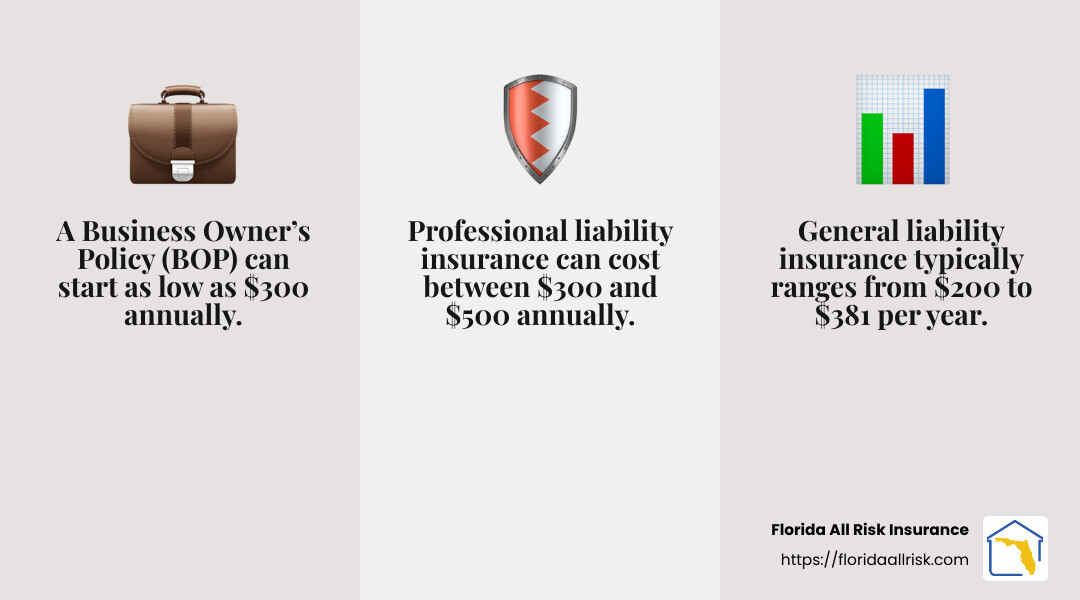
The cost of a Business Owner’s Policy (BOP) can start as low as $300 annually. However, the price you pay will depend on several factors. For example, general liability insurance typically ranges from $200 to $381 per year, while professional liability insurance can cost between $300 and $500 annually.
Factors Affecting Cost
Several factors influence how much you’ll pay for small business insurance:
-
Industry or Profession: High-risk industries like construction or restaurants generally face higher premiums than lower-risk businesses like retail stores or offices.
-
Business Location: A business situated in an area prone to natural disasters or with high crime rates may incur higher insurance costs. State regulations, such as workers’ compensation requirements, also play a role.
-
Claims History: A history of frequent claims can lead to higher premiums, as insurers might view your business as high-risk.
-
Number of Employees and Customers: More employees mean a higher cost for workers’ compensation insurance. Serving a large customer base can also increase liability risks, affecting your premiums.
Cost Breakdown
Here’s a snapshot of the starting premiums from some well-known insurers:
| Type of Coverage | Lowest Cost (per year) |
|---|---|
| Business Owner’s Policy (BOP) | $300 to $500 |
| Professional Liability | $300 to $500 |
| General Liability | $200 to $381 |
Different insurers offer varying rates, and some may provide additional digital tools or have better customer reviews. It’s essential to weigh these factors alongside cost when choosing an insurance provider.
Remember: The cheapest option isn’t always the best fit. Look for comprehensive policies that cover your specific needs. As you explore your options, consider consulting with an insurance agent to tailor your coverage to your business’s unique profile.
Next, we’ll explore why small businesses need insurance and how it serves as a critical component of risk management and legal compliance.
Why Small Businesses Need Insurance
Every small business faces unique risks. From legal requirements to protecting assets, having the right insurance for small businesses is crucial for survival and growth.
Risk Management
Running a business is full of uncertainties. Accidents, natural disasters, and lawsuits can happen when you least expect them. Insurance acts as a safety net, helping you manage these risks. It covers potential losses, so you can focus on growing your business without constantly worrying about what might go wrong.
Example: Imagine a fire breaks out in your office. Without commercial property insurance, you’d have to cover the cost of repairs and lost equipment out of pocket. But with insurance, those expenses are taken care of, allowing you to get back to business quickly.
Legal Requirements
For many businesses, having certain types of insurance isn’t just smart—it’s the law. If you have employees, you’re likely required to carry workers’ compensation insurance. Failing to comply can lead to hefty fines or even the shutdown of your business. In some states, professional liability insurance is mandatory for specific professions, such as healthcare or legal services.
Asset Protection
Your business assets—like your office space, equipment, and inventory—are valuable. Protecting them with insurance ensures that you can replace or repair them if they’re damaged or stolen. This is especially important for businesses with significant physical assets.
Quote:
Unforeseen Events
No one can predict the future. Natural disasters, such as hurricanes or floods, can strike at any time. Lawsuits can arise unexpectedly. Insurance prepares you for the unexpected, providing financial support when you need it most.
Case Study: A small retail shop in Florida was hit by a hurricane. Thanks to their business interruption insurance, they received compensation for the income they lost while their shop was closed for repairs.
Next, we’ll dive into how to choose the right insurance for your small business. We’ll discuss assessing risks, consulting agents, and customizing your coverage to fit your needs.
How to Choose the Right Insurance for Your Small Business
Choosing the right insurance for small businesses involves a few key steps. It’s not just about picking a policy and moving on. Here’s how to make sure you’re covered properly.
Assess Risks
First, identify the risks your business faces. Different businesses have different risks. A bakery might worry about kitchen fires, while a tech startup might be more concerned about data breaches. Think about what could go wrong and how it could affect your business.
Example: If you run a small delivery service, consider risks like vehicle accidents or package theft. Knowing these risks helps you choose the right insurance.
Consult Agents
Once you know your risks, talk to a licensed insurance agent. They can help you understand which policies cover your specific needs. Agents can also explain complex terms in simple language, making it easier to make informed decisions.
Tip: Look for agents who specialize in small business insurance. They’ll have the expertise to guide you through the process.
Compare Policies
Don’t settle for the first policy you find. Compare different policies to see which offers the best coverage at the best price. Look at what each policy covers, the limits, and any exclusions.
Checklist:
– Coverage: What risks does it cover?
– Limits: How much will it pay out?
– Exclusions: What isn’t covered?
Customize Coverage
Every business is unique, so your insurance should be too. Work with your agent to customize your coverage. You might need a Business Owner’s Policy (BOP) that bundles different types of insurance or specific add-ons like flood insurance.
Story: A small restaurant owner in Florida added a flood insurance rider to their BOP after realizing their location was in a flood-prone area. This customization saved them thousands when a storm hit.
By following these steps, you can ensure your business is well-protected. Up next, we’ll tackle some frequently asked questions about insurance for small businesses, including what coverage you need as an LLC and the average cost of a $1 million liability policy.
Frequently Asked Questions about Insurance for Small Businesses
Do I need insurance as an LLC?
Yes, even if your business is an LLC, you still need insurance. An LLC structure offers some personal liability protection, but it doesn’t cover everything. Insurance for small businesses fills the gaps by protecting your assets and covering risks that an LLC status alone cannot, like lawsuits or property damage.
Example: If a customer slips and falls in your store, your LLC status won’t protect you from liability. Here, general liability insurance would cover medical expenses and legal fees.
What is the best insurance for small business owners?
The best insurance depends on your business needs. A Business Owner’s Policy (BOP) is often a great starting point. It bundles general liability, commercial property, and business interruption coverage into one package, making it both comprehensive and cost-effective.
Tip: Customize your BOP to fit your specific needs. If you offer professional services, consider adding professional liability insurance. This helps cover claims related to errors or omissions in your services.
What is the average cost of a $1 million liability insurance policy?
The cost of a $1 million liability insurance policy varies based on several factors, including the type of business, location, and number of employees. On average, small businesses might pay between $300 to $1,000 annually for this coverage.
Cost Factors:
– Type of Work: High-risk industries may face higher premiums.
– Location: Areas prone to natural disasters may have higher rates.
– Number of Employees: More employees can mean higher premiums.
Example: A small tech startup might pay less than a construction company due to lower physical risk. Monthly premiums can range from $25 to $85, depending on these factors.
Understanding these aspects helps you make informed decisions about insurance for small businesses. Up next, we’ll wrap up with how Florida All Risk Insurance can offer custom solutions and personalized service to meet your needs.
Conclusion
Choosing the right insurance for small businesses can be overwhelming. That’s where we come in. At Florida All Risk Insurance, we specialize in providing custom solutions custom to your unique needs. Whether you’re a tech startup, a retail shop, or a service provider, we have you covered.
Why Choose Florida All Risk Insurance?
-
Custom Solutions: We understand that no two businesses are the same. Our team will work with you to create a personalized insurance package that fits your specific needs and budget. Whether you need a Business Owner’s Policy (BOP), workers’ compensation, or specialized coverage, we’ve got you covered.
-
Personalized Service: Our independent agency, based in St. Petersburg, Florida, is dedicated to offering the best possible service. We believe in building long-term relationships with our clients. Our agents are always ready to answer your questions and help you steer the complexities of business insurance.
-
Comprehensive Coverage: We offer a wide range of insurance options, from general liability to commercial property insurance. Our goal is to ensure that your business is protected from unforeseen events, legal issues, and financial risks.
When it comes to protecting your business, don’t leave anything to chance. Get in touch with us today to discuss your insurance needs. Visit our Group Health Insurance page to learn more about our comprehensive coverage options and how we can help secure the future of your business.
Your business is your livelihood. Let us help you protect it with the right insurance coverage.

