I need public liability insurance—a thought that often crosses the minds of business owners seeking to shield their ventures from potential financial pitfalls. This insurance type is crucial as it covers damages and legal expenses related to bodily injury, property damage, and reputation harm caused by your business operations. If you’re wondering whether you need this coverage, here’s a quick guide:
- Purpose: Protects against third-party claims.
- Coverage: Includes bodily injury, property damage, and more.
- Beneficiaries: Essential for businesses interacting with the public.
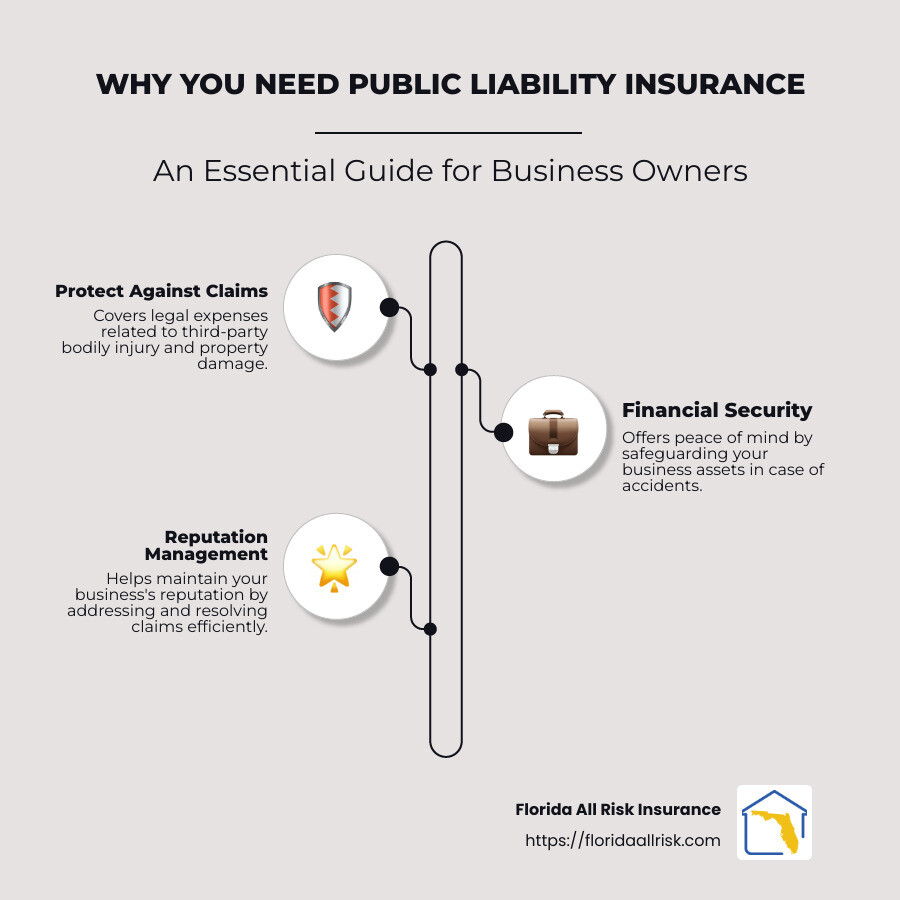
In today’s litigious environment, safeguarding your business with the right insurance is not just a wise choice, it’s a necessity. Accidents happen, and a single mishap could lead to costly legal battles. This is where public liability insurance becomes invaluable, offering peace of mind and financial security.
I’m Jason Miller, a seasoned expert in public liability insurance with over 20 years of experience in the field. Having dedicated my career to assisting businesses throughout Florida, I’ve seen how I need public liability insurance evolves from a question into a vital, protective strategy.
I need public liability insurance helpful reading:
– public liability risk
– excess public liability
– professional liability insurance for independent contractors
What is Public Liability Insurance?
Public liability insurance is an older form of general liability insurance. While both terms are often used interchangeably, public liability focuses specifically on third-party claims. These claims are made by people who are not part of your business, like customers or visitors.
Key Features of Public Liability Insurance:
-
Third-Party Claims: This insurance covers claims from individuals who may get injured or experience property damage due to your business activities. Imagine someone slipping on a wet floor in your store and getting hurt. Public liability insurance helps cover the medical expenses and any legal costs if they decide to sue.
-
General Liability Connection: Public liability is a subset of general liability insurance. It provides a broader scope of protection, including coverage for incidents that happen away from your business premises. For example, if you or an employee accidentally damage a client’s property during a work visit, this insurance has you covered.
-
Importance for Businesses: Any business that interacts with the public, whether it’s a retail store, a contractor working at various sites, or even a home-based business meeting clients, needs this protection. Without it, your business could face significant financial strain from unexpected accidents or legal actions.

Real-World Example:
Consider a local coffee shop in Saint Petersburg, Florida. If a customer trips over a loose tile and injures themselves, the shop could face medical bills and potential legal fees. Public liability insurance would step in to handle these costs, ensuring the business doesn’t suffer financially.
In summary, public liability insurance is essential for businesses that want to protect themselves from the unpredictable nature of third-party claims. It’s an integral part of a comprehensive risk management strategy, providing peace of mind and financial security.
Next, we’ll explore how much this type of insurance typically costs and the factors that can influence your premiums.
Why Do I Need Public Liability Insurance?
Running a business comes with its fair share of risks, especially when interacting with the public. Public liability insurance is crucial for covering these risks. Here’s why:
Bodily Injury
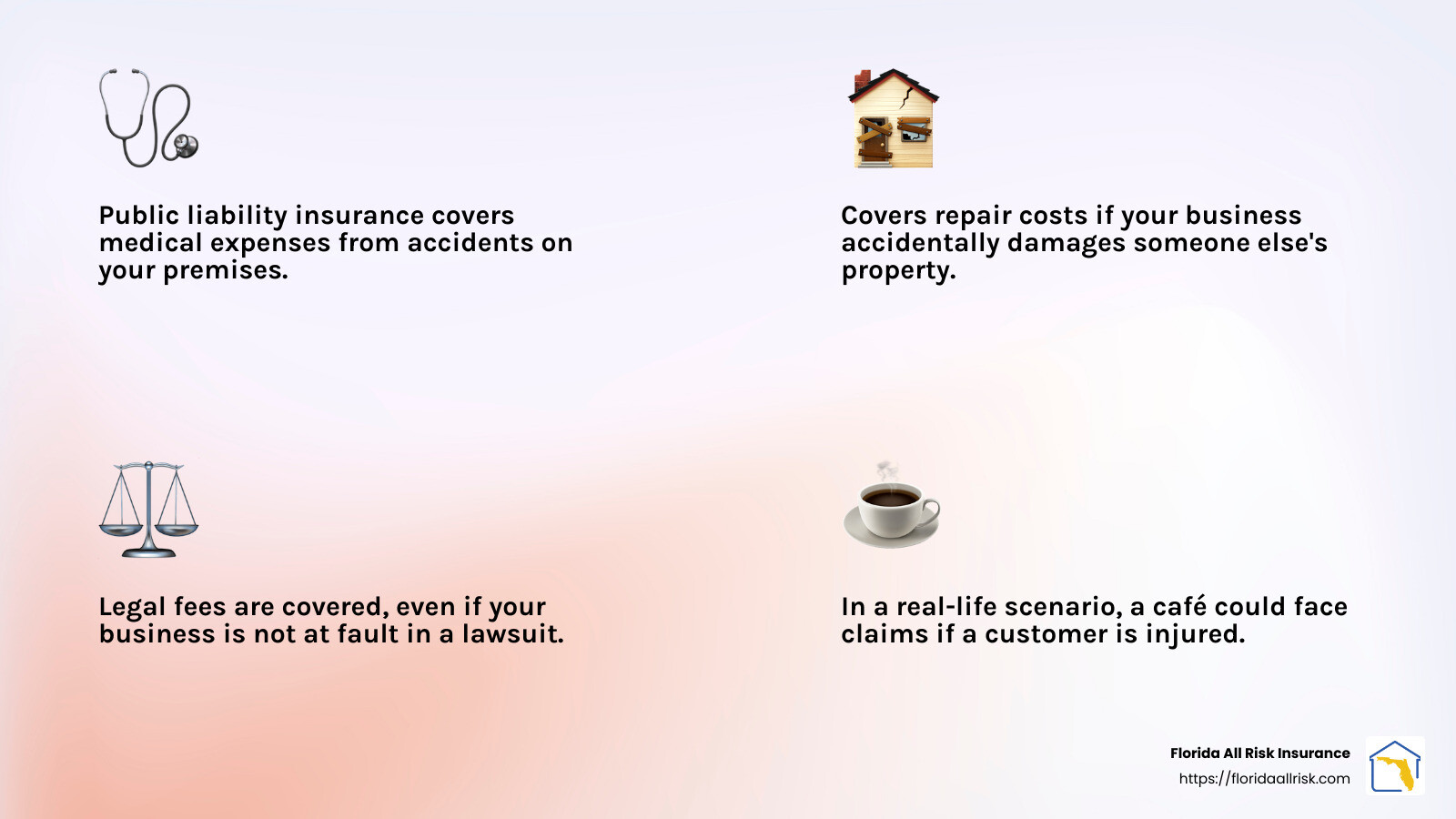
Accidents happen, and when they do, they can lead to bodily injuries. If someone gets hurt on your business premises, you could be held liable. For instance, a customer might slip on a wet floor and break an arm. This insurance helps cover medical expenses and any legal costs if they decide to sue. Without it, your business might face hefty out-of-pocket expenses.
Property Damage
Your business activities could accidentally damage someone else’s property. Imagine running a small moving company and accidentally scratching a client’s antique furniture. Public liability insurance would cover the repair costs, saving you from a potentially expensive claim.
Legal Costs
Legal battles can be costly. Even if you’re not at fault, defending your business in court requires resources. Public liability insurance covers legal fees, ensuring that a lawsuit doesn’t drain your finances. This means you can focus on running your business without the added stress of potential legal costs.
Real-Life Scenario
Picture a busy café in Saint Petersburg, Florida. A customer spills hot coffee on themselves and decides to sue for damages. With public liability insurance, the café owner can rest easy knowing that both the legal defense and any settlement costs are covered.
Public liability insurance acts as a safety net, protecting your business from unforeseen accidents and legal claims. It’s an investment in peace of mind, ensuring that one mishap doesn’t lead to financial ruin. Next, we’ll dig into the costs associated with this essential coverage and what factors influence your premiums.
How Much Does Public Liability Insurance Cost?
When you realize “I need public liability insurance,” understanding the cost is crucial. The average monthly premium for general liability insurance, which includes public liability, is about $67. But remember, this figure can vary widely based on several factors.
Factors Affecting Premiums
-
Type of Business: Different businesses carry different levels of risk. For example, a construction company will likely pay more than a consulting firm due to the nature of their work.
-
Location: If your business is in a high-crime or accident-prone area, you might face higher premiums. A busy city like Saint Petersburg, Florida, might have different rates compared to a rural area.
-
Size of the Business: The more employees you have, the higher your premiums. More people equals more potential for accidents or claims.
-
Claims History: If your business has a history of claims, insurers may see you as a higher risk, leading to increased premiums.
-
Coverage Limits and Deductibles: Higher coverage limits mean more protection but at a higher cost. Conversely, a higher deductible can lower your premiums since you’re agreeing to pay more out of pocket before insurance kicks in.
Coverage Limits
Most public liability insurance policies set per-occurrence limits at $1 million and aggregate limits at $2 million. These can be adjusted based on your business needs. Choosing the right limits is essential; too little coverage could leave you vulnerable, while too much might mean unnecessary expenses.
Real-World Example
Consider a small bakery in Saint Petersburg. They opted for a policy with a $1 million per-occurrence limit. After a customer fell and injured themselves, the bakery’s insurance covered medical bills and legal costs, all within the policy limits.
In summary, the cost of public liability insurance is not one-size-fits-all. It’s custom to your business’s unique profile. By understanding the factors that influence premiums, you can better estimate your costs and ensure adequate protection.
Next, we’ll guide you through the steps to get started with public liability insurance, ensuring you choose the right coverage for your needs.
I Need Public Liability Insurance: How to Get Started
Once you’ve recognized the need for public liability insurance, the next step is to get started on securing the right coverage for your business. This involves obtaining insurance quotes, considering custom policies, and understanding your specific coverage needs.
Getting Insurance Quotes
The first step is to gather insurance quotes. It’s wise to get at least three quotes to compare prices and coverage options. Providing detailed information about your business, such as the number of employees, annual revenue, and the value of your business property, can help you get accurate quotes. The more information you provide, the more custom the quote will be to your business needs.
Custom Policies
Not all businesses are the same, and neither are their insurance needs. Florida All Risk Insurance offers the option to create custom policies that fit your specific needs. Whether you run a small bakery or a tech startup, customizing your policy ensures that you are not paying for unnecessary coverage while still getting the protection you need.
- Type of Business: Some businesses, like photography studios or fitness centers, might need more extensive coverage due to higher interaction with the public.
- Location: If you’re in a busy area like Saint Petersburg, you might face different risks than a business in a quieter location.
Understanding Coverage Needs
Determining your coverage needs is crucial. Public liability insurance primarily covers third-party bodily injury and property damage. However, you might also want to consider additional coverage based on your business operations.
- Interactive Businesses: If your business involves frequent interaction with the public, such as a retail store or a café, public liability insurance is essential.
- Contractual Requirements: Sometimes, contracts with clients or landlords may require specific coverage limits. Be sure to review these to ensure compliance.
Real-Life Scenario
Consider a local event planner in Florida. They realized they needed public liability insurance after a client requested a certificate of insurance (COI) before signing a contract. By obtaining quotes and customizing their policy, they ensured coverage that met both their needs and their client’s requirements.
By following these steps, you’ll be well on your way to securing public liability insurance that fits your business. Up next, we’ll address some frequently asked questions to help clarify any remaining doubts you might have about public liability insurance.
Frequently Asked Questions about Public Liability Insurance
Can I get business insurance without an LLC?
Absolutely! You don’t need an LLC to get business insurance. In fact, sole proprietors can and often do purchase public liability insurance. It’s a smart move for anyone running a business, regardless of its legal structure. This type of insurance helps protect against claims from third parties, such as customers or visitors, who might get injured or have their property damaged in connection with your business activities.
While having an LLC can provide a layer of personal liability protection, it’s not a requirement for obtaining business insurance. What matters most is the nature of your business activities and the risks involved. If your business involves public interaction, such as a coffee shop or a home-based service, having insurance is crucial to safeguard against potential claims.
How do I know if I need public liability?
Determining whether you need public liability insurance depends on your business activities and how much you engage with the public. Here are a few questions to consider:
- Does your business involve regular interaction with clients, customers, or the general public?
- Do you have a physical location where people visit, like a store or office?
- Do you or your employees work on client sites, such as a cleaning service or construction company?
If you answered “yes” to any of these, then having public liability insurance is a wise decision. It helps protect your business from the financial impact of claims related to bodily injury or property damage.
Is public liability insurance tax deductible?
Yes, public liability insurance is typically considered a business expense and can be tax-deductible. According to IRS regulations, expenses that are ordinary and necessary for running a business can usually be deducted. This includes insurance premiums for policies that protect your business from risks.
However, it’s always a good idea to consult with a tax professional to ensure you’re taking full advantage of any deductions and complying with current tax laws. They can provide guidance custom to your specific situation and help you steer any complexities related to business insurance and taxes.
By understanding these aspects of public liability insurance, you can make informed decisions about protecting your business. Whether you’re a sole proprietor or a business with frequent public interactions, having the right insurance coverage is essential.
Conclusion
In business, being prepared for the unexpected is crucial. That’s where Florida All Risk Insurance comes in. We offer comprehensive solutions custom to fit your unique needs, ensuring your business is protected from potential risks.
Our approach is all about providing custom coverage. We understand that no two businesses are the same, and neither are their insurance needs. Whether you’re a small start-up or an established company, we work with you to craft a policy that offers the right level of protection.
With a wide range of options, including public liability insurance, we help shield your business from claims related to bodily injury, property damage, and more. Our team in Saint Petersburg, Florida, is dedicated to delivering personalized service and competitive rates, giving you peace of mind as you focus on growing your business.
Explore how we can help protect your business with Florida All Risk Insurance’s general liability solutions. Let us be your partner in safeguarding your business, so you can concentrate on what you do best.