

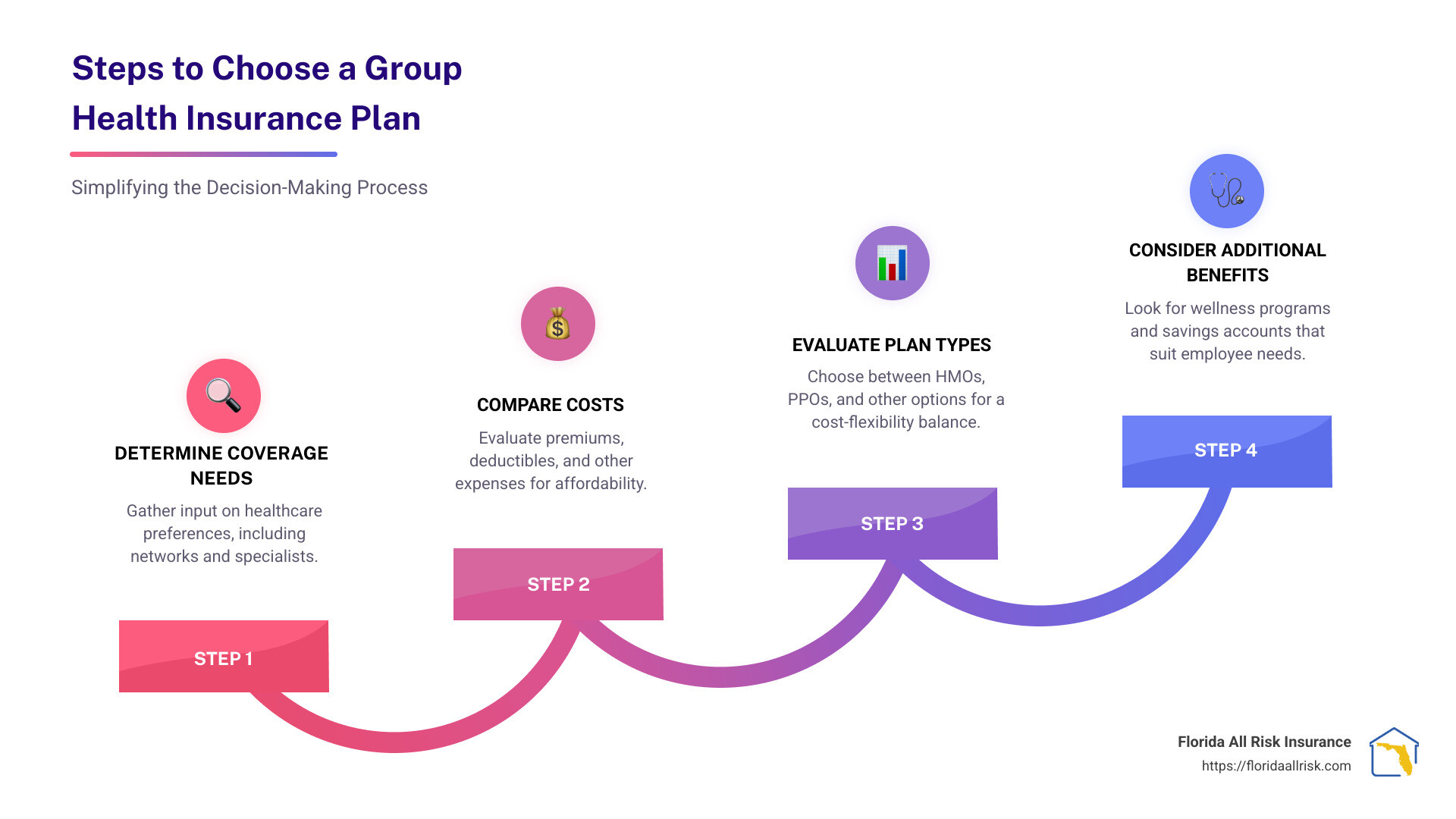
How to choose a group health insurance plan can seem daunting, but breaking it down into key decisions can simplify the process:
- Determine the coverage needs of your team by gathering input on their healthcare preferences, including preferred networks and any desired specialist access.
- Compare costs like premiums, deductibles, and out-of-pocket expenses, both for the employer and employees, to ensure affordability.
- Evaluate the plan types available, such as HMOs or PPOs, to find a balance between cost and flexibility.
- Consider additional benefits, like wellness programs or savings accounts, that may appeal to your team.
Employer-sponsored health insurance is a staple in many organizations, providing a way for businesses to support the well-being of their employees and attract top talent. The decision-making process involves evaluating not just cost and coverage, but also the needs and demographics of the staff to ensure that the selected plan is a good fit for everyone involved.
I’m Jason Miller, and I have experience in guiding Florida homeowners and businesses through complex insurance options. With over 20 years in the insurance sector, I’ve developed a knack for understanding how to choose a group health insurance plan that meets diverse needs while ensuring cost efficiency.
Understanding Group Health Insurance Plans
Choosing the right group health insurance plan for your team can be a game-changer. It’s about finding the right fit between cost, coverage, and flexibility. Let’s dive into the main types of plans available and what they offer.
Plan Types: PPO vs. HMO
When it comes to group health insurance, two common types you’ll encounter are PPO (Preferred Provider Organization) and HMO (Health Maintenance Organization).
-
PPO Plans: These are popular because they offer flexibility. Employees can see any doctor or specialist without a referral, even those outside the network, though at a higher cost. PPOs tend to have higher premiums, but the trade-off is greater freedom in choosing healthcare providers.
-
HMO Plans: These require employees to select a primary care physician (PCP) and get referrals for specialists. While this might seem restrictive, HMOs often have lower premiums and out-of-pocket costs, making them a cost-effective choice for many businesses.
Network Size and Structure
Network size is a crucial factor when evaluating health insurance plans. A larger network means more choices for your employees, which can lead to greater satisfaction with their healthcare options.
-
PPO Networks: Typically larger and more expansive, offering a wider range of doctors and specialists. This can be a significant advantage for employees who travel or have specific healthcare needs.
-
HMO Networks: Usually more limited but can provide ample coverage within a specific area. This is ideal for businesses whose employees are located in a single region.
Choosing between a PPO and an HMO often comes down to balancing cost with flexibility. If your team values freedom in their healthcare choices, a PPO might be the way to go. On the other hand, if cost savings are a priority, an HMO could be more suitable.
The right choice depends on your team’s specific needs and preferences. Conduct surveys or discussions to gauge what matters most to your employees.

By understanding these key aspects of group health insurance plans, you can make a more informed decision that aligns with both your business’s budget and your employees’ healthcare needs.
How to Choose a Group Health Insurance Plan
Choosing a group health insurance plan involves looking at costs, understanding employee needs, and exploring coverage options. Let’s break it down into simple steps to help you make the best decision for your team.
Evaluating Costs and Benefits
When choosing a plan, cost is a big factor. Here’s what to consider:
-
Premiums: This is the monthly amount you pay to keep the plan active. On average, individual health insurance costs over $462 a month without subsidies. If you, as an employer, can cover a significant portion, it makes insurance more affordable for your employees.
-
Deductibles: This is what employees pay out of pocket before insurance kicks in. Plans with lower premiums often have higher deductibles. Decide if your team prefers lower monthly costs or lower expenses when they need care.
-
Copayments: These are fixed amounts employees pay for specific services, like visiting a doctor. Understanding these costs helps in choosing a plan that balances affordability with access to necessary care.
Assessing Employee Needs
To choose the right plan, you need to know what your employees need. Consider the following:
-
Survey: Conduct an anonymous survey to find out what your employees value in a health plan. Ask about their preference for low premiums versus low deductibles, and whether they’d like additional benefits like dental or vision coverage.
-
Demographics: Consider the age and health needs of your employees. Younger employees might prioritize different benefits compared to those with families or chronic health conditions.
-
Lifestyle: Think about the lifestyle and work habits of your team. Do they travel often, or are they mostly local? This can affect the type of network—PPO or HMO—that suits them best.
Understanding both costs and employee needs helps in selecting a plan that fits your business budget and keeps your team happy and healthy. With this knowledge, you can explore network structures and savings options in your next step.
Key Features to Consider
When selecting a group health insurance plan, it’s crucial to understand the key features that can impact both cost and employee satisfaction. Let’s explore two important aspects: network size and structure, and savings accounts and reimbursement options.
Network Size and Structure
The network size and structure of a health plan determine which doctors and hospitals your employees can access. Here’s a simple breakdown:
-
Preferred Providers: Some plans have a network of preferred providers, where employees pay less when they choose doctors and hospitals within this network. This can save money but limits choices.
-
Open Access: Other plans offer open access to a broader range of healthcare providers. This gives employees more freedom to choose their doctors, but it might come with higher costs, especially for out-of-network care.
Choosing between a preferred provider network and an open access network depends on your employees’ needs. If your team values flexibility, open access might be the way to go. However, if cost savings are a priority, a plan with preferred providers could be more suitable.
Savings Accounts and Reimbursement Options
Understanding savings accounts and reimbursement options is another vital part of choosing the right plan. These options can help employees manage out-of-pocket expenses:
-
Health Savings Account (HSA): An HSA is a tax-advantaged account used with high-deductible health plans. Employees can save money tax-free to pay for qualified medical expenses. One key benefit is that funds roll over year to year.
-
Flexible Spending Account (FSA): An FSA lets employees set aside pre-tax dollars to cover eligible medical expenses. However, unlike HSAs, FSAs usually require employees to use the funds within the plan year, or they lose them.
-
Health Reimbursement Arrangement (HRA): An HRA is funded by the employer to reimburse employees for out-of-pocket medical expenses. This can be a great way for employers to support their team while offering a flexible benefits package.
When choosing a group health insurance plan, consider these network structures and savings options to find the best fit for your employees and your budget. Understanding these features will help ensure your team has access to the care they need while keeping costs manageable.
Next, we’ll tackle some frequently asked questions about group health insurance plans to further clarify your options.
Frequently Asked Questions about Group Health Insurance Plans
What is the most popular type of group health plan?
The most popular type of group health plan is the Preferred Provider Organization (PPO). PPOs are favored because they offer greater flexibility in choosing healthcare providers. Employees can see any doctor or specialist they prefer, but they save more when they choose from a network of preferred providers. This balance of choice and cost-saving makes PPOs a top choice for many businesses.
How to determine which health insurance plan is best?
Choosing the best health insurance plan involves evaluating several factors:
-
Network Size: Consider how many doctors and hospitals are in the plan’s network. A larger network offers more choices, which can be important for employees who have specific healthcare providers they prefer.
-
Provider Options: Some plans require choosing a primary care provider or getting referrals to see specialists. If your employees value direct access to specialists, a plan with open access like a PPO might be more appealing.
-
Coverage Options: Assess what medical services are covered, such as prescription drugs, mental health services, and preventive care. It’s important to ensure that the plan meets the diverse needs of your employees.
By considering these factors, you can select a plan that aligns with your company’s budget and your employees’ healthcare needs.
What type of insurance is most commonly used for group plans?
Employment-based insurance is the most common type of group health insurance. This type of coverage is usually provided by employers to their employees and often extends to family members. In 2022, nearly 48.7% of the U.S. population was covered by employer-provided group health insurance. This makes it a crucial part of employee benefits, helping businesses attract and retain talent by offering comprehensive and affordable healthcare coverage.
When choosing a group health insurance plan, understanding these common questions can guide you in making an informed decision that benefits both your business and your team.
Conclusion
Choosing the right group health insurance plan is a critical decision for any business. It affects not only the financial health of the company but also the well-being and satisfaction of its employees. At Florida All Risk Insurance, we understand the complexities involved in this decision and are here to help you steer them with ease.
Personalized Service
What sets us apart is our commitment to personalized service. We know that every business is unique, with its own set of challenges and needs. That’s why we take the time to understand your specific situation and goals. Our team of experts will work closely with you to ensure that you get a plan that fits your business perfectly.
Custom Coverage
We offer a wide range of coverage options, ensuring that you can find a plan that meets your needs and budget. Whether you’re a small business with just a few employees or a larger organization, we have solutions custom for you. Our plans are designed to be flexible and adaptable, providing you with the peace of mind that comes from knowing your team is well-covered.
By choosing Florida All Risk Insurance, you’re not just getting a policy; you’re gaining a partner dedicated to your success. We aim to make the process of selecting and managing group health insurance as straightforward and stress-free as possible.
To learn more about how we can tailor a group health insurance plan for your team, visit our Group Health Insurance page. Let us help you make the right choice for your business and your employees.

