Your Guide to Navigating Motorhome Insurance Costs
How much is motorhome insurance is one of the first questions every RV enthusiast asks—and it’s a smart one. Your premium depends on a blend of what you drive, how you use it, and where it lives when it’s not rolling down the highway. Below is a practical overview to help you understand typical cost ranges and how Florida’s environment can influence what you pay.
Typical Motorhome Insurance Cost Ranges:
- Class A RVs: $1,000 to $5,000+ annually
- Class B RVs (Campervans): $500 to $1,000 annually
- Class C RVs: $800 to $3,000 annually
- Towed Trailers: $500 to $1,000 annually with extra coverage
The allure of the open road makes motorhome travel incredibly appealing. But before you set out on Florida’s scenic highways and coastal routes, understanding how much motorhome insurance costs—and why—will help you protect your investment and plan your travel budget. Your premium varies based on your RV’s class and value, how often and how far you drive, your driving history, and where and how you store the vehicle. Florida’s unique weather risks, traffic patterns, and year-round usage also play a role.
If you’re new to RV ownership, think of your insurance as a hybrid between auto and home protection. It covers driving-related risks on the road and protects your belongings and liability when you’re parked and using the motorhome as a temporary residence. Because an RV is both a vehicle and a living space, carriers consider a wider set of variables than they would for a standard car policy.
The good news: you have real control over many of the factors that influence your premium. Strategic choices—like installing security devices, maintaining a clean driving record, storing your rig securely, and bundling policies—can meaningfully reduce your annual costs without sacrificing essential protection.
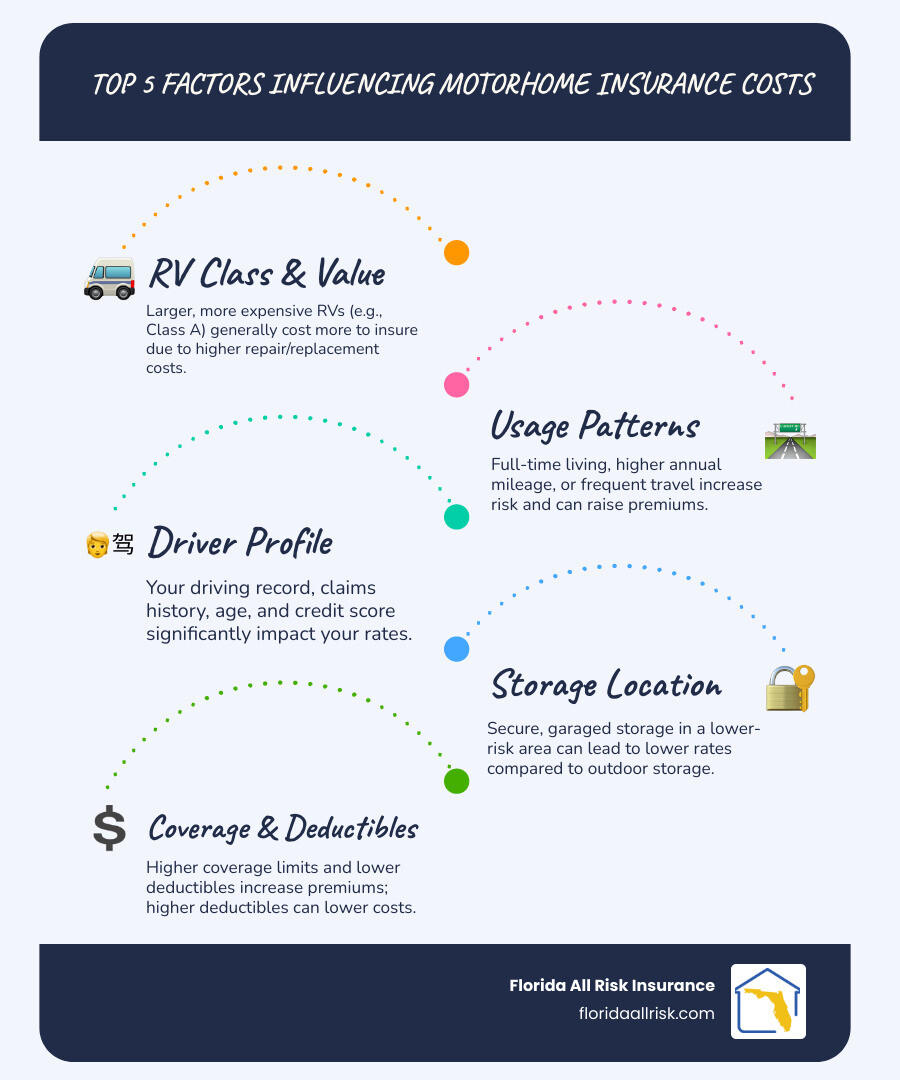
Below, you’ll find a detailed breakdown of the factors that influence price, typical cost ranges by RV class, how Florida’s conditions affect rates, what standard and optional coverages do for you, and practical ways to lower your premium—all in plain language. Throughout, you’ll see links to helpful resources on our site and authoritative sources like the Insurance Information Institute and Ready.gov for deeper learning.
What Factors Influence the Cost of Motorhome Insurance?
How much is motorhome insurance for your specific situation? The answer lies in understanding that motorhome insurance isn’t a one-size-fits-all product. Insuring a brand-new Class A coach used for cross-country travel is very different from covering a compact Class B campervan used for weekend camping. By understanding the key pricing inputs below, you’ll see where costs come from—and where you can save.
Vehicle-Specific Characteristics
Your motorhome’s characteristics are central to pricing. Insurers evaluate the RV’s value, size, complexity, and how expensive it is to repair or replace.
- Motorhome value, age, and repair costs: A $300,000 luxury Class A typically costs more to insure than an $80,000 Class C because replacement parts and labor are pricier and the potential claim payout is higher. Newer rigs may have advanced safety features but still cost more to replace, pushing premiums upward. Older or vintage models can be cheaper to insure in some respects, but hard-to-find parts and specialized labor may increase repair bills.
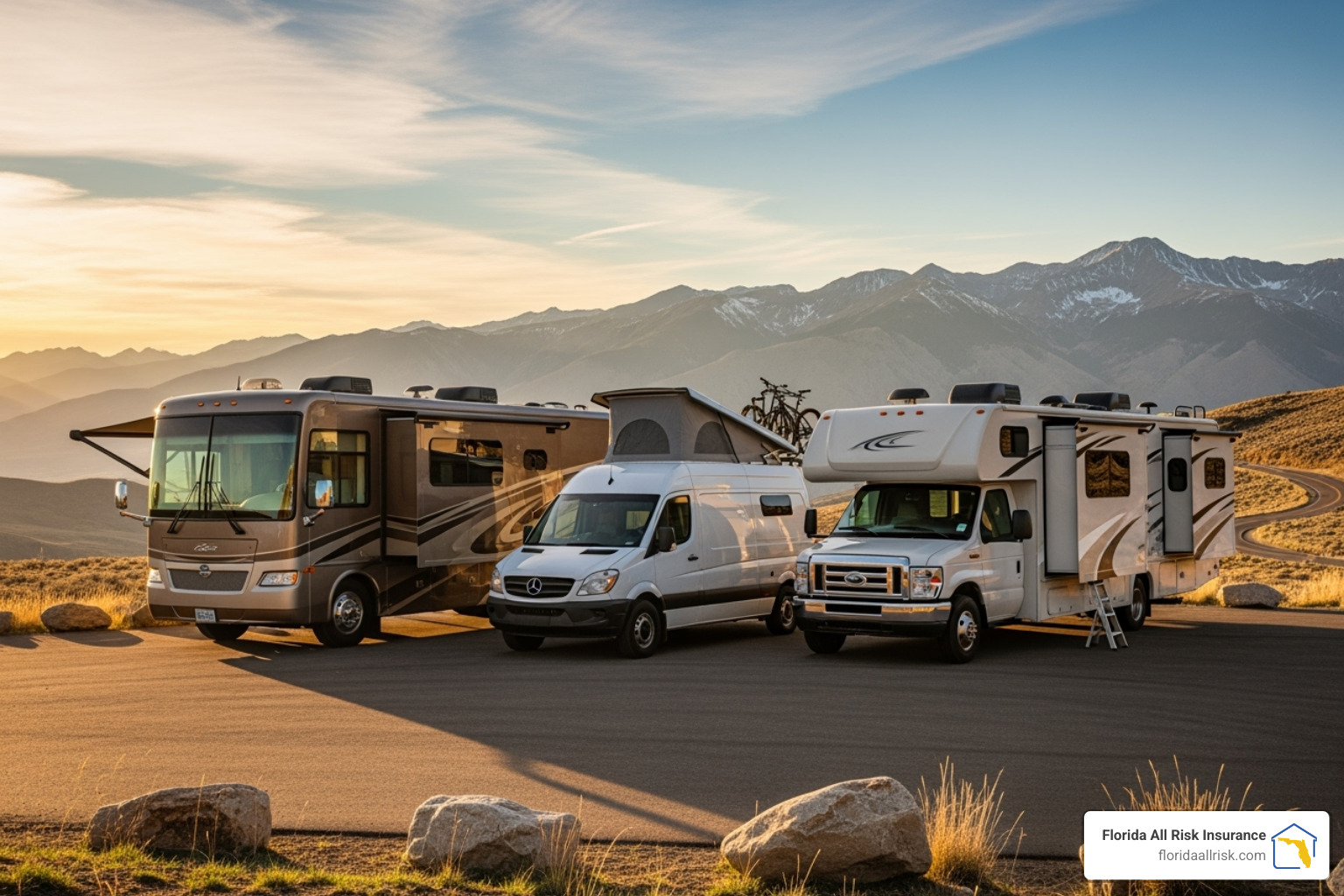
- Class A motorhome: These bus-size, high-amenity coaches carry the highest values and generally the highest insurance premiums.
- Class B campervans: Built on van chassis, they’re compact and maneuverable. Their smaller size and lower value usually mean the most affordable rates.
- Class C motorhomes: Offering a middle ground, Class C models provide ample space for families at a wide range of price points, so premiums vary accordingly.
- Customizations and modifications: Solar arrays, upgraded batteries and inverters, satellite internet, custom cabinetry, or high-end entertainment systems increase your RV’s value—and the cost to repair or replace. Always disclose significant upgrades so they can be covered properly.
| RV Class | General Features | Size | Typical Value Range |
|---|---|---|---|
| Class A | Bus-like, luxurious, large living space, full amenities | 24–45+ feet | $100,000–$500,000+ |
| Class B | Van-like, compact, easy to drive, basic amenities | 17–23 feet | $70,000–$150,000+ |
| Class C | Truck chassis with cab-over bunk, moderate space, good amenities | 20–33 feet | $60,000–$200,000+ |
Usage and Storage Details
How, where, and how often you use your motorhome directly affects your premium.
- Full-time vs. seasonal use: Full-timers typically need broader protection (more like a homeowners policy) for personal belongings, liability while parked, and additional living expense coverage. That extra breadth usually costs more than a policy for recreational or seasonal use.
- Annual mileage: More time on the road means more exposure to accidents. If you’re a light user, ask about low-mileage discounts.
- Storage location and security: A motorhome stored indoors, behind a locked gate, or in a monitored facility often earns lower comprehensive premiums than one parked curbside. Weather protection matters too—covered storage reduces exposure to hail, wind-driven debris, and UV damage.
Driver Profile and Policy Choices
Your driving record and the coverage selections you make can have a big impact on price.
- Driver’s age and driving history: Experienced drivers with clean records generally receive better rates. You can learn more about maintaining a good record and available Safe Driver Insurance Discounts.
- Claims history and credit-based insurance score: Prior insurance claims and, in most states including Florida, your credit-based insurance score can influence pricing. Responsible behavior across policies can be rewarded.
- Coverage limits and deductibles: Higher liability limits provide stronger protection but cost more. Increasing your deductible (for example, from $500 to $1,000) can lower your premium. Explore Auto Insurance Deductible Options to balance out-of-pocket costs with savings.
- Bundling policies: Combining your motorhome insurance with your home, auto, or other policies is one of the easiest ways to save.
Florida-Specific Considerations
- Weather exposure: Hurricane season, intense thunderstorms, and flood risk influence premiums for comprehensive coverage. Thoughtful storage and storm preparation can mitigate costs.
- Higher seasonal traffic: Winter tourism and snowbird travel mean more vehicles on the road, which can influence collision and liability costs.
- Year-round usage: Florida’s climate invites RV use in every month, but more usage means more exposure. Policies and pricing reflect this reality.
For a broader primer on RV insurance fundamentals, the Insurance Information Institute offers a helpful overview: RV insurance basics and considerations. For hurricane preparation that protects both safety and property, see Ready.gov’s hurricane guide.
How Much Is Motorhome Insurance on Average?
While a precise figure requires a personalized quote, knowing typical ranges helps you plan. Premiums vary widely because RVs and travel styles vary widely. A compact Class B used sparingly will land near the lower end of the spectrum, while a luxury Class A driven frequently or used full-time will land higher.
Typical Ranges by RV Class
- Class A: $1,000 to $5,000+ annually. Larger size, higher values, and complex systems drive higher repair and replacement costs.
- Class B: $500 to $1,000 annually. Smaller and easier to repair; often used less intensively.
- Class C: $800 to $3,000 annually. Middle-of-the-road values and repair costs produce middle-of-the-road premiums.
- Towed trailers: $500 to $1,000 annually for comprehensive coverage protecting your trailer and gear; liability may be handled differently since the tow vehicle’s liability can extend while towing.
These ranges reflect broad averages and can swing based on factors such as claims history, chosen deductibles, storage, and optional coverages (for example, total loss replacement or personal effects replacement).
Why Florida Rates Can Differ
Living in the Sunshine State is ideal for RVers—but it also means insurers price for unique risk.
- Hurricane and flood risk: Florida’s storm exposure influences comprehensive coverage pricing. If you store your RV in a secure, elevated location or a hardened facility, mention it. Precautionary actions can help reduce risk and, in some cases, premiums.
- Traffic density: Seasonal influxes of visitors increase traffic volume and, in turn, the chance of collisions. Higher vehicle density can modestly influence liability and collision costs.
- Year-round usage: In contrast to northern states where RVs are winterized and stored for months, Florida owners may use their rigs every month, increasing exposure and influencing rates.
If you’re comparing Florida to other regions, consider that an identical RV, driver, and coverage package may be priced differently across states due to local claim patterns and weather. These aren’t arbitrary differences; they reflect how insurers pool risk and pay claims.
For a deeper look at RV insurance fundamentals and claims considerations, see the Insurance Information Institute’s guidance on insuring recreational vehicles. For preparedness advice tailored to storms and severe weather, bookmark Ready.gov’s hurricane resource center and incorporate those steps into your storage and travel plans.
Real-World Scenarios to Illustrate Cost
- Weekend adventurer (Class B): A 2021 campervan stored in a locked garage, used for 5,000 miles per year, and insured with a $1,000 deductible may land toward the lower end of the $500–$1,000 range, especially with a clean driving record and a bundled policy.
- Family traveler (Class C): A mid-range Class C used for road trips spring through fall, stored outdoors in a fenced yard, and carrying higher liability limits may sit around the middle of the $800–$3,000 range depending on deductibles and optional coverages.
- Long-haul explorer (Class A): A late-model diesel pusher driven cross-country each year and kept at a professional storage facility may fall anywhere from $1,800 to $5,000+ annually, influenced by the RV’s value, robust liability limits, and elective protections like total loss replacement.
These examples are not quotes but illustrations. Your unique combination of vehicle, coverage choices, and usage patterns will determine your premium. If you plan to change how you use the RV (e.g., move from seasonal to full-time), let your agent know so your coverage and pricing can be updated accordingly.
Understanding Your Motorhome Insurance Policy
A motorhome policy blends elements of auto and home insurance to protect you both in motion and at the campsite. Because your RV is a vehicle and a temporary residence, it needs broader protection than a standard car policy. Understanding what’s covered—and what isn’t—helps you avoid surprises.
Standard Coverages
- Liability coverage (bodily injury and property damage): Required in Florida, this protects your assets if you’re at fault in an accident. Given the size and weight of motorhomes, carrying robust liability limits is especially important.
- Collision coverage: Pays for repairs to your RV if it’s damaged in a collision with another vehicle or object, regardless of fault.
- Comprehensive coverage: Protects against non-collision events such as theft, vandalism, fire, hail, falling objects, and weather-related damage—critical in Florida due to hurricane exposure and intense thunderstorms.
- Uninsured/underinsured motorist: Provides protection if a driver with insufficient coverage injures you. Learn more about Uninsured Motorist Coverage Florida.
Note: Florida also requires Personal Injury Protection (PIP) for registered vehicles with four or more wheels. Discuss how PIP applies to your motorhome usage so you understand medical and related benefits after a covered incident.
Popular Optional Coverages
- Total loss replacement: For newer RVs, replaces a totaled motorhome with a brand-new, similar model rather than paying actual cash value (which reflects depreciation).
- Agreed value coverage: Locks in a mutually agreed payout amount for a total loss—useful for customized or specialty rigs where standard valuation may not reflect true replacement cost.
- Personal effects replacement: Covers personal belongings inside the RV (clothing, electronics, outdoor gear). Confirm limits and consider scheduling high-value items if needed.
- Vacation liability: Provides liability protection when your motorhome is parked and used as a temporary residence, similar to protections found in homeowners policies.
- Emergency expense coverage: Helps pay for temporary lodging, meals, and transportation if your RV becomes uninhabitable during a trip due to a covered loss.
- Roadside assistance: RV-specific roadside plans can handle large-vehicle towing, mobile service, and specialized tire assistance.
If you’d like to compare a broader menu of protections, explore Auto Insurance Coverage Options. Your agent can help translate those concepts to RV-specific needs.
Common Exclusions
Policies generally don’t cover:
- Wear and tear or gradual deterioration
- Mechanical breakdowns not caused by a covered event
- Pest or vermin damage
- Mold (unless directly resulting from a covered cause, like a sudden burst pipe)
- Damage from incorrect fuel or misuse
- Intentional damage
Review your policy documents and ask questions about any gray areas—especially if you’ve made significant modifications or carry specialty gear. Clear documentation and photos of upgrades can streamline claims if you have a loss.
Smart Strategies to Lower Your Motorhome Insurance Rates
The encouraging part of how much is motorhome insurance is how many levers you can pull to keep premiums in check. Some strategies deliver quick wins; others are habits that pay off every renewal.
Discounts and Policy Adjustments
- Bundle your policies: Insure your motorhome alongside your home and auto to earn multi-policy savings, commonly in the 15–25% range depending on the carrier.
- Multi-vehicle discounts: If you have multiple cars, boats, or recreational vehicles, insuring them with one carrier can lower the rate on each.
- Right-size your deductibles: Raising your comprehensive and collision deductibles can meaningfully reduce premiums. Make sure the higher out-of-pocket number is comfortable for your budget.
- Pay in full or set up EFT: Paying the annual premium upfront or using electronic funds transfer (EFT) can shave off installment and processing fees.
- Storage-only options: For seasonal users, some carriers allow you to reduce certain coverages when the RV is in storage. Florida law requires continuous liability coverage on registered vehicles, but you may be able to adjust other parts of the policy—ask your agent what’s permissible and smart for your situation.
Proactive Safety and Security Measures
- Install anti-theft devices: Alarms, GPS tracking, immobilizers, and even simple visible deterrents like wheel locks can qualify you for discounts and reduce theft risk.
- Park smart: Secure indoor storage or covered, fenced facilities with surveillance lower the risk of weather and theft-related claims. If using outdoor storage, consider breathable covers and added tie-downs in storm-prone areas.
- Complete an RV safety course: Defensive driving courses geared toward RVs can improve your skills—and sometimes your rates. The RV Industry Association (RVIA) provides helpful resources for training opportunities and safety best practices.
- Maintain a clean driving record: Few factors influence insurance costs as consistently as your driving history. Learn more about potential safe driving discounts and how they’re applied.
Shop Confidently and Review Annually
- Compare thoughtfully: Identical coverage from different carriers can vary in price by hundreds of dollars. Independent agents shop multiple companies for you and help you weigh coverage quality against cost.
- Revisit at renewal: Update your agent when you change how you travel, where you store your RV, or the equipment you’ve added. Aligning coverage with your current reality can avoid gaps and uncover savings.
Small actions compound over time. A modest deductible adjustment, a verified storage improvement, and a driver safety course together can generate meaningful savings while preserving critical protection.
Frequently Asked Questions About Motorhome Insurance
Here are concise answers to common questions RV owners ask when pricing and configuring coverage.
What’s the difference between motorhome insurance and car insurance?
While both cover a vehicle on the road, motorhome insurance is a specialized hybrid. A standard car policy focuses on driving-related risks; a motorhome policy also accounts for living-space exposures—covering personal belongings, appliances, vacation liability when parked, and emergency expense coverage.
Does my motorhome need to be insured year-round in Florida?
Yes. Florida requires continuous insurance on registered vehicles. Even if your RV is in storage part of the year, you must maintain at least the state-required liability and Personal Injury Protection (PIP) coverages. Keeping comprehensive year-round is also wise to protect against theft, vandalism, fire, and weather while parked.
How does insurance work if I tow a car behind my motorhome?
Typically, your motorhome’s liability coverage extends to a vehicle you’re towing while it is attached, but that does not cover damage to the towed vehicle itself. The towed car should carry its own comprehensive and collision coverage for physical damage protection.
Will my policy cover me outside Florida—or outside the U.S.?
Most policies cover you across the U.S. and Canada, but not in Mexico without special endorsements. If you plan cross-border travel, speak with your agent well in advance so you can add the right protection for the area you’ll visit.
How should I insure aftermarket upgrades and customizations?
Keep receipts and photos for major upgrades (solar, batteries, lift kits, suspension, electronics, custom cabinetry). Ask about agreed value or specific endorsements so your policy properly reflects the upgraded value. Detailed documentation can speed up and simplify claims.
What’s the difference between actual cash value, stated value, and agreed value?
- Actual cash value (ACV): Pays the depreciated value at the time of loss.
- Stated value: Lets you list a value for underwriting purposes; settlement may still reflect ACV depending on policy language.
- Agreed value: You and the insurer agree to a specific payout amount for a total loss—often preferred for heavily customized or specialty rigs.
Can I reduce coverage when the RV is in storage?
Possibly. Some carriers allow you to adjust or suspend certain coverages while the RV is stored, but Florida requires continuous liability coverage on registered vehicles. Discuss what’s permissible, and make sure any changes still protect against theft, fire, and storms.
How do deductibles affect the price I pay?
Higher deductibles usually lower your premium because you’re taking on more out-of-pocket responsibility for smaller claims. Make sure the deductible you choose fits your emergency fund and risk tolerance. For a deeper dive, see Auto Insurance Deductible Options.
What information will I need for an accurate quote?
- Vehicle information: Year, make, model, VIN
- Value and customizations: Purchase price, current estimated value, and details of major upgrades
- Usage details: Recreational vs. full-time, estimated annual mileage, typical destinations
- Storage: Address and security features
- Drivers: Names, license numbers, and driving histories
Being thorough helps ensure the rate you receive matches the coverage you need, with fewer surprises at claim time.
Get the Right Coverage for Your Adventure
After exploring the factors that shape pricing, one theme stands out: how much is motorhome insurance is really about matching coverage to your travel style, your coach, and your budget. You now have a clear view of what pushes costs up or down—from RV class and value to storage, mileage, deductibles, and optional protections.
Smart owners don’t chase the absolute lowest number; they seek strong value. That means carrying liability limits that reflect the size and momentum of your RV, keeping comprehensive protection for Florida’s severe weather risk, and tailoring optional coverages to the way you travel. An independent agent can help you compare quotes, interpret fine print, and right-size your policy as your RV life evolves.
Ready for the next step? Get a fast, no-obligation quote tailored to your RV and travel plans at https://floridaallrisk.com/get-a-quote/. Our experienced team understands the unique needs of Florida RV owners and can help you find the perfect balance of coverage and cost.
Prefer a quick conversation to sort through options? Connect with a Florida specialist today at https://floridaallrisk.com/contact-us/. We’re here to answer your questions and ensure you hit the road with confidence.
Contact Us
Florida All Risk Insurance
Helpful Resources:
- Learn RV insurance fundamentals and shopping tips from the Insurance Information Institute
- Prepare for hurricane season and protect your RV with Ready.gov’s guidance
For related products and options, explore:
- Auto Insurance: https://floridaallrisk.com/insurance_products/auto-insurance/
- Affordable Car Insurance Florida: https://floridaallrisk.com/affordable-car-insurance-florida/
- Top Rated Car Insurance Florida: https://floridaallrisk.com/top-rated-car-insurance-florida/
- Motorhome and Recreational Vehicle Insurance: https://floridaallrisk.com/insurance_products/rec-vehicle/
- Safe Driver Insurance Discounts: https://floridaallrisk.com/safe-driver-insurance-discounts/
- Auto Insurance Deductible Options: https://floridaallrisk.com/auto-insurance-deductible-options/
- Auto Insurance Coverage Options: https://floridaallrisk.com/auto-insurance-coverage-options/
- Uninsured Motorist Coverage Florida: https://floridaallrisk.com/uninsured-motorist-coverage-florida/
Thank you for trusting us to help you navigate motorhome insurance with confidence and clarity.