How Much Does Box Truck Commercial Insurance Really Cost?
Navigating the Costs of Protecting Your Business on Wheels
The box truck commercial insurance cost typically ranges from $250 to $1,200 per month, translating to an annual cost of about $3,000 to $10,910. However, there is no one-size-fits-all price. Your premium is customized to your specific operation.
Quick Cost Overview (Typical Florida Ranges):
- Small operators (16-foot truck, local): $250–$600/month
- Regional operators (26-foot truck, standard limits): $550–$1,100/month
- New ventures (26-foot truck, urban): $1,500–$2,600/month
- Hazmat operations: $1,000–$2,000+/month
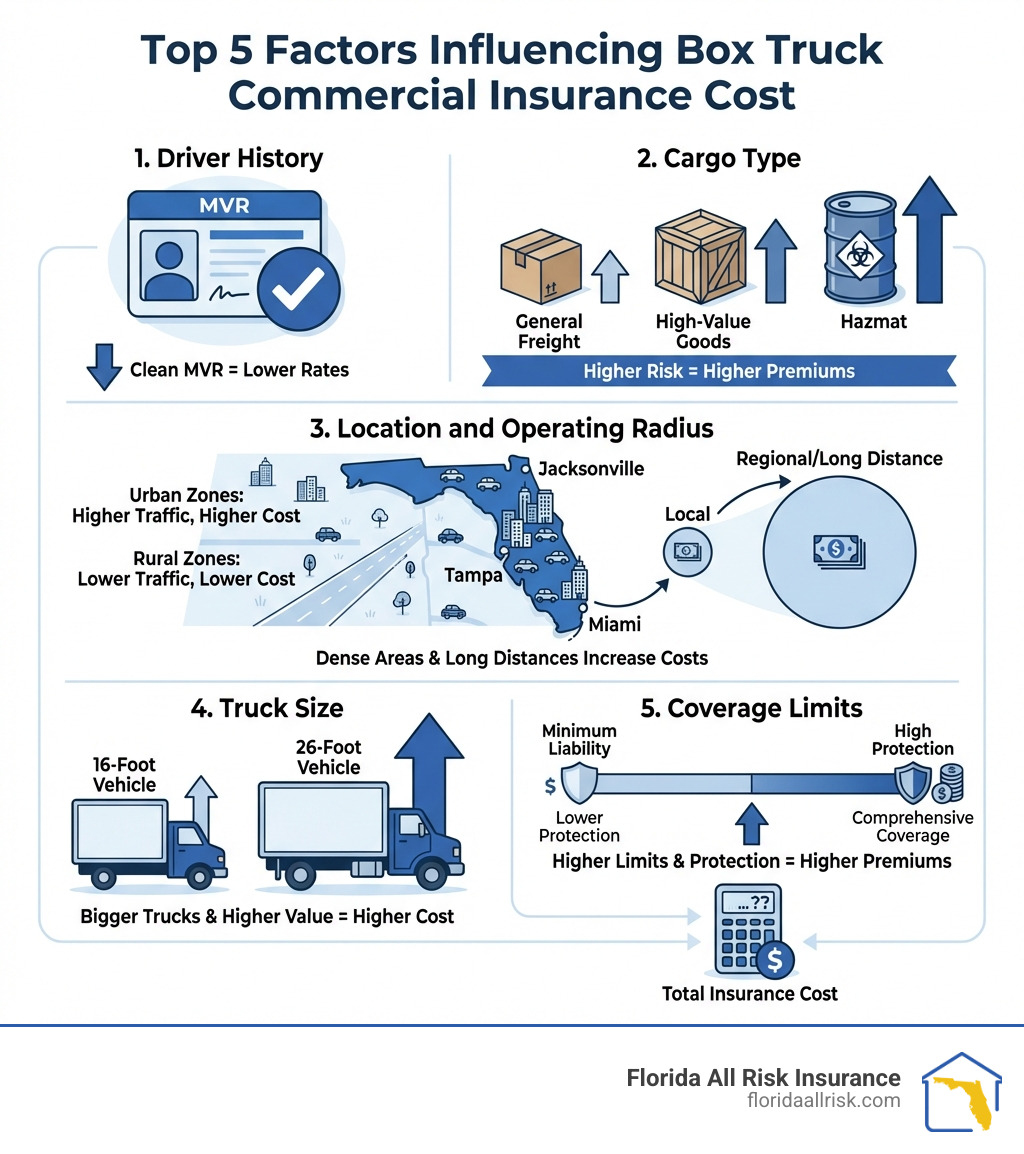
Top 5 Cost Factors:
- Driver history: Clean records lower rates.
- Truck size and value: Larger, more valuable trucks cost more to insure.
- Cargo type: Hazardous or high-value goods increase premiums.
- Location and radius: Urban routes and long distances raise costs.
- Coverage limits: Higher protection equals higher premiums.
If you operate a box truck in Florida, you know it is the lifeblood of your business, but insuring it can feel like navigating a maze of confusing numbers. You may see widely different quotes from insurer to insurer and wonder what you will actually pay. The truth is, the cost is not a flat number pulled from a chart; it is a custom premium based on how, where, and what you haul, and who is behind the wheel.
For any Florida box truck business, insurance is a crucial financial safety net. Whether you are hauling furniture in Tampa or delivering packages in Jacksonville, your final cost depends on your truck’s size, your cargo, your routes, your drivers, and your chosen coverage. A local delivery business with experienced drivers will usually pay far less than a new venture in a high-traffic urban area with higher liability limits.
This guide will break down every major component of box truck insurance costs, from average prices and key rating factors to legal requirements and money-saving strategies. By the end, you will have a clear roadmap to securing the right protection at a fair price for your Florida operation.
I am Jason Miller, owner of Florida All Risk Insurance in St. Petersburg, Florida. With over 20 years of experience, I help Florida businesses steer the complexities of box truck commercial insurance cost. My goal is to give you practical information so you can make confident decisions for your trucking operation.
Box truck commercial insurance cost terminology:
Understanding the Average Cost of Box Truck Insurance
While there’s no single “average” price, box truck commercial insurance cost generally falls between $250 and $1,200 per month. Annually, this ranges from $3,000 to $10,910. These figures are a starting point, as your actual premium depends on your business’s unique risk profile. Insurers weigh many variables before providing a quote.
For a broader perspective, industry analyses confirm these figures. The average box truck insurance cost typically runs $231–$950 per month, or about $3,000–$10,910 per year, aligning with our observed ranges.
Cost Estimates for Owner-Operators
For an owner-operator in Florida, your box truck commercial insurance cost is heavily influenced by your truck’s size and operating radius.
- Local Delivery (16-foot Box Truck): Owner-operators on local routes with a 16-foot truck typically see monthly costs between $250 and $600. This reflects shorter distances and less exposure to high-traffic interstate travel. For more on this truck size, see our 16 Foot Box Truck Insurance Complete Guide.
- Regional Hauling (26-foot Box Truck): If you run regional routes across Florida with a larger 26-foot truck, expect higher premiums. The estimated monthly cost is generally between $550 and $1,100. This accounts for the larger vehicle and longer distances. Our 26 Foot Box Truck Insurance Cost guide offers more detail.
These are averages; your driving record, cargo, and other factors will refine your specific quote.
Breaking Down the Box Truck Commercial Insurance Cost for New Ventures
New box truck businesses in Florida often face higher insurance premiums. Insurers rely on historical data like claims history and safety records to assess risk. Since new ventures lack this history, they are perceived as a higher risk.
This can result in a box truck commercial insurance cost that is 50-100% higher than an established business. For instance, a new venture with a 26-foot box truck in an urban area might pay $1,500 to $2,600 per month. Some new operators with high liability needs could see first-year costs around $29,000 annually.
This is often a temporary hurdle. After a year of safe operations, renewal rates typically decrease as you build a reliable track record. Learn more in our Box Truck Business Insurance Cost Guide.
Insurance Costs for Small Fleets
Operating a small fleet of 3-5 box trucks in Florida can lead to more favorable per-truck rates. While the total premium is higher, fleet discounts can lower the cost per vehicle.
Small fleets often see per-truck costs from $400 to $800 per month. Insurers view well-managed fleets as a stable risk, especially with established safety programs. Many providers offer multi-vehicle discounts of up to 15%. Implementing strong Fleet Insurance Risk Management strategies can further reduce your overall box truck commercial insurance cost.
Key Factors That Influence Your Box Truck Commercial Insurance Cost

Your premium is a direct reflection of the risk an insurer takes on. Understanding the factors they evaluate is the first step toward managing your costs. Even small operational changes can significantly impact your rate.
Driver History and Business Experience
The people behind the wheel and your company’s track record are paramount in determining your box truck commercial insurance cost.
- Driver History (MVRs): This is a major factor. Insurers review the Motor Vehicle Records (MVRs) of all drivers. A history of accidents or traffic violations will increase premiums. A team of experienced drivers with clean records is your best asset for securing lower rates. Drivers under 25 are statistically riskier, which can also drive up costs.
- Business Experience: The age of your business and its claims history are key risk indicators. An established Florida business with several years of clean loss runs (few or no claims) presents a lower risk and often gets better pricing.
We can help you find the Best Truck Insurance Rates by highlighting your commitment to safety and strong business history.
The Impact of Cargo on Premiums
What you haul plays a critical role in your box truck commercial insurance cost. Certain cargo types are riskier, leading to higher premiums for your Cargo Insurance for Trucks.
- General Freight: Transporting general dry goods is lower risk and results in standard rates.
- High-Value Goods: Moving electronics or pharmaceuticals will increase cargo premiums due to the higher potential loss from damage or theft.
- Hazardous Materials (Hazmat): Hauling materials like chemicals or flammable liquids carries the highest risk. This requires special endorsements and higher liability limits, often increasing monthly costs to $1,000–$2,000+.
- Perishables and Refrigerated Goods: Transporting items in reefers adds the risk of spoilage from equipment failure, often requiring reefer breakdown coverage which affects your premium.
How Location and Radius Affect Your Box Truck Commercial Insurance Cost
Where and how far you operate in Florida are significant cost determinants.
- Garaging Address: The ZIP code where your truck is garaged matters. Urban areas like Miami or Orlando have more traffic, accidents, and theft, leading to higher premiums than rural areas.
- Operating Radius:
- Local: Operations confined to a small radius (e.g., a single county) mean less road time and lower risk, potentially lowering premiums.
- Regional: Traveling longer distances between major Florida cities increases risk exposure and rates.
- Interstate: Any travel across state lines subjects you to federal regulations and can lead to the highest premiums.
Our expertise in Trucking Company Insurance Florida allows us to tailor coverage to your specific operating zones.
Your Truck’s Details: Size, Age, and Value
The characteristics of your truck itself are crucial to your box truck commercial insurance cost.
- Size and Gross Vehicle Weight Rating (GVWR): Bigger trucks mean higher insurance costs. A 26-foot truck will cost more to insure than a 16-foot truck because it is more expensive to repair and can cause more damage in an accident. GVWR is a key metric insurers use.
- Vehicle Age and Condition: Newer, more valuable trucks cost more to insure due to higher replacement costs. However, very old trucks may also see higher premiums if they lack modern safety features.
For more on how vehicle specifics impact your policy, see our guide on Comprehensive Business Vehicle Insurance.
Coverage Limits and Deductibles
The amount of protection you choose directly impacts your box truck commercial insurance cost.
- Policy Limits: These are the maximum amounts an insurer will pay. Higher limits provide more protection but lead to higher premiums.
- Deductibles: This is the amount you pay out-of-pocket before insurance kicks in. Choosing a higher deductible lowers your premium, but ensure you can afford it if you need to file a claim. We can help you balance cost and protection, which is key to managing your Liability Insurance Cost.
Essential Coverages and Legal Requirements
A comprehensive box truck insurance policy is a package of different coverages designed to protect you from various risks. Understanding what you need is crucial for legal compliance and financial security.
Core Commercial Auto Coverages
These are the foundational coverages for any commercial vehicle:
- Primary Liability Insurance: The cornerstone of your policy, this covers damages and injuries you cause to others. It includes Bodily Injury and Property Damage Liability and is legally required. Our Commercial Truck Liability Insurance guide explains this in detail.
- Physical Damage Coverage (Collision & Comprehensive):
- Collision: Pays to repair or replace your truck if it’s damaged in an accident.
- Comprehensive: Protects your truck from non-collision events like theft, fire, or vandalism. These are usually required if your truck is financed.
- Uninsured/Underinsured Motorist (UM/UIM): Protects you if you’re hit by a driver with little or no insurance. This is a crucial protection in Florida.
For more on your options, visit our Commercial Auto Insurance Florida page.
Trucking-Specific Insurance Policies
Box truck operations often require specialized policies beyond standard auto coverage:
- Motor Truck Cargo Insurance: Protects the goods you are hauling from loss or damage. While not always federally mandated, it’s almost always required by brokers and shippers, who typically ask for $100,000 in coverage.
- Trucker’s General Liability (GL): Covers claims of injury or property damage that happen on your premises or due to your operations, but not directly involving your truck on the road (e.g., a client slips at your loading dock). Explore this in our General Liability Insurance guide.
- Non-Trucking Liability (NTL) / Bobtail Insurance: If you’re leased to a motor carrier, this covers you when driving your truck for personal use or between loads when not under dispatch.
Federal, State, and Contractual Minimums
Minimum insurance requirements come from several sources:
- Federal Motor Carrier Safety Administration (FMCSA): For interstate carriers, the FMCSA mandates liability insurance. Most general freight trucks over 10,000 lbs GVWR need at least $750,000 in public liability coverage. Hauling hazardous materials can push this requirement to $1 million or more. You can find details on the Federal Motor Carrier Safety Administration (FMCSA) website.
- State-Specific Laws: Florida has its own minimum liability requirements for commercial vehicles, which vary by truck size and use.
- Contractual Requirements: Many brokers and shippers, like Amazon Relay, require higher limits than the law demands. Amazon Relay, for example, requires $1 million in auto liability and $100,000 in cargo coverage. Always check your contracts.
Other Policies for Your Trucking Business
A holistic approach to protection may include:
- Workers’ Compensation Insurance: If you have four or more employees in Florida, this is typically required. It covers medical expenses and lost wages for employees injured on the job. Learn more in our Workers Compensation Insurance Complete Guide.
- Business Owner’s Policy (BOP): Bundling General Liability and Commercial Property insurance into a BOP can be a cost-effective solution for broad coverage. Our Business Insurance Florida Complete Guide has more information.
- Spoilage Coverage: Essential for refrigerated trucks, this protects against losses if your cargo spoils due to a refrigeration unit breakdown.
Smart Strategies to Lower Your Box Truck Insurance Premiums
While many cost factors are fixed, you can take proactive steps to lower your insurance premiums. Demonstrating that you are a low-risk client can lead to significant savings without sacrificing essential coverage.
Prioritize a Strong Safety Culture
Investing in safety is one of the most effective ways to reduce your box truck commercial insurance cost.
- Clean MVR Program: Implement strict hiring standards and regularly review driver Motor Vehicle Records (MVRs). A fleet with a history of clean MVRs signals lower risk.
- Driver Training: Invest in ongoing training for defensive driving and safe cargo handling. Documenting these efforts can sometimes earn you discounts.
- Dashcams and Telematics: Dashcams can deter fraudulent claims and encourage safer driving. Telematics data (GPS, speed monitoring) shared with insurers might lead to premium reductions.
- Documented Safety Plans: A formal, written safety plan shows a proactive approach to risk management.
These steps help you Unlock the Best Business Insurance for Your Enterprise by presenting a low-risk profile.
Optimize Your Policy and Payments
Smart financial decisions about your policy can also lead to savings:
- Increase Deductibles: Opting for a higher deductible will reduce your premium. Just ensure the out-of-pocket expense is manageable for your business.
- Pay Premiums in Full: Many carriers offer a discount for paying your annual premium upfront instead of in monthly installments.
- Bundle Policies (BOP): Purchasing multiple policies (auto, general liability, property) from one provider can often qualify you for multi-policy discounts and is a great way to secure Affordable Commercial Vehicle Insurance.
Proactively Manage Your Operations
Day-to-day operational choices influence your risk and premiums:
- Secure Vehicle Parking: Storing trucks in a secure, well-lit, gated facility reduces the risk of theft or vandalism and can lower comprehensive coverage costs.
- Regular Maintenance Schedules: Well-maintained vehicles are safer. Keeping detailed maintenance logs proves your commitment to vehicle upkeep.
- Route Optimization: If possible, optimize routes to avoid high-crime or heavily congested areas to reduce risk exposure over time.
These practices are part of effective Haulage Insurance Unpacked: Affordable Coverage for Your Commercial Fleet.
Shop Around and Work with an Expert
Perhaps the most impactful strategy for managing your box truck commercial insurance cost is to not settle for the first quote you receive.
- Compare Multiple Quotes: Insurance rates vary significantly between different carriers. Always obtain quotes from several providers to ensure you’re getting the most competitive rate for the coverage you need.
- Review Coverage Details: Don’t just compare prices; carefully compare the coverage limits, deductibles, exclusions, and endorsements offered by each policy. A cheaper policy isn’t a better policy if it leaves you underinsured.
- Understand Carrier Differences: Some carriers specialize in trucking insurance and may offer more custom policies or better rates for specific types of operations (e.g., hazmat, reefer).
- Work with an Independent Agent: As an independent agency, Florida All Risk Insurance works with multiple top-rated carriers. This means we do the shopping for you, comparing options from various providers to find the best blend of coverage and cost for your specific Florida business. We understand the nuances of the trucking industry and can advocate on your behalf. This is truly the Best Way Get Insurance Quotes and how you can benefit from Finding the Right Insurance Agency.
Frequently Asked Questions About Box Truck Insurance
How quickly can I get a Certificate of Insurance (COI)?
A Certificate of Insurance (COI) is your proof of coverage and is often required before you can pick up a load or start a new contract. With your business details, vehicle identification numbers (VINs), and driver information ready, we can often provide quotes and issue a COI within 24 hours. This quick turnaround helps you avoid costly delays when starting a job. Our team at Florida All Risk Insurance prioritizes getting you your 24 Hour Commercial Truck Insurance certificate promptly.
Why is my first-year insurance premium so high?
As a new venture, your box truck commercial insurance cost is higher because insurers lack data to assess your risk. Without a claims history or safety record, you are an unknown variable, which leads to a higher “new venture” premium. This can mean paying 50–100% more than a comparable established operation. After a year of safe operations and no significant claims, renewal rates often decrease as you establish a track record of reliability.
Do I need commercial insurance for a non-CDL box truck?
Yes. If a vehicle is used for business, a personal auto policy will not provide coverage, as it typically excludes commercial use. Whether your box truck requires a Commercial Driver’s License (CDL) or not, you must have a commercial auto insurance policy to be properly protected and legally compliant in Florida.
Are box truck insurance costs tax-deductible?
In many cases, premiums for business insurance, including box truck commercial coverage, may be treated as a deductible business expense. However, tax rules can change and every business situation is different. It is wise to confirm how these costs apply to your situation with a qualified tax professional or refer to guidance from the Internal Revenue Service on deductible business expenses.
How often should I review my box truck insurance policy?
It is a good practice to review your policy at least once a year, or sooner if something in your operation changes. Adding or selling trucks, taking on new types of cargo, hiring additional drivers, or expanding your operating radius are all reasons to revisit your coverage. Regular reviews help ensure that your limits, deductibles, and endorsements still match your current risk and budget.
Secure the Right Coverage for Your Business
Understanding your box truck commercial insurance cost is the first step toward making an informed decision for your business. As we’ve explored, your final premium is a complex calculation based on your unique operational footprint—from your drivers and cargo to your location and the size of your truck. By focusing on safety, maintaining clean records, and structuring your policy correctly, you can take control of your insurance expenses.
Navigating this landscape alone can be challenging. Working with an experienced independent insurance agency like Florida All Risk Insurance gives you a partner dedicated to finding the most competitive rates from a wide range of carriers. We can help you identify the exact coverages you need and uncover discounts you may be eligible for, ensuring you have robust protection without overpaying.
Ready to find out what your box truck insurance will really cost for your Florida business? Get a personalized quote for your commercial truck insurance today!
Have more questions about specific coverages or how to lower your premiums? Our team of experts is here to help you understand every aspect of your policy. Contact us to discuss your specific business needs and get expert advice.
Contact Us: Florida All Risk Insurance Address: 7111 Central Ave, St. Petersburg, FL 33710 Phone: (727) 345-0242 Email: [email protected]