

How many people to create group health insurance plan: Top 2 Tips
Why Understanding Group Health Insurance Requirements Matters for Your Business
How many people to create group health insurance plan is a common question for Florida business owners. The answer isn’t simple, but here’s what you need to know right away:
Quick Answer:
- Small businesses: Minimum 2 people (1 owner + 1 eligible employee)
- Large businesses: 50+ full-time equivalent employees (subject to ACA mandate)
- Sole proprietors: Cannot qualify for group plans
Understanding group health insurance requirements is critical for attracting and retaining top talent. In the United States, 60.4% of people under age 65 had employer-sponsored health insurance in 2023, highlighting its importance.
For Florida businesses, offering health insurance is a competitive advantage. As one industry expert noted, “Group health insurance is one of the best ways to attract and retain talented employees.” Beyond recruitment, businesses can deduct 100% of premium contributions, and employees typically pay 17% less for group coverage compared to individual plans.
However, offering group coverage means navigating federal, state, and carrier rules. The how many people to create group health insurance plan question involves employee definitions, participation rules, and eligibility criteria that can make or break your application.
I’m Jason Miller, and for over 20 years, I’ve helped thousands of Florida businesses steer insurance complexities. My experience shows that understanding these requirements upfront saves time, money, and frustration.

How many people to create group health insurance plan vocabulary:
- group health insurance plans for small businesses
- how to choose a group health insurance plan
- Small business employee benefits
The “Magic Number”: How Many People to Create a Group Health Insurance Plan?

Figuring out how many people to create group health insurance plan for your business can feel complex, but it’s straightforward once you know the rules. In Florida, the journey begins with understanding your business size. The market is split into two main groups based on employee count, each with its own rules.
Understanding Small Group Health Insurance
The first stop for most new group plans is the small group market, which includes businesses with 1 to 50 full-time equivalent (FTE) employees.
To qualify for a small group plan, you generally need at least one employee besides the business owner (or their spouse), making the effective minimum two people. The plan must cover at least one W-2 employee who isn’t related to the owner. This rule is crucial; it demonstrates to the insurer that you’re offering a genuine team benefit, not just seeking a group rate for individual or family coverage. This helps stabilize the insurance pool for all small businesses. For example, if you run a small marketing agency in Tampa as the owner and hire one full-time, W-2 designer, you meet the minimum requirement. However, if your only other worker is a 1099 freelance contractor, you would not qualify.
Having that one non-owner, W-2 employee opens the door to more affordable and comprehensive health coverage than individual plans typically offer.
More info about Small Business Health Insurance
How many people to create a group health insurance plan for large businesses?
Once your business grows to 51 or more FTE employees, you move into the large group category, which comes with important responsibilities under the Affordable Care Act (ACA).
These “Applicable Large Employers” (ALEs) are subject to the ACA’s Employer Shared Responsibility Provisions. This means they must offer affordable, minimum-value health coverage to at least 95% of their full-time employees and their dependents or face significant penalties.
- Minimum Value: The plan must cover at least 60% of the total allowed cost of benefits.
- Affordable Coverage: The employee’s contribution for self-only coverage cannot exceed a certain percentage of their household income (this percentage is adjusted annually by the IRS).
Failing to meet these requirements can result in steep penalties, which can amount to thousands of dollars per employee. While this increases compliance needs, it also gives your business more power to negotiate favorable rates and plan designs with insurance carriers. For these larger businesses, there are also extra rules to keep in mind, like offering COBRA to laid-off employees, which allows them to continue their coverage for a period.
Who Counts as an “Employee” for Group Health Insurance?

When determining how many people to create group health insurance plan, understanding who legally counts as an “employee” is critical. Insurance carriers and the government have specific definitions that determine your eligibility. Not everyone who works for you counts toward the minimum, a distinction that often surprises business owners.
Full-Time vs. Full-Time Equivalent (FTE) Employees
Eligibility starts with full-time employees. Under the ACA, a full-time employee works an average of 30 or more hours per week.
Part-time staff hours are combined to create Full-Time Equivalents (FTEs). This calculation is vital when approaching the 50-employee threshold. Here’s how it works: add up the total hours worked by all part-time employees in a month and divide by 120. For example, if you have 10 part-timers each working 60 hours a month (600 total hours), you would have 5 FTEs (600 / 120). If you have 45 full-time employees and 5 FTEs from your part-time staff, your total is 50 FTEs, placing you on the cusp of the large group market. Most insurers require employees to work at least 20 to 30 hours per week on a permanent basis to be eligible for coverage. You can use a full-time equivalent (FTE) employee calculator to determine your official count.
Who is Typically Excluded from the Count?
While business owners can be covered by the plan, they don’t count toward the minimum employee requirement. Insurers require at least one genuine common-law W-2 employee who is not the owner or the owner’s spouse. This rule prevents individuals from using a business structure solely to get group rates.
Independent contractors (1099 workers), business partners, and seasonal workers also don’t count toward your employee minimum. The IRS uses a detailed Common Law Test to determine a worker’s status, focusing on three areas:
- Behavioral Control: Does the company have the right to direct and control how the worker does their job through instructions, training, or other means?
- Financial Control: Does the business have the right to direct or control the financial aspects of the worker’s job, like how they are paid, whether expenses are reimbursed, and who provides tools and supplies?
- Relationship of the Parties: Is there a written contract? Are benefits provided? Is the relationship permanent, and is the work performed a key aspect of the business?
Misclassifying a worker can lead to significant penalties for taxes and benefits, so it’s crucial to get this right.
Family members can be legitimate W-2 employees, but some insurance carriers scrutinize these arrangements to prevent fraud. It’s key to ensure they are bona fide employees with regular hours, defined duties, and proper payroll documentation like pay stubs and W-2 forms.
More info about Small Business Employee Benefits
Understanding Participation and Enrollment Rules
After meeting the minimum employee count for how many people to create group health insurance plan, you must also meet participation rules. Carriers require a certain percentage of employees to enroll to ensure a diverse risk pool, which prevents costs from skyrocketing. These rules are a key part of plan approval.
The 70% Participation Rule Explained
Most insurance companies require that at least 70% of your eligible, uninsured employees enroll in the health plan. This rule exists to combat “adverse selection.” If only employees who anticipate high medical needs enroll, the group becomes high-risk, driving premiums up for everyone. By requiring a broad mix of healthy and less-healthy individuals, carriers can spread the risk and keep costs more stable.
“Eligible, uninsured employees” refers to staff who can enroll and don’t already have other qualifying health coverage. Employees with coverage through a spouse’s plan, a parent’s plan, or a government program like Medicare or Medicaid are considered “valid waivers.” They are subtracted from the total before the 70% is calculated. For example, if you have 15 eligible employees, but 5 have valid waivers, your pool of eligible, uninsured employees is 10. You would need at least 7 of those 10 employees to enroll (10 * 0.70 = 7).
Strategies to Meet Participation Requirements
- Increase Employer Contributions: The more the business pays toward premiums, the more affordable it is for employees, making enrollment more attractive.
- Employee Education: Hold meetings to clearly explain plan options, benefits, and costs. Many employees waive coverage simply because they don’t understand its value or how it works.
- Offer Plan Choices: Providing a choice between a low-cost HMO and a more flexible PPO can appeal to a wider range of employee needs and budgets.
The Special Enrollment Period Exception
A key exception for small businesses is the special enrollment period, typically from November 15 to December 15. If you apply during this window, the minimum participation requirement is often waived, making it much easier to start a plan.

What if My Employee Count Changes?
Your plan is generally safe if your employee count drops mid-year. Policies are set for a full year, so changes during the policy term typically won’t affect your eligibility, and your coverage will continue. However, at renewal, the insurance carrier will re-evaluate your eligibility based on your current number of enrolled employees. It’s always a good idea to keep your insurance broker informed about significant workforce changes to ensure a smooth renewal process.
More info about Group Health Insurance Plans
What Are Your Options? Plans and Alternatives for Small Businesses
If you’ve asked “how many people to create group health insurance plan” and found a traditional plan isn’t the right fit, don’t worry. Excellent alternatives exist that offer flexibility. Understanding these options is key to finding the right solution for your business.
Common Types of Group Health Insurance Plans
- HMO (Health Maintenance Organization): A guided plan where you choose a primary care physician (PCP) to manage your care and provide referrals to specialists. HMOs require using a specific network of providers but often have lower monthly premiums.
- PPO (Preferred Provider Organization): Offers more freedom. You don’t need a referral to see a specialist and can go outside the plan’s network, though at a higher cost. This flexibility usually means higher monthly premiums.
- EPO (Exclusive Provider Organization): A hybrid plan. Like a PPO, you don’t need a PCP or referrals. However, like an HMO, there is no coverage for out-of-network care except in true emergencies. They can be a good middle ground on cost and flexibility.
- HDHP (High Deductible Health Plan): Has a higher deductible in exchange for lower monthly premiums. HDHPs are often paired with a Health Savings Account (HSA), a tax-advantaged account employees use to save for qualified medical expenses.
Here’s a quick look at how these common plans compare:
| Plan Type | Network | PCP Required | Referrals | Cost (Premiums) |
|---|---|---|---|---|
| HMO | Limited | Yes | Yes | Lower |
| PPO | Broad | No | No | Higher |
| EPO | Limited | No | No | Medium |
| HDHP | Varies | No | No | Lower |
Alternatives to Traditional Group Insurance
Health reimbursement arrangements (HRAs) are fantastic alternatives. They let you provide tax-free funds that employees can use to buy their own individual health insurance or pay for medical expenses.
- The ICHRA (Individual Coverage Health Reimbursement Arrangement) is a flexible option for any size business. You provide a monthly allowance for employees to buy their own individual plans. ICHRAs have no minimum participation requirements and allow you to set different allowance amounts for different employee classes (e.g., salaried vs. hourly).
- The QSEHRA (Qualified Small Employer HRA) is for businesses with fewer than 50 employees that don’t offer a group plan. It allows you to reimburse employees tax-free for their medical expenses and individual plan premiums, up to annual limits set by the IRS. For 2024, those limits were $6,150 for an individual and $12,450 for a family.
Another option to explore is an Association Health Plan (AHP), which allows small businesses in the same field to band together for more purchasing power. Their availability and rules can be complex, so expert guidance is recommended.
more info about group health insurance plans for small businesses
What if I’m a Sole Proprietor?
If you’re a sole proprietor or it’s just you and your spouse, you won’t qualify for a group health plan. You need at least one non-owner W-2 employee. Your best bet is to look for an individual or family health insurance plan through the Health Insurance Marketplace at Healthcare.gov, where you might be eligible for income-based subsidies.
The Business Case: Benefits and Tax Advantages of Offering Health Insurance
Offering health insurance is a smart investment in your team, not just an expense. It’s a win-win for both the business and its employees, regardless of how many people to create group health insurance plan for.
Benefits for Employers and Employees
A strong benefits package helps you attract and retain top talent in Florida’s competitive market. According to a 2023 Glassdoor survey, health insurance is the single most important benefit employees consider when choosing a job. Valued employees are more likely to stay, which reduces turnover and the associated costs of hiring and training. This leads to improved morale and productivity from a team less stressed about medical bills. Group plans also offer better risk management through pooled rates.
For employees, the benefits are significant. They enjoy lower premiums than individual plans, providing better access to care and financial security against high medical costs. Group plans also offer simplified enrollment. It’s a top-tier benefit, with 90% of employees stating that benefits impact their job satisfaction.
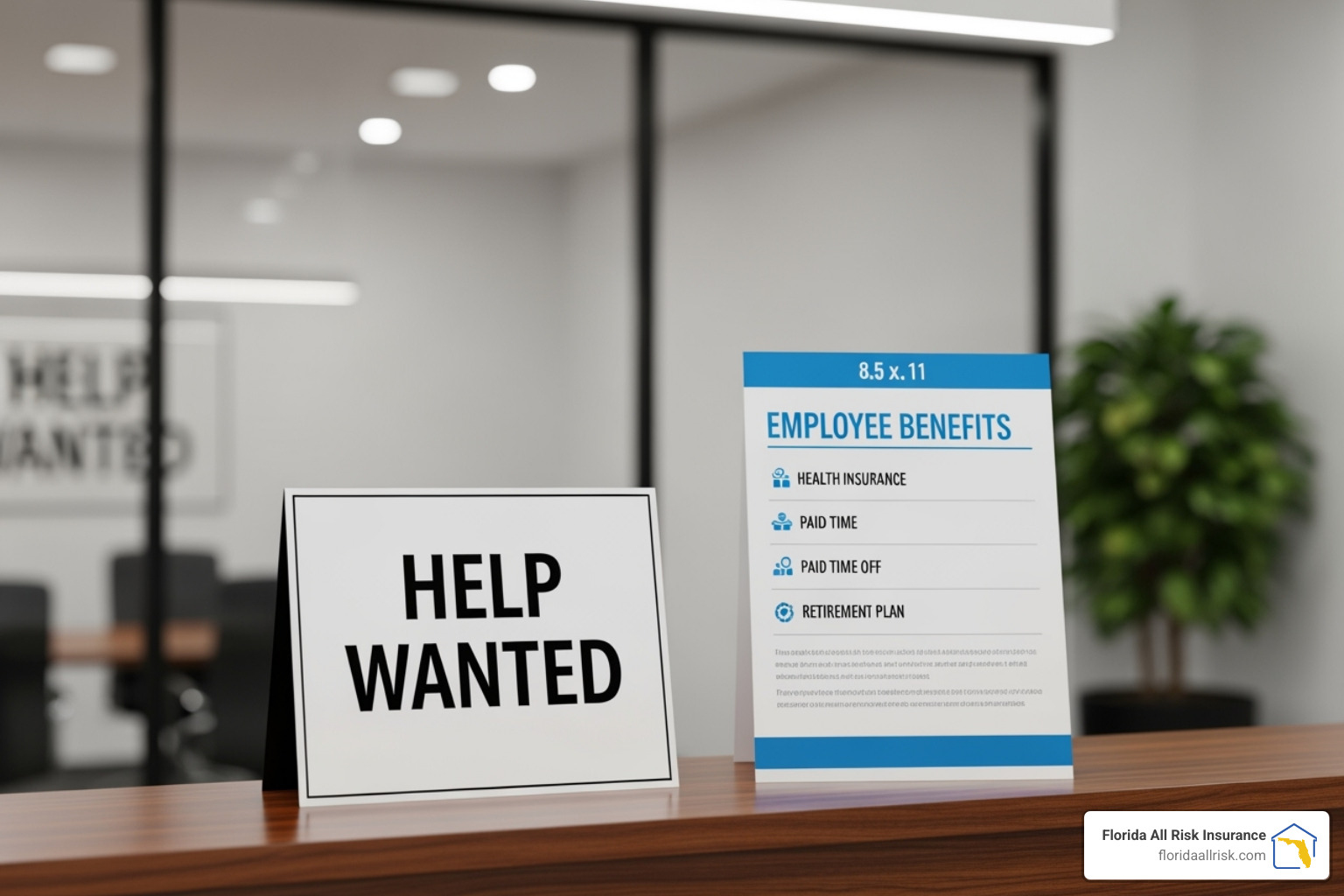
How many people to create a group health insurance plan and get tax benefits?
The premiums you contribute for employee group health insurance are generally 100% tax-deductible as a business expense. This lowers your taxable income while providing a valuable benefit. For example, if your business contributes $50,000 annually toward employee premiums, you can deduct that full amount from your gross income. In a 25% tax bracket, this deduction would save you $12,500 in taxes.
Small businesses may also qualify for the Small Business Health Care Tax Credit. This credit can cover up to 50% of the premiums you pay. To qualify, you generally need:
- Fewer than 25 FTEs
- To pay average annual wages below a certain threshold (around $62,000 for 2024, indexed annually)
- To contribute at least 50% of premium costs
- To buy coverage through the Small Business Health Options Program (SHOP) Marketplace
This two-year credit is most generous for businesses with fewer than 10 FTEs and lower average wages. It is claimed using IRS Form 8941 and offers a substantial financial advantage. You can learn more about this valuable credit directly from the IRS: Small Business Health Care Tax Credit.
For a deeper dive into all the ways health benefits can boost your business, explore more about the Benefits of Health Benefits.
Frequently Asked Questions about Group Health Insurance Eligibility
Here are answers to common questions about how many people to create group health insurance plan for your business.
Do sole proprietors or one-person businesses qualify for group health insurance?
No. A business with only the owner, or the owner and their spouse, does not qualify for a group plan. These plans require at least one eligible W-2 employee who is not the owner or their spouse to spread risk effectively. Sole proprietors should seek coverage through the individual marketplace at Healthcare.gov, where they may qualify for income-based subsidies.
How does the number of employees affect the cost of group health insurance?
A larger group spreads risk across more people, which typically leads to lower, more stable premiums. Small businesses often pay 8-18% more than large corporations for similar plans due to having less negotiating power. While costs vary, with 2023 averages at $8,435 for individual and $23,968 for family coverage, even small groups access better rates than individuals. Group purchasing power often results in savings of 10-25% compared to individual plans.
Can I offer group health insurance to part-time employees?
Yes, you can offer coverage to part-time employees at your discretion, though it’s not legally required. Part-time employees generally don’t count toward the minimum number needed to start a plan. If you offer coverage, you must do so consistently for all similarly situated part-time staff to avoid discrimination. For many Florida employers, offering these benefits is a powerful tool for attracting and retaining workers. The investment can improve satisfaction and reduce turnover, saving money on recruiting and training in the long run.
Conclusion
Figuring out how many people to create group health insurance plan is more than a headcount. It requires understanding who counts as a full-time equivalent employee, meeting the minimum of at least one non-owner employee, and satisfying carrier participation rules. While the regulations can seem complex, the benefits of providing health coverage—from attracting top talent to gaining tax advantages—make it a worthwhile investment in your team and your business’s future. Navigating these options is a powerful step toward building a resilient, competitive business in Florida.
That’s where we come in! For personalized guidance right here in Florida, the friendly experts at Florida All Risk Insurance are ready to help. We’ll assess your unique situation, break down the complexities into plain language, and help you find the perfect plan that fits your team’s needs and your budget. We’re here to simplify the process and ensure you make the best decision for your employees and your bottom line. To get started and light up the path to better benefits, take a moment to explore your group health insurance options with us. Let us help you take this important step for your business today!
Contact Us
Florida All Risk Insurance
Address: Saint Petersburg, FL
Phone: (727) 345-3400
Email: [email protected]

