Homeowners insurance Florida is essential for anyone owning a home in this hurricane-prone state. The unique weather conditions, including regular windstorms and heavy rains, make having the right insurance coverage crucial. Here’s a quick snapshot of what you need to know:
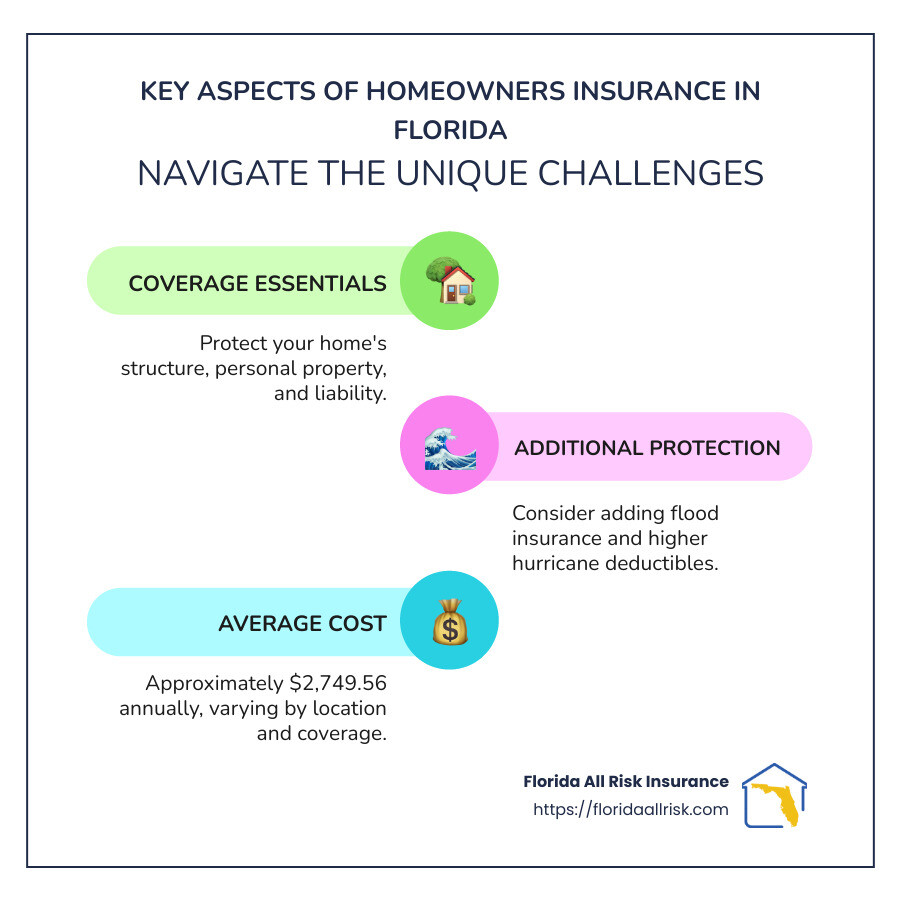
- Coverage Essentials: Protects your home’s structure, personal property, and offers liability protection.
- Additional Protection: Consider flood insurance and higher hurricane deductibles.
- Average Cost: Around $2,749.56 annually, but this varies by location and coverage choices.
Florida’s insurance market is diverse, with a mix of big-name insurers and local companies offering custom solutions. Understanding these options helps you find the right coverage that fits your needs.
As Jason Miller, a seasoned insurance professional, I have over 20 years of experience in the homeowners insurance Florida market. My family has been in the business for over 60 years, guiding Floridians in securing their homes against unforeseen events. Next, we’ll dig deeper into understanding how homeowners insurance works in Florida.
Understanding Homeowners Insurance in Florida
When it comes to homeowners insurance Florida, the landscape is as dynamic as the weather itself. Let’s break down the essentials you need to know about coverage options, costs, and the impact of natural disasters.
Average Cost of Homeowners Insurance
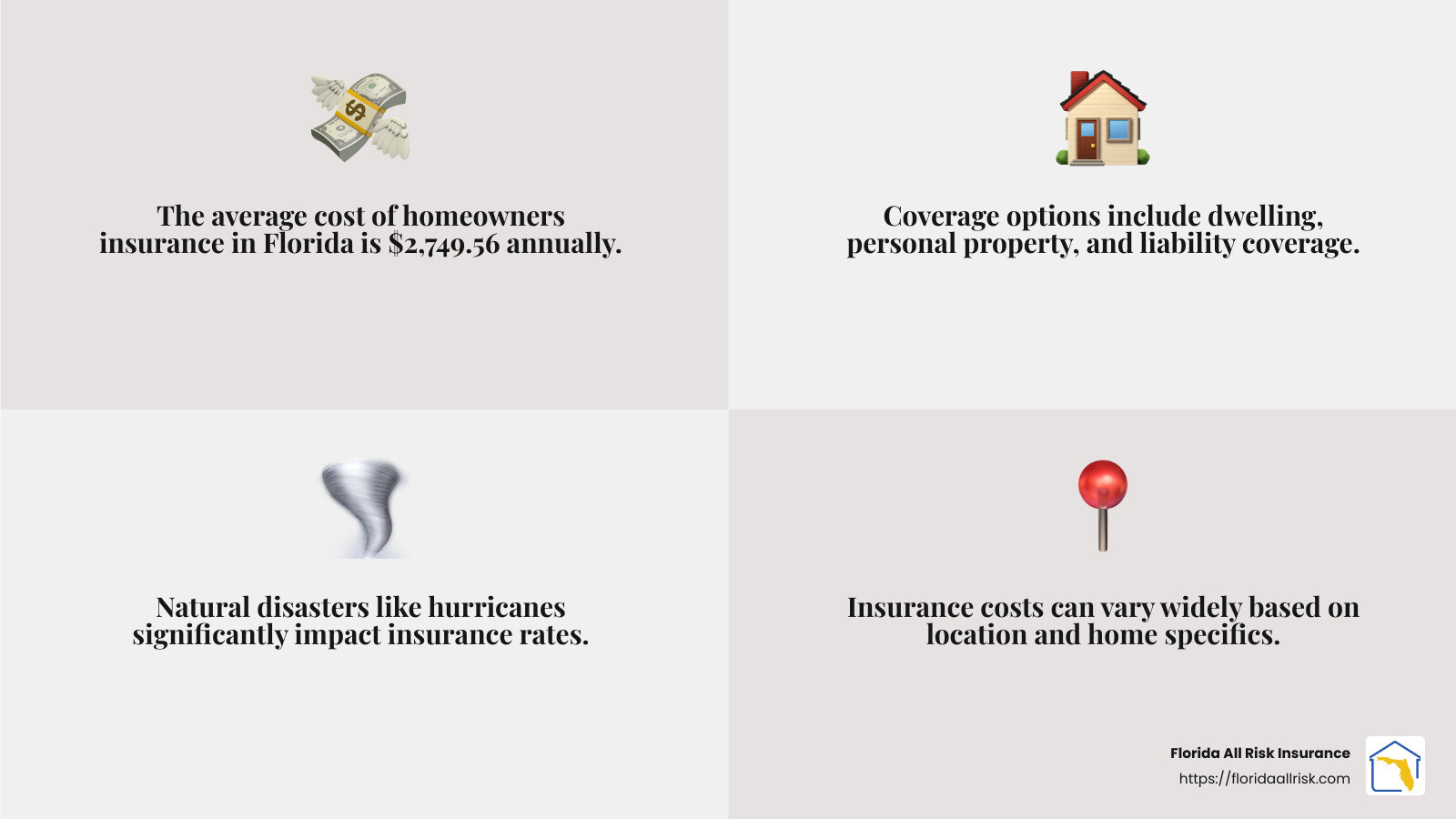
Homeowners in Florida face unique challenges, and the insurance premiums reflect that. On average, residents pay about $2,749.56 annually for a standard policy. This figure can vary widely based on factors like your home’s location, age, and the type of coverage you choose.
Coverage Options
A typical homeowners insurance policy in Florida includes several key coverages:
- Dwelling Coverage (Coverage A): Protects the structure of your home, including the roof and walls.
- Other Structures Coverage (Coverage B): Covers detached structures like fences and sheds.
- Personal Property Coverage (Coverage C): Safeguards your belongings, from furniture to electronics.
- Loss of Use Coverage (Coverage D): Assists with additional living expenses if your home becomes uninhabitable due to a covered loss.
- Personal Liability Coverage (Coverage E): Provides financial protection if you’re legally responsible for injuries or property damage.
- Medical Payments (Coverage F): Covers medical expenses for injuries that occur on your property.
Natural Disasters and Special Considerations
Florida’s weather can be unpredictable, with hurricanes posing a significant risk. It’s crucial to understand that:
- Windstorms may not be covered under a standard policy. You might need separate windstorm insurance.
- Hurricane Deductibles are common and often higher than standard deductibles. Be sure to check your policy details.
- Flooding is not covered by standard homeowners insurance. Given Florida’s susceptibility to floods, consider a separate flood insurance policy through a private insurer or the National Flood Insurance Program (NFIP).
Real-Life Challenges
Recent years have seen a spike in insurance premiums, partly due to the impact of multiple hurricanes. For instance, premiums have increased nearly 60% since 2019, according to a Reuters report. This trend highlights the importance of understanding your coverage needs and options.
In the following section, we’ll explore the factors that affect homeowners insurance rates in Florida, including the risks posed by hurricanes and the challenges of insuring coastal properties.
Factors Affecting Homeowners Insurance Rates
When it comes to homeowners insurance Florida, several factors can significantly impact your premium rates. Understanding these can help you make informed decisions about your coverage needs.
Hurricane Risk
Florida is no stranger to hurricanes. With four major hurricanes hitting the state in the past four years, the risk is high. This frequent storm activity has led to increased insurance premiums and some insurers pulling back on coverage. For instance, average premiums have surged nearly 60% since 2019.
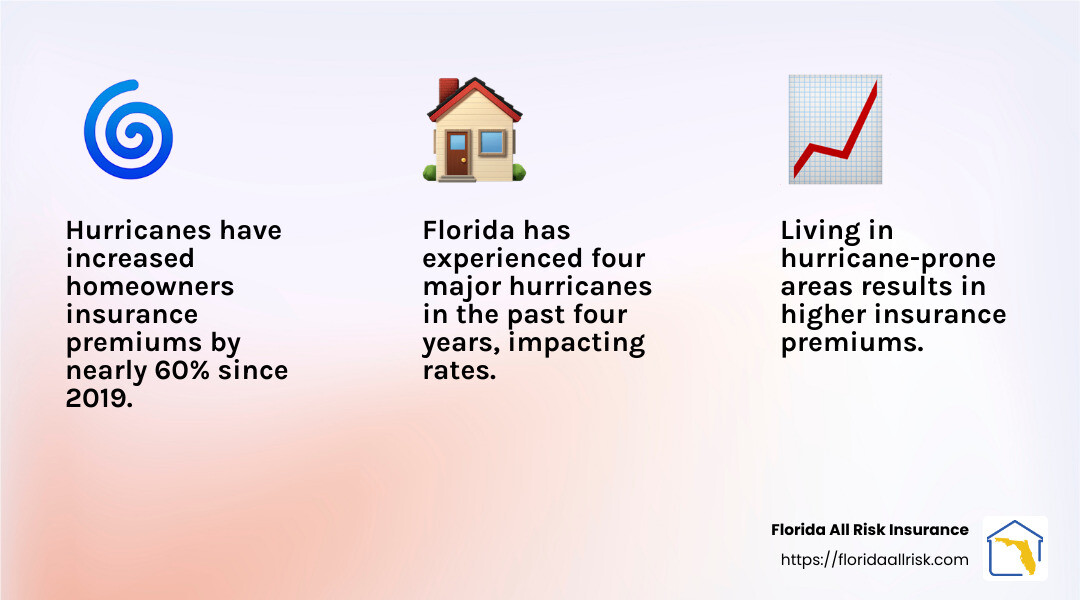
Insurance companies often adjust rates based on the likelihood of these natural disasters. If you live in a hurricane-prone area, expect higher premiums and possibly higher deductibles for hurricane-related damages.
Litigation and Fraud
Litigation and fraud have also contributed to rising insurance costs in Florida. The state has seen a spike in insurance-related lawsuits, which drives up costs for insurers. This increase in legal activity often results in higher premiums for policyholders.
Fraudulent claims, though less common, can also inflate rates. Insurers must account for potential fraud when setting their prices, which can affect your bottom line.
Coastal Areas
Living near the coast is a dream for many, but it comes with additional insurance considerations. Coastal properties face higher risks due to potential storm surges and flooding. Insurers may charge more for homes in these areas or require additional coverage, such as flood insurance, which is not part of a standard homeowners policy.
In some cases, securing coverage for coastal properties can be challenging. As Jim Tynan’s experience illustrates, finding an insurer willing to cover a home near the ocean can be difficult, and even when coverage is available, it often comes at a premium.
Understanding these factors can help you steer the complexities of homeowners insurance in Florida. In the next section, we’ll discuss how to choose the right policy to meet your needs.
How to Choose the Right Homeowners Insurance
Selecting the right homeowners insurance Florida can feel overwhelming, but understanding your coverage needs, policy options, and the claim process can make it easier. Here’s a straightforward guide to help you make an informed decision.
Assess Your Coverage Needs
Start by evaluating what you need from your insurance policy. This includes:
-
Dwelling Coverage: This covers the cost to rebuild or repair your home if it’s damaged by a covered event. Consider the current cost of materials and labor in your area when determining this amount.
-
Personal Property: Protects your belongings, such as furniture, electronics, and clothing. Take an inventory to estimate their value.
-
Liability Protection: Covers legal expenses if someone is injured on your property. Consider the risks associated with your home and activities.
-
Additional Living Expenses: Covers costs if you need to live elsewhere while your home is being repaired.
Explore Policy Options
Once you know your coverage needs, it’s time to explore policy options. Here are some types to consider:
-
Standard Policies: Offer basic coverage for common risks like fire, theft, and storm damage. These are a good starting point for most homeowners.
-
Flood Insurance: Since standard policies don’t cover flood damage, you may need a separate policy, especially if you live in a flood-prone area.
-
Wind Mitigation: Florida offers discounts for homes that meet certain wind mitigation standards. This can significantly reduce your premium.
-
Bundling Options: Some insurers offer discounts if you bundle your home and auto insurance, which can lead to savings.
Understand the Claim Process
Knowing how the claim process works is crucial for peace of mind:
-
Report the Claim: Contact your insurer as soon as possible after an incident. Be prepared with details and documentation, such as photos and receipts.
-
Assessment: An adjuster will evaluate the damage. It’s important to understand what is covered and what your deductible is.
-
Settlement: Once the claim is approved, you’ll receive funds to cover the repairs. Keep track of all communications and documentation throughout the process.
Take a cue from Phillip W.’s experience, where a clear understanding of the claim process made it “a very easy and painless process.”
By carefully considering these aspects, you can choose a homeowners insurance policy that offers the best protection for your home and peace of mind for you and your family. Next, we’ll provide top tips for saving on your homeowners insurance.
Top Tips for Saving on Homeowners Insurance
Saving on homeowners insurance Florida doesn’t have to be complicated. Here are some practical tips to help you lower your premiums without sacrificing coverage.
Accept Wind Mitigation
Florida’s weather can be unpredictable, with hurricanes posing a significant risk. Fortunately, the state offers wind mitigation discounts for homes that meet specific safety standards. These improvements not only protect your home but can also significantly reduce your insurance costs.
- Install impact-resistant windows or storm shutters.
- Reinforce your roof with hurricane straps or clips.
- Secure doors and garage doors to withstand high winds.
A Florida Wind Mitigation Inspection by a licensed inspector can help you identify eligible improvements and apply for these discounts.
Leverage Discounts
Many insurers offer various discounts that can add up to substantial savings. Here are some common ones to explore:
- Bundling Discounts: Combine your home and auto insurance for a reduced rate.
- Security System Discounts: Installing a monitored alarm system can lower your premiums.
- Loyalty Discounts: Long-term customers may receive discounts for staying with the same insurer.
Always ask your insurance agent about available discounts and ensure you’re taking full advantage of them.
Shop for Competitive Rates
The insurance market in Florida can be volatile, with rates varying widely between providers. Use tools like Progressive’s HomeQuote Explorer® to compare rates and coverages from different companies. This can help you find competitive rates custom to your needs.
- Get quotes from multiple insurers to see who offers the best deal.
- Review your policy annually to ensure you’re still getting the best rate.
- Consider increasing your deductible to lower your premium, but be sure you can afford the higher out-of-pocket cost in the event of a claim.
By following these tips, you can save money on your homeowners insurance while ensuring your home is adequately protected. Up next, we’ll tackle some frequently asked questions about homeowners insurance in Florida.
Frequently Asked Questions about Homeowners Insurance Florida
What is the average cost of homeowners insurance in Florida?
In 2023, the average annual premium for homeowners insurance Florida was approximately $2,749.56. This figure can vary based on several factors, including the location and type of home, as well as the desired coverage limits.
Dwelling coverage is a significant part of the policy, protecting the home’s structure. For a $500,000 home, the insurance cost might be higher due to the increased value, but compare rates from different insurers to get the best deal.
Why is it difficult to get homeowners insurance in Florida?
Florida’s unique geographical features contribute to the challenges of securing homeowners insurance. The state is prone to natural disasters, particularly hurricanes, which can cause significant damage to properties. This risk makes insurers wary, leading to higher premiums and, in some cases, companies pulling back on coverage.
Coastal areas are especially vulnerable, and homeowners in these regions might find it harder to obtain affordable insurance. Additionally, issues like litigation and fraud have further complicated the insurance landscape in Florida, making it crucial for homeowners to thoroughly understand their policy options.
How much is insurance on a $500,000 home in Florida?
Insuring a $500,000 home in Florida can be costly due to the high dwelling coverage required. The exact premium will depend on factors such as the home’s location, construction type, and the selected coverage options.
Comparatively, insurance costs in Florida tend to be higher than in many other states due to the increased risk of hurricanes and other natural disasters. It’s advisable for homeowners to seek quotes from multiple insurers and consider factors like wind mitigation improvements to potentially lower their premiums.
By understanding these elements, homeowners can make informed decisions about their insurance needs and find the best coverage for their situation.
Conclusion
At Florida All Risk Insurance, we understand the unique challenges Florida homeowners face when it comes to protecting their properties. Our personalized service and custom coverage options are designed to meet the diverse needs of homeowners across the state.
Why Choose Florida All Risk Insurance?
We are committed to providing custom solutions that ensure your home is adequately protected against Florida’s unpredictable weather. Whether it’s the threat of hurricanes or the risk of flooding, our team works with you to craft a policy that fits your specific requirements.
Personalized Service
As an independent agency based in St. Petersburg, we pride ourselves on offering personalized service. We take the time to understand your needs and provide guidance on the best coverage options available. Our team of experienced professionals is always ready to assist you, ensuring that you have peace of mind knowing your home is safeguarded.
Custom Coverage
With access to a wide range of carriers, we can offer competitive rates and customize your policy to include necessary coverages like flood insurance or additional liability protection. This flexibility allows us to cater to both standard and unique insurance needs, providing comprehensive protection for your home and assets.
Choosing the right homeowners insurance Florida can be daunting, but with Florida All Risk Insurance by your side, you can rest assured that you have a reliable partner dedicated to protecting what matters most to you. Reach out to us today to explore your options and secure the coverage you need.