

Home Insurance Spring Hill FL: Complete Guide to Protecting Your Investment
Finding the right home insurance spring hill fl coverage is one of the most critical financial decisions you’ll make. In a state with a uniquely challenging and dynamic insurance market, protecting your family’s biggest investment requires more than just a basic policy. For homeowners in Spring Hill, located in the heart of Hernando County on Florida’s beautiful “Nature Coast,” understanding the specific risks and opportunities is paramount.
Your home faces a complex combination of threats. Its proximity to the Gulf of Mexico brings significant hurricane exposure, while the state’s distinct karst geology introduces sinkhole concerns that standard policies simply do not cover. These are not abstract risks; they are powerful forces that directly shape your policy needs and dictate your insurance costs.
The stakes have never been higher. Florida’s insurance landscape is in a state of flux, with some national carriers reducing their footprint, leading to rising premiums and fewer options. Home insurance costs in Spring Hill can average around $1,924 annually, but this figure is just a starting point. Rates can vary dramatically based on your specific ZIP code, your home’s age and construction, and your chosen coverage levels. For instance, the average premium in ZIP code 34606 is $1,813, while in 34607 it’s $1,881, illustrating how hyperlocal factors influence your bottom line.
Navigating this environment—with its evolving regulations, Citizens takeout programs, and stringent requirements for wind mitigation and flood coverage—can feel overwhelming. However, being properly informed is the single most effective tool you have. This comprehensive guide will empower you to make confident decisions, ensuring your Spring Hill home is adequately protected without overpaying.

Understanding Your Core Coverage Needs
A home insurance spring hill fl policy is a comprehensive package designed to protect your most valuable asset from multiple angles. This “package policy” combines different types of protection into one plan, shielding your home’s structure, your belongings, and your financial liability against unforeseen events.
Overview of Standard Policy Components
A standard homeowners policy (typically an HO-3 form) is built on four pillars of protection. Understanding each one is key to ensuring you’re not underinsured.
- Dwelling Coverage (Coverage A): This is the foundation of your policy. It pays to repair or rebuild your home’s physical structure—including the roof, walls, foundation, and attached structures like a garage—if it’s damaged by a covered peril. Crucially, this amount should be based on the home’s replacement cost (the cost to rebuild it today with similar materials), not its market value. The market value includes the land, which isn’t insured, and can fluctuate wildly. An accurate replacement cost valuation is essential to avoid a devastating coverage shortfall.
- Personal Property (Coverage B): This protects your belongings—furniture, electronics, clothing, appliances, and more. Standard coverage is often for “Actual Cash Value” (ACV), which pays for the item’s value minus depreciation. For a higher premium, you can (and should) upgrade to “Replacement Cost” coverage. Example: A fire destroys your five-year-old, $1,000 television. With ACV, you might only get $200. With Replacement Cost coverage, you’d get enough to buy a new, comparable TV. Be aware of special sub-limits on high-value items like jewelry, art, and firearms, which may require a separate rider or endorsement for full coverage.
- Liability Protection (Coverage E): This is your financial shield. If a visitor is injured on your property (e.g., a slip and fall on a wet tile floor) or you accidentally cause damage to someone else’s property (e.g., your tree falls on a neighbor’s fence), this coverage pays for their medical bills, your legal defense costs, and any court-ordered settlements, up to your policy limit. Standard limits often start at $100,000, but most experts recommend at least $300,000 to $500,000 of protection.
- Additional Living Expenses (ALE) (Coverage D): If a covered disaster, like a fire or hurricane, makes your home uninhabitable, ALE is a lifesaver. It covers the increase over your normal living expenses. This can include hotel bills, restaurant meals, laundry services, and even pet boarding while your home is being repaired. It ensures your family can maintain a relatively normal standard of living during a stressful time.
Is insurance mandatory? Mortgage lender requirements
While the state of Florida doesn’t legally mandate homeowners insurance, your mortgage lender will. Lenders have a significant financial interest in your property, and they require you to maintain insurance to protect that investment. If you let your policy lapse, the lender can purchase a policy on your behalf (“force-placed insurance”), which is typically far more expensive and offers less coverage. If you own your home outright, the choice is yours, but going without coverage means exposing your life’s biggest asset to potentially devastating financial loss.
What a Standard Policy Typically Covers

Your policy protects you against specific “perils,” or causes of damage. Key covered events include:
- Fire and lightning
- Windstorm and hail (vital in Spring Hill, but often with a separate hurricane deductible)
- Theft and vandalism
- Damage from falling objects
- The weight of ice, snow, or sleet
- Water damage from bursting pipes (but not the pipe repair itself)
- Liability for injuries to others on your property
Common Exclusions in a Florida Home Policy
Just as important is knowing what your policy doesn’t cover. These risks require separate policies or special add-ons (endorsements).
- Flood Damage: This is the most critical exclusion for Floridians. Damage from storm surge, overflowing rivers, or heavy rain is not covered by a standard policy.
- Sinkhole Damage: While “catastrophic ground cover collapse” is covered, less severe sinkhole activity that can still cause foundation cracks is excluded unless you add a specific endorsement.
- Other Exclusions: Standard policies also typically exclude damage from earthquakes, routine wear and tear, mold (unless caused by a covered peril), and pests like termites.
Key Factors That Determine Home Insurance Spring Hill FL Rates
Ever notice how your neighbor’s home insurance spring hill fl premium might be hundreds of dollars different from yours, even though your houses look nearly identical? There’s a sophisticated science behind these differences. Insurance companies are experts in risk assessment, and they use complex algorithms that weigh dozens of factors to calculate your specific risk profile. Understanding these factors empowers you to make smarter decisions and potentially lower your costs.

How Insurance Rates Are Determined
Insurers evaluate these key elements to predict the likelihood and potential cost of a future claim:
- Location: Your ZIP code is a primary driver. In Spring Hill, rates in 34607 average nearly $70 more per year than in 34606 due to subtle differences in historical storm data, crime rates, and fire protection capabilities (known as the Protection Class Code).
- Home’s Age and Construction: Newer homes built to the latest Florida Building Code are more resilient and earn lower rates. Construction material is also huge: Concrete Block Structure (CBS) homes are generally preferred by insurers over wood-frame homes due to their superior resistance to wind and termites.
- Roof Age and Material: In Florida, the roof is king. A newer roof is your best friend when it comes to insurance costs. Many insurers are now hesitant to cover shingle roofs over 15 years old. A newer roof, particularly a more durable metal or tile roof, can significantly lower your premium compared to an aging asphalt shingle roof.
- Claims History: A homeowner’s personal claims history (and sometimes the property’s claims history) can increase rates. Insurers see past claims as an indicator of future risk.
- Credit-Based Insurance Score: Florida law allows insurers to use a credit-based score (which is different from your FICO score) as a rating factor. Statistical data shows a correlation between financial responsibility and a lower likelihood of filing claims.
- Deductible Amount: Your deductible is the amount you pay out-of-pocket on a claim before the insurance company pays. Choosing a higher deductible lowers your premium. For example, increasing a standard deductible from $500 to $2,500 in Spring Hill can save hundreds of dollars annually.
- Coverage Limits: The more coverage you buy, the higher the premium. Increasing your dwelling, personal property, or liability limits will cost more but provides essential financial security.
Spring Hill’s Unique Risk Factors
Living in Spring Hill means contending with specific environmental risks that insurers price into every policy:
- Hurricane Risk: Its proximity to the Gulf Coast places Spring Hill in a high-risk area for hurricanes, leading to mandatory and often expensive hurricane deductibles.
- Proximity to the Coast: Even without a direct hit, the salt-laden air from the Gulf can accelerate the corrosion and decay of building materials, increasing maintenance needs and overall risk.
- Flood Zones: Many areas in and around Spring Hill are in designated flood zones (like Zones A or AE). While standard policies don’t cover floods, living in a flood zone increases the perceived risk for insurers and makes separate flood insurance a necessity for mortgaged homes.
- Sinkhole Alley: Spring Hill is situated in a region with karst geology, a type of landscape formed from the dissolution of soluble rocks like limestone. This makes the area prone to sinkholes, a risk that requires special consideration and often additional coverage.
The Critical Role of Your Deductible
Your deductible is a powerful tool for managing costs, but understand how it works in Florida. You will likely have two separate deductibles:
- Hurricane Deductible: This applies only to damage from a named hurricane. It is usually a percentage (1%, 2%, 5%, or 10%) of your Dwelling Coverage (Coverage A). For a home insured for $300,000 with a 2% hurricane deductible, you would be responsible for the first $6,000 of hurricane damage.
- All Other Perils (AOP) Deductible: This is a flat dollar amount (e.g., $1,000 or $2,500) that applies to all other covered claims, like fire or theft.
Choosing a higher deductible will lower your premium, but you must be financially prepared to cover that amount if you need to file a claim.
Beyond the Basics: Essential Additional Coverages for Spring Hill
A standard homeowners policy provides a solid foundation, but Florida’s unique risk profile means that foundation often has significant gaps. For home insurance spring hill fl, relying on a basic policy is a gamble. To be truly protected, homeowners must consider specific additional coverages, known as endorsements or riders, to shield themselves from the state’s most prevalent threats.
Why You Need Separate Flood Insurance in Spring Hill, FL

This cannot be overstated: standard home insurance policies do not cover flood damage. A flood is defined as water from an outside source that covers at least two acres or affects at least two properties. This includes hurricane storm surge, overflowing rivers (like the nearby Weeki Wachee), and widespread water from torrential summer rains. Many Spring Hill homes are in designated flood zones where lenders will mandate flood insurance. However, FEMA reports that over 20% of all flood claims occur in low-to-moderate risk areas.
Most flood insurance is provided through the government’s National Flood Insurance Program (NFIP), which now uses a “Risk Rating 2.0” methodology. This system prices policies based on a property’s unique flood risk, considering factors like elevation, foundation type, and proximity to water sources. Private flood insurance options are also becoming more common and can sometimes offer broader coverage or more competitive rates. It’s crucial to plan ahead, as most new flood policies have a 30-day waiting period before taking effect. You can learn more at the National Flood Insurance Program website{:target=”_blank”}.
Sinkhole Coverage: A Wise Addition
Spring Hill is located in Florida’s “Sinkhole Alley,” a region with limestone geology prone to collapse. Your standard policy includes coverage for “Catastrophic Ground Cover Collapse,” but this has a very strict legal definition: the ground cover must abruptly collapse, leaving a visible depression, and a government agency must condemn and order the home to be vacated. This covers only the most extreme scenarios.
A Sinkhole Loss Coverage endorsement provides much broader protection. It covers structural damage caused by less severe sinkhole activity, such as foundation cracks, shifting walls, and floors that become unlevel. Given the area’s known geology, this endorsement is a prudent investment for any Spring Hill homeowner.
Other Valuable Endorsements
- Ordinance or Law Coverage: This is one of the most important and overlooked endorsements, especially for older homes. If your home is significantly damaged, current building codes may require you to upgrade systems (like plumbing or electrical) or even lift the entire structure. A standard policy only pays to replace what you had. Ordinance or Law coverage pays for these expensive, code-required upgrades.
- Water Backup Coverage: This protects you from damage caused by water backing up through sewers or drains or a sump pump overflowing. This is a common issue after heavy rains, is not considered flood damage, and is explicitly excluded from standard policies.
- Scheduled Personal Property: If you own high-value items like jewelry, fine art, musical instruments, or collectibles that exceed the standard policy’s sub-limits, this endorsement provides full, itemized coverage with no deductible.
- Identity Theft Protection: This modern add-on helps with the costs of recovering your identity if you become a victim of fraud, covering expenses like legal fees, lost wages, and document replacement.
Smart Strategies to Lower Your Insurance Premiums
Let’s be honest – nobody wakes up excited about paying their insurance premium, especially in Florida’s current market. But you have more control than you think. You don’t have to passively accept the first rate you’re quoted. There are proven, proactive strategies that can significantly reduce your home insurance spring hill fl costs while simultaneously making your home safer and more resilient. It’s a rare win-win where smart preparation saves you real money.
The Power of Wind Mitigation
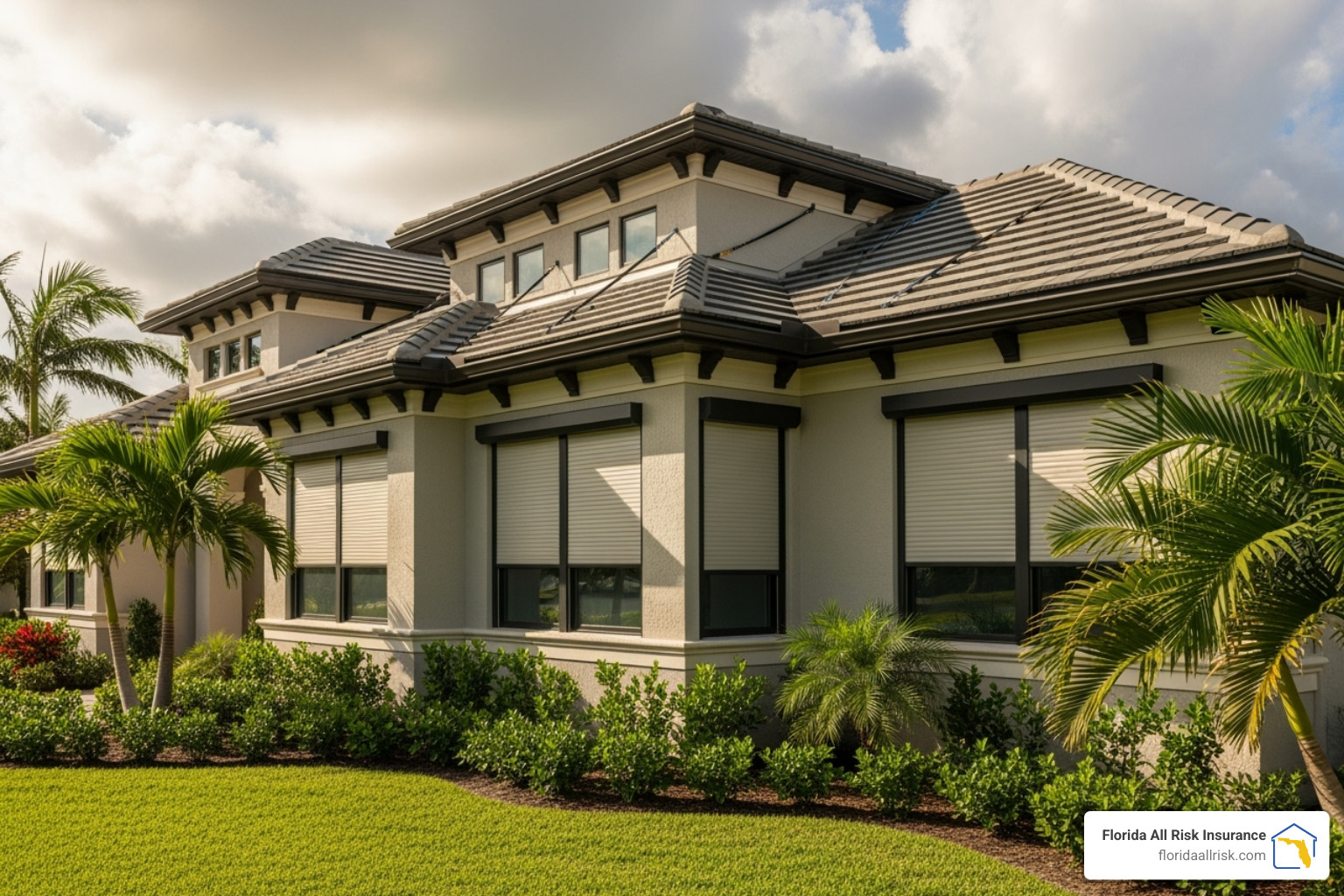
In Florida, a wind mitigation inspection is the single most effective way to lower your premium. A certified inspector evaluates your home’s wind-resistant features and provides an official OIR-B1-1802 form for your insurer. The more features your home has to combat high winds, the larger the discounts you’ll receive. These credits are mandated by state law. Key features that earn substantial discounts include:
- Roof Shape: A hip roof, which slopes down on all four sides like a pyramid, is far more aerodynamic and wind-resistant than a flat or gable roof (which has two sloped sides forming a triangle). This feature alone can result in a major credit.
- Roof Deck Attachment: This refers to how securely the roof sheathing (the plywood layer) is nailed to the roof trusses. Longer nails with closer spacing create a much stronger roof.
- Roof-to-Wall Connections: This is a critical feature. The presence of metal hurricane clips or straps that anchor the roof structure to the walls can prevent the roof from lifting off during a storm.
- Secondary Water Resistance (SWR): This is a sealed underlayment, essentially a self-adhering membrane applied directly to the roof deck. If shingles are blown off, this SWR layer prevents water from pouring into your attic.
- Opening Protection: This refers to protecting your windows and doors. The best protection comes from impact-resistant (hurricane-rated) glass. The next best is having rated and properly installed hurricane shutters for all openings. This is one of the largest available credits.
You can find more information on these features at the Florida Division of Emergency Management{:target=”_blank”}.
Open uping Available Home Insurance Discounts
Beyond wind mitigation, insurers offer a variety of other discounts. It’s your agent’s job to find them, but it never hurts to ask directly if you qualify for these common savings opportunities:
- Bundling (Multi-Policy): Combining your home and auto policies with the same insurer is one of the easiest and most significant discounts available.
- Protective Devices: Having a centrally monitored security and fire alarm system reduces the risk of theft and fire, earning you a lower rate.
- New Home Discount: Homes built within the last few years adhere to the strictest building codes and are considered lower risk.
- Claims-Free History: If you haven’t filed a claim in the past three to five years, many companies will reward you with a discount.
- Loyalty Discount: Sticking with the same insurer for multiple years can often lead to savings.
- Senior/Retiree Discount: Many insurers offer discounts for homeowners aged 55 and older, which can save over $170 annually in Spring Hill.
- Gated Community: Living in a secured, gated community can sometimes provide a small discount.
Finding Your Insurance Partner in Spring Hill
Shopping for home insurance spring hill fl coverage isn’t like buying a car or an appliance. You can’t test it out beforehand. You are buying a promise—a promise that if disaster strikes, the company you chose will be there with the financial resources and customer service to help you rebuild your life. That’s why choosing the right insurance partner is one of the most important financial decisions you’ll make as a homeowner.
Independent Agencies: Your Advocate in the Insurance Market
Not all insurance agents are created equal. Some are “captive” agents, meaning they work for a single company (like State Farm or Allstate) and can only offer that company’s products. Independent agents, on the other hand, are like personal shoppers for insurance. They contract with multiple insurance carriers, which provides two crucial advantages for you:
- Choice and Competition: An independent agent shops the market on your behalf, gathering quotes from numerous companies to find the best combination of coverage, service, and price for your specific needs and budget.
- Advocacy and Unbiased Advice: Because they don’t work for any single insurance company, their loyalty is to you, the client. They provide objective advice and can act as your advocate, especially during the stressful claims process.
This personalized service and expert guidance is invaluable in navigating the complexities of the modern Florida insurance market. For additional unbiased information, you can always get objective insurance information from the Insurance Information Institute{:target=”_blank”}.
How to Vet Your Insurance Company
Before you sign a policy, it’s wise to do a quick check-up on the insurance carrier itself. A great price is meaningless if the company isn’t financially stable enough to pay claims after a major hurricane. Look for two key indicators:
- Financial Strength Rating: Check the company’s rating from independent agencies like A.M. Best or Demotech. Demotech is particularly important in Florida, as they rate many of the state-specific carriers. A high rating (e.g., “A” for Exceptional) indicates a strong ability to meet policyholder obligations.
- Customer Service and Complaint Data: The Florida Office of Insurance Regulation (FLOIR) maintains a database of consumer complaints against insurance companies. A high complaint index relative to its market share can be a red flag.
Understanding the Claims Process
While you hope to never file a claim, knowing the process beforehand can reduce stress during a difficult time.
- Report the Claim Promptly: As soon as it is safe, contact your insurance company or agent to report the damage. Have your policy number ready.
- Mitigate Further Damage: Take reasonable steps to protect your property from further harm, such as putting a tarp over a damaged roof or boarding up a broken window. Keep all receipts for these temporary repairs.
- Document Everything: This is critical. Take extensive photos and videos of all damage before you move or discard anything. Create a detailed list of damaged items. Pro Tip: Create a home inventory before a disaster strikes. A simple video walkthrough of your home, narrating what you own, can be invaluable.
- Work with the Adjuster: An insurance adjuster will be assigned to your case to inspect the property and assess the damage. Be present for the inspection to point out all damaged areas and ensure nothing is missed.
- Communicate and Keep Records: Stay in touch with your agent and adjuster. Keep a log of every conversation, including the date, time, and what was discussed. Don’t hesitate to ask questions if you don’t understand part of the process. A good insurance partner will keep you informed every step of the way.
Securing Your Spring Hill Home with the Right Protection
After walking through everything from the four pillars of a standard policy to the nuances of Florida’s challenging insurance landscape, one thing should be crystal clear: protecting your home insurance spring hill fl investment is not a one-size-fits-all proposition. Your Spring Hill home faces a specific combination of hurricane, flood, and sinkhole risks that a generic, cookie-cutter policy simply cannot address effectively.
Too often, homeowners find these critical coverage gaps only after a loss occurs, when it’s too late. The key to true security is proactive risk management. Understanding the immense value of a wind mitigation inspection, knowing the age and condition of your roof, and recognizing the need for separate flood and sinkhole policies are your best defenses. These steps not only make your home more resilient but can also lead to significant and well-deserved premium savings.
This is where the value of expert, local guidance becomes invaluable. An experienced independent agent doesn’t just sell you a policy and disappear. We help you steer the intricate dance between hurricane deductibles, flood zones, Ordinance or Law requirements, and wind mitigation credits. At Florida All Risk Insurance, we pride ourselves on being that dedicated partner for families in Spring Hill and across the state. We translate confusing insurance jargon into plain English, check the financial stability of the carriers we recommend, and help you make confident decisions to protect your most valuable asset.
Take the Next Step
Your home represents so much more than just a financial investment – it’s where your family creates memories, where you feel safe, and where you’ve built your life. Protecting it from the unexpected isn’t something you want to leave to chance or handle with a bare-minimum policy that could leave you financially exposed.
Don’t wait for a storm to form in the Gulf or for a renewal notice with a shocking price increase to reveal gaps in your protection. The time to act is now, while you can make thoughtful, unhurried decisions. We’re ready to provide a personalized assessment of your needs and guide you through securing the right protection for your unique Spring Hill home.
Get a comprehensive Florida homeowners insurance quote today and take the first step toward true peace of mind.
Contact Us
Ready to protect what matters most? Our team at Florida All Risk Insurance is here to help you steer your home insurance spring hill fl options. We provide honest guidance to ensure your family and property have the comprehensive protection they deserve.
Florida All Risk Insurance
Address: Saint Petersburg, FL
Phone: (727) 306-0306
Email: [email protected]

