

Why St. Petersburg Homeowners Insurance Coverage Requires Local Expertise
St. Petersburg homeowners insurance coverage is essential for protecting your home in one of Florida’s most beautiful coastal cities. Understanding your insurance options is key to securing the right protection against hurricanes, floods, and other local risks without overpaying.
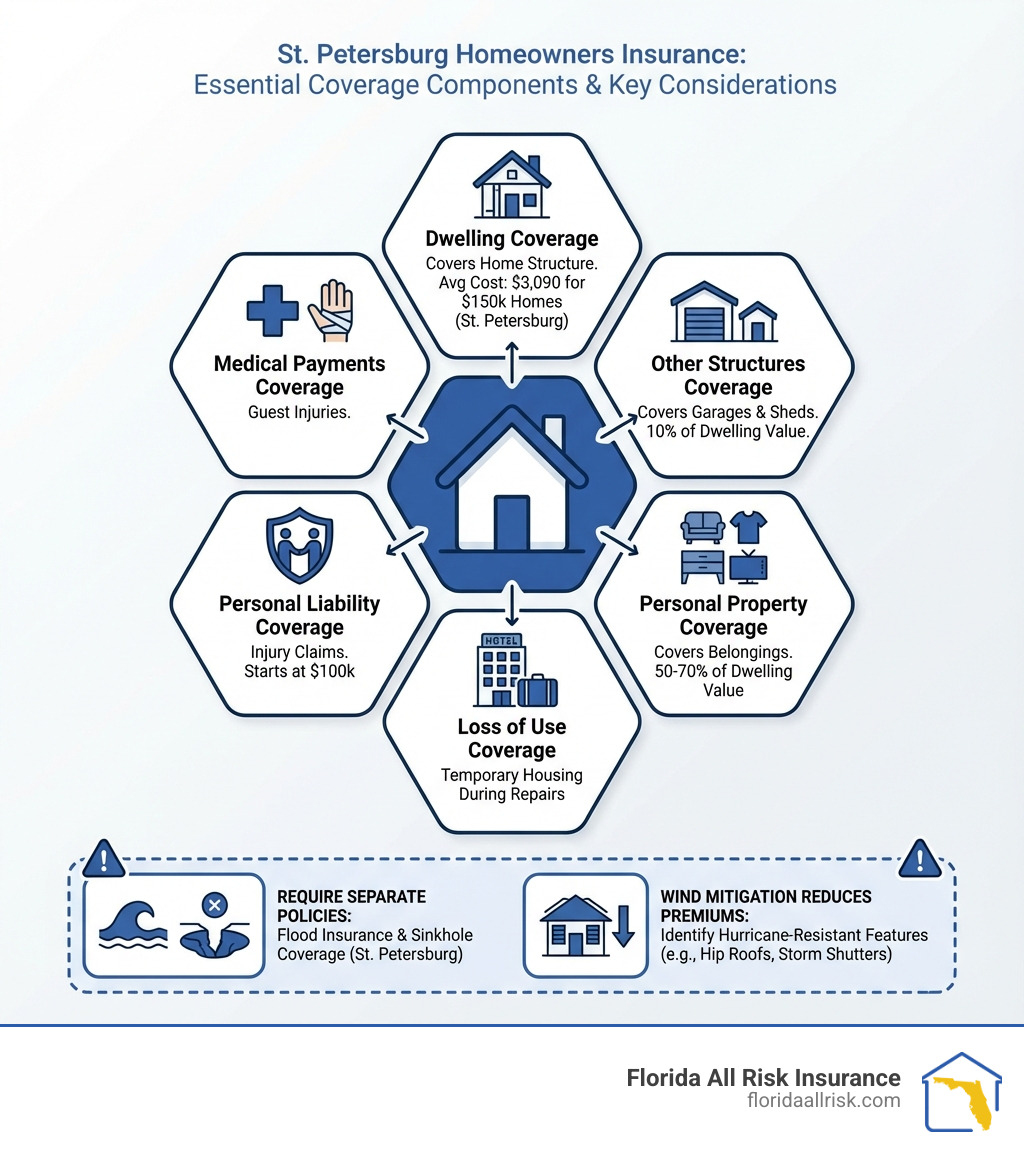
A standard St. Petersburg homeowners insurance policy typically includes these core protections:
- Dwelling Coverage (Coverage A) – Protects your home’s structure from perils like fire and windstorms.
- Other Structures (Coverage B) – Covers detached garages, sheds, and fences.
- Personal Property (Coverage C) – Replaces belongings like furniture, clothing, and electronics.
- Loss of Use (Coverage D) – Pays for temporary housing if your home becomes uninhabitable.
- Personal Liability (Coverage E) – Protects you financially if someone is injured on your property.
- Medical Payments (Coverage F) – Covers minor medical bills for guests injured at your home.
Important Note: Standard policies do not cover flood damage or broader sinkhole losses in St. Petersburg; these typically require separate policies or endorsements.
St. Petersburg’s unique location on the Gulf of Mexico brings both beautiful weather and significant insurance challenges. The average homeowner here often pays more than the national average for coverage, with rates influenced by hurricane exposure, coastal flooding risk, and strict building code requirements. Your actual cost will depend on your home’s age, construction type, roof condition, and wind mitigation features.
The local insurance market has been volatile in recent years, making it important to balance comprehensive protection with manageable premiums. For over 20 years, the team at Florida All Risk Insurance has helped homeowners navigate the specific challenges of insuring coastal properties in Pinellas County. They specialize in finding comprehensive St. Petersburg homeowners insurance coverage and identifying discounts that can meaningfully reduce annual costs.
In this guide, you’ll learn how St. Petersburg’s coastal risks affect your coverage, what a standard policy includes (and excludes), how deductibles and building features influence your premium, and how to choose the right policy and provider.
Understanding the St. Petersburg Home Insurance Landscape
St. Petersburg, often called “The Sunshine City,” is a vibrant coastal community on the Gulf of Mexico. While the area offers an exceptional lifestyle, this setting also comes with unique risks that significantly affect St. Petersburg homeowners insurance coverage. The combination of hurricane exposure, storm surge potential, and dense development makes robust coverage especially important.
Why Home Insurance Is More Expensive in St. Petersburg
Florida consistently ranks among the most expensive states for homeowners insurance, and St. Petersburg reflects that trend. Several local factors contribute to higher costs:
- Coastal Location and Hurricane Vulnerability: Proximity to the Gulf of Mexico creates a meaningful risk of hurricanes and tropical storms. The possibility of severe wind and storm surge is a key driver of higher premiums.
- Higher Rebuilding Costs: Building materials and labor in coastal Florida can be more expensive, in part because homes must meet strict building codes designed to withstand strong winds. Rebuilding a damaged home to current standards can cost significantly more than older construction.
- Insurance Market Volatility: Florida’s property insurance market has faced pressure from multiple active storm seasons and rising reinsurance costs. Some carriers have reduced their presence or tightened underwriting guidelines, which can limit options and increase rates.
- Crime Considerations: St. Petersburg’s crime rate is modestly higher than the national average. While this factor typically has less impact than wind or flood risk, it can influence premiums because homeowners insurance often covers theft and vandalism.
Understanding these factors helps explain why strong St. Petersburg homeowners insurance coverage is an important part of long-term financial planning.
The Average Cost of Homeowners Insurance in St. Petersburg
Insurance costs in St. Petersburg vary widely based on the size of the home, its construction, and its distance from the coastline. One of the biggest drivers of premium is dwelling coverage, which reflects the estimated cost to rebuild your home.
Here’s how typical dwelling coverage amounts can affect average annual premiums in St. Petersburg:
| Dwelling Coverage Amount | Approximate Average Annual Premium in St. Petersburg |
|---|---|
| $150,000 | $3,090 |
| $300,000 | $5,340 |
| $450,000 | $7,065 |
Note: These figures are illustrative averages and can vary based on property characteristics, insurer, coverage details, and available discounts.
Because every home and household is different, it’s important to request personalized quotes rather than relying on averages alone. Evaluating multiple policy options can help you balance coverage levels and cost more effectively.
Decoding Your St. Petersburg Homeowners Insurance Policy
A homeowners insurance policy can seem complex at first glance, but understanding its structure is the best way to confirm you have adequate St. Petersburg homeowners insurance coverage. Most standard policies in Florida are HO-3 policies, which provide broad protection for your home’s structure, personal belongings, and liability.
When reviewing a policy, pay particular attention to:
- Coverage limits: The maximum amount your insurer will pay for a covered loss.
- Exclusions: Specific types of damage or events that are not covered.
- Endorsements (riders): Optional add-ons that provide extra protection for certain risks.
Core Coverage Types Explained
A typical St. Petersburg homeowners policy includes several key components:
-
Dwelling Coverage (Coverage A):
Protects the physical structure of your home (foundation, walls, roof, built-in fixtures) against covered perils such as fire, wind, and vandalism. It’s usually recommended to insure your home for its full replacement cost, not its market value, to ensure you can rebuild after a major loss. -
Other Structures (Coverage B):
Covers structures that are detached from your main home, such as a detached garage, shed, or fence. This coverage is often set at 10% of your dwelling limit by default but can typically be adjusted if you have substantial detached structures. -
Personal Property (Coverage C):
Protects your belongings, including furniture, clothing, appliances, and electronics, whether they’re in your home or temporarily off-premises. Coverage usually ranges from 50% to 70% of your dwelling limit. High-value items like jewelry, collectibles, or fine art may need separate scheduling or an endorsement to be covered for their full value. -
Loss of Use (Coverage D):
Also known as Additional Living Expenses (ALE), this coverage pays for reasonable extra costs if a covered loss makes your home uninhabitable. This can include hotel stays, short-term rentals, additional food costs, and other necessary living expenses while your home is being repaired or rebuilt. -
Personal Liability (Coverage E):
Provides financial protection if you are found legally responsible for bodily injury or property damage to others. It generally covers legal defense costs and settlements or judgments, up to your policy limit. Many experts recommend at least $300,000 in liability coverage, and higher limits or an umbrella policy may be appropriate for some households. -
Medical Payments (Coverage F):
Covers minor medical expenses for guests who are injured at your home, regardless of fault. Limits are typically in the $1,000 to $5,000 range and are designed to resolve smaller incidents quickly.
Replacement Cost vs. Actual Cash Value
How your St. Petersburg homeowners insurance coverage pays for a loss can be just as important as the coverage limit. Two common valuation methods are:
-
Replacement Cost Value (RCV):
Pays the cost to repair or replace damaged property with new items of similar kind and quality, without deducting for depreciation. This provides more robust protection and is generally recommended for dwelling coverage in hurricane-prone areas. -
Actual Cash Value (ACV):
Pays to repair or replace property minus depreciation for age and wear. While ACV policies often have lower premiums, they can leave you responsible for a sizable portion of rebuilding or replacement costs.
Many homeowners choose RCV for both the dwelling and personal property when available. It’s important to confirm how your policy treats these items and consider endorsements that upgrade personal property from ACV to RCV where allowed.
The Role of Deductibles in Your Policy
Your deductible is the amount you pay out of pocket before insurance benefits begin. In Florida, policies often include two distinct deductibles:
-
Standard (All-Perils) Deductible:
A flat dollar amount (for example, $1,000 or $2,500) that applies to most covered losses like fire, theft, or non-hurricane wind damage, depending on the policy. -
Hurricane Deductible:
A separate, usually higher deductible that applies to damage from named hurricanes. This is commonly expressed as a percentage of your dwelling limit (e.g., 2% or 5%). On a home insured for $300,000, a 2% hurricane deductible means you would pay the first $6,000 of covered hurricane damage.
Choosing a higher deductible generally lowers your premium, but it’s important to select an amount you could realistically afford in an emergency. Reviewing different deductible options with an agent can help you find a good balance between lower premiums and manageable out-of-pocket costs.
Navigating St. Petersburg’s Unique Risks: A Guide to Your Coverage
Living in St. Petersburg means your home is exposed to specific natural hazards that should be considered carefully when structuring your St. Petersburg homeowners insurance coverage. The city’s position between Tampa Bay and the Gulf of Mexico creates a combination of wind, surge, and rainfall risks that differ from inland communities.
Does Homeowners Insurance in St. Petersburg Cover Hurricane Damage?
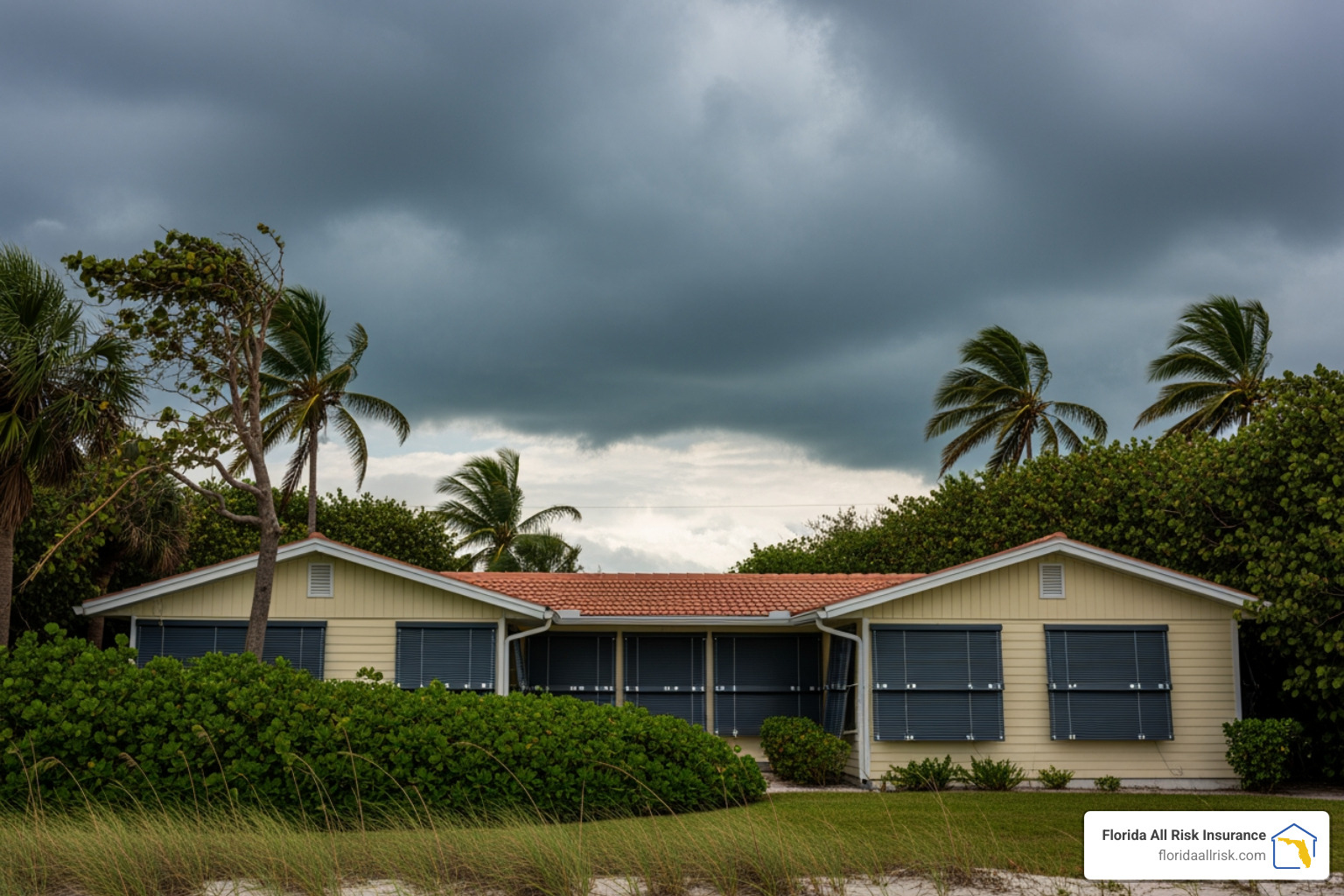
Most standard Florida homeowners policies include coverage for wind damage from hurricanes, often referred to as windstorm coverage. However, several important details affect how that coverage applies:
- Hurricane Deductibles: Damage caused by a named hurricane is usually subject to a separate, percentage-based deductible, which is higher than the standard deductible. Understanding when the hurricane deductible applies, and how much it is in dollar terms, is essential.
- What’s Typically Covered: Windstorm coverage usually applies to damage caused directly by hurricane-force winds. This can include roof damage, broken windows, and structural harm from wind or wind-driven debris. Personal belongings inside the home that are damaged by wind or rain entering through a wind-damaged opening are often covered as well.
- What’s Not Covered (Flooding): Standard homeowners policies do not cover damage from rising water, including storm surge, tidal flooding, or heavy rainfall that leads to standing water. Even if the flooding is associated with a hurricane, this type of loss requires a separate flood insurance policy.
Reviewing your individual policy and declarations page is the best way to confirm how hurricane and windstorm coverage apply to your home.
Understanding Your Need for St. Petersburg Flood Insurance Coverage
Given St. Petersburg’s waterfront setting and low-lying areas, flood insurance is an essential consideration for many homeowners. Without it, damage from storm surge or heavy rainfall that causes flooding is not covered under a traditional homeowners policy.
Key points to know:
- Flood Risk: Many neighborhoods in and around St. Petersburg are part of FEMA-designated flood zones. Even properties outside the highest-risk zones can experience flooding during significant storm events. According to federal data, a notable share of flood claims comes from outside the areas considered highest risk.
- Lender Requirements: If your home is in a high-risk flood zone and you have a mortgage from a federally regulated or insured lender, you are typically required to carry flood insurance.
- Where to Get Coverage: Flood insurance is available through the National Flood Insurance Program (NFIP) and an expanding private flood market. Private policies may offer higher limits or additional coverage options, depending on the insurer.
For homeowners who want to explore broader context on flood risk and mapping, resources from agencies such as FEMA’s Flood Map Service Center and NOAA’s sea level and coastal flooding information can be useful.
What About Sinkholes and Other Local Risks?
In addition to hurricanes and floods, St. Petersburg homeowners should be aware of several other risks:
-
Sinkholes: Florida’s underlying limestone geology makes it susceptible to sinkholes. Standard policies generally only cover “catastrophic ground cover collapse,” which is narrowly defined and requires severe structural damage that renders the home uninhabitable. To obtain broader protection for sinkhole activity that does not meet this threshold, you typically need a sinkhole loss coverage endorsement if available from your carrier.
-
Theft and Vandalism: Like most cities, St. Petersburg experiences some level of property crime. Fortunately, most homeowners policies provide coverage for losses from theft and vandalism, subject to your deductible and policy limits. Taking practical steps—such as installing deadbolts, alarm systems, or security cameras—can help reduce risk and may qualify you for discounts.
-
Water Damage (Non-Flood): Not all water-related losses fall under flood coverage. Leaky pipes, appliance failures, or sudden discharge from plumbing can be covered under a homeowners policy, depending on the cause and how promptly the damage is addressed. Slow leaks or long-term maintenance issues are more likely to be excluded.
Reviewing these risks with a knowledgeable local agent can help you choose the right endorsements and coverage levels for your specific home and neighborhood.
Key Factors That Influence Your St. Petersburg Homeowners Insurance Coverage and Costs
The cost of your St. Petersburg homeowners insurance coverage is determined by an underwriting process that weighs many different risk factors. Understanding these influences can help you make informed decisions about home improvements, policy options, and potential savings.
How Wind Mitigation Can Lower Your Rates
In St. Petersburg, wind mitigation is one of the most effective strategies for reducing homeowners insurance premiums. A wind mitigation inspection evaluates features of your home that make it more resistant to high winds and wind-driven rain.
Key wind mitigation features include:
- Roof Shape: Hip roofs (which slope down on all four sides) tend to withstand high winds better than gable roofs and often receive more favorable rating credits.
- Roof-to-Wall Connections: Stronger connections—such as clips, straps, or other reinforced fasteners—help keep the roof attached to the walls and can significantly improve your home’s wind resistance.
- Roof Deck Attachment and Secondary Water Resistance (SWR): The way your roof decking is attached and whether there is a sealed roof deck or secondary water barrier can reduce the likelihood of water intrusion if shingles are damaged.
- Opening Protection: Impact-resistant windows and doors, or properly installed hurricane shutters, are critical for preventing wind and debris from breaching the building envelope.
Homes built to more recent building codes, particularly those constructed after the early 2000s, often incorporate many of these features by default. A certified wind mitigation inspection documents them, and insurers may offer substantial premium reductions when these features are present.
The Impact of Your Home’s Age, Condition, and Location
Other major rating factors include:
- Age of the Home and Roof: Newer homes, and especially newer roofs, are generally less prone to damage and often qualify for lower rates. Conversely, roofs approaching or exceeding their expected service life can lead to higher premiums or coverage limitations.
- Construction Type: Masonry or concrete block construction is often viewed more favorably than wood-frame construction in high-wind regions because of its resistance to wind and fire.
- Claims History: Both your personal claims history and the property’s prior losses play a role. Multiple recent claims can increase rates or trigger higher deductibles.
- Location Details: Your specific neighborhood, distance from open water, elevation, and proximity to fire services and hydrants can all affect premiums.
How to Save Money on Your St. Petersburg Homeowners Insurance Coverage
There are several practical steps you can take to manage the cost of your St. Petersburg homeowners insurance coverage without sacrificing essential protection:
- Bundle Home and Auto Insurance: Carrying both policies with the same provider often qualifies you for a multi-policy discount. Florida All Risk Insurance can help you compare St. Petersburg auto insurance quotes to see how bundling affects your overall costs.
- Increase Your Deductible (Carefully): Opting for a higher deductible can reduce your annual premium. Ensure you keep an emergency fund that would allow you to pay this amount comfortably if you needed to file a claim.
- Install Safety and Security Devices: Monitored security systems, smoke detectors, fire extinguishers, and smart water-leak detectors may qualify you for safety-related discounts.
- Maintain Good Credit: In Florida, insurers may use credit-based insurance scores as one rating factor. Maintaining strong credit can help keep insurance costs in check.
- Perform Regular Maintenance: Proactive roof inspections, prompt repair of leaks, and upkeep of plumbing and electrical systems can reduce the likelihood of claims and may make your home more attractive to insurers.
- Shop Periodically and Review Annually: Because the insurance market changes over time, it can be helpful to review quotes and coverage options periodically. An annual policy review with an independent agent ensures your coverage still aligns with your needs and that you’re capturing any new discounts related to home upgrades.
For more detailed savings strategies, Florida All Risk Insurance maintains a dedicated resource on reducing premiums at https://floridaallrisk.com/save-on-homeowners-insurance/.
Finding the Right Policy and Provider in St. Petersburg
Finding the right St. Petersburg homeowners insurance coverage is about more than just selecting the lowest premium. It involves choosing a policy that fits your property, lifestyle, and risk tolerance, along with a provider that offers strong claims support and local understanding.
How to Get Reliable Quotes for St. Petersburg Homeowners Insurance Coverage
Working with an independent agency such as Florida All Risk Insurance is an efficient way to obtain reliable, comparable quotes from multiple carriers while receiving guidance tailored to your specific situation.
Here’s how the process typically works:
- Independent Access to Multiple Carriers: As an independent agency, Florida All Risk Insurance partners with numerous top-rated insurance companies. This allows them to present multiple quotes and policy structures side-by-side.
- Gathering Accurate Home Information: To prepare an accurate quote, an agent will ask for details about your property, such as its age, square footage, construction type, roof material and age, and any wind mitigation features. Providing a copy of your current policy’s declarations page can make this process quicker and more precise.
- Comparing Coverage, Not Just Price: A meaningful comparison goes beyond the annual premium. Reviewing coverage limits, deductibles, exclusions, and optional endorsements ensures that you are comparing similar protection levels rather than simply focusing on cost.
- Clarifying the Fine Print: Insurance documents can contain technical wording. An experienced agent can explain how different provisions apply in real-world scenarios, helping you feel more confident in your choices.
More information on working with local insurance professionals is available at https://floridaallrisk.com/insurance-agencies-in-st-petersburg-fl/.
What to Look for in a Homeowners Insurance Company
When evaluating potential insurers for your St. Petersburg homeowners insurance coverage, consider the following criteria:
- Financial Strength: Look for companies with solid financial ratings from independent rating organizations (for example, A.M. Best, Demotech, or similar entities). Strong ratings suggest that the insurer is well-positioned to pay claims following large-scale events.
- Customer Service and Claims Handling: A carrier’s reputation for responsive customer service and fair claims handling is critical. Reading consumer reviews, asking about average claim timelines, and speaking with a local agent about their experience can all provide insight.
- Experience in the Florida Market: Companies that understand Florida’s unique regulatory environment and weather-related risks are often better prepared to structure appropriate coverage and navigate post-storm claim surges.
- Ease of Access: Many homeowners appreciate having multiple ways to manage their policy—online account access, mobile apps, phone support, and local agency backing. This can be especially helpful when filing a claim after a storm.
To further support your research, Florida All Risk Insurance offers a broader overview of what to consider when evaluating home insurance in the state at https://floridaallrisk.com/best-homeowners-insurance-guide-2025/.
Conclusion: Securing Your Peace of Mind in the Sunshine City
Structuring the right St. Petersburg homeowners insurance coverage means bringing together several key elements: understanding your policy’s protections and exclusions, accounting for local hazards such as hurricanes and flooding, investing in wind-resistant features where practical, and partnering with an insurer that has both financial strength and local expertise.
By taking time to review your dwelling, personal property, and liability limits, you can better ensure that your coverage reflects current rebuilding costs and your household’s specific needs. Considering separate flood insurance and optional endorsements—such as sinkhole coverage when available—adds another layer of security in a region where water and ground conditions can change quickly.
Working with an experienced independent agency like Florida All Risk Insurance can make the process more straightforward. Their team can help you compare multiple carriers, walk through different deductible and coverage scenarios, and highlight practical steps you can take—such as wind mitigation improvements or safety upgrades—to manage premiums without leaving major risks uninsured.
If it has been more than a year since you last reviewed your homeowners policy, or if you’ve recently renovated, replaced your roof, or moved to a new neighborhood in St. Petersburg, this is an ideal time to revisit your coverage.
Ready to take the next step toward protecting your St. Petersburg home? Request a free, no-obligation homeowners insurance quote from Florida All Risk Insurance today and see how the right coverage can safeguard your property and budget.
Already insured but unsure whether your current policy is keeping up with local risks and rebuilding costs? Schedule a complimentary policy review with Florida All Risk Insurance and get personalized recommendations to strengthen your protection where it matters most.
Contact Us
Florida All Risk Insurance
7021 46th Ave N, Saint Petersburg, FL 33709
Phone: (727) 344-1600
Email: [email protected]

