High risk general liability insurance is crucial for business owners operating in industries like construction, food service, or agriculture, where the chance of accidents is higher. This specialized insurance protects you from lawsuits related to third-party bodily injuries and property damage. Often customized to meet the specific risks of your business, it ensures you’re not left financially stranded due to unexpected claims.
Key points to know:
- What is it? Specialized coverage for businesses with greater risk exposure.
- Why do you need it? To protect against expensive lawsuits from accidents and damages.
- Who needs it most? Businesses in high-risk sectors like construction or food service.
I’m Jason Miller, a second-generation insurance professional with over 20 years of experience, helping businesses in Florida steer the complexities of high risk general liability insurance. My expertise enables me to guide clients in finding the right protection to suit their unique needs.
High risk general liability insurance further reading:
– contractor liability insurance coverage
– general liability insurance irmi
– general risk insurance
Understanding High Risk General Liability Insurance
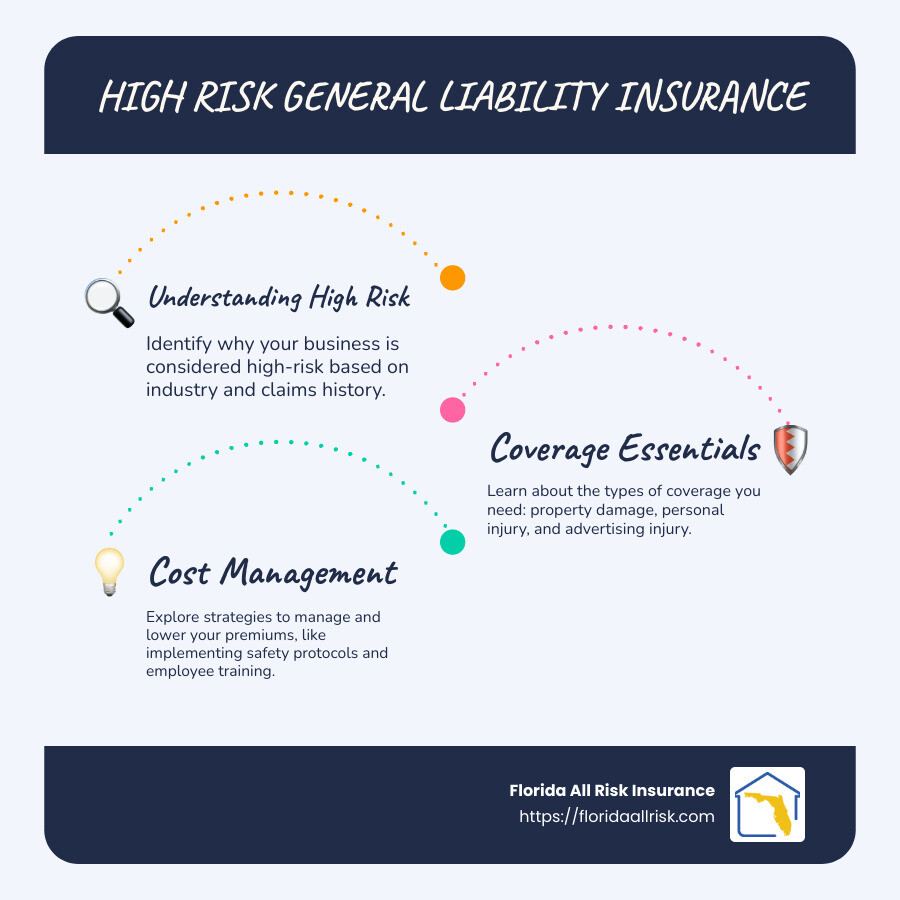
When you’re running a business, protecting it from potential lawsuits is crucial. High risk general liability insurance is a safety net for businesses that are more likely to face claims. But what makes a business “high risk”? And what exactly does this insurance cover?
What Constitutes High Risk?
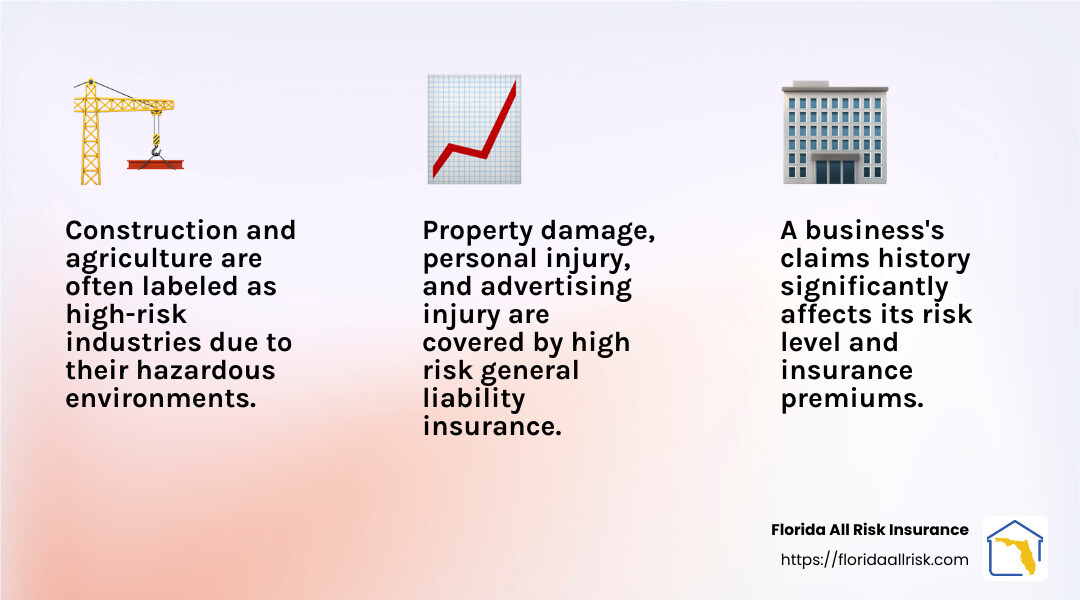
High-risk businesses are those that have a higher chance of facing lawsuits. This could be due to the nature of their operations, their claims history, or even the type of products they handle. For instance, industries like construction, agriculture, and food service often deal with volatile materials or hazardous environments, making them more prone to accidents.
Claims history plays a significant role in determining risk. Businesses with a history of frequent claims or serious incidents are often labeled as high risk. This history can drive premiums up, as insurers see a higher likelihood of future claims.
Business type is another factor. For example, a construction company is more likely to be considered high risk compared to a tech startup, simply due to the physical nature of its work.
Coverage and Protection
High risk general liability insurance offers protection against several types of claims:
-
Property Damage: If your business operations cause damage to someone else’s property, this insurance can cover the repair or replacement costs.
-
Personal Injury: This includes coverage for injuries that occur on your business premises or as a result of your business operations. It can cover medical expenses and legal fees if someone sues for injuries.
-
Advertising Injury: If your business is accused of slander, libel, or copyright infringement in your advertising, this insurance can help cover legal costs.
Without the right insurance, a single lawsuit can cripple a business financially. High risk general liability insurance ensures that you’re not left to bear these costs alone. It’s a vital layer of protection, especially in industries where the stakes are high.
Navigating high-risk insurance can be daunting. But with the right guidance and coverage, you can focus on what you do best—running your business.
Cost Factors and Premiums
When it comes to high risk general liability insurance, the cost is often a major concern for businesses. Premiums can vary widely based on several factors, but understanding these can help you manage and potentially reduce your costs.
Methods to Lower Premiums
Premium Variations: The cost of your insurance premium depends on how much risk your business represents to the insurer. Factors such as your industry, claims history, and even the location of your business can impact your premium. For example, a construction company in a busy urban area might pay more than one in a rural setting due to higher accident risks.
Risk Assessment: Insurers conduct thorough assessments to determine your business’s risk level. This includes evaluating past claims, the nature of your operations, and the safety measures you have in place. A business with a history of frequent claims is likely to face higher premiums. On the other hand, demonstrating a commitment to safety and risk management can work in your favor.
Cost-Saving Strategies: There are several strategies businesses can adopt to reduce their insurance premiums:
-
Implement Safety Protocols: Establishing and maintaining robust safety protocols can reduce the likelihood of accidents and claims. This not only protects your employees and customers but also shows insurers that you’re actively managing risks.
-
Employee Training: Regular training programs for employees can significantly lower risks. Well-trained staff are less likely to make mistakes that could lead to costly claims. Insurers often offer discounts to businesses that invest in comprehensive employee training.
-
Risk Management Practices: Conduct regular risk assessments and implement strategies to mitigate identified risks. This proactive approach can lead to lower premiums, as it demonstrates to insurers that you’re taking steps to minimize potential claims.
By focusing on these areas, businesses can not only lower their premiums but also create a safer, more efficient working environment. These efforts contribute to a positive claims history, which can further reduce premium costs over time.
While cutting costs is important, the key is to ensure that you’re not sacrificing necessary coverage. Balancing cost with adequate protection is crucial in safeguarding your business against potential liabilities.
Industries Often Considered High Risk
Some industries face more challenges than others when it comes to securing high risk general liability insurance. This is often due to the nature of their operations, which may involve complex processes, hazardous materials, or high-value products. Let’s explore some of these high-risk sectors.
Specific High-Risk Sectors
Manufacturing
Manufacturing businesses, particularly those dealing with heavy machinery or chemicals, are often seen as high-risk. The potential for workplace accidents is significant, and the products they produce can lead to liability claims if they malfunction or cause harm. For instance, structural steel fabricators face risks related to the precision and safety of their constructions.
Construction
The construction industry is inherently risky due to its intense nature. Workers handle heavy machinery and sharp tools, increasing the likelihood of accidents. Moreover, construction projects often involve significant financial investments, making them a target for claims. The industry’s dynamic environment, with ever-changing sites and conditions, further complicates risk management.
Transportation
Transportation companies must steer numerous risks, including vehicle accidents and cargo damage. The logistics involved in moving goods from one place to another add layers of complexity. High traffic areas and tight schedules can increase the chance of incidents, making insurance a critical component for these businesses.
Motor Vehicle Upfitters
Motor vehicle upfitters modify standard vehicles for specialized purposes. This customization can lead to unique risks, as alterations must meet safety standards and regulatory requirements. Any oversight can result in significant liability if the modified vehicles are involved in accidents.
Perfumes and Cosmetics
The perfumes and cosmetics industry faces risks related to product safety and consumer health. Any adverse reactions to products can lead to costly liability claims. The industry must adhere to strict regulations and maintain high standards of quality control to mitigate these risks.
Sports Goods
Producers of sports and athletic goods must ensure their products are safe for use. Equipment failures or defects can lead to injuries, prompting liability claims. The industry must balance innovation with safety, ensuring that new products meet rigorous testing standards before reaching consumers.
Each of these sectors presents unique challenges when it comes to obtaining high risk general liability insurance. Businesses must work closely with insurers to understand their specific risks and secure appropriate coverage. This often involves a detailed risk assessment and the implementation of robust safety protocols to minimize potential claims.
Frequently Asked Questions about High Risk General Liability Insurance
How much is $1,000,000 general liability?
The cost of a $1,000,000 general liability insurance policy can vary widely depending on several factors. For small businesses, the premium might range from $300 to $600 annually, while others might pay up to $1,000. The specific cost depends on the business’s risk factors, such as industry type and claims history. For instance, a business with a clean claims history might enjoy lower premiums compared to one with frequent claims.
Who is considered high-risk for insurance?
A business is typically considered high-risk for insurance if it operates in an industry prone to accidents or lawsuits. This includes sectors like construction, manufacturing, and transportation, where the likelihood of third-party bodily injury or property damage is higher. High-risk drivers, such as those with a history of traffic violations or accidents, also fall into this category. Insurers evaluate these risks based on past claims, the nature of the business activities, and overall safety practices.
What damages are covered by a CGL policy?
A Commercial General Liability (CGL) policy covers several types of damages:
-
Property Damage: This includes damage to a third party’s property due to the business’s operations. For example, if a contractor accidentally breaks a client’s window, the policy may cover the repair costs.
-
Personal Injury: CGL policies protect businesses from claims of non-physical harm, such as libel or slander. If an advertisement inadvertently defames an individual, the policy can help cover legal fees and settlements.
-
Advertising Injury: This is related to claims arising from marketing activities, including copyright infringement or false advertising. If a business’s promotional material leads to a lawsuit, the CGL policy may assist with the associated costs.
Understanding these coverages helps businesses manage their risks effectively and ensures they have the necessary protection against common liabilities.
Conclusion
At Florida All Risk Insurance, we understand that navigating the complexities of high risk general liability insurance can be daunting. That’s why we’re committed to providing comprehensive solutions custom to your specific needs. Our personalized service ensures that you receive the right coverage at competitive rates, no matter the industry you operate in.
As an independent agency based in St. Petersburg, Florida, we have access to a wide range of carriers. This allows us to offer custom coverage options that protect your business from potential liabilities, whether you’re in construction, manufacturing, or any other high-risk sector.
Our team of experts is here to help you understand your insurance needs and guide you through the process of securing the best possible protection for your business. We work closely with you to assess your risk factors and find ways to lower your premiums through safety protocols and risk management strategies.
For more information about how we can help safeguard your business with high risk general liability insurance, visit our General Liability Insurance page. Let us help you protect what matters most, so you can focus on growing your business with confidence.