

Group health insurance plans for self employed individuals are crucial in maintaining your health and financial security. Whether you’re a freelancer, entrepreneur, or gig worker, understanding how to access affordable health coverage can be vital. The Health Insurance Marketplace offers various options designed for those who work on their own.
- What are Group Health Insurance Plans for Self Employed?
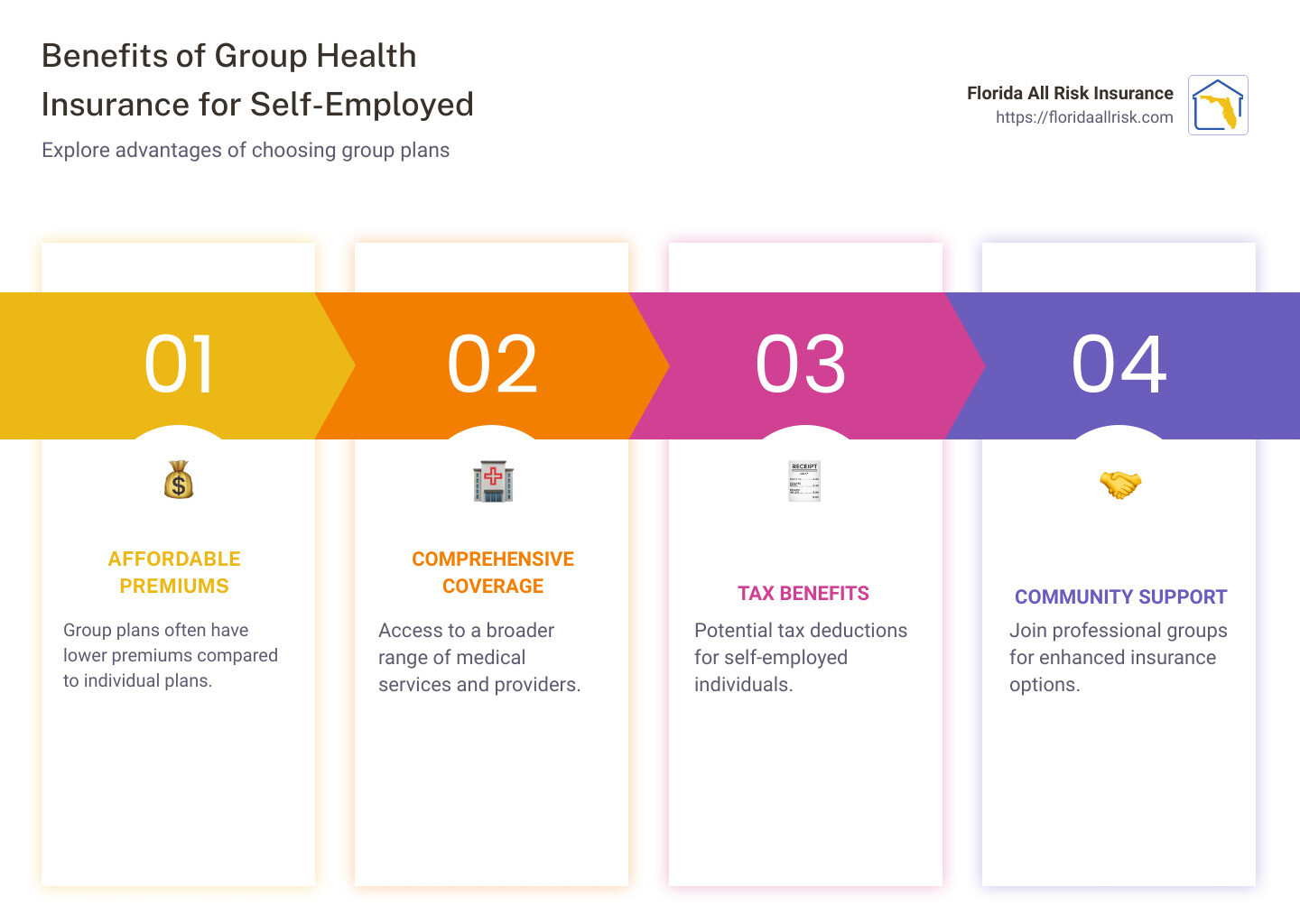
- Affordable coverage facilitated through groups or associations
- Potentially lower premiums compared to individual plans
- Access improved by self-insured plans through professional groups
As a self-employed Floridian, you’re not alone on this journey to secure optimal health insurance. I’m Jason Miller, a seasoned expert in insurance. With over 20 years in the industry and a legacy family background, I’m here to guide you through exploring group health insurance plans for self employed and ensuring you get the best coverage to meet your specific needs.
Understanding Group Health Insurance Plans
When you’re self-employed, finding the right health insurance can feel like a maze. Group health insurance plans might just be the map you need. These plans offer a way for individuals, like freelancers and entrepreneurs, to access affordable health coverage by joining a group or association.
Group Coverage
Group coverage is like buying in bulk. When a group of people comes together to purchase insurance, they often get better rates. This is because the risk is spread across many individuals, making it less risky for insurers. For the self-employed, joining a group plan through a professional association or union can mean lower premiums compared to buying an individual plan on the Marketplace.
Self-Insured Plans
Some groups or associations choose to be self-insured. This means they take on the risk themselves rather than going through a traditional insurance company. They collect premiums from members and use these funds to pay for members’ health care costs. While this can be a cost-saving measure, it requires careful management to ensure that there are enough funds to cover all claims.
Benefits of Group Health Insurance Plans
- Lower Costs: Group plans often have reduced premiums and out-of-pocket costs.
- Comprehensive Coverage: These plans typically cover essential health benefits like hospital stays, prescription drugs, and preventive services.
- Tax Advantages: Many self-employed individuals can deduct premiums from their taxes, reducing their overall tax burden.
- Stability: Being part of a group can provide more stable rates and coverage options year after year.

In Florida, Florida All Risk Insurance can help you steer these options, ensuring you find a plan that fits your health needs and budget. Whether you’re new to being self-employed or a seasoned pro, understanding group health insurance plans can be your key to staying healthy and financially secure.
Group Health Insurance Plans for the Self-Employed
When you’re self-employed, health insurance can seem daunting. But don’t worry—there are several options designed just for you. Let’s explore how group health insurance plans for self-employed individuals can work.
Individual Marketplace
The Individual Marketplace is a popular choice for many self-employed workers. It’s part of the Health Insurance Marketplace established by the Affordable Care Act (ACA). Here, you can find various plans categorized by metal levels: Bronze, Silver, Gold, and Platinum. Each level offers different balances between monthly premiums and out-of-pocket costs.
- Bronze Plans: Low monthly premiums, but higher deductibles.
- Silver Plans: Moderate premiums and deductibles. Eligible for Cost-Sharing Reductions (CSRs).
- Gold and Platinum Plans: Higher premiums but lower deductibles.
These plans cover essential health services, ensuring comprehensive care. You can enroll during the annual Open Enrollment Period or qualify for a Special Enrollment Period due to life events like marriage or the birth of a child.
SHOP Marketplace
If you’re a self-employed individual with at least one employee, consider the SHOP Marketplace. This platform is custom for small businesses and allows you to provide group health insurance for your employees. It’s a great way to attract talent and ensure your team is covered.
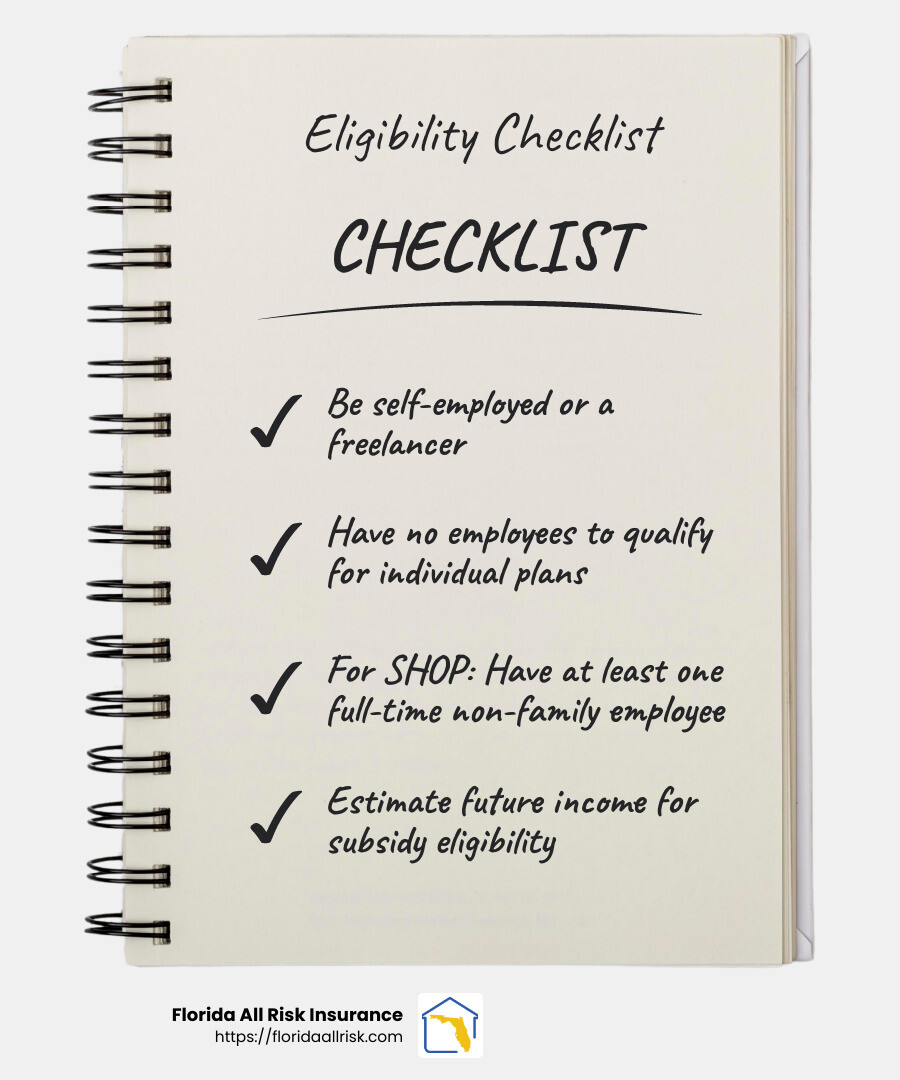
- Eligibility: You must have at least one full-time employee who is not a spouse or family member.
- Benefits: Access to a variety of plans and potential tax credits.
Eligibility
To qualify for these plans, you need to meet specific criteria:
- Self-Employed: You’re considered self-employed if you run a business or are a freelancer without any employees.
- Income Estimation: You’ll need to estimate your future income for the year to determine eligibility for subsidies or tax credits. It’s crucial to update your estimate if your income changes significantly.
Navigating through these options might seem complex, but with the right guidance, you can find a plan that suits your needs. Florida All Risk Insurance is here to assist you in understanding these choices and securing the best health coverage for your situation.
How to Choose the Right Plan
Choosing the right health insurance plan can feel overwhelming, but breaking it down makes it easier. Here’s how to find the best fit for you.
Plan Comparisons
When comparing health insurance plans, focus on the balance of costs—monthly premiums versus out-of-pocket expenses. Look at the plan’s network of doctors and hospitals. Make sure your preferred providers are included. Check if the plan covers the medications you need.
Metal Levels
The metal levels—Bronze, Silver, Gold, and Platinum—help you understand the cost structure of each plan:
- Bronze: Low premium, high deductible. Good if you don’t expect to need much care.
- Silver: Moderate premium and deductible. Eligible for Cost-Sharing Reductions (CSRs) if you qualify.
- Gold: Higher premium, lower deductible. Better if you need frequent care.
- Platinum: Highest premium, lowest deductible. Best if you have regular, high medical costs.
These levels let you choose a plan based on how you expect to use healthcare services.
Cost-Sharing
Cost-sharing includes deductibles, copayments, and coinsurance. It’s what you pay out-of-pocket when you get care. Lower cost-sharing means you’ll pay less when you need medical services but might have a higher monthly premium. Consider your healthcare needs and budget when deciding.
- Deductible: The amount you pay before your insurance kicks in.
- Copayment: A fixed fee you pay for specific services.
- Coinsurance: The percentage of costs you pay after meeting your deductible.
Example
If you rarely visit the doctor, a Bronze plan with lower premiums might save you money. But if you need regular visits or prescriptions, a Gold or Platinum plan could be more cost-effective in the long run.
Final Thoughts
Choosing the right plan requires weighing your healthcare needs against your budget. Florida All Risk Insurance can guide you through these choices, ensuring you find the best coverage for your lifestyle. Explore your options and make an informed decision to secure your health and peace of mind.
Now that you understand how to choose the right plan, let’s dive into the financial aspects and tax benefits that can make these plans more affordable.
Financial Considerations and Tax Benefits
When you’re self-employed, understanding the financial aspects of health insurance can help you save money and make smart choices.
Premium Tax Credits
If you’re buying insurance through the Marketplace, you might qualify for premium tax credits. These credits lower your monthly premium costs based on your income. To be eligible, your income needs to be between 100% and 400% of the federal poverty level. That if your income changes during the year, you should update your information on the Marketplace to avoid surprises when filing taxes.
Deductions
One big benefit for self-employed individuals is that you can deduct your health insurance premiums from your taxable income. This deduction applies if you have a net profit for the year, making it an “above-the-line” deduction. This means it reduces your adjusted gross income, which could lower your overall tax bill.
Subsidies
In addition to premium tax credits, you might be eligible for other subsidies like Cost-Sharing Reductions (CSRs). These are available if you choose a Silver plan and meet certain income criteria. CSRs help reduce out-of-pocket costs like deductibles and copayments, making healthcare more affordable.
Example Scenario
Imagine you’re a freelance graphic designer with a fluctuating income. By estimating your income for the upcoming year and applying for a Marketplace plan, you find that you’re eligible for both premium tax credits and cost-sharing reductions. This means you can choose a Silver plan with lower out-of-pocket costs while keeping your monthly premiums manageable.
Key Takeaway
Navigating the financial side of health insurance can be tricky, but understanding these benefits can ease the burden. Keep track of your income, explore available credits and deductions, and adjust your plan as needed. Florida All Risk Insurance is here to help you maximize these financial benefits, ensuring you get the best coverage without breaking the bank.
Next, let’s tackle some frequently asked questions about group health insurance plans for the self-employed.
Frequently Asked Questions about Group Health Insurance Plans for the Self-Employed
What’s the best health insurance for self-employed?
When you’re self-employed, finding the right health insurance can feel overwhelming. The best health insurance often offers comprehensive options custom to your unique needs. Look for plans that provide a good balance of premiums, deductibles, and coverage benefits.
Florida All Risk Insurance can help you steer these choices. They offer custom plans designed to fit your specific situation, making it easier to find coverage that meets your needs without unnecessary extras.
Can you write off health insurance if you are self-employed?
Yes, you can! If you’re self-employed, you can write off health insurance premiums as a tax deduction. This deduction is available if you have a net profit for the year, allowing you to reduce your taxable income.
This tax benefit is a significant advantage, as it lowers your overall tax bill. Just make sure to keep accurate records of your premiums and consult with a tax professional if needed.
How do self-employed people afford health insurance?
Affording health insurance as a self-employed individual can be challenging, but there are ways to manage costs effectively. One option is to purchase insurance through the Marketplace, where you might qualify for premium tax credits. These credits can significantly reduce your monthly premium costs based on your income level.
Additionally, exploring various plans and understanding the available subsidies, like Cost-Sharing Reductions (CSRs), can further decrease out-of-pocket expenses. By leveraging these financial aids, self-employed individuals can find affordable health coverage that doesn’t strain their budget.
In the next section, we’ll dive into more details on choosing the right group health insurance plan for your needs.
Conclusion
Navigating health insurance as a self-employed individual can be daunting, but Florida All Risk Insurance is here to make the process smoother and more personalized. We understand that every self-employed person has unique needs and circumstances, which is why we offer custom coverage options custom specifically to you.
Our approach is all about personalized service. We work closely with you to understand your specific health insurance requirements and financial situation. This allows us to craft a plan that not only meets your healthcare needs but also fits comfortably within your budget.
Whether you’re exploring options on the individual Marketplace or considering group health coverage, we offer guidance and support every step of the way. Our team is dedicated to helping you find the right balance between premiums, deductibles, and coverage benefits, ensuring you have the protection you need without unnecessary extras.
For more information on how Florida All Risk Insurance can help you with your health insurance needs, visit our Group Health Insurance Plans page. Let us help you find the coverage that gives you peace of mind and supports your journey as a self-employed professional.

