

Unpacking Group Health Insurance: A Core Guide
Ever wondered how group health insurance plans work? This question comes up often because these plans are a cornerstone of many employee benefit packages. In the simplest terms, group health insurance is a single policy an employer purchases to provide health coverage for employees and, frequently, their families.
Here’s a concise look at the mechanics:
- Employer Purchase – The company buys one policy that covers its entire team.
- Risk Pooling – The insurer spreads risk across the whole group, which usually means lower premiums than those found in individual markets.
- Shared Costs – Employers pay a large portion of the premium; employees typically contribute the rest with pre-tax dollars via payroll deduction.
- Coverage – Eligible employees and their dependents (spouses and children) are protected under the master contract.
- Claims – When a covered person receives medical care, the plan pays its share of the bill according to the policy terms.
What Is Group Health Insurance?
Group health insurance is a single health policy, or “master contract,” that covers a defined group of people—typically the employees of a company or members of an organization. The core principle is risk spreading: by insuring a large group instead of individuals, an insurer diversifies its exposure, usually resulting in lower, more stable premiums. According to the Kaiser Family Foundation, about half of all Americans receive health coverage through an employer.
The Purpose and History of Group Plans
Group health insurance became a fixture of employee benefits during World War II. Wage controls prevented employers from offering higher salaries, so they began providing health benefits to attract and retain workers. The strategy still makes sense today because it helps
- Attract and Retain Talent – A robust benefits package can be the deciding factor for top candidates.
- Boost Employee Well-being – Access to preventive and ongoing care reduces absenteeism and improves morale.
- Stay Competitive – Health benefits are now a standard component of compensation in most industries.
Group vs. Individual Health Insurance
While both provide medical coverage, group and individual plans differ in several important ways:
| Feature | Group Health Insurance | Individual Health Insurance |
|---|---|---|
| Purchaser | Employer or organization | Individual or family |
| Cost Sharing | Premiums often shared between employer and employee | Individual pays 100 % of premiums |
| Plan Selection | Employer selects plan(s); employees choose from those options | Individual chooses any plan available on or off the Marketplace |
| Portability | Generally tied to employment | Highly portable—remains with policyholder regardless of job |
| Enrollment Periods | Employer’s open-enrollment window or qualifying life events | Annual Open Enrollment or special enrollment events |
| Affordability | Usually lower premiums thanks to risk pooling and employer contributions | Can be higher, though subsidies may be available through the ACA Marketplace |
In 2023, for example, the average annual premium for employer-sponsored individual coverage was $8,435, with employees paying roughly 17 % of that cost.
How Group Health Insurance Plans Work: The Core Mechanics
Understanding how group health insurance plans work requires a grasp of how coverage is established, financed, and used. Everything begins with the master contract between the employer and the insurance carrier.

For employers, key responsibilities include selecting plans, contributing to premiums, managing enrollment, and ensuring legal compliance. For employees, the experience centers on enrolling during specific periods (open enrollment or after a qualifying life event), adding dependents, and using the plan. The group number on the insurance ID card identifies the specific policy, and staying in-network keeps costs down.
Types of Plans and Associated Costs
Understanding how group health insurance plans work also means knowing the different plan structures and the financial responsibilities involved. Each type offers a unique balance of flexibility, cost, and access to care.
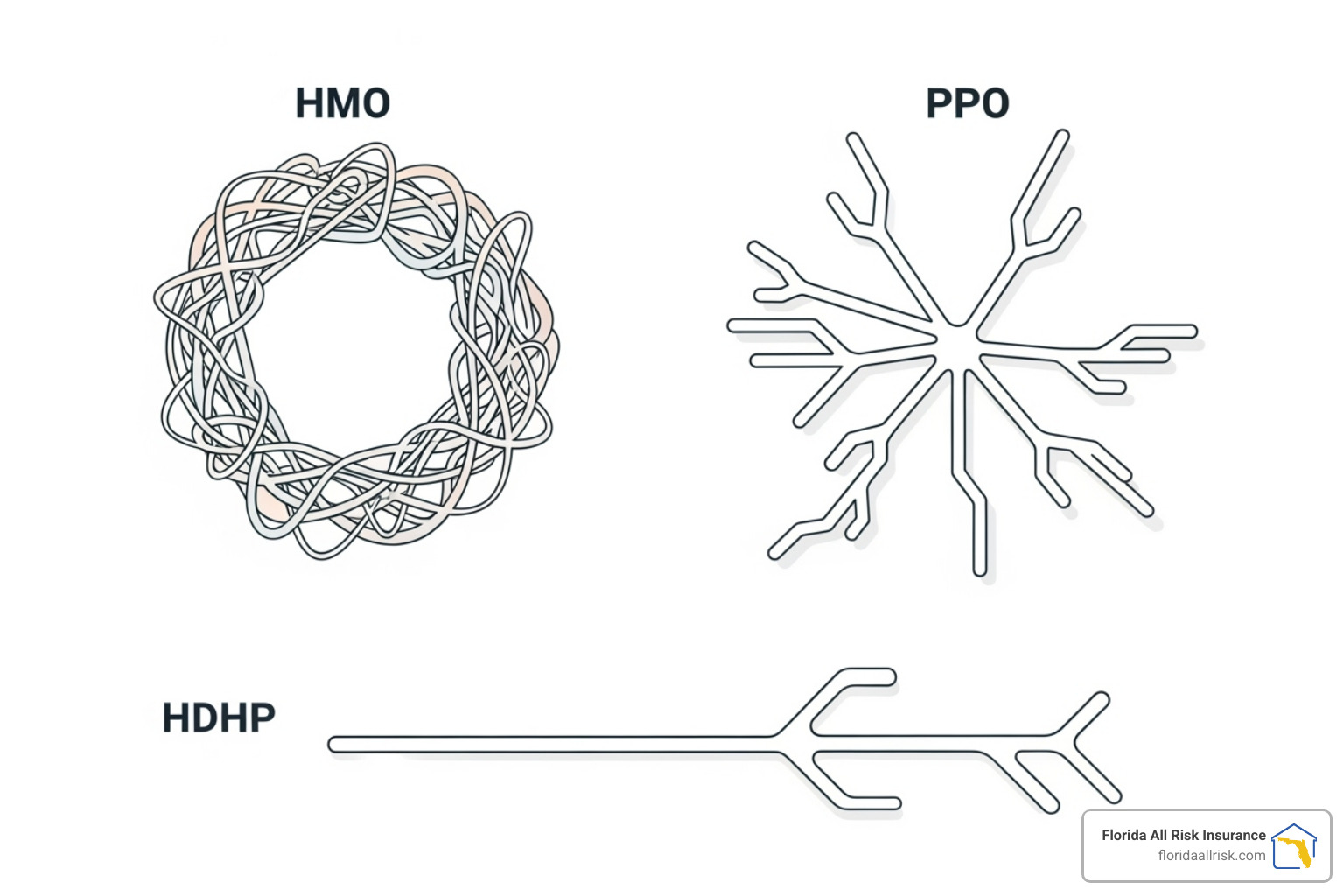
The objective is to find a solution that is both affordable for the company and valuable for the team.
Common Plan Types: HMO, PPO, POS, and More
Health insurance plans can feel like alphabet soup, but each type has a distinct approach to care:
- Health Maintenance Organization (HMO) – Typically lower premiums. Members choose a primary care physician (PCP) who coordinates care and provides referrals to specialists. Out-of-network care is usually not covered except in emergencies.
- Preferred Provider Organization (PPO) – Offers greater flexibility. Members can see specialists without referrals and may seek out-of-network care, although at a higher cost.
- Point of Service (POS) – A hybrid of HMO and PPO structures. Members pick a PCP and need referrals for in-network care but can seek out-of-network services for a higher fee.
- Exclusive Provider Organization (EPO) – Similar to a PPO in that referrals aren’t generally required, but like an HMO it rarely covers care received outside the network.
- High-Deductible Health Plan (HDHP) – Features a higher deductible in exchange for lower monthly premiums and can be paired with a Health Savings Account (HSA).
Understanding the Costs: Premiums, Deductibles, and Copayments
Beyond the monthly premium, several terms define out-of-pocket costs:
- Deductible – The amount you pay for covered services before the plan starts paying.
- Copayment (Copay) – A fixed dollar amount for specific services, such as a $30 office visit.
- Coinsurance – The percentage of costs you pay after meeting the deductible (e.g., 20 %).
- Out-of-Pocket Maximum – The most you can spend on covered care in a plan year; after that, the insurer pays 100 % of covered costs.
Key Benefits and Eligibility Requirements
When we discuss how do group health insurance plans work, the significant advantages for both employers and employees are a central theme. However, specific eligibility and participation rules also apply.

Benefits for Employers
For businesses, offering group health insurance is a strategic investment with tangible returns.
- Tax Advantages: Employer-paid premiums are generally tax-deductible. Small businesses with fewer than 25 employees may also qualify for the Small Business Health Care Tax Credit.
- Talent Management: A strong health plan helps attract top candidates and reduces employee turnover. This is a key part of protecting a business, much like General Liability insurance.
- A Healthier, More Productive Workforce: Access to preventive care and medical treatment keeps employees healthy, reducing sick days and boosting productivity.
Benefits for Employees
For employees, group health insurance is often the most affordable and accessible path to comprehensive coverage.
- Lower Costs: Risk pooling and employer contributions lead to lower premiums. Employee contributions are also typically made with pre-tax dollars, reducing taxable income.
- Better Coverage: Group plans often provide more comprehensive benefits and lower out-of-pocket costs than individual plans.
- Guaranteed Issue: Under the ACA, coverage cannot be denied or priced higher due to pre-existing conditions.
- Family Coverage: Employees can usually extend coverage to their spouses and children.
Who is Eligible and What are the Participation Requirements?
Eligibility generally depends on employment status and company size.
- Eligible Individuals: Coverage is typically offered to full-time employees (often 30+ hours/week) and their dependents (spouses and children up to age 26).
- Waiting Periods: New hires may have a waiting period (e.g., 30-90 days) before coverage begins.
- Participation Rate: Insurers often require a minimum percentage of eligible employees (e.g., 70%) to enroll to ensure a balanced risk pool.
- Employer Size: The ACA mandates that large employers (50+ employees) offer affordable coverage or face penalties. Small employers are generally not required to offer it, but it remains a highly beneficial tool.
Regulations and Modern Health Benefit Options
Understanding how group health insurance plans work also means recognizing the regulations that shape them and the modern tools that employers use to manage healthcare expenses.
The Affordable Care Act (ACA) and Its Impact
The Affordable Care Act of 2010 introduced several important provisions:
- Employer Mandate – Businesses with 50 or more full-time equivalent employees must offer affordable, minimum-value coverage or face penalties.
- Essential Health Benefits – Plans must cover a standardized set of services, including preventive care, maternity care, and prescription drugs.
- No Pre-existing Condition Exclusions – Insurers cannot deny coverage or charge more based on health history.
- SHOP Marketplace – The Small Business Health Options Program helps small businesses compare and purchase plans.
Health Savings Accounts (HSAs) and Health Reimbursement Arrangements (HRAs)
Tax-advantaged accounts can make out-of-pocket costs more manageable:
- Health Savings Accounts (HSAs) – Paired with an HDHP, HSAs allow employees to set aside pre-tax dollars for qualified medical expenses. Funds roll over year to year and belong to the employee.
- Health Reimbursement Arrangements (HRAs) – Employer-funded accounts that reimburse employees for eligible medical expenses on a tax-free basis. Unused balances typically remain with the employer if the employee leaves.
ERISA, COBRA, and HIPAA
Three additional federal laws provide critical protections:
- ERISA (Employee Retirement Income Security Act) – Sets minimum standards for reporting, disclosure, and fiduciary duties. More information is available from the U.S. Department of Labor.
- COBRA (Consolidated Omnibus Budget Reconciliation Act) – Allows certain employees and dependents to temporarily continue group health coverage after a qualifying event; details are outlined at HealthCare.gov.
- HIPAA (Health Insurance Portability and Accountability Act) – Protects patient privacy and limits exclusions for pre-existing conditions.
How to Choose the Right Group Health Plan for Your Business
Selecting a group health plan is a strategic decision that affects employee well-being, talent acquisition, and the company’s budget.

Assessing Employee Needs and Company Budget
Start by examining your workforce demographics. A younger team may prefer lower premiums and higher deductibles, whereas employees with families often value predictable copays and comprehensive networks. Anonymous surveys can surface the benefits most important to your staff.
Next, balance costs and benefits. A plan with premiums or deductibles that are too high for the team to afford will diminish the value of the benefit.
Comparing Plans and Working With a Professional
When comparing carrier options, pay attention to provider networks, cost-sharing structures (premiums, deductibles, copays, coinsurance), and coverage details such as mental-health services or preferred prescriptions.
Working with an independent insurance professional can simplify the process by helping you steer regulations, compare carriers, and streamline enrollment.
Conclusion
Group health insurance remains one of the most effective ways to promote employee wellness, manage healthcare costs, and maintain a competitive edge in the labor market. By pooling risk, sharing costs, and leveraging regulatory safeguards, employers and employees alike gain access to comprehensive, affordable coverage.
Ready to explore how a custom group health insurance plan could benefit your business and your team?
Get a quote for your Group Health Insurance plan
Contact Us
Florida All Risk Insurance
Saint Petersburg, FL 33701
Phone: (727) 555-0123
Email: [email protected]

