Understanding Business Protection: General Liability vs. E&O Insurance
As a small business owner, you’ve probably lost sleep wondering if you’re truly protected against the unexpected. I’ve sat across from countless Florida entrepreneurs who finded—often the hard way—that having the right insurance isn’t just a box to check; it’s the lifeline that can save everything you’ve built.
General liability errors and omissions insurance represents two powerful shields that protect your business from different threats. While they sound similar, they serve distinct purposes in your risk management strategy:
| Insurance Type | Protects Against | Starting Cost | Policy Form |
|---|---|---|---|
| General Liability | Bodily injury, property damage, advertising injury | ~$11/month | Occurrence-based |
| Errors & Omissions | Professional mistakes, negligence, inadequate work | ~$18.34/month | Claims-made |
Let me break this down with real-world scenarios. A contractor might face a lawsuit when a client trips over equipment left on-site (that’s where general liability comes in). Meanwhile, a financial advisor could be sued because their investment recommendation didn’t perform as projected (that’s when errors and omissions coverage becomes essential).
Without proper protection, these incidents could drain your bank account with legal fees starting at $250 per hour—even if you’ve done nothing wrong! Many small businesses simply can’t survive this financial blow.
Think of general liability as your shield against physical mishaps—someone getting hurt or property being damaged. E&O (also called professional liability) is your safety net for when your professional expertise is questioned or your work allegedly causes a client financial harm.
I’m Jason Miller, and after helping Florida businesses steer the complex world of general liability errors and omissions insurance for over 20 years, I’ve seen how the right coverage combination gives business owners something priceless: peace of mind to focus on growth rather than worry about potential lawsuits.

Here’s a quick reference to key terms you’ll encounter when exploring general liability errors and omissions insurance:
– Professional liability insurance for independent contractors protects freelancers from claims of negligence
– General risk insurance provides broad protection against common business hazards
– Public liability risk covers your responsibility to the general public
Why This Guide Matters
Whether you’re running a boutique shop in St. Petersburg, managing construction projects across Florida’s coastline, or offering specialized consulting services, understanding the difference between these policies isn’t just helpful—it’s essential for survival.
I’ve met too many Florida business owners who thought they were fully protected with just one policy, only to find painful gaps in coverage when facing a lawsuit. That moment of realization often comes too late, when they’re already staring at a demand letter or court summons.
This guide will help you understand which coverage you need—or if you need both—to create a safety net custom to your specific business risks. We’ll walk through real examples, compare costs, and help you make an informed decision that protects everything you’ve worked so hard to build.
What Is General Liability Insurance?
Think of general liability insurance as your business’s safety net for the physical world. It’s the policy that catches you when a customer trips over an extension cord or when your landscaping crew accidentally shatters a client’s prized garden statue.
This foundational coverage protects your business against the most common day-to-day risks: injuries to people who aren’t your employees, damage to other people’s property, and even claims that your advertising harmed someone else’s reputation.
“Most small businesses make general liability their first insurance purchase,” says Jason Miller of Florida All Risk Insurance. “It addresses the physical risks that virtually every business faces, regardless of industry.”
Your general liability errors and omissions insurance package typically includes protection for:
Bodily injury to non-employees – When a client visits your office and slips on a freshly mopped floor, breaking their wrist, your policy covers their medical bills, lost wages, and pain and suffering claims.
Property damage – If your employee accidentally knocks over and breaks an expensive vase while working in a customer’s home, your coverage steps in to make things right.
Advertising injury – Should your marketing materials unintentionally mimic a competitor’s campaign or violate copyright laws, you’re protected against claims of slander, libel, or intellectual property infringement.
Premises liability – Covers injuries that happen at your place of business, whether it’s a slip on icy steps or a falling sign that injures a passerby.
Completed operations – Even after you’ve finished a job, you’re covered if your work later causes damage or injury.
General liability policies operate on what’s called an “occurrence form.” This means they cover incidents that happen during the policy period, regardless of when someone files a claim. This long-tail protection continues even after your policy expires – a crucial benefit for businesses that might face delayed claims.
Typical Claims & Real-World Examples
Let’s look at how general liability errors and omissions insurance works in real situations:
Example 1: The Slip-and-Fall
A potential client visits your St. Petersburg office for a meeting. While walking through the lobby, they slip on a wet floor where your employee just mopped but forgot to place a warning sign. The visitor breaks their wrist and sues your business for medical expenses, lost wages, and pain and suffering. Your general liability policy would cover these costs up to your policy limits.
Example 2: Property Damage
A landscaper accidentally damages an expensive garden statue while mowing a client’s lawn. The general liability policy would cover the cost to replace the statue.
Example 3: Reputational Harm
Your marketing team creates an advertisement that unintentionally uses imagery similar to a competitor’s campaign. The competitor sues for copyright infringement, claiming your ad has damaged their brand reputation. General liability’s advertising injury coverage would protect you.

What Is Errors & Omissions (Professional Liability) Insurance?
While general liability handles physical mishaps, errors and omissions insurance (E&O) steps in when your expertise is questioned. Also known as professional liability insurance, E&O protects you when clients claim your professional advice or services caused them financial harm.
Think of it this way: if you’re a financial advisor and your investment recommendation loses a client money, or you’re an architect whose design requires costly modifications, general liability errors and omissions insurance becomes your financial shield.
“Errors and omissions liability coverage isn’t a maybe, but a must-have,” as one industry publication aptly puts it. For professionals who provide advice or specialized services, this coverage is just as essential as your business card.
E&O insurance brings several crucial protections to the table:
- Professional negligence coverage when clients claim your work fell short of industry standards
- Protection against bad advice claims if clients lose money following your recommendations
- Coverage for missed deadlines that cause clients financial losses
- Claims-made form structure that covers claims filed during the active policy period
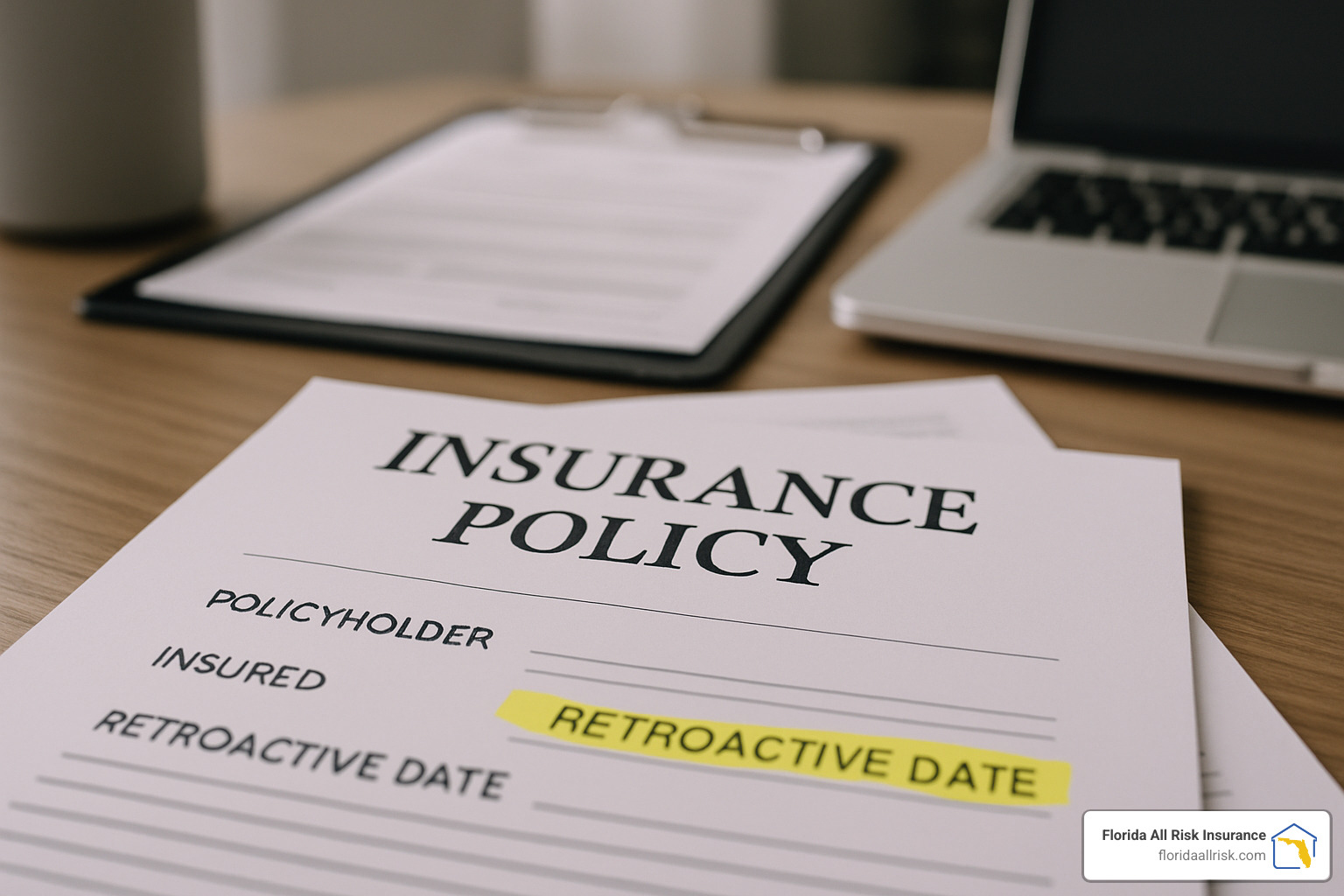
- Retroactive date protection that covers work done after a specific date, even years later
- Worldwide coverage that often extends to global work (provided claims are filed in the U.S.)
Unlike general liability’s “occurrence” basis, E&O policies typically operate on a “claims-made” basis. This means both the alleged mistake and the resulting claim must happen while your policy is active (or within your retroactive coverage period). This distinction is crucial when switching insurers or letting coverage lapse.
“Legal fees from an E&O claim can quickly eat up a company’s cash reserves, causing financial hardship—even if claims are ultimately dismissed,” notes an industry report. This makes E&O protection valuable even when you’ve done nothing wrong.
errors and omissions insurance (E&O)
Situations E&O Covers
Let’s walk through some real-world scenarios where E&O insurance proves its worth:
Imagine you’re an accountant who accidentally transposes numbers on a client’s tax return. This error results in penalties and additional taxes for your client, who promptly sues to recover these costs. Your E&O policy would cover your legal defense and any settlements.

Or consider an architectural firm that designs a commercial building. Months after construction, structural issues emerge requiring costly repairs. The building owner sues the firm for professional negligence. Without general liability errors and omissions insurance, specifically the E&O component, this firm would face potentially bankrupting expenses.
Real estate agents face similar risks. If an agent fails to disclose known property defects to a buyer who later finds these issues, a lawsuit claiming breach of professional duty often follows. E&O insurance steps in to protect the agent’s financial well-being.
What many professionals don’t realize is that E&O coverage extends beyond just settlements—it covers defense costs too. Even if allegations against you are completely groundless, legal fees alone can run into tens of thousands of dollars. Your E&O policy covers judgments, settlements, and those critical defense costs, allowing you to focus on your business rather than draining your savings on attorney fees.
A design flaw, a miscalculation, or a breach of professional duty—these human errors happen even to the most careful professionals. With proper E&O coverage, these mistakes become manageable business challenges rather than career-ending catastrophes.
General Liability Errors and Omissions Insurance: Key Differences & Similarities
When protecting your business, understanding the differences between general liability errors and omissions insurance is like knowing the difference between a life jacket and a helmet – both are essential safety equipment, but they protect you from very different dangers.
Let’s break it down in simple terms. General liability protects you from physical mishaps – like when someone trips over a cord in your office. Errors and omissions (E&O) insurance protects you from professional mistakes – like giving advice that costs your client money.
Here’s how they compare:
| Feature | General Liability | Errors & Omissions |
|---|---|---|
| Primary Coverage | Physical injuries, property damage | Financial losses from professional mistakes |
| Policy Trigger | Occurrence-based (when incident happens) | Claims-made (when claim is filed) |
| Coverage Period | Covers incidents during policy period, even if reported later | Requires both incident and claim during active policy (unless retroactive date applies) |
| Typical Limits | $1M per occurrence, $2M aggregate | $1M per claim, $1M aggregate |
| Common Exclusions | Professional errors, employee injuries | Bodily injury, property damage, intentional acts |
| Industry Focus | All businesses with physical locations or operations | Service professionals, consultants, advisors |
Think of general liability as protection against physical accidents – someone slips on your wet floor, you accidentally damage a client’s property, or your advertisement unintentionally copies a competitor’s campaign.
E&O, on the other hand, shields you when your professional work causes financial harm – like when an architect’s design flaw requires expensive corrections, or when a real estate agent fails to disclose important property information.
“While there is technically no coverage overlap between general liability and E&O, both respond to accidental events and legal expenses,” as one insurance expert puts it. This is precisely why many Florida businesses need both policies for complete protection.
General Liability Insurance for Small Business
Where the Policies Overlap on Costs
Though they cover different risks, both policies handle similar expenses when claims arise.
Defense Inside Limits is a term you’ll see in both policy types. This means your legal defense costs come out of your total coverage amount. For example, if you have a $1 million policy and spend $300,000 defending yourself, you’ll only have $700,000 left for any settlement.
Both policies also cover attorney fees, court costs, and expert witness expenses – which is incredibly valuable since legal defense often costs more than the actual settlement in professional liability cases.
Many client contracts require both policies with specific coverage amounts. Government contracts, for instance, might require $2 million in general liability and $1 million in E&O coverage just to bid on the project.
What Neither Policy Will Cover
Understanding what general liability errors and omissions insurance won’t protect you from is just as important as knowing what they do cover.
Neither policy will help if your employees get hurt on the job – that’s what workers’ compensation is for. They also won’t cover intentional wrongdoing or fraud. As one policy bluntly states, “E&O insurance doesn’t cover intentional misconduct.”
Cyber attacks and data breaches typically fall outside standard coverage too. With digital threats growing daily, separate cyber liability insurance has become essential for most businesses.
Your own property damage isn’t covered by general liability (which protects others’ property) – you’ll need commercial property insurance for that. And if an employee sues you for discrimination or harassment, you’ll need employment practices liability insurance (EPLI) instead.
Who Needs Which Policy—and When You Need Both
Different businesses face different risk exposures. Here’s a breakdown of who typically needs each type of coverage:
General Liability Is Essential For:
– Retail businesses with physical locations
– Contractors performing work on client property
– Manufacturers and product sellers
– Any business with non-employee visitors to their premises
– Companies that advertise their services
Errors & Omissions Is Critical For:
– Consultants providing professional advice
– Real estate agents (often required by law in many states)
– Technology firms developing software or systems
– Architects and engineers
– Financial advisors and insurance agents
– Healthcare providers (often called medical malpractice insurance)
– Lawyers (often called legal malpractice insurance)
In Florida specifically, certain professionals are required to carry E&O insurance. For example, in more than 10 states, including Florida, real estate agents must show proof of E&O coverage before they receive their licenses.
General Liability Insurance for Contractors
Combining Policies for Full Protection
Many businesses need both general liability and E&O insurance for comprehensive protection. Consider these scenarios:
IT Consultant: Needs general liability to cover property damage if they accidentally spill coffee on a client’s server, and E&O to cover financial losses if their software implementation fails to perform as promised.
Architect: Needs general liability for client injuries at their office, and E&O for design errors that lead to structural problems.
Real Estate Agent: Needs general liability for client injuries during property showings, and E&O for failing to disclose property defects.
“Having both general liability and errors and omissions coverage broadens your protection if someone sues you,” explains an industry professional. “The more your business works with customers and clients, the more likely it is that you’ll face a lawsuit.”
Many of our Florida clients at Florida All Risk Insurance find that bundling these policies offers both broader protection and potential premium discounts. Businesses can save an average of 12% when bundling multiple policies.
Professional Liability Insurance for Independent Contractors
Costs, Policy Forms & Buying Tips
Let’s talk money! Understanding what drives the cost of your general liability errors and omissions insurance helps you budget wisely and get the protection your Florida business needs without breaking the bank.
Premium Drivers
Ever wonder why your business neighbor pays less for insurance than you do? Several key factors determine what you’ll pay for coverage.
For your general liability insurance, carriers look at your industry risk level (construction costs more than accounting), your annual revenue (bigger businesses typically pay more), and your Florida location (some areas have higher claim frequencies). Your claims history plays a major role too – a clean record keeps premiums lower. Of course, the coverage limits you choose and your deductible amounts directly impact your rates.
When it comes to errors and omissions insurance, the spotlight shines on the professional services you provide. A financial advisor handling millions in investments faces different risks than a web designer. Your experience level matters too – seasoned professionals often enjoy lower rates than newcomers. Just like with general liability, your claims history, revenue, and coverage limits affect what you’ll pay. The number of clients you serve and how far back your retroactive coverage extends (more on that soon) also influence your premium.

Average Price Ranges & Saving Strategies
The good news? Basic general liability errors and omissions insurance might cost less than your monthly coffee habit. General liability can start around $11 monthly for low-risk small businesses, while E&O coverage begins around $18.34 monthly for small consultancies.
But let’s be realistic – these are starting points. Many Florida businesses, especially those in higher-risk industries or with substantial operations, will pay considerably more. For example, a Florida IT consultant earning $150,000 annually might pay about $515 per year for a $500,000 E&O policy. Meanwhile, a business consultant with $350,000 in revenue might invest around $1,025 annually for $1 million in E&O coverage.
Want to keep more money in your pocket? Consider a higher deductible – you’ll pay less in premiums but more out-of-pocket when claims happen. Many of our Florida clients save by implementing formal risk management practices, which often earn discounts from insurers. For E&O policies, carefully select your retroactive date to balance cost against exposure from past work.
Here’s an insider tip: bundling your policies with one insurer typically saves around 12%. And if cash flow allows, pay annually instead of monthly to avoid those pesky installment fees.
Scientific research on cost factors
How to Choose the Right Insurer & Limits
Finding the right coverage goes beyond hunting for the lowest premium – trust me, I’ve seen too many business owners regret choosing solely on price.
First, look for an insurer who understands your industry. At Florida All Risk Insurance, we specialize in Florida-specific business risks and can recommend appropriate coverage based on local claim trends we’ve observed over decades. Your insurance partner should speak your industry language and understand your unique exposures.
Check your insurer’s financial strength through ratings agencies like A.M. Best. After all, you need a company that will be financially sound when you need them most – which might be years after you purchased the policy.
For coverage limits, most small businesses start with $1 million per occurrence and $2 million aggregate for general liability insurance. For E&O, I recommend using your largest contract value as your minimum limit – this represents your potential financial exposure if something goes seriously wrong.
Don’t overlook the claims handling reputation of your insurer. A company that drags its feet or fights legitimate claims isn’t a bargain at any price. Ask about their claims process and read reviews from other business owners.
Finally, pay attention to policy form details. For E&O, understand the claims-made provisions and what your retroactive date means for your coverage. For general liability, check whether defense costs are inside or outside policy limits – this can dramatically affect how much protection you actually have.

Frequently Asked Questions about General Liability Errors and Omissions Insurance
Is E&O the same as professional liability?
Yes, errors and omissions (E&O) insurance and professional liability insurance are essentially two names for the same protection. It’s a bit like how some people call it a “couch” while others say “sofa” – same thing, different term!
The name often changes depending on your profession. Doctors call it “malpractice insurance,” lawyers refer to it as “legal professional liability,” while real estate agents, insurance brokers, and consultants typically use “errors and omissions.”
“E&O insurance is also called professional liability insurance in some fields,” as industry definitions confirm. No matter what you call it, these policies all protect you from the same thing – claims that your professional work caused financial harm to someone else.
Are either of these policies legally required?
General liability insurance isn’t usually mandated by Florida state law, but don’t assume you can skip it! You’ll likely need it for:
Your commercial lease (most landlords won’t let you move in without it)
Client contracts (especially with larger organizations)
Professional licensing in certain fields
Business loans (lenders want to protect their investment)
E&O insurance, on the other hand, does have legal requirements for several Florida professions. If you’re a real estate agent, insurance broker, healthcare provider, or certain types of financial advisor in Florida, you may be legally required to carry E&O coverage before you can even get your license.
Even when the law doesn’t demand it, client contracts often do. As one expert puts it, “Many client contracts require proof of coverage before work can begin.” At Florida All Risk Insurance, we’ve seen countless situations where having both general liability errors and omissions insurance helped our clients land important contracts they otherwise would have lost.
Can I switch carriers without losing retroactive coverage?
Yes, you can switch your general liability errors and omissions insurance carrier without losing protection for past work – but it requires careful planning. Since E&O is claims-made coverage, maintaining your retroactive date is crucial when changing insurers.
When you’re ready to make a switch:
First, ensure your new policy includes a retroactive date that matches or precedes your original policy’s date. This preserves coverage for work you’ve already completed.
Before switching, be transparent with your current insurer about any potential claims or incidents. Hiding these could lead to denied coverage later.
If your new policy won’t match your retroactive date, consider purchasing “tail coverage” (Extended Reporting Period) from your current insurer to maintain protection.
Never, ever let your current policy expire before your new one takes effect – even a single day’s gap can leave you exposed for all your past work!
At Florida All Risk Insurance, we’ve guided countless Florida businesses through carrier transitions, ensuring they maintain continuous coverage without dangerous gaps. We understand the nuances of general liability errors and omissions insurance and can help you steer these transitions smoothly.
Conclusion
When it comes to protecting your business, understanding general liability errors and omissions insurance isn’t just about checking boxes—it’s about sleeping better at night knowing you’re covered from multiple angles.
Think of it this way: general liability is your shield against the physical world (someone slips on your wet floor or you accidentally damage a client’s property), while errors and omissions insurance defends you against claims about your professional work (you gave advice that led to financial loss or missed a critical deadline).
Many Florida business owners I’ve worked with initially believe they only need one policy, only to find—sometimes the hard way—that different situations call for different types of protection. The contractor who perfectly installs a cabinet but accidentally scratches the client’s hardwood floor needs different coverage than the financial advisor whose investment recommendation underperforms.
At Florida All Risk Insurance, we’ve spent years helping St. Petersburg businesses and professionals across Florida find that perfect balance of coverage. As an independent agency, we’re not tied to a single insurance carrier, which means we can shop around to find you the best coverage at the most competitive rates.
Here’s what I want you to remember:
Your general liability policy forms the foundation of your business protection, covering physical risks that are part of everyday operations. Your E&O policy protects the professional aspects of your work—the advice, designs, or services you provide. Many businesses truly need both to be fully protected.
Pay close attention to policy forms too—the difference between claims-made and occurrence coverage can mean everything when a claim arises. And don’t overlook the potential savings from bundling policies, which can reduce your premium while strengthening your protection.
Don’t wait until you’re facing a lawsuit to find gaps in your coverage. Reach out to us at Florida All Risk Insurance for a friendly, no-pressure conversation about your business risks. Our experienced team will help you understand exactly what you need—and just as importantly, what you don’t—to protect the business you’ve worked so hard to build.
More info about general liability services