General contractor insurance coverage is essential for safeguarding both contractors and their businesses from potential financial disasters. This coverage provides the peace of mind crucial for professionals managing complex construction projects. These policies typically cover various liabilities, ensuring that unforeseen mishaps don’t jeopardize your business. Essential components include protection against bodily injury, property damage, and completed operations, all of which secure your financial stability and uphold your business reputation.
For homeowners in Florida concerned about ensuring comprehensive coverage, general contractor insurance coverage acts as a financial shield. This insurance framework offers robust protection across various scenarios, making it a vital component in your overall insurance strategy.
My name is Jason Miller, and with over 20 years of experience in the Florida insurance market, I can assure you that understanding general contractor insurance coverage is key to securing your assets.
Basic general contractor insurance coverage vocab:
– contractor liability coverage
– contractor liability insurance coverage
– general liability insurance irmi
Understanding General Contractor Insurance Coverage
When you’re managing a construction project, general contractor insurance coverage is your safety net. It protects you from financial risks and helps maintain your business reputation. Let’s break down the key components and additional options you might consider.
Key Components of Coverage
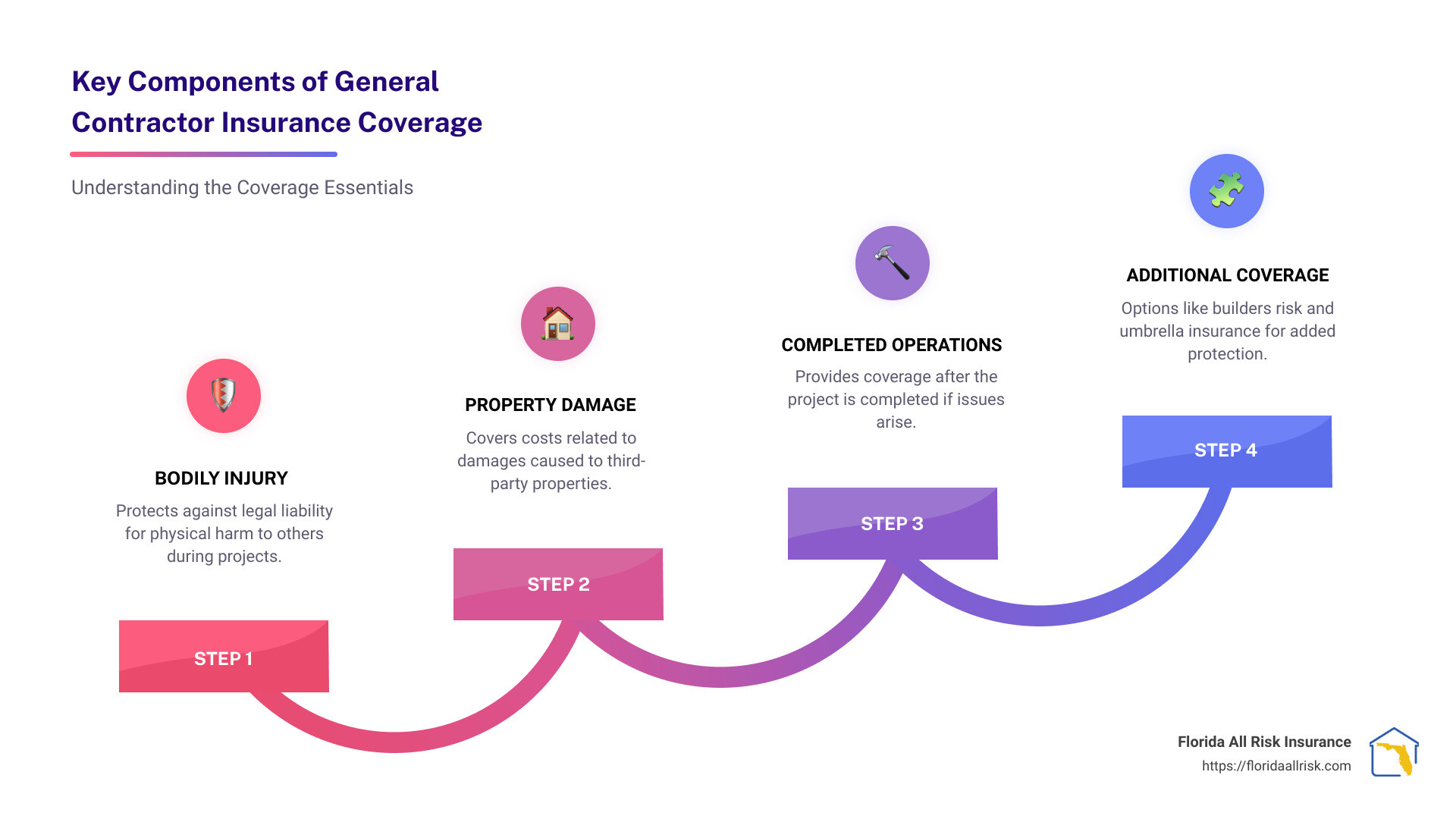
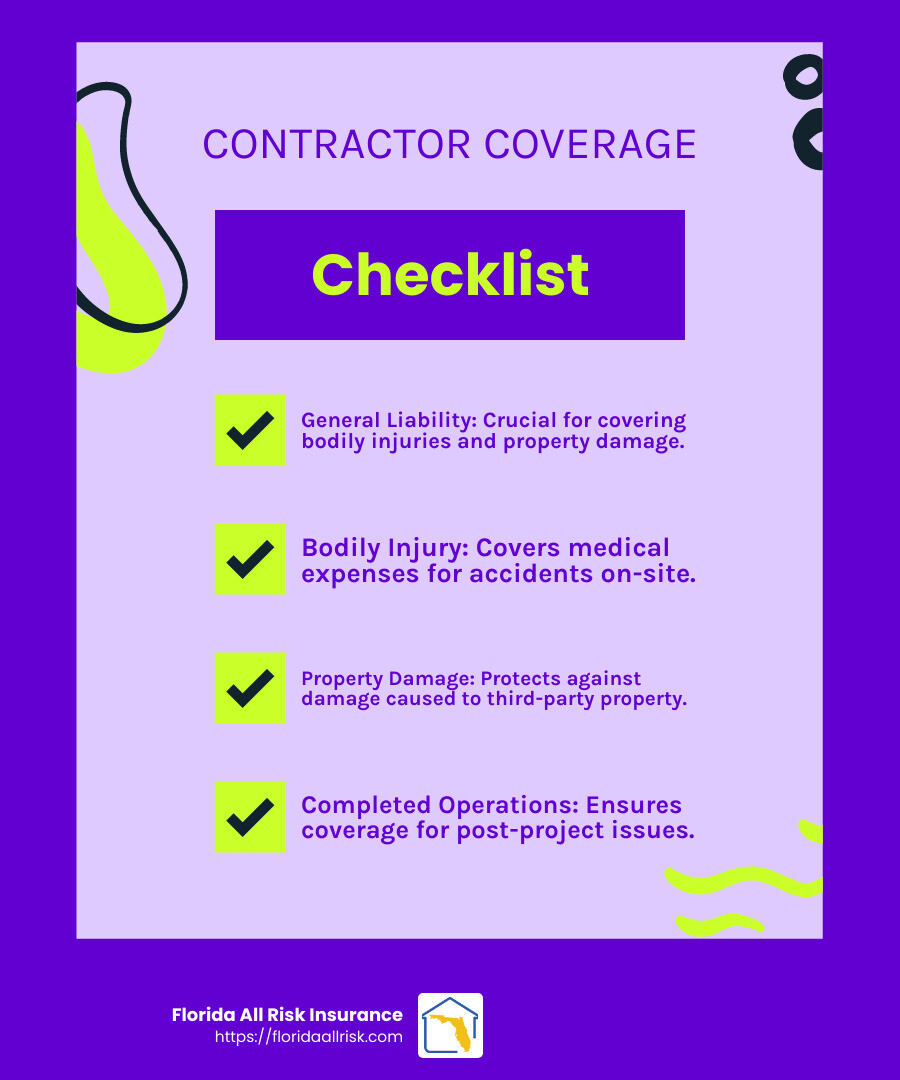
General Liability Insurance is the cornerstone of contractor coverage. It shields you from claims related to bodily injury and property damage that might occur on your worksite. Imagine a visitor trips over tools and gets hurt. Your liability insurance can cover their medical expenses.
- Bodily Injury: Covers medical costs if someone is injured on your site. This could be a worker or a third party.
- Property Damage: Protects against damage to someone else’s property caused by your work.
Completed Operations Coverage ensures that you’re covered even after the project wraps up. If a defect in your work causes damage or injury later, this coverage steps in. It’s crucial because issues can surface long after you’ve moved on to new projects.
Additional Coverage Options
Beyond the basics, there are other coverages worth considering:
-
Builders Risk Insurance: Think of it as insurance for the project itself. It covers structures and materials in progress from events like fire or theft. This is vital in protecting your investment during construction.
-
Inland Marine Insurance: This might sound like it’s for boats, but it’s actually for tools and equipment. If your gear is stolen or damaged while in transit, inland marine insurance has you covered.
-
Umbrella Insurance: Provides extra liability coverage beyond your existing policies. If a claim exceeds your general liability limits, the umbrella policy kicks in to cover the gap.
Understanding these components and options helps you tailor your general contractor insurance coverage to fit your specific needs. The right coverage not only protects your finances but also your reputation in the industry.
Next, we’ll dive into the cost factors and considerations that influence your insurance premiums.
Cost Factors and Considerations
When it comes to general contractor insurance coverage, understanding what influences your premiums is key to managing costs effectively. Let’s explore the main factors that affect what you’ll pay.
Factors Influencing Premiums
-
Location: Where you operate can significantly impact your premiums. For instance, contractors in densely populated urban areas like San Francisco may face higher premiums due to increased risk factors, such as stricter regulations and higher property values.
-
Claims History: If you have a track record of frequent claims, insurers may view you as a higher risk, resulting in higher premiums. It’s important to maintain a clean claims history to keep costs down.
-
Subcontractor Costs: Hiring subcontractors can influence your insurance costs. If subcontractors aren’t insured, you might need to extend your coverage to include them, which could increase your premium. Alternatively, hiring subcontractors with their own insurance can mitigate this cost.
-
Payroll Tiers: Insurers often use payroll tiers to assess risk. Higher payroll typically indicates more employees or larger projects, which can increase the risk of claims. As a result, higher payroll can lead to higher premiums.
-
Risk Exposure: The nature of your projects and the associated risks play a crucial role. High-risk projects, such as those involving heavy machinery or hazardous materials, may incur higher premiums due to the increased likelihood of accidents or damage.
Comparing Policy Costs
When selecting insurance coverage, understanding the cost variance between different policy limits is crucial. Here’s a breakdown of typical coverage options:
-
$1 Million vs. $2 Million Coverage: Many contractors opt for $1 million per occurrence and $2 million aggregate limits. However, choosing higher limits, such as $2 million per occurrence, can provide additional peace of mind, especially for larger projects. While higher coverage limits may increase premiums, they offer greater protection against substantial claims.
-
Cost Variance: The difference in premium costs between $1 million and $2 million coverage can vary based on the factors mentioned above. It’s essential to weigh the potential risks and benefits to determine the most cost-effective option for your business.
By understanding these factors and comparing policy costs, you can make informed decisions about your general contractor insurance coverage. This helps ensure your business is protected without overextending your budget.
Next, we’ll dig into the essential insurance requirements for contractors in California, including workers’ compensation and surety bonds.
Essential Insurance for Contractors in Florida
Florida is a bustling hub for construction, with cities like Miami, Orlando, Tampa, and Jacksonville presenting unique opportunities and challenges for contractors. To operate legally and safely, contractors must secure the right insurance coverages, customized to comply with state requirements and local considerations.
State Requirements
In Florida, contractors are required by law to have specific insurance coverages. Workers’ Compensation Insurance is mandatory for all contractors with employees. This coverage ensures that medical treatment, disability, and death benefits are available if an employee is injured or dies due to work-related activities. Not having this insurance can lead to severe penalties and legal issues.
Another critical requirement is the Contractor License Bond. Every licensed contractor must carry a bond, which serves as a financial guarantee to clients that the contractor will comply with state regulations and contractual obligations. Depending on the license, additional bonds may also be necessary.
Surety Bonds
Surety bonds are not just a formality; they are a cornerstone of trust in the construction industry. They assure clients that contractors will fulfill their contractual duties. In Florida, contractors might need additional surety bonds, such as bid bonds, performance bonds, and payment bonds, especially for larger projects. These bonds protect the client from financial loss if the contractor fails to meet the contract terms.
Regional Considerations
Florida’s diverse landscape means that regional factors can influence insurance needs:
-
Miami: Known for its vibrant urban environment, contractors in Miami must navigate complex zoning laws and building codes. Insurance policies here often need to account for higher property values and increased liability risks.
-
Orlando: With its proximity to hurricane-prone areas, contractors in Orlando should consider insurance that covers storm risks. Local construction regulations can also impact the types of coverage needed.
-
Tampa: Flood risk is a significant consideration in Tampa. Contractors should ensure their insurance policies address potential water damage, as the city has strict building codes designed to mitigate flood impacts.
-
Jacksonville: While Jacksonville might not have the same level of urban density or natural disaster risk as other Floridian cities, contractors still need to adhere to state regulations and consider local factors like coastal impacts on construction projects.
Navigating the insurance landscape for general contractors in Florida requires a comprehensive understanding of both state mandates and regional nuances. By securing the right coverages, contractors can protect their business and ensure compliance with local laws.
Next, we’ll address some frequently asked questions about general contractor insurance coverage, providing clarity on common concerns and misconceptions.
Frequently Asked Questions about General Contractor Insurance Coverage
Navigating general contractor insurance coverage can be complex, but understanding the essentials can help you make informed decisions. Below are some common questions contractors often have:
How much insurance do I need as a contractor?
The amount of insurance you need depends on several factors, including the size and scope of your projects, client demands, and state requirements. In California, for instance, contractors must carry a minimum of $1 million in general liability coverage to meet state regulations and satisfy client expectations. However, some clients may require higher limits, such as $2 million, especially for larger or higher-risk projects. It’s crucial to assess your specific needs and consult with an insurance agent to ensure adequate protection.
Is contractor protective liability the same as general liability?
No, contractor protective liability and general liability are not the same. General liability insurance covers a broad range of risks, such as bodily injury or property damage, that might occur on your business premises or as a result of your operations. In contrast, contractor protective liability is more project-specific, providing coverage for incidents directly related to a particular project. This type of insurance is often required for certain contracts where the contractor assumes liability for the project’s entirety. Understanding the differences can help you choose the right coverage for your business needs.
Do contractors carry their own insurance?
Yes, contractors are responsible for carrying their own insurance to protect against various risks. This includes general liability, workers’ compensation, and other necessary coverages. Additionally, subcontractors should also have their own insurance. It’s a good practice for general contractors to verify that subcontractors have adequate coverage before hiring them. This verification protects all parties involved and ensures that any work done by subcontractors is covered, reducing the risk of potential gaps in coverage. You can often add subcontractors to your policy temporarily, but this might increase your premium.
Understanding these key aspects of general contractor insurance coverage can help you make informed decisions and safeguard your business. As you explore your insurance options, tailoring your coverage to meet specific project requirements and regional considerations is essential.
Conclusion
In construction, having comprehensive insurance coverage is not just a safety net—it’s a necessity. Whether you’re a small contractor or managing large-scale projects, the right insurance can protect your business from unforeseen risks and financial setbacks.
At Florida All Risk Insurance, we understand that every contractor’s needs are unique. That’s why we offer custom solutions designed to fit the specific requirements of your business and projects. Our team in Saint Petersburg, Florida, is dedicated to providing personalized service, ensuring you have the right coverage at competitive rates.
Choosing the right insurance is about more than just meeting legal requirements. It’s about safeguarding your livelihood and giving you peace of mind. With our expertise, you can steer the complexities of general contractor insurance coverage confidently, knowing you’re protected against potential risks.
For more information on how we can help you tailor your insurance to meet your needs, visit our General Liability Insurance page. Let us help you build a secure future for your contracting business.