GEICO Home Insurance in Florida: 2025 Pros & Cons
Understanding the Home Insurance Agency Model in Florida
Home insurance in Florida can operate differently than you might expect, especially when dealing with some of the largest national brands. While you may be familiar with companies that directly underwrite their own policies, many use an agency model. This means they act as a broker, connecting you with a network of partner companies that handle the actual coverage.
This structure matters in Florida’s unique insurance landscape. Every homeowner faces challenges, from hurricane risks and flooding concerns to sinkhole potential, making the right coverage critical for protecting your investment. The state’s volatile market has seen multiple carriers exit or reduce coverage in recent years. As a result, understanding all your options—including how major brands structure their Florida operations—is essential for making informed decisions.
With an agency model, your policy experience depends heavily on which partner company underwrites your coverage. Always check your policy documents to see who is actually insuring your home, and verify their financial strength through a trusted source like the AM Best financial strength ratings at https://www.ambest.com/.
As Jason Miller, a second-generation insurance professional with over 20 years of experience helping Florida families steer our complex insurance market, I’ve seen how these different models fit into the broader landscape. My expertise comes from building Florida All Risk Insurance into a trusted resource for thousands of homeowners seeking comprehensive protection in our challenging marketplace.
How the Home Insurance Agency Model Works in Florida
When you seek a homeowners policy from certain large national insurers in Florida, you may find they don’t write the policy directly. Instead, they often work as an insurance broker, connecting you with their network of partner insurance companies who handle the underwriting and coverage.
Think of the well-known brand as a helpful middleman. When you request a quote, they evaluate your needs and match you with one of their vetted partner companies. This could be anyone from another well-known carrier to a specialized regional insurer.
This agency model differs significantly from a direct writer approach, where one company handles everything from quote to claims. With the agency model, you get the convenience of a familiar brand upfront, but your actual policy and claims service live with the partner company.
What does that look like in practice?
- Quoting: You provide your information to the brand you contacted. They run it through their network and return a proposal from one partner carrier (or a few) that fits their criteria.
- Policy documents: Your declarations page will list the true underwriting company by name. Keep that document handy—it’s the key to understanding who is insuring you.
- Billing: Payments are typically made to the partner company (or its billing vendor), not the brand you first contacted.
- Claims: You may start by calling the brand you recognize, but your claim is transferred to the underwriting partner. The partner assigns adjusters, manages communication, and issues payments.
Florida homeowners should set expectations accordingly: your day-to-day experience depends on the selected partner carrier. Two neighbors who both “went through the same brand” can have very different service because they landed with different partners.
The Pros and Cons of the Agency Model
This approach comes with distinct advantages and some potential drawbacks worth considering.
Pros:
- Convenience: Getting multiple quotes through one familiar contact point can save time compared to calling dozens of companies individually.
- Bundling Discounts: If you already have another policy (like auto) with the brand, bundling can create meaningful savings.
- Brand Familiarity: Many customers feel confident starting with a brand they know and trust, even if the policy is ultimately handled by a lesser-known partner.
Cons:
- Inconsistent Service: Your customer service experience depends entirely on the partner company. One might offer excellent support, while another could have slower processes.
- Variable Claims Experience: The partner handles claims, which can feel disconnected during a stressful event. Timing and quality can vary.
- Cost: While bundling offers discounts, standalone homeowners policies through an agency model may not always be the most competitive. Shopping with an independent agent who can access the wider market often yields better overall value.
Tip: Before you bind coverage, ask for the underwriting company’s name, look up their financial strength (see AM Best at https://www.ambest.com/), and review recent customer service indicators. An independent agent—like Florida All Risk Insurance—can help you compare partners side-by-side so you understand differences in coverage, deductibles, claims handling, and price.
Understanding Your Florida Home Insurance Coverage Options
When you’re exploring home insurance in Florida, understanding your coverage options is the first step to securing the right protection. Most homeowners policies, including those arranged through an agency model, are built on a standard HO-3 form. This provides a strong foundation of protection for most Florida families.
An HO-3 policy provides two types of coverage for your property:
- Open Perils Coverage (Dwelling): This applies to your home’s structure. You are protected against all risks unless the policy specifically excludes them.
- Named Perils Coverage (Personal Property): This applies to your belongings and covers damage only from specific risks listed in your policy (e.g., fire, theft, windstorm, hail).
In Florida’s unique environment, policy customization is crucial. A basic HO-3 policy is a starting point, but our state’s risks require special attention. Exploring endorsements and additional coverages isn’t just smart—it’s essential for protecting your investment.
Core Homeowners Insurance Coverages
No matter which company underwrites your policy, it will include six standard coverages that form the foundation of your protection.
- Dwelling Coverage (Coverage A): Protects the physical structure—walls, roof, and foundation. Opt for replacement cost coverage, which pays to rebuild your home to its previous state without deduction for depreciation.
- Other Structures (Coverage B): Covers detached structures like a garage, fence, or shed. Typically 10–20% of the dwelling limit, and adjustable.
- Personal Property (Coverage C): Covers belongings such as furniture, clothing, and electronics. Whenever possible, choose replacement cost for personal property rather than actual cash value.
- Loss of Use (Coverage D): Also called Additional Living Expenses, this pays for temporary housing and necessary costs if your home becomes uninhabitable due to a covered loss.
- Personal Liability (Coverage E): Protects you financially if you are responsible for bodily injury or property damage to others. Includes legal defense costs up to your policy limit.
- Medical Payments (Coverage F): Pays for minor medical expenses for guests injured on your property, regardless of fault.
Helpful step: Create a detailed home inventory with photos or video to streamline any future claims. Document serial numbers and receipts for high-value items when possible.
Smart Endorsements for Florida Homes
Florida homeowners often benefit from custom endorsements that address common loss scenarios:
- Ordinance or Law: Pays for the extra cost to rebuild to current building codes after a covered loss. This is vital in areas where codes have evolved after major storms.
- Water Backup: Covers damage from backups through sewers or drains or sump pump overflow—problems that can be costly and aren’t covered by a standard policy.
- Screen Enclosures and Pool Cages: Florida homes frequently include these features, which may require a specific endorsement or separate limit.
- Scheduled Personal Property: Increases limits and broadens causes of loss for jewelry, fine arts, collectibles, and other high-value items beyond standard sub-limits.
- Equipment Breakdown: Covers sudden mechanical or electrical failure of systems like HVAC and major appliances.
- Service Line Coverage: Helps with repairs to underground piping or wiring that service your home.
- Animal Liability: If you own a dog, confirm whether your policy includes or excludes animal liability and whether certain breeds are restricted.
- Mold/Fungi and Water Damage Limits: Know the sub-limits and consider higher limits if available.
Essential Additional Coverages for Florida Homeowners
- Hurricane Coverage: Standard policies include windstorm damage, but most Florida policies carry a separate hurricane deductible—often 2%, 5%, or 10% of your dwelling limit. Understand this number before storm season.
- Flood Insurance: Standard homeowners policies do not cover flood damage. Florida’s low elevation and heavy rainfall make flooding possible nearly anywhere. Consider a separate policy through the National Flood Insurance Program (see the official FloodSmart site at https://www.floodsmart.gov/) or a private carrier. For general preparedness, visit Information on flood risk from FEMA at https://www.fema.gov/.
- Sinkhole Coverage: Florida’s limestone geology creates sinkhole exposure. Many policies include catastrophic ground cover collapse (a very strict definition). Broader sinkhole coverage can be added in certain areas and is especially worth evaluating in Central Florida.
Timing tip: NFIP flood policies typically have a 30-day waiting period before coverage takes effect. Don’t wait until a storm is on the radar to secure flood protection.
If you’re unsure which endorsements make sense for your property, an independent agent can tailor options based on your home’s construction, location, and your budget.
Navigating Florida’s Unique Insurance Challenges
Living in Florida means accepting that our insurance market has its own unique personality. When you’re exploring home insurance options, you’re entering a marketplace shaped by decades of hurricanes, evolving building codes, reinsurance costs, and the constant challenge of insuring homes in a high-risk state.
- High Premiums: Florida consistently ranks among the most expensive states for homeowners insurance, driven by frequent, costly weather events and rising construction and litigation expenses.
- Insurer Adjustments: The challenging environment has caused some carriers to limit new business, tighten underwriting, or reduce policy counts, which can translate to fewer choices and higher prices.
- Weather Volatility: Beyond hurricanes, Florida contends with severe thunderstorms, hail, tornadoes, and flooding from intense rainfall—all contributing to a high volume of claims.
- Common Claims: Water damage (from burst pipes and leaks), fire, theft, and liability claims (slip-and-fall or pool-related incidents) are frequent. For pet owners, understand how your animals might affect your coverage, a topic we cover in our guide, Paws & Policies: Navigating Homeowners Insurance with Dogs at https://floridaallrisk.com/paws-policies-navigating-homeowners-insurance-with-dogs/.
For consumer education on rates, filings, and complaint ratios, the Florida Office of Insurance Regulation provides helpful information at https://www.floir.com/Consumers. These resources can be valuable when comparing your options.
How to Save Money on Your Florida Home Insurance Policy
Despite the high costs, there are proven strategies to reduce your premiums without sacrificing protection.
- Multi-Policy Discount: Bundling your home and auto insurance with the same provider is often the easiest way to get a significant discount.
- Home Safety Discounts: Installing a monitored security system, smoke detectors, and fire extinguishers can lower your rates.
- Wind Mitigation Credits: This is where Florida homeowners can see the biggest savings. Features that help your home withstand high winds can earn substantial credits, including:
- Hip roof shape
- Strong roof-to-wall attachments (clips or straps)
- A secondary water resistance barrier on the roof deck
- Impact-rated windows or hurricane shutters
- Properly rated and installed garage doors
- Roof and System Updates: Newer roofs and updated electrical, plumbing, and HVAC can improve eligibility and price.
- Higher Deductibles: Choosing higher all-other-peril and hurricane deductibles lowers your annual premium. Ensure you can comfortably pay those deductibles in an emergency.
- Claims-Free History: Insurers reward homeowners with no recent claims with better rates.
For a deeper dive into potential savings, explore our detailed guide on how to Save on Homeowners Insurance at https://floridaallrisk.com/save-on-homeowners-insurance/. The key is finding the right balance between an affordable premium and the comprehensive protection your Florida home needs.
The Quoting and Application Process
Starting your search for home insurance in Florida is straightforward, whether you prefer to do it online, over the phone, or in person.
Many large insurers offer an online quote tool that provides a quick estimate in minutes. If you prefer to talk through your options, you can call a representative who will guide you through the process. In Florida, many companies also have local agents you can meet with face-to-face.
Once you have a quote, compare it with other options. If you’re working with a company that uses an agency model, the quote you receive is from one of their partners. An independent agent, however, can provide quotes from a wider range of carriers, ensuring you see a fuller picture of the market.
What to expect next:
- Underwriting Questions: Expect follow-up questions about your roof, updates, occupancy, and any unique features.
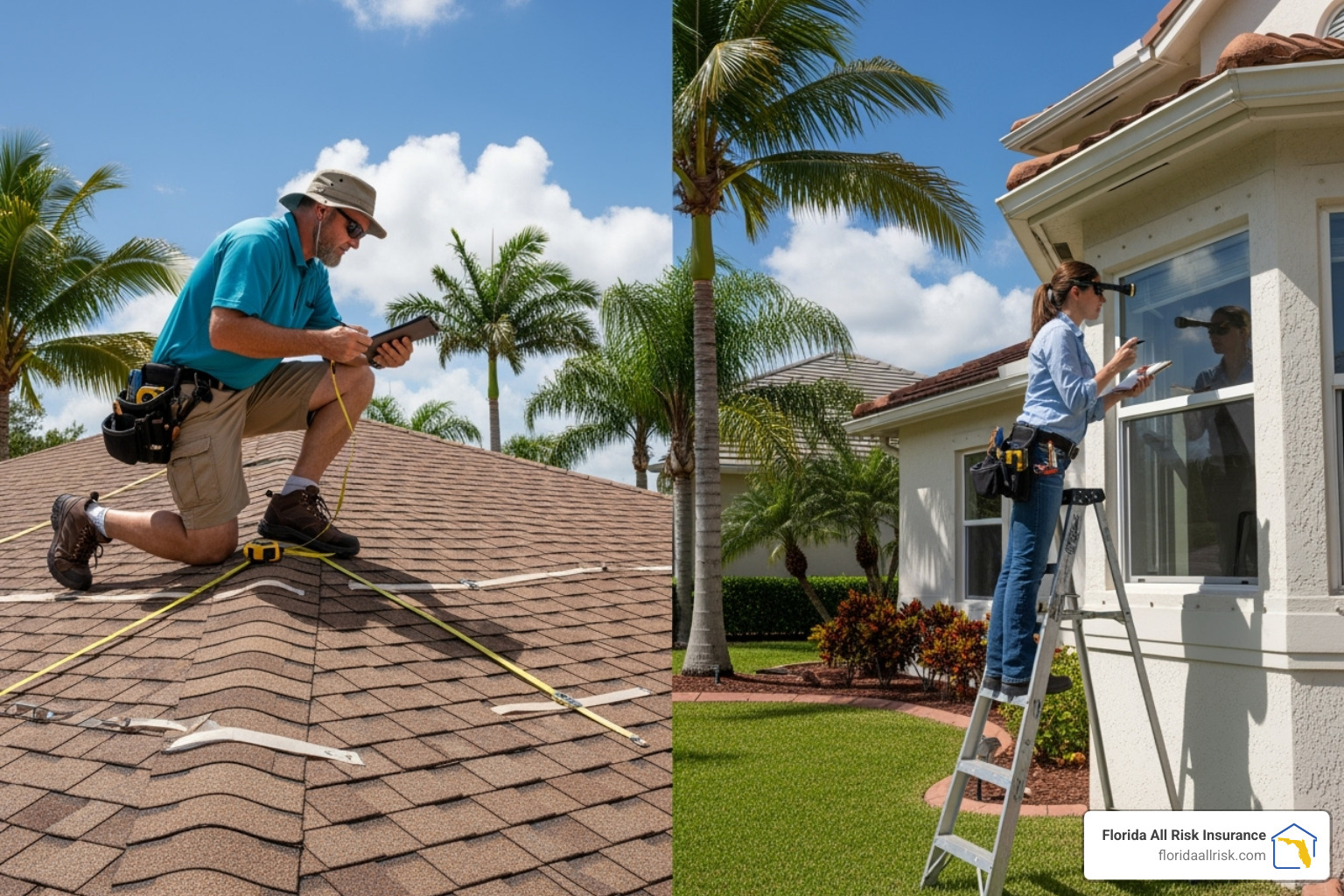
- Inspections: A wind mitigation inspection and, for older homes, a four-point inspection (roof, electrical, plumbing, HVAC) may be required to validate eligibility and pricing.
- Binding and Mortgage: Once you choose a policy, your agent can bind coverage and send evidence of insurance to your lender for closing or escrow setup.
When comparing, look beyond the premium. Ensure you’re comparing policies with similar coverage limits, deductibles, and endorsements. A slightly more expensive policy might be worth it if it offers superior protection for Florida-specific risks like hurricanes and major water losses.
Checklist: Information for Your Home Insurance Quote
To get an accurate and competitive home insurance quote in Florida, be prepared to provide the following information. Having these details ready will make the process smoother and help you receive the best options the market can offer.
- Personal Information:
- Full name and date of birth
- Address of the property to be insured
- Occupancy type (primary, secondary, seasonal, rented)
- Property Details:
- Year the home was built and total square footage
- Construction type (e.g., concrete block, wood frame)
- Roof age, material, and shape (hip/gable/flat)
- Foundation type and number of stories
- Any additions or major renovations and year completed
- Safety and Mitigation Features:
- Security system, smoke detectors, fire sprinklers
- Wind mitigation features (clips/straps, roof deck attachment, secondary water barrier, opening protection)
- Details from a wind mitigation inspection report, if available
- Insurance and Claims History:
- Current or prior insurance carrier
- Claims filed in the last 3–5 years (dates, types, amounts)
- Outdoor Features and Liabilities:
- Pool, screened enclosures, trampolines, or other attractive nuisances
- Dog ownership and any animal liability history
- Desired Coverage:
- Target dwelling limit (or estimated replacement cost)
- Personal property and liability limits
- Standard and hurricane deductible amounts you can comfortably afford
- Documentation That Helps:
- Four-point inspection (for older homes)
- Wind mitigation inspection
- Recent roof permit or completion documents, if applicable
Frequently Asked Questions About Florida Home Insurance
As insurance professionals in Florida, we hear many of the same questions from homeowners trying to steer our state’s complex market. Here are straightforward answers to some of the most common inquiries.
Is homeowners insurance required by law in Florida?
No, the state of Florida does not legally require you to have homeowners insurance. However, if you have a mortgage, your lender will almost certainly require it as a condition of the loan. Even if you own your home outright, insurance is a critical part of responsible homeownership given risks like hurricanes, fires, and major water losses.
Does a standard policy cover floods or hurricanes?
- Hurricane Wind Damage: A standard homeowners policy covers damage from wind and hail, including during a hurricane. Most Florida policies include a separate and higher hurricane deductible, typically a percentage of your insured value.
- Flood Damage: Standard homeowners policies explicitly exclude damage from flooding, including storm surge, overflowing bodies of water, and heavy rainfall accumulation. You must purchase a separate flood policy through the National Flood Insurance Program (see https://www.floodsmart.gov/) or a private carrier. For general preparedness, see Information on flood risk from FEMA at https://www.fema.gov/.
How does the claims process work with an agency model?
If your policy was arranged through a large brand that acts as a broker, the claims process involves a handoff.
Typically, you make your initial report to the familiar brand you bought the policy from. They then transfer your claim to the partner company that underwrites your policy. From that point on, the partner company takes over completely—assigning the adjuster, managing communication, and issuing any payments. Your policy documents will clearly state which company is your true insurer; it’s wise to know that name before you need to file a claim.
What triggers the hurricane deductible?
Most policies apply the hurricane deductible when the National Weather Service names a storm and your damage occurs during a specified window around that event (such as when a hurricane watch or warning is issued and for a set period after it ends). Read your policy’s definition carefully so you understand when the percentage deductible applies.
What is Ordinance or Law coverage, and why is it important in Florida?
If your home is damaged by a covered loss, you may be required to rebuild portions to current building codes. Ordinance or Law coverage helps pay these extra costs, which aren’t covered by standard dwelling limits. With frequent code updates in coastal areas, this protection can be essential.
Are short-term rentals or home-sharing covered?
Using your home for short-term rentals can change your risk profile and is often excluded or restricted under a standard homeowners policy. If you rent all or part of your home, tell your agent. You may need a specific endorsement or a different policy type to be properly covered.
Conclusion
Understanding home insurance in Florida means recognizing the different ways policies are offered. Some large brands act as an agency, connecting you to a partner carrier. This model can offer convenience and bundling discounts, but your service and claims experience will depend on the underwriting partner. In Florida’s complex market, customized coverage is a necessity—tailoring your policy with the right hurricane deductible and essential add-ons like flood insurance, ordinance or law, and water backup is paramount. By leveraging all available discounts, especially wind mitigation credits, you can make comprehensive coverage more affordable.
This is where the expertise of an independent agent like us at Florida All Risk Insurance becomes invaluable. We have access to a wide range of carriers, allowing us to compare multiple policies and find the best value and most comprehensive protection for your home. We serve as your guide through the intricacies of the Florida insurance market.
Ready to protect your Florida home with confidence?
Get a comprehensive Florida homeowners insurance quote today and compare your options!
Don’t leave your biggest investment to chance. Contact Florida All Risk Insurance for personalized guidance and a custom home insurance solution!
Contact Us
When you’re ready to explore your home insurance options in Florida, Florida All Risk Insurance is here to help. As an independent agency based in St. Petersburg, we understand the unique challenges homeowners face in the Sunshine State.
Our team knows that choosing the right coverage can feel overwhelming. That’s why we take the time to explain your options in plain English. Whether you need help comparing quotes from multiple carriers or want to understand your coverage options, we’re just a phone call or email away. We work with dozens of top-rated insurance companies to find you the best combination of coverage and value.
Florida All Risk Insurance
Address: 123 Main Street, Saint Petersburg, FL 33701
Phone: (727) 555-1234
Email: [email protected]
We’re here to answer your questions, provide quotes, and help you protect what matters most. At the end of the day, good insurance is about giving you peace of mind so you can enjoy life in beautiful Florida.