
Florida lowest car insurance: Slash Rates 2025!
Why Finding the Lowest Car Insurance in Florida Matters More Than Ever
Florida lowest car insurance isn’t just a search term—it’s a financial necessity for millions of drivers facing some of the nation’s highest premiums. While Florida’s average full coverage cost is around $174/month, significantly higher than the national average, it is possible to find much lower rates depending on your profile. Some drivers can find minimum coverage for as low as $55-$70 per month, while others secure full coverage for closer to $115-$165 per month.
The reality is stark: Florida often ranks as one of the most expensive states for car insurance, with average annual premiums exceeding $2,500. This is due to the state’s unique no-fault insurance system, hurricane risk, heavy tourist traffic, and a high rate of uninsured drivers. For many Florida families, car insurance is a significant monthly expense that demands careful shopping and smart strategy.
Despite this challenging landscape, substantial savings are possible. The gap between the highest and lowest premiums can be staggering, with identical coverage varying by hundreds of dollars between providers. A driver in a lower-risk area like Port Charlotte might pay a fraction of what someone in a high-traffic zone like Miami Shores faces for similar coverage. These differences represent thousands of dollars annually that could stay in your pocket.
I’m Jason Miller, and I’ve spent over 20 years helping Florida drivers steer this complex market at Florida All Risk Insurance, building on my family’s 60+ years of combined experience. Understanding our state’s unique challenges—and how to overcome them—is what we do every day.

In this guide, we’ll break down why Florida’s rates are so high, reveal which strategies consistently lower premiums for different driver profiles, and share proven ways to slash your insurance bill—all while ensuring you maintain the protection you need.
Why Are Florida Car Insurance Rates So High?
Florida’s reputation for sky-high premiums is justified by a unique combination of risk factors that create a “perfect storm” for expensive coverage. The reasons go far beyond simple supply and demand, involving the state’s legal system, weather patterns, and driver behaviors.
The Impact of Florida’s No-Fault System
Florida is one of a handful of states with a no-fault car insurance system. In theory, this means that after an accident, your own insurance company pays for your initial medical expenses and lost wages, regardless of who was at fault. This is handled through your Personal Injury Protection (PIP) coverage, and every Florida driver is required to carry at least $10,000 in PIP.
Your PIP covers 80% of necessary medical expenses and 60% of lost wages up to your policy limit. The goal was to ensure quick medical payments and reduce lawsuits over minor injuries. However, the system’s design has inadvertently led to widespread fraud and abuse. The ease of filing PIP claims has created an environment ripe for fraudulent activities, which drives up costs for all policyholders. Insurers factor this heightened risk into their calculations, resulting in higher premiums for everyone, even those with perfect driving records. To better understand how PIP fits into your overall protection, you can learn more about liability car insurance in Florida and see how these pieces work together.
Weather, Traffic, and Uninsured Drivers
Beyond the no-fault system, several other factors contribute to high rates:
-
Hurricane and Flood Risk: Florida’s geography makes it highly susceptible to hurricanes and tropical storms. The resulting wind and flood damage leads to a high volume of comprehensive claims, a risk that insurers price into every policy. A single major storm can cause billions in damages, including countless auto claims that lead to rate increases across the state.
-
Tourist Traffic and Population Density: With over 137 million visitors annually and a booming population, Florida’s roads are crowded. This mix of local drivers and tourists unfamiliar with the area leads to a higher frequency of accidents, particularly in metro areas like Miami, Orlando, and Tampa.
-
Uninsured Drivers: Florida has one of the highest rates of uninsured drivers in the nation, with estimates often placing the figure at 20% or higher. This means about one in five drivers on the road may not have insurance. When an uninsured driver causes an accident, the financial burden often falls on the insured driver and their insurance company, pushing up costs for everyone. It’s crucial to explore uninsured motorist coverage in Florida to protect yourself from this common risk.
The Role of Litigation and Insurance Fraud
Florida’s insurance market is also strained by a uniquely litigious environment and rampant fraud.
Despite the no-fault system’s intent, Florida sees an exceptionally high volume of litigated auto claims. Even minor accidents can escalate into costly legal battles, and these expenses are passed on to consumers through higher premiums.
Staged accidents and PIP fraud are particularly problematic. Criminal rings organize deliberate collisions and file fake injury claims to exploit PIP coverage. Another common issue is windshield replacement scams, where solicitors offer “free” windshields and then bill insurance companies for inflated or unnecessary work. These fraudulent activities cost insurers hundreds of millions of dollars annually, directly impacting the rates paid by honest drivers.
In response, Florida lawmakers have enacted legislative reforms aimed at stabilizing the market by targeting fraud and litigation abuse. While these changes are a step in the right direction, their full effect on consumer rates will take time to materialize. Understanding these challenges is the first step toward making smarter decisions about your coverage.
Finding the Florida Lowest Car Insurance: A Profile-Based Guide
There is no single “cheapest” car insurance policy that works for everyone. Insurers calculate your premium based on a unique profile that includes your age, driving history, location, and vehicle. The best insurer for a new teen driver will likely be different from the one offering the best deal to a retiree with a perfect record. Understanding how your specific situation affects pricing is key to finding your best deal.
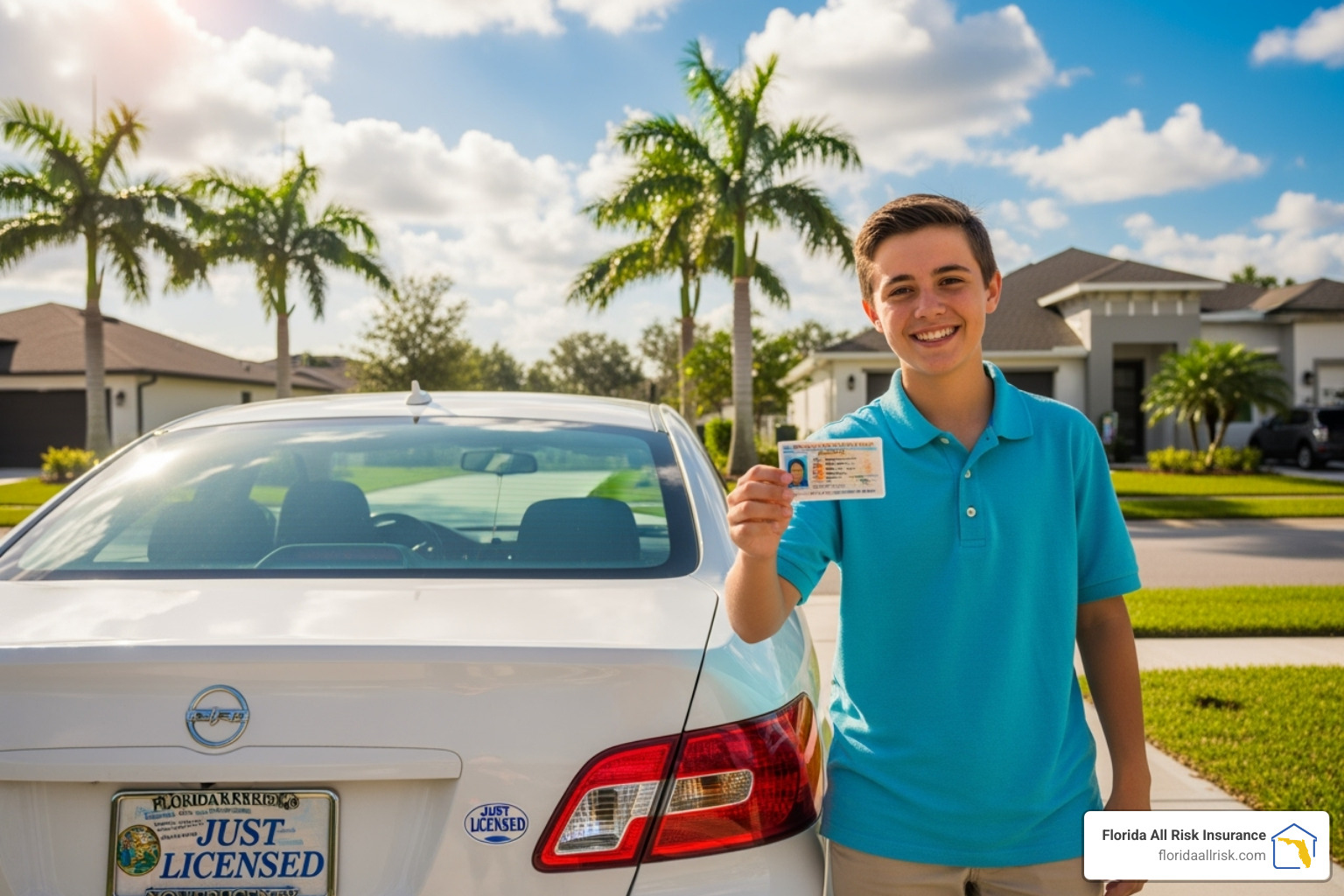
For Young Drivers and Teens
Young drivers face the highest premiums due to their statistical lack of experience and higher accident rates. A 17-year-old in Florida might see average annual premiums exceeding $8,000, though these costs drop significantly with age and experience. Here are key strategies to manage these costs:
- Good Student Discounts: Most insurers offer significant discounts for students who maintain a B average or higher.
- Defensive Driving Courses: Completing an approved course not only improves driving skills but also often qualifies the driver for a premium reduction.
- The Family Policy Advantage: Keeping a teen on a family policy is almost always far cheaper than purchasing a separate one. They benefit from the parents’ driving history and potential multi-car discounts.
For more detailed guidance, explore our resources on auto insurance for young drivers in Florida.
For Seniors and Retirees
Senior drivers with years of safe driving experience are often in a great position to find affordable coverage. Insurers reward this experience, though rates can sometimes increase for drivers in their late 70s and beyond. To maximize savings:
- Ask for Senior-Specific Discounts: Many companies offer special rates for mature drivers with clean records.
- Leverage Low-Mileage Savings: If you’re no longer commuting daily, your annual mileage has likely dropped. Inform your insurer if you drive less than 10,000 miles a year, as this can lead to substantial discounts. Learn how to unlock savings with low mileage on your Florida car insurance.
- Complete a Mature Driver Course: Approved safety courses can refresh your skills and qualify you for another discount.
- Review Your Policy: Retirement is a perfect time to reassess your coverage needs. You may be able to adjust limits or remove coverage you no longer need.
For Drivers with a Clean Record
If you have no at-fault accidents, moving violations, or claims in the past three to five years, you are in the best position to secure the Florida lowest car insurance. Insurers reward safe drivers with:
- Accident-Free Discounts: The longer you maintain a clean record, the more you save.
- Claims-Free Rewards: Some insurers offer additional savings if you haven’t filed any type of claim.
- Vanishing Deductibles: Certain programs reduce your deductible for each year you remain accident-free, potentially lowering it to zero.
We can help you find every discount you deserve. Check out our information on safe driver insurance discounts in Florida to learn more.
How to Find the Lowest Car Insurance in Florida with a Poor Driving Record
Finding affordable coverage with a spotty driving record is challenging but not impossible. Incidents like at-fault accidents or DUIs classify you as a high-risk driver, leading to significantly higher premiums. An at-fault accident can raise your rate by 40% or more, while a DUI can double it.
Serious violations may require you to obtain an SR-22 or FR-44 filing. These are certificates your insurer files with the state to prove you have the required coverage. An FR-44, typically for DUIs, mandates higher liability limits, further increasing your premium for several years.
While some insurers may decline to cover high-risk drivers, others specialize in this market. The key is to shop around extensively. An independent agency can be invaluable here, as we can quickly identify which carriers are more forgiving of past mistakes. Most importantly, these surcharges are not permanent. Violations typically affect your rates for three to five years. As time passes and you maintain a clean record, your premiums will gradually decrease. If you need help, learn more about DUI auto insurance solutions in Florida and how we can assist you.
Florida’s Minimum Car Insurance Requirements Explained
To drive legally in the Sunshine State, Florida requires all drivers to carry a minimum amount of car insurance. However, this minimum is often not enough to fully protect you financially after a serious accident. Understanding what is required versus what is recommended is crucial.
Understanding Minimum Liability and PIP
Florida’s minimum requirements are unique and focus on two key areas:
- Property Damage Liability (PDL): $10,000 Requirement. This covers damage you cause to someone else’s property in an at-fault accident. With the average new car costing over $40,000, this $10,000 limit is easily exhausted, leaving you personally liable for the rest.
- Personal Injury Protection (PIP): $10,000 Requirement. As part of the no-fault system, this covers your own medical bills (80%) and lost wages (60%) after an accident, regardless of fault. This limit can be depleted quickly, even with moderate injuries.
For a deeper dive into these essentials, check out our guide to basic auto insurance requirements in Florida.
Why Minimum Coverage May Not Be Enough
Meeting the legal minimum leaves you dangerously exposed. If you cause an accident that totals a $50,000 SUV, you are personally on the hook for the $40,000 your PDL doesn’t cover. Creditors can pursue your savings, home, and wages to satisfy the debt.
This is where additional, highly recommended coverages become vital:
- Bodily Injury Liability (BIL): While not required by Florida law for most drivers, BIL is essential. It protects you if you’re at fault in an accident that injures someone else, covering their medical bills, lost wages, and pain and suffering. Without it, you could face a lawsuit that threatens your financial future.
- Uninsured/Underinsured Motorist (UM) Coverage: With roughly one in five Florida drivers being uninsured, UM coverage is critical. It protects you and your family if you’re hit by a driver with no insurance or not enough insurance to cover your injuries and damages.
Going beyond minimum coverage is about asset protection. If you own a home or have savings, a basic policy puts it all at risk. Explore our page on auto insurance coverage options in Florida to see how you can build a policy that truly protects you.
What is Full Coverage Car Insurance?
“Full coverage” isn’t a specific policy but a term for a package that includes liability plus protection for your own vehicle. The main components are:
- Collision Coverage: Pays to repair your car after a collision with another vehicle or object, regardless of fault.
- Comprehensive Coverage: Pays for non-collision damage from events like theft, vandalism, fire, falling objects, and, critically in Florida, hurricanes and floods.
If your vehicle is leased or financed, your lender will require you to carry full coverage. You’ll also choose a deductible—the amount you pay out-of-pocket on a claim. A higher deductible lowers your premium, but ensure it’s an amount you can comfortably afford.
For new cars, Gap Insurance is a smart addition. It covers the “gap” between what you owe on your loan and the car’s depreciated value if it’s totaled, protecting you from paying thousands for a car you can no longer drive. Our article on top rated car insurance options in Florida provides more insights into building a robust policy.
Proven Strategies to Slash Your Florida Car Insurance Bill
Finding the Florida lowest car insurance is about more than just comparing quotes; it’s about being strategic. By leveraging discounts, adjusting your policy, and improving your risk profile, you can open up savings that add up to hundreds or even thousands of dollars annually.
The Power of Discounts and Bundling
Insurance discounts are like hidden money. One of the most effective strategies is bundling your policies. Combining your auto insurance with your homeowners, renters, or flood insurance with the same carrier can earn a multi-policy discount of 15-25%.
Other valuable discounts include:
- Multi-Car: Insuring more than one vehicle with the same company.
- Good Student: For young drivers with a B average or higher.
- Defensive Driver: For completing an approved safety course.
- Safety Features: For vehicles with anti-lock brakes, airbags, and anti-theft systems.
- Payment Discounts: For paying your premium in full or setting up automatic payments.
Always ask your agent to check for every discount you might be eligible for. Don’t leave money on the table by overlooking all the Florida car insurance discounts you may qualify for.
How to Get the Lowest Car Insurance in Florida by Adjusting Your Policy
Fine-tuning your existing policy can lead to significant savings. A policy review at least once a year is a great practice.
- Raise Your Deductibles: Increasing your collision and comprehensive deductibles from $500 to $1,000 can immediately lower your premium. Just be sure you can afford the higher out-of-pocket cost if you file a claim.
- Drop Unnecessary Coverage: If you have an older car with low market value (e.g., less than $4,000), it may be cost-effective to drop collision and comprehensive coverage.
- Report Low Mileage: If you work from home or have a short commute, you may qualify for a low mileage discount. For those who drive very little, pay per mile auto insurance in Florida could be an excellent option.
The Impact of Your Credit Score and Vehicle Choice
Two often-overlooked factors have a major impact on your rates: your credit and your car.
- Credit-Based Insurance Score: In Florida, insurers use a score derived from your credit history to predict claim likelihood. A driver with excellent credit can pay significantly less than someone with poor credit for the same coverage. Improving your credit by paying bills on time and reducing debt can directly lower your insurance costs.
- Vehicle Choice: The car you drive matters. Vehicles with high safety ratings and advanced safety features are cheaper to insure. Conversely, luxury cars with expensive repair costs and models with high theft rates carry higher premiums. When shopping for a car, consider that choosing a safer vehicle can lower your insurance costs.
Usage-Based Insurance (Telematics)
For cautious drivers, usage-based insurance (telematics) offers a way to get rates based on your actual driving habits. By using a small device or a smartphone app, the program monitors factors like speed, braking, and mileage. Safe drivers can earn substantial discounts, often ranging from 10% to 30%. While it involves sharing data, the potential savings can be a game-changer for those confident in their driving skills. You can learn more about telematics and insurance savings from the Insurance Information Institute.
Frequently Asked Questions About Low-Cost Florida Car Insurance
What is the average cost of car insurance in Florida?
Florida is one of the most expensive states for car insurance. On average, full coverage costs over $3,000 annually, while minimum coverage is around $900 to $1,000 per year. However, these are just averages. Your actual rate depends heavily on your location, driving record, vehicle, and choice of insurer. For example, a driver in Miami might pay an average of $3,443 annually, while someone in Port Charlotte could pay closer to $1,919 for similar protection. This variation highlights why personalized quotes are essential.
How much does a DUI or at-fault accident raise your rates in Florida?
A single serious incident can cause your rates to skyrocket. An at-fault accident typically increases your premium by 40% or more. A DUI conviction is even more severe, often leading to a 50-100% increase. In addition to the rate hike, a DUI usually requires you to file an FR-44 certificate, which proves you carry higher-than-minimum liability limits, further increasing your costs. These penalties typically affect your rates for three to five years, so the financial consequences are long-lasting.
Is the absolute cheapest car insurance policy always the best choice?
No. While finding the Florida lowest car insurance premium is tempting, the cheapest policy is rarely the best choice for your financial security. Florida’s minimum coverage requires only $10,000 in property damage liability and $10,000 in PIP. These limits are dangerously low in today’s world. If you cause an accident that totals a modern car or injures someone, those limits will be exhausted almost instantly. You would then be personally responsible for all remaining costs, which could amount to tens or even hundreds of thousands of dollars, putting your assets like your home and savings at risk. The wisest approach is to get as much coverage as you can comfortably afford, balancing your budget with true peace of mind.
Your Road to Affordable Coverage Starts Here
Finding the Florida lowest car insurance is a strategic process. We’ve explored the challenges Florida drivers face, from our no-fault system to the impact of your personal profile. We’ve also shared proven strategies to lower your premiums, from leveraging discounts to choosing the right coverage levels.
The insurance market can feel overwhelming, but you don’t have to steer it alone. Working with an independent agency like Florida All Risk Insurance changes the game. Unlike captive agents tied to one company, we shop your policy across dozens of top-rated carriers. This allows us to find the optimal blend of protection and affordability custom to your specific needs. Serving Florida drivers from our Saint Petersburg location, we understand the local challenges and how to solve them.
Think of us as your personal insurance advocate. We do the comparison shopping and policy analysis so you can get back on the road with confidence. Whether you’re insuring your first car or looking to trim hundreds from your annual premium, we’re here to help you make smart decisions that protect your wallet and your future.
Ready to see how much you could save? Get a free, no-obligation auto insurance quote online right now—it takes just minutes!
Want to talk through your options with an expert? Explore our comprehensive auto insurance solutions and let our team compare rates across multiple carriers to find your best deal.
Contact Us
Florida All Risk Insurance
Address: 7210 1st Ave N, Saint Petersburg, FL 33710
Phone: (727) 347-0200
Email: [email protected]

