

Auto insurance quotes Florida: Best Affordable 2025
Why Auto Insurance Quotes Florida Are Essential for Every Driver
Auto insurance quotes Florida are the first step toward protecting yourself on the road while managing costs in one of the nation’s most expensive insurance markets. In 2024, Florida’s average car insurance cost reached $3,682—a staggering 68% higher than the national average. Whether you’re new to the state or just shopping for better rates, understanding how to compare quotes can save you thousands each year.
Quick Guide to Getting Auto Insurance Quotes in Florida:
- Gather your information – Driver’s license, VIN, driving history, and current coverage details.
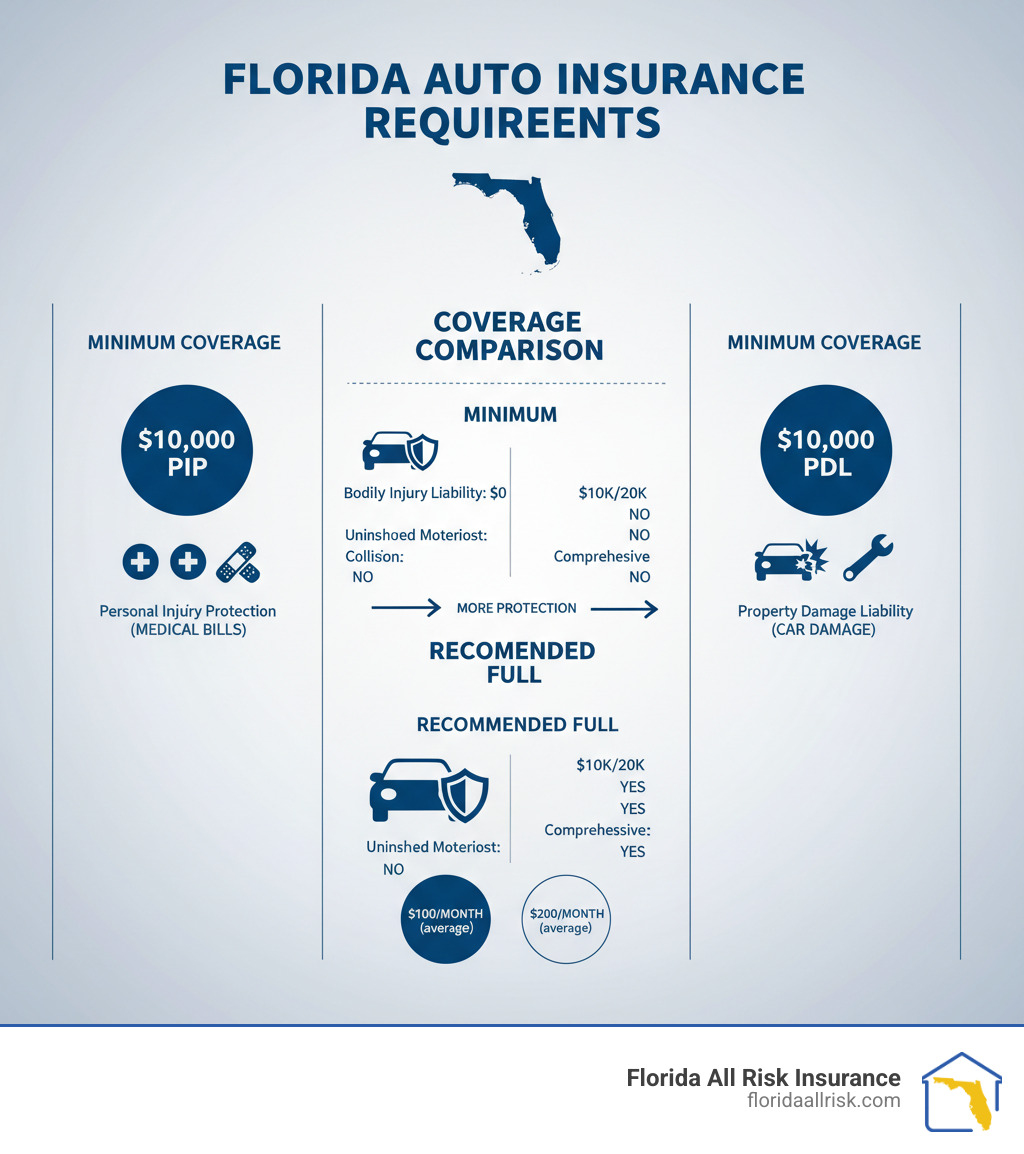
- Know Florida’s minimum requirements – $10,000 Personal Injury Protection (PIP) and $10,000 Property Damage Liability (PDL).
- Compare quotes from multiple sources – Use independent agents, direct carriers, and online tools.
- Look beyond the price – Consider coverage limits, deductibles, and company reputation.
- Ask about discounts – Bundling, safe driver, and multi-car discounts can significantly reduce your premium.
Florida’s unique no-fault system, combined with high rates of uninsured drivers and severe weather, pushes premiums higher than in most states. Full coverage insurance in Florida typically costs around $200 per month, while minimum coverage averages closer to $100 per month. The good news is that with the right approach, you can find affordable coverage that protects you without breaking your budget.
I’m Jason Miller, owner of Florida All Risk Insurance. With over 20 years of experience, my team and I have helped thousands of drivers secure Auto insurance quotes Florida that balance comprehensive protection with affordability. We specialize in navigating Florida’s complex insurance marketplace to find coverage that fits your unique needs.
Understanding Florida’s Unique Car Insurance Landscape
Shopping for auto insurance quotes Florida can be confusing because the state’s insurance landscape is genuinely different. Several factors contribute to higher costs, including high population density in cities like Tampa and Miami, millions of tourists unfamiliar with our roads, and severe weather events like hurricanes that cause significant vehicle damage.
Perhaps the biggest factor is Florida’s no-fault insurance system. This requires drivers to carry Personal Injury Protection (PIP), which covers your own medical bills after an accident, regardless of who is at fault. In an at-fault state, the responsible driver’s insurance pays for injuries and damages. In Florida, you first turn to your own PIP coverage for medical expenses. While this system, in theory, streamlines small claims, it has been a subject of legislative debate for years due to its contribution to high litigation rates and insurance fraud, which ultimately drive up premiums for everyone.
Understanding these challenges helps explain why getting multiple quotes is so important. Florida law mandates two types of coverage:
- Personal Injury Protection (PIP): This is the core of the no-fault system. It covers 80% of your medical expenses and 60% of lost wages up to your policy limit (minimum $10,000). It covers you, relatives in your household, and others driving your car. Importantly, if your injuries are not deemed an “emergency medical condition,” your PIP benefit is limited to just $2,500.
- Property Damage Liability (PDL): This covers damage you cause to someone else’s property, like their car, a mailbox, or a fence. The minimum required is $10,000, which is often dangerously insufficient. A minor accident with a newer car or luxury vehicle can easily result in repair costs exceeding this limit, leaving you to pay the rest out-of-pocket.
Notably, Florida does not mandate Bodily Injury Liability coverage, which pays for others’ injuries when you are at fault. Driving with only the minimums is legal but leaves you financially exposed. For a more detailed breakdown, see our guide on Basic Auto Insurance Florida.
Available Coverage Types Beyond the Minimum
To be truly protected, consider adding these crucial coverages to your policy:
- Bodily Injury Liability (BIL): This is arguably the most important coverage you can add. It protects your personal assets if you injure someone in an accident. Imagine causing a crash that results in $75,000 in medical bills for the other driver; without BIL, you could be sued personally, and your savings, home, and future wages could be at risk. We recommend limits of at least $100,000 per person and $300,000 per accident (100/300).
- Uninsured/Underinsured Motorist (UM/UIM): Critical in Florida, where about one in five drivers is uninsured. If one of these drivers hits you and you’re injured, UM/UIM coverage steps in to pay for your medical bills, lost wages, and pain and suffering—expenses the at-fault driver’s insurance should have covered.
- Collision: This pays to repair or replace your vehicle after an accident, regardless of who is at fault. It covers collisions with other cars or objects (like a pole or a wall). It is typically required by lenders if you have a car loan or lease.
- Comprehensive: This protects your car against non-collision events. In Florida, this is invaluable, covering damage from theft, vandalism, fire, falling objects, civil unrest, and severe weather like flooding and hurricanes. Both Collision and Comprehensive coverages have a deductible, which is the amount you pay before the insurance takes over.
- Medical Payments (MedPay): This optional coverage helps cover the 20% of medical bills that PIP doesn’t pay. It can also be used to cover your PIP deductible or for expenses that exceed your PIP limit, providing an extra layer of financial protection.
- Rental Reimbursement & Roadside Assistance: These optional coverages are convenient and affordable. Rental Reimbursement pays for a rental car while yours is in the shop after a covered claim. Roadside Assistance provides help for breakdowns, flat tires, dead batteries, or lockouts.
Decoding Your Florida Auto Insurance Rates

When you gather auto insurance quotes Florida, the prices you see are based on a complex calculation of your risk profile. Insurers analyze dozens of factors to predict how likely you are to file a claim. Understanding these factors can help you find ways to lower your costs.
On average, full coverage in Florida is about $200 per month, while minimum coverage is closer to $100 per month. However, your rate could be very different. A 40-year-old with a clean record might pay around $1,758 annually, but a 16-year-old could face rates as high as $6,464 per year. Key factors influencing your rate include:
- Your Driving Record: This is the most significant factor. A clean record with no accidents or tickets will earn you the best rates. A history of violations, especially at-fault accidents or serious infractions like a DUI, can add thousands to your annual premium.
- Where You Live: Your ZIP code matters immensely. Urban areas like Miami, Hialeah, and Fort Lauderdale have higher rates of accidents, theft, and litigation, leading to premiums that can be double those in quieter, rural communities in the Panhandle or North Central Florida.
- Age and Experience: Young, inexperienced drivers are statistically more likely to have accidents, making their insurance very expensive. Rates typically decrease with age and experience, with drivers in their 50s and 60s often enjoying the lowest prices before they begin to slowly rise again for senior drivers.
- The Car You Drive: The make, model, and safety features of your vehicle affect your premium. Sports cars, electric vehicles, and luxury vehicles cost more to insure due to high repair costs and theft rates. A sensible sedan or SUV with a high safety rating from the IIHS is much cheaper to cover. Choosing a safer vehicle can lead to discounts.
- Your Credit History: In Florida, insurers are permitted to use a credit-based insurance score to help determine rates. This score is different from your FICO score and predicts your likelihood of filing a claim. Statistically, individuals with better credit history file fewer claims. Maintaining good credit can lead to significantly lower insurance rates.
- Coverage and Deductibles: The more coverage you buy, the higher your premium. Higher liability limits (e.g., 100/300/100 vs. the minimum) increase your premium but offer far more protection. Choosing a higher deductible for comprehensive and collision (e.g., $1,000 instead of $500) can lower your premium but means you pay more out-of-pocket if you file a claim.
For a deeper dive into how rates are calculated, visit our Auto Insurance Rates Florida page.
How a High-Risk Record Affects Your Costs
Being labeled a “high-risk” driver due to a DUI, multiple at-fault accidents, or numerous tickets will significantly increase your insurance costs. High-risk drivers can pay 43% to 134% more than average. A DUI conviction will require an FR-44 filing, which is a specific proof of insurance for the state. An FR-44 mandates much higher liability limits (100/300/50) than the state minimum, making the policy substantially more expensive. Other serious violations may require a standard SR-22 filing.
Finding coverage can be challenging, but maintaining continuous insurance is crucial to avoid even higher rates or license suspension. The good news is that a high-risk status isn’t permanent. By maintaining a clean driving record for three to five years and completing a defensive driving course, you can work your way back to standard rates. We specialize in helping all drivers find suitable coverage. If you’re dealing with a serious violation, our DUI Auto Insurance Florida page has more information.
A Guide to Getting the Best Auto Insurance Quotes Florida
Shopping for auto insurance quotes Florida is an investment in your financial security. The goal is to find the best value—coverage that truly protects you at a competitive price. You can gather quotes by working with an independent agent, contacting insurance companies directly, or using online comparison tools. An independent agent, like our team at Florida All Risk Insurance, shops multiple carriers on your behalf to find the best fit for your needs.
When comparing, the most important principle is to ensure every quote reflects the same coverage limits and deductibles. A cheap premium for minimal coverage isn’t a better deal than a slightly higher premium for comprehensive protection. Price is important, but also consider the insurer’s reputation for customer service and claims handling. A low rate isn’t a bargain if the company is unresponsive when you need them most. For personalized guidance, our Car Insurance Broker St. Petersburg FL team is here to help.
What Information Do I Need for Auto Insurance Quotes Florida?
To get accurate auto insurance quotes Florida, have the following information ready:
- Personal Details: Full name, address, and date of birth for all drivers.
- Driver’s License Numbers: For every licensed driver in your household.
- Vehicle Information: The Vehicle Identification Number (VIN), make, model, year, and current odometer reading for each car.
- Driving History: Details of any accidents, claims, or traffic violations for all drivers in the past five years.
- Current Insurance: Information about your current or prior auto insurance policy to ensure continuous coverage and qualify for potential discounts.
How to Compare Auto Insurance Quotes Florida Effectively
Once you have your quotes, compare them carefully to find the best value:
- Standardize Coverage Limits: Ensure all quotes have identical liability limits (e.g., 100/300/50) and Uninsured Motorist coverage.
- Match Deductibles: Compare quotes with the same comprehensive and collision deductibles (e.g., $500 or $1,000).
- Verify Optional Coverages: Check that add-ons like rental reimbursement or roadside assistance are included in all quotes if you want them.
- Apply All Discounts: Make sure every discount you qualify for has been applied to each quote.
- Research Company Reputation: Look up customer reviews and financial strength ratings from agencies like A.M. Best to ensure the insurer is reliable.
- Consider the Service: An experienced agent provides valuable insight and support that goes beyond the price tag.
By weighing these factors, you can choose a provider that offers the best combination of coverage, service, and price. For more guidance, visit our page on Online Auto Insurance Quotes Florida.
Maximizing Your Savings on Florida Car Insurance
When it comes to auto insurance quotes Florida, you have more control over the price than you might think. Proactive steps can lower your costs while maintaining the protection you need.
The foundation of affordable insurance is a clean driving record. Avoiding accidents and tickets is the single most effective way to keep your premiums low. Beyond that, consider these strategies:
- Choose the Right Car: Vehicles with high safety ratings, advanced safety features, and lower repair costs are typically cheaper to insure. Research insurance costs before you buy a car.
- Improve Your Credit Score: In Florida, a better credit score can lead to lower auto insurance premiums. Paying bills on time and reducing debt can translate into savings.
- Review Your Policy Annually: Life changes and so do insurance rates. An annual review with your agent ensures you have the right coverage and are receiving all eligible discounts. Your needs may have changed, or new discounts may be available.
For more strategies, our guide on Cheap Auto Insurance Quotes Florida offers additional insights.
Available Discounts for Florida Drivers
Discounts are the key to open uping significant savings. Stacking multiple discounts can dramatically reduce your premium. Be sure to ask your agent about these common options:
- Bundling Policies: Combining your auto insurance with a home, renters, or condo policy from the same company can lead to savings of 10-25% on both policies.
- Multi-Car Discount: Insuring more than one vehicle on the same policy almost always results in a discount.
- Good Student Discount: Young drivers who maintain a “B” average or better can often qualify for savings of up to 20%.
- Defensive Driving Course: Completing an approved course can earn you a discount that lasts for several years.
- Vehicle Safety Features: Discounts are often available for anti-lock brakes, airbags, and anti-theft systems.
- Payment Discounts: You can often save by paying your premium in full, setting up automatic payments (EFT), or remaining a loyal customer for several years.
We stay on top of every opportunity to save you money. Explore the full range of options on our Florida Car Insurance Discounts page. We are also proud to partner with organizations like Safe Kids Worldwide® to promote youth auto safety.
The Role of Telematics and Safe Driving Habits
Telematics, or usage-based insurance, offers a modern way for safe drivers to save money. These programs use a smartphone app or a small device in your car to monitor your actual driving habits, such as braking, acceleration, speed, and time of day.
If you consistently demonstrate safe driving, you can earn significant discounts—some drivers save an average of $322 per year. Telematics puts you in control, allowing your good habits to directly translate into lower premiums. It’s a fair and transparent way to be rewarded for being a careful driver. To learn more, visit our Pay As You Drive Insurance Florida page.
Frequently Asked Questions about Auto Insurance in Florida
We often hear the same questions from drivers trying to make sense of their auto insurance quotes Florida. Our state’s insurance rules can be confusing, so here are clear, concise answers to some of the most common questions we receive.
Why are car insurance rates in Florida so much higher than the national average?
Florida’s rates are among the highest in the nation due to a “perfect storm” of factors:
- No-Fault System: Florida’s Personal Injury Protection (PIP) requirement leads to a higher frequency of claims and has historically been susceptible to fraud.
- Uninsured Drivers: An alarmingly high percentage of drivers in Florida (around 20%) are uninsured, increasing costs for those who do carry coverage through higher Uninsured Motorist premiums.
- Severe Weather: Hurricanes, tropical storms, and intense flooding cause widespread vehicle damage, leading to a high volume of comprehensive claims that drive up rates for everyone in affected areas.
- High Litigation & Fraud: Florida has a reputation for high rates of insurance fraud and costly lawsuits related to auto accidents, which insurers pass on to consumers through higher premiums.
- Population Density: Crowded roads in major cities like Miami, Orlando, and Tampa, combined with heavy tourist traffic, lead to more accidents.
What is the difference between no-fault and at-fault states?
The main difference is who pays for injuries after an accident. In a no-fault state like Florida, your own insurance policy’s PIP coverage is your primary source for medical expenses, regardless of who caused the accident. This is meant to speed up payments for injuries. In an at-fault state, the person who caused the accident is financially responsible, and their Bodily Injury Liability insurance pays for the other party’s injuries and damages. This often requires a formal investigation to determine fault before payments are made.
How much can I really save by bundling my auto and home insurance?
Bundling is one of the most effective ways to save. While the exact amount varies by company and your specific policies, customers who combine their auto and home (or renters/condo) insurance with the same provider typically receive discounts from 10% to 25% on both policies. This can easily translate into savings of hundreds of dollars per year. It also simplifies managing your insurance with a single point of contact and one bill.
How does a hurricane claim affect my auto insurance rates?
Filing a single comprehensive claim for hurricane damage (e.g., your car was flooded) will generally not cause your individual rate to spike in the same way an at-fault accident would. That’s because it’s considered a “no-fault” event beyond your control. However, when a hurricane causes widespread damage in a specific region, the insurance company experiences massive losses. To offset this increased risk, they will likely raise the base rates for all policyholders in that geographic area during the next policy renewal cycle. So, while you aren’t penalized individually, you may see an increase as part of a broader regional adjustment.
What is the difference between an SR-22 and an FR-44 in Florida?
Both are certificates of financial responsibility that an insurer files with the Florida Department of Highway Safety and Motor Vehicles (FLHSMV) on your behalf, but they are required for different reasons and have different implications.
- An SR-22 is typically required for non-alcohol-related offenses, such as driving with a suspended license, having too many points on your record, or causing an accident while uninsured. It certifies that you are carrying at least Florida’s minimum required insurance (PIP and PDL).
- An FR-44 is required specifically for DUI/DWI convictions. It is much stricter and more expensive. It certifies that you are carrying significantly higher liability limits: $100,000 in Bodily Injury Liability per person, $300,000 per accident, and $50,000 in Property Damage Liability (100/300/50). This requirement makes finding and affording insurance much more challenging.
Your Road to Affordable Coverage Starts Here
Navigating auto insurance quotes Florida can seem complex, but with the right knowledge, it’s entirely manageable. Florida’s unique environment makes it critical to make informed decisions to secure the best rates.
We’ve covered why rates are high, what coverage you need for true protection, and actionable strategies to save money. Comparing quotes effectively means looking beyond price to the coverage, deductibles, and reliability of the insurance provider.
As an independent agency in St. Petersburg, Florida All Risk Insurance is here to help. We work with a wide range of carriers to find a policy custom to your needs and budget. We’ll explain your options and help you secure comprehensive protection without overpaying.
Take control of your premiums and gain peace of mind on Florida’s roads. Ready to find the best protection for your journey?
Get a personalized auto insurance quote today and see how much you can save. For any questions, don’t hesitate to contact our team of experts.
Contact Us
We’re here to make your search for auto insurance quotes Florida as straightforward as possible. Whether you have questions, need to review your policy, or are ready for a personalized quote, our team at Florida All Risk Insurance is ready to help.
As an independent agency with deep roots in St. Petersburg, we understand the challenges Florida drivers face and are committed to providing expert guidance and support.
Florida All Risk Insurance
Address: 777 Central Ave, St. Petersburg, FL 33701
Phone: (727) 555-0100
Email: [email protected]
Reach out today, and let’s work together to find a policy that protects what matters most to you while fitting comfortably within your budget.

