

Flood Insurance: What’s Covered When the Waters Rise?
Why Understanding Flood Coverage Matters in Florida
What does flood insurance cover is one of the most critical questions facing Florida homeowners today, yet the answer remains surprisingly unclear for many residents. Standard homeowners insurance policies typically exclude flood damage—a gap that leaves countless families financially vulnerable when storm surges, heavy rainfall, or overflowing waterways threaten their properties. In the Sunshine State, where no property is truly immune to the risk of rising water, understanding the nuances of this coverage is not just a financial exercise; it is a necessity for long-term stability.
Quick Answer: What Does Flood Insurance Cover?
Flood insurance provides two distinct types of protection, which are often purchased together but have separate deductibles and limits:
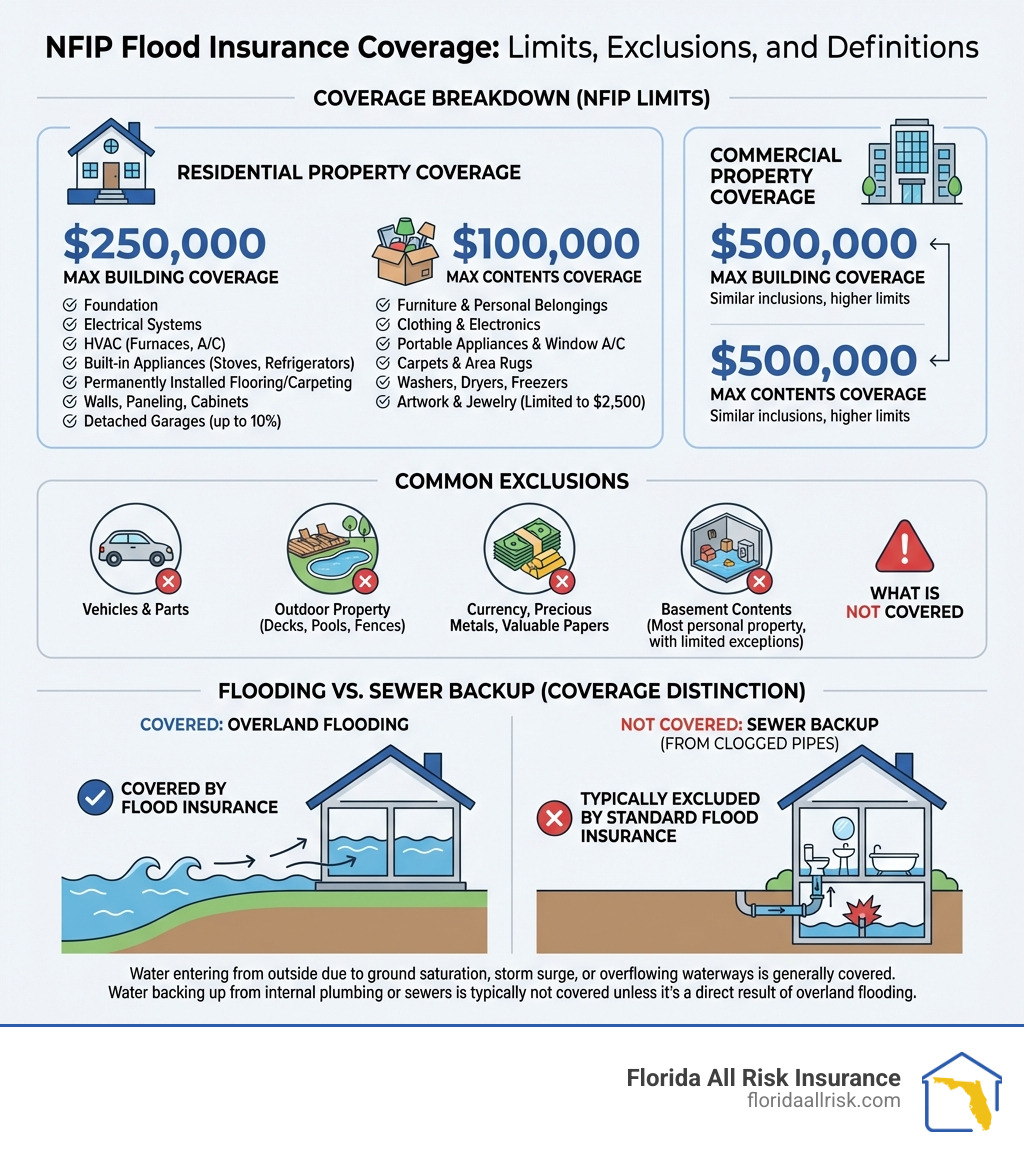
Building Coverage (up to $250,000 for residential properties):
- Foundation and structural elements (including anchorage systems and stairways)
- Electrical and plumbing systems (including circuit breakers and solar energy equipment)
- HVAC equipment, furnaces, and water heaters
- Built-in appliances (refrigerators, dishwashers, stoves, and built-in microwaves)
- Permanently installed carpeting and flooring over unfinished subflooring
- Walls, paneling, and cabinets
- Detached garages (up to 10% of building coverage, though this reduces the total limit available for the main house)
- Fuel tanks and the fuel in them, well water tanks and pumps, and pressure tanks
Contents Coverage (up to $100,000 for residential properties):
- Furniture and personal belongings (sofas, beds, tables)
- Clothing and electronics (televisions, computers, sound systems)
- Portable appliances and window air conditioners
- Carpets and area rugs not covered by building coverage
- Washers, dryers, and food freezers (and the food inside them)
- Artwork, furs, and jewelry (limited to a combined total of $2,500)
What is NOT Covered:
- Currency, precious metals, and valuable papers (stock certificates, bonds)
- Vehicles and their parts (cars, motorcycles, golf carts)
- Property in basements (with limited exceptions for structural items and utilities)
- Outdoor property (pools, decks, fences, landscaping, seawalls, and docks)
- Temporary housing and living expenses (Loss of Use is not covered by NFIP)
- Damage from moisture or mold that could have been prevented by the owner
- Financial losses caused by business interruption
According to FEMA, the average flood claim costs approximately $43,000—a devastating expense for any family forced to pay out of pocket. In Florida, where coastal storm surges and tropical downpours are seasonal realities, this protection isn’t just recommended; for many properties with federally backed mortgages in high-risk zones, it’s legally required. Even outside of these zones, the risk remains high; nearly 25% of all flood insurance claims come from areas designated as low-to-moderate risk.
The confusion surrounding flood coverage stems from a fundamental misunderstanding: most homeowners assume their standard property insurance will protect them from rising waters. It won’t. Flood insurance is a separate policy, primarily offered through the National Flood Insurance Program (NFIP) or increasingly through private carriers, and it operates under different rules, limits, and definitions than traditional homeowners coverage. The “100-year flood” terminology often misleads people into thinking they are safe for a century, when in reality, it means there is a 1% chance of flooding every single year.
The distinction between “water damage” and “flooding” creates another layer of complexity. Water damage from a burst pipe inside your home? That’s covered by your homeowners policy. Water that enters from outside due to ground saturation, storm surge, or overflowing waterways? That requires flood insurance. Understanding where one policy ends and another begins can mean the difference between a covered claim and a financial catastrophe.
I’m Jason Miller, and I’ve spent over two decades helping Florida families steer the complexities of what does flood insurance cover and ensuring they have the right protection when the waters rise. As a second-generation insurance professional and owner of Florida All Risk Insurance, I’ve guided thousands of homeowners through the often-confusing landscape of flood risk, policy limits, and claim requirements—experience that becomes invaluable when every inch of water can cause tens of thousands of dollars in damage.
Easy what does flood insurance cover glossary:
Understanding the Basics: What Does Flood Insurance Cover?
To understand what does flood insurance cover, one must first understand how the National Flood Insurance Program (NFIP) defines a “flood.” According to the NFIP, a flood is a general and temporary condition of partial or complete inundation of two or more acres of normally dry land area, or of two or more properties (at least one of which is your property). This inundation must result from the overflow of inland or tidal waters, unusual and rapid accumulation or runoff of surface waters from any source, mudflow, or the collapse or subsidence of land along the shore of a lake or similar body of water as a result of erosion or undermining by waves or currents exceeding anticipated cyclical levels.
Standard homeowners insurance typically covers “water damage” that originates from within the home—such as a burst pipe or a leaking water heater. However, it almost never covers “flooding” that originates from outside the home. This is where a dedicated flood policy becomes essential. Flood insurance is designed to protect the physical structure of your home and the personal belongings inside it from external water sources. It is important to note that the NFIP uses the Standard Flood Insurance Policy (SFIP) forms, which are legal contracts. There are three main forms: the Dwelling Form (for residential homes), the General Property Form (for commercial buildings), and the Residential Condominium Building Association Policy (RCBAP).
Specific Types of Water Damage Covered
Flood insurance specifically addresses damage caused by “overland” water. This includes coastal storm surges—a major concern for Florida residents—as well as flash flooding from heavy rainstorms, overflowing rivers, and even the rapid melting of snow in northern climates. It also covers mudflows, which are defined as a river of liquid and flowing mud on the surfaces of normally dry land areas. This is distinct from landslides or slope failures, which are generally not covered by flood insurance.
It is important to note that “water damage” from a sewer backup is only covered by flood insurance if the backup is a direct result of a flood in the area. If your sewer backs up due to a localized plumbing failure or a clogged pipe, flood insurance will not provide coverage. Furthermore, the policy covers damage from “hydrostatic pressure,” which occurs when water in the ground exerts pressure against a foundation, causing it to crack or fail. This is a common issue in Florida’s sandy soils during periods of extreme saturation.
Coverage Limits for Building and Contents under Flood Insurance
When purchasing a policy through the NFIP, there are strict maximum limits on how much the government will pay for a loss. For a single-family residential home, the maximum building coverage is $250,000. This covers the structure itself, including the foundation, electrical and plumbing systems, and built-in appliances. For personal belongings, the maximum contents coverage is $100,000. These limits have remained unchanged for many years, despite rising construction costs and inflation.
For business owners, the limits are higher: up to $500,000 for the building and $500,000 for the contents. If your home or business is valued higher than these limits, you may need to seek “excess flood insurance” through the private market to ensure you are fully protected. Excess flood insurance sits on top of your primary NFIP policy and provides additional limits to cover the full replacement cost of your property. Understanding these limits is crucial for homeowners in high-value areas like St. Petersburg, where rebuilding costs can easily exceed the federal cap. For more detailed insights into what flood insurance might cost you in the Sunshine State, we invite you to explore our guide on More info about flood insurance cost in Florida.
The NFIP vs. Private Flood Insurance: How Coverage is Determined
While the NFIP is the most common provider of flood insurance, the private market has expanded significantly in recent years, offering more options for Florida residents. Private flood insurance policies often mirror the NFIP’s coverage but can offer higher limits and additional perks, such as coverage for temporary living expenses (loss of use), which the NFIP does not provide. This can be a significant advantage, especially for those who might need to relocate while their home is being repaired after a flood. Private carriers also often have shorter waiting periods—sometimes as little as 10 to 15 days, compared to the NFIP’s standard 30-day waiting period.
The way your claim is paid depends heavily on the type of coverage you have. Most building coverage is settled on a Replacement Cost Value (RCV) basis, provided the home is your primary residence and you have insured it for at least 80% of its full replacement cost. RCV pays the cost to repair or replace the damaged parts of your home without deducting for depreciation. In contrast, personal property (contents) is almost always settled on an Actual Cash Value (ACV) basis. ACV takes the replacement cost and subtracts depreciation based on the age and condition of the item, meaning you may not receive enough money to buy a brand-new version of the item that was lost.
Actual Cash Value vs. Replacement Cost Value
The distinction between ACV and RCV is one of the most important aspects of what does flood insurance cover. Imagine a five-year-old sofa is destroyed in a flood. Under ACV, the insurance company will determine what that five-year-old sofa was worth just before the flood—likely a fraction of its original price. Under RCV (if available through a private policy), they would pay the cost to buy a similar new sofa today. For the structure of your home, maintaining the “80% rule” is vital. If you underinsure your home, the NFIP may apply a penalty, paying out only the ACV of the structure rather than the full replacement cost. This is why accurately assessing your home’s replacement cost is so important, especially in Florida’s dynamic construction market where labor and material costs can spike after a major storm.
The Role of Flood Maps and Risk Rating 2.0
FEMA uses Flood Insurance Rate Maps (FIRMs) to identify different levels of flood risk. These maps are critical tools for understanding your property’s vulnerability. Areas labeled with “A” or “V” are considered Special Flood Hazard Areas (SFHAs) and have at least a 1% annual chance of flooding. In these zones, flood insurance is typically mandatory for anyone with a federally backed mortgage. For coastal Florida, Zone V designations are particularly common, indicating areas subject to high-velocity wave action and storm surge.
Recently, FEMA implemented “Risk Rating 2.0,” a new methodology for determining premiums. Instead of relying solely on flood zones, Risk Rating 2.0 considers individual property characteristics, such as distance to water, type of flooding (river, coast, or heavy rain), and the cost to rebuild. This provides a more accurate picture of risk but has led to premium changes for many Florida residents. However, it is a common mistake to assume that living in a “low-risk” zone (Zone X or B) means you don’t need insurance. In fact, more than 20% of NFIP claims come from outside high-risk areas. We’ve seen in Pinellas County that even properties outside official flood zones can experience significant damage during heavy rain events. Flood maps are updated periodically to reflect changes in topography, urban development, and climate patterns, so it is wise to check your property’s designation regularly via FloodSmart.gov to stay informed.
What is Specifically Excluded from Flood Policies?
Even the most comprehensive flood insurance policy has exclusions. It is essential to know what is not covered to avoid surprises during the claims process. Generally, flood insurance does not cover damage caused by moisture, mildew, or mold that could have been avoided by the property owner. If you wait weeks to begin drying out your home after the water recedes, any resulting mold growth may be denied. This emphasizes the importance of prompt action and mitigation efforts following a flood event. Furthermore, damage caused by “earth movement” (such as sinkholes or earthquakes) is excluded, even if the movement was triggered by a flood.
Common Exclusions and Basement Limitations
One of the most misunderstood areas of flood insurance is basement coverage. The NFIP defines a basement as any area of a building that has its floor subgrade (below ground level) on all sides. Coverage in these areas is extremely limited. While the policy will cover structural elements like the foundation, water heaters, and furnaces located in a basement, it will not cover finished walls, carpeting, or personal belongings like furniture and electronics stored there. This can be a harsh reality for homeowners who have invested in finishing their basements. In Florida, while true basements are rare, “sunken” rooms or crawlspaces that meet this definition can face similar restrictions.
Other common exclusions include:
- Outdoor Property: Decks, fences, patios, swimming pools, septic systems, and landscaping are generally not covered. We often see homeowners surprised that their beautifully landscaped yards or new pool decks aren’t covered after a flood. This also includes seawalls, docks, and piers, which are highly susceptible to storm surge damage.
- Vehicles: Cars, motorcycles, and boats are not covered by flood insurance; these typically require comprehensive coverage under an auto or marine policy. If your car is flooded in your garage, your flood policy will cover the garage structure, but your auto policy must cover the vehicle.
- Currency and Valuables: Cash, stock certificates, and precious metals are excluded. There is also a $2,500 limit on high-value items like artwork, furs, and jewelry. This is a total limit, not a per-item limit, so if you have multiple valuable pieces, you may need a separate “inland marine” or “scheduled personal property” rider on your homeowners policy.
- Living Expenses: The NFIP does not pay for hotel stays or meals while your home is being repaired. This is known as “Additional Living Expenses” (ALE). If you need coverage for ALE, you would need to seek a private flood insurance policy that includes this benefit, as it can be a lifesaver when a home is uninhabitable for months.
The Difference Between Water Damage and Flooding
As mentioned earlier, the source of the water determines which policy responds. If a pipe bursts in your upstairs bathroom, your homeowners insurance covers the damage. If a heavy rainstorm causes water to seep through your foundation walls due to hydrostatic pressure, this is often considered a “sewer backup” or “seepage” issue rather than a “flood” unless the entire area is inundated. This distinction is a frequent point of contention in insurance claims, making it vital to have both a strong homeowners policy and a separate flood policy.
For example, if your sewer backs up because the municipal system is overwhelmed by floodwaters, your flood policy might cover it. But if it backs up due to a clog in your own plumbing, that’s typically a homeowners insurance issue, or requires a specific sewer backup endorsement on your homeowners policy. Additionally, “gradual seepage” that occurs over a long period is rarely covered by either policy, as insurance is designed to cover sudden and accidental events. Regular maintenance of your home’s exterior and drainage systems is the best defense against seepage issues.
Navigating Requirements, Costs, and Risk Mitigation
For many Florida homeowners, flood insurance isn’t just a choice—it’s a requirement. If you live in a high-risk flood zone and have a mortgage from a federally regulated or insured lender, you are legally required to carry flood insurance. Even if your lender doesn’t require it, the peace of mind is often worth the cost, especially considering that just one inch of water can cause over $25,000 in damage to a home. We’ve seen this time and time again in St. Petersburg and across Florida – a small amount of water can lead to significant structural and content damage.
When is Flood Insurance Required for Homeowners?
In St. Petersburg and surrounding Pinellas County, many properties fall within the SFHA. Lenders require flood insurance to protect their collateral. If you fail to maintain coverage, the lender may “force-place” a policy on your behalf, which is often significantly more expensive and provides less protection than a policy you purchase yourself. Additionally, if you have received federal disaster assistance in the past (such as a FEMA grant or SBA loan), you may be required to maintain flood insurance on that property indefinitely to remain eligible for future aid. This ensures that federal funds are not repeatedly used for properties that could have been insured. You can find more comprehensive information on flood insurance requirements and policies on the FEMA Flood Insurance page.
How to Reduce Your Flood Risk and Lower Premiums
There are several ways to lower the cost of your flood insurance premiums while simultaneously protecting your property. One of the most effective methods is obtaining an Elevation Certificate (EC). This document, prepared by a licensed surveyor, compares your home’s elevation to the estimated flood level in your area (the Base Flood Elevation). If your home is built above the base flood elevation, your rates could drop significantly. An EC is a powerful tool for demonstrating reduced risk to insurers.
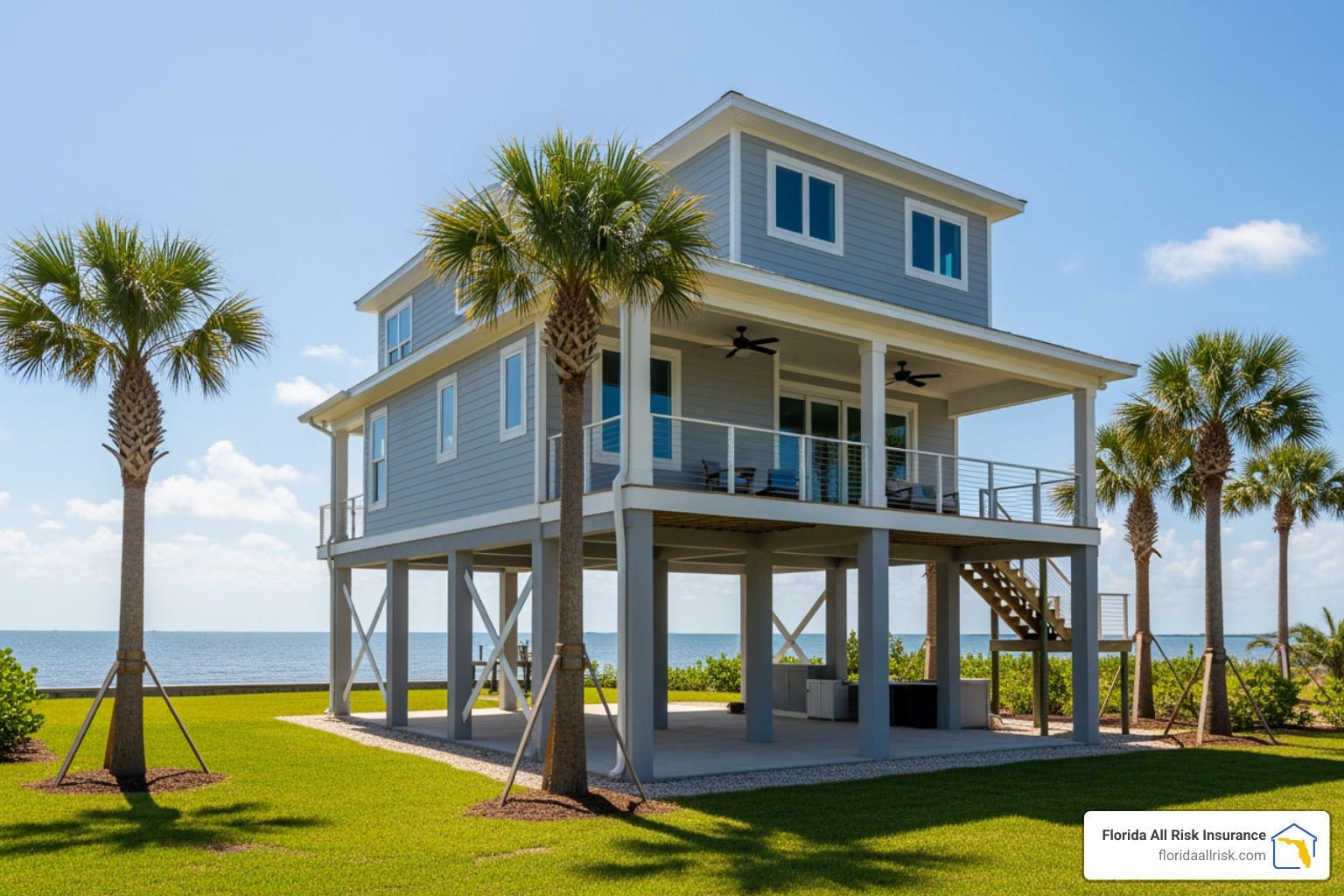
Other mitigation strategies include:
- Installing Flood Vents: These allow water to flow freely through a crawlspace or enclosed area below the base flood elevation, equalizing pressure and preventing structural collapse. They’re a smart investment for many Florida homes and can lead to substantial premium discounts.
- Elevating Utilities: Moving your HVAC unit, water heater, and electrical panel above the flood level not only protects critical systems but can also earn you discounts on your premium. This is often one of the most cost-effective ways to reduce potential damage.
- Community Rating System (CRS): Many cities in Florida, including St. Petersburg, participate in the CRS. This is a voluntary incentive program that recognizes communities for implementing floodplain management practices that exceed the minimum NFIP requirements. Depending on the community’s rating, residents can receive discounts of 5% to 45% on their flood insurance premiums.
- Increased Cost of Compliance (ICC): This is a fantastic benefit included in most NFIP policies. If your home is substantially damaged by a flood (meaning the cost to repair is 50% or more of the building’s market value before the damage), your NFIP policy includes ICC coverage, which provides up to $30,000 to help cover the cost of bringing your home into compliance with local floodplain management laws (e.g., elevating or relocating the structure). This can be a game-changer for homeowners facing severe damage and the need to rebuild to modern standards.
Filing a Claim: The Proof of Loss and ICC Coverage
When a flood occurs, the clock starts ticking. You must notify your insurance agent or company immediately to start the claims process. Here at Florida All Risk Insurance, we guide our clients through this stressful period. An adjuster will be assigned to visit your property and assess the damage. It is your responsibility to document everything. Take photos and videos of the water levels and the damage to both the structure and your belongings before you begin the cleanup process. We recommend creating a detailed inventory of damaged items, including the date of purchase, original cost, and brand names, even if it feels overwhelming at the time.
During the inspection, the adjuster will create a “Scope of Work” or a preliminary report. It is important to review this carefully to ensure all damaged areas are included. If you discover additional damage later, you can file a “supplemental claim,” but it is much easier to get it right the first time. Do not throw away damaged items until the adjuster has seen them, unless they pose a health hazard (like spoiled food). If you must discard items, take clear photos of them first.
The most critical document in this process is the “Proof of Loss” form. This is a formal, sworn statement that outlines the amount you are claiming under the policy, supported by documentation like receipts, photos, and repair estimates. Under the NFIP, you typically have 60 days from the date of the loss to submit this form. Failing to meet this deadline or providing untruthful information can result in your claim being denied or your policy being voided. We always stress the importance of accuracy and timeliness when completing this form. Once the Proof of Loss is accepted, the insurance company will issue payment, which may be split between you and your mortgage lender if the building is covered.
Frequently Asked Questions about What Does Flood Insurance Cover
We often hear similar questions from our clients about what does flood insurance cover. Here are some of the most common queries we address:
Does flood insurance cover mold?
Flood insurance only covers mold damage if it is a direct result of a flood and the property owner took reasonable steps to prevent its growth. If the mold is caused by a lack of maintenance or a failure to dry out the property promptly (such as leaving the house closed up for weeks after the water recedes), it will likely be excluded. This highlights the importance of immediate action after a flood to mitigate further damage, including using fans and dehumidifiers as soon as it is safe to do so.
Is sewer backup covered by flood insurance?
Sewer backup is only covered if it is directly caused by rising floodwaters in the area. If the backup occurs due to a blockage in your home’s plumbing or a failure of the municipal sewer system unrelated to a flood, it is not covered by a standard flood policy. You might need a specific sewer backup endorsement on your homeowners policy for those situations. This is a common gap in coverage that we help our clients identify.
Does flood insurance cover my car?
No. Flood insurance specifically excludes self-propelled vehicles. Damage to your car from a flood is typically covered under the “comprehensive” portion of your auto insurance policy. So, if your car is submerged during a hurricane, you’ll be looking to your auto insurer, not your flood insurer, for help. This is why we recommend reviewing all your insurance policies before hurricane season begins.
Is there a waiting period for flood insurance?
Yes, for the NFIP, there is typically a 30-day waiting period from the date of purchase before the policy becomes effective. There are exceptions, such as when you are purchasing a new home and the lender requires coverage at closing. Private flood insurance companies often have much shorter waiting periods, ranging from 0 to 15 days. This is why you cannot wait until a storm is in the Gulf to buy coverage.
Does flood insurance cover my condo?
If you own a condo, your association likely has a master policy (RCBAP) that covers the building’s structure and common areas. However, this may not cover the interior of your unit (like your cabinets and flooring) or your personal belongings. You should purchase your own flood policy (often called a “contents-only” policy or a unit-owner policy) to ensure your specific assets are protected.
Conclusion
Navigating the waters of flood insurance can be overwhelming, but understanding what does flood insurance cover is the first step toward protecting your most valuable assets. From the strict limits of the NFIP to the flexible options of the private market, having the right coverage ensures that a natural disaster doesn’t become a permanent financial catastrophe. For residents in St. Petersburg and throughout the Sunshine State, the risk of flooding is a part of life, but it doesn’t have to be a threat to your future. The peace of mind that comes with knowing your home and belongings are protected is invaluable, especially when the clouds begin to gather.
Florida All Risk Insurance is dedicated to helping homeowners and businesses find the perfect balance of protection and affordability. As an independent agency based in the heart of St. Petersburg, we have the local expertise and access to a wide range of carriers to ensure you are never left unprotected when the tide rises. We pride ourselves on personalized service, making sure your policy is custom to your unique needs and risks. We understand the local flood maps, the impact of Risk Rating 2.0, and the specific challenges faced by coastal residents.
Ready to secure your home? Get a personalized flood insurance quote today and ensure your property is protected against the unexpected. Our team is ready to help you compare NFIP and private options to find the best fit for your budget.
Don’t wait for the storm to hit. Contact our expert team to review your current policy and identify any gaps in your coverage. We’re here to help you steer the complexities of flood protection with confidence and clarity. Whether you are a first-time homebuyer or a long-time resident, we are your partners in protection.
Contact Us
Florida All Risk Insurance Address: 136 4th St N, Ste 229, Saint Petersburg, FL 33701 Phone: (727) 475-5757 Email: [email protected] Website: https://floridaallrisk.com/

