

Flood insurance prices: 5 Smart Ways to Save
Why Understanding Flood Insurance Prices Matters for Florida Homeowners
Flood insurance prices are a crucial consideration for every Florida homeowner. If you’re searching for clear answers about costs, here’s what you need to know right now:
Quick Answer: Flood Insurance Prices at a Glance
- National Average: $898 per year (March 2025)
- Florida Average: $865 per year
- High-Risk Zones (A or V): $1,031+ annually
- Low-Risk Zones (X, B, C): $691 annually
- Contents-Only for Renters: As low as $100 per year
- Commercial Properties: $2,000 to $10,000+ per year
Flooding is the #1 natural disaster in the United States, and here’s the wake-up call: one inch of floodwater can cause $25,000 worth of damage to your home. Yet many Florida homeowners don’t realize that standard homeowners insurance excludes flood damage completely. You need a separate flood insurance policy—and understanding what you’ll pay for that protection is essential.
According to the Department of Homeland Security, 90 percent of U.S. natural disasters involve flooding. Whether you live near the coast, along a river, or in what seems like a low-risk area, your property is vulnerable. The good news? Comparing flood insurance prices and understanding your options can help you find affordable, comprehensive coverage that fits your budget.
The process doesn’t have to be overwhelming. By following five straightforward steps—assessing your risk, understanding price factors, comparing policy types, getting quotes, and finding ways to save—you can secure the protection your home needs without overpaying.
I’m Jason Miller, and with over 20 years of experience helping Florida families steer flood insurance prices and coverage options, I’ve built Florida All Risk Insurance on a foundation of expert guidance and superior customer service. My goal is to make comparing flood insurance simple, so you can protect what matters most with confidence.
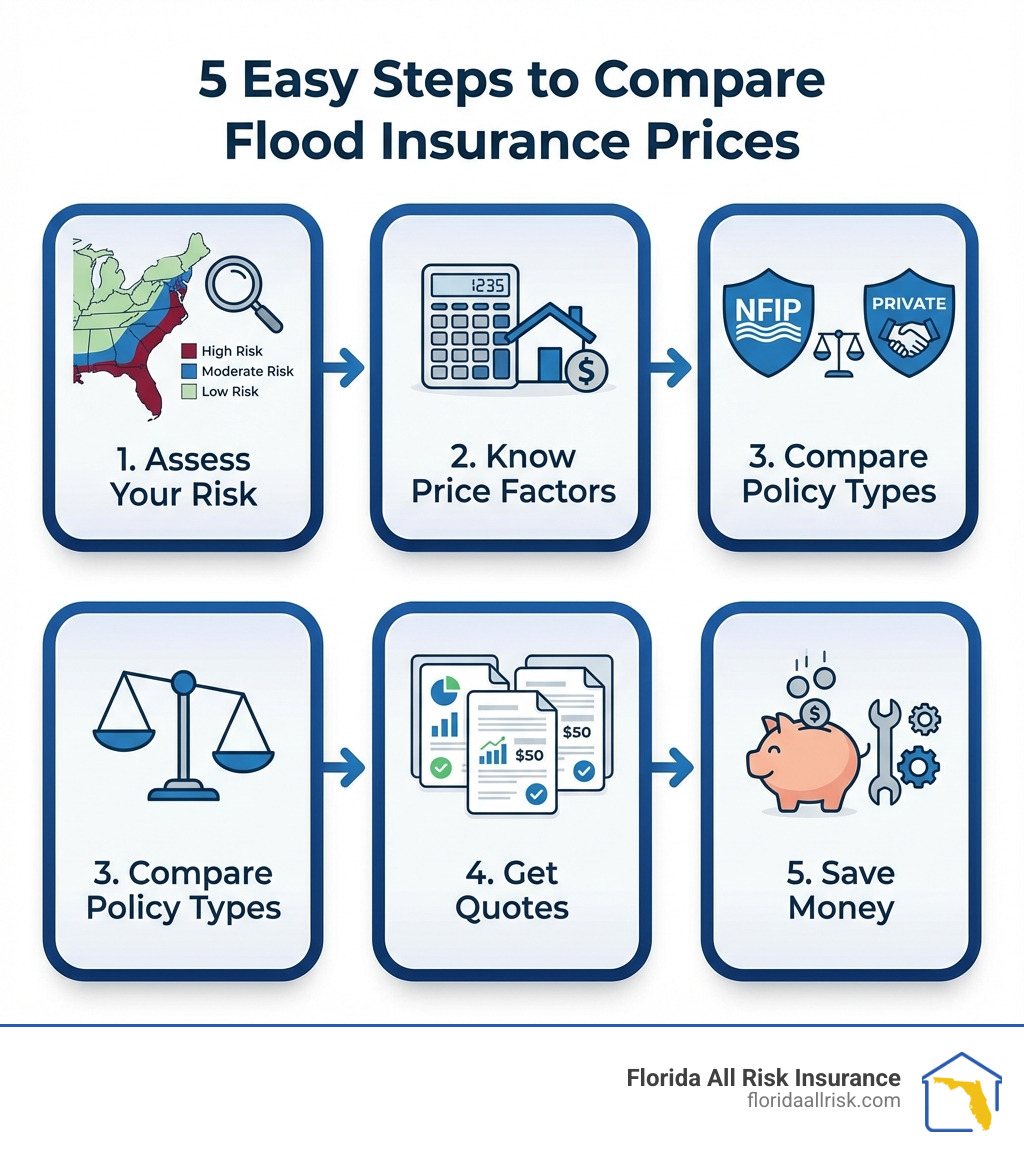
Step 1: Assess Your Property’s Unique Flood Risk
Before we even begin talking about flood insurance prices, the very first step is to truly understand your property’s unique flood risk. Many people assume that if they aren’t right on the coast or next to a river, they’re safe. However, the reality in Florida, and across the U.S., is that floods can happen anywhere. According to the Department of Homeland Security, 90 percent of U.S. natural disasters involve flooding. This means that even if you’re in an area not traditionally considered “high-risk,” heavy rainfall, poor drainage, or unforeseen weather events can still lead to significant water damage.
For many homeowners, especially those with a mortgage, understanding flood risk isn’t just about peace of mind—it’s a requirement. Lenders often mandate flood insurance if your property falls within a designated high-risk flood zone. You can learn more about these specific requirements on our page dedicated to Flood Insurance Requirements Florida. Knowing your flood zone is critical because it directly impacts whether insurance is required and what your flood insurance prices will look like.
Understanding FEMA Flood Zones
The Federal Emergency Management Agency (FEMA) uses flood maps to designate areas based on their risk of flooding. These designations are known as FEMA Flood Zones. We often refer to these when discussing your property’s vulnerability. You can explore these designations and what they mean on our dedicated FEMA Flood Zone Map page.
The most critical zones are the Special Flood Hazard Areas (SFHAs), which include Zones A and V. Properties in these zones have a 1-in-4 chance of flooding over the course of a 30-year mortgage.
- Zone A: Areas subject to inundation by the 1-percent-annual-chance flood event.
- Zone V: Coastal areas with additional hazards associated with storm-induced velocity (wave) action.
Then, we have the moderate-to-low risk zones, typically identified as Zones B, C, or X. While these zones are considered lower risk, it doesn’t mean no risk. In fact, FEMA statistics show that more than one in three flood insurance claims are outside of high-risk flood zones. This means even if you’re in a Zone X, you’re not immune to the devastating effects of flooding.
You can easily check your property’s specific flood risk by entering your address into the Federal Emergency Management Agency’s Flood Map Service Center. For those of us in Florida, understanding local nuances is key. For example, you might want to specifically check resources like the St. Johns County, Florida Flood Zone Map to understand regional specifics.
Is Flood Insurance Required?
The question of whether flood insurance is required often comes down to your mortgage lender. If your property is located in a Special Flood Hazard Area (SFHA) and you have a federally backed mortgage, federal law mandates that you purchase flood insurance. This is a condition of your loan, and failure to maintain coverage can have serious consequences. Our page, Does Flood Zone AE Require Flood Insurance in Florida?, provides more detail on specific zone requirements.
However, even if your lender doesn’t require it, or if you own your home outright, we strongly recommend considering flood insurance. In Florida, with our susceptibility to hurricanes, tropical storms, and heavy rainfall, the peace of mind knowing you’re protected is invaluable. Flooding can occur anywhere, and the financial impact of not having coverage can be catastrophic. Many Floridians wonder, Does Everyone in Florida Need Flood Insurance? While not everyone is legally required, we believe everyone in our state is at risk and should seriously consider it.
Step 2: Understand the Key Factors That Determine Flood Insurance Prices
Once you understand your property’s flood risk, the next step is to dig into what actually determines your flood insurance prices. It’s not just a flat rate; multiple variables come into play, creating a unique price for each property. Our goal is to help you understand these factors so you can make informed decisions. We offer a comprehensive Flood Insurance Risk Assessment to help you understand these elements.
Historically, flood insurance rates were largely based on broad flood zone designations. However, FEMA has introduced a new methodology that significantly changed how flood insurance prices are calculated, moving towards a more individualized approach.
How FEMA’s Risk Rating 2.0 Changed Flood Insurance Prices
FEMA’s Risk Rating 2.0, fully implemented as of April 1, 2023, represents a significant shift in how flood insurance prices are determined for policies issued through the National Flood Insurance Program (NFIP). This new approach moves away from simply using broad flood zone designations and instead focuses on a property’s unique, individual flood risk. You can read more about this comprehensive update on FEMA’s NFIP’s Pricing Approach page.
Under Risk Rating 2.0, FEMA now considers a much broader range of factors, including:
- Flood Frequency: How often does flooding occur in your specific area?
- Distance to Water: How close is your property to a river, lake, or coastline?
- Rebuilding Cost: The estimated cost to rebuild your home.
- First-Floor Elevation: The elevation of your home’s lowest floor relative to the ground.
- Foundation Type: The type of foundation your home has (e.g., slab, crawlspace, liftd).
- Types of Flooding: The specific types of flood risk your property faces (e.g., riverine, coastal, heavy rainfall).
This new methodology aims to set more accurate and equitable flood insurance prices that truly reflect a property’s flood risk. While some policyholders, particularly those in older homes or previously subsidized rates, may see increases, others may experience decreases. For existing policies, federal law generally prevents your premium from going up by more than 18% in any given year, allowing for gradual adjustments towards your property’s true risk rate. You can dig deeper into this new system and its implications on FEMA’s Learn more about Risk Rating 2.0 page.
Property Characteristics and Location
Beyond the overarching Risk Rating 2.0 methodology, several specific characteristics of your property and its location play a crucial role in shaping your flood insurance prices:
- First-Floor Elevation: This is a huge factor, especially in high-risk zones. If your home’s lowest floor is liftd above the Base Flood Elevation (BFE)—the expected height floodwaters would reach in a 100-year flood—your risk is lower, and so are your premiums. Elevating a property by just a few feet above the BFE can result in substantial savings on premiums.
- Foundation Type: Whether your home has a basement, crawlspace, or is built on a slab or liftd pilings can affect your rate. Basements, for instance, can sometimes lead to higher premiums in high-risk areas due to increased vulnerability.
- Age and Construction Materials: Older homes may be more expensive to insure against flooding compared to newer constructions, often because they might not meet current building codes designed to mitigate flood damage. The cost to rebuild your home with current materials also factors in.
- Proximity to a Flood Source: The closer your home is to a body of water, whether it’s the Gulf of Mexico, a Florida river, or even a large retention pond, the higher your perceived flood risk and, consequently, your premium.
These factors are particularly relevant when we consider the Average Cost of Flood Insurance in Florida, where coastal proximity and varied construction types are common.
Your Chosen Coverage and Deductible
Finally, the decisions you make about your policy—how much coverage you want and your deductible—directly influence your flood insurance prices.
- Building Coverage Limits: This is the amount of money you would receive to repair or rebuild your home’s structure. For residential properties, the NFIP typically offers up to $250,000 in building coverage. If your home is valued higher, you might need to consider private flood insurance for additional protection.
- Contents Coverage Limits: This covers your personal belongings inside the home, such as furniture, electronics, and clothing. The NFIP usually provides up to $100,000 for contents coverage for residential properties. You can learn more about specific coverages on our Flood Insurance Coverage Florida page.
- Deductible Amount: Just like with other insurance policies, choosing a higher deductible on a flood policy leads to a lower annual premium. However, this means you’ll pay more out-of-pocket if you file a claim. It’s about finding the right balance between a manageable premium and an affordable out-of-pocket expense in the event of a flood.
Step 3: Compare National Flood Insurance Program (NFIP) and Private Policies
When looking for flood insurance in Florida, you essentially have two main avenues for coverage: the National Flood Insurance Program (NFIP), which is federally backed, and the growing private flood insurance market. We often guide our clients through both options to find the best fit for their needs. Our FEMA Flood Insurance page provides further details on the federal program.
The private flood insurance market has expanded significantly. According to research from Triple-I, nearly 80 private insurers write flood insurance and account for nearly a third of total premiums written for U.S. flood insurance. This expansion provides more options for homeowners, especially in states like Florida. We help you steer these choices to find the Best Flood Insurance Companies for your specific situation.
National Flood Insurance Program (NFIP)
The NFIP was established by Congress in 1968 and is managed by FEMA. It aims to reduce the impact of flooding on private and public structures by providing affordable insurance to property owners and by encouraging communities to adopt and enforce floodplain management regulations.
- Availability: The NFIP is available to any property owner in a community that participates in the program, which most Florida communities do.
- Coverage Limits: For residential properties, the NFIP offers up to $250,000 for building coverage and up to $100,000 for contents coverage. For commercial properties, these limits are higher, up to $500,000 for building and $500,000 for contents. If you’re a business owner, our Commercial Property Flood Insurance Guide has more information.
- Waiting Period: Typically, there’s a 30-day waiting period from the date you purchase an NFIP policy until it goes into effect, though there are some exceptions (e.g., if required by a lender at loan closing).
- Pricing: Under Risk Rating 2.0, NFIP flood insurance prices are based on individual property risk, making them more reflective of actual flood exposure.
Private Flood Insurance
The private flood insurance market has become a viable alternative or supplement to the NFIP, especially in Florida. These policies are offered by private insurance companies, often with different underwriting guidelines and pricing models. You can explore more about these options on our Flood Insurance Companies Florida page.
- Flexibility and Higher Coverage: Private policies often offer higher coverage limits than the NFIP, which is beneficial for high-value homes or commercial properties. They can also be more flexible, with options for additional coverages like Additional Living Expenses (ALE) if you’re displaced from your home due to flood damage.
- Waiting Periods: Private policies typically have shorter waiting periods, often around 14 days, which can be advantageous if you need quicker coverage.
- Cost Competitiveness: For some properties, particularly those in lower-risk zones or with specific mitigation features, private flood insurance can offer more competitive premiums than the NFIP. However, this isn’t always the case, and compare.
Table: Comparing NFIP vs. Private Flood Insurance
To help you visualize the differences, here’s a quick comparison:
| Feature | NFIP (or even a small amount of floodwater can cause significant damage to your home, according to FEMA).
Step 4: How to Get Personalized Flood Insurance Quotes
Now that you understand your risk and the factors influencing flood insurance prices, the next crucial step is to obtain personalized quotes. This is where our expertise at Florida All Risk Insurance truly shines. We help you gather the necessary information and steer the options.
Information Needed for an Accurate Quote
To get the most accurate and competitive flood insurance prices, you’ll need to provide some specific details about your property. Having this information ready will streamline the quoting process:
- Property Address: The exact address of the building you want to insure.
- Construction Year: The year your home was built, as this influences its vulnerability and compliance with older building codes.
- Foundation Type: Whether your home has a slab, crawlspace, or is liftd on pilings or columns.
- Number of Floors: The total number of floors in your home, excluding basements if applicable.
- Square Footage: The total living area of your property.
- Desired Building Coverage: The amount you want to cover for the structure of your home.
- Desired Contents Coverage: The amount you want to cover for your personal belongings.
- Elevation Certificate (if available): This document, prepared by a licensed land surveyor, provides crucial information about your home’s elevation relative to the Base Flood Elevation (BFE) and can significantly impact your premium. Even if not required, it can often help reduce your rate.
Where to Find Quotes
Finding the right flood insurance policy means comparing options. As an independent agency, we specialize in doing this for you.
- Independent Insurance Agents: This is where we come in. An independent agent, like us at Florida All Risk Insurance, works for you, not a single insurance company. We have access to policies from multiple carriers, both NFIP and private, allowing us to compare flood insurance prices and coverages on your behalf. If you’re searching for a Flood Insurance Agent Near Me in Saint Petersburg, Florida, or anywhere in the state, we’re here to help.
- Direct from Some Private Carriers: Some private insurance companies offer direct quotes, but this limits your comparison to just one provider.
- Online Quotes: While some platforms offer Flood Insurance Online Quotes, these tools often provide estimates and may not capture all the nuances of your property’s risk, making a personalized quote from an agent more accurate.
Comparing multiple quotes is key to finding the best value and ensuring you have the right coverage for your unique situation in Florida. We make this process seamless and transparent for you.
Step 5: Lower Your Premiums with Smart Strategies
Understanding your risk and getting quotes is great, but what if those flood insurance prices are higher than you anticipated? The good news is that there are proactive steps you can take to potentially lower your premiums and protect your wallet. We’re committed to helping our clients in Florida find the Cheapest Flood Insurance Florida without compromising on essential coverage.
Flood Mitigation and Property Improvements
Investing in flood mitigation efforts not only reduces your home’s vulnerability to damage but can also lead to significant savings on your flood insurance prices. FEMA’s Risk Rating 2.0 specifically rewards properties that have undertaken mitigation.
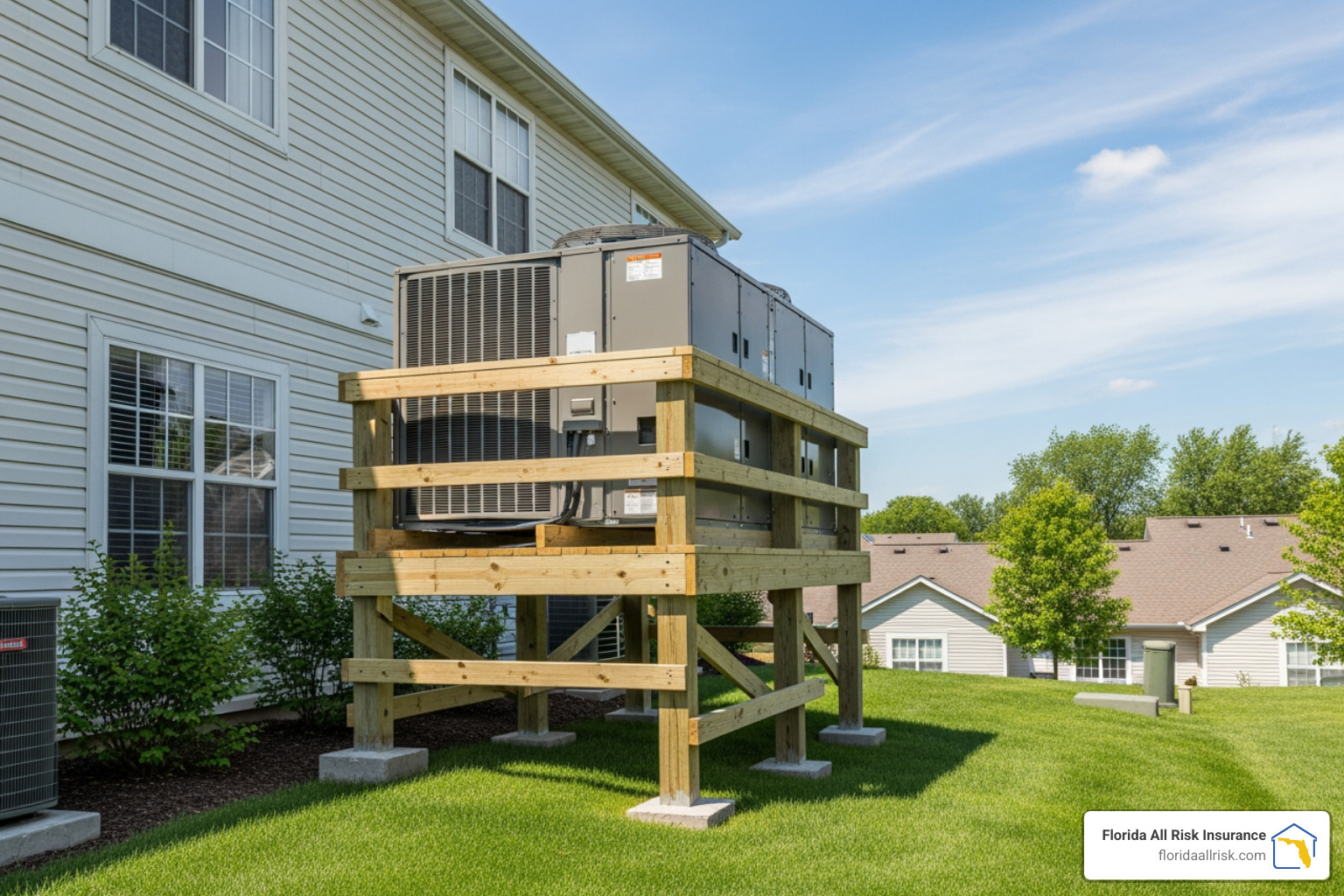
Here are some effective strategies:
- Elevating the Structure: Raising your entire home or its utilities above the Base Flood Elevation (BFE) is one of the most impactful mitigation efforts. Properties liftd by just a few feet above the BFE can see substantial savings.
- Installing Flood Vents: For homes with enclosed areas below the lowest liftd floor (like a crawlspace or garage), installing flood vents allows floodwaters to enter and exit freely, reducing pressure on the walls and preventing structural damage.
- Moving Utilities: Elevating critical systems like your HVAC unit, water heater, and electrical panel to a higher floor or above the BFE can significantly reduce potential damage and risk.
- Using Water-Resistant Building Materials: If you’re renovating, consider using materials that are resistant to flood damage in lower areas of your home.
- Obtaining an Elevation Certificate: Even if not strictly required, an Elevation Certificate can sometimes help qualify for a lower flood insurance rate by providing precise data about your home’s elevation.
Adjusting Your Policy for Better Flood Insurance Prices
Beyond physical improvements to your home, you can also make strategic adjustments to your insurance policy itself to influence your premiums:
- Choosing a Higher Deductible: As we mentioned earlier, opting for a higher deductible will generally result in a lower annual premium. Just be sure you’re comfortable with the increased out-of-pocket expense should you need to file a claim.
- Reviewing Coverage Amounts Annually: Your home’s value, contents, and local rebuilding costs can change. Periodically review your building and contents coverage to ensure you’re not over-insured (paying for more than you need) or under-insured (which could leave you financially vulnerable).
- Bundling with Other Policies: While not always available for flood insurance, some private carriers might offer discounts if you bundle your flood policy with other insurance products like homeowners or auto insurance. It’s always worth asking your agent about potential bundling opportunities.
Community-Based Discounts
Your community’s efforts in floodplain management can also translate into savings for you.
- Community Rating System (CRS): This is a voluntary program where communities implement floodplain management practices that go above and beyond the minimum NFIP requirements. In return, FEMA provides discounts on flood insurance premiums for residents within that community. These discounts can range from 5% to 45%. We always encourage our clients to ask if their Florida community participates in the CRS program, as it can significantly reduce flood insurance prices for everyone.
Frequently Asked Questions about Flood Insurance Costs
We often hear similar questions from our clients in Saint Petersburg and across Florida. Here are some of the most common inquiries about flood insurance prices:
What is the average cost of flood insurance?
The national average flood insurance prices for an NFIP policy is approximately $898 per year as of March 2025. However, this figure can vary dramatically based on your specific location and property characteristics. In Florida, the average is slightly lower, at about $865 per year.
For homes in low- to moderate-risk zones (Zones X, B, or C), NFIP policies typically cost around $400 to $700 per year. For properties in high-risk zones (Zones A or V), premiums can range from $1,000 to $4,000 or more annually, sometimes even higher. To understand how your specific zone impacts costs, check out our guide, How Much Is Flood Insurance in Florida Zone X?.
What is the difference in cost for residential, commercial, and rental properties?
The cost of flood insurance varies significantly across different property types due to varying values, risks, and coverage needs:
- Residential Properties: For homeowners, NFIP policies average around $700-$900 annually, though as noted above, this can be much higher in high-risk areas.
- Commercial Properties: Commercial flood insurance premiums are generally much higher, often ranging from $2,000 to $10,000 per year or more. This reflects the greater property values, potential business interruption losses, and often higher coverage limits needed for commercial structures and their contents. Our Commercial Property Flood Insurance Guide provides more details.
- Rental Properties: For landlords owning rental properties, the cost will be similar to residential homeowner policies, depending on the property’s risk factors. For renters, flood insurance can be much cheaper if you only need to cover your personal belongings. The NFIP advertises contents-only coverage for renters as low as $100 a year. Landlords can find more information in our Landlord Flood Insurance Guide 2025.
Does flood insurance cover basements?
Coverage for basements and areas below the lowest liftd floor is very limited under NFIP policies. The NFIP primarily covers structural elements like foundation walls, staircases, and essential utility equipment such as furnaces, water heaters, and electrical junction boxes located in a basement.
However, it generally does not cover finished items like walls, floors, ceilings, or personal belongings (furniture, electronics, clothing, etc.) stored in a basement. This is a critical distinction that many homeowners overlook. If you have a finished basement, you might need to explore private flood insurance options for more comprehensive coverage.
Get Your Personalized Flood Insurance Price Today
Comparing flood insurance prices doesn’t have to be complicated. By understanding your risk, knowing the rating factors, and exploring both NFIP and private options, you can secure the right protection at a competitive price. An independent agent at Florida All Risk Insurance can steer the market for you, providing multiple quotes and expert guidance. Don’t wait for the waters to rise; protect your property and your financial future.
Ready to find out your true flood insurance cost? Contact us for a personalized flood insurance quote today!
For a comprehensive overview of costs in the Sunshine State, explore our guide on how much flood insurance costs in Florida.
Contact Us:
Florida All Risk Insurance
Address: 777 9th St N, Suite 105, Saint Petersburg, FL 33701
Phone: 727-489-6924
Email: [email protected]

