

Flood insurance Florida is crucial for protecting your home from extensive damage caused by flooding. In Florida, the combination of its subtropical climate and proximity to two major bodies of water significantly increases the risk of flooding. To find the best flood insurance options, homeowners have access to two primary resources:
- National Flood Insurance Program (NFIP): Government-backed, standard rates, ideal for most communities.
- Private Insurers: Often more flexible, potentially offering more competitive rates and custom coverage.
Homeowners should consider their community’s participation in the NFIP, which facilitates access to these resources.
As Jason Miller, a second-generation insurance professional with over 20 years of experience in flood insurance Florida, I’m here to guide you through the complexities of choosing the right insurance for your home. My expertise is grounded in years of successful practice in Florida’s insurance market, and I’m committed to helping you secure the best protection possible.
Flood insurance Florida terms explained:
– average cost of flood insurance in florida
– do all homes in florida require flood insurance
– fema flood zone map
Understanding Flood Insurance in Florida
When it comes to flood insurance Florida, knowing the basics can make all the difference. Let’s break it down:
National Flood Insurance Program (NFIP)
The NFIP is a federal program managed by FEMA. It offers flood insurance to homeowners, renters, and businesses in communities that participate in the program. The NFIP is especially useful for those in high-risk flood areas. Coverage includes:
- Structure Insurance: Protects the building and its foundation.
- Contents Coverage: Covers personal belongings inside the building.
Most policies under the NFIP come with a 30-day waiting period, so it’s crucial to plan ahead. If your lender requires flood insurance, this waiting period may be waived.
High-Risk Areas
Florida’s landscape makes it highly susceptible to flooding. With its extensive coastline and subtropical climate, many areas are designated as high-risk flood zones. If you live in one of these zones, flood insurance is often required, especially if you have a federally backed mortgage.
To determine if your property is in a high-risk area, you can use tools like the FEMA website map or consult with your insurance provider. Homeowners in these zones benefit from the financial protection that flood insurance offers.
Coverage Options
In addition to the NFIP, there are private insurance carriers available in Florida. These private options can sometimes offer:
- Custom Coverage: More flexibility in what is covered.
- Competitive Rates: Potentially lower premiums based on individual risk assessments.
Private insurers might be a good choice if you’re looking for coverage that goes beyond the standard NFIP offerings. They can also provide faster turnaround times for quotes and claims.

By understanding the different aspects of flood insurance Florida, you can make informed decisions that best protect your home and belongings. Whether you choose the NFIP or a private insurer, the key is to ensure you have adequate coverage before disaster strikes.
How to Choose the Best Flood Insurance in Florida
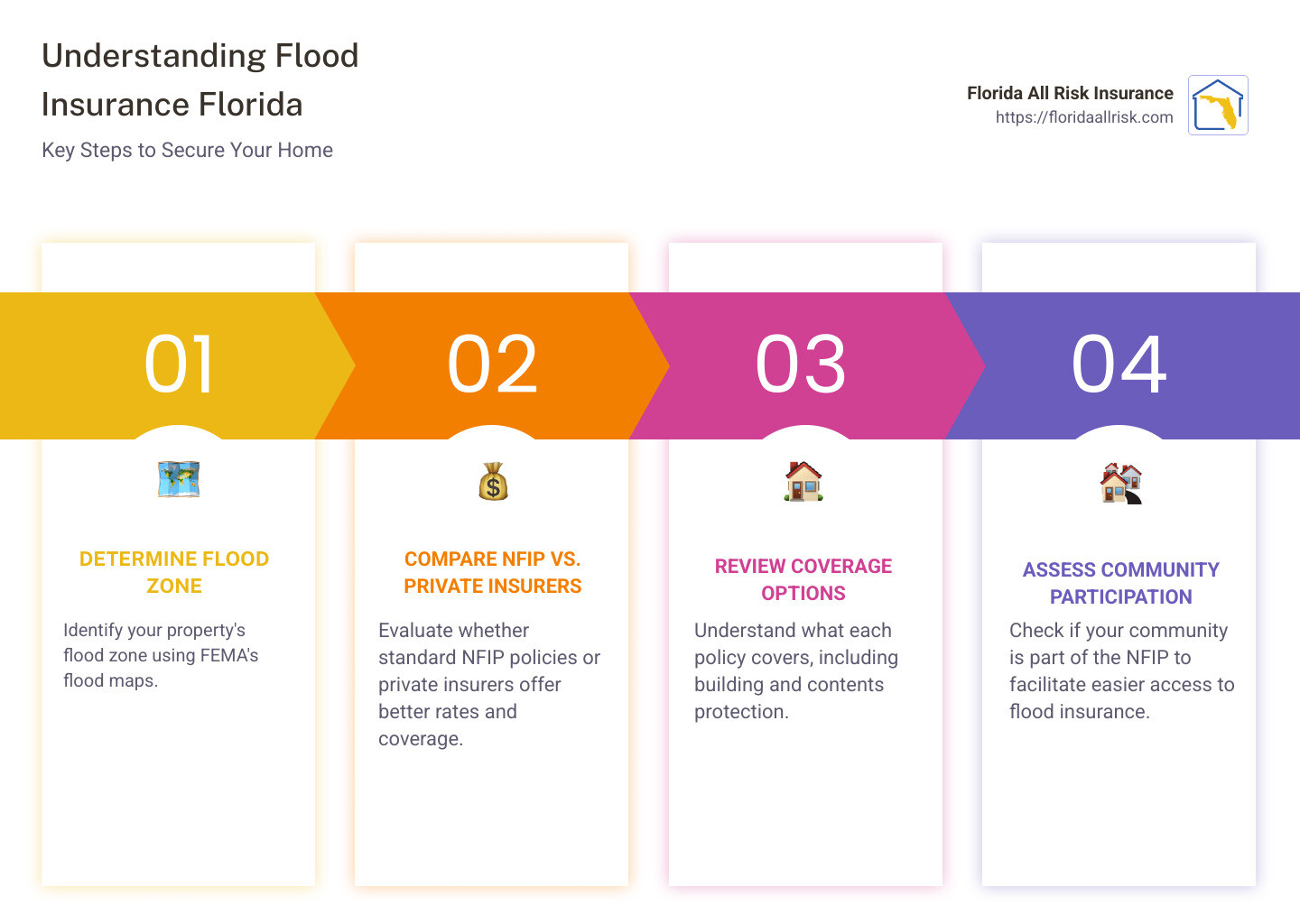
Choosing the right flood insurance in Florida can seem daunting, but it doesn’t have to be. Here’s a simple guide to help you steer your options, including flood zone determination, private carriers, and the NFIP.
Flood Zone Determination
The first step in choosing the best flood insurance is understanding your flood risk. This is where flood zone determination comes in. Your property’s flood zone will influence your insurance needs and costs.
-
High-Risk Zones: If your property is in a high-risk flood zone, flood insurance is often required, especially if you have a mortgage through a federally insured lender. Use FEMA’s online map or consult with your insurance provider to determine your flood zone.
-
Low- to Moderate-Risk Zones: Even if you’re not in a high-risk area, consider flood insurance. Floods can happen anywhere, and having coverage provides peace of mind.
Private Carriers vs. NFIP
In Florida, you have the option to choose between the National Flood Insurance Program (NFIP) and private carriers. Each has its own set of benefits.
National Flood Insurance Program (NFIP)
The NFIP is a federal program that offers standardized coverage options. It’s a reliable choice if you live in a participating community.
-
Standard Coverage: Includes building and contents coverage. Most policies have a 30-day waiting period unless required by a lender.
-
Community Participation: Available in communities that adopt and enforce floodplain management regulations. Check if your community is part of the NFIP to access these policies.
Private Carriers
Private insurance companies offer alternatives to NFIP policies. These can be beneficial if you’re looking for more customized options.
-
Custom Policies: Private carriers can offer more flexible coverage options, sometimes including additional protections not available through the NFIP.
-
Competitive Pricing: They may provide competitive rates based on a detailed assessment of your property’s risk factors.
-
Faster Service: Private insurers often provide quicker turnaround times for quotes and claims processing.
Making Your Choice
When deciding between the NFIP and private carriers, consider your specific needs and circumstances. If you require more personalized coverage or live in a low-risk zone, a private carrier might be the better option. However, if you’re in a high-risk area, the NFIP provides a solid foundation of coverage.
By thoroughly exploring your options and understanding your flood zone, you can make an informed decision. This ensures that you have the best possible coverage to protect your home and assets from flooding.
Next, we’ll explore the Top Benefits of Flood Insurance in Florida, highlighting how it provides financial protection, aids in faster recovery, and offers peace of mind.
Top Benefits of Flood Insurance in Florida
Living in Florida means being surrounded by beautiful coastlines and sunny weather, but it also brings the risk of flooding. Whether you’re in a high-risk zone or not, flood insurance Florida offers several key benefits that can protect you and your property.
Financial Protection
Flooding can cause significant damage to homes and businesses. Without insurance, the cost of repairs can be overwhelming. Flood insurance provides a financial safety net, covering direct physical losses to your property and belongings. This means you’ll have the funds needed to rebuild and replace damaged items without draining your savings.
-
Coverage Details: Flood insurance policies typically cover your building’s structure and essential systems like electrical and plumbing. They also offer contents coverage for personal items, though this may require additional policies.
-
Avoid Out-of-Pocket Expenses: By having flood insurance, you reduce the risk of paying for costly damage repairs yourself, which can be especially important in high-risk areas.
Faster Recovery
After a flood, recovery can be challenging. Flood insurance helps speed up this process by providing the resources needed for repairs and rebuilding. This means less time dealing with the aftermath and more time getting back to normal.
-
Quick Claims Processing: With a policy in place, you can file a claim and receive compensation to start repairs sooner. This reduces the downtime and stress associated with flood damage.
-
Community Resilience: In areas prone to flooding, having insurance helps communities recover faster, as more people have the means to repair and rebuild.
Peace of Mind
Knowing that you’re protected against flood damage brings peace of mind. Floods can happen unexpectedly, and having insurance ensures you’re prepared for the worst.
-
No More Worries: With flood insurance, you can rest easy knowing that your property and finances are safeguarded against potential floods.
-
Preparedness: Being insured means you’re ready to handle any flood-related challenges, allowing you to focus on keeping your family safe.
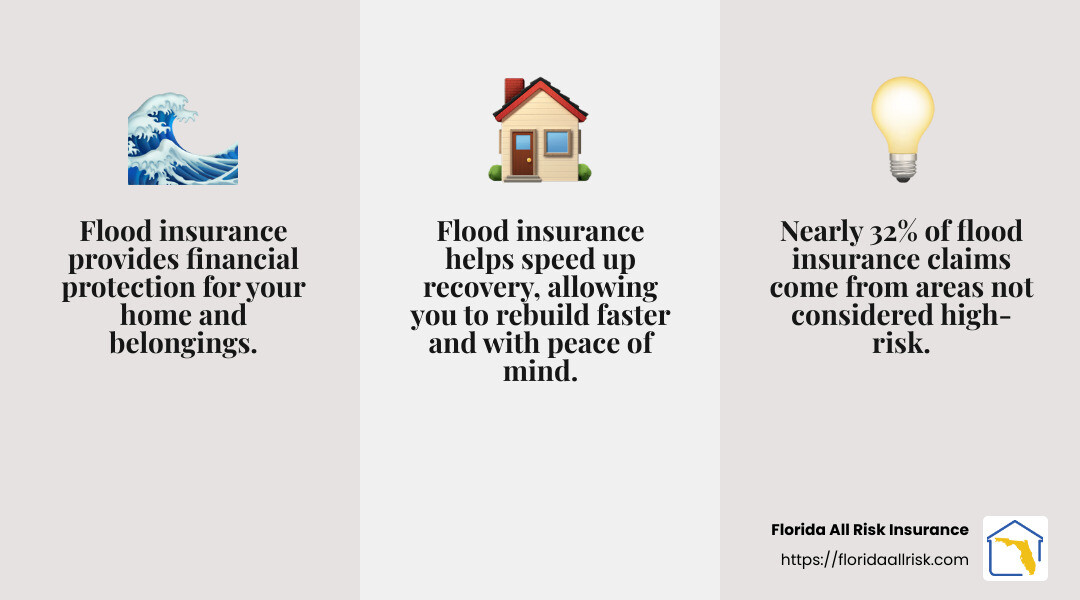
Did you know? Nearly one-third of flood insurance claims come from outside high-risk areas, highlighting the importance of coverage no matter where you live.
Next, we’ll address some Frequently Asked Questions about Flood Insurance Florida, including average costs, availability, and what exactly is covered.
Frequently Asked Questions about Flood Insurance Florida
What is the average cost for flood insurance in Florida?
The cost of flood insurance in Florida can vary widely. On average, NFIP policies can cost anywhere from $500 to $1,000 annually. However, this depends on several factors like your location, the flood risk of your area, and the coverage you select. Homes in high-risk flood zones typically see higher premiums due to the increased likelihood of flooding.
How hard is it to get flood insurance in Florida?
Getting flood insurance in Florida is relatively straightforward, especially if your community participates in the NFIP. This program provides coverage to homeowners, renters, and businesses in areas that have adopted floodplain management regulations. If you’re in an NFIP community, you can purchase a policy through major insurers or directly via the NFIP Direct system. Even if you’re not in a high-risk zone, flood insurance is available, and it’s a good idea to consider it given Florida’s susceptibility to storms and flooding.
What does flood insurance actually cover?
Flood insurance typically includes two main types of coverage: building coverage and contents coverage.
-
Building Coverage: This protects the structure of your home, including the foundation, electrical and plumbing systems, central air conditioning, furnaces, water heaters, and built-in appliances like dishwashers. It also covers permanently installed carpets and paneling.
-
Contents Coverage: This insures personal belongings such as clothing, furniture, and electronics. However, contents coverage often requires a separate policy. Certain items, like valuable artwork or furs, may have limited coverage, so additional insurance might be necessary.
Knowing what is covered helps you make informed decisions about your insurance needs and ensures you have the right protection in place.
These FAQs aim to clarify some common concerns about flood insurance Florida. Next, we’ll wrap up with how Florida All Risk Insurance can help you find personalized service and custom coverage to meet your needs.
Conclusion
At Florida All Risk Insurance, we understand the unique challenges homeowners face in the Sunshine State. Flooding is a real risk, and having the right insurance is crucial. That’s why we offer personalized service to help you steer your options and find custom coverage that fits your specific needs.
Our team in St. Petersburg is committed to providing custom solutions, whether you’re looking for flood insurance through the NFIP or exploring private carrier options. We pride ourselves on offering competitive rates and access to a wide range of insurance carriers. This flexibility ensures that you get the best possible protection for your home and belongings.
By choosing Florida All Risk Insurance, you’re not just getting a policy—you’re gaining a partner who will be there with you every step of the way. We’re dedicated to helping you protect what matters most, offering peace of mind in knowing you’re covered against unexpected events.
Reach out to us today to discuss your flood insurance needs in Florida. Let us help you secure the protection you deserve with our expert guidance and personalized approach.

