

Flood insurance coverage Florida: Secure 2025
Why Every Floridian Needs Flood Insurance (Even in Low-Risk Zones)
Flood insurance coverage Florida is essential for every homeowner in the Sunshine State. Florida’s unique geography, with over 1,200 miles of coastline and predominantly flat terrain, makes it one of the most flood-prone states in the nation. Frequent hurricanes, heavy rainfall, and storm surge mean that flooding can happen anywhere, at any time.
Many homeowners are unaware that standard homeowner’s insurance policies specifically exclude flood damage, leaving a critical gap in protection. The financial impact of this gap can be devastating. Just one inch of floodwater can cause more than $25,000 in damage to an average home. While federal disaster assistance is sometimes available, it’s often a loan that must be repaid and is only granted in presidentially declared disasters. The average federal payout is a fraction of what a flood insurance policy provides.
The numbers tell a sobering story: research shows that more than 25% of flood insurance claims come from outside high-risk flood zones, proving that no Florida property is truly safe. Despite this, many homeowners in vulnerable areas remain uninsured, leaving their families financially exposed.

To better understand your risk and the costs involved, it’s helpful to be familiar with key terms. You can learn more about flood insurance requirements Florida, how to get a flood insurance risk assessment, and the average cost of flood insurance in florida.
The Unseen Risk: Beyond the High-Risk Flood Zone
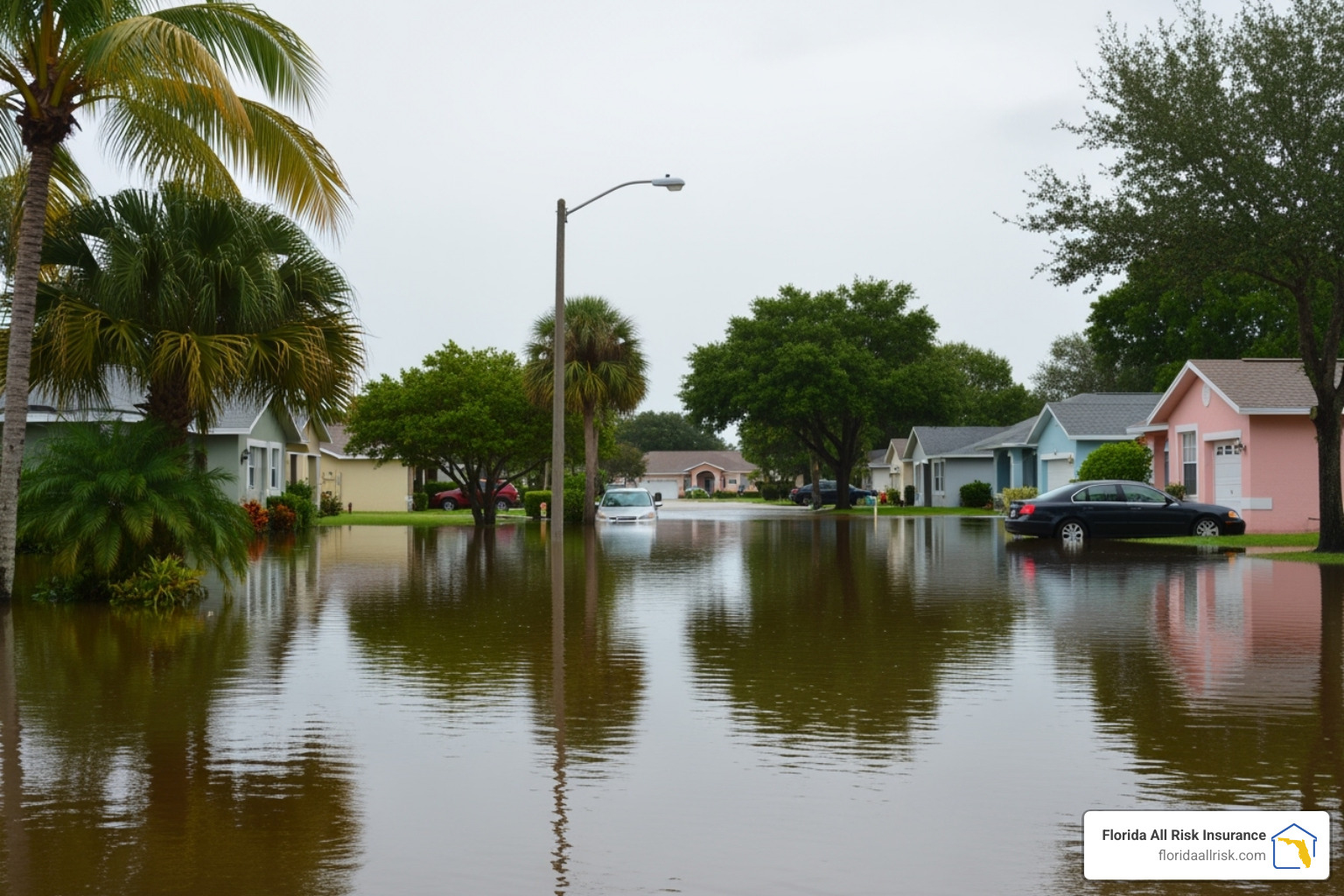
It’s a common misconception that only homes in designated high-risk flood zones need flood insurance. As noted, a significant portion of flood claims occur in so-called “low-risk” areas. Flooding isn’t just about coastal storm surge; it can be caused by overwhelmed storm sewers, poor neighborhood drainage, or even broken water mains. A sudden, intense downpour can cause significant damage that standard homeowners insurance won’t cover.
The truth is, flooding can happen anywhere it rains. A comprehensive Flood Insurance Risk Assessment is vital to understanding your true vulnerability. You can also use FEMA’s Flood Map Service Center to check your property’s specific flood zone.
Homeowner’s Insurance vs. Flood Insurance: The Critical Gap
This is the most crucial distinction for Florida homeowners: your standard homeowner’s policy does not cover damage from flooding. These policies may cover sudden water damage from within your home, like a burst pipe, but they exclude rising groundwater, storm surge, or overflow from a body of water.
Flood damage is a specific, excluded peril. This means you need a separate, dedicated flood insurance policy to protect your home and belongings. Without it, you bear the full cost of repairs, which can be financially ruinous. The peace of mind that comes with proper flood insurance coverage Florida is invaluable.
Understanding Flood Insurance Options in Florida
When seeking flood insurance coverage Florida, you have two main paths: the National Flood Insurance Program (NFIP) and the growing private flood insurance market. Working with an independent insurance agency like Florida All Risk Insurance is valuable because we help you access and compare both options to find the coverage that best fits your needs.
The NFIP, managed by FEMA, has long been the foundation of flood insurance in the U.S. It provides standardized policies and helps communities manage flood risk. Many people don’t realize that a significant portion of NFIP policies are sold and serviced by private insurance companies through the Write-Your-Own (WYO) Program. Under this arrangement, numerous private insurers issue NFIP policies, while FEMA underwrites the flood risk.
Florida has also actively worked to expand its private flood insurance market. The Florida Office of Insurance Regulation has facilitated this expansion, leading to a growing number of companies writing private flood insurance in the state. These private insurers offer competitive alternatives with often more flexible options than the NFIP.
To ensure a solid baseline of protection, Florida law requires that most private flood insurance policies offer coverage at least as broad as the NFIP. Our guide to the Best Flood Insurance Companies provides a comprehensive look at what’s available.
Key Differences in Coverage and Flexibility
Understanding the differences between NFIP and private flood insurance is key to making an informed choice. Both provide essential protection, but the features can vary significantly.
| Feature | NFIP (Federal) | Private Flood Insurance (via Independent Agencies) |
|---|---|---|
| Coverage Limits (Building) | Up to $250,000 | Often higher (e.g., $500,000, $1M+) |
| Coverage Limits (Contents) | Up to $100,000 | Often higher (e.g., $250,000, $500K+) |
| Additional Living Expenses (ALE) | Not typically included | Often available as an endorsement |
| Waiting Period | 30 days (typical) | Can be shorter (e.g., 7-14 days), sometimes waived |
| Customization Options | Standardized, fixed terms | More flexible endorsements, custom policies |
| Coverage for Other Structures | Limited/Not typically included | Can often be included (e.g., detached garages) |
One of the most significant differences is Additional Living Expenses (ALE) coverage. If your home becomes uninhabitable after a flood, ALE helps pay for temporary housing and other living costs. The NFIP generally doesn’t provide this, while many private policies do. Private policies also tend to offer shorter waiting periods, which can be a major advantage.
Which Option is Right for Your Florida Home?
Choosing between NFIP and private flood insurance depends on your property value, risk tolerance, and desired level of protection.
The NFIP might be your best bet if you have a federally-backed mortgage in a high-risk area requiring flood insurance. It provides reliable, standardized protection. For those in low-to-moderate risk areas, the NFIP’s pricing can be very attractive, with average costs for policies in Florida around $776-$786 per year.
Private market options might be better if you need coverage limits above the NFIP’s maximums or want benefits like ALE. They are also ideal if you want to cover additional structures like a detached garage or pool house. While private flood insurance in Florida averages around $1,479 annually, the broader coverage and flexibility often justify the cost. An independent agent can help you find the Best Flood Insurance Florida solution for your property.
Understanding Your Flood Insurance Coverage Florida Policy
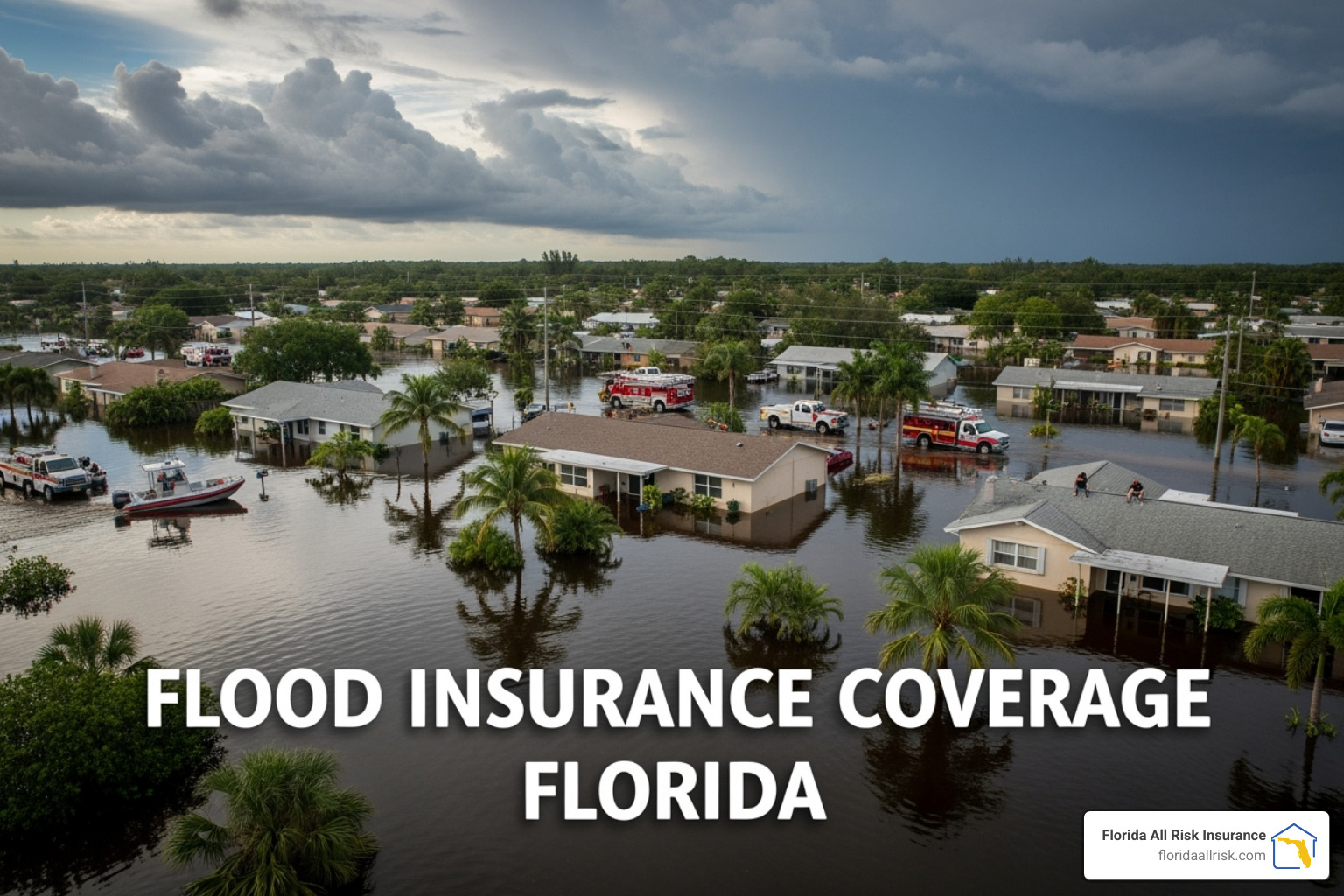
Once you’ve secured your flood insurance coverage Florida, it’s crucial to understand what it protects. A flood policy has two main components: one for your home’s structure and another for your personal belongings.
Building coverage protects the physical structure of your home, including the foundation, walls, roof, and essential systems like electrical, plumbing, and HVAC. It also covers built-in appliances and permanently installed cabinets and carpeting.
Contents coverage protects your personal belongings, such as furniture, clothing, and electronics. This coverage is separate from building coverage, so you must select a limit that adequately protects your property.
It’s also important to understand how items are valued. Replacement Cost Value (RCV) pays to replace damaged items with new ones. Actual Cash Value (ACV) pays the depreciated value of your items. The NFIP typically offers RCV for building damage but only ACV for contents. Many private policies offer RCV for both, providing more comprehensive protection.
Your policy will also have a deductible, which is the amount you pay out-of-pocket before insurance benefits begin. A higher deductible can lower your premium, but be sure to choose an amount you can comfortably afford. Our Flood Insurance Products page offers more details on these options.
What’s Covered: From Your Foundation to Your Furnishings
Your flood insurance coverage Florida is designed to protect both the structure of your home and your personal property inside.
-
Building Coverage typically includes: The foundation and structure, electrical and plumbing systems, HVAC equipment, built-in appliances (refrigerators, stoves), permanently installed carpeting and cabinets, and window blinds. Detached garages are also covered, though often with limits.
-
Contents Coverage typically includes: Clothing, furniture, electronics, portable appliances (microwaves, window AC units), washers and dryers, area rugs, and certain valuables like artwork (up to a specified limit, often $2,500 for NFIP).
For those in multi-unit dwellings, coverage rules can differ. More information is available on Flood Insurance for Condos.
What’s Not Covered: Common Exclusions to Know
While comprehensive, flood insurance doesn’t cover everything. Understanding exclusions helps you set realistic expectations.
- Preventable Damage: Moisture or mildew that could have been prevented by the homeowner is typically not covered.
- Property Outside the Building: Items like fences, retaining walls, swimming pools, septic systems, and landscaping are generally excluded.
- Valuable Papers and Currency: Cash, precious metals, and stock certificates are not covered.
- Vehicles: Damage to cars is covered by the comprehensive portion of an auto insurance policy, not flood insurance.
- Additional Living Expenses (ALE): NFIP policies generally do not cover costs for temporary housing if your home is uninhabitable. Some private policies offer this as an add-on.
- Basement Limitations: Coverage for personal belongings in basements or enclosed areas below the lowest liftd floor is very limited under NFIP rules.
Decoding the Cost: What Determines Your Florida Flood Insurance Premium?
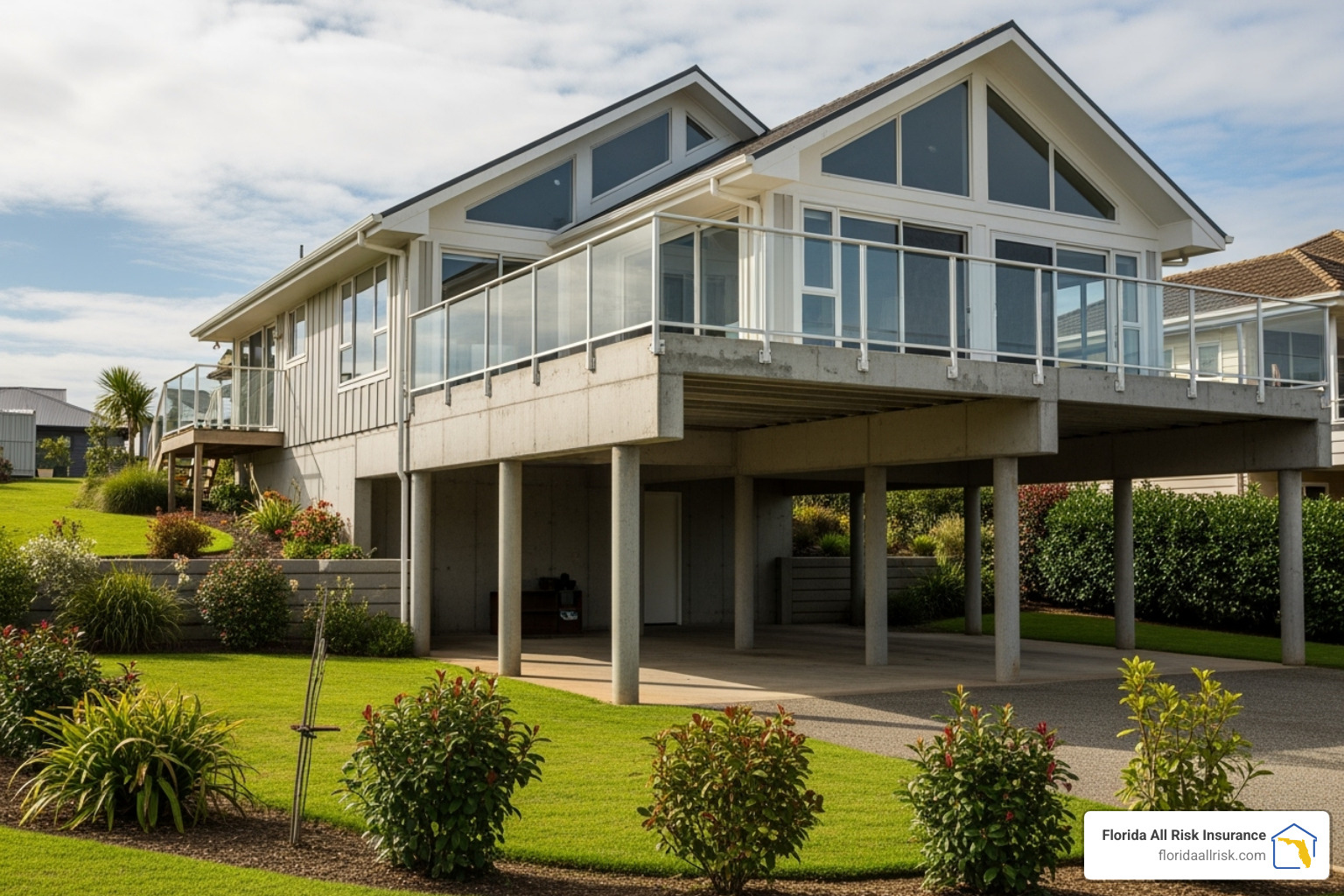
When it comes to flood insurance coverage Florida costs, no two properties are priced the same. Several key factors determine your final premium.
Your flood zone is the primary factor. Homes in high-risk zones (like A or V) will have higher premiums than those in moderate-risk zones (like X). However, your property’s specific elevation relative to the Base Flood Elevation (BFE) is just as important. A higher elevation can lead to significant savings.
Other factors include the construction type and age of your home, the foundation type (e.g., slab, crawlspace), and your chosen coverage amounts and deductible. Higher coverage and lower deductibles increase the premium, while a higher deductible can lower it.
FEMA’s Risk Rating 2.0 has changed how NFIP premiums are calculated. This system uses advanced modeling to assess the unique flood risk of each individual property, considering factors like distance to a water source and rebuilding costs. This results in rates that more accurately reflect a property’s true risk. You can find more details on our page about the Average Cost of Flood Insurance in Florida.
How to Potentially Lower Your Flood Insurance Costs
There are several practical ways to reduce your flood insurance coverage Florida premiums while making your home more resilient.
- Increase Your Deductible: This is the quickest way to lower your annual premium, but it means a higher out-of-pocket cost if you file a claim.
- Install Flood Vents: These allow floodwater to flow through enclosed foundation areas, reducing pressure on your walls and potentially lowering your premium.
- Lift Utilities: Moving your HVAC system, water heater, and electrical panel above the BFE protects them from damage and can lead to discounts.
- Use Flood-Resistant Materials: When building or renovating, using materials designed to withstand water can reduce potential damage and insurance costs.
- Obtain an Elevation Certificate: This document, prepared by a surveyor, officially records your home’s elevation. If your home is higher than FEMA maps indicate, it can lead to significant savings.
- Community Rating System (CRS): If your community participates in the CRS program by taking steps to reduce flood risk, residents may be eligible for discounts on NFIP premiums from 5% to 45%.
For more strategies, see our information on Flood Insurance Cost.
Understanding Your Property’s Flood Zone
Knowing your property’s flood zone is fundamental to understanding your risk and insurance requirements.
- Zones A and AE are high-risk areas with at least a 1% annual chance of flooding. Over a 30-year mortgage, this translates to a 26% chance of a flood. Flood insurance is typically mandatory in these zones for homes with federally-backed mortgages. More information is available on our page discussing if Flood Zone AE requires flood insurance in Florida.
- Zones V and VE are high-risk coastal areas that face the additional threat of wave action. These zones have the highest risk and premiums, and homes often must meet strict building codes, such as being liftd on pilings.
- Zone X represents moderate-to-low risk areas. While insurance is not typically required, it is highly recommended, as about a quarter of all flood claims occur in these zones. Properties in Zone X often qualify for lower-cost policies.
You can look up your property on the FEMA Flood Zone Map to determine your zone.
The Ultimate Guide to Buying and Filing a Claim for Flood Insurance in Florida
Securing and using your flood insurance coverage Florida is a manageable process with the right guidance. Being prepared is key, both when purchasing a policy and in the unfortunate event of filing a claim.
How to Purchase Your Policy and What to Expect
Purchasing flood insurance coverage Florida through an independent agency is a straightforward process designed to find the best policy for your needs. Unlike captive agents who represent a single company, we access multiple carriers to shop the market on your behalf.
- Contact an Independent Agent: We’ll start by discussing your property’s characteristics and coverage needs, comparing both NFIP and private carrier options.
- Provide Property Information: To generate an accurate quote, we’ll need your address, home construction details, and desired coverage amounts. An Elevation Certificate is helpful but not always required.
- Review Your Quote: We will present you with options, explaining the differences in premiums, deductibles, and coverage so you can make an informed decision.
- Purchase Your Policy: We handle the paperwork and coordination to ensure your policy is issued correctly and you understand your effective date.
A crucial detail is the 30-day waiting period for most new NFIP policies. This means you cannot buy coverage right before a storm and expect to be protected. There are some exceptions, such as for a new mortgage closing. Private market options sometimes offer shorter waiting periods of 7-14 days, providing more flexibility. For more details on the purchasing process, you can read about if you can buy flood insurance in Florida.
The Step-by-Step Process for Filing a Flood Claim
Filing a flood claim can be stressful, but preparation can make the process much smoother. We are here to support you every step of the way.
Step 1: Contact Your Agent Immediately: As soon as it’s safe, call us. We will help you report the loss and start the claims process. Time is critical to prevent further damage like mold.
Step 2: Document All Damage: Before any cleanup, take extensive photos and videos of the damage from multiple angles. Document water lines on walls and damage to both the structure and personal belongings.
Step 3: Separate Damaged and Undamaged Property: If possible, move undamaged items to a safe, dry location. Do not throw anything away until the insurance adjuster has inspected it.
Step 4: Create an Inventory of Lost Items: Make a detailed list of all damaged belongings, including descriptions, age, and original cost if known. This is vital for your contents claim.
Step 5: Meet with the Adjuster: Be present for the inspection with your documentation ready. Walk the adjuster through the property and explain the damage.
Step 6: Submit a Proof of Loss Form: This is your formal, sworn statement of the amount you are claiming. It must be submitted to the insurance company within 60 days of the flood. This is a firm deadline. We can help you review the form for accuracy before submission.
Throughout this process, we advocate for you to ensure you receive the full benefits of your policy. FEMA also provides a helpful guide on filing a flood claim.
Frequently Asked Questions About Flood Insurance Coverage Florida
Do all homes in Florida require flood insurance?
No, Florida state law does not mandate flood insurance coverage Florida for every homeowner. However, if you have a mortgage from a federally regulated or insured lender and your home is in a designated Special Flood Hazard Area (SFHA), federal law requires you to have it. This protects the lender’s financial interest in your property.
Even if not required, it’s a wise investment. More than 25% of flood claims come from outside high-risk zones. Flooding from heavy rain or drainage issues can happen anywhere. Protecting your most valuable asset is smart planning, regardless of regulations. For more details, see our guide on if all homes in Florida require flood insurance.
How much is flood insurance in Florida for a Zone X property?
Zone X properties are in moderate-to-low risk areas, which typically means more affordable flood insurance coverage Florida premiums. Historically, these properties qualified for lower-cost Preferred Risk Policies (PRPs) through the NFIP.
With FEMA’s Risk Rating 2.0 system, premiums are now based on a property’s individual characteristics, not just its flood zone. Factors like elevation, distance to water, and reconstruction cost are considered. This means rates can vary, but on average, premiums for Zone X properties might range from $500 to $700 annually.
Your chosen coverage limits and deductible will also impact the final cost. An independent agent can shop multiple carriers to find the best rate for your specific Zone X property. Learn more in our guide on how much flood insurance is in Florida Zone X.
Can I buy flood insurance right before a hurricane?
Unfortunately, the answer is almost always no. Procrastination can be costly. The National Flood Insurance Program (NFIP) has a 30-day waiting period before a new policy becomes effective. This rule prevents people from buying coverage only when a storm is imminent.
While some private insurers offer shorter waiting periods (e.g., 7-14 days), they also typically implement a moratorium on binding new coverage once a storm is named or forecast to hit an area. This means they stop issuing new policies until the threat has passed.
The lesson is clear: the time to secure flood insurance is well before a storm is on the horizon. Hurricane season in Florida runs from June through November, but floods can occur year-round. Don’t let a waiting period leave you unprotected.
Conclusion: Secure Your Peace of Mind with the Right Florida Flood Policy
Living in Florida offers incredible beauty, but it comes with the inherent risk of flooding. As we’ve covered, flood insurance coverage Florida is not a luxury—it’s an essential shield for your home and financial future.
Standard homeowners insurance leaves a dangerous gap by excluding flood damage. With just one inch of water capable of causing more than $25,000 in damage, being uninsured is a risk few can afford to take. The fact that 25% of flood claims occur outside high-risk zones underscores that every Floridian is vulnerable.
Navigating the options between the NFIP and the private market can be complex. An independent insurance agency like Florida All Risk Insurance provides the expertise to compare carriers and find a policy that fits your specific needs and budget. We help you understand the differences in coverage limits, waiting periods, and additional benefits like ALE.
The peace of mind that comes with the right policy is invaluable. It allows you to focus on your family’s safety during a storm, knowing you have a plan for recovery. Most policies have a 30-day waiting period, so the time to act is now—long before the next storm is on the radar.
Contact Us
Florida All Risk Insurance
Saint Petersburg, FL
Email: [email protected]
Contact us today to get a personalized flood insurance policy and find the perfect coverage for your Florida property.

