

Flood insurance cost is a crucial concern for many homeowners in flood-prone areas like Saint Petersburg, Florida. As the threat of flooding persists, understanding the factors that influence flood insurance cost, and how policies are structured, can help homeowners make informed decisions. Here’s a quick overview:
- National Flood Insurance Program (NFIP): The NFIP sets standardized insurance policies and premium calculations.
- Risk Rating 2.0: A new system aiming to more accurately reflect individual property flood risks and adjust premiums accordingly.
Flood insurance covers damage from natural flooding incidents, which are not included in standard homeowner’s insurance. With the transition to Risk Rating 2.0, policies are shifting to be more personalized, considering specific property characteristics rather than just flood zone maps. This change affects premium costs, which means you may see adjustments on your next renewal, depending on your property’s location and risk level.
I’m Jason Miller, a second-generation insurance professional with over 20 years of experience providing comprehensive flood insurance solutions in Florida. This guide will help you steer the complexities of flood insurance cost, aligning your protection needs with your budget.
Flood insurance cost word roundup:
– fema flood zone map
– do all homes in florida require flood insurance
– does flood zone ae require flood insurance in florida
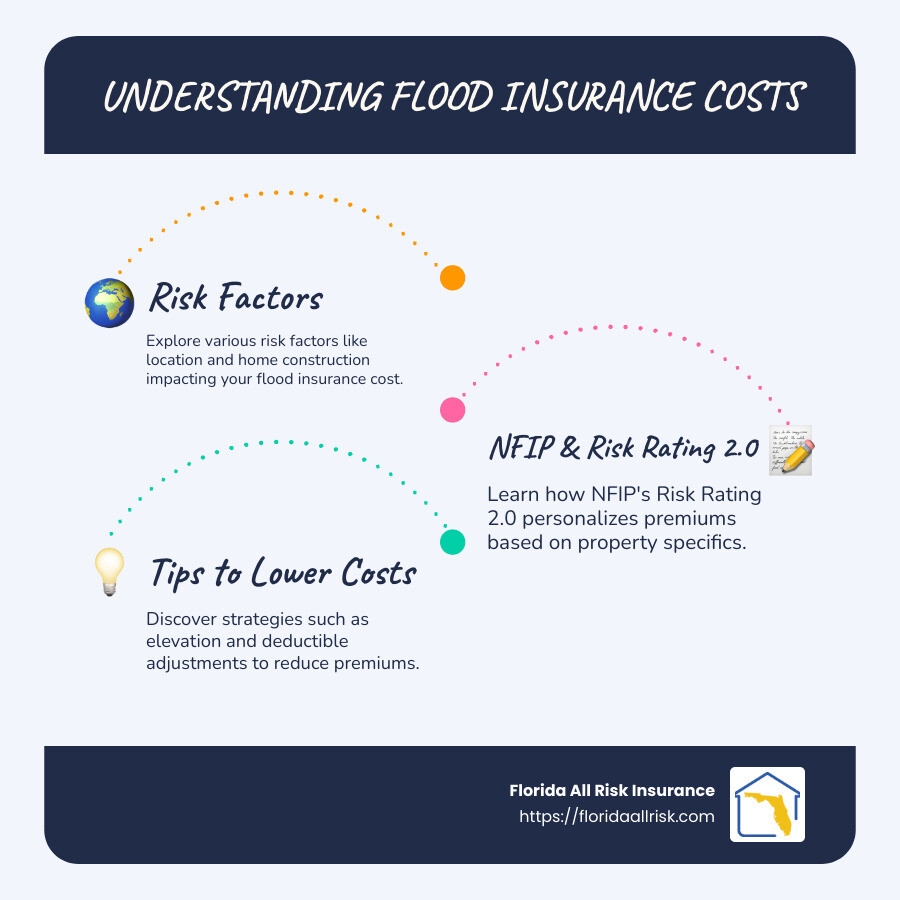
Understanding Flood Insurance Costs
Factors Influencing Flood Insurance Cost
Location: Where your home is located plays a big role in determining your flood insurance cost. Homes in high-risk flood zones typically face higher premiums compared to those in moderate or low-risk areas. The proximity to water bodies and elevation of your property are key considerations.
Home Construction: The age and type of your home can also affect insurance costs. Older homes or those built with less flood-resistant materials may incur higher premiums.
Coverage Selection: The type and amount of coverage you choose will influence your premium. For instance, opting for both building and contents coverage will likely increase your costs.
Deductible: A higher deductible can lower your premium. However, this means you’ll pay more out-of-pocket if a flood occurs. Balancing your deductible and premium is crucial for managing your budget.
NFIP vs. Private Flood Insurance
NFIP Pricing Approach: The National Flood Insurance Program (NFIP) uses Risk Rating 2.0 to determine premiums based on individual property risk. This system considers factors like flood risk, building characteristics, and elevation. The aim is to provide a more accurate reflection of a property’s flood risk, moving beyond traditional flood zone maps.
Coverage Limits: NFIP policies have set coverage limits, with the maximum for residential structures at $250,000 for building coverage and $100,000 for contents. If your property value exceeds these limits, you might need additional coverage from a private insurer.
Policy Endorsements: Private flood insurance often offers more flexibility with endorsements and higher coverage limits. This allows for customization to better fit individual needs, especially for properties with higher values.
FEMA’s Role: FEMA oversees the NFIP, ensuring that rates are actuarially sound and reflect true flood risks. This federal backing provides a level of reliability, but it also means NFIP policies might not offer the same flexibility as private options.
Understanding these factors can help you choose the right flood insurance policy, whether through the NFIP or a private insurer. By considering your specific circumstances, you can better manage your flood insurance costs and ensure comprehensive protection for your home.
State-by-State Flood Insurance Costs
When it comes to flood insurance costs, they can vary significantly from state to state. These variations are influenced by factors like regional flood risks, historical flood data, and specific state regulations.
Average Premiums Across the U.S.
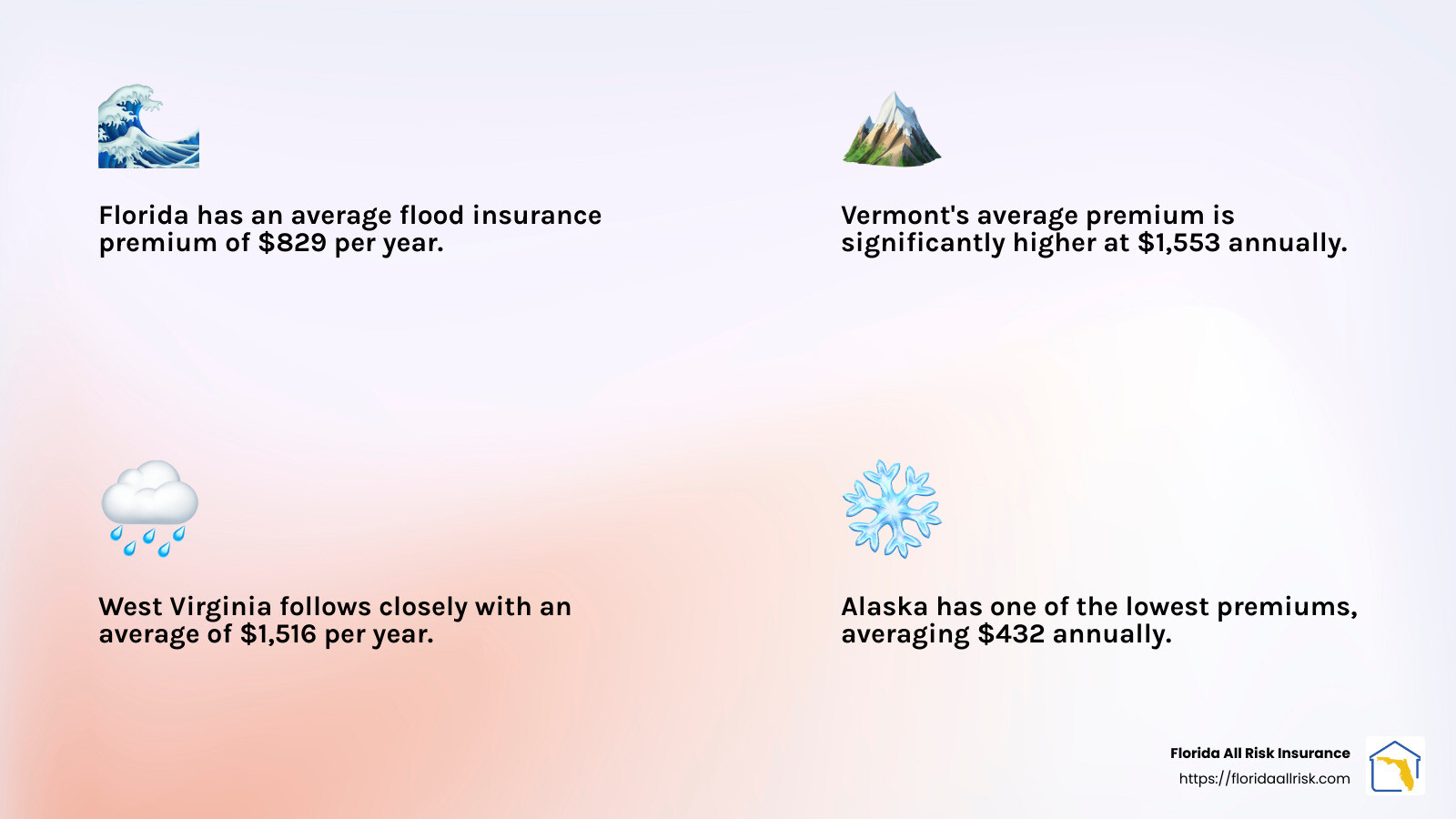
The average cost of flood insurance varies widely across the United States. For instance, as of October 2024, Florida has an average premium of $829 per year. In contrast, states like Vermont and West Virginia have much higher averages, at $1,553 and $1,516 respectively. On the other end, Alaska boasts one of the lowest average premiums at just $432 per year.
Why the Variations?
Several factors contribute to these differences:
-
Risk Levels: States with higher flood risks, like those prone to hurricanes or heavy rainfall, typically see higher premiums. Florida, for example, is highly susceptible to hurricanes and tropical storms, which influences its average rates.
-
FEMA Data: The Federal Emergency Management Agency (FEMA) uses detailed flood maps and risk assessments to guide the pricing of insurance policies. These maps are continuously updated to reflect new data and changing environmental conditions.
-
State-Specific Regulations: Some states may have additional requirements or incentives that impact insurance costs. For example, Kentucky and Missouri, with premiums over $1,200, may have specific building codes or flood mitigation efforts that influence costs.
Comparing States
Here’s a quick look at some average premiums by state:
| State | Average Annual Premium |
|---|---|
| Alabama | $830 |
| California | $903 |
| New York | $1,106 |
| Texas | $859 |
| Virginia | $711 |
FEMA’s Role: FEMA plays a crucial role in determining these costs through the National Flood Insurance Program (NFIP). By using their Risk Rating 2.0 system, they aim to provide more accurate and fair pricing based on individual property risks rather than broad flood zones.
Understanding these state-by-state differences can help you make informed decisions about your flood insurance needs. Whether you live in a high-risk area or a state with lower average premiums, evaluate your specific situation and consider how these factors might affect your coverage options and costs.
How to Lower Your Flood Insurance Costs
Reducing your flood insurance costs might seem challenging, but there are practical steps you can take to make it more affordable. Let’s explore some effective strategies you can consider.
Elevation
One of the most effective ways to lower your flood insurance premium is by elevating your home or its utilities.
-
Lift Your Home: Raising the structure of your home above the base flood elevation can drastically reduce your premium. An elevation certificate, which details your home’s elevation relative to the estimated flood level, can be a valuable tool in proving your reduced risk to insurers.
-
Lift Utilities: Placing your electrical panels, HVAC systems, and water heaters on platforms above potential flood levels can protect them from damage and may also lower your insurance costs.
While these measures can be expensive initially, they might save you money on insurance and prevent costly flood damage in the long run.
Flood Openings
Installing flood openings, or vents, is another way to potentially decrease your premiums. These allow water to flow through your foundation walls, reducing pressure and minimizing the risk of structural damage.
- Install Flood Vents: By allowing water to pass through, flood vents help balance water pressure and prevent walls from collapsing. They are especially useful in areas prone to flooding and could lead to insurance discounts.
Deductible Adjustments
Adjusting your deductible is a straightforward way to impact your flood insurance costs.
- Increase Your Deductible: Much like with other types of insurance, opting for a higher deductible can lower your premium. However, it’s important to ensure that you can afford the higher out-of-pocket costs in the event of a flood claim.
These strategies are not just about saving on premiums; they are about protecting your home and peace of mind. When considering these changes, weigh the potential savings against the costs and risks involved.
By taking proactive steps, you can manage your flood insurance costs effectively while safeguarding your property.
Frequently Asked Questions about Flood Insurance Cost
How much is flood insurance?
The average cost of flood insurance through the National Flood Insurance Program (NFIP) is around $700 per year. However, this can vary significantly based on factors like your home’s location, construction type, and the level of flood risk in your area. Homes in high-risk flood zones might see higher premiums, while those in low-risk areas could pay less.
In recent years, private providers have entered the market, offering alternatives to NFIP policies. These private insurers often provide competitive rates and additional coverage options, which might better suit your needs.
Is flood insurance really expensive?
Flood insurance can seem costly, especially in high-risk areas. The introduction of Risk Rating 2.0 by NFIP aims to align premiums more closely with individual property risks. This risk-based premium approach considers factors such as the likelihood of flooding, home elevation, and proximity to water bodies.
While premiums might increase under this system, they reflect a more accurate assessment of flood risk, ensuring that homeowners pay a fair price based on their specific circumstances. For some, this might mean higher costs, but for others, it could result in savings.
How is flood insurance premium calculated?
Flood insurance premiums are calculated based on several key factors:
-
Flood Risk: The primary determinant of your premium is the flood risk associated with your location. Homes in areas with a higher likelihood of flooding will generally have higher premiums.
-
Home Characteristics: The age, construction materials, and elevation of your home can impact your insurance costs. Older homes or those built with outdated materials may face higher premiums due to increased vulnerability to flood damage.
-
Coverage Type: The type and amount of coverage you choose also play a role. Opting for both building and contents coverage will typically cost more than building coverage alone.
By understanding these factors, you can make informed decisions about your flood insurance policy and potentially find ways to reduce your costs.
Conclusion
At Florida All Risk Insurance, we understand that navigating flood insurance can be overwhelming. That’s why we’re here to help. As a trusted independent agency based in St. Petersburg, Florida, we offer personalized service custom to your unique needs.
Our team is committed to providing competitive rates and comprehensive coverage options. We work with a wide range of carriers to ensure that you have access to the best policies available, whether through the National Flood Insurance Program (NFIP) or private insurers. This flexibility allows us to find solutions that fit your budget and provide peace of mind.
Flood insurance is a crucial part of protecting your home, especially in a state as flood-prone as Florida. With the right policy, you can safeguard your property against the financial impact of flood damage.
Take the next step in securing your home by exploring our flood insurance options. Visit our flood insurance page to learn more about how we can help you find the right coverage at a price you can afford.
At Florida All Risk Insurance, we’re not just about policies; we’re about protecting what matters most to you.

