

Why Electrical Contractors Need Financial Protection
Electrical contractor public liability insurance is a specialized form of business insurance that protects your company from financial losses when third parties—clients, customers, or members of the public—make claims of bodily injury or property damage caused by your work. For electrical contractors operating in Florida, this coverage is not just recommended; it’s often legally required and contractually mandated by state licensing boards and commercial clients.
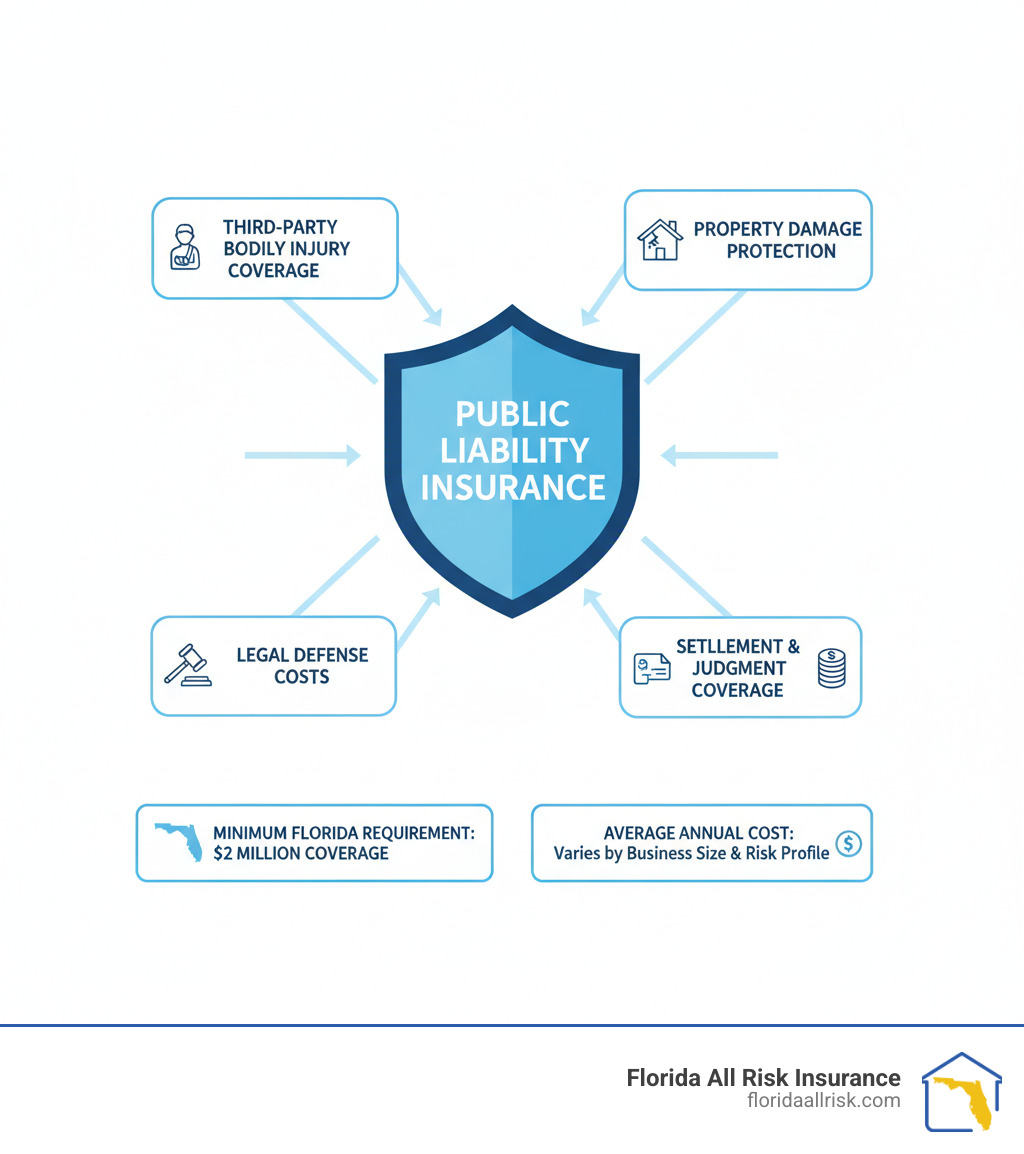
This essential coverage handles third-party bodily injury, property damage, legal defense costs, and settlements. Most Florida electrical contractors need at least $2 million in aggregate coverage to meet licensing and project requirements. While the cost varies based on business size, work type, and claims history, the protection it offers is invaluable.
The electrical contracting profession carries significant inherent risk. Every day, you work with live wires and complex systems where a simple mistake can have major consequences. A wiring job completed months ago could allegedly lead to a fire, or you might accidentally damage a client’s expensive property while working. Without proper insurance, any one of these scenarios could financially cripple your business. The financial stakes are staggering, with a single claim easily exceeding hundreds of thousands of dollars when factoring in property damage, medical expenses, and legal fees.
Beyond financial protection, public liability insurance is a business enabler. Commercial clients and general contractors almost universally require a Certificate of Insurance (COI) before allowing you to bid on projects. Without it, you are automatically excluded from many lucrative opportunities.
I’m Jason Miller, and for over 20 years, my team at Florida All Risk Insurance has specialized in finding the right electrical contractor public liability insurance solutions for Florida businesses. We understand the specific risks you face and create comprehensive coverage that keeps your business running smoothly, even when the unexpected happens.
What is Public Liability Insurance and Why is it Essential?
Think of electrical contractor public liability insurance as your financial safety net. At its heart, this coverage protects your company from claims made by third parties: clients, customers, suppliers, or even a member of the public walking past your work area. It steps in to cover the costs when someone alleges they’ve suffered bodily injury or property damage because of your business operations.
For electricians, this protection isn’t just nice to have—it’s essential. Your work is skilled and valuable, but it’s also inherently risky. You work with electricity in diverse environments, from residential homes to busy commercial construction sites. Even the most careful, experienced electrician can’t eliminate risk entirely.
Consider these realistic scenarios:
- A homeowner trips over your power cord and breaks their wrist. Suddenly you’re facing a claim for medical expenses and lost wages.
- You’re installing new lighting and your drill bit hits a hidden water pipe. Within minutes, water is causing thousands of dollars in damage to drywall, carpet, and office equipment.
- Months after a major rewiring project, a lawyer alleges that a fault in your installation caused an electrical fire. Whether the claim has merit or not, you now face a lawsuit that could run into six figures.
These aren’t far-fetched scenarios; they’re the reality of working as an electrical contractor. When a claim hits, you’re not just looking at immediate costs like medical bills or property repairs. You’re also facing legal defense fees that can climb into the tens of thousands, even if the claim is baseless. Your electrical contractor public liability insurance covers those defense costs, plus any settlements or judgments if you are found liable.
Industry data reveals an average of 125 electrical shock incidents on the job every year. While many affect workers (covered by workers’ compensation), the potential for a third party to be injured is always present. A curious child, a distracted property owner, or a delivery person could become involved in an incident that leads to a claim against your business.
Without robust public liability coverage, a single serious claim could wipe out everything you’ve built. Your business savings, equipment, and even personal assets could be at risk. With the right coverage in place, you can work with confidence, knowing that if something goes wrong, you’re not facing financial ruin. It’s a fundamental component of running a professional, responsible electrical contracting business.
Understanding Your Coverage: Risks, Protections, and Policy Types

Knowing you need public liability insurance is the first step; understanding what it specifically covers is the next. This policy acts as your financial defense against a range of third-party claims that could otherwise threaten your business.
What Specific Risks Does Public Liability Insurance Cover?
Electrical contractor public liability insurance is designed with your unique risks in mind. Your policy will protect you from:
- Third-Party Bodily Injury: This covers medical expenses, lost wages, and rehabilitation costs if a non-employee (client, visitor, passerby) is injured due to your work. For example, if a client trips over your extension cord and breaks a hip, this coverage would apply.
- Third-Party Property Damage: This handles the cost to repair or replace someone else’s property that you damage. This could be anything from a ladder slipping and shattering an expensive window to a power surge that fries a client’s computer server.
- Legal Defense Costs: Your policy pays for attorney fees, court costs, and expert witness fees to defend your business against a claim, even if it’s frivolous. This allows you to fight baseless claims without draining your business accounts.
- Settlements and Judgments: If your business is found legally liable, the insurance pays the amount awarded to the third party, up to your policy’s limit. This transfers the financial risk from your bank account to the insurance company.
Differentiating Public Liability from Other Essential Insurance
Public liability is powerful, but it’s just one piece of your protection puzzle. It’s crucial to understand what it doesn’t cover and how it differs from other policies electrical contractors need.
- Professional Indemnity Insurance (E&O): Public liability covers physical problems (injury and property damage). Professional indemnity covers financial losses caused by your professional advice or design. If you design an electrical system that proves inadequate and costs the client money to fix, that’s an E&O claim.
- Workers’ Compensation: This is legally required in Florida if you have employees. It protects your team by covering their medical bills and lost wages if they get injured on the job. Public liability does not cover employee injuries.
- Tools and Equipment Insurance: This policy protects your own tools and equipment from theft, loss, or damage, whether they’re in your van or on a job site. Public liability only covers damage to other people’s property.
- Commercial Auto Insurance: Your personal auto policy likely won’t cover accidents that happen while you’re conducting business. This policy covers liability and physical damage for your work vehicles.
Many smaller electrical contractors find that a Business Owner’s Policy (BOP) offers great value by bundling general liability (the U.S. term for public liability), commercial property, and other coverages into one cost-effective package. You can learn more info about business liability insurance services to see how different coverage types work together. An experienced agent can help you build a comprehensive strategy with the right combination of policies, ensuring there are no gaps in your protection.
Navigating the Requirements and Costs of Electrical Contractor Public Liability Insurance
The need for electrical contractor public liability insurance isn’t just a best practice—it’s often a legal and contractual necessity. In Florida, contractors must provide proof of liability insurance to the Electrical Contractors’ Licensing Board to operate legally. Furthermore, commercial and government clients almost always require a Certificate of Insurance (COI) before you can bid on a project. A common minimum requirement is $1 million per occurrence and $2 million in aggregate, but this can be much higher for larger projects. Without adequate coverage, you’re locked out of the most lucrative opportunities in your market.
How Much Does Electrical Contractor Public Liability Insurance Cost?
There is no single price for this insurance. Premiums are calculated based on your specific risk profile, reflecting the fact that a solo residential electrician faces different risks than a large commercial contractor.
What Factors Influence the Cost?
Your premium is influenced by several key factors:
- Coverage Limits: Higher policy limits mean higher premiums, but offer greater protection against catastrophic claims.
- Deductible: This is your out-of-pocket cost per claim. A higher deductible can lower your premium, but be sure it’s an amount you can comfortably afford.
- Business Size and Revenue: Larger businesses with more employees and higher revenues have more exposure, leading to higher premiums.
- Type of Work Performed: The risk associated with simple residential wiring is lower than that of complex high-voltage industrial installations. Your specialization impacts your rates.
- Location: Insurance rates vary by state and city due to local regulations and legal climates. Some jurisdictions are known for more frequent or larger lawsuits.
- Claims History: A clean safety record with few or no claims will result in lower premiums over time.
- Experience and Training: Insurers may offer better rates to experienced contractors with certified training and a proven track record of safe operations.
How to Manage Your Premiums
While some factors are fixed, you can take proactive steps to manage your insurance costs:
- Prioritize Safety: A strong safety program is your best tool for lowering costs. Fewer claims mean lower premiums.
- Choose the Right Deductible: Balance premium savings with an out-of-pocket amount your business can handle in an emergency.
- Bundle Policies: Purchasing multiple policies (like liability, commercial auto, and tools coverage) from the same provider often results in significant discounts.
- Review Coverage Annually: Your business changes, and your insurance should too. Review your policy with your agent each year to ensure it aligns with your current operations.
- Work with an Independent Agent: Unlike captive agents, independent agents compare quotes from multiple carriers to find the most competitive rates for the coverage you need. We shop the market for you, leveraging our relationships to find the best value. You can learn more about our business liability insurance services to see how this personalized approach works.
The cost of insurance is an investment in your business’s stability. As noted by the U.S. Chamber Institute for Legal Reform, the lawsuit system is a major expense for small businesses, making risk management essential.
How to Secure the Right Public Liability Policy
Finding the right electrical contractor public liability insurance policy requires some preparation. You can request quotes directly from insurance companies or partner with an independent insurance agent who specializes in contractor coverage.
What Information is Needed for a Quote?
To get an accurate quote, have the following information ready:
- Business name, legal structure (sole proprietor, LLC, etc.), and contact information
- Years in business and your level of experience
- Detailed description of your services (residential, commercial, industrial, specializations)
- Number of employees (full-time, part-time, and subcontractors)
- Annual revenue and payroll figures
- Past claims history
- Desired coverage limits (an agent can help you determine this)
Online Quotes vs. Specialized Insurance Providers
Yes, you can get public liability insurance quotes online. Many providers offer instant quotes, which is convenient for those who prefer a quick process. However, automated systems can’t always capture the nuances of your business. They might not ask the right questions about your specialized services, potentially leading to coverage gaps you only find when filing a claim.
This is where working with a specialized independent insurance agent provides a significant advantage. An agent who understands the electrical trade offers more than just a policy—they provide expert guidance.
The benefits of using a specialized agent include:
- Expert Knowledge: We translate insurance jargon and ensure you understand what you’re buying. We know the right questions to ask to tailor coverage to your specific business risks.
- Access to Multiple Carriers: As independent agents, we aren’t tied to one provider. We shop your business to a wide range of top-rated insurers, comparing prices, terms, and claims handling reputations to find the best fit.
- Customized Policies: We help you build a policy that addresses your unique exposures without making you pay for coverage you don’t need.
- Time Savings: We do the legwork of comparing complex policies, so you can focus on running your business. For a deeper dive, you can learn more info about business liability insurance services.
- Claims Advocacy: If you need to file a claim, we act as your advocate, helping you steer the process and working to ensure a fair and timely resolution.
What to Consider When Choosing a Policy
When comparing policies, price shouldn’t be your only consideration. Look closely at these details:
- Policy Limits: Ensure the per-occurrence and aggregate limits meet both state licensing and client contract requirements. It’s wise to carry more than the bare minimum.
- Exclusions: Pay close attention to what the policy doesn’t cover. Ask your agent to explain any unclear terms.
- Deductible: Choose a deductible your business can comfortably afford to pay out-of-pocket.
- Insurer’s Reputation: A policy is only as good as the company backing it. Choose an insurer with strong financial ratings (from agencies like A.M. Best) and a solid reputation for fair claims handling.
The Business Impact of Your Insurance Choice
Your decision to carry adequate electrical contractor public liability insurance has a profound impact that extends far beyond just paying claims. It’s a powerful business tool that shapes client perception, professional opportunities, and the long-term viability of your business.
How Insurance Builds Client Trust and Secures Contracts
From a client’s perspective, hiring an electrical contractor involves a degree of risk. A Certificate of Insurance (COI) is tangible proof that you are a professional who takes responsibility seriously. When you can promptly produce a COI that meets their requirements, you demonstrate financial stability and give them peace of mind. This can be the deciding factor that sets you apart from less-prepared competitors in a crowded market like Florida.
More importantly, electrical contractor public liability insurance is your ticket to the most lucrative work. Nearly all commercial, industrial, and government projects have strict insurance requirements written into their contracts. Without the right coverage—often $2 million or more—you won’t even qualify to bid. You could be the most skilled electrician in the state, but without adequate insurance, you are automatically disqualified from these growth opportunities. Many general contractors and property managers maintain approved vendor lists, and proper insurance is a non-negotiable requirement to get on them.
The Consequences of Inadequate Coverage
Operating without proper insurance is a gamble with devastating stakes. According to the U.S. Chamber Institute for Legal Reform, the lawsuit system costs small businesses $182 billion annually, and electrical contractors are prime targets. A single significant claim can destroy everything you’ve built.
Without insurance, you are personally responsible for paying:
- Legal Defense Costs: Attorney fees, court costs, and expert witnesses can run into tens of thousands of dollars, even if you win the case.
- Settlements and Judgments: If found liable, you’re on the hook for medical bills, lost wages, property repair, and other damages, which can easily reach six or seven figures.
For a sole proprietor or small LLC, this could mean liquidating business assets, draining personal savings, or facing bankruptcy. The time and stress of dealing with a lawsuit also lead to business interruption and lost income.
Beyond the financial devastation, the reputational damage can be permanent. Word travels fast in the contracting world. A public lawsuit where you can’t pay a claim can tarnish your reputation, making it nearly impossible to secure future work. It’s a risk that’s simply not worth taking when affordable, proper coverage is available.
Conclusion: Powering Your Business with the Right Protection
For an electrical contractor, electrical contractor public liability insurance isn’t something you add to your budget as an afterthought—it’s one of the most fundamental investments you’ll make in your business’s future. Think of it as the foundation that everything else is built on. Without it, even the most skilled electrician with the best reputation is just one accident away from losing everything they’ve worked so hard to build.
This coverage does more than just protect you when things go wrong. It opens doors. When a potential client asks for your Certificate of Insurance and you can hand it over without hesitation, you’re not just showing them a piece of paper—you’re demonstrating that you’re a professional who takes responsibility seriously. That confidence translates into trust, and trust translates into contracts. The commercial projects, the government work, the high-value residential jobs—they all require proof that you’re properly insured before you can even submit a bid.
Beyond the practical business benefits, there’s something to be said for peace of mind. When you know you’re protected against third-party claims of injury and property damage, you can focus on what you do best: delivering quality electrical work. You’re not lying awake at night wondering what would happen if a client tripped over your equipment or if an installation issue led to a costly claim. You’ve transferred that risk to your insurance carrier, where it belongs.
At Florida All Risk Insurance, we’ve spent years helping electrical contractors across Florida find coverage that fits their specific needs. We understand the unique challenges you face—from the licensing requirements set by the Electrical Contractors’ Licensing Board to the stringent insurance demands of commercial clients. As independent agents based right here in St. Petersburg, we’re not tied to a single carrier. That means we can shop the market on your behalf, comparing policies from multiple providers to find you the best combination of comprehensive coverage and competitive pricing.
Your electrical contracting business represents years of hard work, training, and dedication. Don’t let a single uninsured claim undo all of that progress. The cost of adequate electrical contractor public liability insurance is modest compared to the financial devastation of even one significant lawsuit. According to research, small businesses bear $182 billion in lawsuit costs annually, and without proper coverage, you’re personally exposed to that risk.
Whether you’re a sole proprietor just starting out or an established firm with multiple crews, we can help you find the right policy. We’ll take the time to understand your business—the types of projects you handle, the environments you work in, your revenue and employee count—and use that information to build a custom insurance package that protects you completely without paying for coverage you don’t need.
Don’t leave your business exposed to the risks that come with the territory. Protect your hard work, your reputation, and your financial future with the right insurance coverage.
Contact us today for a personalized electrical contractor public liability insurance quote. Our team is ready to answer your questions, explain your options, and help you find coverage that gives you confidence to take on any project.
Ready to secure your business with comprehensive protection? Explore our complete business liability insurance options and find how the right coverage can power your business forward.
Contact Us
Address: 7320 4th St N, Saint Petersburg, FL 33702
Phone: 727-522-7777
Email: [email protected]
Contact Us
When you’re ready to protect your electrical contracting business with the right insurance coverage, we’re here to help. At Florida All Risk Insurance, we understand the unique risks you face and are committed to finding solutions that fit your specific needs and budget.
Our experienced team is ready to answer your questions, explain your options, and provide a personalized quote. We are proud to serve electrical contractors throughout Florida from our office in St. Petersburg.
Get in Touch Today:
Address: 7320 4th St N, Saint Petersburg, FL 33702
Phone: 727-522-7777
Email: [email protected]

