

Why Florida Condo Owners Need Loss Assessment Coverage
Assessment insurance for condos, also known as loss assessment coverage, protects you from unexpected charges your condominium association may levy when damages to common areas exceed the master policy limits or when deductibles are too high. In the current Florida insurance climate, this coverage has transitioned from a “nice-to-have” add-on to an essential component of a responsible financial plan. As the state grapples with rising construction costs, increased storm frequency, and evolving legislative requirements, the financial burden placed on individual unit owners has never been higher. The Florida property insurance market has undergone significant shifts in recent years, with many carriers leaving the state or drastically increasing premiums. This has forced many condo associations to accept higher deductibles and lower coverage limits to keep their annual budgets manageable. Consequently, the risk of a “shortfall” that must be covered by unit owners has increased exponentially.
Quick Answer: What is Assessment Insurance for Condos?
- Purpose: Covers your share of special assessments for damage to common property or liability claims.
- Trigger: When the condo association’s master policy doesn’t fully cover a loss or a high deductible must be met.
- Typical Coverage: $1,000 to $50,000 (often $25,000 standard in high-risk areas).
- Common Scenarios: Hurricane damage to building exterior, liability claims exceeding master policy limits, large deductibles on the association’s policy.
- Cost: Usually a few hundred dollars per year as an endorsement to your HO-6 condo policy.
- Legal Note: While Florida law requires a minimum inclusion, it is rarely enough to cover actual modern risks.
As a Florida condo owner, you might think your monthly association fees cover all insurance needs. They don’t. Your building’s master policy protects the structure and common areas, but it leaves a significant gap—one that could cost you thousands of dollars if disaster strikes. The Florida insurance landscape has become increasingly complex. Rising premiums, more frequent weather events, and higher deductibles mean condo associations are more likely than ever to pass costs down to unit owners. What was once a rare occurrence has become a genuine financial risk that every Florida condo owner should prepare for. This is particularly true in coastal areas like St. Petersburg, where windstorm risks are a primary concern for every insurer.
Following the tragic events in Surfside and the subsequent passage of Senate Bill 4-D, Florida condo associations are now under stricter scrutiny regarding their structural integrity and reserve funding. This legislative shift means that many associations are discovering long-deferred maintenance needs or insurance shortfalls that must be addressed immediately. When these costs arise, the association doesn’t have a magic pot of gold; they have the unit owners. Without robust assessment insurance for condos, you are essentially writing a blank check to your association for any future disasters. The new laws require associations to conduct Structural Integrity Reserve Studies (SIRS), which often reveal the need for massive capital expenditures that can lead to assessments if not properly managed.
I’m Jason Miller, and over my 20+ years helping Florida condo owners secure comprehensive protection, I’ve seen how assessment insurance for condos can save owners from financial hardship when unexpected losses occur. My team at Florida All Risk Insurance specializes in explaining these complex coverage options in plain language, ensuring you understand exactly what you’re paying for and why it matters. We understand the nuances of the Florida Department of Financial Services guidelines and how they impact your personal liability. We take pride in helping our clients navigate the “hard market” of Florida insurance, where finding the right balance between premium costs and coverage limits is more difficult than ever.
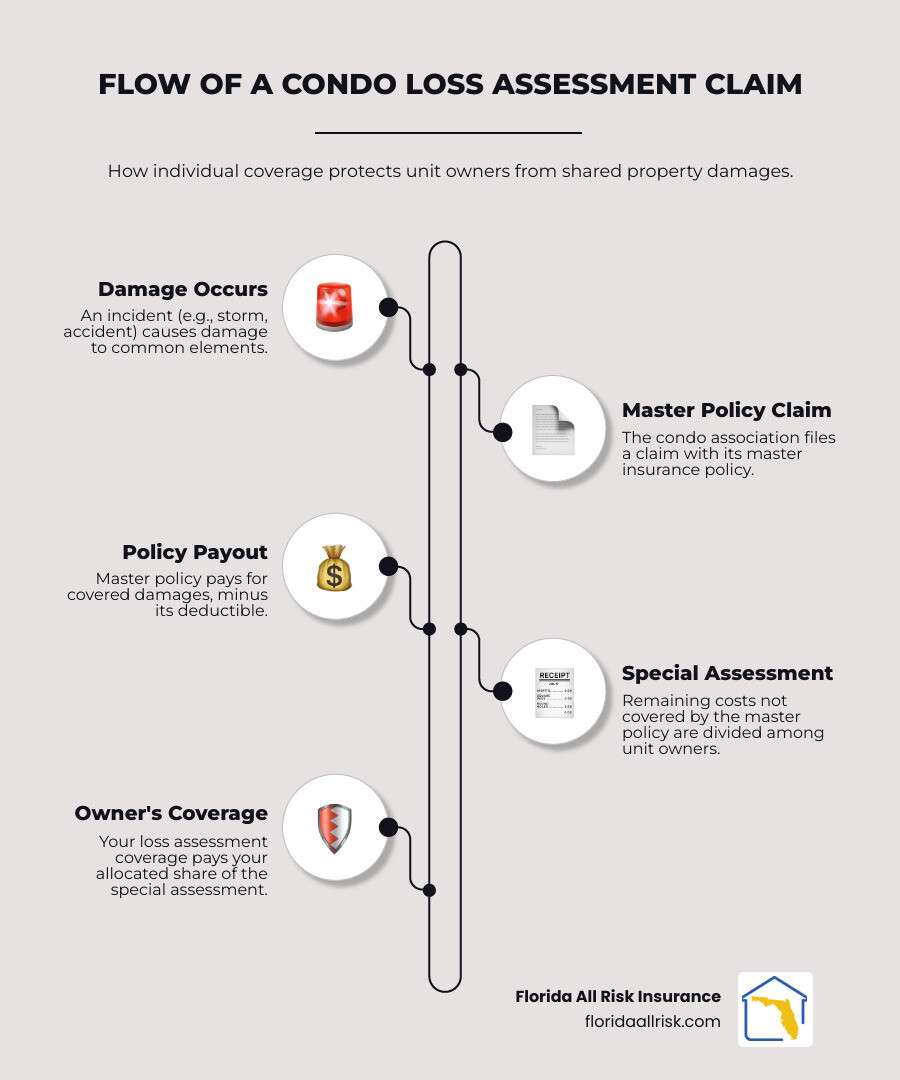
Assessment insurance for condos terms explained:
Understanding Special Assessments and the Master Policy
When you buy a condo in St. Petersburg or anywhere in the Sunshine State, you aren’t just buying the air space between your four walls. You are becoming a partial owner of a larger entity: the condo corporation or association. This means you share the perks—like that sparkling pool and the fitness center—but you also share the financial burdens. This collective ownership is governed by the Florida Statutes Chapter 718, which outlines the rights and responsibilities of both the association and the unit owners. This statute is the bedrock of condo law in Florida, defining everything from how meetings are conducted to how insurance must be maintained.
The association maintains a “master policy.” Think of this as the “big” insurance policy that wraps around the entire building. It typically covers the “common elements”—the roof, the exterior walls, the elevators, the lobby, and those shared amenities we all love. However, even the most robust master policies have limits. If a catastrophic event occurs and the repair costs exceed what the insurance company pays out, the association doesn’t just eat that cost. They turn to the unit owners. This is a fundamental aspect of condo living that many owners fail to grasp until they receive a bill in the mail. The master policy is often divided into two types: “Bare Walls” coverage, which covers only the structure, and “All-In” coverage, which may include some interior fixtures. Knowing which one your association has is critical for your own HO-6 policy planning.
This is where things can get sticky. Most associations maintain “reserve funds” for planned maintenance, like painting the building or repaving the parking lot. But reserve funds are rarely large enough to cover a multi-million dollar hurricane repair or a massive liability settlement. When the reserves are dry and the master policy is tapped out, the association issues a special assessment. In recent years, we have seen a surge in these assessments as associations struggle to keep up with the skyrocketing costs of property insurance in Florida. For more detailed information, you can explore our guide on Condo Association Insurance Florida to see exactly what your board is responsible for covering. The board of directors has a fiduciary duty to maintain the property, and if insurance is insufficient, they are legally obligated to assess the owners to cover the difference.
What is a Special Assessment?
A special assessment is an unexpected, mandatory fee charged to unit owners to cover a specific expense that isn’t in the regular budget. In Florida condos, these assessments are often triggered by three things:
- A major loss (like a fire or storm) that exceeds insurance limits. This is common when inflation drives up construction costs beyond the policy’s stated value.
- A large deductible on the master policy that the association doesn’t have the cash to cover. Many Florida associations now carry 5% or 10% windstorm deductibles.
- Structural damage or mandatory safety upgrades (like the new Florida milestone inspections) that require immediate funding to ensure the building remains habitable and legal.
If your association tells you that you owe $15,000 by next month to fix the parking garage, that is a special assessment. It is a legal obligation. In Florida, if you fail to pay a valid assessment, the association can place a lien on your property and, in extreme cases, even foreclose. That is why assessment insurance for condos is so vital; it turns a potential financial catastrophe into a covered insurance claim. It acts as a buffer between your personal savings and the association’s financial shortfalls. Without this coverage, you are personally liable for your portion of the building’s collective debt, regardless of whether you were personally responsible for the damage. It is also important to note that assessments are usually divided based on the percentage of ownership defined in the Declaration of Condominium, meaning owners of larger units often pay a higher share.
Assessment Insurance for Condos vs. Master Policy Deductibles
One of the most confusing parts of condo living is the “deductible gap.” We often talk to clients in St. Petersburg who are shocked to learn that their association’s master policy has a deductible of 3%, 5%, or even 10% of the building’s total value for hurricane damage. This is a standard practice in high-risk coastal zones, but the math can be devastating for the unprepared. If your building is insured for $10 million and has a 5% hurricane deductible, the association has to come up with $500,000 before the insurance company pays a single dime. This is not a hypothetical scenario; it is the reality for thousands of Florida residents every time a named storm enters the Gulf. As reinsurance costs for carriers rise, they pass these high deductibles onto the associations, who then have no choice but to pass the risk to you.
Who pays that $500,000? You do. The association will divide that half-million-dollar bill among all the owners. If there are 50 units, that’s $10,000 per owner. If there are only 20 units, that bill jumps to $25,000. Assessment insurance for condos (loss assessment coverage) is designed specifically to help you pay your portion of that association deductible. Without it, that $10,000 or $25,000 comes directly out of your savings account, your retirement fund, or a high-interest personal loan. Many owners assume their personal $500 deductible covers everything, but that only applies to claims inside their unit, not the collective liability of the building.
Under The 2025 Florida Statutes, specifically Section 627.714, Florida law requires that residential condo unit owner policies include at least $2,000 in loss assessment coverage. However, as we’ve seen, $2,000 is often just a drop in the bucket when compared to the actual deductibles being carried by modern associations. The law ensures you have some protection, but it doesn’t ensure you have enough protection. In fact, the $2,000 limit was set years ago and has not kept pace with the rapid appreciation of Florida real estate or the surge in insurance costs. We often see assessments for deductibles reaching $15,000 to $30,000 per unit in older, smaller waterfront buildings.
Loss Assessment vs. Standard Deductible
It is important to understand that your personal policy deductible and a loss assessment are two very different things. Here is a quick breakdown:
| Feature | Personal Policy Deductible | Loss Assessment |
|---|---|---|
| Who pays? | You, directly to your insurer. | You, to the condo association. |
| What triggers it? | A claim for damage inside your unit. | A shortfall in the association’s master policy. |
| How much? | Usually $500 to $2,500. | Can be thousands or tens of thousands. |
| Can it be insured? | No, this is your “skin in the game.” | Yes, via loss assessment coverage! |
| Frequency | Only when you have a personal loss. | Whenever the building has a major loss. |
How Loss Assessment Differs from a Deductible
While a deductible is a fixed amount you agree to pay when you file a claim for your own stuff (like your sofa or your kitchen cabinets), a loss assessment is an external levy. You don’t have control over when it happens or how much it is. It is a collective liability. In Florida, the standard “statutory” amount for loss assessment coverage is often cited as $2,000, but most high-quality policies allow you to increase this to $10,000, $25,000, or even $50,000. Given the cost of construction and the size of modern deductibles in Florida, we frequently recommend a limit of at least $25,000 for our clients. It is a small price to pay for the peace of mind it provides, especially when you consider that the cost of adding this coverage is often negligible compared to the potential payout. Furthermore, some policies have a sub-limit for assessments related to deductibles, so it is vital to read the fine print of your endorsement to ensure the full amount applies to deductible-related assessments.
The Scope of Protection: What is Covered and What is Not?
Not every bill from your condo association qualifies for an insurance claim. This is a point of frequent contention between unit owners and their insurance carriers. If the board decides they want to upgrade the lobby from “1980s chic” to “modern coastal” just because they feel like it, your insurance isn’t going to pay for that. That is a capital improvement, not a loss. Insurance is designed to restore you to the position you were in before a loss, not to fund aesthetic upgrades or general building modernization. Similarly, if the association is raising funds for a new roof because the old one simply reached the end of its 20-year lifespan, that is considered maintenance, not a covered insurance event.
For a loss assessment claim to be valid, the assessment must be triggered by a “covered peril.” This means the damage must be caused by something your policy actually covers, such as fire, lightning, windstorm, or hail. If the underlying cause of the assessment is an excluded event, your loss assessment coverage will not respond. This is why understanding the “perils” listed in your HO-6 policy is just as important as the coverage limits themselves. In Florida, windstorm is the most common covered peril, but it is also the one with the highest deductibles.
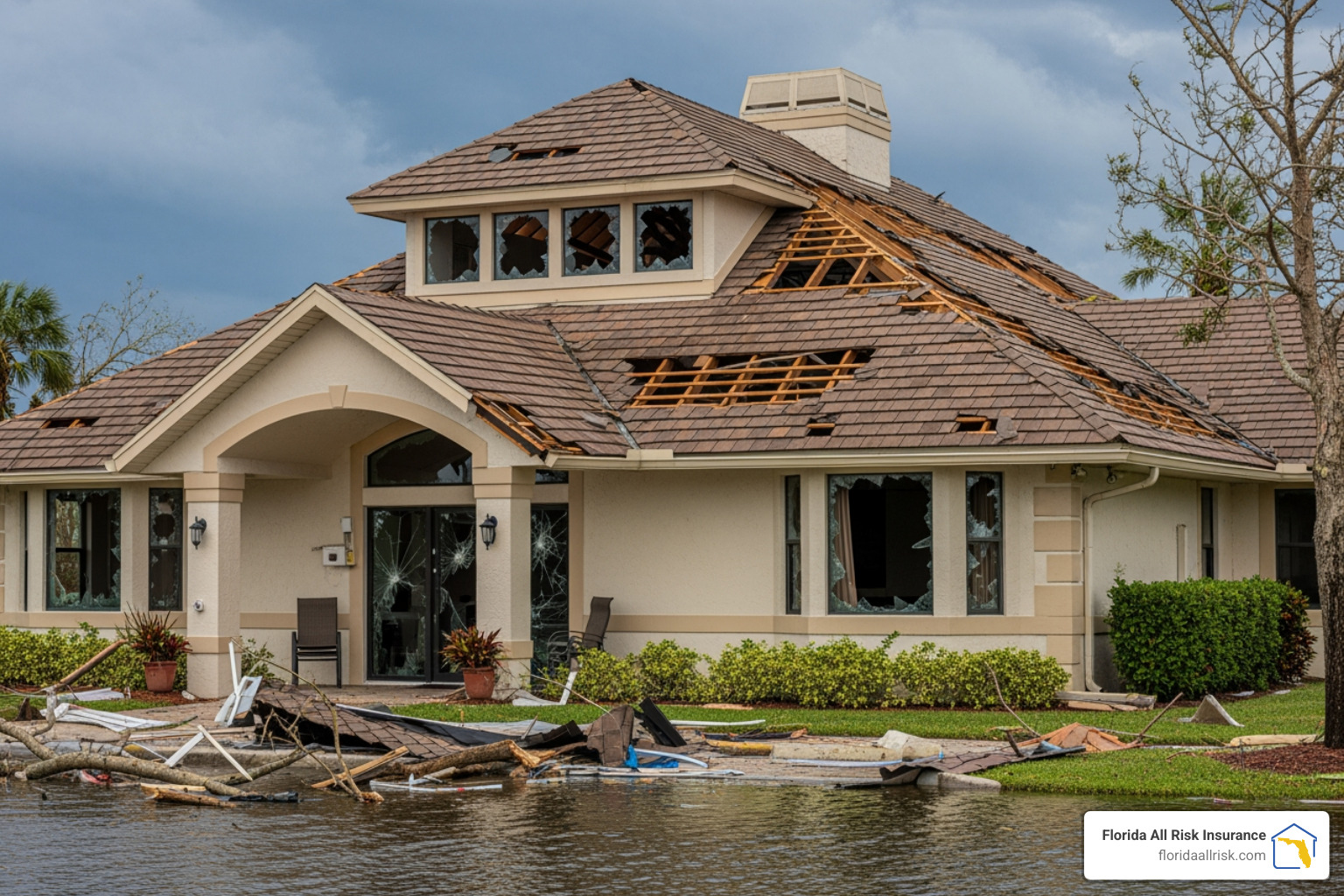
If you’re dealing with a specific claim, our Florida Condo Property Claims Guide can help you steer the process of documenting damage and working with adjusters. Understanding the nuances of what constitutes a “covered loss” is the first step in ensuring your claim is successful. You must also be aware of the timing; the loss must occur during your policy period for the assessment to be covered.
What Does Assessment Insurance for Condos Actually Cover?
When we look at assessment insurance for condos, we generally see it applied in three main areas:
- Property Damage to Common Areas: This is the most common use in Florida. If a hurricane smashes the clubhouse, destroys the roof of the main building, or a fire guts the shared gym, and the master policy doesn’t cover the full cost, your loss assessment coverage kicks in to pay your share of the remaining bill. This includes the cost of debris removal and temporary repairs required to prevent further damage. It also covers damage to “limited common elements” like your specific balcony or patio if the association is responsible for their repair.
- Liability Claims: Imagine a guest slips on a wet tile in the lobby and suffers a serious injury. They sue the association and win a $3 million judgment. If the association’s liability limit is only $2 million, the owners are responsible for the remaining $1 million. Your loss assessment coverage can help pay your portion of that legal settlement, protecting your personal assets from being seized to satisfy a judgment against the association. This is a critical protection that many owners overlook, focusing only on physical damage.
- Master Policy Deductibles: As mentioned before, if the association levies an assessment specifically to cover the deductible for a major property claim, your policy can respond to that as well. This is perhaps the most frequent use of the coverage in Florida due to the high percentage-based wind deductibles. Some policies require that the assessment be for a loss that would have been covered under your own policy if you owned the property outright.
Common Exclusions and Limitations
It is just as important to know what assessment insurance for condos won’t cover. Insurance is meant for “sudden and accidental” events, not for poor planning, general wear and tear, or predictable maintenance issues. Florida insurers are very strict about these distinctions.
- Routine Maintenance: If the balconies are crumbling because they haven’t been sealed in 20 years, the assessment to fix them is considered maintenance. Your insurance will not pay for this. This is a common issue in older Florida buildings where reserves were not properly funded for decades.
- Mismanagement: If the board forgot to renew the master policy or didn’t buy enough coverage due to negligence, those shortfalls are often excluded. Insurance does not cover the errors and omissions of the board unless you have specific coverage for that, or if the board has their own D&O (Directors and Officers) insurance.
- Pre-existing Conditions: If the damage occurred before you bought your policy, you can’t claim it. This is why it’s vital to have coverage in place before storm season begins. You cannot buy insurance for a house that is already on fire.
- Unlisted Perils: If the damage was caused by something specifically excluded in your policy (like a sinkhole, if you don’t have sinkhole coverage), the assessment won’t be covered either. Many Florida policies exclude sinkholes unless an additional premium is paid.
- Flood: This is a big one for Florida. Standard condo insurance (HO-6 policies) almost never covers flood damage. If a storm surge floods the lobby and the association assesses everyone for the repairs, your standard loss assessment coverage won’t help unless you have specifically added Flood Insurance for Condos. Flood insurance is a separate policy or endorsement that is essential for any Florida property, even those not in a high-risk zone.
Strategic Planning: How Much Coverage Do You Need?
Determining the right amount of assessment insurance for condos isn’t a guessing game; it’s a strategic decision based on your specific building and your financial comfort level. We always tell our clients: “The time to find out you’re underinsured is not when the bill arrives.” In a state where a single storm can cause billions in damage, being underinsured is a risk you simply cannot afford to take. With the average special assessment in Florida rising each year, a conservative approach is often the most expensive one in the long run.
Determining Your Need for Assessment Insurance for Condos
To figure out your number, we recommend a four-step process that involves a deep dive into your association’s financial health and insurance structure. This requires a bit of homework, but it can save you tens of thousands of dollars:
- Review the Master Policy: Ask your association for a “Certificate of Insurance” (COI). Look at the deductibles. If the hurricane deductible is 5% of a $20 million building, that’s a $1 million gap. If there are 100 units, you need at least $10,000 just to cover that one risk. If there are only 50 units, you need $20,000. Always calculate based on the highest possible deductible listed.
- Evaluate Amenity Risks: Does your building have a lot of high-value common areas? A parking garage, a private pier, a clubhouse, and two pools? More amenities mean more things that can break and more liability risks. A fire in a shared parking garage can lead to massive assessments that far exceed a standard $2,000 limit. Consider the replacement cost of these amenities in today’s inflated construction market.
- Check Building Age and Compliance: Older buildings are more susceptible to damage and often have higher insurance premiums and deductibles. They are also more likely to face assessments for structural issues. With the new Florida laws regarding milestone inspections and the Structural Integrity Reserve Study (SIRS), older buildings are seeing a wave of assessments for structural repairs that were previously ignored. If your building is over 30 years old, your risk profile is significantly higher.
- Consult an Independent Broker: At Florida All Risk Insurance, we can look at your association’s documents and help you calculate the potential “worst-case scenario.” We can also help you determine the replacement value of your personal belongings to ensure your entire policy is balanced. We look at the big picture, not just the individual unit. We can also advise on “Loss of Use” coverage, which helps if an assessment is triggered by damage that makes your unit uninhabitable.
For a deeper dive into choosing the right limits, check out our Condominium Insurance Guide 2025.
Factors Influencing the Cost of Coverage
The good news is that increasing your loss assessment coverage is usually very affordable. While your base condo insurance premium is influenced by things like your unit’s square footage and the age of the roof, the “add-on” cost for higher loss assessment limits is often less than the cost of a single dinner out in St. Pete. It is one of the highest-value endorsements you can add to a policy. Most carriers charge between $20 and $50 per year to increase your limit from $2,000 to $25,000.
Factors that influence the overall cost of your condo policy include:
- Location: Coastal units near the Gulf or Tampa Bay will have higher rates due to wind risk. Distance from the coast is a primary rating factor for all Florida property insurance. Even being a few blocks inland can make a difference in your base premium.
- Building Condition: Buildings with updated plumbing, electrical, and hurricane shutters often qualify for significant discounts. These updates reduce the likelihood of a claim, which lowers the risk for the insurer. Wind mitigation inspections are the best way to document these features and save money.
- Your Claims History: Just like auto insurance, a clean history helps keep rates low. Frequent small claims can lead to higher premiums or even non-renewal. It is often better to pay for small repairs out of pocket to protect your claims record.
- Deductibles: Choosing a higher personal deductible can lower your annual premium, potentially freeing up room in your budget for higher loss assessment limits. This is a strategic way to reallocate your insurance dollars to where they are needed most. By taking on a bit more risk for small, manageable losses, you can afford to protect yourself against the catastrophic assessments that actually threaten your financial stability.
Frequently Asked Questions
Is loss assessment coverage mandatory in Florida?
While Florida law (Statute 627.714) requires that insurers include at least $2,000 of this coverage in every residential condo policy, you aren’t legally forced to buy more than that by the state. However, most mortgage lenders require it as part of their lending guidelines, and savvy owners recognize that $2,000 is woefully insufficient for the reality of Florida’s insurance market. We strongly recommend increasing this limit to at least $10,000 or $25,000 depending on your building’s value and the master policy’s deductible structure.
Can I add loss assessment coverage to an existing policy?
Absolutely. In most cases, we can add this as an endorsement to your current HO-6 policy with a simple phone call. It doesn’t require a whole new application or a physical inspection of your unit. If you’ve recently seen your association’s master policy deductibles go up—which many Florida owners have in the last 12 months due to the hardening market—now is the perfect time to adjust your coverage. It is a quick fix that provides immediate protection.
Does loss assessment cover earthquake damage?
In Florida, earthquakes are exceptionally rare. Consequently, standard Florida condo policies do not include earthquake coverage. If your association were to somehow be assessed for earthquake damage, your loss assessment coverage would only respond if “earthquake” was a covered peril on your personal policy. For Florida owners, the bigger concern is usually whether the assessment covers flood or sinkhole damage—both of which require specific endorsements to be active. Always check your policy’s “Exclusions” section to be sure.
What happens if I sell my condo before the assessment is paid?
This is a complex legal area that often involves the real estate contract. Generally, the owner of the unit at the time the assessment is levied is responsible for the payment. However, during a real estate transaction, title companies will search for pending assessments. If an assessment is “active” or “announced,” it is usually settled at closing, often with the seller paying the balance. If you have a claim open for a loss assessment, the coverage typically stays with the policy that was in force at the time of the loss, but you should consult with your agent and your real estate attorney to ensure a smooth transition.
Does loss assessment cover the “Milestone Inspections” required by Florida law?
Generally, no. The inspections themselves and the resulting repairs for structural integrity are considered maintenance and safety compliance, not a “sudden and accidental” loss. However, if a covered peril (like a storm) causes damage that is then identified during an inspection, there may be some overlap. It is vital to distinguish between “wear and tear” and “storm damage” when discussing these assessments with your board and your insurer. If the assessment is for a repair that was necessitated by a specific event like a hurricane, it may be covered.
Can I have multiple loss assessment claims in one year?
Yes, as long as they are for separate occurrences. If a hurricane causes damage in September and a fire occurs in the clubhouse in December, and the association issues two separate assessments, your policy can respond to both. However, each claim will be subject to your policy’s per-occurrence limit. If you have a $25,000 limit, that is typically the maximum the insurer will pay for all assessments arising out of a single event, regardless of how many different bills the association sends you for that one event.
Conclusion
Living in a Florida condo offers a lifestyle of convenience and community, but it also requires a clear understanding of your shared financial responsibilities. Assessment insurance for condos is the bridge that protects your personal finances from the gaps in your association’s master policy. Whether it’s a massive hurricane deductible or a multi-million dollar liability lawsuit, having the right loss assessment limit ensures that you won’t be forced to sell your home or drain your retirement savings to pay an unexpected bill. In the volatile Florida market, this coverage is your most important line of defense. As we have seen with recent legislative changes and the increasing frequency of severe weather, the “old way” of insuring condos is no longer sufficient. Owners must be proactive in understanding their building’s insurance and their own personal exposure.
At Florida All Risk Insurance, we pride ourselves on being more than just an agency; we are your neighbors in St. Petersburg. As an independent agency, we have the freedom to shop multiple carriers to find the best rates and the most comprehensive coverage for your unique situation. We don’t believe in “one size fits all” insurance. We believe in custom protection that gives you the peace of mind to enjoy the Florida sunshine without worry. Don’t wait for the next storm season to review your limits; the best time to secure your home is today. Our expertise in the local market allows us to provide insights that national call centers simply cannot offer.
Next Steps for Condo Owners
Ready to secure your financial future and protect your piece of paradise? We make the process simple and stress-free:
- Get a Personalized Quote: Visit our website to get a personalized condo insurance quote today and see how affordable high-limit loss assessment coverage can be for your specific unit. Our online tool is fast and easy to use.
- Schedule an Expert Policy Review: Contact our St. Petersburg agents for a complimentary, no-obligation review of your current policy and your association’s master policy documents. We’ll help you spot the hidden gaps before they become expensive problems. We can even join a call with your board members to help explain the insurance implications for the entire community.
Contact Us
Florida All Risk Insurance
Address: 136 4th St N Ste 229, Saint Petersburg, FL 33701
Phone: (727) 547-3023
Email: [email protected]
Website: https://floridaallrisk.com/
Whether you are a first-time buyer in a trendy downtown high-rise or a long-time resident of a quiet waterfront community, we are here to provide the expertise and personalized service you deserve. Give us a call today and let’s make sure your condo—and your wallet—are protected against the unexpected.

