

When delving into contractor liability insurance coverage, it’s critical to understand that this isn’t just a standard business insurance. It protects construction professionals from risks and potential lawsuits stemming from property damage or bodily injuries that occur on job sites.
Here’s what you need to know upfront:
- Essential Protection: Safeguards your business from financial losses due to accidents or mishaps.
- Scope of Coverage: Includes property damage, bodily injury, and legal costs.
- Peace of Mind: Ensures your projects comply with legal and client mandates.
Contracting involves unique risks. From unforeseen accidents on site to the legal complexities of third-party claims, these challenges make a robust contractor liability insurance policy indispensable. Ensuring you have the right coverage not only fortifies your business but also instills confidence in your clients.
I’m Jason Miller, an experienced insurance professional specializing in contractor liability insurance coverage. With decades of experience working alongside my family’s insurance firms in Florida, I’m here to break down the essentials of liability coverage to help you protect your contracting business.

Learn more about contractor liability insurance coverage:
Understanding Contractor Liability Insurance Coverage
When you think about contractor liability insurance coverage, it’s all about protection. This insurance shields construction professionals from the financial risks associated with accidents, mistakes, or unforeseen events on the job site. Let’s break down the key components of this coverage.
Coverage Types
Contractor liability insurance isn’t a one-size-fits-all solution. It typically includes several types of coverage to address the diverse risks contractors face:
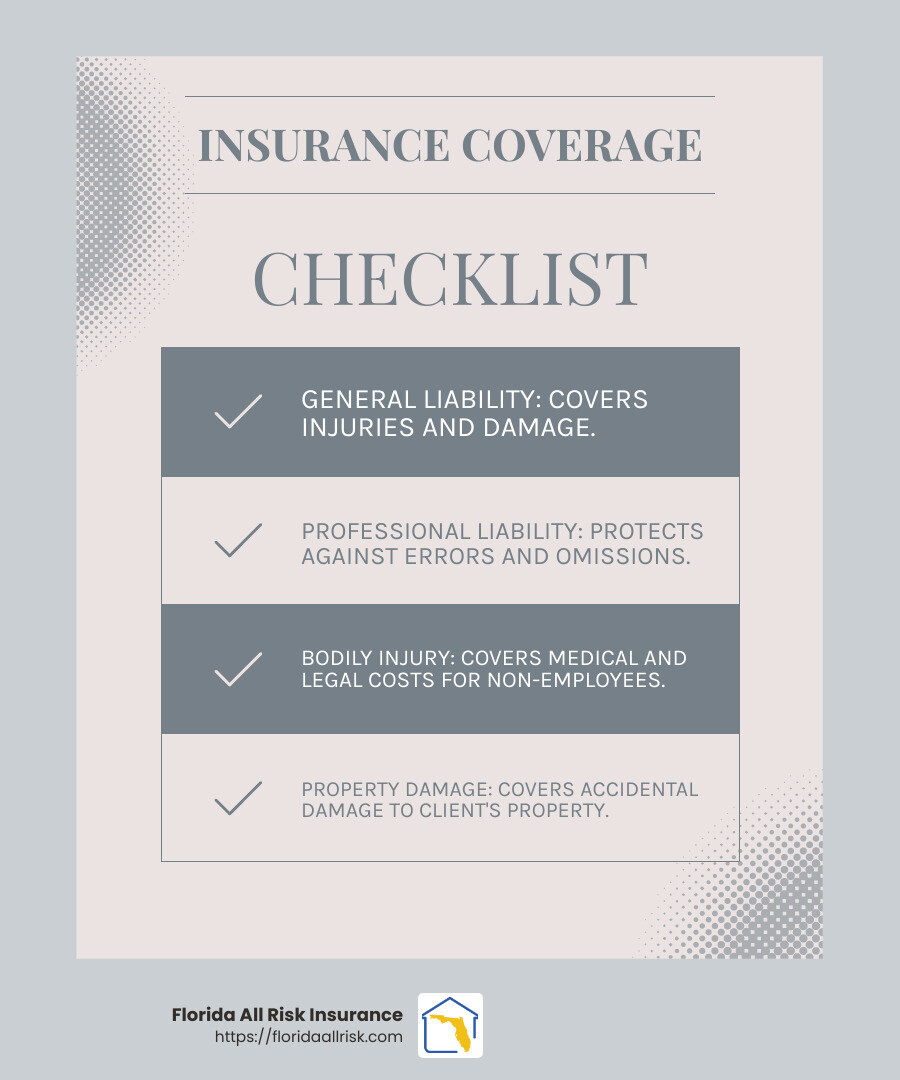
- General Liability Insurance: Covers claims related to bodily injuries and property damage caused by your business operations.
- Professional Liability Insurance: Protects against claims of negligence, errors, or omissions in the services you provide. This is crucial for contractors who offer design or consultancy services.
Bodily Injury
Accidents happen, especially in construction. If someone gets hurt on your job site, your liability insurance can cover medical expenses, legal fees, and potential settlements. This protection extends to injuries suffered by non-employees, such as clients or bystanders, ensuring that you aren’t financially crippled by an unfortunate incident.
Property Damage
Imagine working on a renovation project, and you accidentally damage a client’s expensive flooring. Without insurance, you might have to pay for repairs out of pocket. Property damage coverage helps cover these costs, protecting your business’s finances and reputation.
Professional Liability
Mistakes in construction can lead to costly errors. Professional liability insurance, also known as errors and omissions insurance, covers claims related to professional mistakes. This might include design flaws or failing to meet project specifications, which can lead to financial losses for your clients.
Contractor liability insurance coverage is a safety net for your business. It ensures that you’re protected against the unpredictable nature of construction work, allowing you to focus on delivering quality projects without the constant worry of financial repercussions.
Next, we’ll explore the key components of contractor liability insurance, and how they work together to provide comprehensive protection.
Key Components of Contractor Liability Insurance
When diving into contractor liability insurance coverage, it’s crucial to understand the main components that provide this essential protection. Each component plays a unique role in safeguarding your business from financial pitfalls. Let’s break them down:
General Liability
General Liability Insurance is the backbone of any contractor’s insurance plan. It covers claims related to bodily injuries and property damage that occur during your business operations. For example, if a client trips over a tool and gets injured on your site, this insurance can cover their medical expenses and any legal fees that might arise. It’s a must-have for any contractor aiming to protect themselves from everyday risks.
Completed Operations
Completed Operations Insurance is a vital extension of general liability. It covers incidents that occur after a project is completed. Imagine this: you finish installing a roof, but months later, it leaks and causes water damage. This coverage steps in to handle claims related to your finished work, ensuring you’re not left vulnerable to post-project liabilities.
Equipment Coverage
Tools and equipment are the lifelines of any contractor. Equipment Coverage, also known as inland marine insurance, protects your gear from theft, damage, or loss. Whether it’s a set of hand tools or a piece of heavy machinery, having this coverage means you won’t have to bear the full cost of replacements or repairs.
Workers’ Compensation
If you have employees, Workers’ Compensation Insurance is not just important—it’s often legally required. This coverage ensures that if an employee gets injured on the job, their medical expenses and lost wages are covered. It also provides peace of mind, knowing that both your employees and your business are protected from the financial strain of workplace injuries.

By understanding these key components of contractor liability insurance, you can tailor a policy that meets your specific needs and provides comprehensive protection. Up next, we’ll guide you through choosing the right contractor liability insurance for your business, considering factors like coverage needs and budget.
How to Choose the Right Contractor Liability Insurance
Selecting the right contractor liability insurance coverage is crucial for protecting your business from unexpected financial setbacks. Here’s how to make an informed choice:
Coverage Needs
First, identify the specific risks associated with your contracting business. Consider the types of projects you handle and the potential liabilities they might involve. For example, a roofing contractor faces different risks than a general handyman. Make sure your policy covers all relevant risks, including bodily injury, property damage, and completed operations.
Policy Limits
Policy limits determine the maximum amount your insurance will pay in case of a claim. Assess the scale of your projects and the potential costs involved in worst-case scenarios. It’s wise to choose limits that adequately cover these risks. Underestimating your policy limits can leave you vulnerable to expenses that exceed your coverage.
Risk Assessment
Conduct a thorough risk assessment to understand the potential hazards your business might face. This involves evaluating past incidents, industry standards, and the nature of your work. A detailed risk assessment helps you identify areas where you need more protection and can guide you in customizing your coverage.
Budget Considerations
Balancing comprehensive coverage with your budget is essential. While it might be tempting to opt for the cheapest policy, ensure it offers adequate protection. Consider your financial capacity to handle out-of-pocket expenses if an incident occurs. You can work with an insurance agent to find a policy that fits your budget while providing necessary coverage.
Choosing the right contractor liability insurance is about finding a balance between adequate protection and cost-effectiveness. By focusing on your coverage needs, policy limits, risk assessment, and budget, you can secure a policy that safeguards your business without breaking the bank.
Next, we’ll explore top tips for comparing contractor liability insurance policies, ensuring you get the best deal for your needs.
Top Tips for Comparing Contractor Liability Insurance Policies
When it comes to contractor liability insurance coverage, finding the right policy can feel overwhelming. Here are some straightforward tips to help you compare policies effectively:
Policy Comparison
Start by gathering quotes from multiple insurance providers. This gives you a clear picture of what’s available and helps you spot differences in coverage and price. Look for policies that align with your specific business needs. Pay attention to the coverage limits, deductibles, and any additional features offered.
Endorsements
Endorsements are add-ons to your basic insurance policy that provide extra coverage for specific risks. For instance, if you handle high-risk projects, you might need endorsements for completed operations or specific equipment. Carefully review the endorsements available and consider which ones are necessary for your business.
Exclusions
Understanding what is excluded from a policy is just as important as knowing what is included. Common exclusions might involve intentional damage, contractual liabilities, or pollution-related incidents. Make sure you’re aware of these exclusions so that there are no surprises when you need to file a claim.
Claims Process
A seamless claims process can save you time and stress. Check how each insurance provider handles claims. Are they known for quick responses and efficient resolutions? Reading reviews or asking for recommendations can provide insights into a provider’s reputation in handling claims.
Additional Considerations
- Endorsements and Customization: Look for policies that offer flexibility in terms of endorsements and customization. This allows you to tailor the policy to your specific needs.
- Provider Reputation: Research the insurance provider’s reputation. A reliable provider with a strong track record can offer peace of mind.
- Cost vs. Coverage: While cost is an important factor, ensure that the policy provides adequate coverage for your business’s unique risks.
By focusing on these key aspects—policy comparison, endorsements, exclusions, and the claims process—you can confidently choose a contractor liability insurance policy that offers the best protection for your business.
Next, we’ll address some frequently asked questions about contractor liability insurance coverage to clarify common concerns.
Frequently Asked Questions about Contractor Liability Insurance Coverage
What does contractor liability insurance cover?
Contractor liability insurance coverage primarily includes protection against claims related to bodily injury, property damage, and legal expenses.
-
Bodily Injury: If someone is injured due to your work—like a customer tripping over equipment on a job site—this insurance can cover medical expenses and legal fees.
-
Property Damage: Accidents happen. If your work inadvertently damages a client’s property, this insurance helps cover repair costs and any legal claims that might arise.
-
Legal Expenses: Lawsuits can be expensive. This coverage includes attorney fees, court costs, and settlements, which can be crucial for small businesses.
Are contractors legally required to have liability insurance?
While contractor liability insurance is not legally required in all states, it often becomes necessary due to client expectations and project prerequisites.
-
Requirements: Some states mandate liability insurance for licensure, especially in high-risk trades.
-
Client Expectations: Many clients require proof of insurance before hiring a contractor. It assures them that any potential damages or injuries will be covered.
-
Project Prerequisites: Larger projects, especially those involving government contracts, typically require contractors to carry liability insurance as part of the project terms.
How can contractors customize their liability insurance coverage?
Customizing your insurance policy ensures it meets the unique needs of your business. Here are some ways to tailor your coverage:
-
Endorsements: These are add-ons that provide extra protection. For instance, if your work involves high-risk elements, you might add endorsements for completed operations or specific equipment.
-
Policy Limits: Adjusting the limits of your coverage can ensure that you’re protected against the financial impact of larger claims. Consider the size and scope of your projects when setting these limits.
-
Additional Insureds: You can add other parties, like subcontractors or business partners, to your policy. This provides them with coverage under your insurance, which can be a valuable addition for collaborative projects.
By understanding these components, contractors can effectively manage their risks and ensure comprehensive protection for their business.
Next, we’ll wrap up with a look at how Florida All Risk Insurance provides custom solutions and personalized service to meet your needs.
Conclusion
At Florida All Risk Insurance, we understand that every contractor has unique needs and challenges. That’s why we offer custom solutions custom specifically to your business. Whether you’re a roofer, electrician, or general contractor, our team is dedicated to finding the right contractor liability insurance coverage for you.
Our commitment to providing competitive rates ensures that you get the best value without compromising on coverage. We work with a wide range of carriers, allowing us to compare options and secure the most favorable terms for your business.
But we don’t stop at just offering great rates. Our focus is on delivering personalized service. We take the time to understand your business, assess your risks, and recommend the most suitable insurance products. Our agents are always ready to assist you, ensuring that you have the support and guidance needed to make informed decisions.
Choosing the right insurance can be overwhelming, but with Florida All Risk Insurance by your side, you can have peace of mind knowing that your business is protected. Explore our comprehensive coverage options and see how we can help safeguard your operations today.
For more information on contractor liability insurance, visit our General Liability Insurance page. We’re here to help you every step of the way.

