

Contractor liability coverage is essential for protecting your business from unforeseen mishaps and legal liabilities. If you’re involved in the construction industry, it offers crucial financial protection against claims, such as damage to third-party property or personal injury. Furthermore, it often meets the insurance requirements mandated by construction boards and projects alike.
- Financial Protection: Ensures you’re covered for unexpected costs from lawsuits or claims.
- Insurance Requirements: Helps meet mandatory conditions set by project contracts or licensing boards.
As an experienced insurance professional, I’m Jason Miller. With decades of experience in contractor liability coverage, my goal is to simplify these insurance complexities for you. Let’s explore how contractor insurance can safeguard your business.

Understanding Contractor Liability Coverage
When you’re a contractor, accidents can happen. That’s why contractor liability coverage is so important. It helps protect your business from financial loss due to accidents or mistakes on the job. Let’s break down what this coverage includes.
General Liability Insurance
At the core of contractor liability coverage is general liability insurance. This type of insurance covers a range of risks that contractors face every day. Here’s what it typically includes:
-
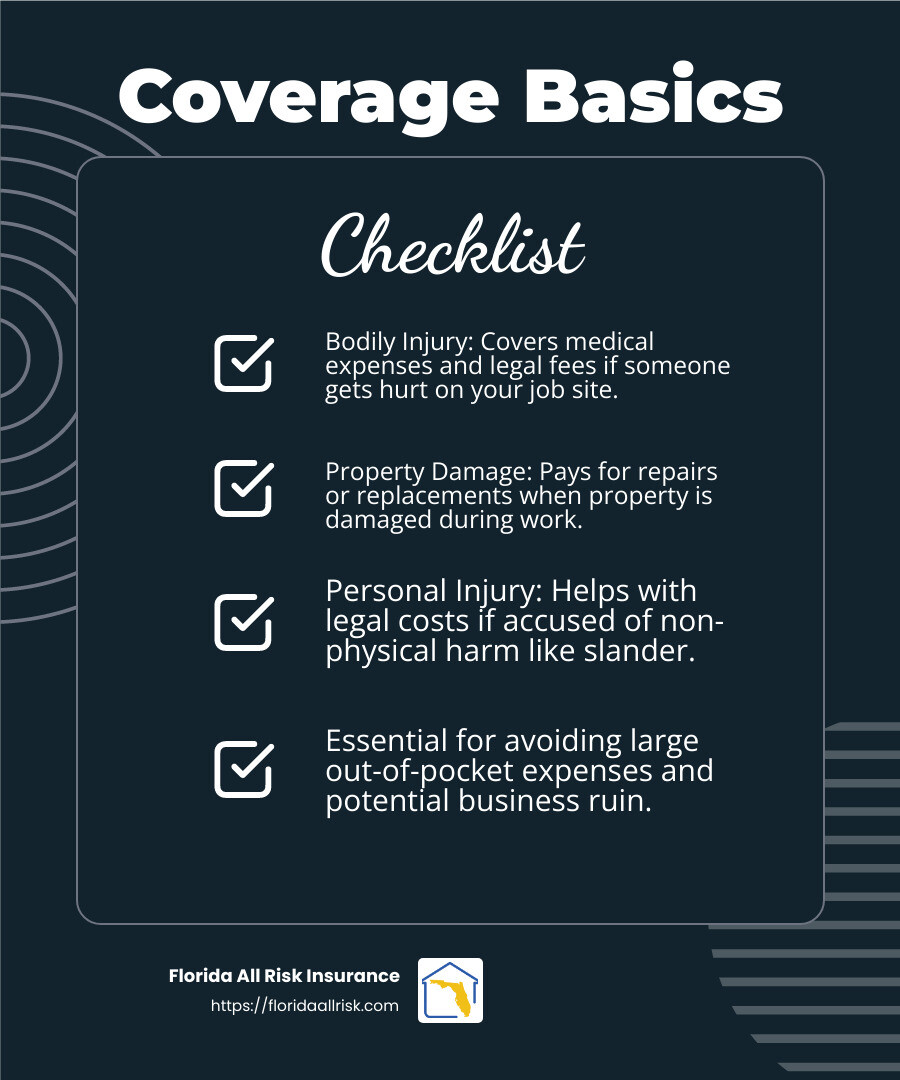
Bodily Injury: If someone gets hurt on your job site, this part of your insurance can help cover medical expenses and legal fees. For example, if a visitor trips over a tool and breaks an ankle, you’re covered.
-
Property Damage: Accidents can also lead to damage of property. Imagine you’re installing a new roof, and a piece of equipment falls and damages a client’s car. Property damage coverage helps pay for repairs or replacements.
-
Personal Injury: This covers non-physical harm, such as slander or libel. If someone claims your advertising injured their business reputation, personal injury coverage can help with legal costs.
Why It’s Important
Without this coverage, contractors could face huge out-of-pocket costs. Imagine having to pay for a client’s medical bills or repairing a damaged property without insurance. These expenses can quickly add up and potentially ruin a business.
Real-Life Example
Consider a case where an electrical company accidentally caused a fire while working on a home. The company’s general liability insurance covered the cost of damages, saving the business from financial disaster. This is a perfect example of why having the right coverage is crucial.
In summary, contractor liability coverage is not just a safety net—it’s a business essential. It protects against common risks like bodily injury, property damage, and personal injury, ensuring your business can continue to thrive, even when accidents occur.
Next, we’ll dive into the different types of contractor liability insurance and how they can be custom to fit your specific needs.
Types of Contractor Liability Insurance
When it comes to safeguarding your contracting business, understanding the different types of contractor liability insurance is crucial. Each type of coverage addresses specific risks and scenarios that contractors might face. Let’s explore these in more detail:
Professional Liability Insurance
Professional liability insurance, also known as contractors’ errors and omissions (E&O) insurance, is essential for businesses that offer professional advice or services. This coverage protects against claims of negligence, errors, or omissions in the work performed. For instance, if you provide design services and an oversight leads to costly project delays, this insurance can cover legal fees and damages.
Completed Operations Insurance
Once a project is finished, the risk doesn’t simply vanish. Completed operations insurance covers liabilities that occur after the project is completed. This is vital for contractors, as problems can surface long after the work is done. For example, if a railing you installed collapses months later, causing injury, completed operations coverage can handle the claims.
Contractors’ All Risks (CAR) Insurance
Contractors’ all risks insurance is a comprehensive policy that covers a wide range of potential risks on a construction site. This includes damage to the property under construction, as well as third-party claims for bodily injury or property damage. It’s an all-encompassing policy that helps protect against unforeseen events during the building phase.
Here’s a quick comparison of these types of insurance:
| Insurance Type | What It Covers |
|---|---|
| Professional Liability | Negligence, errors, and omissions in professional services |
| Completed Operations | Liabilities arising after the completion of a project |
| Contractors’ All Risks | Damage to construction site property and third-party injury/damage during the build |
These types of contractor liability insurance provide a safety net for various scenarios, allowing you to focus on delivering quality work without constantly worrying about potential liabilities. By choosing the right mix of coverage, you can tailor your insurance to fit the unique needs of your business.
In the next section, we’ll explore the factors that can affect the cost of contractor liability insurance, so you can make informed decisions about your coverage.
Factors Affecting Contractor Liability Insurance Costs
When it comes to contractor liability insurance costs, several key factors come into play. Understanding these can help you tailor your coverage to fit both your needs and your budget.
Trade-Specific Risks
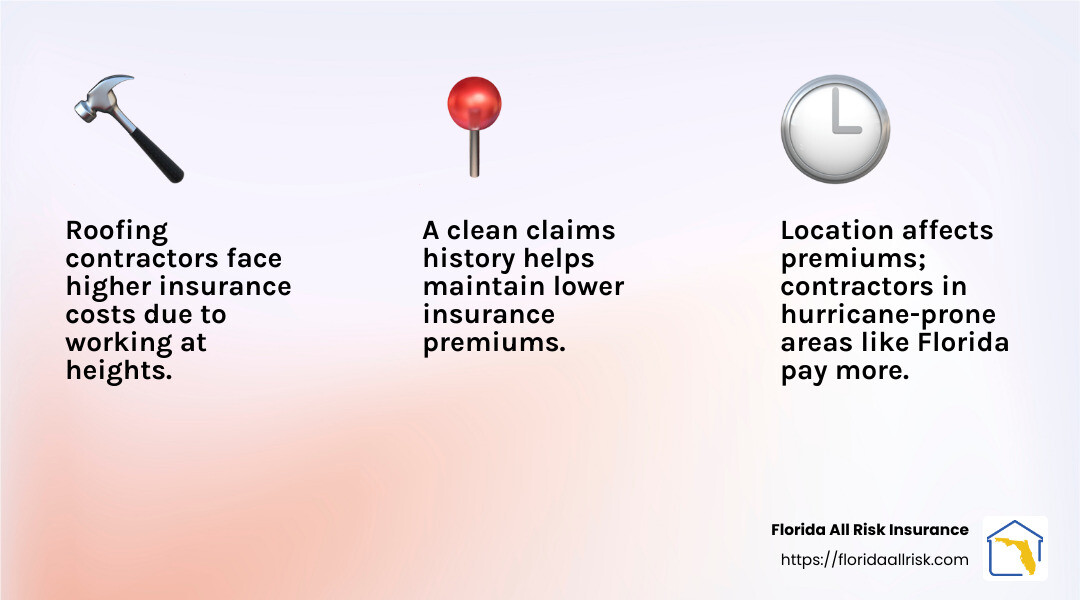
Different trades face unique risks, which influence insurance costs. For instance, roofing contractors often face higher premiums due to the inherent dangers of working at heights. On the other hand, plumbers might pay less, unless they work in high-rise buildings or with utilities, which can increase their risk profile.
Coverage Needs
The scope of your coverage directly impacts the cost. General liability insurance is a must-have, covering bodily injury and property damage. However, adding completed operations insurance or professional liability insurance can raise your premiums. It’s crucial to evaluate what coverage is necessary based on your business operations and potential liabilities.
Location
Where you operate also affects your insurance costs. Contractors in urban areas or regions prone to natural disasters might face higher premiums due to increased risk. For example, contractors in Florida might pay more due to the state’s hurricane risk.
Claims History
Insurance companies assess your claims history to determine your premiums. A history of frequent claims can lead to higher costs, as it suggests a higher likelihood of future claims. Maintaining a clean record can help keep your premiums lower.
Understanding these factors can help you manage your contractor liability insurance costs effectively. By assessing your specific risks and needs, you can choose coverage that offers the best protection for your business, without breaking the bank.
In the next section, we’ll dig into the importance of contractor liability coverage, highlighting why it’s a critical component of your business strategy.
Importance of Contractor Liability Coverage
When you’re a contractor, having contractor liability coverage is not just a smart move—it’s essential. Here’s why:
Financial Protection
Accidents happen, even to the best of us. Without the right insurance, a single mishap could drain your finances. Contractor liability coverage acts as a safety net, protecting you from costly lawsuits and claims. Whether it’s a slip-and-fall accident on a job site or damage to a client’s property, this coverage ensures you’re not paying out of pocket for these incidents.
Project Requirements
Many projects, especially larger ones, require proof of liability insurance before you can even begin work. This is not just a formality; it’s a safeguard for all parties involved. Having the right insurance shows that you are a professional who is prepared for unforeseen events. It can also make you more attractive to potential clients who want to work with insured contractors.
Proof of Insurance
Carrying contractor liability coverage provides tangible proof that you are covered. This documentation is often requested by clients, licensing boards, and even subcontractors. It serves as a testament to your commitment to safety and professionalism. Moreover, it can be a deciding factor in whether or not you secure a contract, especially in competitive markets.
In summary, contractor liability coverage offers crucial financial protection, meets project requirements, and serves as proof of your professionalism. Without it, you’re leaving your business vulnerable to significant risks.
In the next section, we’ll tackle some frequently asked questions about contractor liability coverage, addressing common concerns and misconceptions.
Frequently Asked Questions about Contractor Liability Coverage
What is contractor liability insurance coverage?
Contractor liability insurance coverage is a type of insurance that protects contractors from financial losses due to third-party claims. These claims often involve bodily injury, property damage, or personal injury that occur as a result of the contractor’s work. For example, if a client slips and falls on a job site or if a contractor accidentally damages a client’s property, this insurance helps cover the costs. It’s a vital safety net that ensures contractors aren’t financially responsible for these incidents.
What are the liabilities of a contractor?
Contractors face several potential liabilities in their line of work. These can include:
- Bodily Injury: Injuries to third parties, like clients or bystanders, that occur on the job site.
- Property Damage: Damage to a client’s property or neighboring properties during construction.
- Personal Injury: Legal claims related to libel, slander, or advertising injury.
- Completed Operations: Issues that arise after the project is finished, such as a structural failure.
Each of these liabilities can result in costly legal fees or settlements. That’s why having the right insurance is crucial.
Does contractor insurance cover negligence?
Yes, contractor insurance can cover negligence, but it’s important to understand the specifics. General liability insurance typically covers unintentional acts of negligence that result in bodily injury or property damage to third parties. However, it does not cover intentional acts or gross negligence.
For more complex claims related to professional errors, omissions, or negligence, contractors may need professional liability insurance. This type of insurance is essential for those who provide design or advisory services as part of their work, such as architects or engineers.
In summary, while contractor insurance can cover many forms of negligence, it’s important to have the right type of coverage custom to your specific risks and operations.
Conclusion
At Florida All Risk Insurance, we understand that each contractor’s needs are unique. That’s why we offer personalized service and custom coverage options custom to your specific requirements. Whether you’re a general contractor, roofer, or electrician, our team is dedicated to finding the right contractor liability coverage for you.
Our independent agency, based in St. Petersburg, Florida, provides access to a wide range of carriers. This allows us to offer competitive rates and comprehensive insurance solutions, ensuring you’re protected no matter the trade. We work closely with you to understand your business and the specific risks you face, so we can recommend the best coverage options available.
By choosing Florida All Risk Insurance, you’re not just getting an insurance policy; you’re gaining a partner committed to helping you secure your business’s future. We pride ourselves on our ability to provide exceptional service and support, making the process of obtaining and managing your insurance as seamless as possible.
Explore our General Liability Insurance page to learn more about how we can help protect your business. Let us assist you in finding the right coverage to keep your projects and your peace of mind intact.

