Florida Condominium Insurance (HO-6): A Complete Guide for Condo Owners
Why Florida Condo Owners Need Specialized Protection
Condominium insurance is a specialized HO-6 policy that protects your unit’s interior, personal belongings, and provides liability coverage beyond what your condo association’s master policy covers.
Quick Answer for Condo Owners:
- What it covers: Interior walls, floors, fixtures, personal property, liability, and additional living expenses.
- What it doesn’t cover: Building exterior, common areas, floods, or earthquakes (unless added).
- Average cost: Around $490 per year in Florida.
- Required by: Most mortgage lenders and many HOAs.
- Key benefit: Fills coverage gaps left by your association’s master policy.
Living in a Florida condo means sharing ownership responsibilities with your homeowners association (HOA). While the HOA’s master policy covers common areas and the building’s exterior, it doesn’t protect your personal investment inside your unit. This is where personal condo insurance, known as an HO-6 policy, becomes essential.
Your HO-6 policy provides “walls-in” coverage, protecting everything from your interior walls and flooring to your furniture and electronics. Without it, you could face significant out-of-pocket expenses after a fire, water damage, or theft. Understanding the gap between what your HOA covers and what you are responsible for is the first step toward securing your investment.
Understanding the Two Key Policies: Your HO-6 and the Master Policy
When you buy a condo, you enter a unique insurance partnership. Your personal HO-6 policy and your association’s master policy must work together to provide complete protection. Understanding the relationship between these two is crucial to avoid unexpected expenses.
What is the Condo Association’s Master Policy?
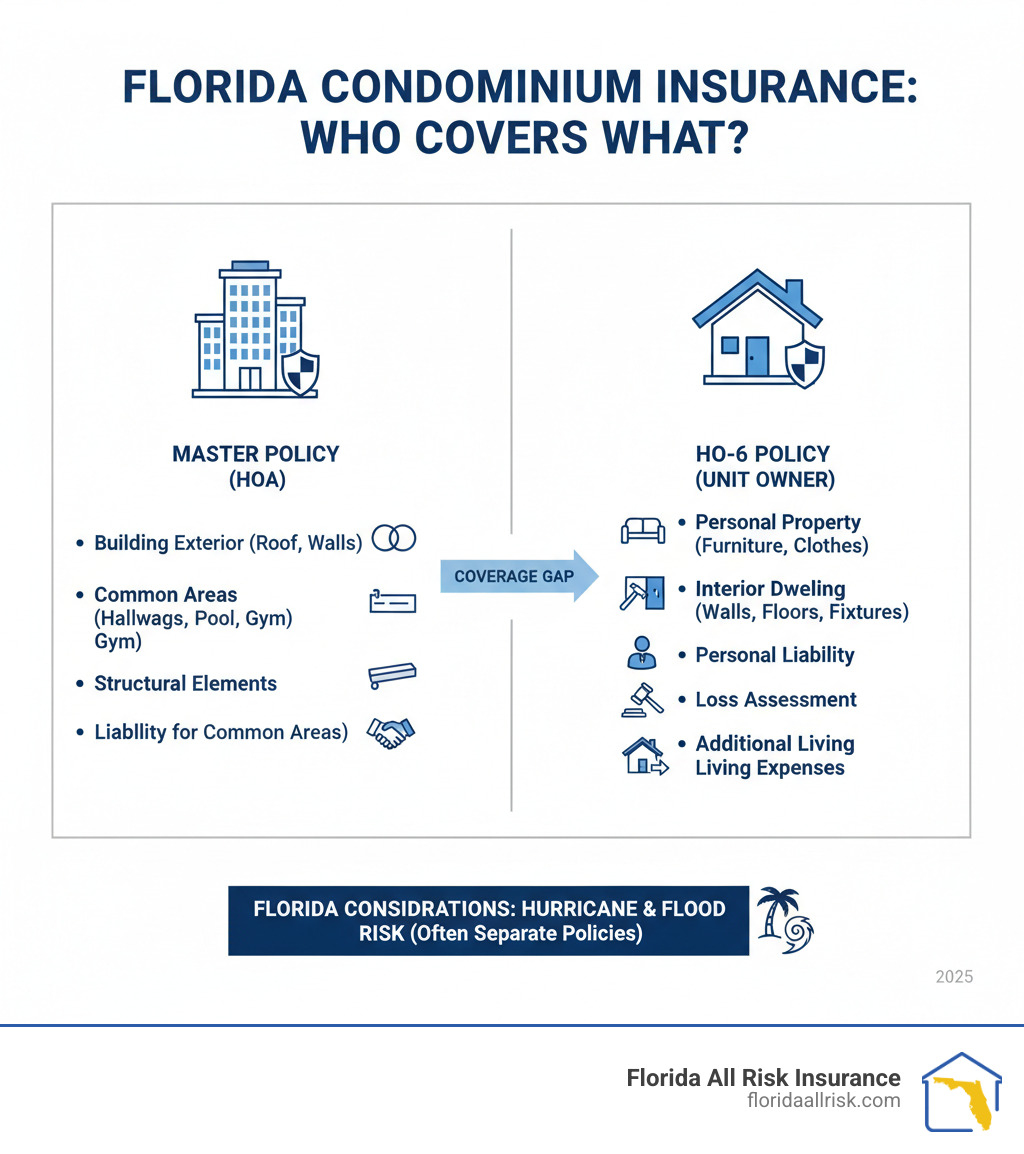
Your condo association’s master policy is the primary insurance that protects all shared spaces and structural elements. Purchased by the HOA, it covers:
- Common Areas: Hallways, lobbies, elevators, pools, and fitness centers.
- Building Exterior: The roof, foundation, and outer walls.
- Association Liability: Protects the HOA and unit owners from lawsuits arising from incidents in common areas.
Crucially, the master policy generally stops at your unit’s front door. It does not cover your personal belongings or the interior of your unit. Reviewing your association’s bylaws is essential to know exactly where its coverage ends and yours begins. For HOA boards, understanding these needs is vital; you can learn more about commercial condo insurance to see how comprehensive association coverage works.
The Three Types of Master Policy Dwelling Coverage
Not all master policies are the same. The type your HOA carries determines how much personal coverage you need.
- Bare Walls Coverage: This is the most basic type, covering only the building’s structure and common areas, stopping at your unit’s bare walls. You are responsible for insuring everything from the drywall inward, including flooring, cabinets, and fixtures.
- Single Entity Coverage: This covers the building plus the standard fixtures originally installed in each unit (e.g., basic countertops, builder-grade appliances). Any upgrades you’ve made require coverage under your personal HO-6 policy.
- All-Inclusive Coverage: The most comprehensive option, this covers the building, common areas, and most fixtures and improvements within units, including upgrades. Even with this policy, you still need an HO-6 for personal belongings, liability, and to cover the master policy’s deductible.
Your Personal Policy: The HO-6
Your personal condominium insurance policy, the HO-6, is designed to fill the gaps left by the master policy. It provides “walls-in” coverage for your personal investment, including:
- Interior Structure: Paint, flooring, built-in fixtures like cabinets and countertops.
- Improvements and Upgrades: Any renovations you’ve made to personalize your space.
- Personal Belongings: Your furniture, electronics, clothing, and other possessions.
- Liability Protection: Covers you if someone is injured in your unit or you accidentally damage another’s property.
Most mortgage lenders require an HO-6 policy, and many HOAs mandate it to ensure all residents are protected. If you’re curious about other property insurance options, you can explore homeowners insurance options in Florida to understand the broader landscape.
Condo Insurance (HO-6) vs. Homeowners Insurance (HO-3)
The key difference between condominium insurance (HO-6) and homeowners insurance (HO-3) lies in ownership responsibility.
- Coverage Scope: An HO-3 covers the entire dwelling, from foundation to roof, plus other structures on the land. An HO-6 focuses on the unit’s interior and personal property, as the master policy covers the exterior.
- Property Responsibility: A homeowner is responsible for everything. A condo owner shares responsibility for the exterior and common areas with the HOA.
- Cost: HO-6 policies typically have lower premiums due to their more limited structural coverage.
- Liability: HO-3 liability covers your entire property. HO-6 liability is for incidents within your unit, while the master policy handles common area liability.
What Your Personal Condo Insurance (HO-6) Policy Covers
Your HO-6 policy is a package of protections for your unit, belongings, and financial well-being. It is built on several key pillars of coverage.
Dwelling / Building Property Coverage
This is your “walls-in” protection, covering the parts of the unit that you own. While the master policy handles the building’s exterior, your dwelling coverage protects your home’s interior, including:
- Interior walls and paint
- Flooring (carpet, hardwood, tile)
- Built-in fixtures like kitchen cabinets, bathroom vanities, and light fixtures
- Improvements and renovations you have made, such as upgraded countertops or custom built-ins. The master policy typically won’t cover these upgrades, making your personal policy essential.
Personal Property Coverage
This coverage protects your belongings, from furniture and electronics to clothing and artwork. When selecting this coverage, you must choose between:
- Actual Cash Value (ACV): Pays what your item is worth today, including depreciation. If your five-year-old laptop is stolen, you get its current, depreciated value.
- Replacement Cost (RC): Pays the cost to buy a new, similar item. This is highly recommended, as it allows you to truly replace what you’ve lost without paying out-of-pocket for the difference.
Creating a home inventory with photos and receipts is a crucial step. It helps you determine how much coverage you need and simplifies the claims process.
Personal Liability and Medical Payments Coverage
Liability coverage is your financial protection if you are held responsible for an accident that injures someone or damages their property. It can cover:
- Guest Injuries: If a guest is injured in your unit, this helps pay for their medical bills and protects you from a potential lawsuit.
- Legal Defense: Covers legal fees and court costs if you are sued, even if you are not at fault.
Medical Payments Coverage is a related but separate protection. It covers small medical expenses for guests injured in your unit, regardless of who is at fault. This can be a goodwill gesture to prevent a larger liability claim. For pet owners, be aware that some dog breeds can affect your liability coverage; you can read about insuring your home with pets for more guidance.
Loss of Use / Additional Living Expenses (ALE)
If a covered event like a fire or major water leak makes your condo uninhabitable, Loss of Use coverage helps pay for the extra costs of living elsewhere during repairs. This can include:
- Temporary housing, such as a hotel or short-term rental.
- The extra cost of restaurant meals if you cannot use your kitchen.
- Laundry services and other necessary expenses.
ALE covers the difference between your temporary expenses and your normal cost of living, preventing a financial disaster on top of a property disaster.
Loss Assessment Coverage
This unique coverage protects you when your HOA levies a special assessment on all unit owners to cover costs from a shared loss. This often occurs when:
- Common area damage exceeds the master policy’s coverage limits.
- The HOA needs to cover a large master policy deductible.
For example, if a hurricane causes major damage to the roof and the master policy has a high deductible, the HOA may assess each owner a share of that cost. Without loss assessment coverage, you would have to pay this out of pocket. This coverage applies to assessments for covered perils like fire or windstorms, not for routine maintenance. To learn more, see our guide on how to handle condominium insurance claims.
Exclusions and Optional Coverages for Your Condominium Insurance
A standard HO-6 policy provides excellent protection, but it has limits. Understanding what is excluded and which optional coverages (endorsements) are available is key to building a comprehensive safety net.
What is Typically NOT Covered?
Standard condominium insurance policies are designed for sudden and accidental events. Common exclusions include:
- Floods: This is the most critical exclusion for Florida residents. Standard policies do not cover damage from flooding; this requires a separate policy.
- Earthquakes: While less of a concern in Florida, earthquake damage is also excluded.
- Wear and Tear: Insurance is not a maintenance plan. Gradual deterioration of your property is not covered.
- Lack of Maintenance: If you ignore a small leak that leads to major water damage, the claim may be denied due to negligence.
- Pest Damage: Damage from termites, rodents, or other pests is considered a maintenance issue.
- Intentional Damage: Acts of destruction by someone in your household are not covered.
For more details on this crucial exclusion, you can learn about flood insurance for condos explained.
Common Optional Coverages (Endorsements)
You can customize your policy with endorsements to cover specific risks:
- Water/Sewer Backup: Covers damage from water backing up through sewers or drains, a common issue not covered by standard policies or flood insurance.
- Scheduled Personal Property: Provides higher, specific coverage for high-value items like jewelry, art, or collectibles, often with broader protection than the standard policy.
- Identity Theft Protection: Helps cover expenses related to recovering from identity theft, such as legal fees and credit monitoring.
- Ordinance or Law Coverage: Helps pay the extra cost to bring your unit up to current building codes during repairs after a covered loss.
Special Considerations: Flood and Hurricane Coverage in Florida
Living in Florida requires special attention to weather-related risks.
- Flood Insurance: As mentioned, this is a separate policy, most often obtained through the National Flood Insurance Program (NFIP){:target=”_blank”}. Even a few inches of water can cause tens of thousands of dollars in damage.
- Hurricane Deductibles: Your policy will likely have a separate, higher deductible for hurricane damage. It is usually a percentage (e.g., 2%, 5%) of your dwelling coverage limit. Understanding this amount is crucial for financial planning.
- Windstorm Coverage: In high-risk coastal areas, windstorm coverage may be handled separately from your main policy to keep insurance available and affordable.
An experienced local agent can help you steer these Florida-specific challenges. For more information, explore Florida flood insurance options to ensure you’re fully protected.
The Cost of Condo Insurance: Factors, Discounts, and Getting a Quote
While the average cost of condominium insurance in Florida is around $490 per year, your actual premium will depend on several factors unique to your property and coverage choices.
What Factors Influence the Cost of Condominium Insurance?
Insurers consider several key factors when calculating your premium:
- Location: Proximity to the coast, local crime rates, and flood risk all impact cost.
- Building Construction and Age: Newer buildings made with fire-resistant materials and updated systems are often cheaper to insure.
- Your Claims History: A history of filing claims can lead to higher premiums.
- Coverage Limits and Deductible: Higher coverage limits increase the premium, while a higher deductible can lower it. Ensure you can afford your deductible in an emergency.
- Fire Protection: The quality and proximity of your local fire department can affect your rate.
How to Save: Common Condo Insurance Discounts
Several discounts can help lower your condominium insurance costs:
- Bundling Policies: Combining your condo and auto insurance with the same carrier is one of the easiest ways to save.
- Protective Devices: Monitored security systems, smoke detectors, and fire alarms can earn you a discount.
- Claims-Free History: Insurers often reward policyholders who have not filed claims for several years.
- Paying in Full: You may receive a discount for paying your annual premium upfront rather than in monthly installments.
For more ideas, check out our tips to save on homeowners insurance, as many principles apply.
What Information is Needed for a Quote?
To get an accurate condominium insurance quote, you’ll need to provide some basic information:
- Property address and unit square footage
- Building’s construction type and year built
- Details on safety features (alarms, sprinklers)
- Desired coverage amounts for dwelling, personal property, and liability
- Your personal information and claims history
- Information about your HOA’s master policy, if available
Having this information ready will streamline the process.
Choosing the Right Policy and Coverage Amount
Selecting the right condominium insurance is about matching coverage to your specific needs and assets, not just finding the lowest price. A policy should provide confidence that you are properly protected.

How to Determine How Much Condominium Insurance You Need
Figuring out your coverage needs can be done systematically:
- Review your HOA’s master policy. This is your starting point. Obtain a copy and understand if it provides “bare walls,” “single entity,” or “all-inclusive” coverage. This will determine how much dwelling coverage you need for your interior structure and fixtures.
- Create a personal property inventory. Walk through your condo and document everything you own, from furniture and electronics to clothing and kitchenware. Use photos or a spreadsheet and estimate the cost to replace these items today. Most people are surprised by how quickly the value adds up. This inventory is also invaluable if you ever need to file a claim.
- Assess your liability needs. Your liability coverage should ideally be enough to protect your total net worth. It is relatively inexpensive to increase liability limits, and doing so can protect your savings and assets from a lawsuit.
- Set your loss assessment limit. In Florida, hurricane damage can lead to significant HOA assessments. Consider your building’s condition and your own finances. If a surprise $10,000 bill would be a hardship, ensure your loss assessment coverage is at least that high.
For additional guidance, see the Insurance Information Institute’s condominium insurance overview{:target=”_blank”}.
How to Choose the Right Insurance Company
Price is important, but so are stability and service. When choosing a carrier, consider the following:
- Financial Stability: Look for companies with strong ratings (A- or better) from firms like A.M. Best. This indicates they have the financial resources to pay claims, even after a widespread disaster.
- Customer Service and Claims Handling: Research the company’s reputation for handling claims. Are they responsive and fair? Online reviews and local recommendations can provide insight.
- Local Expertise: An insurer that understands Florida’s unique market, weather risks, and building codes can provide better guidance and service. As an independent agency, we work with multiple carriers to provide that local knowledge.
The goal is to find an insurance partner who will be there when you need them most. That peace of mind is the true value of a good policy.
Frequently Asked Questions About Condominium Insurance
Here are answers to some of the most common questions we receive about condominium insurance.
What is the difference between condo insurance and renters insurance?
Renters insurance (HO-4) is for tenants and covers only personal belongings and liability. It does not cover the building itself. Condominium insurance (HO-6) is for owners and covers the interior structure of the unit (walls, floors, fixtures) in addition to personal belongings and liability. As a condo owner, you are responsible for the parts of the unit that a renter is not, which is why you need the more comprehensive HO-6 policy.
Does condo insurance cover special assessments from the HOA?
Yes, but only if you have loss assessment coverage and only for specific situations. This coverage applies when your HOA levies an assessment to cover a shortfall after a covered peril, such as a fire or storm that damages a common area. It does not cover assessments for routine maintenance (like replacing an old roof due to age) or planned community upgrades (like renovating the pool).
If I rent out my condo, do I still need an HO-6 policy?
No, a standard HO-6 policy is designed for owner-occupied units. If you rent out your condo, you become a landlord and your risks change. You will likely need a dwelling fire policy (DP-3) or a specific landlord policy. This type of insurance covers the structure, your liability as a landlord, and any property you leave for the tenant’s use (like appliances). It is crucial to speak with your insurance agent before renting out your unit to ensure you have the correct coverage. You should also require your tenants to purchase their own renters insurance to cover their belongings and personal liability.
Conclusion: Secure Your Florida Condo Today
Protecting your condo investment requires a partnership between your HOA’s master policy and your personal HO-6 coverage. By understanding what each policy covers, you can eliminate dangerous and costly gaps.
We’ve covered the essentials of condominium insurance, from the different types of master policies to the key components of your HO-6: dwelling protection, personal property, liability, and loss assessment coverage. In Florida, it is especially critical to address risks like floods and hurricanes with the right endorsements and separate policies.
Choosing the right coverage amount and a financially stable insurer is more important than simply finding the lowest premium. The cheapest policy is not the best value if it leaves you underprotected when you need it most.
As an independent agency serving St. Petersburg and all of Florida, we understand the state’s unique insurance landscape. We work with multiple carriers to find a policy that fits your building’s master policy, your budget, and your personal needs, giving you true peace of mind.
Ready to protect your investment? Explore our comprehensive condo insurance options and see how we can help you secure the right coverage for your Florida home.
Prefer tailored guidance? Request a personalized consultation and no-obligation quote and our team will build a custom protection plan for your condo.
Contact Us
Florida All Risk Insurance
Address: Saint Petersburg, FL
Phone: (727) 522-7777
Email: [email protected]