

Understanding Townhouse Insurance Basics
Condo townhouse insurance can feel confusing at first glance. Your home may look like a traditional townhouse with its own entry and possibly a small yard or patio, yet your responsibilities and risks depend less on how it looks and more on how it’s owned. That ownership structure determines whether you need a standard homeowners policy (HO-3) or a condo unit-owner policy (HO-6) designed to work alongside your association’s master policy.
At a high level:
- Ownership determines your policy. Freehold townhouses generally need a homeowners policy (HO-3). Condo townhouses typically require an HO-6 policy.
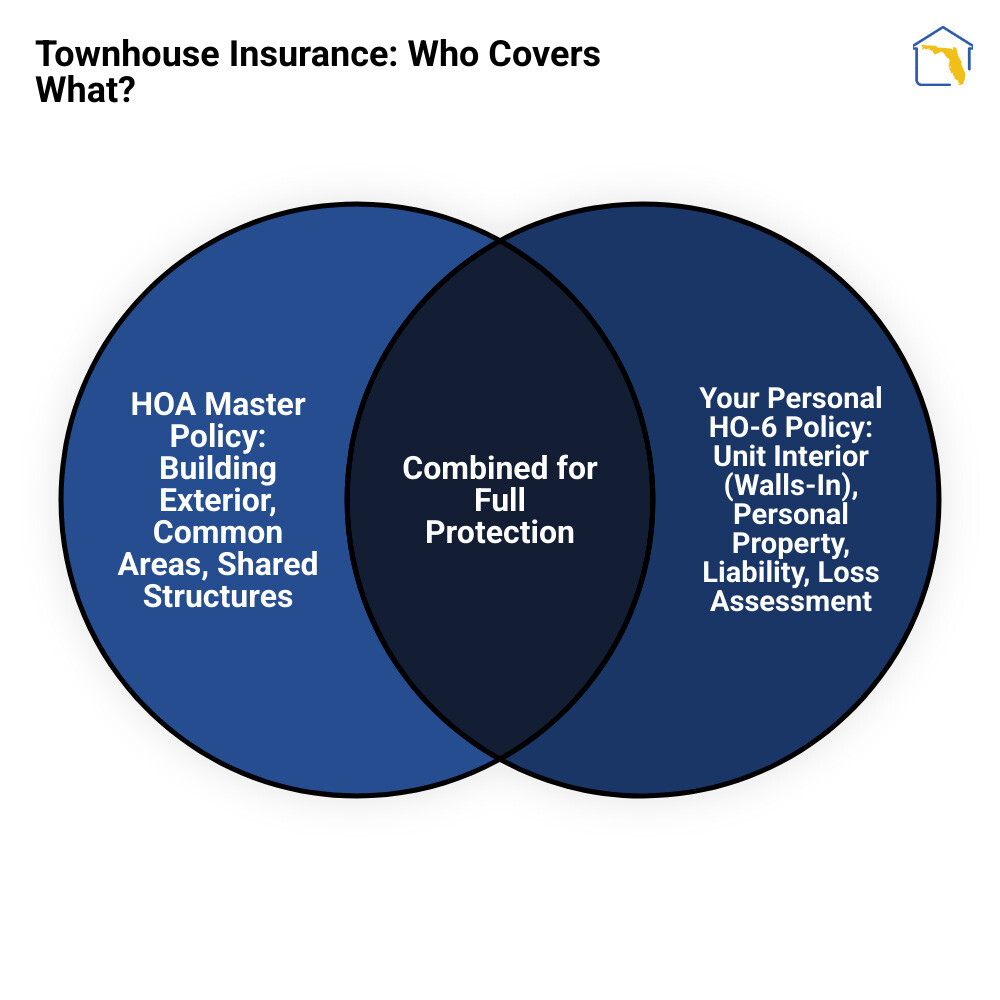
- The HOA master policy is not enough. It usually protects the building’s exterior and common areas, not your unit’s interior finishes, your belongings, or your personal liability.
- You tailor your personal policy. With the correct policy type in place, you can customize coverage for interior finishes, personal property, liability, loss assessments, water damage, and more.
The stakes are real: choose the wrong policy and you can face major gaps after a loss—especially in Florida, where windstorm, water, and hurricane exposures make coverage details and deductibles matter. This guide breaks down the differences between freehold and condo townhouses, explains HO-3 vs. HO-6 policies in plain language, and shows how your personal coverage should align with your HOA’s master policy. You’ll also find practical tips, examples, and links to helpful resources so you can make confident, informed decisions.
By the end, you’ll understand which policy type you need, which coverages warrant extra attention, and how to avoid the most common pitfalls we see when condo townhouse owners rely too heavily on the master policy. If you already know you’re in a condominium ownership structure and want to explore coverage options, our specialists can help you fine-tune a unit-owner policy that matches your risk profile at https://floridaallrisk.com/insurance_products/condo/.
Townhouse vs. Condo: It’s All About Ownership, Not Just Walls
In Florida, the words “townhouse” and “condo” are often used interchangeably, but they mean different things. A townhouse describes a style of home—typically multi-level, with shared walls. A condominium, by contrast, describes a legal ownership structure. Many Florida townhouses are legally part of a condominium association, which brings unique insurance responsibilities and the need for an HOA master policy to work in tandem with your personal coverage.
If you’re unsure which type of ownership you have, review your recorded deed and declaration documents or ask your real estate professional. The distinction is more than academic; it tells you which policy form you need and where the HOA’s master policy ends and your personal insurance begins. For background on how condominium ownership is defined in Florida, see the Florida Condominium Act, Chapter 718 of the Florida Statutes: https://www.leg.state.fl.us/statutes/index.cfm?Appmode=DisplayStatute&URL=0700-0799/0718/0718.html.
Freehold Townhouses: Your Castle, Your Responsibility
With a freehold townhouse, you own the entire building and the land underneath it. There may be a homeowners association for the community, but it typically doesn’t insure your structure. That means you’re responsible for insuring the dwelling from the foundation to the roof under a standard homeowners policy (HO-3). Your policy should address hurricane wind, hail, fire, liability, and loss-of-use needs, plus optional protection for items like jewelry or collectibles.
Key considerations for freehold townhouse owners:
- Dwelling limit accuracy: Make sure the dwelling coverage reflects current local rebuilding costs, not your home’s market value.
- Windstorm deductibles: In Florida, hurricane deductibles are often a percentage of the dwelling limit. Understand how that will affect your out-of-pocket costs.
- Ordinance or law: If rebuilding must meet updated codes, this coverage helps pay for mandated upgrades.
For a deeper look at homeowners policies for Florida properties, visit https://floridaallrisk.com/homeowners-insurance-florida/.
Condo Townhouses: Shared Structures, Defined Boundaries
If your townhouse is legally a condominium unit, you own the interior “walls-in” portion of your home and share ownership of common elements (roof, exterior walls, grounds, amenities) through your association. The association’s master policy typically covers the building shell and common areas. Your personal condo policy (HO-6) covers the inside of your unit—finishes, fixtures, flooring, cabinets—and your personal property and liability.
The Insurance Information Institute offers a helpful overview of how condo insurance works and where the master policy stops: https://www.iii.org/article/condo-insurance. Keep in mind that master policy types can differ by association, so it’s vital to read your documents and request a current Certificate of Insurance and the master policy deductible schedule. Once you understand what the association insures, you can right-size your unit-owner policy at https://floridaallrisk.com/insurance_products/condo/.
Decoding Your Policy: HO-3 vs. HO-6 for Townhouse Owners
Choosing between an HO-3 and an HO-6 isn’t a preference call—it flows from how your property is owned and how the HOA’s master policy is written. Get this wrong and you may find out after a loss that big parts of your home aren’t covered the way you assumed.
The HO-3 Policy for Freehold Townhouses
An HO-3 policy is designed for owners who are responsible for the entire structure and the land it sits on.
- Dwelling coverage: Typically “open perils” (all-risk subject to exclusions), protecting the full structure and attached features.
- Other structures: Covers detached items like sheds, fences, or a detached garage.
- Personal property: Usually “named perils” coverage for your belongings, with options to upgrade to replacement cost.
- Personal liability: Protects against claims if someone is injured at your home or you accidentally damage someone else’s property.
- Loss of use: Pays for temporary living expenses when your home is uninhabitable after a covered loss.
- Ordinance or law: Helps fund code-required upgrades during repairs or rebuilds.
Real-world example: A windstorm tears off roof shingles and rain damages interior ceilings. With an HO-3, your dwelling coverage addresses the roof and interior repairs (less your deductible), while loss of use can help cover living elsewhere during major repairs.
The HO-6 Policy for Condo Townhouses
An HO-6 fits condo townhouse owners because it aligns with master policies and the “walls-in” responsibility you have for your individual unit.
- Dwelling (additions and alterations): Protects interior elements under your responsibility—drywall, paint, flooring, cabinets, countertops, and built-in fixtures. If you’ve upgraded finishes (e.g., high-end flooring), set limits to reflect those values.
- Personal property: Covers your belongings, with options for replacement cost and scheduling high-value items like jewelry or fine art.
- Personal liability: Essential in shared buildings, where a mishap in your unit (say, an overflowing washing machine) can damage neighbors’ homes.
- Loss of use: Helps with housing if your unit is uninhabitable after a covered loss.
- Loss assessment: Applies when the HOA levies a special assessment against unit owners to cover a master policy deductible or shortfall after a covered loss.
- Ordinance or law: Helps cover code-driven upgrades to interior components you insure.
Practical scenario: A plumbing line inside your unit bursts and damages your kitchen and the ceiling below. Your HO-6 addresses interior repairs and your neighbor’s damage if you’re found responsible, subject to your policy terms and liability limits. If the HOA files a claim for common-area damage with a large master policy deductible that gets assessed to all unit owners, your loss assessment coverage helps protect you up to the selected limit.
Why Picking the Right Form Matters
- Misalignment risk: If a condo owner buys an HO-3, the policy may not respond as expected because it assumes you insure the full structure—which you do not own. Conversely, if a freehold owner buys an HO-6, the dwelling limit would be far too low and exclude the exterior entirely.
- Deductibles and special assessments: HOAs may carry large windstorm or hurricane deductibles. If those costs are passed to unit owners, you’ll want your HO-6’s loss assessment limit to be realistic.
- Claims coordination: With condos, the master policy and your HO-6 should dovetail cleanly so neither over- nor under-insures the risk. Reviewing documents before a loss ensures smoother claim handling.
Essential Coverages for Your Condo Townhouse Insurance Policy
Customizing your condo townhouse insurance (HO-6) is not about chasing the lowest premium—it’s about balancing realistic limits with Florida’s risk profile. Start with the master policy language, then design your personal policy to fill the gaps from the drywall inward.
Dwelling Coverage (Improvements & Betterments)
Your HOA’s master policy generally insures the building exterior and shared structures. Your HO-6 needs enough “additions and alterations” coverage to rebuild your unit’s interior to its current condition. Consider:
- Finish level: Tile vs. hardwood, builder-grade vs. custom cabinets, stone countertops, built-ins, and custom lighting.
- Labor and materials inflation: Reconstruction costs often rise after widespread events; your coverage should anticipate higher costs.
- Code upgrades: Older buildings may require new wiring, plumbing, or insulation standards during repairs—addressed in part by ordinance or law coverage.
If offered by your carrier, endorsements that extend replacement cost or remove certain sublimits can add resilience after severe losses.
Personal Property (and Landlord Belongings for Rentals)
Many owners underestimate how much they own until they start itemizing. Take an inventory—room by room—and consider replacement cost coverage for your belongings. If you rent out the unit (long-term or seasonally), include landlord-owned appliances and furnishings.
- Typical starting points: $20,000 to $40,000 for lightly furnished units, more if you’ve fully furnished the home.
- High-value items: Jewelry, watches, artwork, collectibles, and specialty electronics may need to be scheduled for broader coverage.
- Storage and off-premises: Confirm how your policy treats belongings stored offsite or taken with you while traveling.
Personal Liability Protection
Liability protects you if someone is injured in your unit or if you’re responsible for damage to another unit or the building’s common elements. Because condo claims can spread quickly (water and smoke don’t respect unit boundaries), consider higher limits—often $1 million is a sensible baseline for Florida homeowners. Discuss whether a personal umbrella policy is appropriate if you want higher overall liability protection.
Loss Assessment Coverage: Your Backstop Against Shared Costs
Associations sometimes levy special assessments on unit owners. This can happen after a large claim when the master policy’s deductible is substantial, or when repairs exceed reserves.
- Match to realistic exposure: Review the master policy’s hurricane and all-other-perils deductibles. If the HOA keeps premiums low by choosing high deductibles, owners may shoulder more costs after a loss.
- Understand triggers: Loss assessment coverage generally applies when the assessment arises from a covered peril under your policy; it doesn’t respond to routine maintenance or purely financial shortfalls.
- Align limits with property value: Some owners set loss assessment at a meaningful percentage of their personal property limit or tie it to known master policy deductibles.
Water Damage: A Top Risk in Florida
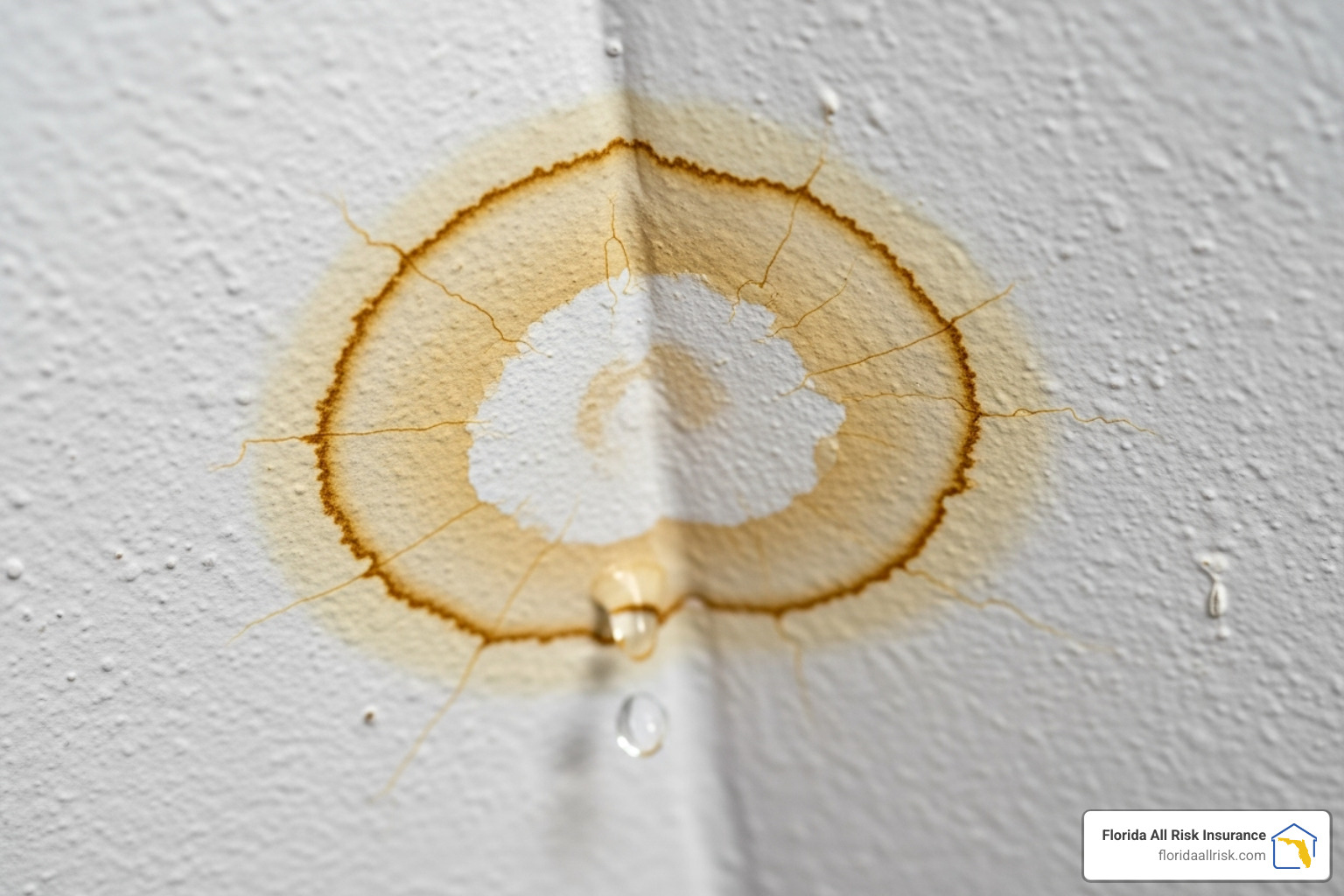
Water claims are among the most common and costly in condo buildings. Review the spectrum of water-related protections and exclusions in your policy:
- Sudden and accidental discharge: Typically covered (e.g., burst pipe). Check sublimits and exclusions for gradual leaks.
- Water backup/sump overflow: Usually needs an endorsement; helpful if drains or sewers back up into your unit.
- Overland water: Can protect ground-floor units from surface water entering after heavy rains, depending on carrier availability.
- Flood: Damage from storm surge or rising water from outside is excluded by standard policies. Consider a separate flood policy. To check your flood zone and risk, visit FEMA’s Flood Map Service Center: https://msc.fema.gov/portal/home.
Pro tip: Timely maintenance—like replacing old supply lines and maintaining shutoff valves—reduces the likelihood of water losses and may help keep premiums stable over time.
Short-Term Rentals and Occupancy Considerations
If you occasionally rent your unit or use it as a seasonal home, tell your agent. Occupancy and rental patterns can affect eligibility and policy terms. Some carriers require a landlord or short-term rental endorsement for frequent hosting, while others may require a different policy form. Clear disclosure helps ensure your coverage remains valid.
Putting It Together: A Quick Coverage Checklist
- Verify what the HOA insures and the master policy deductibles.
- Set dwelling (additions and alterations) limits to match your interior finishes.
- Choose replacement cost for personal property and schedule high-value items.
- Consider $1 million or higher liability, with an umbrella if needed.
- Add water backup and evaluate overland water options where available.
- Set realistic loss assessment limits based on the HOA’s risk profile.
- Review flood risk and consider a separate policy through the National Flood Insurance Program (https://www.floodsmart.gov) or a private flood insurer.
The Role of Your HOA’s Master Policy
Your HOA’s master policy is the cornerstone of a condo community’s risk management strategy. It insures shared structures and common elements and is funded by your condo assessments. The type of master policy your association carries influences exactly where your HO-6 needs to begin.
Common Master Policy Approaches
While terminology varies, you’ll typically see one of these approaches in Florida:
- Bare walls (or walls-out): The master policy covers the building structure and common elements up to the unfinished interior surface of your unit’s walls. You insure drywall inward (including paint, floor coverings, cabinetry, and fixtures) on your HO-6.
- Single entity (sometimes called all-in): The master policy may insure certain standard interior items, but not upgrades or improvements you’ve added. You still need adequate HO-6 dwelling coverage to protect betterments.
Always read your governing documents and request the latest master policy details. The Florida Condominium Act (Chapter 718) provides the legal framework for how associations are structured and operate: https://www.leg.state.fl.us/statutes/index.cfm?Appmode=DisplayStatute&URL=0700-0799/0718/0718.html. For consumer assistance navigating Florida insurance questions, you can also visit the Florida Office of Insurance Regulation’s consumer resources: https://www.floir.com/Office/ConsumerServices.
What the Master Policy Usually Covers (and What It Doesn’t)
Typically covered by the HOA master policy:
- Building shell: Foundations, roofs, exterior walls, and structural elements, including required fire-resistive components.
- Common areas: Lobbies, corridors, elevators, amenities, and shared grounds.
- Shared systems: Primary plumbing, electrical, and HVAC systems serving multiple units or the building.
Typically not covered by the HOA master policy:
- Your unit’s interior finishes: Drywall, paint, flooring, cabinets, interior trim, and built-ins—especially in a bare-walls arrangement.
- Your personal belongings: Furniture, electronics, clothing, small appliances, and décor.
- Your personal liability: Claims arising from incidents originating in your unit.
- Special assessments: Deductibles or shortfalls assessed to owners after covered losses are generally your responsibility unless you’ve purchased loss assessment coverage on your HO-6.
Why HOA Deductibles and Reserves Matter
- High deductibles, especially for wind/hurricane, keep master policy premiums lower but shift costs to owners during claims.
- Reserves fund planned capital projects; underfunded reserves may increase the likelihood of special assessments.
- Before buying—or at least annually—review the association’s budget, reserve study, and insurance documents. Understanding these factors helps you calibrate your personal loss assessment limit and plan for potential out-of-pocket expenses.
Frequently Asked Questions about Townhouse Insurance
Below are answers to common questions we hear from Florida townhouse owners weighing condo townhouse insurance and related coverages.
What’s the most important difference between freehold townhouses and condo townhouses for insurance?
Ownership. Freehold owners insure the entire structure and land, typically with an HO-3 policy. Condo townhouse owners insure their unit’s interior and personal property with an HO-6 that complements the HOA’s master policy. Your deed and association documents will confirm which you have.
How do I figure out whether my HOA’s master policy is bare walls or all-in?
Ask your property manager or board for a copy of the master policy, the association’s declaration documents, and a current Certificate of Insurance. Look for language describing what the association insures versus what’s left to unit owners. Your agent can help translate the jargon and align your HO-6 accordingly.
What is guaranteed replacement cost, and do I need it?
Some carriers offer provisions that go beyond basic replacement cost to help absorb inflation and demand surges after large disasters. If available, enhanced replacement features can be valuable in Florida, where post-storm reconstruction costs often spike. Discuss options with your agent to determine whether the added protection and cost make sense for your situation.
Why is loss assessment coverage so important for condo owners?
When the association files a claim, the master policy deductible or any coverage shortfall may be assessed to all unit owners. Loss assessment coverage on your HO-6 helps pay your share for covered causes of loss, up to the limit you choose. In Florida, where hurricane deductibles can be large, choosing a realistic limit is key.
How should I set my HO-6 dwelling (additions and alterations) limit?
Think about what it would cost to put your unit’s interior back the way it is today, at current local prices: drywall, paint, flooring, tile, cabinets, countertops, fixtures, built-ins, and appliances you’re responsible for. If you’ve upgraded finishes, raise your limit accordingly. Your agent can help estimate realistic figures based on square footage and finish quality.
Do I need water backup coverage if I live on an upper floor?
Backup claims aren’t limited to ground floors. A clogged line can affect any level. Water backup coverage is a relatively affordable endorsement that can make a big difference in a multi-unit building. It’s a common add-on for Florida condo owners.
Is flood insurance necessary for a condo unit?
Standard HO-6 policies exclude flood (rising water, storm surge). If you’re on a lower or ground floor—or if your building is in a higher-risk zone—consider a separate flood policy. Check your flood zone at FEMA’s Flood Map Service Center: https://msc.fema.gov/portal/home. Even when you’re above ground level, flood events can disrupt building utilities and access; some owners opt for flood coverage for peace of mind.
Can short-term rentals affect my condo coverage?
Yes. If you rent your unit, especially frequently, you may need policy endorsements or a different policy form depending on the carrier’s underwriting rules. Let your agent know how often and how long you rent so your coverage stays valid. Also verify your association’s rental rules—they may restrict short-term rentals.
What liability limit should I consider?
Because multi-unit buildings can amplify losses, many condo owners choose at least $1 million in personal liability. If you want additional protection, ask about a personal umbrella policy, which can increase your liability limits across home, auto, and other covered exposures.
How do wind and hurricane deductibles work on my personal policy?
Florida policies often apply a separate percentage deductible for named storms or hurricanes, distinct from your all-other-perils deductible. The percentage is typically based on your insured dwelling limit (HO-3) or sometimes on parts of your HO-6 coverage. Ask your agent to walk through how each deductible would apply in a major storm scenario.
Can I rely on my HOA’s insurance for interior damage?
Usually not. Even where the master policy includes some interior components, it won’t cover your personal property and may not cover improvements or betterments you’ve made. Your HO-6 is designed to take care of what the master policy doesn’t, including your belongings and personal liability.
How often should I review my policy?
At least annually, and whenever you complete improvements or buy high-value items. Also review after your HOA updates its master policy or changes deductibles. A quick annual check-in can prevent unpleasant surprises at claim time.
Conclusion: Secure the Right Protection for Your Florida Townhouse
The surest way to insure a Florida townhouse is to start with the right policy form and then customize details around how your association’s master policy is written. If you own a freehold townhouse, an HO-3 insures the entire structure and your belongings. If your townhouse is part of a condominium, an HO-6 is built to protect the interior of your unit and your personal property and to fill crucial gaps left by the master policy. From there, adjust limits and endorsements to reflect your finishes, belongings, liability needs, and water exposures.
A thoughtful review of the HOA’s financial health, reserves, and master policy deductibles helps you set a realistic loss assessment limit and anticipate out-of-pocket costs after a community-wide claim. Likewise, a careful look at water coverage (including water backup and separate flood insurance when appropriate) can prevent the most common—and costly—surprises we see in multi-unit buildings.
We’ve served Florida communities long enough to know that thoughtfully tailored coverage is about more than satisfying a lender or checking a box. It’s about making sure you can recover quickly and confidently after a setback.
- Get a personalized condo townhouse insurance quote and see how your coverage dovetails with the HOA’s master policy at https://floridaallrisk.com/insurance_products/condo/.
- Prefer to talk it through? Schedule a friendly coverage review with a Florida-based agent at https://floridaallrisk.com/insurance_products/condo/.
For additional Florida market context, you can also explore our latest overview: https://floridaallrisk.com/best-homeowners-insurance-in-florida-2025/.
Contact Us
We’re local to the Tampa Bay area and happy to help you understand your options and your HOA’s master policy.
Florida All Risk Insurance
Address: 7710 66th St N, Pinellas Park, FL 33781
Phone: (727) 544-0093
Email: [email protected]
You can also find product details and request quotes directly on our website: https://floridaallrisk.com/.

