

Why Your Business Vehicle Needs Complete Protection
Comprehensive business vehicle insurance provides complete protection for your company vehicles against collision damage, theft, vandalism, weather events, and liability claims. Unlike basic commercial auto policies that only cover minimum legal requirements, comprehensive coverage protects your business from both physical damage to your vehicles and financial liability from accidents.
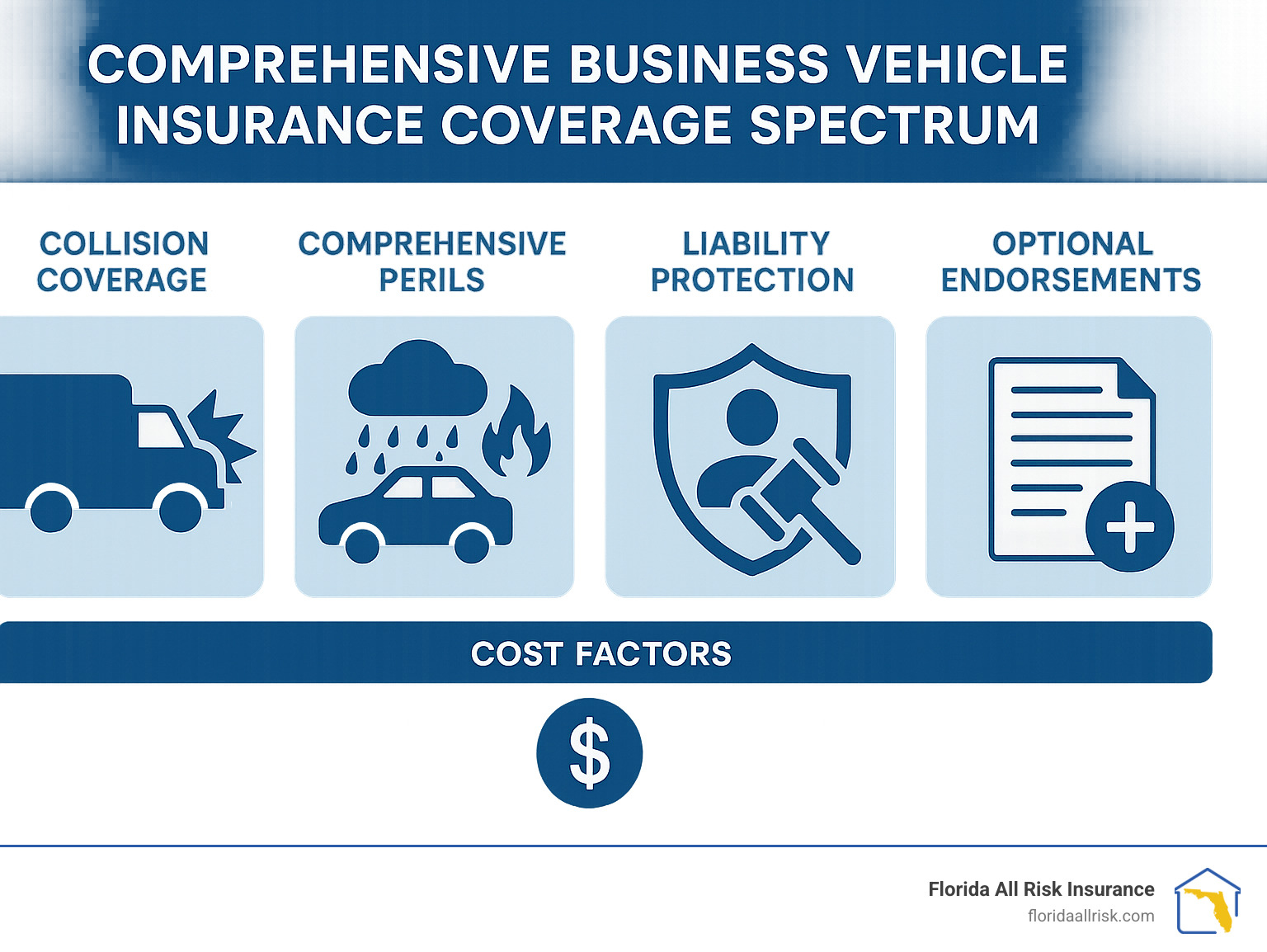
What Comprehensive Business Vehicle Insurance Covers:
– Collision damage – repairs after accidents with other vehicles or objects
– Theft and vandalism – complete vehicle replacement or repair costs
– Weather damage – hail, flood, wind, and storm-related repairs
– Fire damage – engine fires, electrical fires, or external fire exposure
– Third-party liability – medical bills and property damage you cause to others
– Glass breakage – windshield and window replacement
– Animal strikes – deer, birds, and other wildlife collisions
Whether you operate a single delivery van or manage a fleet of service trucks, the right insurance protects your business operations and prevents devastating financial losses. Research shows that businesses can save up to 35% on premiums by comparing rates across leading insurance companies.
As Jason Miller, I’ve helped thousands of Florida businesses secure proper vehicle coverage during my 20+ years in the insurance industry. My experience with Comprehensive business vehicle insurance has shown me that most business owners underestimate their coverage needs until it’s too late.
Relevant articles related to Comprehensive business vehicle insurance:
– Cargo insurance for trucks
– Commercial truck liability insurance
– Affordable commercial vehicle insurance
Comprehensive business vehicle insurance 101
Comprehensive business vehicle insurance is your complete protection package for company vehicles – the “all-perils” coverage that protects against fender-benders and hailstorms alike.
Comprehensive business coverage combines liability protection (covering damage you cause to others) with physical damage coverage (protecting your own vehicles from various perils). It’s designed specifically for the higher risks that come with using vehicles for business purposes.
Commercial auto insurance is mandatory by law for any vehicle used in business operations. Most experts recommend carrying at least $2 million in third-party liability coverage to properly protect your business assets.
When you’re running a business with multiple vehicles, fleet insurance often provides better pricing because insurers assess your risk holistically rather than vehicle by vehicle. This approach typically becomes cost-effective once you have five or more vehicles.
| Coverage Type | Standard Commercial Auto | Comprehensive Business Vehicle |
|---|---|---|
| Third-party liability | Minimum required limits | Higher limits ($2M+ recommended) |
| Collision damage | Optional | Typically included |
| Theft/vandalism | Optional | Included |
| Weather damage | Optional | Included |
| Fire damage | Optional | Included |
| Glass coverage | Optional | Often included |
| Rental reimbursement | Optional add-on | Often included |
For Canadian business owners, understanding Motor Vehicle Expenses can help you properly deduct your insurance premiums and vehicle-related costs.
What is Comprehensive business vehicle insurance?
Comprehensive business vehicle insurance provides “all-perils” protection that doesn’t leave you guessing about coverage gaps. Your vehicles are protected against virtually any covered loss except those specifically excluded in your policy.
This means you’re covered for collision damage from accidents, plus non-collision perils like theft, vandalism, fire, hail, flood, and animal strikes. Whether a deer jumps in front of your delivery truck or vandals target your work van overnight, you’re protected.
What sets business comprehensive coverage apart from personal auto insurance is its design for commercial risks. Your policy understands that your vehicles might be transporting goods, tools, equipment, or people for business purposes – exposures that personal policies simply aren’t built to handle.
How it differs from standard commercial auto
The difference between comprehensive and standard commercial auto insurance comes down to coverage breadth and higher limits. Standard commercial policies typically stick to mandatory coverages: third-party liability, accident benefits, direct compensation-property damage, and uninsured motorist coverage.
Comprehensive coverage adds the physical damage protection that standard policies leave optional. This includes collision coverage for accidents and comprehensive coverage for non-collision perils like theft and weather damage.
You’ll also get higher liability limits – often $2 million or more compared to minimum legal requirements. Lenders typically require comprehensive and collision coverage on financed or leased business vehicles, making this coverage practically mandatory for most businesses.
Despite its name, comprehensive coverage doesn’t mean you’re covered for everything. Exclusions still apply, which is why understanding your policy details matters so much for protecting your business properly.
What’s Covered, What’s Not
When you’re investing in Comprehensive business vehicle insurance, you want to know exactly what you’re getting for your money. Comprehensive coverage protects against most disasters that keep business owners awake at night, but there are still some gaps you need to know about.
Covered risks: peace-of-mind checklist
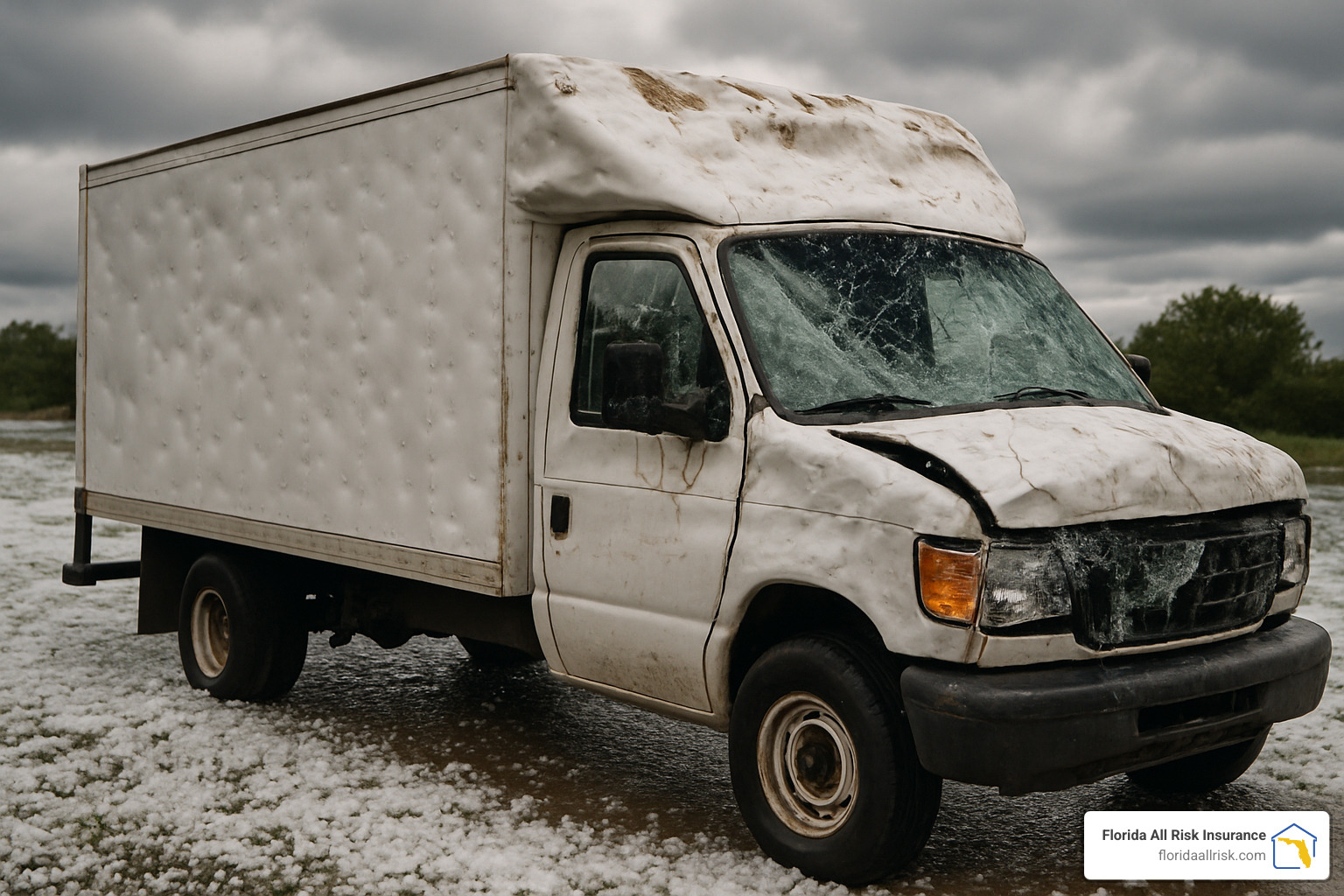
Your comprehensive policy acts like a safety net for most disasters that can hit your business vehicles. Weather damage is fully covered – whether it’s hail pounding your delivery truck, flood water reaching your van’s engine, or wind tearing off your truck’s side panels.
Theft and vandalism protection means you’re covered if someone steals your vehicle or damages it during break-in attempts. This includes broken windows from break-in attempts and damaged locks from theft attempts.
Collision coverage handles accidents with other vehicles, backing into loading docks, and those unfortunate meetings between your truck and a telephone pole. Glass breakage is typically included, and animal strikes are more common than you’d think.
Your policy also covers fire damage regardless of the cause, and civil disturbances mean you’re protected if your vehicle gets caught up in riots or protests.
The third-party liability portion protects you when you’re at fault for injuring someone else or damaging their property. This coverage also pays for legal defense costs, which can be substantial even if you’re not ultimately found liable.
Typical exclusions & gaps
Even though it’s called “comprehensive,” your policy doesn’t cover everything. Normal wear and tear isn’t covered – your insurance company won’t pay to replace worn brake pads or fix an engine that died from lack of oil changes. Mechanical breakdowns fall into this category too, unless they result from a covered peril.
Intentional acts are excluded. If you decide to enter your delivery van in an illegal street race, don’t expect your insurer to pay for the repairs. The same goes for using your vehicle for illegal activities.
One of the biggest gaps: tools and equipment stored in your vehicles typically aren’t covered under your auto policy. That expensive toolkit in your service van? Your laptop in the front seat? These usually need separate coverage. Tools under $1,500 might have limited coverage, but anything above that threshold needs separate tools and equipment coverage.
Cargo protection is another common gap. If you’re hauling goods for customers and they get damaged in an accident, your comprehensive auto policy won’t cover them. You need separate cargo insurance.
Employee personal property isn’t covered either. If your driver’s personal phone gets damaged in an accident, that’s their problem, not your insurance company’s.
Mandatory & optional add-ons in Canada & U.S.
Every jurisdiction requires certain basic coverages, but the minimums are rarely enough for business owners. Third-party liability is mandatory everywhere, but required amounts vary from $200,000 to $500,000. Smart business owners carry $2 million or more because lawsuits can be expensive.
Accident benefits or Personal Injury Protection is mandatory in most areas, covering medical costs and lost wages for people injured in your vehicle. Uninsured motorist coverage protects you when the other driver doesn’t have insurance.
The optional coverages are where you can customize your protection. Collision and comprehensive coverage aren’t legally required, but they’re practically essential if you have financed vehicles. All-perils coverage combines both into one broader protection.
Rental reimbursement keeps your business running while your vehicle is being repaired. Roadside assistance gets you back on the road quickly when you break down. Hired auto coverage protects you when employees rent vehicles for business use, and non-owned auto coverage extends protection to employee-owned vehicles used for business.
For more detailed information about your coverage options, check out our Auto Insurance Coverage Options guide.

Premiums, Discounts & Smart Savings
Let’s talk dollars and cents—specifically, what drives the price of Comprehensive business vehicle insurance and how to keep it reasonable.

How premiums are calculated
Insurers look at five main factors:
- Vehicle class and value – new trucks cost more to replace than ten-year-old vans.
- Annual mileage and territory – busy urban routes usually price higher than rural ones.
- Industry type – a florist faces different risks than a roofing contractor.
- Driver history – violations, claims, and experience levels move rates up or down fast.
- Coverage choices – higher limits or lower deductibles raise premiums; the opposite lowers them.
Typical ranges: light commercial vehicles run $1,000–$1,500 per year, while heavy trucks can exceed $5,000.
Discount playbook
- Clean driving records: up to 15% off.
- Fleet rating (five or more vehicles): bundled pricing and simplified admin.
- Telematics, GPS, dashcams: safety data can trim double-digit percentages.
- Multi-policy bundling: save about 10% on property/liability and 5% on auto when you package.
- Higher deductibles: instant savings—just be sure you can afford the out-of-pocket hit.
Shop around annually and use an independent agent who can quote multiple carriers. For deductible guidance see our Auto Insurance Deductible Options and always check company reputations at the Better Business Bureau. The goal is balance—never sacrifice essential protection to shave a few dollars.
Quotes, Claims & Real-World Operations

Getting a comprehensive quote in three fast steps
- Gather data: VINs, year/make/model, current value, and any aftermarket equipment.
- List drivers: licence numbers, years of experience, and five-year accident/violation history.
- Define usage: annual mileage, delivery radius, typical cargo or tools, and desired limits/deductibles.
Hand these details to an independent broker and you’ll receive apples-to-apples quotes instead of estimates based on guesswork.
Claims roadmap (condensed)
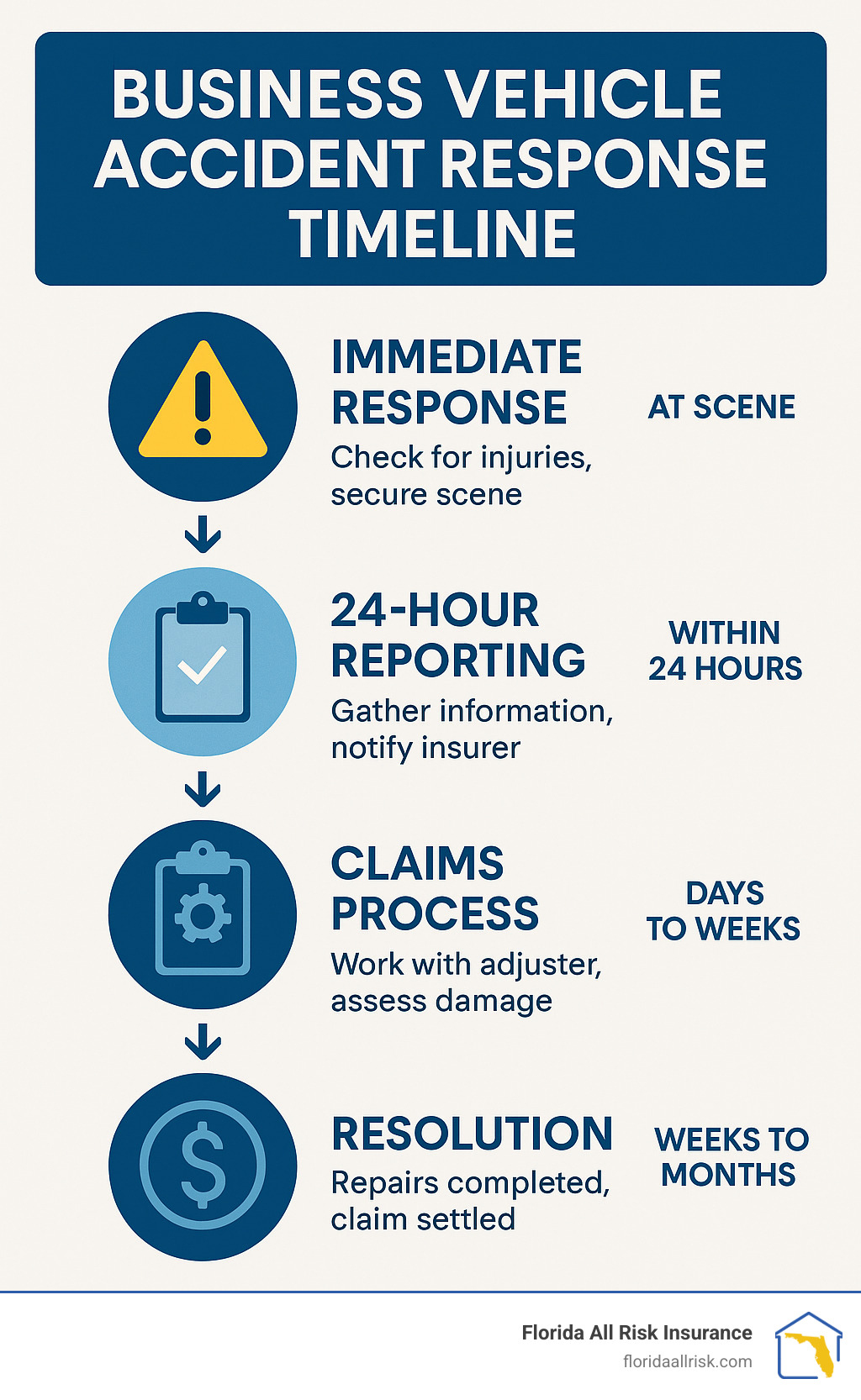
- Immediately: ensure safety, call 911 if needed, snap photos, and move vehicles out of traffic.
- Within 24 hrs: report the claim to your insurer’s 24/7 line and, if law requires, file a police report.
- Days to weeks: meet the adjuster, submit repair estimates, and stay engaged until repairs are complete.
Keep operations moving with rental reimbursement or backup vehicles, and notify customers of any delays.
Fleets, employees & non-owned vehicles
Once you hit five vehicles, fleet policies usually beat individual ones on price and convenience. List all regular drivers, use telematics to coach safe habits, and add hired/non-owned coverage for employee rentals or personal cars used on company time. More resources are on our Affordable Commercial Vehicle Insurance page.
Avoiding Pitfalls & Ensuring Continuity
Common misconceptions—busted
- “Comprehensive means everything.” It still excludes wear & tear, mechanical failure, and intentional damage.
- Personal auto policies cover business errands. They rarely do—claims can be denied and policies cancelled.
- “It’s too expensive.” Light commercial coverage often costs less than a single minor liability claim.
- Tools inside the van are automatically covered. You need a separate endorsement for most portable gear.
Post-accident checklist (quick version)
- Secure the scene and check for injuries.
- Photograph damage, road conditions, and licence plates.
- Exchange info; gather witnesses; note police report number.
- Notify your insurer within 24 hrs—stick to facts, no fault-admitting.
- Arrange alternate transportation so business stays on schedule.
Frequently Asked Questions about Comprehensive business vehicle insurance
What types of vehicles can be covered?
Almost anything on wheels used for business—cars, vans, pickups under 4,500 kg, plus heavier trucks, construction equipment, buses, food trucks, and limos. Premiums and endorsements adjust to the vehicle’s weight and purpose.
Are tools and equipment inside my van covered?
Usually not. Permanently installed items (GPS, shelves) are covered, but portable tools, laptops, or inventory need a tools and equipment endorsement. List high-value items with your agent so nothing slips through the cracks.
How can I save the most on premiums?
Maintain clean driving records, install anti-theft/telematics devices, bundle policies, and compare quotes yearly. Raising deductibles also lowers costs—just be sure you can pay the deductible when a claim hits.
Conclusion
Running a business without proper vehicle protection is like driving blindfolded – you might get lucky for a while, but eventually, something’s going to hit you. Comprehensive business vehicle insurance gives you the complete protection your business needs to operate with confidence.
Throughout this guide, we’ve covered the essential elements of comprehensive coverage – what’s protected, what’s not, how premiums work, and smart strategies for keeping costs under control. The bottom line is simple: proper coverage isn’t just about checking a legal box. It’s about protecting your business operations and ensuring you can keep serving customers when unexpected events try to derail your plans.
Here’s what every Florida business owner should remember: comprehensive coverage combines liability and physical damage protection, light commercial vehicles typically cost $1,000-$1,500 annually to insure, and businesses can save significantly through driver training, fleet discounts, and policy bundling. Don’t forget that tools and equipment often require separate coverage endorsements, and regular policy reviews help ensure coverage keeps pace with business growth.
At Florida All Risk Insurance in St. Petersburg, we’ve seen too many businesses learn about coverage gaps the hard way. Our independent agency status means we’re not tied to just one insurance company – we can shop multiple carriers to find the right coverage at competitive rates for your specific situation.
Whether you’re protecting a single delivery van or managing a fleet of service trucks, we’ll help you steer the complexities of Comprehensive business vehicle insurance and develop a customized solution that fits both your budget and your risk profile.
Don’t leave your business vehicles playing insurance roulette. Contact us today for a comprehensive quote that actually covers what you need it to cover. For specialized trucking operations, check out our trucking coverage options that go beyond basic commercial auto.
The right insurance isn’t an expense – it’s an investment in your business’s future success and your own peace of mind. Because when accidents happen (and they will), you’ll be glad you chose protection over hoping for the best.

